life · Uncategorized

What’s going down in Rock Creek (and why it’s a big deal)

This weekend, my Handsome Assistant and I attended an educational picnic to save Rock Creek, which is currently at risk from the continued expansion of a golf course. Construction has already begun, parts of the forest are being turned into mulch as we speak. Over 1,200 trees are slated to be cut down, including some that would otherwise be considered special or heritage trees under DC law.

This deforestation is part of an effort to expand multiple golf courses throughout the DC area.

Yeah, I know.

Even without further examination, I mean — who is building golf courses right now, of all things? The answer is the National Links Trust. While people worry about paying rent and getting their next meal, the National Links Trust apparently thinks that the public yearns for more golf courses. It’s something that sounds almost moustache-twirlingly villainous. Like the plot of an after school special where the heroes are a band of plucky cartoon kittens. Unfortunately, this is actually happening.

What’s the deal with the National Links Trust?

The NLT’s stated intention is “positively impacting our community and changing lives through affordable and accessible municipal golf.”

This is something that doesn’t sound… terrible, barring the whole “people-can’t-afford-food-right-now-you-rich-weirdoes” aspect. However, here’s what the NLT isn’t saying:

Lem Smith, NLT board member, International & Federal Government Affairs Manager for Chevron, and Former VP, Federal Government Relations for the American Petroleum Institute.
  • One of the board members, Lem Smith, is the International and Federal Government Affairs Manager for Chevron. The Chevron responsible for dumping 16 billion gallons of toxic wastewater into the Amazon basin. The Chevron currently denying millions in fossil fuel transit fees to the Palestinian people. The Chevron currently funding apartheid and war crimes. That Chevron.
  • While they claim that they’re attempting to mitigate the harm done by the deforestation of Rock Creek (harm that is, once again, completely unnecessary and unasked for), they are not adhering to the best practices for doing so. There are multiple ways to mitigate the damage of both removing old growth trees and the presence of invasive plants, but their policy seems to be to mulch everything and call it good.
  • They’re not actually accountable to anyone. They can make half-hearted promises to plant meadows and maintain the forest all they want, but there is no incentive for them to keep them and nothing to stop them from doing whatever they want.

They claim that they’re willing to dedicate unused golf courses to being replanted as meadows. This is not a suitable compromise for multiple reasons:

There’s also the fact that it doesn’t seem like anybody actually asked for this. When asked, local golfers appear to be ambivalent at best. The NLT was able to scrape together some who are in favor of it to make a public appearance, but these don’t appear to reflect the opinion of the majority of the new course’s ostensible user base. They are absolutely not reflective of the larger population of DC and the adjacent area.

Here’s why it matters (no matter where or who you are).

So the NLT is attempting to build a golf course. Like I said, this is a huge deal and will have far-reaching effects even if you don’t live anywhere near DC. Here’s why:

Old growth areas are carbon sinks.

It is generally thought that old forests cease to accumulate carbon, but this isn’t the case. Research shows that in forests between 15-800 years of age, “net ecosystem productivity (the net carbon balance of the forest including soils) is usually positive.” What’s more, carbon doesn’t cease to exist once it’s taken up. When these areas are disturbed, that carbon is liberated as plant matter decays or is burned. Rather than trees dying naturally over time, breaking down, and having their nutrients (including carbon) absorbed into the mature forest, deforestation disrupts this natural cycle.

Rock Creek is part of the Potomac watershed.

Trees support healthy watersheds. Rock Creek itself connects to the Potomac River, and eventually drains into the Atlantic Ocean via the Chesapeake Bay. Trees contribute to healthy waterways by anchoring soil in place, preventing erosion. Their root systems (including the mycorrhizae within the soil that surrounds their roots) help capture nutrients. Without these systems in place, they would otherwise flow into the water to encourage algal blooms and fish kills, a process known as eutrophication. Removing these trees and replacing them with grass that requires a regimen of fertilizers and treatments to maintain is a terrible idea.

The last thing anyone needs is golf course runoff oozing into our local waterways.

Golf courses need a lot of water.

I already mentioned supplemental irrigation, but I’ll say it again: Golf courses need a lot of water. They are generally watered with sprinkler systems that lead to a lot of waste and loss through evaporation. This also puts strain on existing systems, reducing the availability of water for other uses and increasing scarcity issues. Only about 12% of golf courses surveyed use recycled water, and even with more efficient irrigation methods, turf grass remains a very wasteful use of land and water.

We’ve already had droughts here. We’re already told not to use any more water than necessary during the summer because of scarcity issues. Why are they building a golf course?

This could increase the transmission of avian flu.

I’m not being hyperbolic when I say this. Destruction of wildlife habitats drive populations of wild animals into greater contact with humans. If old growth trees are destroyed, the thousands of birds that they house and feed get pushed elsewhere. That “elsewhere” is going to be people’s back yards.

How does that relate to the H5N1 virus? More displaced birds mean more contact between wild birds and flocks of backyard fowl. It means more indoor-outdoor cats that come in contact with potentially infected birds. It means more bird feces on cars, decks, and feeders. A higher overall population of birds congregating in the same feeding and shelter areas means a higher risk of potentially zoonotic H5N1 moving through that population.

Birds aren’t the only ones that’re going to be displaced, either. Look for more conflicts with foxes, raccoons, rodents, and coyotes, too.

If it was living in that part of Rock Creek, it’s gonna need a new place to go. In an area as densely populated as DC and the surrounding suburbs, there aren’t many other options.

This further undermines Washington, DC, as a political entity.

Washington, DC, has been pushing for statehood for some time now. (A significant part of the reason why it keeps getting struck down is that DC would be a majority blue state, so it benefits the Conservative party to avoid allowing it to have any more representation than it already does.) While it isn’t a state, DC does still have home rule in some aspects. For example, DC’s tree law provides numerous protections specifically for heritage trees. Removal of a tree that qualifies as a “special tree” requires a permit. Healthy heritage trees cannot be removed, period.

Rock Creek is part of the National Park System. As such, even though a significant portion is within DC, DC isn’t able to enforce its tree laws to protect it. This inability to protect trees within its area further undermines DC as a legal and political entity.

The National Park Service is part of the problem.

Rock Creek is a national park, but it hasn’t been maintained as one. Invasive plants are a significant issue, and one that the National Park Service hasn’t adequately remedied. There are local people who are trained as Weed Warriors, who are able to legally remove invasive plants. However, there’s only so much they can do.

Part of the inception of the National Park Service was to push Indigenous Americans off of their ancestral land, with the claim that the land must be “preserved.” (Madison Grant helped launch the national parks movement — he also wrote The Passing of the Great Race, which gave a very detailed account of his negative views of Indigenous people, Black people, and immigrants.) In reality, the land in the National Park System was being preserved just fine while its original stewards were living there.

The neglect of Rock Creek shows that this land is not being protected or preserved. Furthermore, its current state has incentivized the NPS to sell part of Rock Creek in order to have it cut down and turned into a golf course. The idea is, I guess, that the National Links Trust would do the preserving instead, by… cutting the trees down and turning the land into a putting green.

It’s all so, so ridiculous, and it’s a terrible omen of things to come. Nothing good will come of the NPS being allowed to neglect public lands, then sell them off.

Light pollution is going to be a problem, too.

In addition to the loss of exceptionally old trees, biodiversity, and wildlife habitat, the presence of a golf course will increase light pollution in the area. The plans call for a driving range that will be lit through the night hours. This will disrupt nocturnal animals, including (especially) insects. We’re already experiencing a dramatic drop in insect populations. We don’t need a @#$%ing driving range that nobody asked for to begin with.

The land is removed from public use.

Right now, you can just go to Rock Creek. You can walk around. Picnic. Bird watch. Have a grand old time.

Already, the area of the forest that is earmarked for cutting has been removed from public use. You can’t just go there — people who have have been told to leave.

Meadows aren’t forests.

Even if the NTL carries out their plan to turn unused golf courses into meadows, meadows do not provide the same benefits as forests. I’ve been very vocal here about my efforts to remediate the immature, hard clay soil and turn it into mature soil. Cultivating turf grass is terrible for soil and doesn’t allow it to mature.

So here’s a bunch of immature soil that’ll be used to grow some (one can hope, but certainly not assume) native flowers and grasses. This will take over a hundred years become anything like the area that’s currently being cut down, in a process known as forest succession. While meadows are certainly better than the sterile monoculture of a putting green, they do not play the same role or have the same benefits as a century old forest.

Here’s what you can do.

Right now, the easiest thing to do is to boycott Chevron and its associated companies. People across the US and around the world are rejecting Chevron. Coupled with lower sales of jet fuel and other factors, Chevron recently reported a loss for the first time since 2020.

This effort to turn part of Rock Creek into a golf course is just a continuation of Chevron’s ongoing pattern of land acquisition and destruction. They are promoting this destruction via the National Links Trust. If you are interested in helping to put a stop to this, please visit Defend Rock Creek’s Linktree for further steps that you can take.
life

Bones, Beavers, and Vegan Tacos.

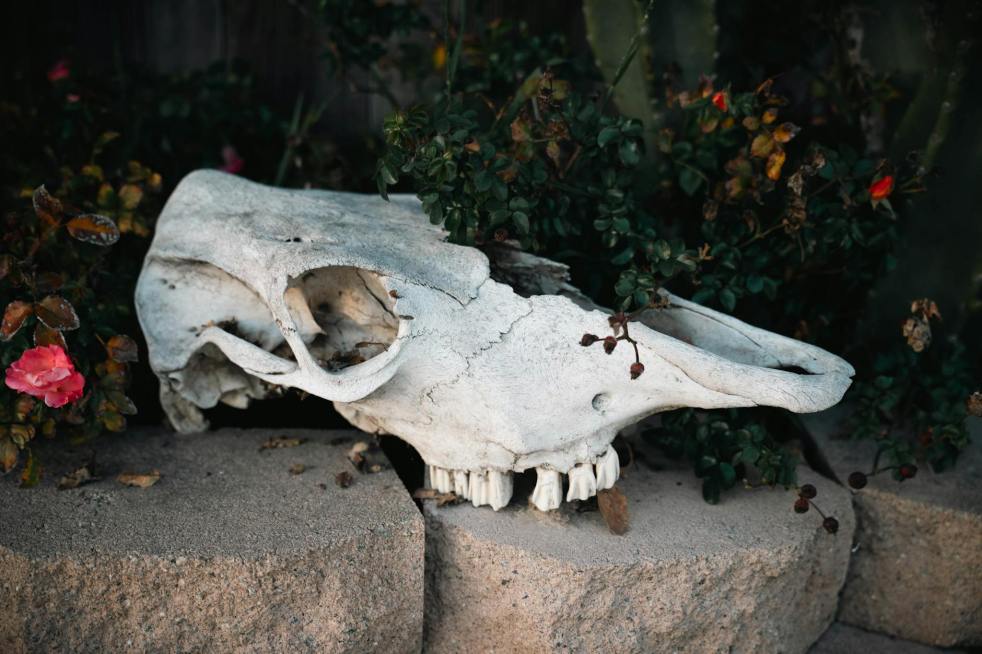
This past Saturday, my Handsome Assistant, some friends, and I went on a bone walk. This was organized by a friend in the Druidry group of which I’m a part, and it’s pretty much exactly what it sounds like — a walk through an area where it’s common to find bones.

Late winter/early spring is the best time for this, because winter is harsh on wild things and this is when the snow melts and uncovers the earth again. It’s a meditation on mortality and privilege; we are fortunate to have access to the things we need to easily survive winter, but this isn’t universally true. And, regardless of how true it is, none of us will live forever. It’s kind of an antidote to modern western society’s extreme refusal to acknowledge the more visceral aspects of our own mortality.

(I’ll give you an example. When my grandmother passed away, she was sleeping in bed beside my grandfather. Her body was picked up, cleaned, preserved, and covered in makeup and a wig. Her cheeks were stuffed with cotton to hide the way cancer had eaten her away. Her eyelids were pulled over barbed plastic forms to make her look like she was sleeping. We filed in during the wake to see her, and she was carted off to her grave by unseen hands. Only, it wasn’t her grave exactly — she was brought to a kind of staging area, with her coffin set atop a white rectangular platform. There was a eulogy, the press of a button, and a mechanical whirr as the coffin descended into the platform. It was all very neat and methodical, with as little involvement from the bereaved as possible. Just lots of preservatives, makeup, and little tricks to maintain the illusion of life, and a closed casket gently lowering into a sterile, white box.

If this is the closest we come to experiencing mortality before going through our own, no wonder we’re so fucking weird about it.)

The bone walk itself was a lot of fun. We didn’t find many bones, mostly some vacant snail shells. The area we walked was a very diverse meadow, with horse nettle, lobelia (I even snuck some leftover lobelia seeds), native grasses, and more plants than I could possibly identify, so there were signs from an abundance of wild things. Shed feathers. Coyote scat, packed with rodent and rabbit fur until it looked almost like owl pellets. Tufts of winter coat from horses, where they’d rubbed against a fence. The stumps of trees, whittled to a pencil point by beaver teeth. Droppings from rabbits, deer, and horses. It was the traces of a healthy, vibrant population.

We chatted about all kinds of things, mortality-adjacent and non. Books. Music. The population of crows that visits here. The plants we saw. I haven’t been able to see anyone since late autumn, so it was nice to just catch up and spend time together.

We also talked about the idea of a burial forest, where everyone could be buried beneath a tree. One friend said they wanted to be buried beneath an apple tree, which would continue to feed people in a somewhat macabre fashion. I said I wanted to be buried under a bald cypress, so it’d grow cypress knees. Then I could continue to be a pain in the ass in death as I am in life.

(Alternatively, I want to go to a body farm. Then I want my picked-clean skeleton recovered, well-scrubbed, and adorned with thrift store junk jewelry. Then I want to be propped up on a marble throne in a mausoleum to confuse the shit out of anthropologists far into the future.)

Once we’d finished the bone walk, my Handsome Assistant and I had to go. (We had a rather long drive back, and I was in a hurry to get to my favorite stationery store before it closed because it would probably be my only opportunity to pick up Colorverse’s exceeding gorgeous 2025 ink, Blue Green Snake, without having to order it online.)

(I got the one with blue purple shimmer.)

We stopped at a placed called Kelley Farm Kitchen on the way back. We’d never been — didn’t know anything about it, really, but it said it was “100% Vegan.” I had some doubts when I looked at the creamy sauces and cheesy dishes on their menu, but they were not kidding.

My Handsome Assistant got a seitan cheesesteak and a little bit of macaroni and cheese (well, “cheese”), which were both delicious. I was debating getting the same, but I went with the pinto bean and avocado tacos instead, and you guys.

They were amazing. Just a little heat. Flavorful. Satisfying. The tortillas were soft, but with just a bit of crispiness on the outside. The grated carrots were a cool, sweet counterpoint to the salt and heat of the other ingredients. And the sauce!

For serious, I’d gladly make the trip just to get more tacos.

This was a small adventure, but delightful. I’m glad that the thought of mortality doesn’t strike the same fear in me that it did years ago. I’m grateful that I got to see and socialize with my friends. I’m happy to spend time in a beautiful, biodiverse place. I’m glad for delicious food, good conversation, and beautiful ink.

(Seriously, it’s so pretty.)

animals

The Magical Meaning of Wasps

Last week was spiders, this week we’re doing wasps.

Why wasps?

In temperate climates, late summer and early autumn when many wasps (the eusocial ones, at least) start losing direction. Like kids on spring break, they no longer have the structure they once did — the nest is likely done producing larvae, the newly-created queens are getting ready to hibernate, and the wasply lifecycle comes to a close to start back up in spring. This means that the workers, if they haven’t died already, are about to.

The lack of larvae to raise also means that the wasps’ dietary habits shift. Where babies need protein in order to grow big and strong (and adequate protein is so important, worker wasps have been observed shoving drones into lockers in order to make sure that the larvae eat first), the workers have already done all the growing they’re going to do. They don’t need a high protein diet; they need carbs for energy. This often puts them in conflict with humans, as sugar sources start to wind down a bit this time of year and humans are generally a veritable bonanza of sugary treats.

A close-up of a wasp's face.
Photo by David Hablu00fctzel on Pexels.com

So, if you’re noticing larger numbers of more aggressive wasps than usual, that’s probably why. They’re hungry, and they’re on a kind of wasply rumspringa. Don’t worry, though — they won’t be around much longer. It’ll get cold, the workers will die off, the queens will hibernate, et fin.

Right now, we have a wasp nest beneath a tree stump. We considered removing it, but it’s late enough that nature will take its course pretty soon, and then we can fill in the cavity to keep anyone else from setting up shop.

In honor of the last of the summer’s wasps, here are various bits of folklore, mythology, and magical properties associated with these creatures.

Insects feature pretty frequently in Japanese folklore and mythology, wasps included. In one story, the deity Susanoo-mikoto ordered his son-in-law, Ôkuninushino-kami, to sleep in a room infested with wasps and centipedes. Fortunately, Suseribimeno-mikoto, his wife, gives him an insect-repelling cloth to protect him.

One of the plays of Aristophanes, an ancient Greek playwright, is titled The Wasps. In it, the titular wasps are a group of jurors. Bdelycleon, son of Philocleon, has imprisoned his father after many, many unsuccessful treatments for Philocleon’s seeming addiction to trials. When the jurors (Philocleon’s comrades) learn of his imprisonment, they swarm Bdelycleon like wasps. Bdelycleon eventually gives in, and turns the house into a “courtroom” where his father can judge household disputes.

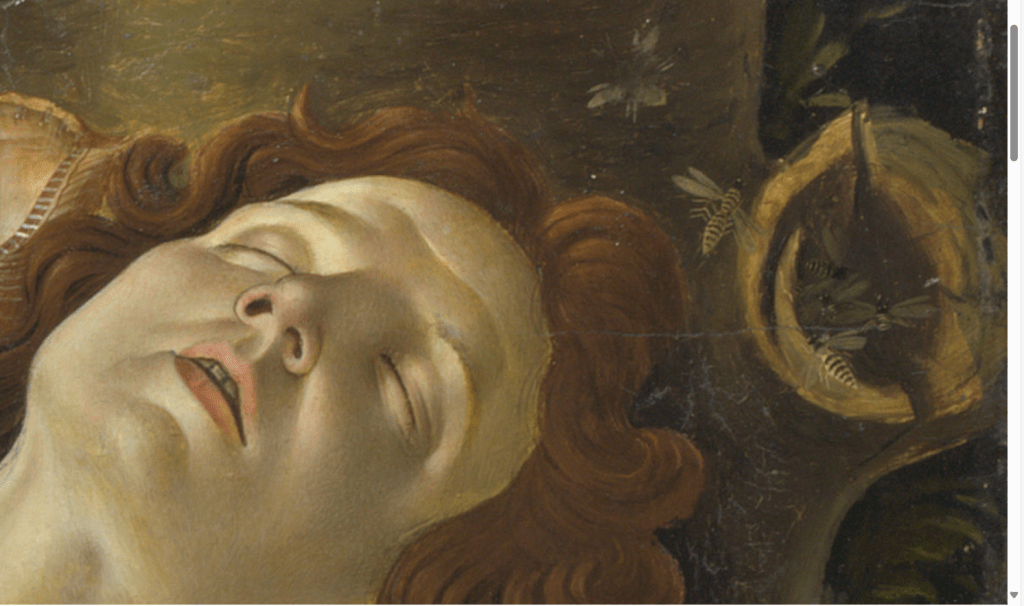
In Boticelli’s painting Venus and Mars, there’s a small wasp nest far to the right, near Mars’ head. Wasps are associated with Mars (and his Greek counterpart, Ares) as animals that are considered aggressive or warlike, but this may not be why Boticelli chose to include them. The painting may have been commissioned by the Vespucci family (from the Italian “vespa,” or “wasp”), and the inclusion of the wasp nest may have been a nod to that.

Detail from Botticelli's Venus and Mars, showing Mars' face and an adjacent wasp nest.

Ichneumon wasps, a family of parasitoid wasps, were also instrumental in strengthening Charles Darwin’s doubts about the existence of a benevolent creator:

I cannot persuade myself that a beneficent and omnipotent God would have designedly created the Ichneumonidae with the express intention of their feeding within the living bodies of caterpillars[.]

I have seen multiple references to wasps as sacred animals in Indigenous American cultures, but haven’t found many specific examples of this — particularly examples sourced from Indigenous peoples themselves. This isn’t to say that this isn’t true, but any references to wasps as sacred, totemic, or spirit animals in generic “Native American” culture should be taken with a grain of salt. (North America is kind of a huge place.)
One specific story comes from the Diné people and tells the story of the First World — known as Ni’hodilhil, the Dark or Black World. This was a black place surrounded by four cloud columns: Black Night to the north, White Dawn to the east, Blue Daylight to the south, and Yellow Twilight to the west. The First Man, along with a perfect ear of white corn, was formed at the place where Black Night and White Dawn met. The First Woman, along with a perfect ear of yellow corn, was formed where Blue Daylight and Yellow Twilight met.
At that time, creatures did not have their present forms. They were as mists, but would one day become their present shapes.
In the story, the first man and first woman meet and live together. Gradually, other beings appear. First is Great-Coyote-Who-Was-Formed-in-the-Water, who hatched from an egg and knew all that went on under the water. Second was another Coyote, First Angry, who insisted that he had been born first, and brought witchcraft into the world. After that, four more beings appeared. They were the Wasp People, and they knew how shoot and harm others. They were followed by the Red Ants, the Black Ants, and many others, until the world became crowded and was full of arguing.
Eventually, the Gods became angry and the occupants of the First World were forced to leave. The First Man planted a reed in the east, which grew tall and strong. The First Man, First Woman, and all of the other creatures of the world climbed up it to safety, to the Second World.

A black and yellow wasp on a white flower.
Photo by Pixabay on Pexels.com

Ahti, a little-known Egyptian deity, was represented as a hippopotamus with the head of a wasp. Not much is known about her, though her interesting composition has led some scholars to associate her with chaos, disorder, and spite.

In Hindu mythology, wasps are associated with Bhramari — the goddess of bees. Bees, wasps, hornets, spiders, termites, mosquitoes, and biting flies cling to her body, and she could send them out to attack for her. In the tenth book of the Devi Bhagavata Purana, there is a powerful asura named Aruna. He performs a penance to Brahma, and, in return, Brahma makes it so Aruna cannot be killed in war by any man, woman, weapon, bipedal creature, quadrupedal creature, or any combination thereof. Feeling suitably overpowered, Aruna called on other beings to attack the devas. He nearly succeeded in beating them, too, until Adi Parashakti appeared and began releasing bees from her hands. Calmly, she continued releasing insects that clung to her body, making her larger and larger and creating the divine form of Bhramari.
When all of Aruna’s army had been defeated except him, she released her insects upon him to tear him limb from limb.

John Gerard, a sixteenth century herbalist, had a method of tree divination using acorns. The technique involved finding an acorn at a specific time of year (likely autumn), breaking it open, and examining the contents:

  • If there was an ant inside, there’d be an abundant harvest in the coming year.
  • On the other hand, a worm that attempts to crawl away means a light harvest.
  • A spider was a harbinger of pestilence for humans.
  • A white worm was a harbinger of pestilence for animals.
  • If the worm thrashed and turned away, however, it meant the plague.
  • If there was a worm that “flew away” (perhaps by growing into an adult knopper gall wasp), it foretold war.
A wasp climbing on a mossy stick.
Photo by Pixabay on Pexels.com

Some modern witches use deceased wasps as an ingredient in banishing or protective powders. Combine them with ingredients like salt, hot pepper, and garlic, and grind to a fine powder. Use to dress candles, sprinkle around borders, et cetera.

Wasps represent war, arguments, and violence. This is probably undeserved, as there are plenty of non-aggressive wasp species. (I mean, I woke up the other day with a little ichneumon wasp crawling on my leg. She was tiny, harmless, and seemed at least as confused as I was, considering both of us were A) in a bed and B) under a blanket.)

Wasps’ violence isn’t always unjustified, however. These creatures, and stinging insects in general, also frequently represent punishment and wrath. Even in the story of Bhramari, where wasps are part of the insect army that eventually defeat Aruna, they are part of the righteous, defensive wrath of the goddess.

They’re also symbols of strictly enforced boundaries and protection.

On the other hand, dreaming of wasps is said to represent evil and negative emotions. Dreams of being stung by a wasp may indicate envy. Killing a wasp in a dream represents bravery in overcoming the negativity or malicious actions of others.

Are wasps aggressive? They certainly can be, but this isn’t directionless aggression. In reality, they’re very protective. The trouble is, it’s often difficult for humans to tell where our territory ends and theirs begins, which frequently brings us into conflict. Still, wasps perform very important functions as pollinators and predators of pest insects, so it’s worth learning about your local wasp species and finding ways to coexist whenever possible.
Sometimes that long “stinger” is just an ovipositor, and that wasp is on the way to take care of your garden for you!

animals

The Magical Meaning and Symbolism of Wasps

Last week was spiders, this week we’re doing the magical meaning and symbolism of wasps.

Why wasps?

In temperate climates, late summer and early autumn when many wasps (the eusocial ones, at least) start losing direction. Like kids on spring break, they no longer have the structure they once did — the nest is likely done producing larvae, the newly-created queens are getting ready to hibernate, and the wasply lifecycle comes to a close to start back up in spring. This means that the workers, if they haven’t died already, are about to.

The lack of larvae to raise also means that the wasps’ dietary habits shift. Where babies need protein in order to grow big and strong (and adequate protein is so important, worker wasps have been observed shoving drones into lockers in order to make sure that the larvae eat first), the workers have already done all the growing they’re going to do. They don’t need a high protein diet; they need carbs for energy. This often puts them in conflict with humans, as sugar sources start to wind down a bit this time of year and humans are generally a veritable bonanza of sugary treats.

A close-up of a wasp's face.
This one’s weirdly cute. Photo by David Hablu00fctzel on Pexels.com

So, if you’re noticing larger numbers of more aggressive wasps than usual, that’s probably why. They’re hungry, and they’re on a kind of wasply rumspringa. Don’t worry, though — they won’t be around much longer. It’ll get cold, the workers will die off, the queens will hibernate, et fin.

Right now, we have a wasp nest beneath a tree stump. We considered removing it, but it’s late enough that nature will take its course pretty soon, and then we can fill in the cavity to keep anyone else from setting up shop.

In honor of the last of the summer’s wasps, here are various bits of folklore, mythology, magical properties, and the symbolism of wasps.

Insects feature pretty frequently in Japanese folklore and mythology, wasps included. In one story, the deity Susanoo-mikoto ordered his son-in-law, Ôkuninushino-kami, to sleep in a room infested with wasps and centipedes. Fortunately, Suseribimeno-mikoto, his wife, gives him an insect-repelling cloth to protect him.

One of the plays of Aristophanes, an ancient Greek playwright, is titled The Wasps. In it, the titular wasps are a group of jurors. Bdelycleon, son of Philocleon, has imprisoned his father after many, many unsuccessful treatments for Philocleon’s seeming addiction to trials. When the jurors (Philocleon’s comrades) learn of his imprisonment, they swarm Bdelycleon like wasps. Bdelycleon eventually gives in, and turns the house into a “courtroom” where his father can judge household disputes.

In Boticelli’s painting Venus and Mars, there’s a small wasp nest far to the right, near Mars’ head. Wasps are associated with Mars (and his Greek counterpart, Ares) as animals that are considered aggressive or warlike, but this may not be why Boticelli chose to include them. The painting may have been commissioned by the Vespucci family (from the Italian “vespa,” or “wasp”), and the inclusion of the wasp nest may have been a nod to that.

Detail from Botticelli's Venus and Mars, showing Mars' face and an adjacent wasp nest.

Ichneumon wasps, a family of parasitoid wasps, were also instrumental in strengthening Charles Darwin’s doubts about the existence of a benevolent creator:

I cannot persuade myself that a beneficent and omnipotent God would have designedly created the Ichneumonidae with the express intention of their feeding within the living bodies of caterpillars[.]

I have seen multiple references to wasps as sacred animals in Indigenous American cultures, but haven’t found many specific examples of this — particularly examples sourced from Indigenous peoples themselves. This isn’t to say that this isn’t true, but any references to wasps as sacred, totemic, or spirit animals in generic “Native American” culture should be taken with a grain of salt. (North America is kind of a huge place.)
One specific story comes from the Diné people and tells the story of the First World — known as Ni’hodilhil, the Dark or Black World. This was a black place surrounded by four cloud columns: Black Night to the north, White Dawn to the east, Blue Daylight to the south, and Yellow Twilight to the west. The First Man, along with a perfect ear of white corn, was formed at the place where Black Night and White Dawn met. The First Woman, along with a perfect ear of yellow corn, was formed where Blue Daylight and Yellow Twilight met.
At that time, creatures did not have their present forms. They were as mists, but would one day become their present shapes.
In the story, the first man and first woman meet and live together. Gradually, other beings appear. First is Great-Coyote-Who-Was-Formed-in-the-Water, who hatched from an egg and knew all that went on under the water. Second was another Coyote, First Angry, who insisted that he had been born first, and brought witchcraft into the world. After that, four more beings appeared. They were the Wasp People, and they knew how shoot and harm others. They were followed by the Red Ants, the Black Ants, and many others, until the world became crowded and was full of arguing.
Eventually, the Gods became angry and the occupants of the First World were forced to leave. The First Man planted a reed in the east, which grew tall and strong. The First Man, First Woman, and all of the other creatures of the world climbed up it to safety, to the Second World.

A black and yellow wasp on a white flower.
Photo by Pixabay on Pexels.com

Ahti, a little-known Egyptian deity, was represented as a hippopotamus with the head of a wasp. Not much is known about her, though her interesting composition has led some scholars to associate her with chaos, disorder, and spite.

In Hindu mythology, wasps are associated with Bhramari — the goddess of bees. Bees, wasps, hornets, spiders, termites, mosquitoes, and biting flies cling to her body, and she could send them out to attack for her. In the tenth book of the Devi Bhagavata Purana, there is a powerful asura named Aruna. He performs a penance to Brahma, and, in return, Brahma makes it so Aruna cannot be killed in war by any man, woman, weapon, bipedal creature, quadrupedal creature, or any combination thereof. Feeling suitably overpowered, Aruna called on other beings to attack the devas. He nearly succeeded in beating them, too, until Adi Parashakti appeared and began releasing bees from her hands. Calmly, she continued releasing insects that clung to her body, making her larger and larger and creating the divine form of Bhramari.
When all of Aruna’s army had been defeated except him, she released her insects upon him to tear him limb from limb. This story is especially interesting because the warlike symbolism of wasps is still present, but used in a defensive, benevolent sense.

John Gerard, a sixteenth century herbalist, had a method of tree divination using acorns. The technique involved finding an acorn at a specific time of year (likely autumn), breaking it open, and examining the contents:

  • If there was an ant inside, there’d be an abundant harvest in the coming year.
  • On the other hand, a worm that attempts to crawl away means a light harvest.
  • A spider was a harbinger of pestilence for humans.
  • A white worm was a harbinger of pestilence for animals.
  • If the worm thrashed and turned away, however, it meant the plague.
  • If there was a worm that “flew away” (perhaps by growing into an adult knopper gall wasp), it foretold war.
A wasp climbing on a mossy stick.
Photo by Pixabay on Pexels.com

Some modern witches use deceased wasps as an ingredient in banishing or protective powders. Combine them with ingredients like salt, hot pepper, and garlic, and grind to a fine powder. Use to dress candles, sprinkle around borders, et cetera.

The symbolism of wasps generally revolves around war, arguments, and violence. This is probably undeserved, as there are plenty of non-aggressive wasp species. (I mean, I woke up the other day with a little ichneumon wasp crawling on my leg. She was tiny, harmless, and seemed at least as confused as I was, considering both of us were A) in a bed and B) under a blanket.)

Wasps’ connection to violence isn’t always unjustified, however. These creatures, and stinging insects in general, also frequently represent punishment and wrath. Even in the story of Bhramari, where wasps are part of the insect army that eventually defeat Aruna, they are part of the righteous, defensive wrath of the goddess.

They’re also symbols of strictly enforced boundaries and protection.

On the other hand, the symbolism of wasps in dreams is linked to evil and negative emotions. Dreams of being stung by a wasp may indicate envy. Killing a wasp in a dream represents bravery in overcoming the negativity or malicious actions of others.

Are wasps aggressive? They certainly can be, but this isn’t directionless aggression. In reality, they’re very protective. The trouble is, it’s often difficult for humans to tell where our territory ends and theirs begins, which frequently brings us into conflict. Still, wasps perform very important functions as pollinators and predators of pest insects, so it’s worth learning about your local wasp species and finding ways to coexist whenever possible.
Sometimes that long “stinger” is just an ovipositor, and that wasp is on the way to take care of your garden for you!

animals

The Magical Meaning of Spiders

(If you’re arachnophobic, you probably want to skip this one. Don’t worry — I’ll be back next week with some more non-spider related lore.)

This is Matilda. I was out checking for more ground candy (aka, the delicious maypops that fall off my porch’s vines when they’re ripe), when I happened to look up and realize that I was face-to-face with a massive orbweaver (Neoscona species).

A close up of a large, hairy orb weaver perched in the center of a web.

Later that afternoon, once she’d had a chance to build a sizeable web right across the upper part of my window, I very carefully opened the window to snap multiple pics of her from a variety of angles.
It was then that I realized that there was a fire truck and an ambulance in front of one of my neighbor’s houses.

(Note to neighbors: THERE WAS A COOL SPIDER. I PROMISE THAT I’M NOT A MANIAC.)

(Also the emergency vehicles left pretty uneventfully, so hopefully everyone is okay.)

*Ahem*

Anyhow, this is the time of year when sightings of these guys peak around here. So, in honor of Matilda, I figured now would be a good time to write a bit about the magical meaning of spiders.

In Greek mythology, the first spider was a woman named Arachne. She was a marvelously talented weaver — allegedly better than Athena herself. She challenged her to a weaving contest, and Arachne’s weaving was, indeed, very beautiful. However, while her weaving was flawless, Arachne had chosen to create a tapestry mocking the gods. (In some tellings, Athena is simply enraged by Arache’s pride.) Angered, Athena transformed her into a spider.

A close up of a jumping spider's face, showing their fuzzy pedipalps and big, black, almost puppylike eyes.
Photo by Pixabay on Pexels.com

In Catholic Christian mythology, spiders are connected to faith. Saint Conrad of Constance, a German bishop, is said to have seen a spider fall into his cup during Easter Mass. While it was widely believed that all spiders were venomous (or, in this case, poisonous) Conrad drank the wine and trusted in his faith to preserve him.

Probably the best-known spider in mythology is Anansi, from the Ashanti people. He’s viewed as a cunning trickster figure. He’s so prominent, that he gave rise to the term “spider tales,” which encompasses several kinds of story within the Ashanti oral tradition.

In North America, spiders were viewed as either trickster figures, or ingenious creators. The Hopi and Diné people have Spider Grandmother, who plays a key role in the creation of the world.

Another close up of a very cute, fuzzy white jumping spider.
Photo by Pixabay on Pexels.com

In Peru, spiders frequently appear in ancient artworks (including the famous Nazca lines). While the specific significance of these depictions is often uncertain, it is known that the Cupisnique people had a spider deity associated with weaving, nets, war, and power.

In Australia, spiders sometimes appear in art and as clan totems.

The people of Kiribati Island and the Republic of Nauru, of Micronesia, both have spider figures that play a central role in their creation mythology.

In Japan, there are spider-like yokai called ogumo, yatsukahagi, or tsuchigumo. Tsuchigumo translates as “earth spider,” but likely didn’t originate as a spider at all. Historian Yoshiyuki Takioto put forth the idea that tsuchigumo were local chieftains (described as short people with long limbs, who lived in caves, eschewed civilization, and disregarded the imperial court), These chieftains were most likely shamans.
The yokai tsuchigumo first turns up in medieval literature, as a spider-like figure 60 meters long. When killed, the heads of almost 2000 people fell from its belly.

In Scotland, spiders were an inspirational figure during the First War for Scottish Independence. After a series of defeats, Robert the Bruce hid in a cave. While there, he watched a spider struggle to climb a strand of silk. Despite failing over and over, the spider eventually succeeded. This gave him the encouragement he needed to go back into battle and eventually win Scotland’s independence.

A slender black and yellow spider perched on its web.
Photo by Pixabay on Pexels.com

It’s often said to be bad luck to kill a spider that you find in your home. This has a (perhaps unsurprising) grain of truth to it — killing spiders in your house means that you’re opening yourself up to all of the much less desirable things that spiders eat. If an infestation of flies or ants looks like bad luck to you, then you might want to heed this bit of folklore!

In dream dictionaries, dreaming of spiders is believed to represent:

  • Feeling like an outsider — like a spider in a web in the corner of a room.
  • Wanting to be an outsider.
  • A protective force.
  • A strong or overbearing feminine figure.
  • Rewards for one’s hard work.
  • Unpleasant relationships. Relationships one can’t escape, a (usually feminine) person who is draining one’s energy, a conflict with an overbearing person.

However, dreaming specifically of a rainbow colored spider is said to point to a situation that you probably want to avoid.

Spiders have far-reaching symbolism. Across cultures, they’ve been everything from tricksters to cosmic creators, to the unfortunate fate of the proud.

In general, these animals are associated with industry and creativity. Spider webs come in an astonishing variety of shapes and sizes — from small, silk-lined burrows to impressive constructs that are as delicate as they are massive.

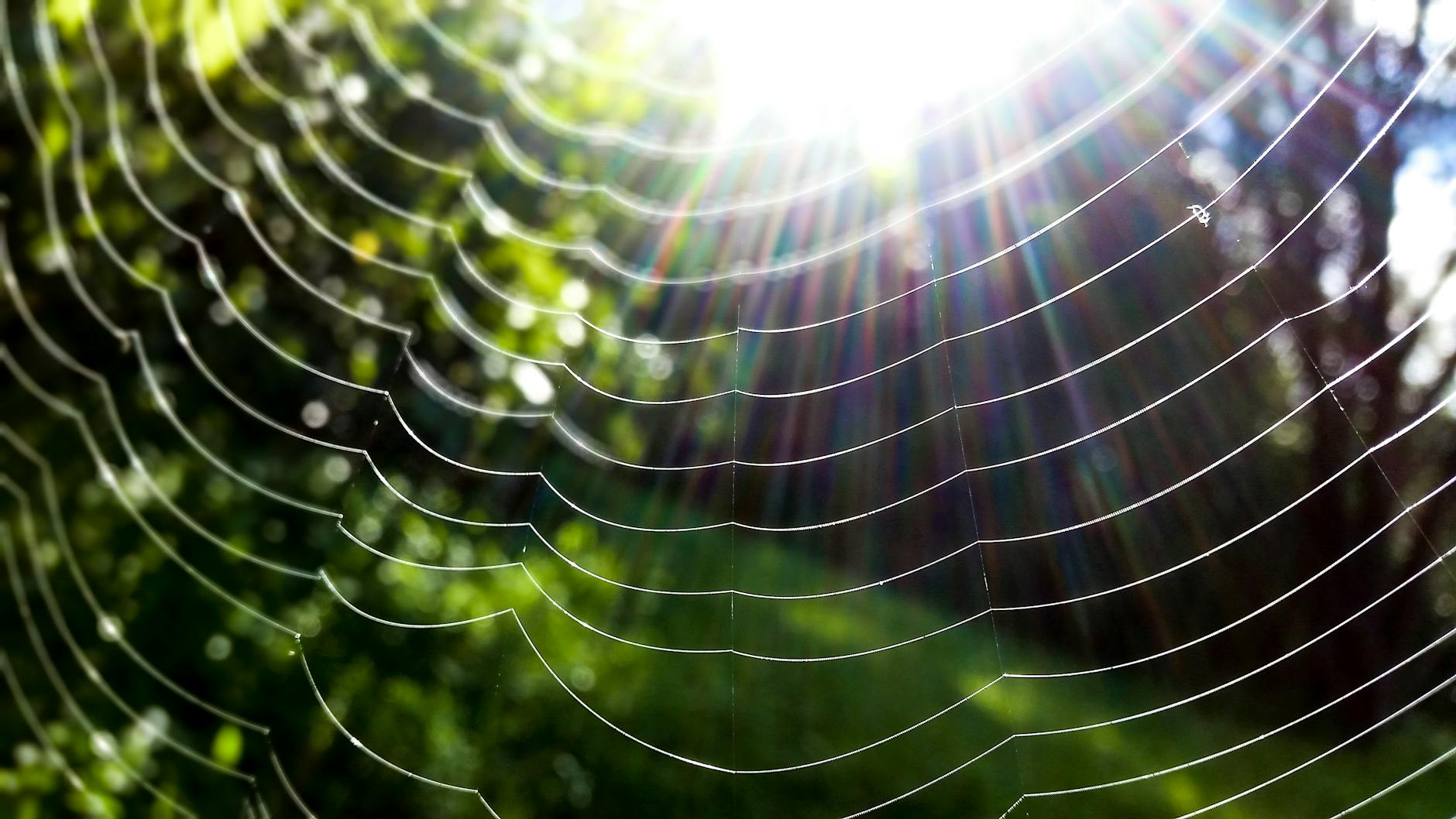
Strands of a spider's web, highlighted in the sunlight. There are trees and shrubs visible in the background.
Photo by Phil Kallahar on Pexels.com

They’re also associated with snares, webs, and trickery. Spiders who use webs to catch their food place them in places where they’ll be both efficient and unobtrusive — virtually invisible, until an unwitting insect (or unlucky hiker) bumps into them. Spiders who don’t use webs generally either rely on natural camouflage to hide them as they run down their prey, or conceal themselves and wait for the opportunity for ambush. In all cases, they are patient, diligent, and cunning.
This can be good for you, if you’re seeking to emulate the spider a la Robert the Bruce.
It can also be very bad, if you’re heading into a situation that may prove to be a trap.
As with all things, context is important when it comes to interpreting omens.

A close up of a jumping spider, on what appears to be a striped rug or blanket.
Jumping spiders are ambush predators. Photo by Skyler Ewing on Pexels.com

Spiders are also connected to resiliency. No matter how many times their webs are destroyed, they rebuild them. They get knocked down, and they climb right back up again.

To an extent, spiders are also symbols of healing and rebirth. A spider can lose a leg or two and (if they survive the injury without losing too much hemolymph) will regrow them with subsequent molts.

Not a lot of people like spiders. Personally, I was never a fan of them — they terrified me as a kid. Eventually, I forced myself to take an interest in them, their body language, and their habits. I’m glad I did, because they’re really beautiful, fascinating, helpful creatures when you get right down to it.

animals

The Magical Meaning and Symbolism of Spiders

(If you’re arachnophobic, you probably want to skip the whole “symbolism of spiders” post. Don’t worry — I’ll be back next week with some more non-spider related lore.)

This is Matilda. I was out checking for more ground candy (aka, the delicious maypops that fall off my porch’s vines when they’re ripe), when I happened to look up and realize that I was face-to-face with a massive orbweaver (Neoscona species).

A close up of a large, hairy orb weaver perched in the center of a web.

Later that afternoon, once she’d had a chance to build a sizeable web right across the upper part of my window, I very carefully opened the window to snap multiple pics of her from a variety of angles.
It was then that I realized that there was a fire truck and an ambulance in front of one of my neighbor’s houses.

(Note to neighbors: THERE WAS A COOL SPIDER. I PROMISE THAT I’M NOT A MANIAC.)

(Also the emergency vehicles left pretty uneventfully, so hopefully everyone is okay.)

*Ahem*

Anyhow, this is the time of year when sightings of these guys peak around here. So, in honor of Matilda, I figured now would be a good time to write a bit about the magical meaning and symbolism of spiders.

In Greek mythology, the first spider was a woman named Arachne. She was a marvelously talented weaver — allegedly better than Athena herself. She challenged her to a weaving contest, and Arachne’s weaving was, indeed, very beautiful. However, while her weaving was flawless, Arachne had chosen to create a tapestry mocking the gods. (In some tellings, Athena is simply enraged by Arache’s pride.) Angered, Athena transformed her into a spider.

A close up of a jumping spider's face, showing their fuzzy pedipalps and big, black, almost puppylike eyes.
Photo by Pixabay on Pexels.com

In Catholic Christian mythology, the symbolism of spiders relates to faith. Saint Conrad of Constance, a German bishop, is said to have seen a spider fall into his cup during Easter Mass. While it was widely believed that all spiders were venomous (or, in this case, poisonous) Conrad drank the wine and trusted in his faith to preserve him.

Probably the best-known spider in mythology is Anansi, from the Ashanti people. He’s viewed as a cunning trickster figure. He’s so prominent, that he gave rise to the term “spider tales,” which encompasses several kinds of story within the Ashanti oral tradition.

In North America, spiders were viewed as either trickster figures, or ingenious creators. The Hopi and Diné people have Spider Grandmother, who plays a key role in the creation of the world.

Another close up of a very cute, fuzzy white jumping spider.
Photo by Pixabay on Pexels.com

In Peru, spiders frequently appear in ancient artworks (including the famous Nazca lines). While the specific significance of these depictions is often uncertain, it is known that the Cupisnique people had a spider deity associated with weaving, nets, war, and power.

In Australia, spiders sometimes appear in art and as clan totems.

The people of Kiribati Island and the Republic of Nauru, of Micronesia, both have spider figures that play a central role in their creation mythology.

In Japan, there are spider-like yokai called ogumo, yatsukahagi, or tsuchigumo. Tsuchigumo translates as “earth spider,” but likely didn’t originate as a spider at all. Historian Yoshiyuki Takioto put forth the idea that tsuchigumo were local chieftains (described as short people with long limbs, who lived in caves, eschewed civilization, and disregarded the imperial court), These chieftains were most likely shamans.
The yokai tsuchigumo first turns up in medieval literature, as a spider-like figure 60 meters long. When killed, the heads of almost 2000 people fell from its belly.

In Scotland, spiders were an inspirational figure during the First War for Scottish Independence. After a series of defeats, Robert the Bruce hid in a cave. While there, he watched a spider struggle to climb a strand of silk. Despite failing over and over, the spider eventually succeeded. This gave him the encouragement he needed to go back into battle and eventually win Scotland’s independence.

A slender black and yellow spider perched on its web.
Photo by Pixabay on Pexels.com

It’s often said to be bad luck to kill a spider that you find in your home. This has a (perhaps unsurprising) grain of truth to it — killing spiders in your house means that you’re opening yourself up to all of the much less desirable things that spiders eat. If an infestation of flies or ants looks like bad luck to you, then you might want to heed this bit of folklore!

The symbolism of spiders in dreams includes:

  • Feeling like an outsider — like a spider in a web in the corner of a room.
  • Wanting to be an outsider.
  • A protective force.
  • A strong or overbearing feminine figure.
  • Rewards for one’s hard work.
  • Unpleasant relationships. Relationships one can’t escape, a (usually feminine) person who is draining one’s energy, a conflict with an overbearing person.

However, dreaming specifically of a rainbow colored spider is said to point to a situation that you probably want to avoid.

Spiders have far-reaching symbolism. Across cultures, they’ve been everything from tricksters to cosmic creators, to the unfortunate fate of the proud.

In general, these animals are associated with industry and creativity. Spider webs come in an astonishing variety of shapes and sizes — from small, silk-lined burrows to impressive constructs that are as delicate as they are massive.

Strands of a spider's web, highlighted in the sunlight. There are trees and shrubs visible in the background.
Photo by Phil Kallahar on Pexels.com

They’re also associated with snares, webs, and trickery. Spiders who use webs to catch their food place them in places where they’ll be both efficient and unobtrusive — virtually invisible, until an unwitting insect (or unlucky hiker) bumps into them. Spiders who don’t use webs generally either rely on natural camouflage to hide them as they run down their prey, or conceal themselves and wait for the opportunity for ambush. In all cases, they are patient, diligent, and cunning.
This can be good for you, if you’re seeking to emulate the spider a la Robert the Bruce.
It can also be very bad, if you’re heading into a situation that may prove to be a trap.
As with all things, context is important when it comes to interpreting omens.

A close up of a jumping spider, on what appears to be a striped rug or blanket.
Jumping spiders are ambush predators. Photo by Skyler Ewing on Pexels.com

Spiders are also connected to resiliency. No matter how many times their webs are destroyed, they rebuild them. They get knocked down, and they climb right back up again.

To an extent, spiders are also symbols of healing and rebirth. A spider can lose a leg or two and (if they survive the injury without losing too much hemolymph) will regrow them with subsequent molts.

Not a lot of people like spiders. Personally, I was never a fan of them — they terrified me as a kid. Eventually, I forced myself to take an interest in them, their body language, and their habits. I’m glad I did, because they’re really beautiful, fascinating, helpful creatures when you get right down to it.

animals · life

Pagan Pride 2024! (In which I meet some very handsome lads.)

This past Saturday was Pagan Pride at the Unitarian Universalist Congregation of Frederick. If you’ve never been, I highly recommend it — there’s live music, workshops on a variety of subjects, food, and tons of vendors of all kinds of cool stuff!

(I, personally, came away with a mug, some artwork, a mushroom-shaped incense holder, a pin, a set of earrings, dried organic lavender, magnesium butter, a really cool jar shaped like a skull, a hand-dyed and block printed bandana, and a display of a mossy log set with three corked test tubes. The stump in the front yard has been putting out a ton of interesting mushrooms lately, and I’ve been dehydrating what I can identify. I’m looking forward to displaying them once they’re done!)

This year, I decided to skip the workshops in favor of hanging out with friends (actually, many of the friends that I just saw at the Mabon celebration), listening to music, and eating delicious sorbet. The Street Cow‘s Cowabunga sorbet pop is non-dairy, real fruit puree, and awesome.

An image of a series of moon-shaped suncatchers. They're all made of copper wire, decorated with gemstones, brass charms, and crystals.

Also, I met some very handsome lads.

This is Spectre.

An image of a snowy owl, with his beak agape.
Spectre is fine, it was just toasty out and he is a young boy who is very excited to see new things.

He was part of Avian Encounters, a group of falconers who provide people with the chance to learn about and see raptors close up. These are all trained birds, kept by licensed professionals who know how to properly feed, care for, and mentally engage them. Getting to see birds like this up close is a rare and fascinating experience.

They also had a little screech owl, an American kestrel…

And (oh, be still my heart) a gorgeous African pied crow.

A close up of an African pied crow, showing their distinctive white chests and backs. They look like black crows that are constantly wearing little white sweater vests.

“May I take a picture of him?” I asked, barely able to contain my excitement.

“Sure! If you make a donation, you can also hold him and take a picture.”

!!!!

A photo of the author with the pied crow perched on their arm.

Needless to say, I did. He sat still for a short video (the picture to the right is a still), before hopping back to his handler. The whole time, I gushed to him (like a starstruck dork) about how pretty he is.

Human celebrities are all well and good (I saw one of my favorite musicians not long ago and managed to be surprisingly normal about it). A really cool bird or bug, though? I will absolutely lose my mind.

Pagan Pride is delightful every year, but this year was particularly special. I really hope Avian Encounters is there next year, too — the birds are all beautiful, alert, and well cared-for, and it’s a great opportunity to learn more about them and get some close-up reference photos for paintings.

life

I could never have planned a better prank than this.

I’m not really a fan of pranks, chiefly because most of what the internet has come to consider “pranks” aren’t actually funny.

But oh man, did fate line up some extremely perfect timing yesterday.

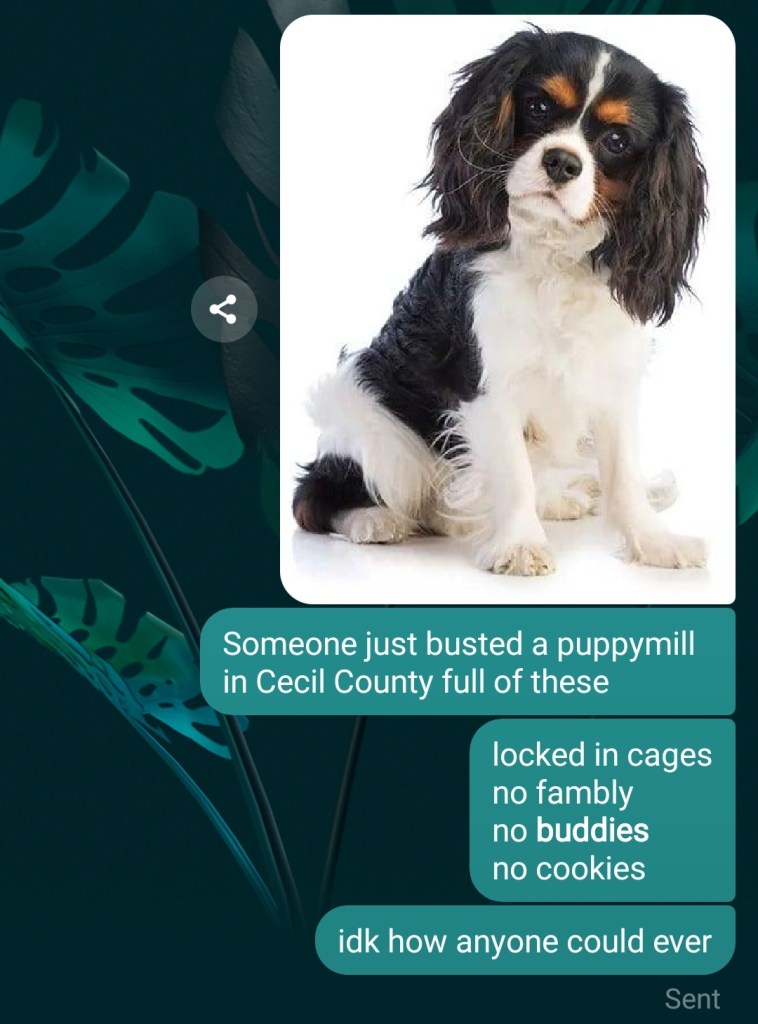
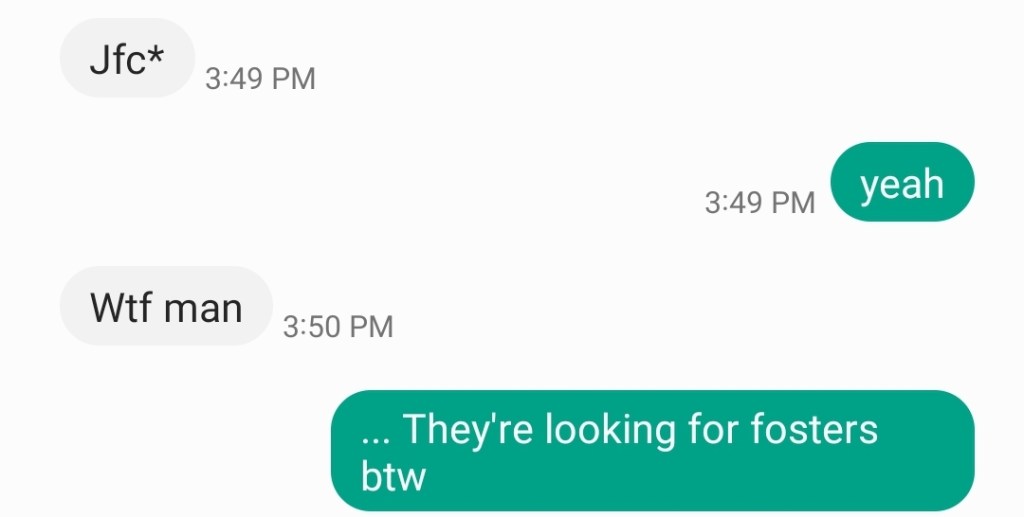
My Handsome Assistant was in office. I message him frequently — usually not anything of consequence, just what the cats did, pictures of cool bugs I found, etc. Earlier in the day, I saw a notice about a puppy mill bust in Cecil County. 23 dogs, mostly Cavalier King Charles Spaniels, bichons, and shih tzu, are currently looking for foster homes while rescues sort through their assorted health problems, issues due to neglect, and so forth. Animal neglect and abuse upset me, so I vented to him about it for a bit.

(Also, I was maybe kind of hoping I could tug on a few heartstrings and get him to agree to try to foster.)

Anyhow, a half hour later, my phone buzzed.
The camera system detected “a pet” in the front yard.
I do not have pets in the front yard.

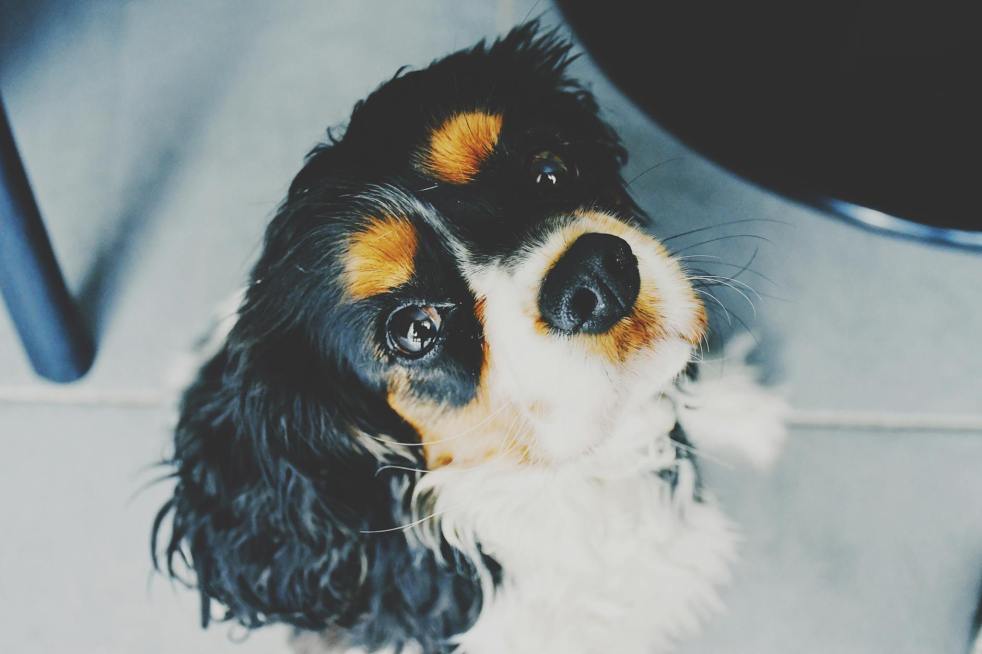
Nonetheless, there, on the camera, was an adorable little fluffy white dog snuffling around the front porch. I dropped my phone and hurried outside to get a better look — was he alone? Lost? Were his people close by? Was he at risk of getting stuck in the fence? Running into the street? Being captured by owls?
There’s a nest of ground wasps — what if he got stung?

Sure enough, there was a little white dog hustling around the yard. I called to him and he happily trotted over, wagging his tail. He seemed outgoing and relaxed, so I let him sniff my hand and gave him an ear scratch. He also had a collar and tag, so finding his family should’ve been no problem.

And it wouldn’t have been, had I not left my phone inside.

Dilemma.

Not wanting to lose track of him or have him run into the street/be captured by owls/eat a bunch of wasps, I was torn for a moment.
There was only one thing to do.
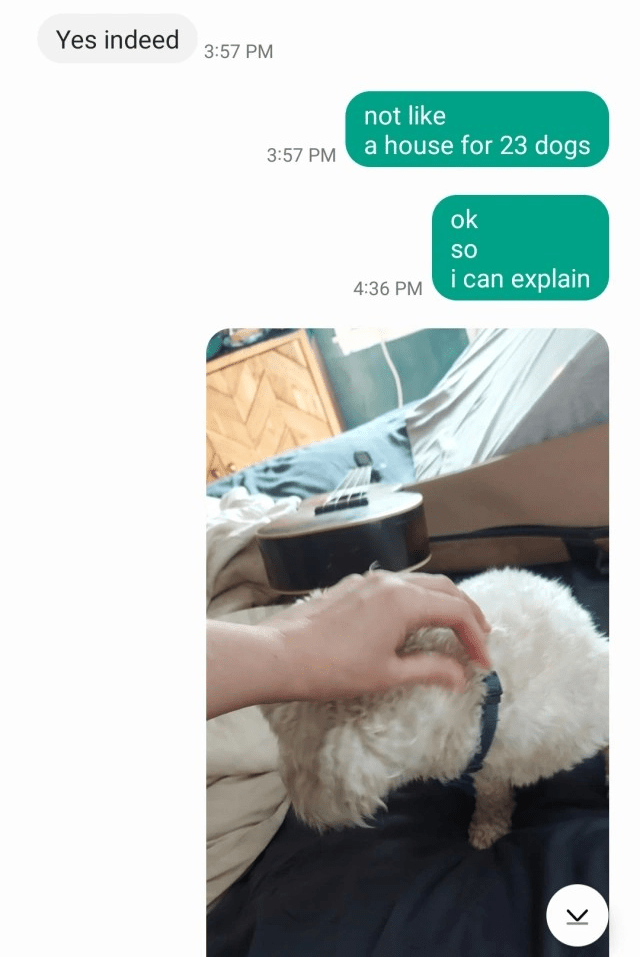
I didn’t have a leash or a way to secure him in the meantime, so I gingerly scooped that little dog up and carried him inside to hang out while I figured out where the #$%& I left my phone.

He seemed perfectly okay with this. I set him down, he sniffed around a bit and wagged his tail, all, “Hello! Yes! Okay!”

That was when I had a brilliant idea.

Phone in hand, I snapped a few pics, sent them to my Handsome Assistant along with an “I can explain,” and brought the little guy back outside to call his family. They came over to pick him up not long after and were very nice. He hung out on the porch with me until then, getting pets and being extremely chill and good-natured about everything.

Honestly, as far as ways to meet your neighbors go, this is definitely one of the better ones.

It’s also a great way to confuse and startle your spouse when they know you have a soft spot for animals and are given to hypomanic states.

Seriously. I couldn’t’ve planned it better.

If you live in the Maryland or Delaware area, there are still several dogs looking for foster homes. They’re coming from a puppy mill, where they’ve been confined, underfed, overbred, and never offered the opportunity to be part of a family and just be dogs. If you have the ability to open your home to one of them (or one of any number of other dogs currently awaiting adoption), please consider filling out Renee’s Rescues’ foster application.

Even if you’re not in MD or DE, there are always animal rescues looking for help with fostering. If you have the time and love to give, reach out to your local organizations to find out how you can help!

animals · Uncategorized

The Magical Meaning of Opossums

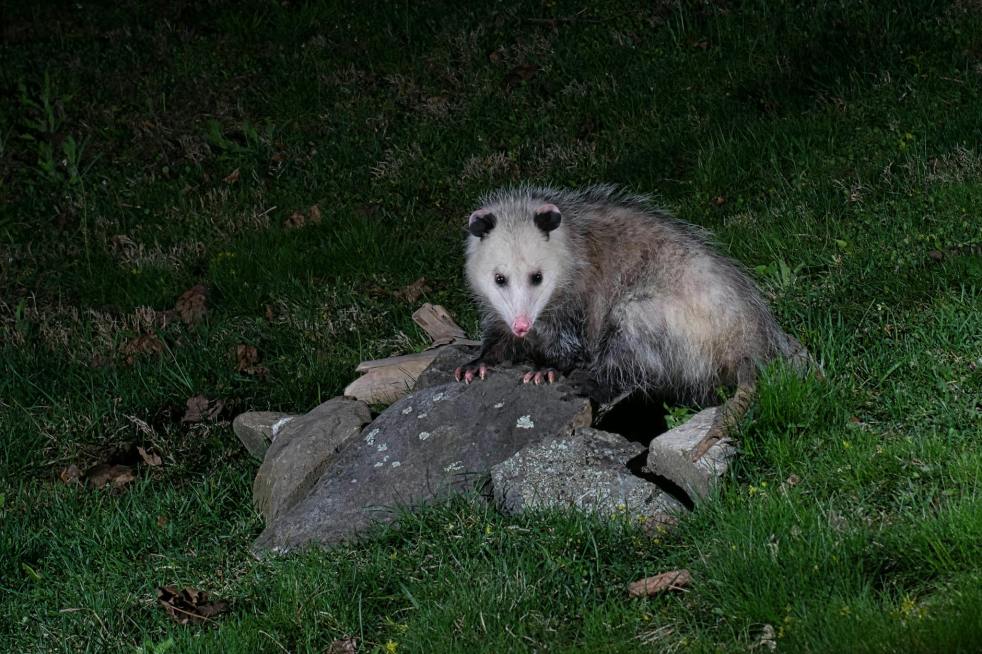
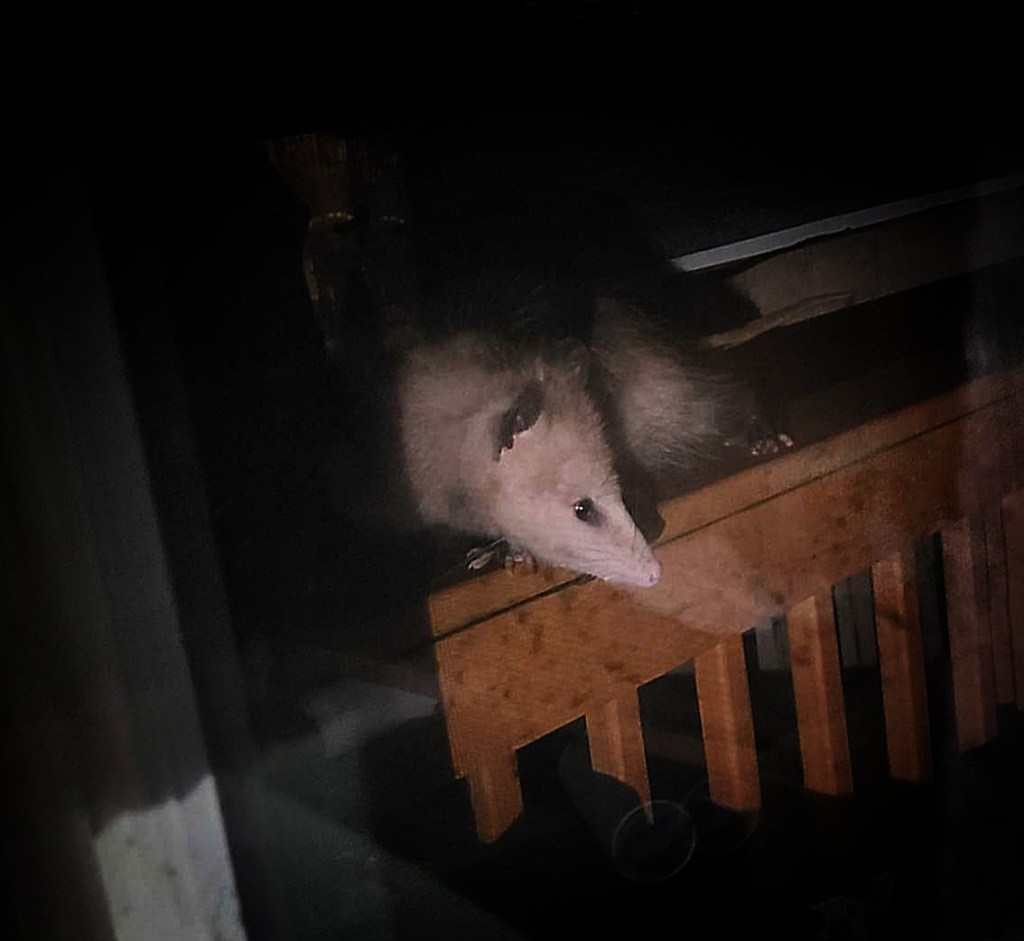
We have a marsupial!

He appeared on the deck railing at 3 AM a few weeks ago, trundling along like one of the ROUS from The Princess Bride. (Which is to say, he moved like a very small man in an opossum suit.) I was so excited I almost shook my Handsome Assistant awake.

When he returned the next day to snuffle around the platform feeders, I actually went outside to offer him a small quantity of the kibble and dried bugs I use to feed the crows. He seemed pretty relaxed about the whole thing — just kind of leaned back and gave me a look that distinctly said, “Are you @#$% serious right now?

It was when my Handsome Assistant and I were watching Hellier a few days later that I realized that I’d never survive a monster movie. If I lived in Kelly, KY, and encountered the Kentucky Goblins, I would 100% have tried to give them Capri Suns and crackers and ended up 1000% dismembered inside an abandoned coal mine.

But my impending mortality at the hands of something I’m trying to give snackies to is neither here nor there. Since there is an opossum, I thought I would explore the magical meaning of these creatures.

The Virginia opossum is the source of the name “opossum.” It comes from a Powhatan word meaning “white animal,” which derives from a Proto-Algonquian word meaning “white dog.” The Spanish words for opossum, tlacuache and zarigüeya, derive from the Nahuatl tlaquatzin and Guarani sarigweya.

There is a large difference between opossums and possums (and Possum). Opossums live in the Americas, have skinny tails, and are grayish with white faces. Brush-tailed possums are from Australia, have fluffy tails, and are brownish. They are unrelated. The kind we have where I live, the Virginia opossum, is a member of Didelphimorphia (specifically, Didelphis virginiana).
Some say that, due to a colossal mix-up, we ended up with Australia’s possum and they ended up with ours. For the purposes of this post, I’m going to focus on the American opossums.

The Virginia opossum. Photo by Skyler Ewing on Pexels.com
The Australian brush tailed possum. Photo by Charles J. Sharp, CC BY-SA 4.0 https://creativecommons.org/licenses/by-sa/4.0, via Wikimedia Commons.

It’s often said that opossums “play dead” when confronted with a threat. In reality, they have a few different responses. They’re more likely to attempt to flee, or puff themselves up, hiss, and try to appear more threatening. In some situations, an automatic anxiety response may cause them to feign death, during which their heart rate and breathing slow, they lie motionless, and they emit a foul-smelling fluid from their butts.

It’s also often said that opossums are voracious tick eaters. This is not true. They are opportunistic omnivores, and they do eat a ton of insects, but the study that gave rise to this myth involved opossums in a laboratory setting during which they didn’t have much other choice. (It’d be like covering a human in peanut butter, locking them in a room for several days, and then saying that their diet primarily consists of nut spreads.) When the stomach contents of wild opossums were analyzed, there actually weren’t any ticks in there.
Still! Even though they’re not the tick-decimating forces of nature folklore paints them to be, they’re a vital part of the ecosystem that helps control numerous other problem species. They’re basically organic garden pest control that screams at their own butts.

Interestingly, opossums aren’t often found in indigenous American folklore. When they appear in North American lore, they’re usually buffoonish characters. (In fact, their feigning death is often portrayed as stemming from embarrassment!)
In South America, however, opossums are clever tricksters. Some groups even regard Opossum as a Prometheus-like figure.

In modern symbolism, opossums are seen to represent cleverness. This may come from the belief that they deliberately choose to “play dead.” (They also have really weirdly dexterous little paws and opposable thumbs on their feet.)

They’re also widely regarded as symbols of patience, perseverance, and survival against the odds. They’re slow-moving and very deliberate animals, and, when in a “feigning death” state, can remain motionless for hours to wait out predators.

Sometimes, opossums are viewed as symbols of rebirth since they seem to come alive after playing dead.

Dreaming of an opossum is believed to represent an illusion. Something may not be what it appears to be. It can be a sign from your subconscious that a situation isn’t right, and you need to look closer to find the truth.

Opossums are commonly associated with the Moon and lunar magic. They’re nocturnal, and their silvery fur and pale faces connect them to these energies.

Personally, I don’t care if Francis (by the way, I named the opossum Francis) never eats a single tick. I’m very happy to share this garden space with him. He is my precious garbage son and I love him very much.

animals

The Return of Boink!

Remember Boink? The weird little scrunglemuppet who spent an entire summer living on top of my shed?

He’s back. At least, I’m pretty certain sure it’s him, though he appears able to fly now. This crow has a distinctive appearance and a set of behaviors I had previously only observed in Boink, so I am somewhat confident in my assertion that The Shed-Dwelling Scrunglemuppet Has Returned.

Last year, he spent evenings roosting in the big apple tree, and mornings and afternoons sitting on top of the shed. When I went outside, he’d run to the far side to “hide.” If he heard the back door close, his little head would pop up over the shed’s roofline to see if I was still there. If not, he’d hop his way over to the feeders to grab some food before the other crows came.

Now, he appears with the rest of the family. He still appears to be pushed away from the food and scolded, and he still does the same goofy little run, but he’s at least better able to get away from predators. I don’t think there are many animals who would go out of their way to eat a Boink, but there are certainly creatures who would take the opportunity to hunt a land-locked crow.

Two crows at perched on a deck railing near a feeder. One is larger and sleeker. The other is smaller and distinctly scrungy.

Boink still has to be a bit opportunistic when he eats. He’s still scrungy. His tail is still kind of karked up, and I don’t think he’s capable of not looking bedraggled, but his flight feathers are back and that’s what’s important.

Good job, scrunglemuppet.