life

The Buzzcut: One Year(ish) Later

The New Year’s day before last, I shaved my head. The whole thing, right down to the skin. I did it for a variety of reasons — some magical, most mundane. Now, after a year (and change), how does it feel?
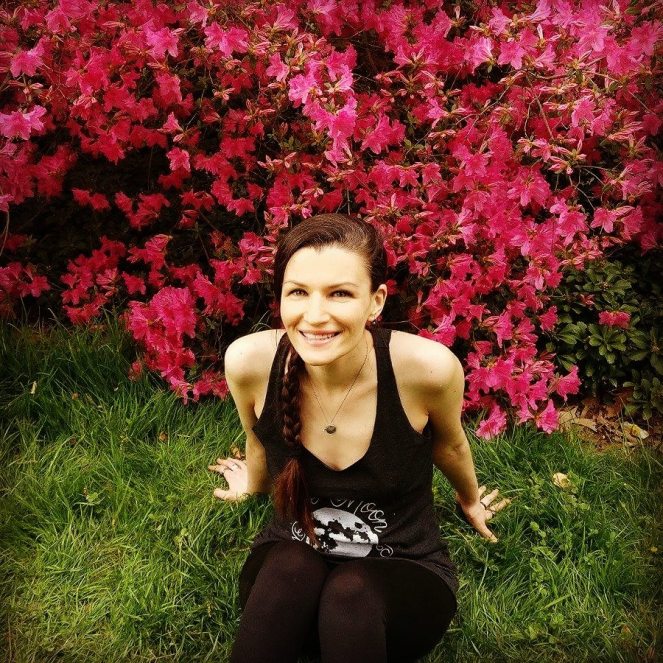
17952710_10211841750497007_6599383343916337071_n
Not shown: the picked-over patches hidden by that ridiculous part.

I’ve gotta be honest, I don’t regret it. I only regret not having done it sooner.

I don’t keep my hair as (non-existently) short as that first cut. Most of the time, it hovers between a #3 and a #5. I’ve debated allowing it to grow out again, but, every time, I hit about an inch in length and get the urge to buzz it again.

26240277_10214210989086491_5780526394462620721_o
Bald af.

It was a little tough to get used to, at first. I’ve almost always had very long hair. It was part of how I mentally pictured myself. Even in dreams, I had long hair. A big part of why I cut it was trichotillomania — after two decades of feeling through my hair, looking for all of the strands that were too thick, to coarse, too curly, or otherwise too different, and then pulling them out, I was ready to stop. I also knew I didn’t want to go the route of buying hair fiber sprays or putting in expensive extensions that’d only end up damaging what hair I had left. Unfortunately, like a lot of things on the obsessive-compulsive spectrum, it’s not that easy to just up and quit trich. Buzzing it short removes not only the temptation, but the ability to grasp hairs and pull them. As a “fix,” it’s a bit hardcore… but it works.

Sometimes I struggle with the idea of keeping my hair short. Most of the people — men, women, or otherwise — who informed my standard of beauty growing up had long hair. The typical image of the witch in popular imagination is a woman with long, wild hair. Some spells even call for unbinding and shaking out hair, using hair as a taglock, braiding hair together with other objects, or wearing items in hair. Some traditions call for keeping hair bound or covered. I have never been a part of one that did, but I kept my hair bound anyway — I shed like a golden retriever, so it helped keep my hair off of things. (It also helped keep it out of other people’s hands. No sense in giving someone an easy way to focus a jinx on you, you know?)

On the flip side, a large component of magic is embracing change and releasing what no longer serves you. Honoring sunk costs or holding on to things that do nothing for you only serves as an energy sink that detracts from your ability to grow, create, and bring in things that don’t suck the joy out of living. With that in mind, and considering how much mental energy it took to go through the hair-pulling process, obsess about it afterward, try to hide the evidence, and keep my hair in decent shape, I don’t at all regret shaving it.

Will I let my hair grow out again? I don’t think so. I like how it looks short. I love how little care it requires. I like that I can make bars of shampoo last much longer now. I love that I never have to worry about it being dull, or limp, or frizzy, or unmanageable. Not having long hair has taken a tremendous load off of me.

Strangely enough for someone who’s had long hair pretty much her whole life, I feel more like myself with little-to-no hair at all.
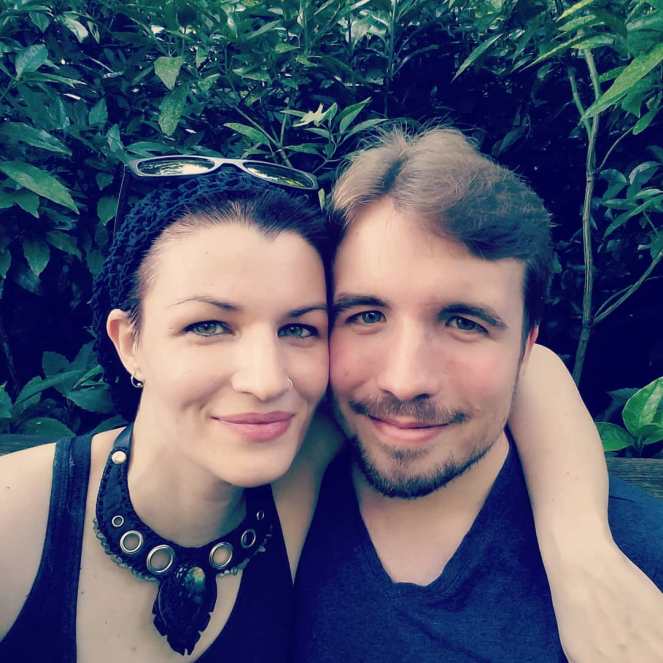
40535922_10216173871437323_8889769613303218176_o
I still like to wear hats, though.
Plants and Herbs

Twice-Blooming Christmas Cacti?

I have a lovely pair of Schlumbergera. They used to live on the windowsill in my bathroom, where they gave me pretty, bright white blooms with hot pink pistils every winter. I looked forward to seeing them every year — individually, the flowers themselves don’t last very long (only about a week per bloom), so it was a little window of beauty in the middle of the cold, gray winter season.

Schlumbergera bridgesii are better known as Christmas cacti, and for good reason — they flower in December. It’s always exciting, watching the little buds pop out of the end of the flat, spiky-edged leaves, growing and lengthening until the flowers finally burst forth. December rolls around, everything else is in the midst of dormancy, but these cacti happily put out flowers anyhow.

Yep.

Every December.

You know, when Christmas happens.

cactusflur
If you notice the leaves don’t really resemble the smooth, round leaves of other Christmas cacti, that’s because holiday cacti nomenclature and labeling makes no sense. This one was labeled as S. bridgesii, which is actually S. buckleyi, and doesn’t look anything like most other S. buckleyi cultivars I’ve seen. ¯\_(ツ)_/¯

So, someone tell me what’s up with this nerd. 

See, not long ago, I moved both of my plants into a warmer, brighter window, on the top shelf of my new plant shelves. Now, I’m not sure what triggers S. bridgesii to flower, exactly — shortening daylight hours? Cooler weather? I don’t know. There are ways to force it into dormancy and trigger flowering, but I didn’t do anything out of the ordinary before moving it. I didn’t even restrict light or water.

I’m not complaining, of course — this little plant’s putting out more flowers now than it did two months ago. It looks healthy and vibrant. The cactus right next to it doesn’t have a single bud on it, but it’s also not really supposed to.

Is it possible for S. bridgesii to flower late, if it didn’t flower during Christmas? I’d say so. Is it possible for one to flower more than once a year? Apparently! Unfortunately, I don’t know exactly what triggered this one to start putting out blooms now, but I’m going to keep an eye on both of them and see if the other decides to put out more buds. Maybe take a few cuttings and try some experiments.


crystals · Witchcraft

5 Ways to Cleanse “Difficult” Crystals

So, the bog-standard crystal cleanse is pretty simple: immerse it in salt water, hold it under running water, cover it in dry salt, or stick it in the sun. Easy, right?

There’s only one problem: those are very efficient ways to accidentally destroy a lot of different minerals. Your stones might come out energetically cleansed, but they also might be much worse for wear. (Cleansing selenite, for example, definitely shouldn’t involve water.)

It’s important to remember that, beneath that shiny surface, there’s a ton going on in a crystal in a molecular sense. Some crystals’ color and structure depends on water molecules bound up in their matrix, like opals. Some contain soluble material, like selenite. Some might leach toxic compounds into water when soaked, like pyrite. Some might just end up fading on you — especially translucent crystals, like amethyst or rose quartz.

So, how do you cleanse crystals that won’t survive regular cleansing methods?

Continue reading “5 Ways to Cleanse “Difficult” Crystals”

Plants and Herbs

Fixing Etiolated Succulents

It’s almost spring, and the unseasonably warm weather has my plants all confused. I’ve got a new basal shoot on my nepenthes, my cacti are putting out new growth, my pothos and aloe are threatening to take over my apartment… So, even though it’s a bit early still, I figured now was a good time to take inventory and see who’s going to need some pruning and re-potting. Unfortunately, it looks like the lack of winter sunlight has left some of my younger plants in a bit of a state, and they’re going to need some “fixing.”

Why is fixing in scare quotes? Well, unfortunately, once a plant is etiolated, there’s really no going back. A stretched-out echeveria is not going to become a neat, compact rosette again, no matter what you do for it.

That doesn’t mean all hope is lost, though.

Let me start from the beginning.

Continue reading “Fixing Etiolated Succulents”

Neodruidry

Blessing Rite + S.J. Tucker Solo Show

This week was a busy one — fortunately, I didn’t actually have to leave my apartment for most of it!

Tuesday, I got to enjoy a solo show by S.J. Tucker. It was a pay-what-you-want online concert, and honestly a lot of fun. I don’t often get to go to concerts myself (IH is murder on my desire to hear things), so it was awesome to be able to support an artist I enjoy and experience their work in a place where I knew I’d be comfortable. There’s another concert coming up on the 19th, check out S.J. Tucker’s page on Concert Window for more details.

Wednesday, I took part in a streamed blessing ritual. As a solitary practitioner, I’ve had to build my rituals around the outline given by ADF without really having a live example to draw from. I’ve developed a ritual pattern and wording that’s comfortable to me (though I would like to re-write some to make it more poetic and give it some more “flow”), but I’m still curious about how other people do their thing. The blessing ritual was a great opportunity to interact with other Pagans in a warm, friendly atmosphere — again, without having to actually go anywhere.

The ritual structure itself was familiar, aside from a few things. The person who hosted the ritual silvers their well differently from me (I use the same, purpose-dedicated silver Mercury dime each time, as opposed to using a new silver bead each time), and draws three omens instead of one.

One thing I’ve noticed about performing rituals is that I always end up very emotionally affected by the omen drawing phase. There are only a few occasions where I’ve ever gotten “bad” omens, and I could almost immediately trace them back to their causes. I talked to my S.O. about it afterward, describing how I invariably get misty-eyed when it comes time to draw the omen and see what blessings are offered.

Really, I think it amounts to the feeling of being seen.

I use the Animalis os Fortuna tarot deck for my ritual divination. It functions like a standard tarot deck, but the artwork and symbolism on the cards themselves make them open to interpretations that, to me, seem to mesh better with ritual divination than most other decks. I’m not fluent enough in runes or Ogham staves to use those yet, so, tarot it is. Since I use tarot, there are a lot of cards, and, therefore, a lot of opportunities to draw something seemingly irrelevant to my situation. This never happens.

I don’t mean in an interpretive way, either. I don’t end up with ambiguous cards that I can sort of apply to my situation if I really think about them. Whatever cards I draw are always a giant, glowing beacon pointing to whatever is on my mind, or whatever I need most. It’s a very, very validating feeling.

In the streamed ritual, the first omen drawn was kenaz. Now, kenaz and I go back about a year — to the Imbolc before this past one, actually. I hadn’t joined ADF yet, but I did decide to do a small ritual to honor Brighid. A lot of my rituals involve a trance state (something that has informed a lot of my artwork) and, during this particular one, I was shown a symbol drawn in a slab of wet clay. I didn’t recognize it, but I was intensely curious and did a lot of searching. As it turns out, it was the rune Cēn from the Anglo-Saxon futhorc: ᚳ.

Cēn (or kaunan, or kaun, or kenaz) is a torch. It’s the healing fire, and the fire of the blacksmith’s forge. It is passion, desire, vitality, and creativity. It’s one I’ve meditated on a lot in the year since, and having it come up again now was a very good feeling.

I don’t know if I’ll find a local grove with the same ritual structure and overall guiding principles as ADF, but I’m glad to have found an avenue to at least take part in rituals with others.

(Speaking of creativity, there’s a new post on my art blog about some stuff I’ve been working on!)


Witchcraft

“But why are so many witches poor?”

You’d think that, if magic really had the ability to bring you the things you want, you’d never see a witch who was poor, or sick, or wanting for anything. They’d just be a moon phase and a candle away from getting their heart’s desire, right? Google the words “prosperity spell,” and you’ll get — no joke — over 11 million results. If these spells really worked, wouldn’t you only need one? If they were really worthwhile, wouldn’t we have a lot more lottery winners walking around?

Unfortunately, it’s more complicated than that.

There are a lot of reasons why magic doesn’t really work as a “burn candle, ????, profit” kind of deal. Like:

Continue reading ““But why are so many witches poor?””

Books · Neodruidry

Let’s Read: A History of Pagan Europe

Note: This post contains affiliate links to the book(s) I mention. These allow me to earn a small finder’s fee from Wordery.com, at no cost to you. Thank you for helping to support writers, publishers, and this site!

Prudence Jones and Nigel Pennick’s A History of Pagan Europe was originally recommended to me years ago, and I pretty much just read it for the fun of it. When it popped up on the approved reading list for the ADF dedicant path, I realized it’d probably be a good time to give it a closer look. It’s a rather dense read (though still an enjoyable one), and, considering the subject matter, it takes a couple of passes to really absorb all of the information presented.

paganeurope

Jones and Pennick do an excellent job of connecting dots between disparate cultures, explaining each area’s stages of religious development in easy-to-understand terms. (The convergent evolution of the concept of sacred wells/trees/etc. between Mediterranean and Celtic cultures was especially interesting.) I particularly enjoyed the analysis of Celtic culture pre-Roman contact. There’s really a dearth of information available on this period — it seems like a lot of what we know is via the Roman conquest itself. Because of Rome’s relatively relaxed attitude toward outsider religions, many aspects of Celtic religion were preserved (albeit in an altered form) through syncretism with the dominant religion of Rome. The Druids disappeared. Their symbols, deities, and sacred sites, however, survived.

(Ultimately, it was this attitude that led to the persecution of monotheists — Rome didn’t particularly care what religion anyone was, so long as every citizen honored the ruler’s personal deity. It was believed that this helped preserve the state itself, and thus failing to do so was tantamount to treason.)

A History of Pagan Europe is a bit dry, as many books of this nature are, but it’s a book I find myself returning to now and then. There’s a lot to take in, and, as a Pagan, I feel that sources like this are important — simple, factual, without a lot of the editorializing you find in books geared toward a new-age or Pagan audience.


life

Let’s eat paste!

Okay, not really.

I haven’t written much lately, mostly because of two reasons:

  1. I was incredibly sick and felt like death, and
  2. It’s almost time for me to turn in all of the essays I’ve written over the past year for evaluation by whoever at ADF is in charge of that kind of thing.

So, in essence, I haven’t written much because I’ve been busy writing in between bouts of coughing and other assorted misery. I have done some other creative-type things, though, which is awesome. I’m in the process of moving my altar (hopefully to a place where cats can’t happen to it), too.

Anyway, you’re probably wondering what the paste bit is about. Let me explain.

Continue reading “Let’s eat paste!”

life

DIY Brain Chemistry

I’ve been doing a lot of reading.

I don’t want to call it “research,” because looking up a bunch of studies isn’t really the same as designing an experiment or compiling a meta analysis, but it’s a lot of reading nonetheless.

See, for years, I’ve been trying to find ways to mitigate some Brain Things. It isn’t purely panic disorder, because there are some very evident physiological aspects to that aren’t really adequately explained by anxiety. It also isn’t purely physical, either.

The first doctor I ever discussed it with was my pediatrician. I was thirteen, had begun experiencing regular panic attacks, and my mother was tired of it.

“It’s anxiety,” he said. And that was it.

It went untreated for years — I was told it was all in my head, that the liver absorbs adrenaline in under a minute (lol what), and there was no reason for any panic attack to last longer than that. This left me with two things:

  1. A raging, untreated panic disorder.
  2. A diagnosis of anxiety.

Getting diagnosed with anxiety is a curse in its own right, particularly if you’re medically female. Women’s pain is often ignored as it is, particularly for black women. If you have a history of anxiety and depression, it is downright impressive how many medical conditions it’ll get blamed for. (Like the time I was given SSRIs to treat a symptomatic hemangioma. Fun!)

Continue reading “DIY Brain Chemistry”

Blog · life

Living my best life is sucking the life out of me.

Its 2:00 in the morning, and I am writing because I have, once again, destroyed my sleep schedule.

Well, not just my sleep schedule.

I have idiopathic intracranial hypertension. It makes me forget things, feel crushing headaches every moment of the day, occasionally lose my ability to see, and want to sleep basically forever. Left to my own devices, I will sleep for twelve hours and still be able to take a substantial midday nap.

Such is life.

Unfortunately, this doesn’t allow me much time for anything else. This doubly sucks, because what time I am left is also devoted to coping with the headaches, dizziness, anxiety, depression, and other trappings of having a head full of surplus brainjuice. Showering is tiring. Clothes hurt. On a high-pressure day, even holding my head up is more than my neck can manage.

Continue reading “Living my best life is sucking the life out of me.”