animals · Plants and Herbs

Tooth Folklore and Magical Properties

The other day, my Handsome Assistant and I had the chance to watch the movie Moon Garden. It’s a beautiful, strange, surreal, very dark fantasy about a (very parentified) little girl who suffers an injury and falls into a coma. While she’s comatose, she has to find her way through an industrial horror landscape to make it back to her family. The entire movie is done with practical effects, and it has some of the most striking imagery — and villains — I’ve ever seen. Particularly the main antagonist: Teeth.

(Admittedly, I was a bit disappointed that Teeth turned out to be the only villain. The Mud Witch looked extremely cool and I would very much have liked for her to have a bigger role.)

Teeth is a manifestation of emptiness. An anthropomorphization of a chattering teeth toy and her grandpa’s dentures. Human teeth can also be transient — the little girl is at the age when she’d start to lose her baby teeth, and Teeth’s decayed-looking maw is an embodiment of neglect.

Outside of Moon Garden, teeth still have meaning and symbolism. They’re useful, beyond their biological function. They’ve been at the root of myth, legend, and folklore for as long as humanity’s had any of those things (or teeth, for that matter).

In the US, western Europe, and other areas with a heavily European influence, there’s the Tooth Fairy. When children lose baby teeth, they’re told to put them under their pillows. Then, at night, the Tooth Fairy is said to come to trade a little bit of money for the lost tooth.
(Traditionally, anyway. Today, some parents have moved away from giving money and give small toys, stickers, or other treats as “payment” instead.)
In Italy, the Tooth Fairy is a little mouse named Topolino. In France, La Petite Souris. In Spain and other Spanish-speaking countries, El Ratoncito Perez. In Scotland, it’s a white rat.

Finland has a modern figure (or figures) known as Hammaspeikko, or “tooth troll.” The tooth troll isn’t a Tooth Fairy like figure, though. Instead, it’s an explanation for dental cavities that comes from a 1949 Norwegian children’s book. Eating candy lures in tooth trolls, and these trolls drill holes in teeth. Luckily, they can be scared away by brushing.

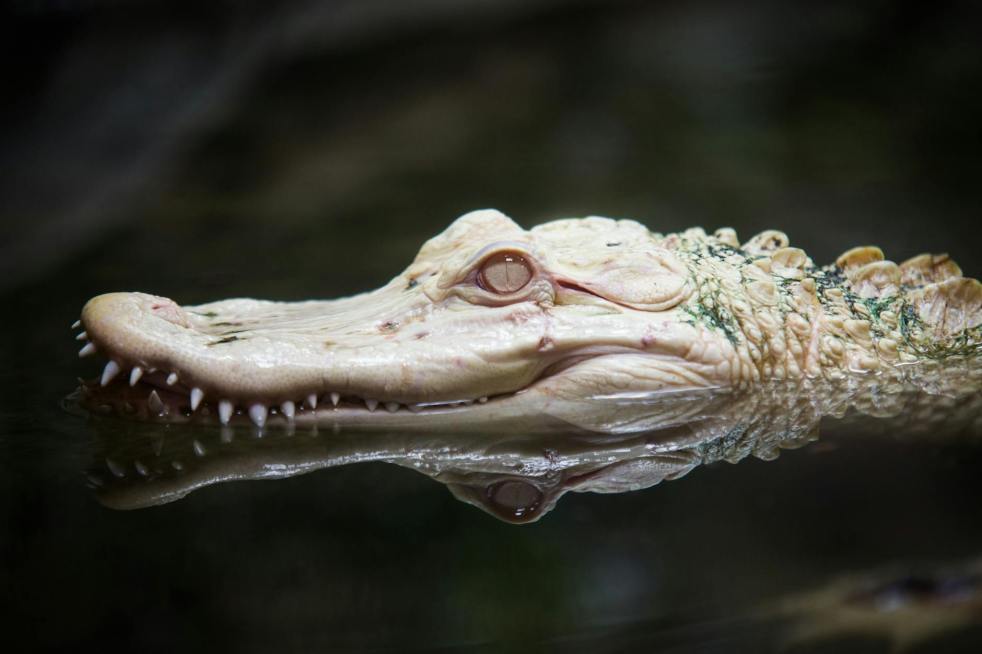
Close up of a mugger crocodile in Bangladesh.
He’s grumpy because he’s got all them teeth and no toothbrush. Photo by RatuL CR♠️ on Pexels.com

Interestingly, the Tooth Fairy doesn’t really have direct parallels in European myth or folklore. Some folklorists say that the idea comes from an old Scandinavian practice of tand-fé, a “tooth fee,” but this is unlikely. In the Norse Eddas, tand-fé is described as ritual in which a child’s mother would give them a small amount of money for the loss of their first baby tooth — no fairies involved.

Ditto for other old practices for dealing with baby teeth. In England during the Middle Ages, children were told to throw their baby teeth in the fire. If they didn’t burn them, they’d spend their afterlife searching for all of their lost teeth.

For the most part, the Tooth Fairy, tooth-burning, and tooth-purchasing do seem connected to one core belief: The idea that those teeth need to be either accounted for or destroyed. There may be a good reason behind this (and it’s not as heartwarming as needing something to put in a baby book or keepsake box).

In spellcraft, there’s the idea of including some “personal concerns” (sometimes called taglocks) in order to help the spell reach and act on its target more effectively. These can be pretty much anything — a piece of jewelry worn by the target, a scrap of fabric cut from their clothing, a shoelace — but the best are physically connected to the target. That means nail clippings, hair, or teeth.
These can be used to very good effect — like sending healing to someone through a poppet with a lock of hair inside, or creating a kind of protective magical decoy — but can also be used for ill. Hexes, curses, jinxes, and other attacks work a lot better when they have a good idea of who they’re going to!

In other words, if you didn’t want anyone to work malevolent magic on your offspring, you had better either keep hold of those baby teeth or make sure they’re totally unusable. Children were regarded as a common target of things like the evil eye or the jealousy of spirits, so it’s not a huge leap from “don’t compliment babies too much or they’ll be cursed,” to “better hide all those baby teeth from witches, just in case.”

Alternatively, children’s teeth were sometimes treated as a kind of talisman. In this case, you wanted to keep those teeth for good luck and success in battle.

Close up of hippopotamuses in a river. One hippo's mouth is open, showing their very impressive teeth.
The “success in battle” bit might work better if the teeth in question come from a juvenile hippopotamus, just saying. Look at those things! Photo by William Warby on Pexels.com

Sometimes, mothers would even swallow lost baby teeth, or encourage their children to swallow them.

Another common ritual involved offering the lost tooth to an animal, typically a rodent or other animal with strong teeth. The idea was that, if the animal received the tooth along with the appropriate prayers, the child’s teeth would grow in as strong as the animal’s.

Close up of a nutria, showing its strong, orange-hued teeth.
May your offspring have teeth as strong as those of the noble nutria. Photo by Petr Ganaj on Pexels.com

Teeth show up in more than just Tooth Fairy stories. In ancient Greek legend, the teeth of a dragon feature prominently in the story of the quest for the Golden Fleece and the tale of Cadmus.
King Aeëtes of Colchis demanded that Jason sow dragon’s teeth given to him by Athena in order to get the Golden Fleece. His daughter, knowing what was up, told Jason that warriors would spring up where the teeth were planted and, if he didn’t want them to turn on him, he needed to throw a stone between them. He did so, and the warriors turned on each other and battled to the death.
Cadmus, on the other hand, killed a dragon that served as the guardian of a spring dedicated to Ares, the God of War. Athena gave Cadmus half of the creature’s teeth and told him to sow them as he would seeds. He did so, and fierce warriors sprang up from the soil. He, like Jason, threw a stone into their midst and they all turned on each other. Only five remained standing, and they helped Cadmus found the city of Thebes.

In Chinese medicine, each tooth is said to be connected to a different organ through energy meridians. Pain in a tooth, then, indicates a problem or imbalance with that particular organ.

Ideally, you have a source of baby teeth. Otherwise, I’d strongly recommend against trying to seek them out elsewhere for magical purposes because 1) it’d hurt, B) it’s likely to be wildly unethical, and III) desecrating corpses is against the law.

A wild boar in close up shot, showing its curving tusks.
They might not be useful for biting, but those tusks are a defensive weapon nonetheless. Photo by Dario Fernandez Ruz on Pexels.com

That aside, human teeth are great taglocks for poppets, spell jars, and other workings. Still, all things considered, you’re probably better off sticking with a lock of hair or a few nail clippings.

Animal teeth are used for animal magic, or (in the case of canine teeth from predators) protection. They can be worn as amulets or talismans on their own or included in protective sachets.

Losing baby teeth is a rite of passage for most kids and parents alike. It’s a sign of growth and, depending on your culture, potentially a source of danger. Whether you still have your teeth saved in a keepsake box somewhere, or you’re creating ways to make visits from the Tooth Fairy special for your own kids, you’re partaking traditions with ancient roots.
(No pun intended.)

life

“I mean, I get but… but you sure, dude?”

So, I haven’t made any secret about having what many would call “mental health struggles.” I don’t find this something to be ashamed or embarrassed about — if I had diabetes, I wouldn’t be embarrassed by using insulin. If I don’t have enough serotonin or dopamine, I’m not embarrassed by supplementing those, either.
Most medicine is pretty much fixing malfunctioning levels of various horrible meat fluids, whether they’re in the blood, pancreas, liver, or brain. The human body is a soggy box of horrors.

(Really, though, I’m not super fond of the euphemism “mental health struggles” either. I came out with funky brain stuff, and I’ll likely die with funky brain stuff regardless of how much therapy, medication, yoga, supplements, special diets, et cetera that I use. Rises and falls in this aren’t because I’m not struggling hard enough, or I’m losing some kind of struggle. Them’s just the breaks, you know?)

Anybutts, I’ve been using a very common SSRI for years to help blunt the worst of it, and it’s helped. The only trouble is, since it’s widely available in a generic form, I’ve been getting those generics. This isn’t a big deal, usually, except for every couple of months when I go to refill my medication.

Pile of white pills with container.
Playing “cheap generic medication grab-bag” every couple of months is not the kind of game that I’m into. Photo by Alex Green on Pexels.com

Generics are generic because they can be produced by companies other than the brand owner, usually for a fraction of the price. This means that pharmacies can fill their generics from whichever manufacturer is currently cheapest (or at least not straight-up out of stock). As a result, if you use a common generic medication on an ongoing basis, you’re likely to get meds from a number of different manufacturers over time.

“But J., what’s the big deal? It’s all the same, right?”
Helas, it is not. Generics have to be bioequivalent to brand-name medications, but that’s it. The inactive ingredients (the stuff that actually dictates how fast the medication breaks down, and how quickly or how well your particular body absorbs it, et cetera) do not. This means there’s also no objective “best” generic, because everyone’s personal biochemistry reacts to these inactive ingredients in different ways. You wouldn’t want to give someone with celiac disease a pill that used wheat starch as a binding agent, for example.

This generally isn’t a big deal for most medical conditions, but it can be a very big deal for drugs to treat or mitigate mental illness. For example, my last bottle of pills came from Camber, whereas the one before was from Aurobindo. I had Lupin before that. Every time I get a refill from a different manufacturer, I have to go through an adjustment period. Sometimes, it’s easy. Sometimes, it’s not. Sometimes, it involves resigning myself to having terrible stomach pains, increased panic, or dangerous ideation for months and hoping I’ll get a different manufacturer on the next go-round. It’s not fun. It’s not helpful. It’s not safe.
For some reason, I hit a heavy, long, difficult period of what I call The Ennui shortly after I started taking Camber’s pills. This happens sometimes.

But this is going on seemingly forever. Flatness. Anhedonia. Withdrawing from life. Nothing seems to move the needle even a little bit. It’s not as if the medication isn’t doing anything — if that were the case, I’d be curled up terror-breathing with tetany. But whatever it is doing is Weird and Bad.

“But J., pills are unnatural anyway! Our ancestors didn’t have pharmaceuticals! Just do what they did!”
They fucking died, Sharon.
That’s what they did.

So, not exactly wishing to go the ancestral approach just yet, I call my doctor. No problem. This happens. It’s a thing. Generics are not all equivalent, and there isn’t really a way to go, “Hey, this manufacturer’s meds suck for me, and I need the ones from this one.” All you can do is get them from the actual brand name, consistently, so you don’t have to readjust every time you refill. Once you know how the brand name medication works for you, you can have some consistency. So, my doctor filled out a new prescription and designated it “brand medically necessary.”

And my health insurance (through United) doesn’t want to cover it.

This isn’t my first brush with this sort of thing. When I was diagnosed with pseudotumor cerebri (intracranial hypertension), I was referred to a neuro-ophthalmology specialist — someone who specializes entirely in the connection between the brain and eyesight, who’d know better than anyone what was going on.
And Blue Cross wouldn’t cover it, so I didn’t get to go. Would I have saved more of my vision had I been able to? Would I still have developed Charles Bonnet syndrome? I guess we’ll never know!

At this point, I’m not sure what else to do. A significant part of me is very close to calling United and saying, “Look, I understand. The brand name is way more expensive. However, in light of recent events… you sure, bro?”

If you’re in a similar position, you probably get it. A friend of mine who has experienced in the medical field recommended a service called SingleCare that’s a) highly rated, and b) able to help discount prescriptions and find the pharmacies with the lowest prices. They even help with brand name medication. Even with their help, the specific medication I need is still priced well out of my price range, but they can be a lifesaver for a huge number of other people.

Anyway, rant over. With luck, I’ll be able to get this sorted out. Otherwise, I guess I’m hanging on and desperately hoping that we’re back to Lupin or Aurobindo next time around.

life

How to Protect Your Magical Stuff

About a week or so ago, I got a lovely message from someone who I wasn’t able to email back. In it, they asked if this site functioned as a kind of grimoire for me, and, if not, if I had any charms for protecting a hard copy grimoire or other magical text.

To the first point, I wouldn’t say that this site is really a grimoire for me personally. Right now, I have a pretty solid background in magical techniques and a running list of go-to ingredients to be able to do what I need to do on the fly. Magic in Druidry also tends to have a different emphasis than witchcraft and folk magic. I mostly keep this site because I have fun writing about folklore and exploring the connections between old beliefs, way-less-old traditions, and modern science.

I do have a small notebook and couple of pages in a notes app that I use for working out recipes. This is for when I’m working on a specific brew, incense, or oil and need to take notes.

As far as protecting things goes, this can be very important. I grew up in an abusive household headed by someone who went from staunch Catholic to American Evangelical, with all of the emphasis on fear, the End Times, and absolutely everything being Satanic. Every few months was another sign of the Apocalypse and a miniature Satanic panic. It was exhausting. The psychological aftermath of it is still exhausting.

Fortunately, there are a lot of ways you can protect yourself and your materials if you’re in a situation where you need to.

I’ll be honest, I’m not super into protection charms for hiding objects. I don’t have a real reason why, other than that I like to rely on more mundane means first. Still, a short, sweet protection charm, when slapped on over several other layers of security, can certainly be a welcome addition.

The easiest protection charm is an old Wiccan bit I picked up ages ago. It’s succinct, it’s simple, and it’s nice as an added layer on top of mundane infosec.

  1. Place the object in front of you.
  2. Hold your dominant hand over it.
  3. Channeling your energy into your hand, send it down into the object.
  4. Trace a pentagram over the object.
  5. Say, “With this pentagram, I lay protection here both night and day. And the one who should not touch, let their fingers burn and twitch. This is my will, so it will be.”
    (The original contained the line, “I now invoke the Rule of Three. This is my will, so mote it be.” I leave most of that out, as the Rule of Three doesn’t actually have any meaning in my tradition.)

Whatever you do, don’t just look up lists of “protection herbs” and throw a bunch of them together. Lists of magical correspondences are useful for some things, but every herb has a folkloric and often medical or scientific basis for its use. Carraway seed, for example, is usually invoked for protection against theft and loss. Good for keeping chickens and such from wandering off, not so much for keeping someone from reading your diary.

Also, the presence of these herbs may be a tip-off. Most regular notebooks don’t come dusted with a generous helping of bindweed and St. John’s wort.

Magical alphabets are writing systems that are sometimes said to have a unique power of their own but also function as cyphers. Some of them are 1-to-1 swaps for the Latin alphabet. Someone who isn’t well-versed in them would have no idea what they say and, even if they had an inkling, they’d have to find the right alphabet and painstakingly translate letter by letter.

You want to create something that an interloper wouldn’t be able to immediately decipher? A magical alphabet is your friend.

Magical alphabets can also be used to hide things in plain sight. Get a sketchbook, memorize a magical alphabet (or create your own cipher), and draw something. Anything. Write the information you want to record in your cipher or magical alphabet, incorporating it into the drawing or background. At most, it’ll look like asemic writing.

If you can’t have a handwritten magical text, the next best bet is to go online and start stashing stuff in weird places.

If you have an email address or app, start writing an email. Don’t send it. Let it stay in your “Drafts” folder. Use it to save whatever information is important for you.

Open up Notepad, Wordpad, or something like it. Write strings of gibberish and symbols. In the middle, write the information that you need to save. If possible, change the font to Wingdings. Save the file as something innocuous, preferably stashed in a program file somewhere on your computer. Few people are going to bother hunting for occult secrets in “Sims 4 > Mods > earringconfig.txt.”

Even better, set it to be “hidden,” stick it in a ZIP file and encrypt it, or password-protect it.

You can also start a free blog on something like tumblr, Blogger, or WordPress. Don’t access it through an app that you need to download, use the site’s interface instead. Don’t use a URL or username that you use anywhere else, especially not your actual name or birthdate. (For best results, use a common word you’d find in the dictionary. It’ll obfuscate your stuff in search engine results.) If you can, password protect it or mark it as private. Use that to organize whatever information you need. Clear your browsing history after each time you update it, and don’t save your login information to your computer or phone.

If you have an altar space or tools that you want to protect, do like the old heads did: Use the most mundane stuff imaginable.

I’m talking a stone to represent the Earth (or the pentacle, if that’s your jam). A mug, cup, or jar for a chalice. Your hand for a wand or athame. A scented candle (even if its unlit) for Fire or the hearth. A bud vase of flowers for the Tree.
(Of course, your tradition/path may call for all, none, or more of this, but you get the idea.)

The principle here is to strip everything down to its most basic. A fancy altar with a cloth embroidered with occult symbols, a towering pillar candle, a chalice, a ritual sword, a staff, and a cauldron is going to attract attention. A windowsill with a tea light, a bud vase, and a rock, not so much.

There’s an old trick that won’t exactly protect a book or small box of objects but can tell you when someone’s been snooping.

If you have long hair, pull out a single strand. Tie it around the book or box. It’s inconspicuous but will easily break when someone tries to go through your stuff. If you go back and your hair is no longer there, you know someone has read your grimoire or gone through your things.

There are some who’ll probably say, “But J., you’ve just told people how to find all of our secrets!” I don’t really think this will be the case, especially if you use several measures at once — save part of what you want to save in an email Draft, another part in an innocuous file, and another in a drawing. Even if one part gets found out, you can still maintain plausible deniability.

Having to protect yourself, your stuff, and your desire to learn is a pain. It’s demoralizing and disheartening. Unfortunately, it’s also sometimes necessary. If you have secrets you need to keep, it’s better to pile on both magical and mundane measures to make sure your stuff stays safe.

Plants and Herbs · Witchcraft

Soap Folklore and Magical Properties

I came across a rather strange argument the other day. One person mentioned “solid body wash,” which prompted another to go “so, soap?” This was followed by several people who either a) vehemently swore up and down that it was a marketing gimmick and there was no difference, or b) vehemently swore up and down that there was an enormous difference, but both c) could not explain why.

Focus photography of a bubble.
Photo by Pixabay on Pexels.com

I didn’t want to Kool-Aid Man in, all, “HELLO YES LET ME TELL YOU SOAP,” so I didn’t. Nonetheless, it gave me the idea to write this post — soap is a very important part of many magical traditions, and something most readers of this blog probably come in contact with every day. Sacred bathing, magical housekeeping, magical soap-making, herb craft, it all ties in together to create a vibrant, powerful, and useful set of magical techniques.

Okay, so. Just to get this out of the way — there’s an enormous difference between “soap” and “body wash.” Soap is specifically made of saponified fat. This is oil (or another fat) that has reacted with lye to produce salts that act to reduce the surface tension of water or reduce the tension where two substances interface. Like, for example, dirt or oil on your skin. Its molecules have a polar end that binds to water, and a non-polar end binds to other stuff.
Body wash is a detergent. Detergents are also made of surfactant salts, but their chemistry is very different. Detergents may be made of petroleum byproducts but are also often plant-based. While the polar end of soap is usually tipped with a carboxyl group, the polar end of detergent molecules is tipped with sulfonates.
Ultimately, as the end user, the biggest difference is this: If you have hard water, soap sucks. It reacts with the minerals in your water to produce soap scum (stearates) a waxy residue that sits on your tiles, your clothes, and your skin.
Detergents don’t produce soap scum the way soap does because they don’t react as readily with hard water minerals and have a higher pH than soap, so they tend to work better and have fewer issues in water that has a high mineral content.
Body wash isn’t really a chemical term — a body wash can be soap based but is usually a detergent because soap tends to strip and dry out skin. They also often contain ingredients designed to benefit the skin beyond cleansing, like moisturizers or exfoliants.
Does this make a difference in a magical sense? Not really, though the ingredients that make up a soap or detergent can be invoked for their own properties. Olive trees, sunflowers, and so forth all have their own energy to contribute.

A close-up of rows of wrapped bars of soap.
Photo by Polina Tankilevitch on Pexels.com

(Also, it should be noted that you can make soap less reactive in hard water. The addition of chelating agents or various forms of vitamin C can help prevent some of the formation of soap scum. It just requires some recipe tinkering.)

One bit of folklore surrounds the origins of the word “soap.” “Soap” is said to come from Mount Sapo, in Italy. In ancient Rome, there was a bend in a river at the base of the mountain. People would gather to do their laundry there because their clothes got cleaner than they did elsewhere.
Interestingly, this mountain is also where people conducted animal sacrifices. The liquefied fat, combined with the pyre ashes, reacted and ran/was washed by the rain down into the Tiber River. This fresh water, combined with unintentional soap, led to much cleaner togas.

This wasn’t the first soap, however. There are recorded mentions of using soap to wash wool going back as far as 2800-2500 BCE. Some Sumerian cylinders from 2200 BCE specifically mentions “fats boiled with ashes” — an old recipe for soap.

Bath with lemon slices in water and lit pillar candles on the floor.
Photo by Monstera Production on Pexels.com

Magically, bathing is used to both banish and attract. There are magical bath recipes for everything from breaking curses to getting a raise. They usually involve making a decoction of herbs in water, straining out the herbs, and adding the liquid to the bathwater.
Magical soaps are formulated with herbs and oils that align with specific intentions. They provide a somewhat more portable and less labor-intensive way to take a magical bath. A shop owner or salesperson, for example, may carry a bar of soap formulated to attract prosperity so they can wash their hands with it throughout the day.

This idea carries through to housekeeping. Floor, window, and door washes work the same way — by using a decoction of herbs or dilution of oils to either bring something into or get something out of a home. Back in the day, people in various cultures had other ways of achieving this goal. For example, smoke cleansing a house with juniper in order to banish sickness, or bringing in fresh sweet-smelling strewing herbs to cover a floor. Now, there are hard floors and glass windows that get washed.

Soap isn’t always associated with positive things, though. Soap Sally, an Appalachian and Southern villain figure, is said to wait with her basket for children who try to slack off when doing chores. She shapeshifts and convinces the children to follow her back to her cottage, where they gorge on candy and fall asleep.
Once asleep, Soap Sally would render the children in her stewpot. Their melted fat would be formed into hand-shaped candles or soaps, which she’d send back to their families. The families would end up burning or washing up with the remains of their own children.
Soap Sally appears to have roots in stories like Baba Yaga or Hansel and Gretel, as well as being a kind of “morality villain” to put the fear in children who’d rather play and goof off than do household chores.

Yes, yes, I know.
Who needs to be told how to use soap?
But this isn’t about just washing up — it’s about using soap for a specific purpose.

In the section above, I mention sacred bathing to attract or banish things. The process usually goes something like this:

  1. Take a regular bath or shower to physically clean yourself.
  2. Drain the tub or basin, and refill with fresh water.
  3. Add a decoction of herbs that match your intention.
  4. Declare your intention as you add the strained decoction. (Some traditions add that you should stir it into the bathwater in a clockwise direction, using your dominant hand.)
  5. Get into the bath and fully immerse yourself.
  6. Remain in the bath until you feel it’s had the intended effects.
  7. Get out of the bath. In some cases, you may be instructed to allow yourself to air dry so you don’t “wipe off” the effects.
  8. Dispose of the bathwater. In some traditions, this means taking a basin outside and throwing it over your left shoulder, toward the rising sun.

Whether the washing is “attracting” or “banishing” depends on your intention and the ingredients you add. Want to attract a lover? Rose petals, vanilla, basil, and jasmine are nice. As you bathe, you’ll be absorbing the sweet scents and loving energies from these plants. Want to banish unwanted things? Salt, rosemary, rue, and hyssop. As you bathe, you’ll be washing away whatever you don’t want.

Small bars of natural soap on linen dishcloths
Photo by Vie Studio on Pexels.com

Having a specially formulated magical soap can make this process easier. You still take a regular bath first, in order to clean yourself, but from there you just have to get into a fresh tub of water, soap yourself thoroughly with the magical soap, then rinse off.

Add a bit of magical soap to a bucket of mop water, then wash your doors, windowsills (maybe not the glass, if you’re hoping for a streak-free shine), and floors. Go from front to back to bring things into your home, and back to front to banish or push things out.
Specially compounded magical floor washes and soaps are largely found in the Hoodoo tradition, but just adding decoctions of herbs (or acids, like vinegar or lemon) is a bit more widespread.

The most basic “washing up” recipe I know of involves adding salt and lemon juice to a bucket of water, then mopping/washing walls, doors, and windows with it to help clear out old, unwanted, or stagnant energy. Pretty simple.

Whether soap originated from the accidental combination of animal sacrifices and a river, or the work of ancient Sumerian scientists, the idea of washing with soap or detergent has become ubiquitous in modern societies. When you couple the act of washing with herb lore and magical techniques, it can become much more than the sum of its parts.

(Also! I’ve gotten a few messages through the site’s Contact form lately, but they don’t include valid email addresses. If you’d like a reply, please, please double-check and make sure that your email address is correct. I’m not going to save it or sell it or put you on an email list or anything, it’s just important if you’d like me to email you back. Thank you!)

Plants and Herbs

Needle and Pin (and Other Sharp Object) Folklore and Magical Properties

The desire to do things correctly, by the letter, is something that I think plagues everyone who’s new to witchcraft (or, really, any type of magical work). I’ve seen it said that there’s no one way to do magic, but there are infinite ways to do it ineffectively, and I wholeheartedly agree with this sentiment. That said, it’s not always that important to have the exact ingredients that a spell, charm, or formula calls for. As long as you know what they’re doing in there, you can usually figure out workable substitutions.

That’s why I wanted to write a post about sharp stuff. Not any sharp stuff in particular. Just… you know. Sharp things. Pokey bits.

Where do I even begin?

Think of every story you’ve ever heard about a sword, or a needle, or a thorn. Think about idioms like “to needle someone.”

closeup photo of cactus plants
Photo by Madison Inouye on Pexels.com

Arthur receives Excalibur, and it confers kingship upon him. Swords are a symbol of sovereignty here because they represent force: both the force needed to maintain one’s position as ruler, and the force needed to defend a country.

A lion receives the business end of a thorn in his paw, and it weakens him to the point where he needs a mouse’s help. Here, the lion — a strong, symbolically dominant figure — is brought down by the pain of something as small as a thorn. A mouse pulls it free, and the lion is in his debt.

It can be as large as a scythe, or as tiny as the hairs on a spider’s belly. Regardless of the pokey thing in question, the message is clear: As long as you’re on the right end of it, you’re at an advantage.

Roses, holly leaves, hawthorns, and blackthorns are pokey to discourage herbivores. (Interestingly, holly leaves don’t really start out all spiney-looking. They re-grow that way as a response to browsing animals, in order to keep from losing any more leaves than strictly necessary.)

Even the thin, needlelike leaves of conifers and cacti are a defensive mechanism, albeit one that protects them against the elements. Cacti leaves are needles to keep them from losing precious moisture to the dry desert air. Conifer needles keep them from losing moisture, holding on to too much heavy snow, or being blown over in harsh winter winds.

Needles and pins are used in magic to “pinpoint” the effect of a spell or charm. Jab them in a poppet, and you can send healing into an arthritic joint, or inflict pain and debility instead.

Sharp tacks in brown round container
Photo by cottonbro studio on Pexels.com

Athames and swords are used in some traditions as a way to direct energy from their points. This is in contrast to ritual knives, which are generally working tools used for mundane tasks like harvesting herbs, cutting offerings, and bloodletting. Even though they’re not strictly “magical,” these working tools still have the same symbolism — these tools are what allows the user to obtain what they need, whether it’s a leaf, a slice of cake, or blood.

Blackthorn spines, porcupine quills, sewing needles, and old nails are all used in defensive and offensive magic alike, generally in various forms of sympathetic magic. Jab a representation of your target, and the idea is that the target themselves will feel the effects. Fill a jar with sharp things, hair, and urine, and the idea is that your hair and urine will attract malevolent energy sent your way, while the sharp things ensnare and poke at it.

When sharp things are involved, it usually doesn’t matter exactly what that thing is — the important aspects are a) the size, and b) that they’re sharp. A protection jar spell that calls for straight pins can use sewing needles, rose thorns, or even the itchy hairs from rosehips instead. A spell that calls for a pin with which to inscribe a candle will work just as well with a knife, or even the tip of a sharp stone. A poppet spell that needs pins and needles will work just as well with porcupine quills.

As I mentioned above, the symbolism of sharp objects is pretty straightforward. Ideally the pointy end should (symbolically) go in the other guy, for good or ill.

When it comes to directing energy, they are an aid to visualization — an extension of the index finger, commanding and pointing and saying, “This is my will, so it will be done.”

When it comes to apotropaic magic, they are a trap. Like the quills on a hedgehog, the stinger of a hornet, or the studs on a leather jacket. They represent the fate of someone (or something) that decides to cross you. This is why they’re employed in various magical decoys, like witches’ bottles.

When it comes to offensive magic, they are weapons. Not in a literal sense, but they represent a sharp, decisive action, or even a physical or emotional pain. They’re the needles poked into a poppet, or the shaken spell jar filled with hot peppers, broken glass, and a photo of an enemy.

Broken glass bottle in a gutter
Photo by Suzy Hazelwood on Pexels.com

In various online magical circles, people joke that we’re all hoarders. We save jars, lids, corks, scraps of fabric, old nails, ribbons, and assorted junk, because there’s immense potential in everything and you never know when it’ll make itself useful. I might dispute the “hoarder” label myself, but I’d also be lying if I said I didn’t have a drawer full of junk-that-I-might-need-for-a-spell-some-day.

Sharp things are symbolic of polarity. The safe and the unsafe. The sharp and the dull. The defensive and the offensive. The sword that cuts, and the scalpel that heals. They’re a pretty simple symbol, but it’s this simplicity that makes them versatile, powerful tools.

Just for fun · life

This Holiday Season, Reskill!

Note: This post contains affiliate links. These allow me to earn a small finder’s fee if you make a purchase, at no additional cost to you. Thank you for supporting small businesses and this site!

For many of us, the winter holidays are a time for gift-giving — especially in the US. Even people who aren’t Christian may celebrate Christmas as a secular holiday, focused around getting together with close friends and family, eating delicious food, and exchanging gifts. For some Pagans, Yule is an opportunity to exchange gifts as a small-scale representation of the communal spirit necessary to make it through the dark, cold winter months.

If you’re like me, you’re probably into reskilling. This past year, I’ve taken up small sewing projects, Nuno felting, making herbal tinctures and smoking blends, and growing fruit. My Handsome Assistant makes his own mead and melomel. These things have given us tangible things and skills to share within our community, and they’re fun.
For real. There’s an enormous sense of accomplishment that comes with being able to go outside, pick breakfast from vines you’ve grown, then turn the leaves into useful medicine.

This year, Etsy put out their Holiday Hub with a great selection of gifts for everyone, at all price points. I thought I’d make my own list of suggestions focused around cute kits and fun gifts for reskilling.

This year, my Handsome Assistant has gotten into whittling (with a gorgeous handmade knife he purchased during Pagan Pride Day). Right now, he mostly strips the bark from branches so I can use them for making other things. When he wants to move on to making his own projects, I plan on getting him this kit from ButternutSpoonCarver — it comes with everything you need to carve a wooden spoon, which is a great project for beginners.

Not into spoons? They also offer kits for a pot stirrer and spurtle!

This knife kit from RazorbackBladeworks contains everything you need to make an 8″ Damascus steel knife, including rosewood scales, brass pins, and a leather sheath. It’s a really nice kit for the person in your life who a) has everything, or b) is very into knives. (It’s me, I’m b.)

This makes a full-tang knife, so it’ll be as durable as it is beautiful and useful.

Photo by SurigirlFibers.

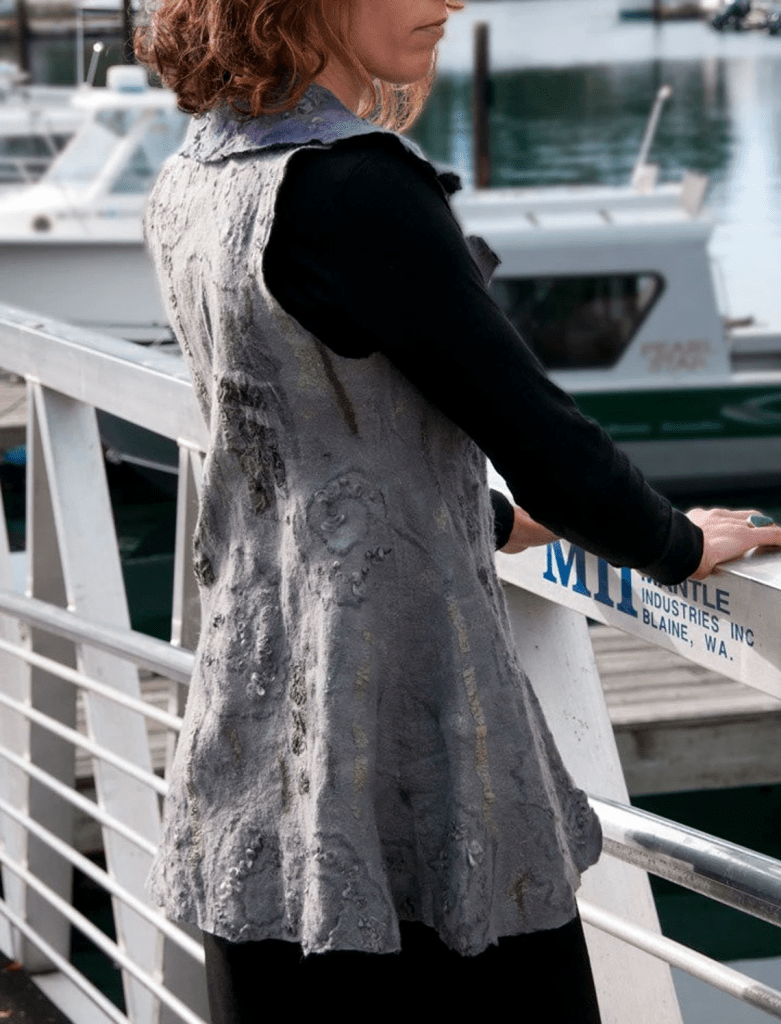
Nuno felting is a ton of fun. Using this kit, I started with a length of silk and some wisps of wool, and, after rolling a soapy pool noodle around my kitchen for a bit, have a gorgeous scarf in my favorite colors. It’s a project I definitely want to tackle again — I’d love to use this technique for arm warmers, vests, shawls, you name it. Next, I’d like to give this Nuno felt vest kit a try.

If you’re not familiar with Nuno felting, it’s a technique that involves felting wool roving onto a fabric backing. It’s easy, beautiful, and very satisfying. If knitting or crocheting aren’t quite your bag, but you’d still like to get into fiber arts, give it a try! These kits from EsthersPlaceonEtsy and SurigirlFibers make it easy.

Photo by ElementalLeaf.

Solar printing uses light from the sun to trigger a reaction, creating a vivid blue and white silhouette of whatever objects you’d like to use. It’s commonly used for creating interesting botanical art by laying leaves and flowers down on the paper before exposing it to sunlight.

This usually involves working with potentially dangerous chemicals, but this kit by ElementalLeaf makes it easy and less messy. It comes with pre-treated paper that you expose to sunlight and process in plain water, but gives you the same stunning results as traditional cyanotype methods.

Have you seen flower dyeing? This is a process that uses the natural pigments in flowers to create a unique, beautiful, almost tie-dye-like pattern on fabric. The flowers are simply placed on the fabric, then wrapped up and steamed.

While fresh flowers for dyeing are in short supply in temperate areas during winter, this kit comes with everything that you need to create a one-of-a-kind scarf from these completely natural materials. The scarf itself has also been pre-treated with a mordant, so the colors in your finished project will last.

Photo by PartynWithPlants.

Biophilic design isn’t just a fad. As it turns out, living in spaces with natural materials and live plants is better for our physical and mental health. This kit allows you to bring more nature into your home, without the struggle of keeping live moss.

It comes with a frame and a variety of preserved moss, so your finished project will last and stay looking good. It’s a great project to introduce the concepts behind creating living moss art and terraria, and also allows you to liven up spaces that may not be conducive to keeping living plants. Since this project is pretty simple, it’s also good for teens and supervised children.

Photo by AtelierNaturelUSA.

Candle making is a pretty classic winter activity. With relatively little labor, you can create your own candles to bring light, warmth, and cheer into your home. It doesn’t take a lot of specialized knowledge or supplies, either, so it’s a great activity to do as a family.

This kit uses non-toxic soy wax and natural fragrances and contains enough for two candles. Everything is pre-measured and ready to go.

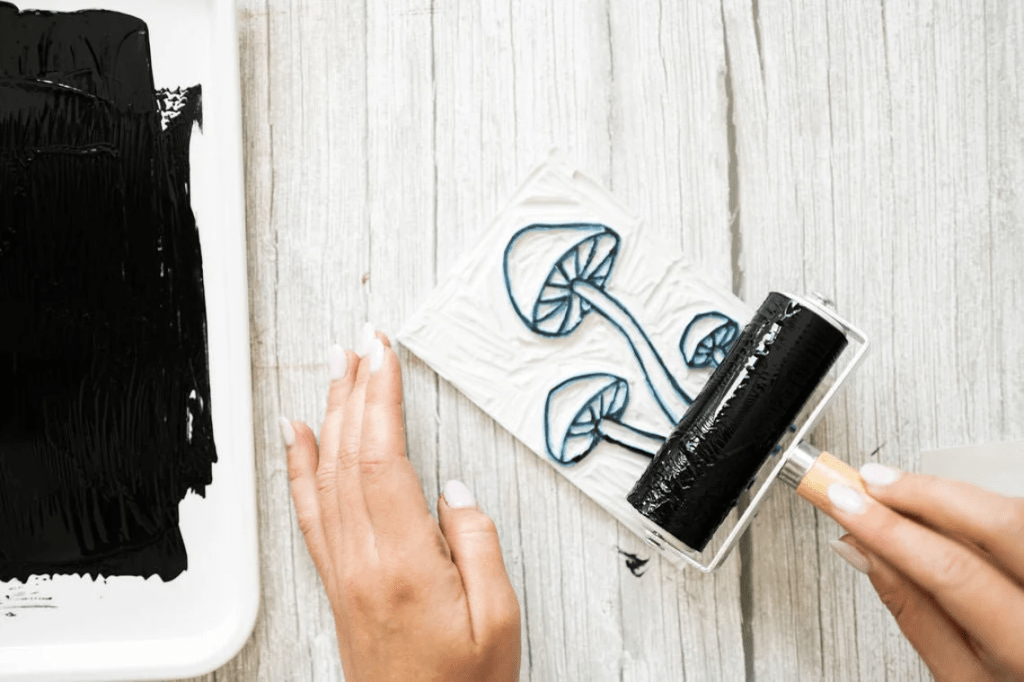
I have really fond memories of making linocut prints in art class as a kid. This kit contains everything you need to do the same — soft linoleum blocks, knives, ink, and even blank greeting cards. Purchase it early, and you can make your own holiday cards!

Photo by AdultsAndCraftsLLC.

Once your linocut blocks are made, you can use them over and over again on paper, fabric, you name it. Use a variety of colored inks, or even multiple blocks layered on the same piece to create stunning artwork. This kit is a great introduction to printmaking.

When I was little, my grandma taught me a very basic crochet stitch. I’ve been wanting to pick up more, and this kit is going to be my gateway into actually crocheting things.

It comes with everything you need to make a cute beanie — yarn, a hook, instructions, and even access to a YouTube tutorial. It’s a very easy project, suitable for ages 10 and up, but the results are pretty impressive. Best of all, once you have this simple technique down, you can make all the beanies you want to wear, give away, or even donate.

Watercolor is one of those skills that anyone can pick up but takes some bravery to get into. It doesn’t erase like pencil, so it teaches us to embrace whatever “mistakes” we make and weave them into the final vision. Like Bob Ross said, “we don’t make mistakes, just happy little accidents.”

Photo by NaturahArt.

This kit contains everything needed to make beautiful beetle art. It has sheets of watercolor paints in brilliant colors, a reusable water pen, inspiration images, and pre-printed beetles to paint.

Winter is a great time to hang out and focus on building new skills. If you’re looking for a new hobby to take up or just need a gift for someone who’s difficult to buy for, these DIY kits may be just the answer you need. You or your giftee can learn things, sharpen your skills, and maybe discover a brand-new passion.

animals

The Magical Meaning and Symbolism of Turkeys

In the US, this coming Thursday is Thanksgiving. This holiday has a fair amount of folklore and mythology itself — much of which doesn’t actually come anywhere near explaining the truth of the first Thanksgiving. Rather than recount this (especially when so many historians, Indigenous and non, have already done so) I figured I’d look into the creature that is symbolic of Thanksgiving for so many Americans.

The turkey.

I like turkeys (Meleagris species). I think they’re beautiful, for the most part, and I love the noises they make.

wild turkey
Photo by ASHISH SHARMA on Pexels.com

(Once, as a tiny child at a Powwow at Queens County Farm, I found a turkey egg. It was unfertilized, of course, but I didn’t know that. I made a small bed for it out of a sweatshirt because I thought sacrificing my hoodie would be enough to keep it warm until it hatched. What I was going to do with a turkey chick after that, nobody knows.)

Turkeys came by their name via a very circuitous route. Originally, colonists thought that they were a kind of guineafowl, an African bird imported through Türkiye. Hence, the turkey.

An Akawaio story speaks of a terrible flood and explains how several animals got their unique traits — turkey included. Makunaima created a single tree that bore food. He also made all of the animals and placed Sigu, his son, in charge of them. While Makunaima was away, Sigu thought it best to cut the tree down and spread the seeds and cuttings so food would be more abundant. Unfortunately, upon felling the tree, Sigu and the animals discovered that the stump was hollow and filled with water and all kinds of freshwater fish. The water began to rise, and Sigu contained it under a magic basket.
Unfortunately, Monkey lifted the basket and release the water again, so Sigu led the birds and climbing animals to tall trees for safety, and all of the terrestrial animals into a cave sealed up with wax to keep the water out. Sigu remained in the trees with the birds and climbing animals and, one day, he tried to make a fire. He rubbed two pieces of wood together until a spark appeared, but Bush-Turkey was so hungry that he mistook the spark for a firefly, tried to eat it, and burned himself. This is why turkeys have red throats to this day.

two black turkeys
Photo by Kranthi Remala on Pexels.com

Many old tales portray turkeys as foolish or gullible figures, from some Indigenous American legends to children’s stories like Chicken Little. In fact, a lot of people still believe that turkeys are so unintelligent, they drown in the rain because they stare up at it. They do sometimes look up at the sky for no reason, but this is because of tetanic torticollar spasms — a genetic problem exacerbated by breeding for sizeee and rapid growth, not fitness.

Fortunately, not all stories depict turkeys as foolish. In one Zuni tale, a girl who tends turkeys longs to go to a dance with everyone else. The turkeys, knowing she’s taken such good care of them, promise to help her by dressing her so beautifully that nobody else would recognize her. They only have one condition: She must enjoy the dance but not forget the turkeys who helped her go.
The turkeys keep their word, and the girl is able to enjoy the dance. She enjoys it so much, in fact, that she forgets about the turkeys. Annoyed to find that she clearly doesn’t care enough about them, the turkeys leave captivity and run off.
The girl chases and chases them, to no avail. Not only can she not catch up to the turkeys, all of the dust and sweat from running has turned her beautiful clothes to rags again.
This is why, when you look at Shoya-k’oskwi (Cañon Mesa), you can still see the tracks of the turkeys embedded in the stone.
This story highlights the importance of remaining in balance with the animals that give so much to humanity. In it, the turkeys aren’t foolish or gullible — they’re grateful to the girl and trust her to do the right thing. She takes their gifts and forgets to return to care for them, so they leave.
One version ends with, “if the poor be poor in heart and spirit as well as in appearance, how will they be aught but poor to the end of their days?”

The Aztec deity Chalchiuhtotolin (Nahuatl for ‘Jade Turkey,” also known as The Jeweled Fowl) is a disease and plague deity. Unfortunately, researchers don’t seem to have much more information about this figure.

In Hopi kachina ceremonies, there’s the Koyona (turkey) kachina. This figure is unique in that it only dances either at night, in the kiva with other birds, or during the Mixed Dances in the springtime.

wild turkey bird
Photo by Chris F on Pexels.com

A common bit of modern lore says that eating turkey makes you sleepy. While turkey does contain tryptophan (which the body converts to serotonin and melatonin) so do a ton of other foods. The urge to take a nap after eating turkey comes from eating a lot of food, not the turkey itself.

Ben Franklin also didn’t push to have the turkey made the United States bird. He wasn’t even part of the 1782 committee that finalized the design of the US seal. In 1784, he wrote a letter to his daughter in which he complained about the Society of the Cincinnati, a military fraternity. Part of his criticism was of the Society’s badge, which included an eagle.

As a birds from North America, turkeys aren’t represented in European, Asian, African, or Middle Eastern mythology. They don’t appear in the Bible, Greek or Roman legends, Celtic oral traditions, nada.
(That said, people in Europe did start farming turkeys pretty much as soon as they got their hands on them in the mid-1500s. Ironically, turkey probably wasn’t present at the first Thanksgiving.)

Since turkeys don’t have a whole lot of representation in world mythology, they’ve been kind of shafted. Colonists, in general, didn’t really care about their place in Indigenous traditions or legends. They were big, dumb birds and it made economic sense to make them bigger and dumber because you get more meat that way. Enter: The Broad Breasted White, America’s most popular commercial turkey.

Turkeys are often symbolic of gullibility and a lack of intelligence.

It’s said that dreaming of a turkey means that you’re acting foolish. If you dream of a turkey flying, then it may represent a rise from obscurity to fame. Dreaming of a dead turkey may symbolize a bruised ego or attack on your pride.

Turkey feathers appear in various magical traditions as representations of birds, animals, and the element of Air. When you buy “imitation eagle feathers,” for example, these are usually actually dyed board breasted white turkey feathers.

Thanksgiving is celebrated as a day for feasting and gratitude, but it isn’t like that for everyone. This year, remember the Mashpee Wampanoag and Wampanoag Tribe of Gay Head who not only suffered the effects of colonization, but the continuing insult of having a false, sanitized version of their own history forced on them and their children. If you are able, please donate to help them continue to preserve their language and culture, as well as provide necessary services to their members.

Uncategorized

The Magical Meaning and Symbolism of Shoes

Look, I know what you’re probably thinking: Shoes? And yes. Shoes. Even the most humble of tennis shoes is a wealth of magical possibility. (Also probably smells, but that’s another topic entirely.)

In most cultures that use shoes, footwear has a unique significance attached to them. Shoes have historically often been the difference between life and death. While there’s much to be said about using foot-shaped shoes with thin, flexible soles, any shoe is a safeguard against parasite infections, damage from extreme heat or cold, or disabling injuries from sharp stuff. Shoes also mold to the feet of the wearer to an extent, so they have a very intimate connection to their owner.

Magic involving shoes is often connected to West African foot track magic, usually via Hoodoo and other diaspora religions and magical traditions. Sprinkling spell ingredients into a target’s shoes is a way to ensure that your magic goes to work on them.
A related practice involves writing a spell target’s name 3, 7, or 9 times on a slip of paper, then tucking that paper in your shoe. This allows the spellworker to keep their target “underfoot,” preventing them from causing trouble.

A 1964 blues song, Conjured by Esmond Edwards and sung by Wynonie Harris, talks about using graveyard dirt in a person’s shoes to ensure their loyalty and punish infidelity:

You said I was jealous when I didn’t go to work,
You sprinkled my shoes with graveyard dirt.

Shoes are also often viewed as impure objects, and much shoe folklore involves removing them before entering temples or other holy places. As the barrier between the wearer and the dirt of the road, removing one’s shoes is a purifying act — shedding this connection to the mundane world before entering the realm of the spiritual.

vintage hiking boots on gravel pathway
Photo by Ahmet Yüksek ✪ on Pexels.com

It’s also said that putting shoes on top of a table invites misfortune. This may stem from old coal mining superstitions. When a miner died, their boots would be placed on the family table. To do so with a living person’s shoes, however, was believed to bring death into the home.
This isn’t shoes’ only connection to death, either. There was an old belief that burying a dead person’s shoes would keep them from troubling you. This caused some problems for an 1889 murder trial, unfortunately. A London man named Edward Rose went missing on the Isle of Arran. Three weeks later, his body was found hidden under a boulder. A police officer took the man’s boots and buried them, which greatly annoyed the judge. A letter to Folklore journal in 1890 explained that burying the boots of the dead would keep their ghosts away (which could be especially helpful if you’re dealing with the vengeful ghost of a murdered man).

On the other hand, putting a new, unworn pair of boots on a table was said to cause fights among family members. This may be somewhat related to the Evil Eye — a bit of malevolent magic that arises from envious looks. Putting new, unworn boots on a table (in other words, prominently displaying a desirable object) could invite the same kind of envy and misfortune.

In ancient Rome, the right side was considered lucky and the left unlucky. (This comes from the Greek practice of augury, where birds going toward the right were considered a lucky omen, and those going to the left were unlucky.) Entering a room should be done right foot first, as should getting out of bed or going down stairs. Putting one’s footwear on the right foot, then the left, was considered better than the reverse.

In parts of England, Wales, Ireland, and Scotland, shoes were seen as protective. Not just against sticks, stones, and the occasional bit of broken glass, either — they were used as protective charms. Author Dr. Jacqueline Simpson notes that miners in Derbyshire, Yorkshire, and Wales would leave clogs in specific part of mines. These were the end of passages, the beginning of backfilled passages, or anywhere that a shaft had collapsed. This appears to be a very old tradition — historians have found leather boots in England’s oldest coal mines, dating back to circa 1450.

Shoes were also used to ward off nightmares and illness. If someone had a fever that wouldn’t break, burning one of their shoes was said to cause it to break. Putting your shoes outside of your bedroom door, with one pointing toward the bedroom and one pointing away, was said to keep away nightmares.

A pair of old Converse sneakers on the ground.
Photo by theamir pick on Pexels.com

Interestingly, shoes are more than just protective emblems or links to their owner. They’re also sometimes used in love divination. Placing one’s shoes in a T shape and reciting a rhyme was said to reveal the image of the owner’s true love.

You can also divine by reading the wear patterns on a pair of old shoes. If they wear out on the balls of the feet, the owner would be long and prosperous. If they wear out at the heels on the inner portion, the owner would be wealthy. On the outer portion, poor. Holes in the toes indicated someone who wouldn’t be able to hold on to money.

Interestingly, shoes are also sometimes used to gain money. An old prosperity charm involves putting a silver coin in the left shoe of a pair of old shoes, putting them on, then walking in circles before putting them away.

The US custom of a bride keeping a silver sixpence in her left shoe during her wedding comes from an English belief that this would help ensure long lives, good health, and prosperity to the married couple.

Humans aren’t the only ones with magical shoes, either. Horse’s shoes are sometimes used as symbols of good luck. This comes from back in the day, when shoes were forged from iron. Faeries are said to be harmed by “cold iron.” Nobody seems able to agree what “cold iron” actually is, or why it harms creatures like the Fae. The details are lost to antiquity, but there are stories reaching back to the medieval era of faeries, elves, and other supernatural creatures being harmed by iron. Hanging iron — in this case, in the form of a horseshoe — over an entryway was an easy way to keep tricky faeries away from your house.
As for whether you should hang a horseshoe points up or down, that seems to be a matter of preference. One camp says that hanging it points-down lets the horseshoe’s accumulated luck rain down on anyone who passes under it. The other says that hanging it points-down lets all of the luck drain away, preventing it from being a lucky charm.

Sometimes, even regular human shoes can be lucky. Throwing old shoes at something is said to be lucky. This is the root of the practice of tying old shoes to a newlywed couple’s car or throwing shoes after them as they leave the wedding venue. Throwing shoes at a ship leaving port is also said to ensure a safe, prosperous voyage.

In British-derived traditions, shoes are symbols of good luck and protection. Their folklore and magical uses are varied and fascinating, but ultimately follow the shoe’s function: they protect an important part of the body, and losing or damaging them opens you up to illness, discomfort, and injury.

Since shoes also carry the shape of the owner’s foot, they’re also a powerful tool for sympathetic magic. This is apparent in charms that involve turning, burning, or placing a person’s shoes in order to end an illness.
Since they’re also a part of everyday wear for most people in the western world, the use of Hoodoo spell powders sprinkled in shoes also makes sense. It’s an easy, effective way for someone to ensure that their target comes in contact with their working.

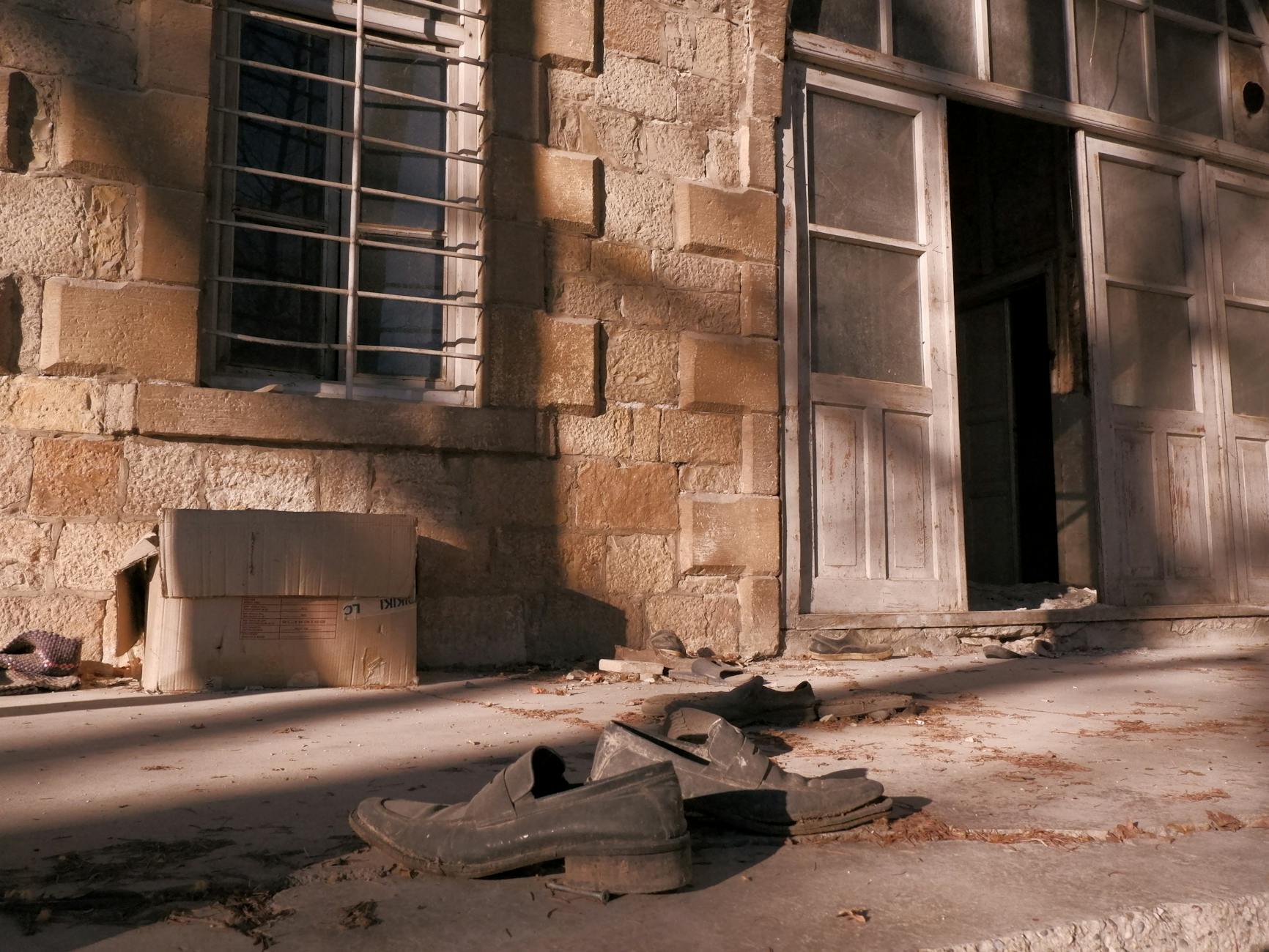
Old shoes left in front of an abandoned building.
Photo by metis film on Pexels.com

I’d also argue that shoes are an emblem of closeness. You can see this in shoe love divination, where people (usually young women) use their shoes to see visions of their true love, or prosperity charms that involve putting coins in a shoe. Keeping a coin in a shoe as you wear it is a way to keep a bit of wealth close to you, where it can’t be spent, lost, or stolen.

Do you have old shoes? You might not want to throw them away — even if you don’t wear them out and about anymore, you can still put them to good use!

life

“I’m not gonna read all that, but I’m happy for you. Or sorry that happened.”

Here’s to a week of various inboxes filled with old men typing paragraphs.

After a while, I kind of started to wonder if all of it was even genuine. The repetition was suspect, at best — an endless line of profile pictures featuring what very well could’ve been the same guy: sunburnt, pudding-faced, probably in sunglasses, most likely with a patchy beard, and almost definitely taking a selfie in a truck. The nattering of the same right-wing dog whistles and centrist mythology, like some kind of VanderMeer-esque madness mantra, didn’t do much to change this perception.
Considering that all this was in response to a post that primarily revolved around getting together with trusted friends, having soup, sharing skills, and cultivating community resilience, it seemed especially absurd.

Like a string of identical, pink-eyed mice preaching to a henhouse that it’s perfectly fine that a fox is in charge now, actually, and you’re hysterical if you think that might be a problem.

A white mouse in a hand covered in in a latex glove.
“Personally, I’m doing just fine right now. That means that everything’s fine.”
Photo by Pixabay on Pexels.com

But if there’s one thing I’ve learned well, it’s when not to waste my time. Not everyone is worth a response. Not everyone’s words are even worth consideration. That’s not always an easy lesson to internalize, however — particularly when people show up to try to rile you up on purpose. There are an awful lot of arguments for why they think they deserve your time and attention, and oh boy will they repeat them at you.
Here’s why these arguments aren’t true:

Please understand me when I say, from the bottom of my heart, that it doesn’t matter.

There’s a very common idea in toxic dynamics that the person who points it out is the one who’s the problem — not the person responsible for the toxic dynamic in the first place. If you didn’t point it out, then everyone else could’ve gone on quietly ignoring it and not having to admit their complicity. It shows up in families, workplaces, and social groups alike. I’ve seen it. You probably have too.

But keeping that kind of peace is not worth it.

“Division” isn’t a bad word. It will let you know who you can actually trust. You needn’t to go out of your way to please others, especially if they’ve shown up just to talk down to you about topics that they don’t understand.

There’s a difference between retreating to an echo chamber and prioritizing where your attention goes. If someone Kool-Aid-Mans in just to waste your time, you are not obligated to let them do it.

Modern media has created the false perception that all opinions need to be heard and respected equally. This is how we ended up with broadcasts featuring respected professionals alongside the heads of Facebook groups who think giving children bleach enemas will cure them of Autism.
Everyone is free to express their opinion.
You’re also free to not give them a platform or an iota of your time and attention. It’s okay.

Knowing when to save your breath is healthy.

You probably won’t. I’m sorry.

By now, anyone who’s remained willfully ignorant (of actual evidence, not Qanon “think mirror” posts) isn’t going to be swayed by a reply in an email or comment section. It’s just a way to get you to waste energy that could be better spent on yourself, your family, and your actual community. It’s their choice if they want to spend their time trying to antagonize you, but you are by no means required to indulge them.

There’s a saying that, sometimes, arguing is like playing chess with a pigeon. You can do your best, but your opponent is still going to shit all over the board and strut around like they’ve won. You don’t need to include yourself in every argument that tries to rope you in. Save your energy and use it for the people who actually matter.

life

Welp.

The election’s over. I don’t really have much to say. Other people who are far more eloquent have said everything that I possibly could.

This post from Waging Nonviolence has been very helpful to my friends and me, and I highly encourage you to read it as well. I’m not going to reiterate the excellent points that it makes, but I did want to add to the list:

Many people (women, people of color, and LGBT people) are taking this opportunity to examine and pare down their spending habits. Most major corporations and big box stores are owned by the exact demographics that will either benefit or have the luxury of remaining passive. Divest from them — literally and figuratively.

Gather a group of trusted people and see what you have to offer each other. How can your community build resilience and foster independence? What can you do to lessen your dependence on purchased goods?

Now’s also a good time to focus on reskilling.

This probably seems a bit out of left field, but it ties into number 1. Grow an edible plant. Even if you’re in an apartment. Even if all you have is a tiny windowsill under a basement window. Stick a basil in it. Shove some parsley in there. Grow something that you can eat.

Will this change the political and capitalist landscape? No, but it is a way to increase your confidence and feelings of independence. It’s one less thing you’ll have to buy in the future. It’s something you can propagate and trade with others. It’s something you can eat, at a time when the US is experiencing a resurgence of fucking scurvy because of grocery price-gouging.

It’s also worthwhile to learn to identify local edible plants, especially if you live in an urban environment. Spruce tips are a good source of vitamin C, as is purslane. These are both pretty easy to find/identify (even in a city) and beat the hell out of getting scurvy.

A lot of us don’t have much energy right now. If you have a recipe for a big pot of something that you can eat for a week (khichdi, goulash, slumgullion, stew, rice and beans, something) now’s a good time to make it. If you don’t have the energy to cook every day, it’s something you can go back to. Hell, most of these foods are ones you can make from scraps and odds and ends of things.

(Yesterday, I made a big pot of vegetable soup using a handful of lentils, some cabbage, and a broth I made from vegetable peels and end bits.)

This is another way to help boost feelings of independence and combat helplessness. You can feed yourself for days, maybe even off of things you wouldn’t have much use for otherwise — broccoli stems, onion ends, a can of beans, etc.

A big pot of something is also a good way to gather the people you trust. Invite them over. Have a potluck. Grieve, if you need to, but focus on what you can do for each other going forward.

It sounds like a lot, but it doesn’t have to be. Pick one local, one national, and one global cause that matter to you. If you can’t do much else, give money. If they need supplies, either give supplies or ask around and gather them from others. If they need volunteers, give your time. If you can’t do any of that, post about them and solicit help from those who can.

Get involved in mutual aid in a way that doesn’t spread you too thin. No single person can support every good cause that comes their way. It’s possible to care about them all, but time, money, and energy are finite resources. Even if you don’t feel like you’re able to make a difference, remember the story of the star-thrower.

Look, safety pins and blue bracelets might make people feel good, but their stated intention was to show others that the wearer is a “safe” person.

There’s only one problem with that: “Safe person” is not a title you can give yourself. If it was, it’d defeat the purpose of having that title at all. If anything, performative gestures have the opposite effect because they cast doubt on whether the wearer is listening to the valid concerns that threatened groups have.

Anyone can wear a safety pin or a blue bracelet. It’s a purely performative gesture, and nobody asked for it. The people who would ostensibly benefit from it don’t want it. It’s also been criticized as a way for the wearer to say “#NotAllWhite/Straight/etc. People.”

It’s easy for gestures like these to be co-opted by predators, and they take agency away from the people they’re trying to help. Women, people of color, religious minorities, and LGBT people can decide for themselves when someone is a “safe person.”

Some people have raised the argument that these visible gestures would make dangerous people uncomfortable, so they’re worth wearing for that reason. The problem here is that that doesn’t work. In the past, they invited mockery. Dangerous people didn’t feel threatened, and other people didn’t feel safe. These gestures only benefit the wearer.

Anyway, that’s all that I have to say for now. Grieve, but don’t stay grieving. Assemble a trusted community. Build resilience. Support the women in your life who’ve chosen the 4B (or 5B-7B) movement. Do things that will foster independence.