I love candle magic, but I don’t do it quite as often as I’d like for one simple reason: It usually requires letting a candle burn completely, ideally uninterrupted, and who’s got that kind of time? There are options for getting around this, of course, but a lot of them are less than ideal. If only there was something smaller, that could burn more quickly. Something like… oh, I don’t know. A birthday candle. There’s gotta be some kind of birthday candle witchcraft out there, right?
What do you do if you can’t leave a candle burning?
So, you’ve got a candle spell to work, and one big problem — you can’t just leave it burning while you go on about life. There are some suggestions in old books, things like placing the candle in a cauldron or bathtub with an inch or two of water in it, so it’ll be immediately doused if it falls over. As someone who grew up with a firefighter, however, these suggestions make my teeth itch.
Fortunately, there’re better options out there than “stick a candle in your bathtub and hope for the best.” If you absolutely have to, you can snuff a candle and re-light it when you’re able to pay more attention to it. You might even be able to work this into your spell itself, by performing it every night for a series of nights and only burning a little of the candle at a time.
The other option, of course, is to use a really tiny candle.
There’s nothing wrong with using birthday candles in spells. They pack much of the same characteristics of full-sized candles (the element of Fire, the act of burning, the presence of a flame, the wax and wick being consumed) in a tiny package. There are a couple of things to consider before swapping all of your pillars, jars, and chime candles for a package of birthday candles, though.
The Pros of Using Birthday Candles in Spells
They’re tiny
Birthday candles are little and don’t take long to burn completely. When time is of the essence, or you can’t afford to take your eyes off of a candle for even a second (hello, friends with children or pets), then you need something that can work quickly.
That aside, there’s another reason why you might want to try using birthday candles: portability.
I have a crane bag. For Druids/Neodruids, this is a container of tools for field work, power objects, and/or everything that you might need for performing a ritual at any time, in any place. I’ve got tiny incense sticks, small statues, stones, bits of wood, airline-sized bottles of whiskey, a small bowl, a tiny bell, a rattle, etc. Birthday candles fit nicely here, and I don’t have to worry about disposing of a plastic or aluminum cup like I would with a tea light.
They’re inexpensive
Birthday candles are cheap and plentiful. You can find them in any grocery store, in decently sized packs that should last you for a while. Honestly, you’ve probably already got some in a junk drawer or the back of a cabinet in your kitchen right now.
They already have positive magical associations (that other candles don’t)
In cultures that celebrate birthdays with cake and candles, there’s a tiny ritual associated with their use. The candles are placed on the cake, one for every year of the recipient’s age, and lit. The recipient closes their eyes, makes a wish, and tries to blow out all of the candles in one breath.
Honestly, if you mention birthday candles to anyone in the US, it’s likely that one of the first things they’ll think of is making a wish. Sure, it’s a cute little ritual primarily targeted at kids. It’s still a ritual, though. It’s still a positive association between birthday candles and wishes.
This is something that other candles don’t really have. Can you imagine parking an eight-inch-tall pillar candle in the middle of a sheet cake? Eleven or twelve tea lights? A massive jar of something labeled “Sun Dried Cotton”?
Depending on your particular birthday candle witchcraft goals, that connection with wishes is something you can tap into.
They’re easy to clean up
As a candle burns, the wax turns to liquid and is carried up the wick to be used as fuel for the flame. This process is more efficient for some candles and some types of wax than it is for others. Scented candles, for example, produce a lot of liquid wax to let the fragrance dissipate. Taper candles are used primarily for light, not scent, so they have a different shape and generally don’t produce much messy liquid wax. Birthday candles are only supposed to burn as long as it takes to blow them out, so they burn pretty neatly. Maybe a drop or two of dripped wax, if that.
If you’re not a fan of either cleaning old wax out of your candle holders, or digging holes to bury the remains of spell candles, birthday candles offer easy clean up and disposal.
The Cons of Using Birthday Candles in Spells
They’re difficult (if not impossible) to engrave
The small size of a birthday candle doesn’t give you a whole lot of real estate for inscribing sigils, words, etc. If you have a particularly steady hand, you may be able to do something with the tip of a straight pin or sewing needle. Otherwise, if your spell calls for inscribing a candle with something, skip the birthday candle witchcraft and go for a chime, votive, or even pillar instead.
They blow out easily
Unlike other candles, birthday candles are meant to go out easily. This can be a pain if you’ve got a situation that makes it tough to keep a candle lit. A stray breeze, whether from the outdoors or sudden movement, can leave you scrambling to re-light your candle mid-spell. It’s a major concentration breaker, if nothing else.
They’re a pain to use in long-running spells
Some spells call for snuffing a re-lighting a candle, generally over a period of several days. Taper, knob, or pillar candles are good for this. Birthday candles, not so much. Can you imagine having to mark a tiny birthday candle into seven equal segments, and burn one single segment each night for a week? By the time you got it lit, you’d need to immediately snuff it again.
You might have some trouble finding a good holder for them
Birthday candle holders usually come in the form of either those little plastic or metal cups with a spike on the bottom, or an entire cake. Neither of these are particularly ideal when you only need to burn one candle, on a flat surface.
If you have trouble figuring out how to securely set up a birthday candle, get yourself a basic glass votive or tealight cup, and a handful or two of sand. Poke the birthday candle into the sand, and you should be good to go. If any of the melted wax gets on the sand, it’s easy to scoop it out and bury or otherwise dispose of it along with any other remains of your birthday candle witchcraft.
Like I said, I love candle magic. I also have three cats and the attention span of a brine shrimp, and I need candles that I can easily travel with. For me, birthday candles are a valuable and useful magical tool.
I will never cease to be simultaneously baffled, amused, and horrified by the sheer number of tiny, pointless ways that the human body can go wrong.
I don’t mean cancer or anything that serious. Just tiny things, like hitting your late twenties and discovering that your brain is no longer able to regulate its own cerebrospinal fluid. Or going to sleep and waking up with a ruptured disc in your spine. Or, as I recently discovered, calmly crocheting on your couch and having part of your eyeball fall apart.
It’s fine. (Really.) It sounds much worse than it is. It seemed much worse than it is when it happened — a sudden flashing of light around the edges of my vision, and the appearance of a blobby, dark-bordered circle in the middle. No pain. No blindness. Not even blurriness. Just something quite a bit stranger than the usual slate of pseudotumor-related optical batshittery to which I’ve become accustomed.
It’s a posterior vitreous detachment, and it’s what happens when your ocular jellies kind of pull away from their attendant structures. The flashes of light happen because the retina has no receptors for pain, and the sagging vitreous jelly pulls on stuff it shouldn’t. The little blobby circle is a shadow cast on the retina from the detached bit. It’s gross, it’s weird, and it’s also bizarrely… harmless?
I mean, it isn’t ideal, but it’s also something that just kind of happens to people. I’ve read that it’s more common in older people, but not exactly uncommon in younger people. My history of papilledema may make me more susceptible, since nothing inside my eye it shaped the way it ought to be anymore to begin with. It isn’t even caused by in injury, the way a detached retina can be. It’s just one of many ways your body can decide to be uncooperative.
And, as with so many other small, horrifying annoyances, there’s not really much to be done. It’s just kind of like that now and will remain so for the next few months until a) my brain retrains itself to ignore it, and/or b) the stringier bits settle to the bottom of my eye. There’s a pretty high likelihood that I’ll develop a retina tear or detachment at some point, but, until that happens… eh.
I can’t say I’m happy about it, but it could be a lot worse.
Eyes were a terrible idea. Mortal existence is a scam.
Years ago, people wrote about the “dead internet theory.” It’s the idea that humans on the internet are a bit like habitable exoplanets — tiny islands in a vast ocean of mostly nothing, where that “mostly nothing” is made up of bots. Now, it’s half conspiracy theory and half grim joke on the continued enshittification of content creation. Whether it’s the coordinated effort of state actors or the natural consequence of the drive for automation and engagement, it seems like we’re hurtling toward a dead internet on a rocket cycle.
So, I’m here to tell you that this blog is entirely human-generated. I come up with the ideas myself, I outline them myself, I research them myself, and I write them myself. I either use my own photos or seek out those by human photographers. When I’m researching, I avoid sources that appear to come from generative AI. The only parts of this process that’re automated are basic grammar, spelling, and SEO compliance checks.
Photos like this vignette of a pen and journal with *squints* crystals and a dried orange slice, I guess. Photo by Alina Vilchenko on Pexels.com
I don’t know who to attribute it to, but I read a great comment not long ago: “How could I be bothered to read something that nobody could be bothered to write?” It’s simple, but it stuck with me. If I can’t be bothered to write something, why should I assume that anyone would bother reading it?
There’s also the fact that I genuinely enjoy making stuff. I like writing. I like making art. I like learning new skills and using them to create things. I can’t imagine automating any aspect of this, because I don’t understand what the point would be. I’m also disabled in a way that makes creating things legitimately difficult. If someone can lose the use of their arms and re-learn to paint using only their teeth, I can sort myself out.
In my experience, arguments in favor of content creation using generative AI seem to come largely from a desire to be someone who has created something, not the desire to create something. This isn’t a strange belief, either — not everyone enjoys the messy, ugly phase that every creative project goes through in the beginning, when the words are unedited, the colors are flat, the melody hasn’t come together, and the bread hasn’t proofed yet. I just think the answer lies in finding a different means of self-expression, not in getting an algorithm to do the hard part.
Every weird turn of phrase and wack idea present here is entirely organic. They’re products of my experiences filtered through my sideshow-quality mind.
(This also means I’m sometimes slow to respond to comments, soz.)
When I was a tiny child (very tiny, maybe six or seven), my grandma taught me to crochet. I didn’t learn much — my clumsy little hands weren’t able to do more than work a piece of string into a basic chain — but it was something I’ve wanted to get back into. So, as part of my desire to continue reskilling this year, I picked up some merino yarn and a basic #5 hook and got to it.
(So far, I’ve managed to make one tiddy portion of a bikini top in single crochet, and most of a scarf that I accidentally did entirely in slip stitch. This is okay, though. Even if you do crochet wrong, as long as you do it wrong enough and consistently enough, you’ll most likely end up with a useable item once you’re done anyway.)
So, since I’ve ended up with a number of odds and ends of string, I thought it’d be a good idea to point out its many magical virtues and uses.
Witches and Pagans — at least, the ones I know — are nothing if not resourceful. Every weed, seed, stick, stone, empty jar, scrap of paper, and bit of string has potential. Sure, supplies from a local metaphysical shop are beautiful and fun, but you’d be amazed at what you can get up to with the contents of your trash.
(Literally. One of my most successful workings involved nothing more than a Sharpie, some toilet paper, and about ten seconds a day for a week.)
Anyway. String.
The Magical Uses of String and Yarn
Witch’s Ladders
One of the most recognizable uses of string/yarn/floss/twine/thread/etc is the witch’s ladder. This is a length of cord knotted at intervals, often with feathers, leaves, stones, or other curios placed within the knots. Ultimately, the ladder is a talisman — as it’s made, the creator imbues each knot and curio with their intention for the ladder.
Wikipedia describes a specific instance known as the Wellington Witch Ladder, the first recorded instance of someone finding a witch’s ladder in an old house. Charles Godfrey Leland discovered that it was remarkably similar the description of a kind of folk charm used in Italy. Witches would utter a baneful spell as they braided the cord (along with locks of the victim’s hair and feathers from a black hen) and place the finished piece under a victim’s bed, in order to cause them pain, illness, and misfortune.
(As a magical device, a witch’s ladder isn’t solely for baneful magic. The inclusion of different curios and chanting a different spell would, by necessity, give the finished product a different effect.)
A more stripped-down version if the witch’s ladder is basic knot magic. This involves taking a length of string and tying knots (usually nine) at intervals, starting with the center, then both ends, then working back toward the center. Each knot is accompanied by a chant.
This is useful as a kind of magic “bank” — each knot holds a portion of the spell and, when the knots are undone, the spell is released. One way to use this involves untying a knot once a day for nine days. I’ve also used them to tie around my wrist or ankle. Once the string breaks, the spell is released.
Magical Pouches and Sachets
Strings also have the more mundane use of securing magical sachets and pouches. In Hoodoo, the traditional knot for this is the miller’s knot. Other traditions may have their own methods that call for a particular knot (or number of knots), or none in particular. Here, the string is mostly just intended to keep the contents of the pouch from falling out, but it’s easy to apply basic techniques like color magic if you so choose.
Embroidery Sigils
If you know how to embroider, it’s easy to apply this skill to creating sigils or other magical images. Embroider them onto pouches, clothing, altar cloths, or any other fabric items sturdy enough to handle them. This is a great method for magic you wish to keep with you — think workings for protection, prosperity, or attraction.
Strings as Sympathetic Magic
Lastly, strings have a powerful symbolic component. Take the photographs of two would-be lovers, for example, place them face-to-face, and tie them together with red or pink string for a love spell. Or, use a string as a component of cord cutting magic, to help you visualize and act directly on the “etheric tethers” that hold you to old relationships, situations, or other undesirable things. Strings represent the “ties that bind,” for good or ill, and you can use them to either strengthen or sever these ties as you wish.
Choosing Your String (or, How to Not Become a Magical Hoarder)
Okay, so. Like I said, I’ve been crocheting. I’ve ended up with a lot of odds and ends of yarn as a result. I probably don’t need all of these bits of yarn, so it pays to be a bit selective in what I decide to keep. If you hold on to odds and ends of string for magical purposes, you’re likely to end up in the same boat.
So, how do you decide?
First, I recommend against using synthetic fibers for magical purposes. This isn’t because I feel like they’ll necessarily have a bad impact on the magic itself — they’re just not practical. They don’t break down like cotton, hemp, linen, silk, or wool do, so they’re not great for spell cords that need to fall apart eventually. They also don’t burn well (and, when they do, tend to melt and produce awful, migraine-inducing fumes), so they’re not great for any spells that involve burning cords.
Second, you don’t necessarily need a ton of strings of the same length and color. You probably know what spells you tend to work the most, and what it makes sense to hold onto. (For example, if you’ve been focusing a lot on money magic, you probably don’t need an ever-increasing stash of red strings.) If you don’t, that’s fine — shoot for white or black strings, and one or two in other basic colors. Develop your preferences from there.
Third, destash periodically. There are a ton of posts and vlogs about people who fall out of practice, or struggle to find the motivation to continue regularly doing magical workings. Let decluttering your magical supplies be a reason to use them. With knot magic, this is especially practical — knot your cords, recite your chants, and put what you’ve made to good use. (Or gift them to your witchcraft-inclined friends.)
Often times, working magic means seeing the potential in what would otherwise be discarded. A plain piece of string can be everything from a curse to a love spell, from a healing charm to a magical battery.
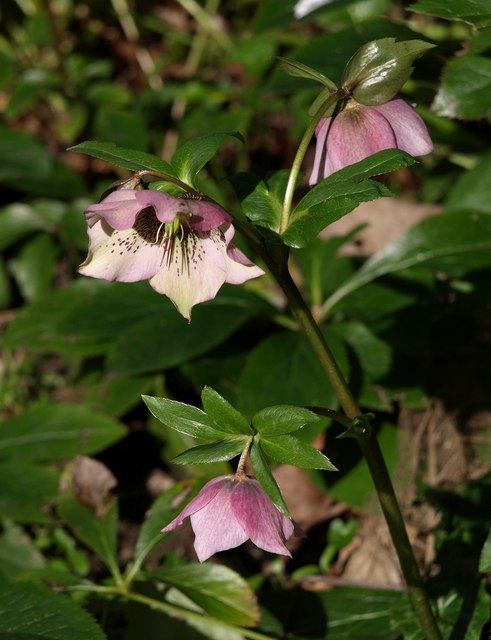
Hellebore is a plant of contrasts. This can even be seen in its name — the word “hellebore” translates to both “food,” and “to harm.” They flower early and herald spring, but their nodding habit makes them look almost mournful about the whole thing. They’re beautiful flowers, but they can be dangerous poison.
Hellebore Magical Uses and Folklore
Hellebores are sometimes called “Christmas roses” or “Lenten roses.” Despite this, they aren’t at all related to members of the rose family. Instead, they’re closer to buttercups — another lovely little poisonous flower.
The name “hellebore” most likely comes from two Greek words: Helein, meaning “to injure,” and boros, meaning “food.” Or, more accurately, “if you eat this it will hurt you.” Another theory holds that “hellebore” references food for Helle, the goddess of a connecting body of water between the Black and Aegean seas.
The name “Christmas rose” comes from a bit of Christian folklore. In it, a little girl cries because she has no gift to bring to the infant Jesus Christ. Where her tears fell, a hellebore sprang up. (It’s like The Little Drummer Boy, but more horticultural. One might also question the wisdom of connecting a highly toxic flower with giving gifts to babies, but that’s another story.)
In the past, hellebore has been used to treat various forms of mental illness, seizures, paralysis, and other maladies of the brain and nervous system. All parts of the plant are toxic, though this can vary somewhat between species — Helleborus orientalis, for example, contains the usual toxic hellebore compounds as well as some interesting cardiac glycosides that aren’t present in some other varieties. The dose makes the poison, and some toxic compounds can be useful in the face of a malady that opposes them. For example, curare is a paralyzing poison that’s also an effective antidote for strychnine, a deadly poison that causes spasms. Go figure.
In fact, hellebore is so effectively poisonous that it was used during the Cirraean War between Kirrha and Delphi during the 6th century BCE. This was the first recorded use of chemical warfare: the poisoning of Kirrha’s water supply with hellebore.
Hellebore is also toxic on contact. Despite its many dangers, you can often find it referenced in old texts as a cure for madness. In the Victorian language of flowers, it’s associated with scandal or delirium. (Here, it’s important to note that saying an herb is “associated with” or “connected to” something can mean many different things. A plant may be associated with a concept, but not necessarily in a positive way. Hellebore is referenced more as a cure for delirium than a cause of it. In the Victorian language of flowers, offering hellebore is more likely to be a reference to scandal caused by madness madness, or to the giver or recipient needing a cure for delirium.)
As far as magical uses go, hellebore is often considered a protective, purifying, or banishing herb. (Though certainly not the kind you’d want to smoke cleanse your home with.) This is most likely a direct reference to its toxicity — not only does it have poisonous compounds in it, most of them also taste and feel awful. This is effective at keeping deer, rabbits, and other nibbling animals away. Ergo, it’s also good for getting rid of or guarding against unwanted spiritual influences. This is something you see a lot with purifying or protective herbs. Almost all of them have a history of use as a way to repel or kill pests.
Some also use it for love or divination magic, but I don’t have much experience with this side of hellebore and haven’t been able to find a lot of sources for this. If anything, I would think hellebore is associated more with clearing one’s head rather than clouding it with romance. Still, the flowers are very pretty and frequently come in the pinks and purples we associated with the domains of love and divination.
Using Hellebore
Even though they aren’t native to this area, I love them. With care and conscientious planting, they can be a good addition to a garden. (You just need a good container, moist-yet-well-draining soil, and an area that gets shade from the summer sun and lots of sun during winter. They’re a bit picky that way.)
You’ll also want to remove the seed heads before they can scatter. If they do, you’ll be pulling up baby hellebores for ages.
Despite the “food” in their name, I strongly recommend against eating them. Even though various species of hellebore have been used medicinally in the past, they’re one of those remedies for which the line between “cure” and “kill” is very thin.
I don’t recommend handling hellebore without gloves. You may find that it helps you best as a boundary herb, either judiciously planted at the edges of a property or dried and sprinkled along it.
Unfortunately, despite its power and beauty, its uses are somewhat limited by its toxicity. It’s not an herb to use in teas, baths, anointing oils, or incense, or even to roll a candle in.
Hellebore is a lovely, mysterious flower with a dark past. While it looks unassuming enough, it holds the power to heal, and the power to raze an entire town. As a baneful herb, it requires respect and a very careful hand.
So, we watched Hereditary not long ago. When I was reading various social media posts about it afterward, one person mentioned that the herb placed in Charlie’s baby bottle and in Peter’s joint was dittany of Crete. And herb, they said, that is “known for making the body more susceptible to demonic possession.”
“Huh,” I said to myself, “I’ve got a whole bag of that in the kitchen cabinet.”
(It’s true. It smells like pizza.)
Seeing as how I have used it to facilitate demonic possession exactly zero times, I thought now might be an opportune time to talk about the actual folklore and magical uses of dittany of Crete.
Dittany of Crete Magical Uses and Folklore
Dittany of Crete (Origanum dictamnus) is a perennial herb with velvety leaves, native to the mountainsides of Crete. It’s related to oregano and marjoram, which becomes immediately apparent the moment you smell it — it has that same kind of aroma.
In the past, it was used to decorate temples, as a kind of tonic and panacea, and as an aphrodisiac. It was also used to soothe stomachs, bring on late menstruation, and encourage wounds to heal. According to Aristotle, wounded goats would seek out dittany of Crete and consume it as medicine. (While this may be true, he also said that dittany helped them eject arrows from their bodies, which is… less credible.)
Really, dittany of Crete is mainly known for healing, not inviting in demons. Not only does it have a long history of use as a medicinal herb for specific maladies and general ill health, but it has also been referenced over and over again in fiction. In the Aeneid, Venus uses it to heal Aeneas. Beaudelaire references this in his poem Tout entière, where he proclaims that his lover is “entirely dittany” and therefore able to heal his wounded soul.
Even outside of Beaudelaire, dittany of Crete is also strongly connected to love. In the Cretan dialect, the herb is called erontas (έρωντας) which means “love.” Dittany-harvesters were called “love seekers,” and considered very brave and passion-driven. They’d have to be, in order to climb the tall, treacherous places dittany calls home!
In European folk magic, feeding a person dittany of Crete was said to make them fall in love with you.
In other esoteric arts, dittany is said to help spirits manifest (primarily by burning it to allow them to show themselves in the smoke) and to facilitate trancework and astral projection. Both Crowley and Blavatsky considered it a powerful magical herb.
A number of Greek dishes from Crete include dittany. Martini Rosso, red vermouth, includes it as a flavoring agent alongside many other herbs and fruits.
In fact, I was unable to find a single recorded instance of someone using dittany of Crete as a way to make someone susceptible to possession. The closest I could come was a rather large leap from its use as a way to help spirits manifest, and as an aphrodisiac. The thing is, dittany is said to help spirits manifest, not occupy people. But, if one were to generously interpret “aphrodisiac” and “love-inducing” as “increased suggestibility,” then one could see where a horror movie might get the idea that an herb that a) makes you horny, b) helps spirits appear in its smoke, and c) facilitates trancework could be a suitable fictitious catalyst for demonic shenanigans.
Using Dittany of Crete
An illustration of “false dittany,” Ballota acetabulosa.
Be careful when you try to purchase dittany of Crete — the herb is classed as rare, and there are measures in place to protect it. As a result, the real stuff can be kind of expensive and not super easy to come by. Some shops will sell Dictamnus alba (fraxinella, gas plant, or burning bush), or even plain marjoram or oregano as dittany of Crete. Remember: Look for the fuzzy oval leaves and distinctive oregano-like smell.
I’ve only found this herb in its dried form and find that using it is much like using any other herb. Personally, I infuse it into a base of jojoba alongside other ingredients for a special oil that I make once a year for meditation and trance work. Otherwise, I don’t really have much use for it outside of this specific recipe. A tiny bit goes rather a long way.
Dried dittany of Crete is suitable for using in handmade incense. Mix it with other loose herbs and resins and spoon it over a lit block of charcoal. As mentioned above, it has been used in this way to help spirits manifest in the smoke.
You can also roll a candle in it. Anoint the wax with oil first, then give it a few rolls back and forth in some finely ground dried dittany. When you feel it’s ready, light it. Use a pink candle, anoint it with rose and jasmine oil, then roll it in ground rose petals, dittany of Crete, and a pinch (just a pinch) of cinnamon, then light it to get your romantic energies burning high.
Dittany of Crete is also suitable for jar spells, sachets, and other forms of container magic. It’s honestly a very nice herb with a delightful fragrance.
Really, Dittany of Crete is not nearly as dangerous as Hereditary makes it seem. I have a feeling they chose a somewhat obscure herb with an intriguing name, tangentially related to the goal of the movie’s antagonist, rather than inventing one whole cloth. It’s related to oregano. It smells like pizza. It’s a nice addition to a dream/vision oil. That’s really about it.
You know, most folk horror movies wouldn’t be folk horror without a nice, solid cult somewhere in the mix. It helps to have a bunch of naked old people levitating in the woods somewhere to really drive the creepiness home, you know? Besides, most of the Big Bads of these movies just wouldn’t be the same without a bunch of minions, lackeys, or at least a couple of fawning lickspittles.
With this in mind (and having marathoned a bunch of horror movies while swallowing large pills and waiting for my organs to stop hating me) my Handsome Assistant and I came up with a ranking system. We now have the answer to a question absolutely nobody asked: Which folk horror cult would suck the least to be part of?
Please note that this is going to be full of spoilers, so proceed with caution.
Langiva’s Village (Black Death)
As far as cults go, the Necromancy Cult in Black Death is probably the easiest. They’re sort of broadly Pagan, and they live in a pretty isolated location in the woods that’s given them natural protection from the plague. Langiva demands people sacrifice outsiders that come to the village, but “human sacrifice” is kind of the baseline for a horror movie cult. She also comes across as a narcissist, but that’s pretty much a given for any cult leader.
As long as you’re willing to put up with her, you’ll probably be fine. There’s also drugs and feasts with makeout sessions, and the villagers are likely way less racist than the Hårga. It kind of sucks that Langiva’s totally lying about the necromancy thing, but that’s not really a huge dealbreaker in the grand scheme of things (especially compared to some of our other options here).
A-
The Hårga (Midsommar)
Ah, the Hårga. For the purposes of this ranking, we had to assume that we’d met the cults requirements for acceptance to begin with. (Namely, being a) very white, b) astrologically favorable, c) under the age of 72, and d) not inclined to indiscriminately urinate on trees.) Once you’re in the Hårga, however, things probably wouldn’t be terrible for you. There’s food, a beautiful setting, a large, seemingly loving family, and movie night. They also only do the whole “burning people alive” thing every 90 years, so it’s very likely that you’ll go your whole life without ever experiencing it. It seems entirely possible for a cult member to live a pretty decent life with the Hårga.
As long as you’re not their deliberately inbred prophet child, you’ll probably have an okay time. At least, until your 72nd birthday. Things tend to fall off rather sharply then.
B
Sator’s Cult (Sator)
Sator’s cult gets several points for costuming and does seem to primarily consist of a large family, but otherwise kind of falls apart. Sator’s main objective seems to be some kind of “purification” for his followers, and he doesn’t really make any promises beyond that.
I think that Sator may only be debatably evil. This could very well be a case of an old-school, “FEAR NOT,” Biblically angelic-style entity with the unfortunate side effect of sanity slippage. As long as you stay the hell away from Adam’s cabin in the woods, you’ll probably be largely unscathed (or, at least, unburnt). On the other hand, you’re most likely not going to get anything out of this cult other than a really cool mask and the occasional levitation. Not worth the risk of dementia, in my opinion.
C
Moder’s Cult (The Ritual)
Uuuuugh.
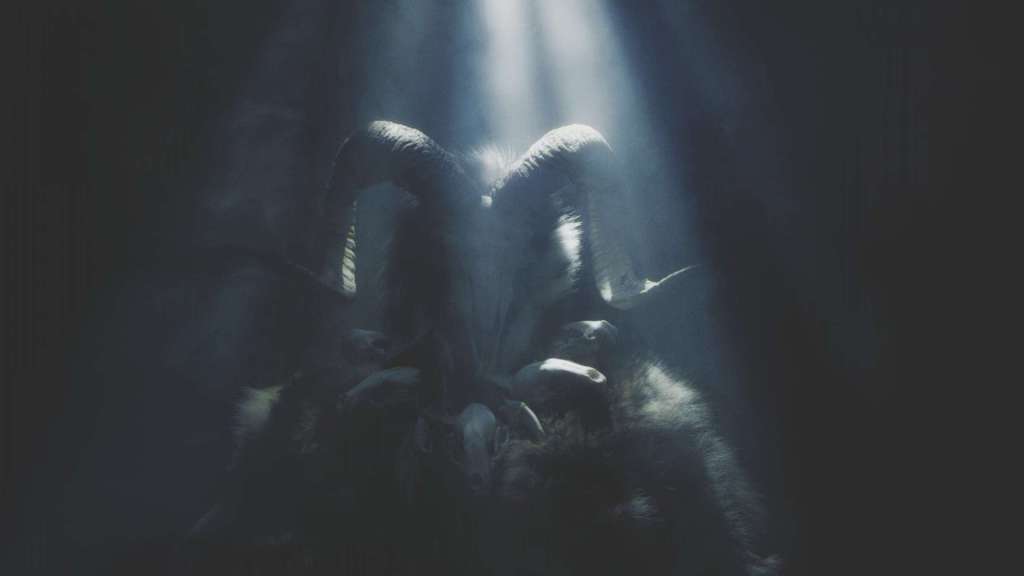
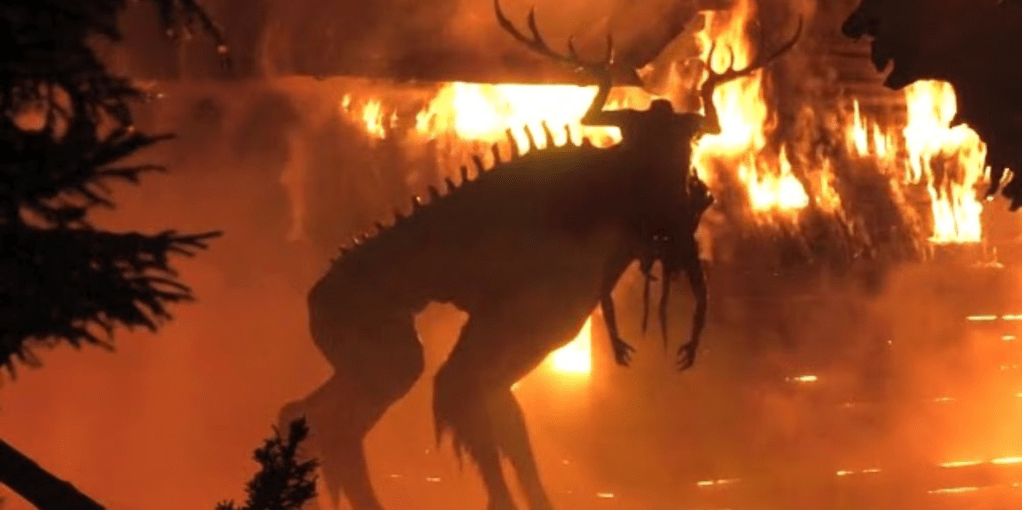
Look, I love Moder. Her visual design? Impeccable. Her sound design? Perfect, no notes. Her behavior? Exactly as violent, animalistic, and inscrutable as I want from my horror monsters. But it doesn’t look like the people in the cult want to be there. Hell, not even Moder seems to be having a good time.
Sure, there’s the immortality thing. That seems pretty cool, until a picosecond later when you realize that “eternal life” is not synonymous with “eternal youth.” Moder also doesn’t appear to be too fond of being looked at, so you don’t even get to hang out and enjoy her completely awesome entire-human-corpse-head-on-a-skeletal-half-plant-elk monster design. It’s just an endless cycle of bowing, sacrificing hikers, and waiting to shrivel up into a mummy. Boring.
D-
The Coven (The VVitch)
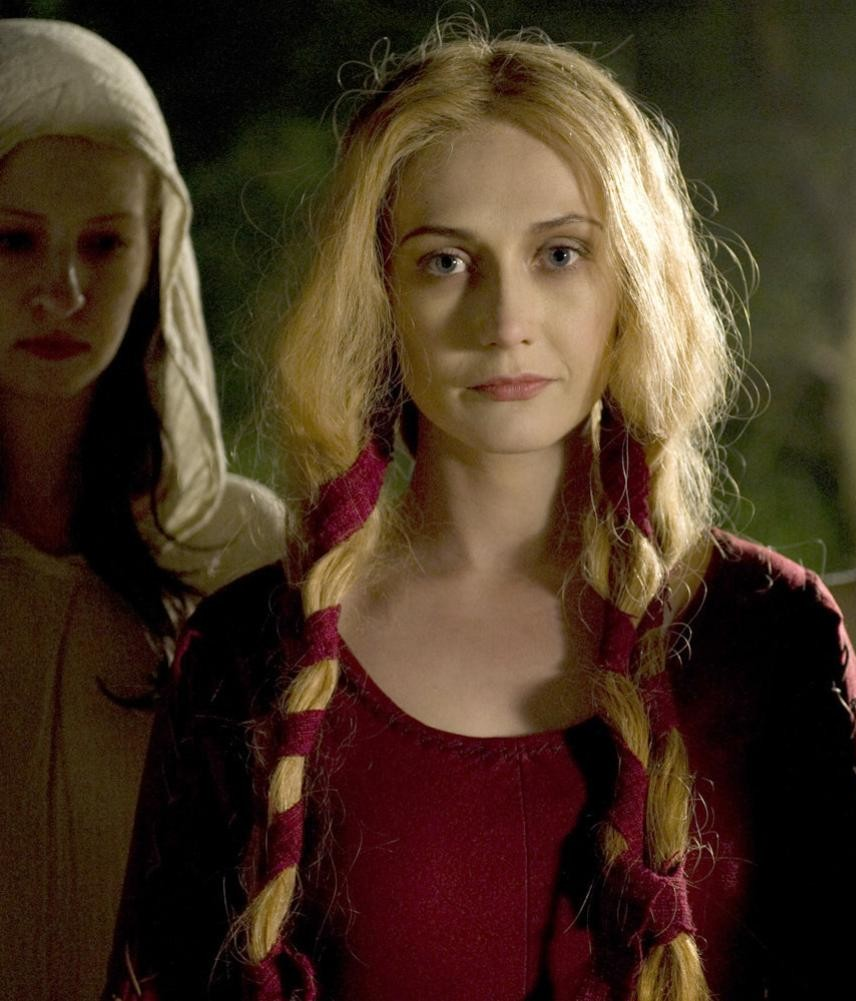
Look, horror movie cults need to have some kind of payoff. Thomasin signs the Devil’s book in exchange for the offer of a taste of butter, a pretty dress, and the ability to fly (as long as the flying ointment holds out, anyway). While I get that this is more of an indictment of the utter bleakness, repression, and poverty of Thomasin’s life than anything else, I feel like you’re gonna need more out of a creepy cult than condiments, an outfit, and occasional floating parties. (Especially if it means having to lose your entire family and be stuck hanging out with the Devil and his retinue of naked octogenarians.)
Wading through a freezing cold stream with a bunch of Christian fanatics, beating yourself, and dying painfully of the black plague anyway? Absolutely not. They don’t even have makeout parties like Langiva’s village, flowers and Austin Powers movies like the Hårga, or a cool figurehead like Moder. It’s all the worst parts of being in a creepy cult, but with absolutely no pay off. Hard pass.
F-
Honorable Mention: King Paimon’s Cult (Hereditary)
Okay, it’s not folk horror, but still. King Paimon’s cult in Hereditary is an excellent portrayal and I felt like it deserved to be on this list.
However, it would still be total ass to be part of.
I get that we see them when their mission is only half-accomplished. They’re still hoping for that wealth, power, and bunch of good familiars, all while dutifully shopping for craft supplies and setting up rubegoldbergian decapitation schemes. As far as the movie goes, nobody’s gotten anything out of this bargain despite ostensibly the entire town being in on it for decades.
Still, if someone’s going to spend an eternity as “Paimon’s sexual furniture” (thanks, Novum), I feel like they’re going to need something more than as-yet-unrealized promises. It’s also not like demons are known for keeping their word, that’s the whole reason why they have so many pain-in-the-ass rules and etiquette. He could decide that you’re next up on the decapitation docket, and then what?
Okay, look. I’m not a film buff. I have no desire to turn this blog into a collection of movie reviews. But I saw a movie that I loved and most of the rest of the internet seems to hate, and oh boy do I have some Thoughts.
I like watching horror movies during winter, especially during the Yuletide season. I have a few favorites that I return to, but lately I’ve been into folk horror (like Midsommar, The VVitch, and Sauna). After chewing through a decently long list of scary movies, I was searching for some more in that same vein when I came across The Head Hunter.
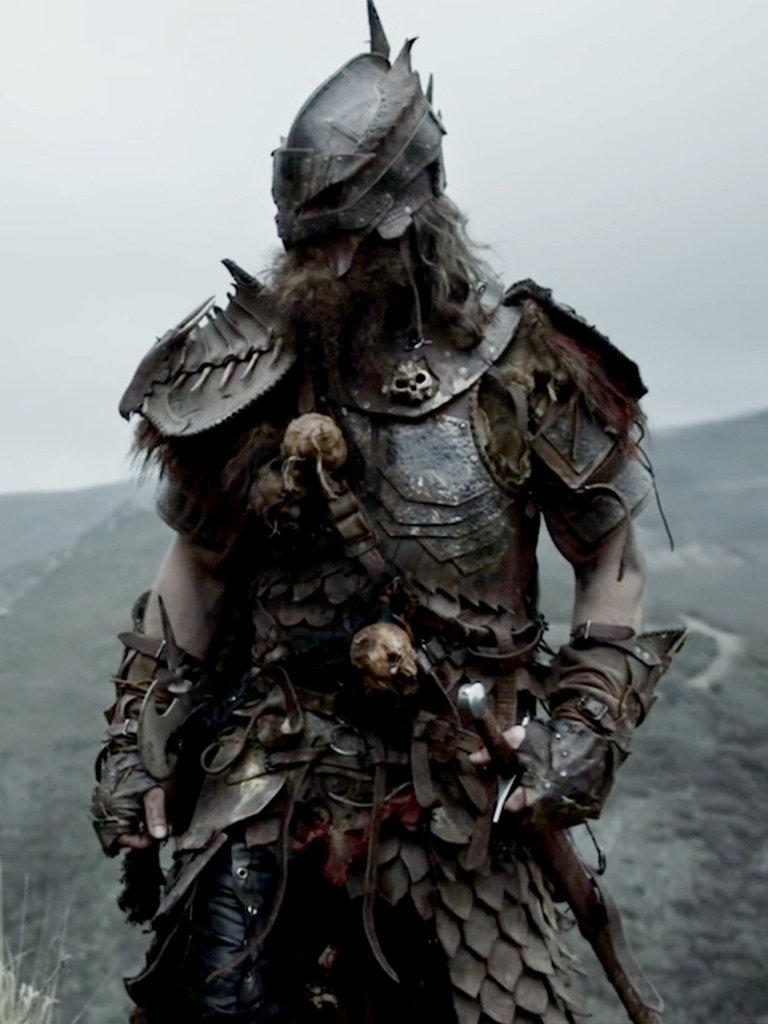
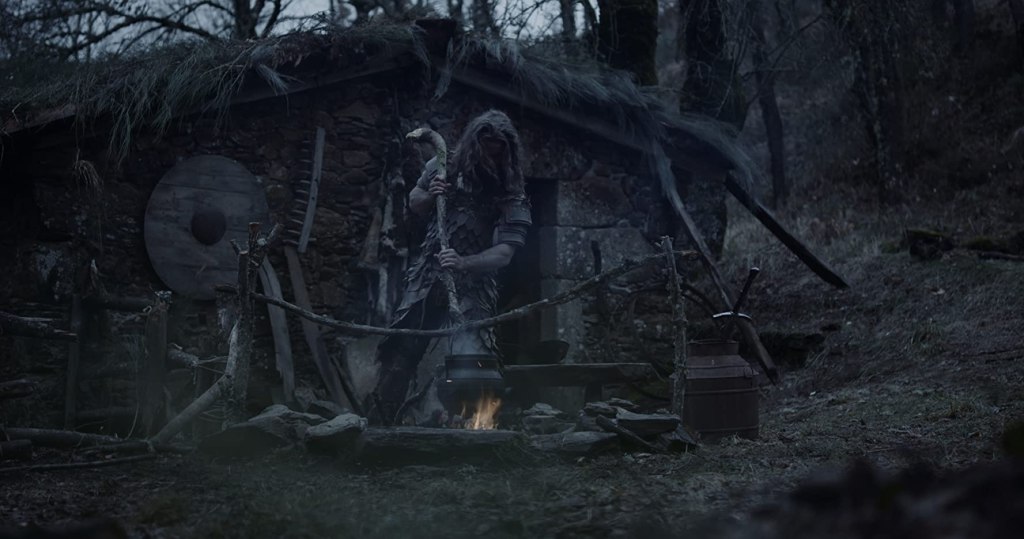
If you’re not familiar with it, The Head Hunter is a dark fantasy/folk horror film directed by Jordan Downey, starring Christopher Rygh, and filmed in Portugal on a ludicrously tiny budget (like, Cube tiny). Fortunately for this film, the miniscule budget seemed to be a help rather than a hindrance — The Head Hunter, like Cube, is a really excellent example of doing a whole lot with a little. Like, one-room-a-forest-and-some-Halloween-decorations-from-Party-City little.
What’s The Head Hunter about?
So, first off, the trailer for this movie is a bit misleading. Based on a number of reviews I’ve read, it seems like a lot of people went into it expecting to get a hack and slash sword-and-sorcery monster movie. Instead, The Head Hunter delivers a portrayal of grief, loss, obsession, and revenge, dressed in minimalist horror and stunningly effective character- and worldbuilding.
It’s also the bleakest movie I’ve ever seen. I love Sauna and Hereditary, so that’s saying a lot.
The story opens with a father and daughter (known only as Father and Daughter). We only get to see the two interact in a brief flashback before we’re brought to the present day — the Daughter is dead, and the Father is a monster hunter.
Every so often, a trumpet blasts. The Father follows the sound to a specific tree, where he finds an arrow, wrapped in a scroll, piercing the bark. On these scrolls are his assignments — basically charcoal and parchment “wanted posters” of whatever monsters are presumably making nuisances of themselves in the local area.
He goes on the hunt. We’re never shown the battles, just the aftermath. The Father returns, bruised, bloodied, and exhausted, with his quarry’s head in a bag. He opens a jar of some kind of substance, rubs it on his wounds, passes out, and awakens healed. Before long, there’s another horn blast, and the process repeats.
That is, until he gets called to hunt the monster that killed his daughter.
Alchemy, Worldbuilding, and the Monster Mash
If the plot sounds a bit thin, that’s because it is. It also doesn’t really need to be more than that. It’s very minimalistic, and it uses this minimalism. This movie is character-driven, not really plot-driven. We follow the Father through his day-to-day, and these mundane, tiny activities do an astonishing amount of heavy lifting when it comes to fleshing out the world that he inhabits.
For one, he keeps the heads as trophies, but that’s not all. The Father is also an alchemist, akin to The Witcher. He has a book filled with the scrolls of each monster he’s killed, but a brief flip through it shows that it also contains information on astrology and herbology. He also has a lot of specialized apparatuses — grinders, a cauldron, jars for macerating, that kind of thing.
We’re shown scenes of him boiling down monster parts into a kind of sludge. He strains things. He dries them. He grinds them down to a powder. He sets the end result up in jars with locking lids, kept behind heavy chains to keep them safe. He doesn’t say a word during this process, and there’s no narration, but there doesn’t need to be. This collection of scenes shows us exactly what we need to know: The Father is a learned man who has either created or been taught the complex alchemical process of turning dead monsters into a healing salve.
There’s no magic here, either. The whole monster mash process is… visceral. Chemical. It’s not showy, bloody, or gory, but the scenes have a smell and a texture.
Some other subtle touches here and there tell us a lot more. For one, the Father gets his assignments by following a horn blast to a tree. He never interacts with another person. At one point, he passes by a castle filled with music and, presumably, other people enjoying themselves. Interestingly, even when his Daughter was still alive, there was a deep sense of isolation about him. Neither he nor the Daughter are shown in a town or even talking to anyone else. Has he isolated himself and his family by choice? Did he do something to drive them to the fringes of society? Is he an outlaw? Where’s the Daughter’s mother? Did something happen to him or his family? How did he become the head hunter?
These questions aren’t answered, and they don’t really need to be. Just like his name, the Father’s backstory isn’t really important. What’s important is his present day: He’s angry. He’s grieving. He’s propelled by vengeance. He’s utterly alone.
And he isn’t a hero.
The Ending
A lot of people didn’t understand the ending or felt that the movie really fell apart because it killed their suspension of disbelief. While I get it, I don’t agree.
(I’m also about to spoil the shit out of this movie, so skip this part if you haven’t seen it yet.)
The Monster Mash (and That @#$%ing Window)
Throughout the movie, we see and hear a window shutter creaking and swinging in the wind. It’s a minor, annoying thing — the kind of small home project that might get put on the back burner for anyone, let alone someone whose days primarily consist of fighting for his life, repairing his armor and weapons, and making monster mash to make sure he doesn’t die. (He also doesn’t seem to be making a ton of money as a monster hunter, so add “getting food, water, and the necessities of life” to that list.)
After the Father gets the call that the monster that killed his Daughter has returned, he goes off to kill it. We don’t see the battle, but he’s successful. He carries the head back in a canvas bag, just like all the others, and tosses it on the floor as he tends to his wounds and otherwise prepares to spear the head on one of his wall stakes. (Say what you will about his interior decorating, the man knows how to commit to a theme.)
Unfortunately, that damned window shutter keeps creaking and banging. Violently enough, in fact, that it knocks a jar of monster mash onto the bag containing the Head. Unbeknownst to the Father, the monster mash is more than just a healing salve — it can even reanimate the dead. The head creeps from the house, painfully propelled by its spinal cord, desperately seeking a body.
When the Father sees the spilled monster mash and now-Head-free space on the floor, he’s shocked. In disbelief, he tests the mash on a dead spider. When it reanimates, he curses, smashes it flat, and goes off to find the Head and finish the job properly.
There’s only one problem: He leaves too quickly. He doesn’t see the smashed spider as it trembles to life second time, with horrifying implications for the effects of the mash. This is what sets up the climax of the movie.
With the Head now on the prowl for a body, it first comes across the corpse of a creature the Father snared in a trap earlier. It attaches itself to it and awkwardly pilots it along, until it gets caught in another trap. The Head then tears itself free again and continues on… until it comes to the Daughter’s grave.
The Father doesn’t just have to kill the Head again, he has to do it while it’s piloting his Daughter’s skeletal body and raspily calling out, “Father.”
The Arrow
At one point earlier in the film, the Father returns to the Daughter’s grave with an iron arrowhead. He briefly explains that people say that firing the arrow can send a soul to the afterlife, but he’s never believed that kind of thing. He tosses the arrowhead onto her grave, almost apologetically.
After the Father defeats the Head a second time, he re-buries his Daughter’s body. The grave is shallow — we can see him scooping loose soil with his hands, seemingly barely able to fully cover her bony limbs in his grief and desperation.
He fires the arrow high into the sky. He wasn’t able to save her life. He wasn’t able to protect her corpse. But maybe, by finally firing the arrow to send her to the afterlife, he can protect her soul.
The Corpse
Firing the arrow is an acknowledgement that the safest place for the Daughter is away from the Father. He kept her with him, presumably after the loss of her mother, and it cost her her life when a monster attacked. He continued to keep her with him, by burying her nearby, visiting her, and giving her occasional gifts, and the Head stole her body and defiled her corpse. Firing the arrow is the final acceptance that he needs to let her go.
Unfortunately, the Father lives a cold and bloody life. We see him bring back the heads of his prey, we see him set traps and make the monster mash, but that’s all. He’s got a lot of heads on his wall. The landscape is still littered with bodies.
The arrow travels high and far, only to thunk into a fly-swarmed corpse on the bank of a stream.
The corpse is an indistinct, furry mass overlaid with the drone of flies. It isn’t the Daughter’s head, because the rest of her is skeletal at this point and this corpse is too recent. It isn’t a rucksack, because we can hear the din of flies feeding on it. It could be the corpse of the wolflike monster from earlier in the film, or the Father’s dead horse, the Head’s original body, or even a random bit of carrion. Like many other things in this movie, its origins aren’t important. It’s a rotting body, presumably just one of many in a hard, violent landscape.
The arrow doesn’t contain the daughter’s soul, or the monster’s soul. It isn’t tainted with monster mash. It’s a superstition the Father doesn’t even believe in, but it’s also all he has right now. It’s the last act of a grieving parent desperate to save his child in some way, after he’s failed too many times already. And it fails, too.
“Body Mine.”
The Father’s mission is accomplished. The Head severed and placed in a bag, he sinks his axe into it to kill it a second time.
In the end, we’re given a scene through the window with the banging shutter. We see the Father walk past, followed by the sound of sawing wood. (Presumably to finally fix the goddamned window.)
Then, there’s a groan. A wet snap and a squelch. And more sawing.
The movie ends with the Head, now attached to the Father’s body, clumsily walking into the house, taking a jar of monster mash, and making one final, triumphant declaration:
“Body mine.“
And a lot of people absolutely hate this ending, because it doesn’t seem to make sense. What’s more, it doesn’t follow what people want from a hero’s story.
I see two problems with that, though:
1) There are little things scattered here and there that make it completely plausible.
As far as the implausibility of the Head winning a fight against the Father goes, there are a lot of theories. One in particular stands out to me.
The Head, on its own, likely couldn’t have overpowered the Father (even without his weapons and armor) even if it had the element of surprise. We are already shown a scene where it comes very close, though. During the fight in the cave, the Head gives just about as good as it gets to a fully-armored Father, head-on, in close quarters.
During that same fight, we’re shown the Father apologizing as he tears the Head from his Daughter’s body. He doesn’t destroy the body, he just pulls the intruder free. Then, he takes her body with him and re-buries her in a shallow grave.
A grave the Head already knows.
It wouldn’t have had to look hard, or even particularly far, for a new body to pilot. If the Head was able to nearly overcome the Father in hand-to-hand combat already, there’s enough evidence that it could’ve done so again.
With the Daughter’s body, stolen from a fresh grave (again), and the Father unarmed, unarmored, and distracted with noisy work, the Head could kill him.
And it did.
2) The Father is not a hero.
The character of the Father is not set up as a hero. He’s our protagonist, but the worldbuilding doesn’t lend itself to heroics. He isn’t on a hero’s journey, and he doesn’t get a hero’s ending.
For example, take the sense of isolation. We’re never told if he’s isolated by choice, by necessity, or by law. Nobody knocks on his door to ask him for help. They pin a message to a tree, blast a horn, and (even when he’s visibly standing in the same field) seem to go out of their way to avoid him. They know he’s there, but there’s something about the Father that’s otherworldly. Outside. Wrong.
Second, the journey of the Head mirrors that of the Father. Both of them are shown using dead bodies as a way to heal themselves and prolong their lives. The Father uses them by breaking them down via alchemy to make his healing, immortalizing monster mash. The Head uses them by attaching itself into one corpse after another. Both of them effectively leapfrog from one body to another, picking up a fresh corpse, using it to repair themselves, then moving on. One just uses more jars than the other one does.
Third, we’re not really shown what the monsters do. There are implications — in one scene, the Father finds a corpse and has a brief, one-sided conversation with it about how it died. It’s implied that it was killed by one monster or another, but we’re never given the kind of swathes of destruction we’d expect from the word “monster.” You could replace them with perfectly ordinary bears, or particularly dedicated pigs, and the effect would be about the same. We kind of have to take the scrolls at face value that these are, in fact, monsters in need of killing.
The Head killed the Daughter, but we aren’t shown that, either. On one hand, the exact circumstances aren’t important. The details don’t matter nearly as much as the fact that this is the incident that sets the Father on his path of vengeance. Still, it made me wonder:
We know the Head is sapient to some degree, because it can speak and understand concepts like “body” and “ownership.” Did the Head also understand familial relationships? Has it lost more than just its body?
The Father and Daughter were outside of society from the beginning, but did the Father become a monster hunter only after the Daughter died? Could the Head have killed her for its own revenge?
If we were watching this from the Head’s perspective… Would anything other than the ending be different?
Ultimately…
The Head Hunter is and isn’t a monster movie. It’s a very effective, minimalist portrayal of how the desire for vengeance leads to obsession, and that obsession can make monsters of us. It’s a depiction of grief and pain that isn’t given a voice, and how that manifests in other ways.
The Father buries his Daughter, but his grief is expressed in rage. He learns (or develops) an entire science in order to hold on just long enough to get his revenge. He’s single-minded, looking solely to the day when the creature who killed his child returns. He has no contact with the town, other than accepting their demands that he kill the things that they’ve deemed monsters. In his obsession, he ignores the banging shutter until it ultimately becomes his undoing. Like Orpheus, he’s unable to keep from looking back. Because of that, there can be no future for him.
I don’t think there is a deeper magical significance to the arrow, or a secret plot twist involving the corpse on the stream, but that doesn’t mean they don’t have meaning. They’re part of the futile action of a parent who desperately wants to save their child and isn’t able to. Like Annie trying the seance in Hereditary, or Katherine lying in Caleb’s grave, the Father fires the arrow because he cannot imagine doing anything less for the child he grieves. It hits a corpse because there is no happy ending here.
Those who live by the sword, die by the sword, and so often condemn their loved ones too.
The Head Hunter is a bleak, bleak movie, but I enjoyed it. With a tiny budget, almost no dialogue, and a few, artfully handled scenes, it manages to build an interesting, complex world and a portrait of a man in torment.
If you go into it anticipating a fantasy monster movie, you’ll likely be disappointed. If you go into it anticipating minimalist horror with some stunning atmosphere and worldbuilding, I think you’ll enjoy it.
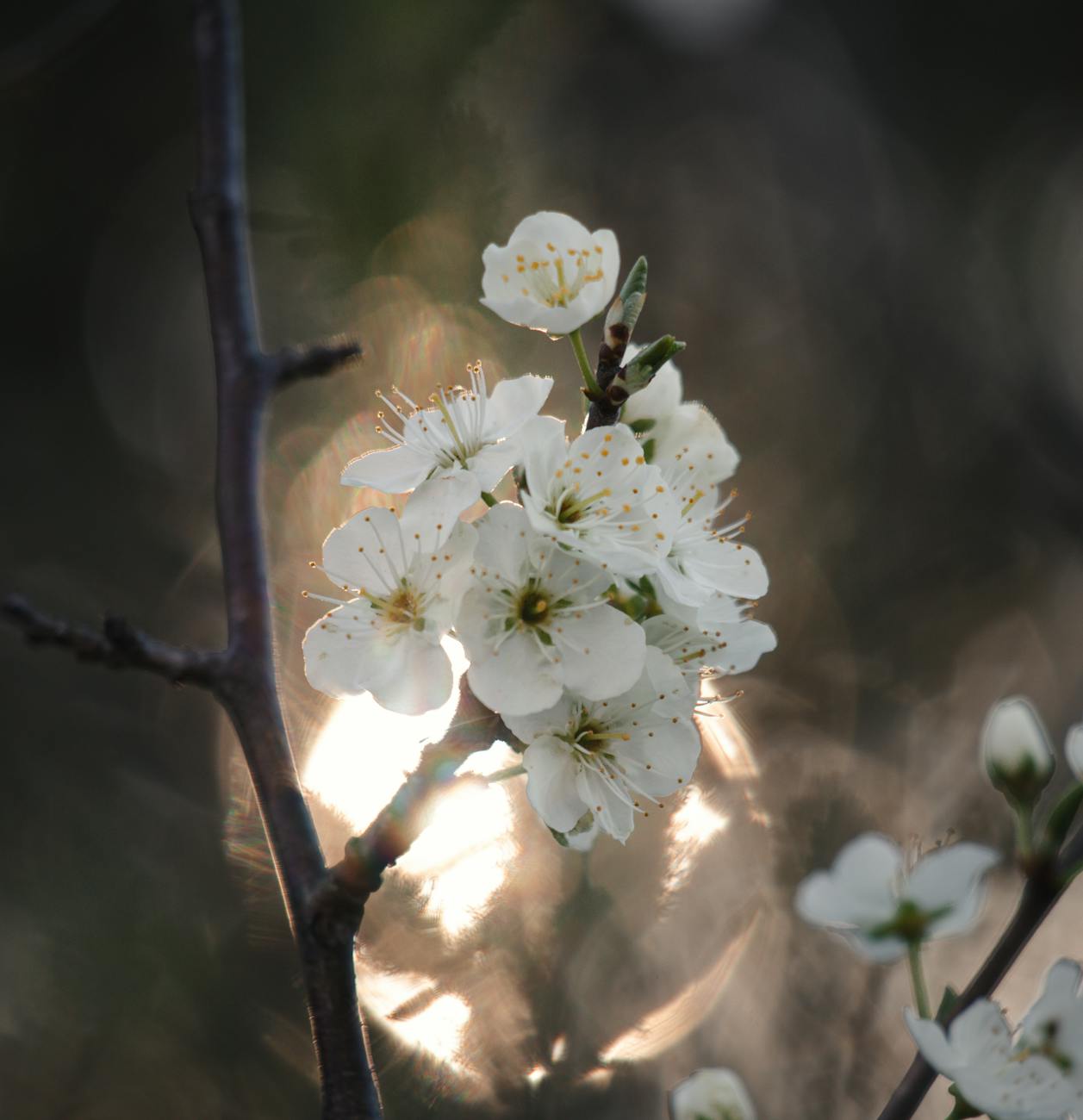
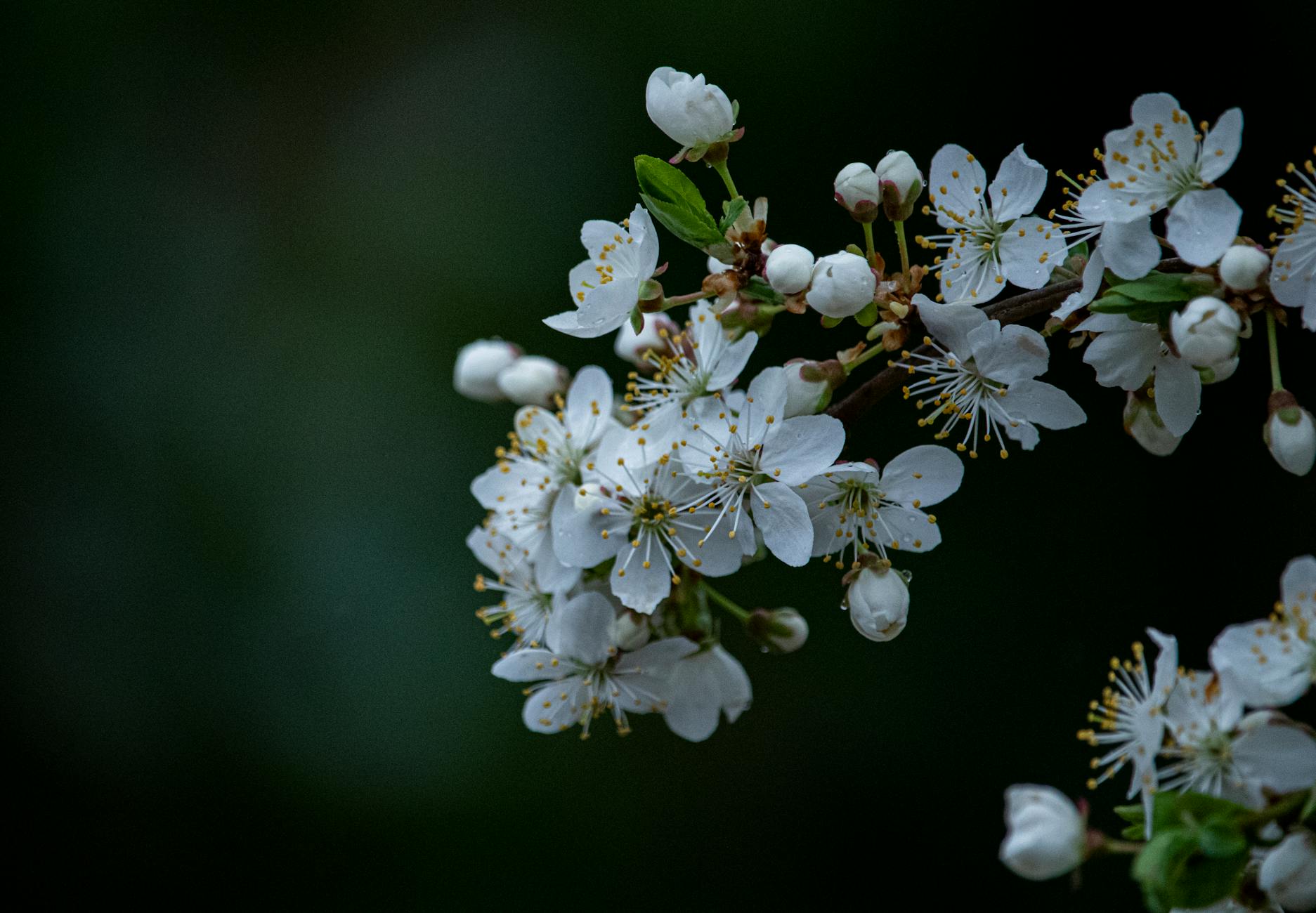
Few trees are as divisive as the blackthorn (Prunus spinosa). When you look at it from a distance, this may be hard to believe — these trees, with their dark bark and frothy white flowers, are honestly very pretty. They also produce sloes, which are excellent in preserves and a crucial ingredient in sloe gin.
So we’ve got a lovely tree with pretty white flowers and useful, equally attractive dark blue-purple fruits. How could a plant like that be divisive?
The answer lies deep in its fascinating folklore.
Blackthorn Magical Uses and Folklore
The blackthorn tree appears in the Irish ogham, an ancient writing system often erroneously called a “tree alphabet.” (In reality, it encompasses a variety of concepts and objects that were only connected to trees much later on.) This ogham few, straif (ᚎ), is frequently associated with misfortune, struggle, and ill omens. It’s regarded as a few of great power, but also the negative or malicious side of magic and the capricious nature of the fae. Blackthorn trees were said to be guarded by the Leanan Sidhe, and it was terribly bad luck to cut one down.
Interestingly, straif’s original meaning likely did not have any connection to the blackthorn at all and may have been a reference to sulfur. The Bríatharogam are, unfortunately, not much help here. We get “strongest reddening” (tressam rúamnai), “increase of secrets” (mórad rún), and “seeking of clouds” (saigid nél).
Blackthorn trees are so named for their sharp thorns. There are a variety of ways one may use these thorns in magic, but blackthorn’s thorns seem to have gotten a bad rap. They tend to be associated chiefly with negative or malevolent workings, and old witch-lore claims both that the Devil used one of these thorns to prick a would-be witch’s finger before they signed his infernal contract, and that witches would jab blackthorn thorns into poppets to harm people.
In Christian mythology, the blackthorn is also one of the trees said to have “betrayed Jesus” at the Crucifixion.
Since blackthorn isn’t a very big tree — in fact, it’s more often seen as a big bush — it’s very useful as a hedge plant. The thorns mean that it isn’t heavily browsed or easily damaged by cattle and deer, and it grows densely. This use may be part of its connection to the fae, since blackthorn is quite literally a plant that marks a boundary from one place to the next. It’s a plant that protects itself, as well as whatever may lay beyond it.
In fact, blackthorn occasionally crops up in old hero stories and fairy tales. The hero, pursued by a giant, throws a blackthorn sprig behind him. The sprig immediately roots and grows into an impenetrable hedge, holding back the giant and allowing the hero to escape.
This protection extends beyond hedges, too. Blackthorn wood is hard and dense, and the traditional material for a bata or shillelagh. They’re part club, part walking stick, and similar in shape to the rungu used in some parts of East Africa or the iwisa, induku, or molamu of South Africa (though usually a bit longer). Shillelaghs were used in structured duels, as other cultures might use rapiers, and there’s a martial art that focuses on shillelagh training to this day.
Shillelaghs were traditionally made using the roots of the blackthorn, where they kind of naturally form a knobby end. This made them less prone to cracking, but some people would still hollow out the knob of their shillelaghs and fill them with lead — a bit like Bugs Bunny dumping horseshoes into a boxing glove.
The process of making a shillelagh took time, but not many resources. If you had access to a blackthorn bush, as well as a chimney or a dung heap, you could make a perfectly serviceable weapon. The blackthorn tree was a social equalizer that allowed even the poorest people a useful tool and a means to defend themselves.
Using Blackthorn
Blackthorns aren’t easy to come by in the Americas. They aren’t native here, though they have been naturalized in parts of the Eastern US. So, if you want to work with any blackthorn-derived ingredients, you may have to get creative.
Kitchen witches or potion crafters may have an easier time. They can incorporate some sloe preserves, sloe chutney, dried sloes, sloe gin, or any of the very excellent sloe or blackthorn shoot-based liqueurs into their work.
Other than that, it is sometimes possible to find small numbers of blackthorn thorns available for sale online. When I can get them, I love using them for defensive workings. Write a name on a slip of paper or parchment, skewer it with a blackthorn thorn, and toss it into a jar or box of suitable ingredients. It’s easy, it’s poignant, and it’s perfect.
Failing all of that, you may have to see what blackthorn characteristics you want to tap into and find a good workaround. For thorns, look for stickers from other thorny plants. (Berry canes are often a great source of these.) For working with the fae, you may have an easier time finding a rowan or hawthorn tree. For protection, you’re pretty much spoiled for choice — there are tons of other herbs used for all forms of protection, from securing your home and keeping malevolent entities away to driving out unwanted housemates. Seriously. There are so many, this post would be a novella were I try to list them all.
Sadly, many of us outside of Europe won’t have the opportunity to work with this beautiful, useful, folklorically-rich tree firsthand, but that’s okay. The blackthorn is a plant with history and power that’s worth understanding, even if we may never have the privilege to meet one.
Kiko has always been a “daddy’s girl.” The kind of cat who’s content — nay, delighted — to sit on my Handsome Assistant’s lap for hours at a time, gazing up at him with an expression that could only be called “worshipful.”
Don’t get me wrong, she loves taking small naps on me. But if he’s available, it becomes much more, “This is my daddy’s house. That idiot lives here too.”
So on Thursday, when she ignored him to come snooze on my stomach and gently headbutt my face, I was surprised.
“Am I dying?” I joked. “Don’t say that. You know she loves you,” he replied.
Anyhow, 10:00 Friday morning. I woke up with a nagging backache of a kind I have uneasily come to associate with pyelonephritis. Even though I hadn’t had any urinary symptoms beyond the “maybe I should have a glass of cranberry juice about this, just in case,” kind, I was somehow progressing into the worst pain of my life. I tried taking a hot bath, just in case it was a muscle or joint thing. When I was in danger of passing out and drowning, I crawled to my Handsome Assistant’s office door and pounded on it.
“Is everything o-“ “help“
No position was comfortable, or even marginally less agonizing, so I kind of did the worm on the floor for a while as he looked things up, asked me questions, and decided it was time for a ride in the Wee-woo Wagon.
Ten minutes after that, I was loaded in the back of an ambulance and shot full of fentanyl and Zofran.
“Is it helping?” One of the paramedics asked. “It’s… I still feel pain. But in a way that’s hard to care about,” I replied. “Yeah, it does that. I have some other stuff that’s more dissociative.”
I don’t remember what I said after that. I’m pretty sure it was something akin to that everyone in the ambulance was now my friend except for this one light that was kind of strobing in a way that I Did Not Appreciate.
It being early January, every ER was swamped. (Also, contrary to popular belief, arriving in an ambulance does not get you seen faster than if you walk in the door. You get triaged just like everyone else no matter how you get there.) Fortunately, the ambulance guys had started an IV so I was able to get some more medication for nausea and pain while I had to wait. Also, because I compulsively apologize when I’m afraid or in pain, I did that to pretty much everyone I came in contact with. If my mind couldn’t find a reason to apologize, I just said “Thank you” over and over instead.
At one point, my Handsome Assistant inspected the various doors, closets, and cubbies in the room. He found this closet/wardrobe type of arrangement and decided it was a good time to go to Narnia. (Also that black box is an Xbox mounted to the wall, because this room used to be/occasionally still is used for pediatrics. No games or controllers, though. I think you have to ask for those.)
Everyone was very nice and extremely helpful. I briefly talked to a teledoc when they were initially triaging me, so they could order some pain meds and initial testing (a CT scan, some bloodwork, and a urinalysis) while I had to wait for a room. My Handsome Assistant handsomely assisted me by occasionally asking how things were progressing, if I could have some water or ice chips, and so on. One of the nurses noticed he called me “they,” so she asked what my pronouns were just to make sure.
“Honestly, I do prefer ‘them.’ But I’m in the ER, you could call me Donald Duck and I’m really not gonna worry about it,” I explained, around a mouthful of ice chips.
There were ultrasounds. An offer of morphine. Ultimately, it looks like it’s a urinary thing of some kind, and my immediate future looks like a whole lotta antibiotics, phenazopyridine, and heating pad time.
Hat tip to everyone in the ER, though. The doctors were thorough, the nurses were very chill and understanding, and the imaging technicians/various -ologists did a lot to help put me at ease. I feel like I’ve been dragged over several miles of gravel road, but I’m probably going to be fine.
But anyway, the point I’m trying to make is that, should you feel a deep, continuous ache in your lower back, and stretching, massage, etc. don’t seem to help, get thee to a doctor instanter. Don’t wait. Not only can it be very dangerous, but it also hurts super badly the entire time.




















 Marble Crow