Plants and Herbs · Uncategorized

Vine Folklore and Magical Uses

Hello!

Close up of a purple passionflower.
Photo by kiwiicat on Pexels.com

My passionflower is loving this weather, though the rest of the plants here seem less than enthused about the whole thing. It’s not only encompassed half the porch, it’s climbed nearly up to the roof and sent out several tendrils along the lawn. If it didn’t also put out beautiful flowers and a ton of fruit, and act as a cozy little haven for sleepy bees, I’d be tempted to cut a bunch of it down.

That got me thinking — if I did, what would I do with that much passionflower? I can only tincture so much of it. Could I weave it into baskets? Turn it into rope?

Vines, in general, have a long history as religious symbols, the subject of legend and folklore, and magical ingredients. If you, too, are experiencing a sudden flush of viny plants that you don’t know what to do with, folklore may have some ideas for you.

In the Ogham writing and divination system, the letter muin (ᚋ) is commonly interpreted as “vine,” and usually portrayed as either grape or ivy. However, grapes are not native to Ireland and, even when they were introduced, they never really took root there (pun intended — Ireland is not a great place to try to grow grape vines). The word “muin” also doesn’t have anything to do with vines. Instead, it refers to a thorny thicket. This has made muin one of the most controversial and seldom-agreed-upon parts of the Ogham.

The ancient Greek deity of wine, orchards, frenzy, fertility, and religious ecstasy, Dionysus, is also intimately connected to vines. (And I do mean intimately.) Not only are grape vines his domain, he is also regularly portrayed as wreathed in ivy vines. Here, the evergreen nature of ivy represents the gods’ immortality. It’s also connected to fertility and sex.

Dionysus isn’t the only one to wear an ivy crown, either. Thalia, Muse of Comedy, is also portrayed as wearing one.

In Egyptian legend, Osiris is associated with the ivy, again, because of the plant’s connection to immortality and rebirth.

There’s a Persian (now modern day Iranian) legend that tells of the origin of wine. Long, long ago, a bird dropped some seeds by a King’s feet. Intrigued, the King had the seeds planted and cared for. The seeds became sprouts, the sprouts became vines, and the vines grew heavy with grapes. Overjoyed, he had the delicious grapes picked and stored in his royal vaults.

However, grapes don’t stay fresh forever. The vault was too damp for them to dry into raisins, and too warm to chill them. Instead, the grapes began producing a dark liquid which everyone assumed was likely a deadly poison. Before the old grapes could be cleaned up and thrown away, one of the King’s wives attempted to end her life by drinking some of the grape “poison.” When the King found her later, she was far from deceased — in fact, she was dancing, singing happily, and apparently thoroughly enjoying being the first person in recorded history to ever get absolutely rocked off her tits on wine. With this evidence that the liquid was not poison and, in fact, seemed to make people quite happy, the King named it “Darou ē Shah” — The King’s Remedy.

No word on what happened to his wife, however. Therapy being in short supply thousands of years ago, one can assume she either eventually found some actual poison or developed an absolutely staggering drinking habit.

English ivy climbing a white wall.
Photo by Madison Inouye on Pexels.com

Ivy is about more than ecstasy, wine, sex, and living forever, though. One look at the growing behavior of many vines can show you exactly what else they’re good at: binding things. Even the beautiful, gentle passionflower vines climbing my front porch do so due to grasping tendrils of surprising strength and tenacity. Some vines, English ivy in particular, also get a reputation here for damaging property and killing native trees.
Depending on the context, vines are then equally as restrictive as they are freeing. Sometimes, vines are heavy with grapes and the promise of wine, intoxication, inspiration, sexual desire, and ecstasy. Sometimes, they’re ivy vines, evergreen and symbolizing enduring life and lush greenery during the winter months. Other times, they are the vines that grow around things, binding and restricting them like ropes.

Ivy is also associated with protection and healing. This may be due to its connections to immortality and rebirth. Grapes, on the other hand, are associated with fertility, money, and all things connected to the concept of abundance. Briony, on the other hand, is both money and protection. Placing money near a briony vine is said to cause it to increase.

In the tale of Sleeping Beauty, vines (sometimes) play a key role. In the Disney version, Aurora is cursed, pricks her finger, falls asleep, yadda yadda yadda, vines grow and cover everything. In an older telling, it was a dense hedge of climbing roses. One yet older version of the story (Sole, Luna, e Talia) also has Sleeping Beauty-
You know, I’ll just let Giambattista Basile tell it.

“crying aloud, he beheld her charms and felt his blood course hotly through his veins. He lifted her in his arms, and carried her to a bed, where he gathered the first fruits of love.”

Yeah. When that fails to wake her, he pulls his pants up and rides off to his castle and his already existing wife, the Queen. Sleeping Beauty only awakens again when one of the twins she subsequently births tries to nurse and accidentally sucks the splinter from her finger.
(As if that weren’t enough, the Queen gets fed up with the King’s infidelity and tries to have the children cooked and fed to her husband.)
Interestingly, vines aren’t prominent in the assault version of Sleeping Beauty — they become more important the further you get from that version, and the closer you get to Disney’s much more sanitized telling. It’s as if the presence of the vines in the story both bind Sleeping Beauty in her castle and protect her from the King.
No vines? Not even a climbing rose? You’re in for a bad time.

Vines make beautiful decorations for the home and altar. Evergreen ivy is commonly brought indoors during the winter months as a decoration, tied with swathes of ribbon, hung with bells or other ornaments, you name it.

Vines can also be used to bind things. Hollywood has portrayed magical bindings in some… interesting ways. For example, “binding” a witch à la The Craft.
This, however, is silly.

Bindings can go one of two ways: a person, thing, or situation may be bound (in the sense of binding someone with rope) to keep them/it from causing harm or otherwise interfering with you. You can also bind something to yourself. For example, a really great job that you just got, happen to enjoy, and want to make sure that you keep.

In this case, the binding is a form of sympathetic magic. You take a representation of the thing you wish to bind, and effectively tie it up with what you have on hand. (This may be vines, if you want to enlist the vine’s help and magical associations, but can also just be household twine in a pinch.) There are plenty of chants and incantations you can recite while doing so, but I find that it’s most effective if you speak from the heart — inform the subject why they are being bound, and what you hope will come of it. Put it in a jar or box, close it tightly, and keep it somewhere safe so you can undo the binding when the time comes.

To bind something to yourself, you’d use a representation of yourself (like a photo or lock of hair) and a representation of what you wish to bind to you. Wrap both objects together with the vines or string, again speaking from the heart while you do so. Place the objects in a jar or box and keep them somewhere safe.

Bindings aren’t the only type of sympathetic magic that vines are good at, though. Plant a vine (preferably not an invasive species — there are loads of native vines) along with a representation of something you wish to grow. Ask for the vine’s help, and declare that, as the vine grows, so shall grow the thing you desire. Take good care of that vine, and keep an eye on its growth.

While every species of plant has its own magical uses and depictions in legend and folklore, vines are in a class of their own. Each one has their own unique properties, but vining plants also have plenty of common ground.


Uncategorized

RAL’s Spring Art Show

Hello! Sunday was the opening of RAL‘s Juried Members’ Spring Show. My Handsome Assistant and I attended, albeit briefly, because of a combination of scheduling conflicts and also enough antihistamines to sedate the Cloverfield monster. (I had two paintings selected for the show — one acrylic, the other casein and gold leaf.)

While we didn’t get to stay for the award ceremony, it’s always great to see the artwork itself. Since this is one of RAL’s bigger shows, there are pieces that cover pretty much every combination of genre and material. If you’ve never been, I recommend it. If you can’t attend, you can explore the exhibit online.

Right now, I’m about to go pick strawberries and peas, feed the crows, and plant a rosebush. Here’s hoping today is treating you well!

Uncategorized

Iris Folklore and Magical Uses

It’s the first of the month! Did you remember to say “rabbit, rabbit?”

How’s it going?

As I write this, it’s almost 90° F. My cats are yelling at me for reasons utterly inscrutable. My bearded dragon is demanding to go for a walk on the deck. My Handsome Assistant is at his other job, the one that does not entail handsomely assisting me. Nonetheless, the garden is looking wonderful and all is well.

The hydrangeas and roses are full of buds, the strawberries and blueberries are laden with immature fruits, and the beautiful irises my Handsome Assistant planted are vibrantly blooming.

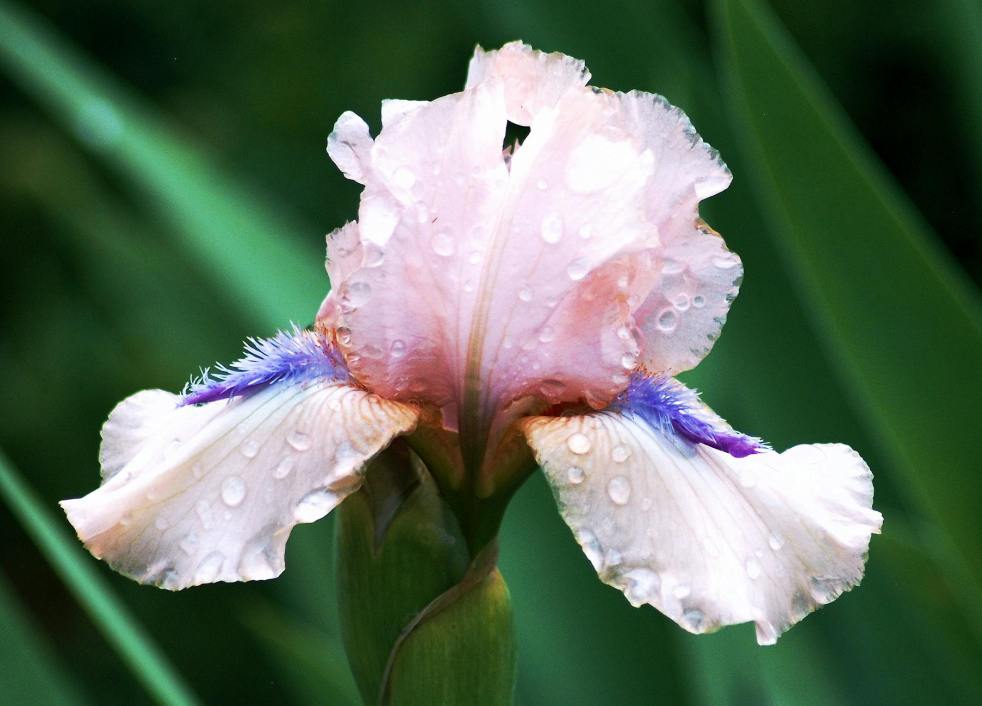
A purple, peach, and orange bearded iris.
One of the bearded irises growing next to our porch.

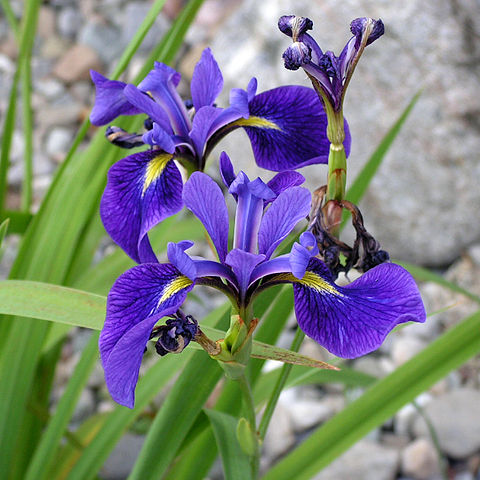
These are sterile bearded irises (Iris × germanica), which aren’t native to this area. We do have our own native species, the blue flag iris (Iris versicolor), which typically grows in wet areas. A lovely art gallery near here has a beautiful water garden just full of blue flag iris.

Several blue flag iris flowers and buds.
A blue flag iris, photo by D. Gordon E. Robertson.

Irises bloom in spring and summer, so this is prime iris season and an excellent time to look into the mythology, folklore, and magical uses of these lovely flowers.

First, let’s start with the name: Iris. These flowers are named for the Greek goddess Iris, who was a messenger between the gods and the rest of the world. She traveled on a rainbow and it was said that brightly colored flowers sprang up everywhere she stepped.

In ancient Greek legend, it was also said that iris flowers were one of the flowers gathered by Kore and the nymphs before she was abducted by Hades to become Persephone.

Irises are not only showy flowers, they’re one ornamental flower species that actually comes in pretty much every color. Many flowers (roses and sunflowers being particular examples) just don’t have the genes to produce certain color pigments, but irises boast a very impressive color palette.

(This is also why all of those ads for blue rose or sunflower seeds are scams. The closest thing you can find to a “blue” rose is probably best described as a sort of lavender shade, not an actual blue. Any photo of a blue rose or sunflower is of a flower that has either been artificially colored with dye or manipulated with image editing software.)

The roots of some varieties of iris are heavily used in perfumery. Called “orris root,” they are often used as a fixative and base note for perfumes and incense. The essence of the roots is said to smell like violets, and is commonly the source for natural “violet” perfumes.

Orris root is also a flavoring ingredient, particularly for gin. Iris roots contain some quantity of the toxic glycoside iridin, but the roots of perfume and flavoring varieties are relatively low. Other varieties, like the blue flag iris, contain much more iridin and should not be consumed.

A yellow iris flower growing in front of the reflection from a pond.
Photo by Roman Biernacki on Pexels.com

Irises are sometimes used in land remediation. Yellow iris, in particular, is used to clean up polluted waterways since it’s excellent at snatching and holding on to nutrient pollutants (think things like fertilizer runoff from agriculture) that would otherwise fuel dangerous algal blooms and fish kills. Unfortunately, they’re so good at this that they’ve become a bit of a problem in some heavily polluted areas — the nutrients they grab onto fuel their growth so much, they can actually clog waterways.

Irises have a long history as an image of nobility and authority. They’re the origin for the fleur-de-lis of French heraldry, where each “petal” represents a sector of society: the peasantry, the nobility, and the clergy. In the 15th century BCE, Pharaoh Thutmose III conquered Syria, which had an abundance of native irises. He brought the flowers back to Egypt, where it became a symbol of power and authority.

In Asia, irises are more likely to connect to the idea of banishing evil. One variety of Chinese iris, Iris anguifuga, was thought to keep snakes from entering anywhere it was grown. It grows during winter and becomes dormant in spring and summer, during which snakes can sneak into the garden again. The ground roots are also used as a remedy for snakebite. In Japan, irises were associated with exorcism.

In addition to authority and banishing, irises are also frequently connected to death. They’re a common flower to plant in Muslim graveyards in Iran, and the ancient Greeks also would plant these flowers on graves in the hope that the deity Iris would come to escort the deceased to the afterlife.

Overall, culturally, irises seem to be a very commanding flower. Even in areas where they aren’t specifically connected to the idea of authority, they’re associated with commanding evil or unwanted things to leave, or making requests of the gods themselves. If you look at an iris, this makes sense — they stand tall and straight, with large, showy blooms like flags.

Magically, irises are typically used for purification and wisdom. Orris root, specifically, is frequently employed in formulas for meditation, divination, and love-drawing. In Hoodoo, orris root is a very common love herb.

Irises are ruled by the Moon and Mercury, and connected to the element of Water.

As with many other plants, one of the best ways to work with iris is to grow it. Since it has a firm reputation as a plant for authority and keeping evil away, it’s a good candidate for growing around the edges of one’s space.

Of course, you can also always work with orris root. One common way to employ it is as an ingredient in incense, magical powders, and container spells. Use chips of the root in herbal sachets or jars or grind it into a fine powder for powders and incense. While it seems to have a very iron-fist-in-a-velvet-glove presence, this isn’t exactly an ingredient for “asking politely.” It has a reputation as a persuasive or commanding herb.

Photo by Aaron Burden on Pexels.com

I also feel that orris root is a power herb, if only through its very commanding properties and presence. Remember, from France to ancient Egypt, the iris flower was a symbol of power and authority. Add it to magical mixtures to increase their power.

Orris root powder is also used as-is in some traditions. Take a pinch of the powder and blow it onto a significant other’s clothes to keep them faithful and ensure that they return your love. However, particularly given orris/iris’s commanding nature, it might be best to do this with some kind of consent from your partner.

Considering the herb’s connections to authority and love, it seems like a natural choice for formulas related to popularity and charisma. A “queen bee” sort of herb, if you will.

I love irises. I think they’re stunningly beautiful and come in an amazing array of colors from deep reds to bright blues. The availability of sterile iris varieties also means that you can enjoy them with less fear of them taking over your garden. Worse comes to worse, if you end up with too many bearded irises, dig them up and dry chips of the roots for use in magical or meditative formulas.

Neodruidry · Plants and Herbs · Uncategorized

Cedar Tree Folklore & Magical Properties

I’m not a fan of fake greenery. While it can definitely amp up a room’s decor when it’s judiciously combined with real plants, I always end up forgetting to maintain it until it’s faded, dusty, and doing the exact opposite of helping things look fresh and natural. Blegh.

Anyway, when it comes to decorating for Yule, my Handsome Assistant and I go for fresh greens. There’s a florist nearby who sells trimmed branches of various evergreens pretty cheaply. Combine a few of them with some wired ribbon, and you can make a very pretty swag or garland without spending much money at all.

A close up of fanlike American cedar branches.
Photo by Abdul Zreika on Pexels.com

This year, we picked up the cutest little potted Alberta spruce tree. We’re keeping it indoors until spring, at which point I’m going to repot it and set it outdoors. Next winter, it’ll probably still be small enough to fit in the living room and be next Yule’s tree, too. Once it’s outgrown its pot, we’ll plant it in the front yard.

We also picked up some trimmed branches from an incense cedar tree (Calocedrus decurrens), which I used to decorate table tops and the top of our curiosity cabinet.

Since we’ve been taking down our Yule decorations and cleaning up the shed bits of greenery, I thought now might be a good time to look into the folk tales and magical associations of cedar trees.

First things first: “Cedar” isn’t a very exact term. True cedars are chiefly found in the Mediterranean, but there are also quite a few unrelated American species referred to as “cedar.” True cedars have needles, while American species have flat leaves, like scales, that form delicate fernlike or fingerlike structures (as seen in the photo above). There are only four species of “true” cedar: cedar of Lebanon (Cedrus libani), Atlas cedar (C. atlantica), Cyprus cedar (C. brevifolia), and deodar cedar (C. deodara). American cedar species are actually members of the cypress family, Cupressaceae!

The needles of an Atlas cedar, one of the "true cedars."
Photo by Feyza Dau015ftan on Pexels.com, showing the needles of a “true cedar.”

American cedars are culturally significant to the people indigenous to the trees’ native ranges. Indigenous people used (and continue to use) cedar as a sacred incense and purifying herb. Cedar trunks were used to make boats, the branches were used to filter sand from water and when leaching acorns for acorn flour, and the fibrous roots are still used to make beautiful baskets.

Cedar smoke was also used to prevent illness, which mirrors the old Scottish practice of fumigating one’s home with juniper for the same purpose. This is particularly interesting since the eastern red cedar, Juniperus virginiana, is actually a juniper. Junipers are also members of the cypress family, like other American cedars are.

Many Salish groups had special rituals for the felling of cedar trees. These trees are considered symbols of providence, abundance, and generosity.

A Mi’kmaq tale warns you to be careful what you wish for. A man went to the legendary Glooskap and asked if it was true that Glooskap gave people whatever they asked him for. Glooskap demurred, saying that he couldn’t always answer people’s requests, but he helped however he could. The man asked Glooskap for immortality, but he refused — all things must die. Once everything has died, even Death would probably die. Disappointed, the man asked to live longer than any man has ever lived. In return, Glooskap turned the man into a tall cedar tree.

A Potawatomi tale tells of a group of men who visited the Sun to ask for help. One desired to see the future, two desired immortality, another desired a blessing associated with water, and yet another had gone along just to help the others. The man who wished to see the future was set down in the west, where the Sun goes to end the day. One of the men who wanted to be immortal became a boulder. The man who wanted a water blessing became a half-man, half-fish. The other man who wished for immortality became a cedar tree. This is how people received the stones and cedar used in sweat lodge ceremonies.

In Judeo-Christian stories, cedar represents protection and strength. Its wood was used to build Solomon’s temple. According to Medieval Christian tradition, the cross used during the crucifixion was made of cedar. For this reason, it was considered bad luck to burn cedar wood. Planting a cedar in your yard was also believed to bring misfortune and poverty, but a cedar growing naturally was considered fortunate.

In Irish folklore, cedars were associated with strength and durability. Their wood is extremely rot-resistant, and the trees live for a very long time.

Like a lot of other magical ingredients used for protection and banishing, all types of cedar repel pests. The aromatic compounds in their essential oils are a deterrent for moths and all kinds of biting insects. All around the world, there’s a very strong connection between “plants that keep bugs out” and “plants that keep evil away.”

Depending on your needs, you may or may not be able to substitute juniper-family cedars for “true” cedars. There is quite a bit of overlap, however — no matter which species you’re working with, these trees are connected to purification, protection, longevity, and strength.

Since we’re talking about some very distinct groups of trees that use the same common name, I won’t go into cedar’s medicinal properties here. This underlines the importance of using standardized nomenclature — each of these species has its own bouquet of medicinal compounds (and some potentially dangerous ones, like thujone), so it’s important to know exactly what you’re using. Never go by a plant’s common name when you’re looking for medicinal ingredients, because there’s a ton of common name overlap between completely unrelated species.

The most important thing to recognize when working with cedar is that this is a plant that should be respected. The famous cedars of Lebanon (Cedrus libani) were highly regarded — the oldest among them were considered sacred, and anyone who harmed them would be overtaken by misfortune. In the Potawatomi tale above, the man who became a cedar says that one should “call the cedar tree your nephew when you speak of it.” Folklore all around the world warns against cutting down a cedar without performing the proper ceremonies.

With that in mind, there are multiple ways to work with cedar. Cedar essential oil is frequently used in magical aromatherapy (though a little bit goes a very long way). Cedar twigs can be burned as incense and used in smoke cleaning. Since the wood and needles are so strongly aromatic, you can also infuse them in oil.

Dried conifers are easy to crumble, so they’re an easy ingredient to include in magical powders or incenses. Grind dried cedar leaves fine and sprinkle the powder in the corner of your rooms or around the border of your property while asking for protection against malevolent forces.

If you or anyone in your household has been sick. use cedar smoke to drive the illness out. Give the sickroom (in modern homes, the sick person’s bedroom and bathroom) a thorough physical cleaning, air it out well, and fumigate it with cedar smoke.

Right now, I have some dried cedar branches waiting to be used. These didn’t require a tree to be felled — instead, they’re trimmings. My plan right now is to grind the leaves fine, mix them with a binder, and form them into incense cones. The branches have blessed and protected my home when they were fresh, and they can continue to do so once they’re processed into incense.

I love the warm, earthy, spicy smell of cedar. In my tradition, it’s connected to the sun and the element of Fire. During these dark, cold months, inviting the power of cedar into your home can bring some much-needed heat, light, cleanliness, and protection.

Uncategorized

Ginger Folklore and Magical Properties

Hot spices have a certain reputation in magic. On one hand, they’re catalysts — helping to speed things along and bring results more quickly. On the other, many of them are baneful or strongly protective. (Chili peppers, for example, are found in many a banishment and protection recipe.)

Then there are what I call the “sweet heat” spices. These are catalysts that don’t show the powerful banishing or repelling properties of other hot spices. They have heat, but their heat is more geared toward attracting things than driving or keeping them away. This is where things like cinnamon and ginger fall.

Since it’s December, I figured a post on ginger would be timely. After all, it’ll be time for ginger cryptids soon!

Ginger (Zingiber officinale) is related to turmeric, galangal, and cardamom. It originated in Southeast Asia, but there are a number of other plants that bear the name “wild ginger.” American wild ginger species are members of the family Aristolochiaceae, making them related to Dutchman’s pipe. While American wild ginger tastes and smells similarly to Z. officinale, they are not closely related. American wild ginger also contains Aristolochic acids which, while they have some medicinal properties, can also damage kidneys and trigger particular types of liver and urinary cancer. (Exposure to Aristolochic acid also correlates with a poor prognosis for liver cancer.) In short, anything that wild ginger can do, there are other remedies that can do it better and more safely. So, for all purposes that suggest ingesting ginger, please assume that this post refers to Z. officinale, and not members of Aristolochiaceae.

In ancient Greece, it was said that ginger flowers grew where Demeter’s tears had fallen after Persephone’s abduction.

In China, ginger was associated with the Monkey King Sun Wukong. He is a fiery-tempered trickster figure who first appeared in the novel Journey to the West published during the 16th century.

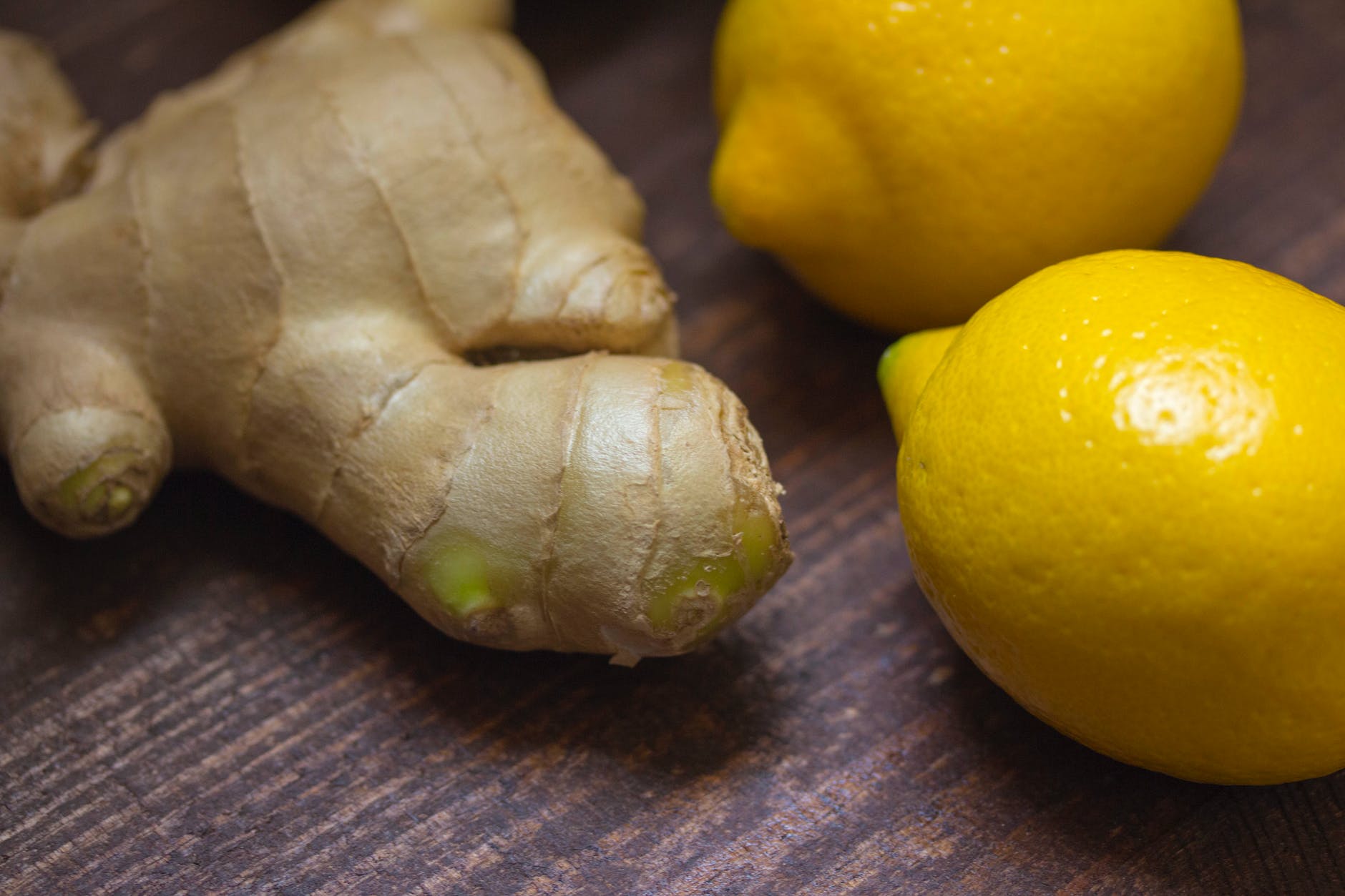
A knobby root of fresh ginger, alongside some whole lemons.

According to Hindu folklore, the first ginger plant arose when Lakshmi tossed a piece of ginger into the ocean.

Pretty much every culture that used ginger recognized it for its warming properties. In ancient Greek, traditional Chinese, and Ayurvedic medicine, ginger is regarded as a spice to ease respiratory ailments and improve digestion. Even today, ginger is used as a natural remedy to reduce nausea. It has shown remarkable efficacy for nausea triggered by pregnancy and chemotherapy.

One old healing ritual involves chewing a bit of fresh ginger root, spitting it out, and rubbing it either on a sick person, or on a photograph or poppet of the sick person.

Overall, ginger is a magical catalyst. This means that it helps achieve results more quickly. It’s also said to increase one’s “inner fire.”

Ginger is often used in romantic formulas to induce passionate feelings.

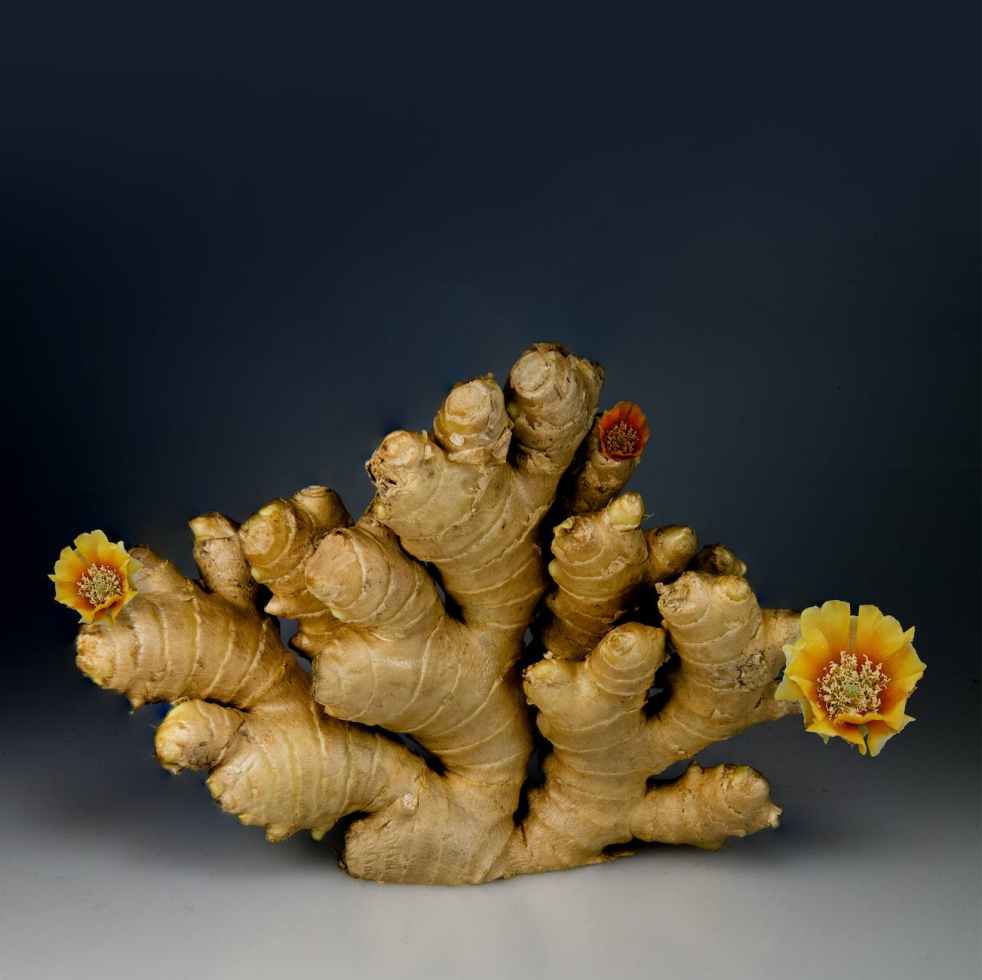
It’s said that the most powerful ginger roots are those that are shaped like humans, with a knobbly “head,” two arms, and two legs.

This root is associated with the element of Fire, as well as the Sun. As a solar herb, it’s frequently used in rituals and formulas for success and prosperity.

Just as a reminder, Z. officinale should be used for preparations that are intended to be ingested. Members of Aristolochiaceae should not be used internally.

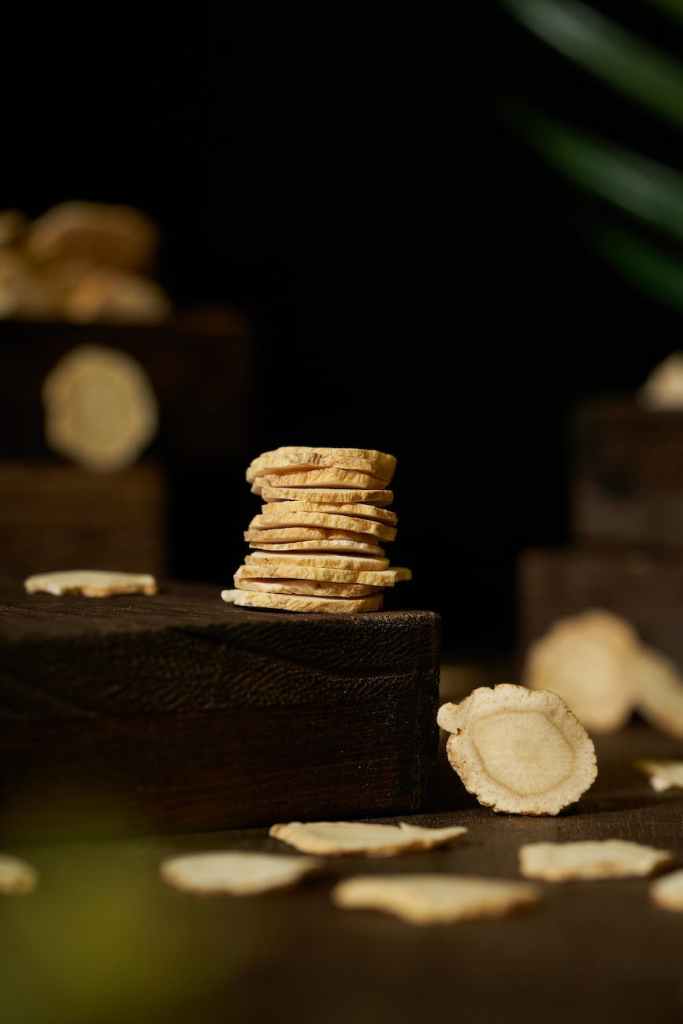
Coin-sized slices disks of ginger root.

Since ginger is a catalyst used in formulas for romantic love, it’s an excellent ingredient in “date night” recipes. Use it alone or with other love- and passion-inducing ingredients, like rose petals or cinnamon, in food or beverages to share with a lover.

A simple money spell involves sprinkling a bit of powdered ginger in your wallet. (You can also tuck a few disks of dried ginger in there, instead.)

As ginger is also considered a physically empowering, warming herb that increases heat and vitality, drinking a cup of ginger tea before a ritual may help facilitate power raising. You can also brew some ginger tea, enchant it for strength, and drink it before playing sports or doing anything physically demanding or competitive.

It’s the Yuletide season here, so ginger is very easy to come by. You can find it in tea, cookies, cakes, and savory dishes alike. With so much delicious ginger at your fingertips, why not use some in your spellcraft?

Uncategorized

Let’s Read: “Hound”

A baby, stolen from his mother by a bloodthirsty goddess.

Human populations driven to war by an ancient entity.

If these don’t sound like the mythological Irish hero Cú Chulainn‘s story, you’re not wrong exactly, but they are what opens the action in Paul J. Bolger, Barry Devlin, and Dee Cunniffe’s Hound.

This is a retelling of the life of Cú Chulainn, but reframed to suit the constraints of a graphic novel. The artwork is gorgeous and heavily stylized, and the story does a very good job of hitting the high points. Some artistic liberties were taken, which the book acknowledges — the story is framed as told by the Morrígan, who outright says that there are many versions. “But remember… I was there. They were not.”

Hound is ultimately a tale about destiny. Who controls it? Do we, or are the wheels set in motion long before we’re able to make our own decisions? How do we win against the whims of forces beyond us? Can we overcome our innermost nature? How do you struggle against a god?

First, the art style. The book is illustrated entirely in black, white, and blood red. The linework is sharp, evocative of danger and madness. The characters also all have visually distinct appearances — there’s no “same facing” here. Not only do they have distinct faces, they have unique hair, tattoos, and jewelry, too. This is important, because the story moves quickly and people can come and go in a blur.

A man kneels beside the corpse of a large, savage looking dog. A text bubble says "Who will protect my family now?"
Below that, a young, not-yet-Cú Chulainn says "I will... be your dog."

Many characters were blended or altered in order to make a smoother, more cohesive story. Some of the mysterious elements of the original (like Deichtine giving birth to Cú Chulainn, who has multiple foster parents) are greatly simplified (Cú Chulainn is kidnapped and raised by the Morrígan, who uses this time to plant the seed of his madness). This isn’t entirely a bad thing — Cú Chulainn’s story is long and complex, with many figures who come and go and have their own, branching stories. Condensing it into a graphic novel requires a bit of ingenuity.

As a graphic novel, it’s excellent. The story is ancient, but it feels fresh. The artwork suits the material. The artistic liberties that were taken with the story help to make it a cohesive, self-contained novel.

From a mythological perspective, it also seemed like some liberties were taken in places where they didn’t quite make sense. Aífe (Eva in the book) is an entirely different character. Rather than being a woman warrior who nearly bests Cú Chulainn in single combat before he creates a diversion, she’s Scáthach’s rebellious — and kind of whiny — daughter. Rather than Cú Chulainn demanding she bear him a son after he defeats her, the two of them get hot and heavy during a hunting montage. Rather than Cú Chulainn giving her a gold ring and telling her to send his son to find him in seven years, she’s butthurt that Cú Chulainn left her for Emer and sends the boy to hunt him down herself.

It’s understandable that a modern telling of Cú Chulainn’s story, where he’s the hero, wouldn’t want to include him demanding Aífe sleep with him in exchange for her life. Nonetheless, I don’t feel like this telling of the story really did her justice. She’s Scáthach’s rival. A legitimate threat, to the point where Scáthach drugs Cú to keep him safely out of the battle. A woman warrior capable of defeating Cú Chulainn. A lot of that was lost, I feel.

King Conchobar is also very different. By all accounts, he was a good king. In Hound, he’s portrayed as almost peevish. This worsens as the story progresses and he develops a grudge against Cú over Emer. Here, it’s the king who sends Cú to Scáthach as punishment.

A significant part of Emer‘s character was lost, as well. In the original, she tells Cú that she’ll only marry him when he proves himself worthy. She isn’t engaged to a king — in fact, kings turn down her father’s offer of her hand, because they know Cú wants her and know better than to get on his bad side. In Hound, it seems that Emer is flattened and her agency taken away. There, she’s engaged to the king against her will, who rejects her when she falls in love with Cú. This takes place over a couple panels’ worth of a travel montage. Why do they fall in love when she’s shown doing nothing but complaining and apparently has complete disdain for Cú? Your guess is as good as mine.

Perhaps my biggest character gripe is the Morrígan. In Hound, she is decidedly one-note. Almost more cryptid than deity, she is a shapeshifting entity who is dissatisfied with the lasting peace among humans. She kidnaps Cú in order to make him her warrior, to stir things up. She instigates the cattle raid to cause war. She has no motivation here other than to cause bloodshed. Alas, every story like this needs a villain, and she’s set up to fit that particular bill.
(She’s also portrayed as a single entity, rather than a triple goddess, but that’s not really an issue.)

I do like how Hound treats Scáthach (simplified to Skye), however. She isn’t portrayed as “comic book hot.” There are no spine-snapping poses, skintight outfits, or fight-inhibiting titties here. Her strength is not an informed characteristic — she exudes it. She is a powerful figure. She has a wild, animal sensuality that is far removed from standard comic heroines. This is a woman who can and will use her thighs to crush a skull like a watermelon. (And she’ll put you through a training montage until you can do the same.)

A tall, powerfully muscled woman stands over Cú. She holds a blade to his head and says, "So you are the great Cú Cullan..."
A nude Scáthach, body painted with bold swirling designs, reclines on carved stones. She says, "Let the sleeping stones seep this world from your bones and the steam steer your dreams in the other..."

As for the other characters, I wish I had more to say. At one point, we’re introduced to a five-man band of Scáthach’s students, but they don’t end up being as significant as I expected. (The only exception is Ferdia.) The story, as dense as it is, moves much too quickly to really become invested in many of Cú’s relationships. People die left and right, but in a way that’s hard to care about.

Ferdia, on the other hand, is treated well. He’s portrayed as a boisterous bruiser, a fitting blood brother for Cú, who is capable of holding his own even without the divine favor Cú has. He’s Medb’s champion, but he’s not a villain. He’s strong, handsome, honorable, and his final meeting with Cú is appropriately upsetting. He’s given weight in a way that the other characters — even some very important ones — are not.

This is not to complain about the story itself, however. Like I said, there are limits to portraying a tale like this in a graphic novel format. Some characters need to be simplified, and others removed. That said, I do think there are some places where this simplification wasn’t strictly necessary or could have been handled differently. (Cú having to leave Emer would’ve been more impactful if she were closer to her original portrayal, for example.) It’s likely that the only way around this would be to split Hound into multiple volumes so everyone could get some more page time and character/relationship development.

I know what you’re probably thinking, though.

“Okay, so this is Cú Chulainn in a visual medium… What about the warp spasm?!”

Don’t worry. It doesn’t disappoint. You know how horror stories are always scarier before you actually see the monster? In Hound, the artwork does a great job of suggesting and evoking without fully showing. Your imagination can fill in the details, and that’s always scarier than anything anyone can draw for you.

I'mma be honest, I'm not really sure how to describe what's even happening here. It's a depiction of Cú's warp spasm, where his body distorts as he enters a rage.

I absolutely recommend this book to readers who are interested in Irish legends, or for whom the story of Cú Chulainn resonates. I wouldn’t, however, recommend it to people looking for a historically faithful representation of the tale. It’s a beautiful book and, as long as it is respected as a dark fantasy adaptation of an ancient story, it’s extremely enjoyable.

Uncategorized

What’re you gonna do when Dracula comes for you?

I don’t usually write much about current events. It isn’t that I ignore them, or feel like they’ll bring down my vibe, or think I’m somehow above them — it’s mostly because I don’t think that anyone really needs or wants to hear about them from yet another random blogger. If I lack the experience and language to engage with something on more than a surface level, if I’m going through the same learning process as most everyone else, then there’s no real reason for me to give my two cents, you know?

Every once in a while, though, the news hits different.

By now, you’ve probably heard about the destruction of Lahaina, Hawaii. Depending on your personal social media ecosystem, you may have heard this blamed on Reptilians, energy weapons, and astrological occurrences. The thing that really got me, though, was an image of a “demonic face” in the flames.

It got me, because I remember seeing pretty much the same picture long ago. Only it wasn’t Hawaii, and it wasn’t an entire town — just two buildings. A devil’s face in the smoke billowing from the World Trade Center. A Rorshach’s test for the afraid.
“Look at that! A demon face!”
How easy is it for someone to dehumanize an enemy when they have a sign — however pareidolic, however blurry — that their enemies are in league with the forces of ultimate evil?

History may not repeat itself, but it certainly rhymes.

I remember another photo. Then-President Bush as he was delivered a folder of important documents, quietly setting them aside. That folder probably didn’t contain any information that could’ve stopped 9/11, but it was no less damning. The CIA had warned his administration months before, and nothing was done.

Sometimes, evil lives in mundane things.

Mundane things, like golf courses and farm land. When Hawaii was taken and sown with sugar cane and pineapples, its water was diverted from wetlands to farmland. When resorts and golf courses came, so was more water diverted. Monoculture brought with it invasive grasses, ill-adapted to Hawaii’s water cycle. Without wetlands, packed now with tinder, Hawaii gave all of the warning signs of a devastating fire. And nothing was done.

Evil lives in a jar of dirt, waiting for analysis. “Handle it with extra care,” they told me, “it’s evidence in litigation.” Evil lives in a board room where it’s debated whether or not it’s cheaper to remediate the soil, or just paying off the people who get sick from it.

It’s easy to point the finger at some kind of Evil Other. Dogmatic religions have been doing it for millennia in the form of devils and heathens. Cults do it by isolating members from non-members. The New Age movement does it by calling its devotees enlightened and high-vibrational and pointing the finger at the “unenlightened” and “low-vibrational.” Some just straight-up blame aliens.

It’s easy to do this, because we will never consider ourselves part of this Evil Other. If we aren’t part of the Evil Other, then we can’t have caused bad things, because it’s common knowledge that the Evil Other is responsible. It’s a tautology that saves us from examining our own mundane habits, and the way that they shape the world.

It’s also easy to blame an Evil Other, because cults, enlightenment, or orthorexia (or whatever your dogma of choice may be) always have a baked-in means of spiritual bypassing. Have the right beliefs, eat the right foods, be born the right way, wear the right things, buy the right stuff, and it will outweigh whatever mundane evil you might contribute to.

But it doesn’t really, does it?

Capitalism came to Hawaii, stripped it of its water, stripped its people of the ability to steward the land, and let it burn for the sake of the money it could get for sugar, pineapples, and vacations.

How many of the same people selling spiritual advice, Starseed activations, and life-coaching courses are willing to blame the Evil Other instead? How many more people are willing to try to extract money from the land even while it burns?

Reptilians, space lasers, and demons didn’t do this. (The photo of an “energy weapon” is a long exposure shot of a launch from years ago. It’s not the only one.) Greed did. The thirst for gold at any cost did. The Evil Other isn’t an alien or supernatural force, it’s us. Every time we engage in spiritual bypassing, every time we point the finger and blame the Other, it’s us. It always was.

There’s not a lot of money to be made in saying that capitalism is the problem. At least, not as much as posting about energy weapons and conspiracies (interspersed with the requisite amounts of platitudes, bare skin, and beach photos, as the algorithm demands).

There’s an old saying, “Before Enlightenment chop wood, carry water. After enlightenment chop wood, carry water,” and I think it fits here. Enlightenment — whatever form that may take for each of us — is within. It doesn’t change how we have to move through and engage with the world. It absolves us of nothing.

But say I’m wrong. Say that it’s all true — the Reptilians, the demons, the space lasers. History has rhymed often enough to show us the tools they use. We should know what unchecked greed looks like, what it does, and how it operates. Why are we willing to use these same tools as long as they’re making us money?

What makes us think that saying the right words, buying the right things, eating the right foods, and thinking the right things make us immune from wrongdoing?

Evil is what evil does. Not what it says, wears, eats, or believes. Would we even recognize it when it stares us in the face?

Uncategorized

The Bully Birds

My crows have, for the moment, disappeared.

Well, okay. Not disappeared, they’re just sort of close by instead of hanging out on my various sheds and/or porch.
Personally, I blame the starlings.

Starlings have a bit of a reputation. They’re invasive, noisy, arrive in hordes, and get into tiny brawls everywhere. They fight in the birdbath and knock it over, upsetting the mourning doves. They fight in the seeds and kick them everywhere. They kick each other off of the deck railing like this is a tiny Sparta, and every one of them is a miniature Leonidas.

A group of starlings doing what they do best: screaming and kicking the crap out of each other in a pile of food.
It’s just this, constantly, all day, every day.

They’re also bullies. Since they travel in groups, often with masses of babies in tow, they have no problem starting fights with birds much larger than them. Starlings are tiny compared to crows, but they do outnumber them greatly. Crows will kill and eat baby birds, so the starling families seem to go on the offensive as a matter of course.

It’s not like they have to fight a whole bunch, either. Crows have good memories, and starlings are loud. It probably only takes one fight for a crow to hear a flock of starlings and not exactly feel up to facing down an army of shrieking lilliputian kickboxers.

A group of starlings pecking in the grass. In their midst, there's an oblivious gull.
A gull, probably about to get his face rearranged.

Starlings also have basically no sense of self-preservation. In the past day, I’ve seen a baby starling walk up and gape its mouth at a reflection, a sparrow, and a squirrel. This afternoon, one of them flew to my kitchen window, stood on the outside sill, and gaped at me through the glass.
I wished I’d gotten a picture of this, but I did not as I was too busy staring in shock at this stunning display of hubris.

Sorry, kid. I keep the feeders filled, but I’m not about to go outside to spit bugs into your tiny face.
Also, where are your parents?

Fortunately, starlings are migratory. They’ll hang around during the summer, like a swarm of drunk college kids in Punta Cana, then pack up and leave. I know the crows are still here because I hear and see them around. They just tend to go to the feeders very early and very late, when they’re less likely to be harassed.

Honestly, I know how the crows feel.

A male starling in a field of dry grass. His feathers are deep black flecked with cream, with a rainbow sheen.
He’s probably looking for someone to fight.
Uncategorized

Wild Bergamot/Bee Balm Folklore and Magical Properties

Monarda species, also known as bee balm, Oswego tea, and wild bergamot, is one of my favorite native flowers. The blooms themselves are striking, the leaves are fragrant, they spread very easily, and they thrive where other plants falter. They’re fantastic additions to permaculture guilds, since they’re good at attracting oft-neglected native US pollinators like the raspberry pyrausta moth. It’s also tolerant of juglone, a natural herbicide produced by black walnut trees.

Bright pink Monarda flowers, growing in a bed of maroon Coreopsis.
Some bright pink Monarda didyma flowers in my garden, planted along with some deep maroon-pink lance leaf Coreopsis.

The name “wild bergamot” is a bit misleading — these plants aren’t related to bergamot at all. Monarda is part of the mint family, while actual bergamot is a citrus fruit. I haven’t been able to find an explanation for why this group of plants is called wild bergamot, so I can only venture that it’s because of the fragrance of the leaves. They’ve a sort of minty-citrusy-herbal scent, very reminiscent of Earl Grey tea.

Wild Bergamot Magical Properties and Folklore

Monarda plants are native to the US and have a very important place in the medicinal lore of indigenous American people. The leaves soothe stomach aches when used internally, treat wounds externally, and ease headaches when used as a poultice. The name “bee balm” comes from the plants ability to calm bee stings.

After the Townshend Revenue Act of 1767, colonist American people began boycotting imported British tea. Instead, Monarda leaves provided a suitable substitute.

Bright pink Monarda flowers, of a cultivar called "Marshall's Delight."

Since Monarda is native to the US, you won’t find it in ancient herb lore or medieval European grimoires. It still has a pretty long history of use as a magical ingredient, however, as people have adapted to using what’s around them over the centuries.

Some magical resources claim that lemon balm and bee balm are synonymous. Though they’re both members of Lamiaceae, the mint family, they aren’t the same plants. Lemon balm is Melissa officinalis, native to Europe, and pretty sedating when drunk as a tea. Bee balms are Monarda species, native to the US, and gently stimulating.

Due to its associations with medicine, it’s considered a healing herb.

Monarda can also be used as a purifying and cleansing herb.

It is generally considered to be ruled by Mercury and the element of Air. Due to these planetary associations, it’s sometimes used in spells for money or success in business/academic endeavors.

Using Wild Bergamot

You’ll be pleased to know that, unlike a lot of the magical herbs I talk about, wild bergamot is edible. The whole thing. Stems, flowers, and leaves. The flowers can be used to add color and interest to salads, and the leaves make a wonderful tea. You can also use the leaves to flavor pork or poultry dishes. If you do want to eat your Monarda leaves, treat them like most other herbs: Harvest the leaves before the plant flowers, when they’re sweeter and more tender. They tend to get a bit tough and bitter after the plant matures and flowers appear.

Personally, I find wild bergamot leaves and flowers to be a very nice addition to drinkable/edible brews. Use it in place of Camellia sinensis leaves as a base for magical teas. Historically, it has been drunk to ease flatulence and as a gentle, general stimulant.

One thing I enjoy doing is making simple sugar cookies and decorating the tops with magical sigils. Candied flowers, chosen for their properties, can both decorate and empower these edible spells.

For purifying, pack some fresh leaves into a large muslin tea bag and place it under your bath faucet. You can also brew Monarda leaves into a tea, strain out the plant matter, add the liquid to a bath, and fully submerge yourself.

To purify spaces or groups of people, bundle fresh Monarda stems together, dip them in salt water, and use them to asperge.

Monarda is known to attract bees, as well as ease their stings. Since it’s connected to Mercury and Air, it’s also used as a success herb. Brew a strong tea from the leaves and use it to wash your front door and steps to attract success to your door like bees to a flower. You can also add this tea to floor washes, if you wish.

A prickly-looking Monarda seed head. Its rounded, comprising many small tubes formed by the base of the flowers.
A Monarda seed head. Each of those little “tubes” houses a single loose seed, which will be picked up by birds or scattered by the wind.

In general, Monarda is a very nice herb that plays well with others. In my experience, it acts as a general attractant — magically drawing in your desires the same way that the flowers call to hummingbirds, moths, and bees. Its flavor and scent are delicious and intriguing without being overpowering, so it’s an excellent addition to brews, kitchen witchery, and spell jars. (Most members of the mint family smell pretty acrid when burned, however, so I’d avoid putting it in incense.)

If you’re in the US, Monarda is a delightful addition to the garden. It’s easy to grow, thrives on neglect, and produces an abundance of seeds and rhizomes. You’ll have plenty to harvest and share, but, unlike non-native mints, it’s not considered invasive.

Uncategorized

Blueberry (and Bilberry) Folklore and Magical Properties

I love blueberries. Few things are as delightful as a fat slice of warm blueberry pie or cobbler, with a generous dollop of ice cream (or non-dairy ice cream equivalent, as it were).

I was very excited to find that the previous occupants of this house had planted some blueberry bushes in the back yard. Unfortunately, these bushes weren’t exactly thriving — they’d been planted in an area that’s under trees. It gets plenty of light during the late autumn to early spring, but very little in the warm months. Our soil is also hard clay, and it didn’t appear that the area had been given much organic matter.

So, as much as it worried me to do it, my spouse and I uprooted these bushes and moved them into a much sunnier spot, blended well with a generous amount of shredded bark and leaf compost. We also planted two more bushes of a different variety, to fill out the tree guild we’re building around the Chehalis apple tree I talked about two weeks ago.

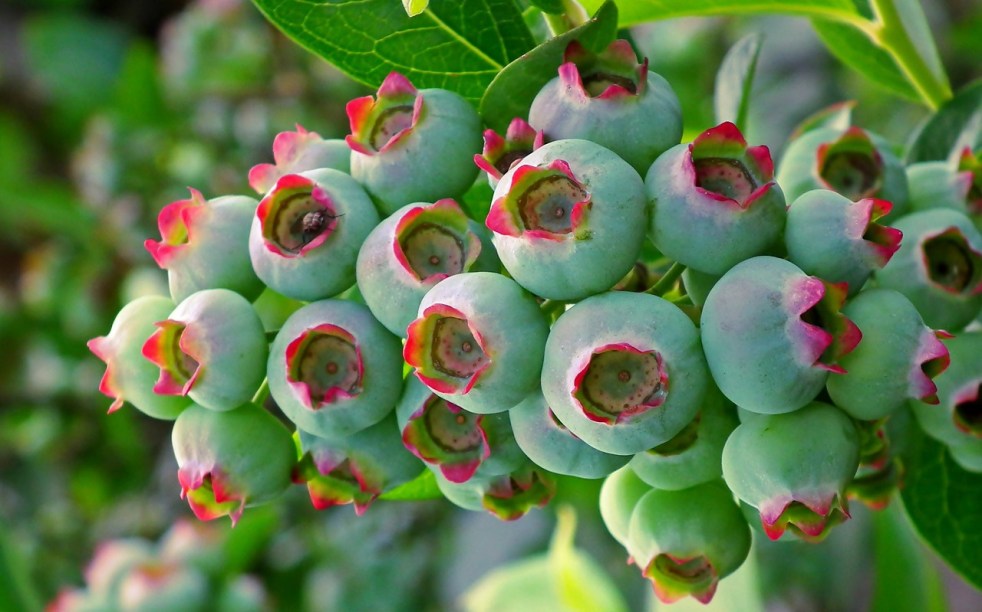
A cluster of ripening blueberries on a bush.
Some lovely little unripe blueberries on one of the bushes in the back yard.

This post isn’t about soil composition and permaculture, though I could definitely go on for volumes if it was.

No. Today, I want to get into some of the folklore and magical uses of these wonderful little balls of deliciousness.

It should be noted that blueberries (Vaccinium angustifolium, V. corymbosum, et al) are a strictly New World fruit. There’s a European relative called the bilberry (or European blueberry, Vaccinium myrtillus) that’s very similar, and the magical properties of these fruits are virtually interchangeable. If you live in an area where bilberries are native, use bilberries. If you live where blueberries grow, use those instead.

Blueberry and Bilberry Folklore

While blueberries are named for their deep purplish-blue color, the name “bilberry” is likely of Scandinavian origin. The Danish word bølle means “whortleberry,” which is another word for certain members of Vaccinium including the bilberry.

You can tell blue- and bilberries apart by their fruits. Blueberries grow in clusters, are a purplish-blue, and have a blossom end that looks a bit like a pentagon with five pointed flaps. Bilberries grow alone or in pairs, are almost black, and have a circular, smoother blossom end.

A bilberry on a bilberry shrub. The blossom end is facing upward, showing a distinct lack of the pointed flaps found on blueberries.
As you can see from this bilberry’s “butt,” they have rounder blossom ends and lack the pointy flappy bits of American blueberries. Compare it to the unripe blueberries in the photo above this one.

In Ireland, bilberries (fraochán or fraughan) are traditionally gathered during the last Sunday in July and the first of August. The first of August is Lughnasadh, a festival marking the beginning of the harvest season. Bilberries and blueberries are a traditional addition to Lughnasadh festivities all around the world.

Since gathering bilberries was traditional for the beginning of the harvest season, they were treated as a kind of oracle. If the crop was abundant, other crops would similarly flourish. If the bilberries did poorly, everything else would, too.

In ancient Greece, bilberries came from Herme’s son Myrtillus. King Oenomaus of Pisa had been given a prophecy: He would one day be killed by a son-in-law. Seeking to avoid this fate, Oenomaus decided to prevent his daughter, Hippodamia, from ever marrying by challenging every one of her would-be suitors to a chariot race on the Isthmus of Corinth. If the suitor won, he’d get Hippodamia. If he lost, Oenomaus would kill him. Since Oenomaus’ chariot was pulled by horses given to him by the god Ares, there was no way he could ever lose.

Then came Pelops. Hippodamia fell for him immediately, and went to her father’s servant, Myrtillus, for a favor. She wanted him to sabotage her father’s chariot so he’d lose the race, and Myrtillus, full of unrequited love for Hippodamia, agreed. On the day of the race, Myrtillus switched the metal linchpins of Oenomaus’ chariot with ones made of beeswax. Oenomaus’ chariot flipped, and Pelops beat him easily.

Some versions of the story say that Oenomaus, with his dying breath, asked to be avenged. Pelops then threw Myrtillus into the sea, and Hermes turned him into a bilberry shrub when he washed to shore. Another version says that Pelops, Hippodamia, and Myrtillus were traveling, when they stopped at an island so Pelops could fetch his new bride some water. When he returned, Hippodamia was in tears. Myrtillus had tried to sleep with her, she cried, while Myrtillus protested that she had promised to do so in exchange for sabotaging Oenomaus’ chariot. The enraged Pelops then killed Myrtillus.

In the folklore of some of the people indigenous to blueberry’s native range, blueberries are called “star berries” for the star-shaped blossom end.

In the Victorian language of flowers, bilberry represents treachery. This symbolism is likely borrowed from the Greek story of Myrtillus.

Blueberry and Bilberry Magical Uses

Blue- and bilberries are associated with protection and luck in European witchcraft.

Dried bilberry leaves are used in protective powders but can also be used whole for prosperity and luck.

The fruit is similarly used for protection and hex-breaking.

(Considering bilberry’s associations with treachery and crop divination, I wonder if their protective properties stem from their connection to physical danger and starvation. Today, we know that fruits like blueberry and bilberry can protect against oxidative cellular damage due to their antioxidant content, but their traditional connection to protection goes back much farther.)

Using Blueberries and Bilberries

Blueberries and bilberries couldn’t be simpler to use. For kitchen witches, include them in recipes for protection and the removal of malevolent enchantments.

Crushing the fresh berries can yield a pigment suitable for drawing protective sigils on paper talismans, the skin, and anywhere else you might need them. Just bear in mind — both of these berries are sweet, and your talismans may be sticky and likely to attract bees this way!

To protect your property, dry bilberry or blueberry leaves. Powder them well, then sprinkle the powder around the perimeter of your home or yard.

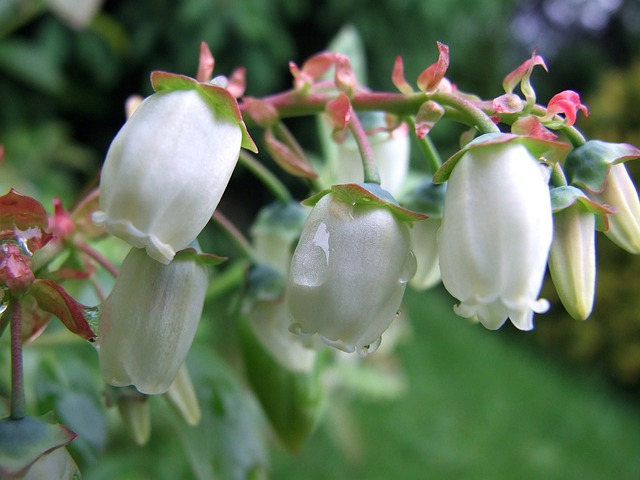
White, bell-shaped blueberry blossoms.

To break a hex, jinx, or run of bad luck, burn dried blue- or bilberry leaves. Use the smoke to fumigate the same way you’d use incense smoke.

Blueberry and bilberry don’t appear to be reversing herbs. That is, they don’t return treachery or malevolent magic to the sender. They just keep it from affecting you.

Since bil- and blueberry seems to predominantly be a protective herb, I would hesitate to use it solely for drawing luck. It appears that it’s virtue in luck drawing lies in its ability to get rid of jinxes and other things that hold you back. For luck spells, then, I’d pair blueberry or bilberry leaves with an ingredient used more specifically for attracting good luck. The berry leaves can clean up the things standing the way of your luck, and the other ingredients can draw it in. Allspice, chamomile, and fenugreek are all good options to consider here.

Interestingly, strawberries are sometimes used in small amounts for luck drawing. You could then theoretically make a jam, smoothie, or pie with both blueberries and strawberries, and, when appropriately made and empowered, use it to attract good luck to you.

It remains to be seen how my poor transplanted blueberries do, but the newer ones seem to be thriving. When the time is right, I’ll harvest the fruits and some of the leaves, and hopefully have enough protection and hex-breaking to last me all year!