This past weekend, my Handsome Assistant and I packed a small picnic and went for a bit of a walk. This particular area is beside the northwest branch of the Anacostia River, near an abandoned mica mine. There are some really cool mineral specimens here — the usual bull quartz, but also tons of mica-bearing rocks and golden beryl.
That’s not all it has, though.
The trail is mostly shaded by trees, so it stays fairly cool even when the weather’s warm. Lesser celandine (lush, but invasive) covers the ground between the trees, creating a dense carpet that reflects the sunlight and further cools the ground. It’s poisonous to eat, though the tubers are said to be edible, and has a long history of use as a topical medicine for hemorrhoids and scrofula.
“That’s a really bad idea, you know.” “I know, but it looks so soft.” “There’s probably poison ivy in it.” “Worth it.” “You’re going to get eaten by snakes. Or ticks. Probably both.” “It’s so soft, though!”
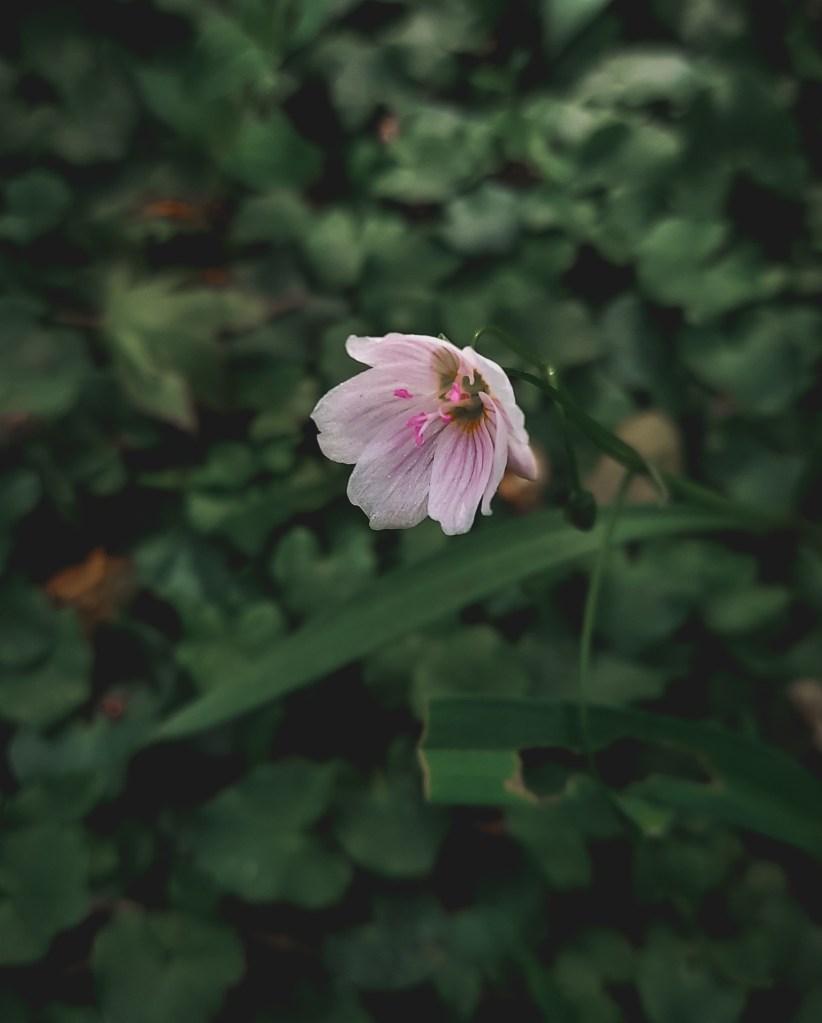
Springbeauty (Claytonia virginica)
Fortunately, there was more to see than just lesser celandine. There were tiny pink blossoms of springbeauty, dense pillows of moss, fern fiddleheads, and some of the lushest skunk cabbage I’ve ever seen. We also spotted some mayapples, a few of which were even mature enough to flower. I don’t know if I’m brave enough to go back and see if there’s any fruit later this summer, but it was lovely to see regardless! (I snapped a few pics of the ones we saw, which you can find in my post on mayapple folklore and magical properties.)
Seriously, just look at that skunk cabbage (Symplocarpus foetidus).
We passed next to the water, eyes peeled for sparkly mica-bearing stones, when I heard a soft “bloop.” I turned my head just in time to see a startled common watersnake (Nerodia sipedon) slipping away across to the opposite bank, gracefully undulating and occasionally poking its head up like a snorkel to take a breath. I apologized for spooking it as I fumbled for my phone but wasn’t able to snap a picture before it had swum away and camouflaged itself in the mud and fallen leaves.
They’re one of the species of snakes that are often vilified for no reason. They’re perfectly harmless but can bear a passing resemblance to a venomous copperhead (Agkistrodon contortrix). Admittedly, I made the same mistake myself at first glance — not that I would’ve behaved any differently, as both the snake and I seemed pretty chill about the whole situation. Like black racers and ratsnakes, they’re guys you actually want to have around if you don’t want to have to deal with pest animals. Also, they’re one of the few reptile species that gives birth to live young, and that’s really neat!
(Also, copperheads are pretty chill, too. They might be venomous, but they’re not aggressive. Their first defensive instinct is to freeze up and rely on their natural camouflage. Bites typically occur when that either fails, or people don’t see them, step too close, and the snake gets desperate.)
Young ferns.
A little further up the trail, we were navigating over a large fallen tree. Another tree lay across it, forming a kind of steep natural bridge. As I investigated it to see if it’d be safe to cross, I heard a silky rasping sound. There, nestled in the root ball of the fallen tree, I saw the shiny black coil and pointed tail of a black racer (Coluber constrictor priapus) vanishing deeper into the tangled roots.
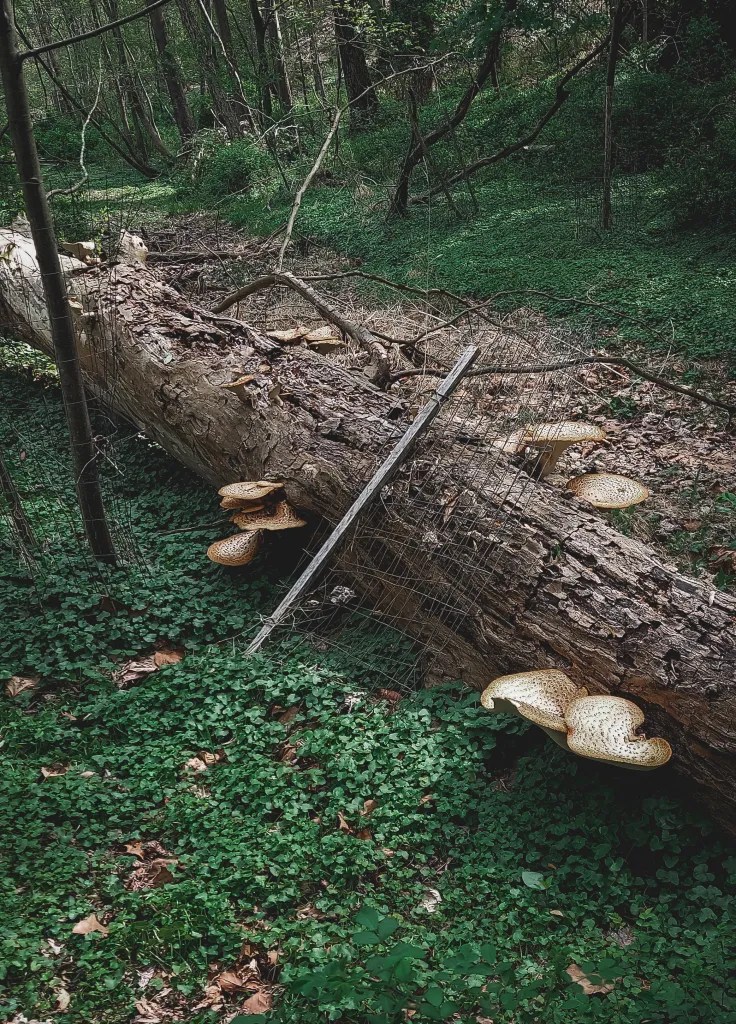
My favorite part, however, was running into a colony of dryad’s saddle (Cerioporus squamosus) growing from a dead tree. These are edible, fairly easy to identify, and don’t really have poisonous lookalikes. They also smell exactly like watermelon rinds, which is honestly very weird. Kind of a green, watery, fruity smell, of decidedly not the type you’d expect from a scaly tan mushroom growing out of a dead tree. I wasn’t 100% positive that that’s what I was looking at, at first. Fortunately, a combination of a quick-and-dirty ID app and friends with much more foraging experience were able to reassure me.
Also?
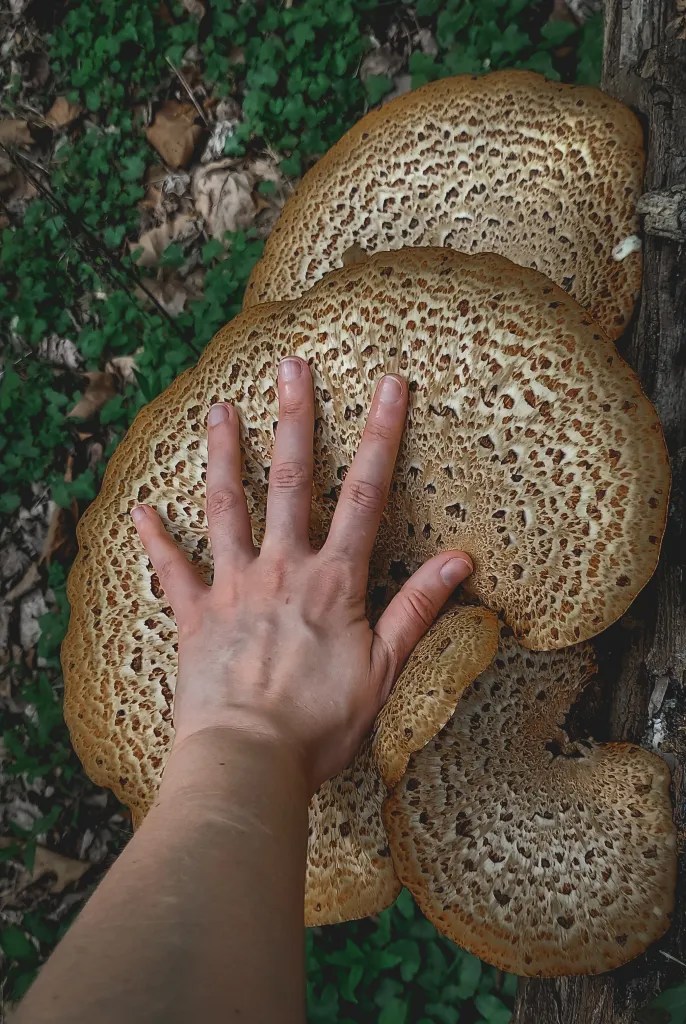
Dryad’s saddles get enormous.
Like, far larger than I felt was reasonable for a mushroom. Much bigger than the reishi and armillaria that grow in my front yard, at any rate.
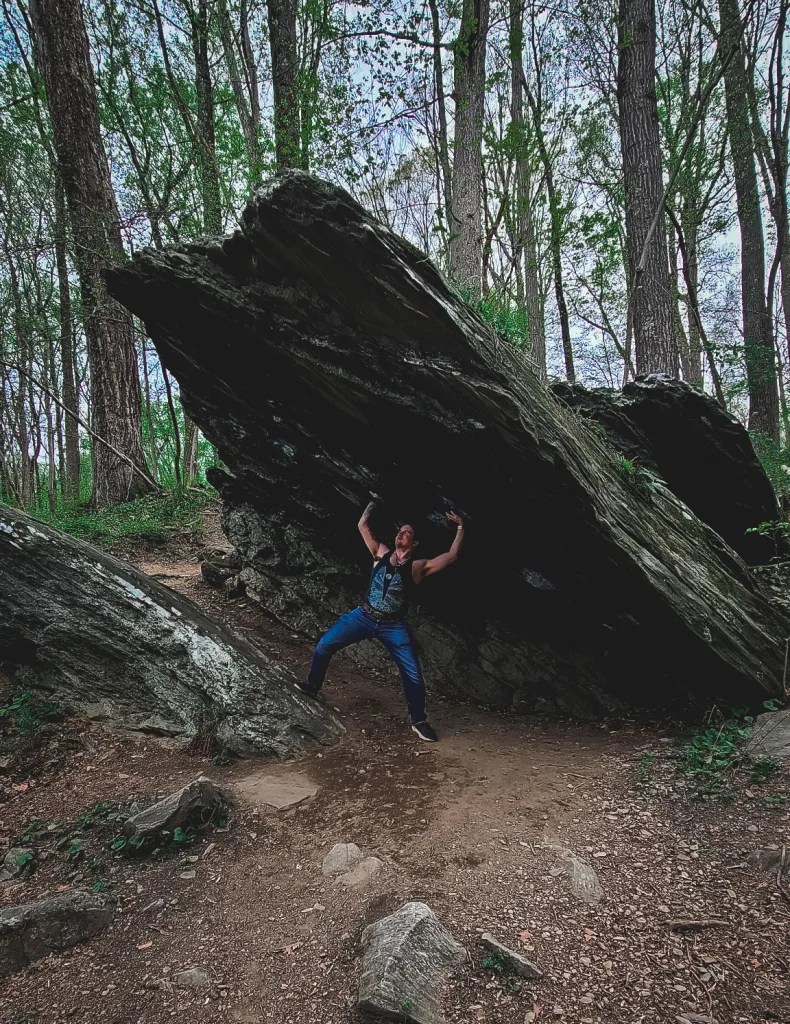
This area has another cool feature, labeled on the map as “prehistoric rock shelter.” I haven’t found any other information about it, but it’s a nice, cool, shaded spot to sit and rest for a bit. The area underneath is at a bit of a slope, but it’s still a comfortable place to take a break.
I also found a tree that was shaped kind of like a sad skull, and a very neat feather — most likely from a hawk.
All told, it was an eventful walk and a lovely picnic. Everything was vibrant and green, and we saw (and heard!) a lot of cool wildlife.
Here’s hoping you’re also finding cool things wherever your adventures take you.
This weekend, my Handsome Assistant and I attended an educational picnic to save Rock Creek, which is currently at risk from the continued expansion of a golf course. Construction has already begun, parts of the forest are being turned into mulch as we speak. Over 1,200 trees are slated to be cut down, including some that would otherwise be considered special or heritage trees under DC law.
This deforestation is part of an effort to expand multiple golf courses throughout the DC area.
Yeah, I know.
Even without further examination, I mean — who is building golf courses right now, of all things? The answer is the National Links Trust. While people worry about paying rent and getting their next meal, the National Links Trust apparently thinks that the public yearns for more golf courses. It’s something that sounds almost moustache-twirlingly villainous. Like the plot of an after school special where the heroes are a band of plucky cartoon kittens. Unfortunately, this is actually happening.
What’s the deal with the National Links Trust?
The NLT’s stated intention is “positively impacting our community and changing lives through affordable and accessible municipal golf.”
This is something that doesn’t sound… terrible, barring the whole “people-can’t-afford-food-right-now-you-rich-weirdoes” aspect. However, here’s what the NLT isn’t saying:
Lem Smith, NLT board member, International & Federal Government Affairs Manager for Chevron, and Former VP, Federal Government Relations for the American Petroleum Institute.
While they claim that they’re attempting to mitigate the harm done by the deforestation of Rock Creek (harm that is, once again, completely unnecessary and unasked for), they are not adhering to the best practices for doing so. There are multiple ways to mitigate the damage of both removing old growth trees and the presence of invasive plants, but their policy seems to be to mulch everything and call it good.
They’re not actually accountable to anyone. They can make half-hearted promises to plant meadows and maintain the forest all they want, but there is no incentive for them to keep them and nothing to stop them from doing whatever they want.
They claim that they’re willing to dedicate unused golf courses to being replanted as meadows. This is not a suitable compromise for multiple reasons:
For two, if there are already unused golf courses, they don’t need to cut down old growth trees in Rock Creek in order to make new ones. WT-actual-F?
There’s also the fact that it doesn’t seem like anybody actually asked for this. When asked, local golfers appear to be ambivalent at best. The NLT was able to scrape together some who are in favor of it to make a public appearance, but these don’t appear to reflect the opinion of the majority of the new course’s ostensible user base. They are absolutely not reflective of the larger population of DC and the adjacent area.
Here’s why it matters (no matter where or who you are).
So the NLT is attempting to build a golf course. Like I said, this is a huge deal and will have far-reaching effects even if you don’t live anywhere near DC. Here’s why:
Old growth areas are carbon sinks.
It is generally thought that old forests cease to accumulate carbon, but this isn’t the case. Research shows that in forests between 15-800 years of age, “net ecosystem productivity (the net carbon balance of the forest including soils) is usually positive.” What’s more, carbon doesn’t cease to exist once it’s taken up. When these areas are disturbed, that carbon is liberated as plant matter decays or is burned. Rather than trees dying naturally over time, breaking down, and having their nutrients (including carbon) absorbed into the mature forest, deforestation disrupts this natural cycle.
Rock Creek is part of the Potomac watershed.
Trees support healthy watersheds. Rock Creek itself connects to the Potomac River, and eventually drains into the Atlantic Ocean via the Chesapeake Bay. Trees contribute to healthy waterways by anchoring soil in place, preventing erosion. Their root systems (including the mycorrhizae within the soil that surrounds their roots) help capture nutrients. Without these systems in place, they would otherwise flow into the water to encourage algal blooms and fish kills, a process known as eutrophication. Removing these trees and replacing them with grass that requires a regimen of fertilizers and treatments to maintain is a terrible idea.
The last thing anyone needs is golf course runoff oozing into our local waterways.
Golf courses need a lot of water.
I already mentioned supplemental irrigation, but I’ll say it again: Golf courses need a lot of water. They are generally watered with sprinkler systems that lead to a lot of waste and loss through evaporation. This also puts strain on existing systems, reducing the availability of water for other uses and increasing scarcity issues. Only about 12% of golf courses surveyed use recycled water, and even with more efficient irrigation methods, turf grass remains a very wasteful use of land and water.
We’ve already had droughts here. We’re already told not to use any more water than necessary during the summer because of scarcity issues. Why are they building a golf course?
This could increase the transmission of avian flu.
I’m not being hyperbolic when I say this. Destruction of wildlife habitats drive populations of wild animals into greater contact with humans. If old growth trees are destroyed, the thousands of birds that they house and feed get pushed elsewhere. That “elsewhere” is going to be people’s back yards.
How does that relate to the H5N1 virus? More displaced birds mean more contact between wild birds and flocks of backyard fowl. It means more indoor-outdoor cats that come in contact with potentially infected birds. It means more bird feces on cars, decks, and feeders. A higher overall population of birds congregating in the same feeding and shelter areas means a higher risk of potentially zoonotic H5N1 moving through that population.
Birds aren’t the only ones that’re going to be displaced, either. Look for more conflicts with foxes, raccoons, rodents, and coyotes, too.
If it was living in that part of Rock Creek, it’s gonna need a new place to go. In an area as densely populated as DC and the surrounding suburbs, there aren’t many other options.
This further undermines Washington, DC, as a political entity.
Washington, DC, has been pushing for statehood for some time now. (A significant part of the reason why it keeps getting struck down is that DC would be a majority blue state, so it benefits the Conservative party to avoid allowing it to have any more representation than it already does.) While it isn’t a state, DC does still have home rule in some aspects. For example, DC’s tree law provides numerous protections specifically for heritage trees. Removal of a tree that qualifies as a “special tree” requires a permit. Healthy heritage trees cannot be removed, period.
Rock Creek is part of the National Park System. As such, even though a significant portion is within DC, DC isn’t able to enforce its tree laws to protect it. This inability to protect trees within its area further undermines DC as a legal and political entity.
The National Park Service is part of the problem.
Rock Creek is a national park, but it hasn’t been maintained as one. Invasive plants are a significant issue, and one that the National Park Service hasn’t adequately remedied. There are local people who are trained as Weed Warriors, who are able to legally remove invasive plants. However, there’s only so much they can do.
Part of the inception of the National Park Service was to push Indigenous Americans off of their ancestral land, with the claim that the land must be “preserved.” (Madison Grant helped launch the national parks movement — he also wrote The Passing of the Great Race, which gave a very detailed account of his negative views of Indigenous people, Black people, and immigrants.) In reality, the land in the National Park System was being preserved just fine while its original stewards were living there.
The neglect of Rock Creek shows that this land is not being protected or preserved. Furthermore, its current state has incentivized the NPS to sell part of Rock Creek in order to have it cut down and turned into a golf course. The idea is, I guess, that the National Links Trust would do the preserving instead, by… cutting the trees down and turning the land into a putting green.
It’s all so, so ridiculous, and it’s a terrible omen of things to come. Nothing good will come of the NPS being allowed to neglect public lands, then sell them off.
Light pollution is going to be a problem, too.
In addition to the loss of exceptionally old trees, biodiversity, and wildlife habitat, the presence of a golf course will increase light pollution in the area. The plans call for a driving range that will be lit through the night hours. This will disrupt nocturnal animals, including (especially) insects. We’re already experiencing a dramatic drop in insect populations. We don’t need a @#$%ing driving rangethat nobody asked for to begin with.
The land is removed from public use.
Right now, you can just go to Rock Creek. You can walk around. Picnic. Bird watch. Have a grand old time.
Already, the area of the forest that is earmarked for cutting has been removed from public use. You can’t just go there — people who have have been told to leave.
Meadows aren’t forests.
Even if the NTL carries out their plan to turn unused golf courses into meadows, meadows do not provide the same benefits as forests. I’ve been very vocal here about my efforts to remediate the immature, hard clay soil and turn it into mature soil. Cultivating turf grass is terrible for soil and doesn’t allow it to mature.
So here’s a bunch of immature soil that’ll be used to grow some (one can hope, but certainly not assume) native flowers and grasses. This will take over a hundred years become anything like the area that’s currently being cut down, in a process known as forest succession. While meadows are certainly better than the sterile monoculture of a putting green, they do not play the same role or have the same benefits as a century old forest.
This effort to turn part of Rock Creek into a golf course is just a continuation of Chevron’s ongoing pattern of land acquisition and destruction. They are promoting this destruction via the National Links Trust. If you are interested in helping to put a stop to this, please visit Defend Rock Creek’s Linktree for further steps that you can take.
It’s the time of year when my crow bros — Magni, Ruff, Boink, Muse, Peanut, and company — typically come back. They’ll be around until the starlings fledge, then usually disappear with the rest of their murder over the winter. I love them dearly and I’m excited to have them, but it’s an excitement that’s tinged with worry for one reason: H5N1, the virus responsible for avian flu.
There’s avian flu in my county. It was found in a backyard flock of chickens. (Perhaps coincidentally, the neighbor’s roosters have been unusually silent.)
While news stories have primarily focused on pet and livestock birds, wild bird populations are also potential reservoirs for the disease. While you’re not going to get it from hiking or bird watching, it’s a significant concern if you’re one of the many people who maintain bird feeders.
My yard is, for the most part, optimized for feeding songbirds on its own. I leave the seed heads on things for the finches to pick at, and I’ve deliberately planted hip roses and beautyberries to provide some autumn and winter food. The platform feeders I have are pretty much just for crows, and two distinct families of crows, at that. One of them is Magni’s bunch, the other is a family that was displaced during some construction downtown. There are a few reasons why I want to keep them attracted here:
I’d rather they hang around here, where food and water are easy to get, than go hassle my neighbors that have backyard fowl. Also,
They keep the rodents away.
“But,” you might be saying right now, “If you don’t put food out, rodents won’t come!” Ha, I say. Ha ha, even. You would think that, but as long as there’s a water source and anything resembling food, the rodents will come. That means bugs. Any fruit-, vegetable-, or grain-bearing plants. Particularly attractive pieces of cardboard. In short, as long as I grow anything other than grass, something’s gonna come try to eat it. Since I am legitimately terrified of hantavirus, I want as many natural allies against uninvited rodentia as possible.
So, there are some steps I’m taking to keep myself, the crows, and others safer from avian flu. This shouldn’t be taken as advice, but as an assurance that all of these little weirdoes that I write about seem healthy, and that I’m doing the best I can to keep them so.
I’m:
Being selective.
Regular wild bird seed mixes are intended to attract a variety of birds to one’s yard. Experts recommend against this for multiple reasons, chief among them that it encourages multiple groups and species to congregate in one spot. This makes it easier to transmit diseases like avian flu between bird populations that otherwise wouldn’t interact.
Fortunately, in this situation, I’m not trying to attract multiple species of birds. Much the opposite, really. While the front yard is planted in a way that wild birds can come pick at things as they please, the two platform feeders I maintain are pretty much exclusively for Magni’s crew and the other crow family. This means that I can put out food that they’ll want, but is unappealing to the starlings, juncos, cardinals, finches, and sparrows that usually pass through here. In other words, I’m discouraging congregation by focusing entirely on two small family groups of birds that already forage together.
Being nosy.
I don’t want to keep food out for long periods of time because, even if the food I put out isn’t appealing to smaller birds, they’ll still come up and pick through it to see if there’s anything edible.
I’ve been nosy, so I’ve noticed that Magni’s group and the other family typically come through here at two distinct times of day. Now, those are the only times I put food out. Once it’s gone (and it never lasts long), it’s gone. There aren’t any leftovers for anyone else to come dig through. Whatever they don’t eat, Todd, Freddie, and the other squirrels clean up in short order.
Sanitizing.
The platform feeders are basic wire mesh, which is nice. Any dust or water falls right through, so things stay pretty neat in the feeders themselves. Nonetheless, this doesn’t mean that they’re germ-free.
Each one gets a regular soak in a diluted bleach solution. I know, I’m usually all about making my own cleaners and using vinegar on everything, but I’m not going to fuck around with a virus like avian flu. Bleach and water it is.
This is also useful for other surfaces that animals come in contact with. It’s something I’ve gotten used to doing from keeping small animals whose enclosures require careful, thorough, regular sanitization.
Observing.
Right now, Magni’s bunch and the other crow family look (and sound) healthy. Last year, Ruff had an issue with what was most likely a mite or fungal infection that caused them to lose most of the feathers around their neck, but this has resolved on its own. Boink had some damaged flight feathers that kept him from flying away, but he had enough safe places to hide, molted well, and has replaced the feathers he’d lost. Nobody has had any signs of avian pox or other serious illnesses. Dark, shiny feathers, clear eyes, clean butts, no weird lesions, and no weird noises.
It isn’t always easy to tell a sick animal at a glance, so this isn’t exactly reliable. Still, it’s a good idea to keep an eye on the overall health of wild animals that pass through spaces you frequent. A weird looking bird could be cause for concern.
Occasionally, I provide some diluted ACV in the water I put out. This isn’t something that’s helpful to do on a constant basis, and it must be very diluted. There’s some evidence that it can help birds combat various fungal and bacterial issues, but it is not a suitable treatment or preventative for serious illnesses.
Protecting myself.
The last step I’m taking is to take care of myself. That means masks and gloves when cleaning up, careful hand and face washing, and so forth. This is important whenever you have to be around any kind of biological mess, but masking is especially important when you’re dealing with dried feces or any other residue that may break down into airborne dust when you disturb it.
If you maintain a feeder for multiple species of birds, now might be a good time to either revise your strategy or go on a hiatus. Encouraging them to congregate makes it easier for sicknesses like avian flu to spread from one population to another, and more disease vectors mean more opportunities for mutations that could make the jump to humans and other animals. It’s always better to provide food in the form of native fruits, vegetables, and flowers than to provide a bird feeder, but that also isn’t always possible with every species. By taking on the task of providing food, water, and shelter to animals, one also takes on the responsibility of keeping them (and the people who may come in contact with them) as healthy as you feasibly can.
March 12th is Plant a Flower Day. While the idea of dedicating a day to planting seeds goes back pretty far, this is a fairly recent innovation that likely originated in the US. A lot of the seasonal celebrations that I follow revolve around things like seed swaps, observing wild plants as they exit dormancy, and planting seeds as a form of sympathetic magic, but I also like observing days like this.
Of course, the best way to observe Plant a Flower Day is to select a native (or carefully-selected nativar) flower variety for your area, choose a spot in your yard, and conscientiously plant it. You’ll increase your local area’s biodiversity and provide a source of food and shelter for native insects (who really, really need it) and birds.
If your garden is dedicated toward food rather than flowers, consider planting an edible species. Nasturtiums, for example, are beautiful, easy to grow, and taste nice. (You can even pickle the seeds and use them as a substitute for capers!) As far as native edible flowers go, violets are lovely, a very nice groundcover, edible, and there are a number of varieties native to various parts of North America. White wood sorrel produces very pretty little white flowers, and both the flowers and leaves have a tart taste that’s very nice in salads. Wherever you live, I can pretty much guarantee that there’s a native flower that can feed the birds, bees, butterflies, and you.
And, just because this is a secular observance doesn’t mean that you can’t work some magic into it. Planting seeds is a very common and easy type of sympathetic magic — as the seeds grow and flourish, so, too, should the intention with which you planted them. Get together with a partner, hold a handful of seeds, and visualize yourselves having a happy, peaceful relationship. Choose seeds of herbs associated with prosperity, picture your bank account growing, and plant them. The only real trick here is that you need to keep the seeds tended. If they die from neglect, you may soon find your intention following suit!
Even if you don’t have the space to dedicate to a flower garden, consider planting some seeds in a pot on a windowsill. It’s good for your mental and physical health, and it can help you bring the energy of spring into your home. Plus, if you choose an edible variety, it’s pretty much close-to-free food and decor in one.
Larkspurs are strikingly lovely flowers of the genera Delphinium and Consolida. They’re summer flowers that are possibly best known for being a) extremely deadly to most things, and b) the birth flower for the month of… July.
Okay, okay, I know what you’re thinking, and I have a very good reason for writing about them now. Despite their birth month symbolism and all that, they’re actually flowers that need a bit of cold. Depending on your zone, that means sowing the seeds in either autumn or early spring so they can get a bit of a chill in. Lately, gardening stuff has been on my mind. Ergo, I figured now’d be a good time to write about… Well. Gardening stuff.
Larkspur Magical Uses, Folklore, and Medicinal History
Like the lovely hellebore and lobelia, larkspur is poisonous. All parts of it. They’re actually a major contributor to cattle poisonings, to the point where farmers will delay grazing their cattle at high elevation pastures until summer, when the larkspur has chilled out a little and is slightly less likely to cause problems.[1]
The name Delphinium comes from the Greek word delphínion, meaning “dolphin.” According to Discorides, this is because of the shape of the flowers, which resemble dolphins if you kind of squint.[2] The English common name comes from the idea that their flowers resemble the feet of larks.
I’m just gonna take his word for it. Photo by Zuzanna Musial on Pexels.com.
Mythologically, larkspur is a very interesting plant. In the story of Hyacinthos and Apollo, in which Apollo and Zephyros vie for the affections of Hyacinthos, Apollo ends up killing Hyacinthos either accidentally or in a fit of jealous rage. It’s usually said that Apollo turned Hyacinthos’ body into the hyacinth, but some scholars hold that the flower was the larkspur instead.[3]
Another story holds that the larkspur sprang up from Ajax’s blood. After the death of Achilles, Ajax and Odysseus vied for his armor. Athena supported the latter and drove Ajax mad. In his madness, he fell on his sword. Where his blood spilled, larkspur flowers grew.[4]
Larkspur appears to have somewhat limited medicinal and magical uses. As with many poisonous herbs, it’s associated with protection — the alkaloids in larkspur are cardiotoxic, cause respiratory arrest and digestive issues, and are generally irritating to skin. Just as they naturally repel most animals who’d eat them, planting them in one’s garden is said to repel evil. Some writers suggest using larkspur in protection baths, but, given its potential as a skin irritant, I would caution against this.
Some also cite larkspur as a love herb, but I haven’t done so. It does bloom during “wedding season,” and the flowers make beautiful bouquets, but most of its associations seem to spring from its toxicity and connection to warfare. Even the story of Hyacinthos and Apollo, where larkspur is essentially a symbol of Apollo’s love for Hyacinthos, ends in tragedy. Your mileage may vary, of course, but larkspur has never done much for me in love workings.
(Interestingly, its medicinal uses seem to primarily lie in its appearance. Multiple sources cite folk practices of looking either at larkspur (or through bunches of larkspur) to soothe tired eyes and guard against eye problems.)[5]
Even in Victorian floriography, larkspur is a bit… sketch. In general, larkspur is associated with lightness and levity. You know, the kind of stuff you’d expect from a pretty summer flower with tall blooms. However, this meaning depends heavily on its color — pink larkspur indicates a fickle nature, while purple represents haughtiness.[6]
Using Larkspur
The easiest, and probably most straightforward, way to use larkspur is to plant a native variety in your garden. Not only is this said to repel evil, but it’s a huge help to native bees, butterflies, songbirds, and hummingbirds.
You could also crush the dried flowers into a powder (or salt) for protection and sprinkle it around whatever it is you wish to protect — your property, a room, et cetera. However, I caution against sprinkling it where a house pet may be able to step in it or get it on their fur, since ingesting it during grooming could cause serious harm.
The dried flowers are also a good addition to protection jars, sachets, or other container spells. Honestly, container spells are one of my favorite ways to use baneful herbs — they work, they’re easy, and I don’t have to worry about anyone trying to eat them.
Larkspurs are a beautiful summer plant, but they need cool seasons and humid summers to grow. Don’t wait until summer to add them to your garden. Sow them now, so they have time to stratify and establish themselves properly. You’ll be rewarded with their protection, tall spikes of colorful flowers, and an abundance of native pollinators.
Every time I read the word “lobelia,” I always hear it in the voices of those girls from Lobelia Girls’ Academy from Ouran High School Host Club.
It’s a very specific kind of brain rot. Anyway.
The other day, during the bone walk, we came across some Indian tobacco (Lobelia inflata) in a meadow. It was a striking looking plant, with tall flower spikes covered in things that looked almost like the tiny, dried flower “skulls” of the snapdragon plant. So, I thought now might be a good time to go into the various folklore, (very limited) medicinal, and magical uses of this very intriguing plant.
Lobelia Magical Uses, Folklore, and Medicinal History
Lobelia erinus, from southern Africa.Photo by Aljona Ovtšinnikova on Pexels.com
The genus Lobelia is made up of a lot of plants with some very disparate characteristics. It’s not considered a very useful designation in a taxonomic sense. It’s very paraphyletic, meaning that it consists of lobelia’s most recent common ancestor and some (but not all) of its descendants. Lobelia species are also highly variable. There’s the giant lobelia of Tanzania, Lobelia deckenii, which is eaten by hyraxes and pollinated by birds. Then there’s Lobelia inflata, Indian tobacco, which is pollinated by bees and doesn’t appear to be eaten by much of anything. For the purposes of this post, I’d like to focus on the American lobelias.
In European-based folk magic, lobelia is often treated as a baneful herb — according to the (lovely, but now-defunct) Pooka Pages, it’s an herb that expresses hatred, where other baneful herbs might express dislike or anger. Its action is efficient, effective, and nasty, but seldom predictable.
Lobelia inflata, also known as Indian tobacco or puke weed, is native to eastern North America. Traditionally, it was an entheogen and, as the name “puke weed” suggests, an emetic. It was also used for skin and respiratory disorders. Consuming lobelia can lead to a lot of adverse effects, however, up to and including death. Its therapeutic index is narrow, and the medicinally helpful dose is very close to the potentially deadly one. As a result, it shouldn’t be used outside of the guidance and close supervision of a trained herbal medicine practitioner or an expert in its ceremonial use.
Lobelia siphilitica.
Lobelia siphilitica, or great lobelia, has an absolutely fascinating mechanism for pollination. (Seriously, it’s so cool.) It has three petals that are fused into a kind of landing pad for bees. When a bee lands that is just heavy enough, these petals bend downward as it wiggles its way toward the nectar. This triggers the plant’s stigma to also move downward, wiping along the bee’s back and picking up pollen granules.
Some lobelia species contain a compound called lobeline. This is a nicotine receptor agonist, meaning that it triggers nicotine receptors in the body. For this reason, some species have been used as a way to quit tobacco use. Refined lobeline has even been sold as a commercial anti-smoking aid and has been researched as a potential treatment for other addictions.
Since lobelia has been used as an entheogen, it’s sometimes used (preferably not internally) as an aid to visions and prophetic dreaming. In these cases, the dried leaves are typically added to sachets or dream pillows, or otherwise placed near the user’s bedside.
Using Lobelia
If you live in lobelia’s native range, it’s a great plant for native bees. Look for a species that’s endemic to where you live, and you won’t have to do much to care for it. Your local ecosystem will thank you.
Since lobelia can be rather dangerous when used improperly, I don’t recommend taking it internally despite its history of use as a medicinal herb. As I mentioned previously, the line between “helpful” and “possibly deadly” is very thin, and something that should only be navigated by someone who has been highly trained in its use.
That aside, there’s no reason not to include lobelia in formulas to repel or curse. Add the dried flowers to powders to drive someone away, for example, or include a dish of the dried leaves or flowers in spells that target an enemy. (Not necessarily a rival — as I also mentioned above, this is an herb for hatred. Not one you’d reach for just to outshine someone, express dislike, or exercise your anger.)
You can also include lobelia in jars or pouches for visionary work. While it’s also sometimes suggested to place the dried leaves under your pillow or beside your bed, it’s important to exercise caution here — you really don’t want to place it anywhere where a curious pet or child might ingest it. For that reason, I recommend using lobelia in container spells where the risk of ingestion is minimal.
Lobelia is an interesting, powerful herb that demands respect. On one hand, it’s an herb used for hatred and hexing. On the other, it’s an ally for those seeking prophetic dreams or visions. If you treat it well, and keep its unpredictable nature in mind, it can be a very helpful, fascinating friend.
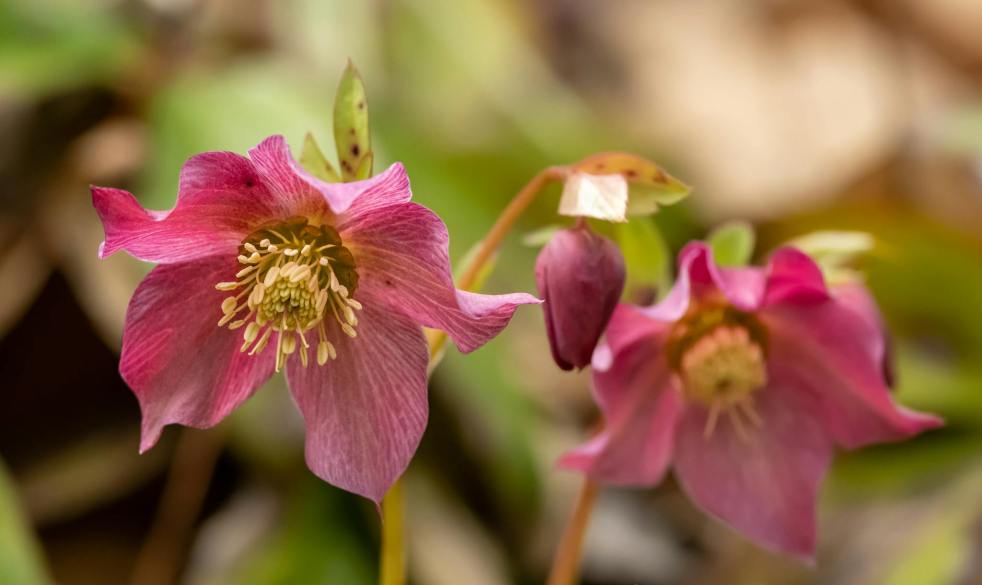
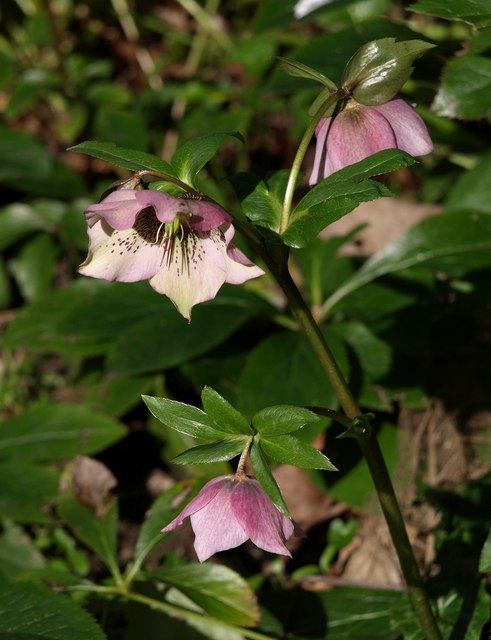
Hellebore is a plant of contrasts. This can even be seen in its name — the word “hellebore” translates to both “food,” and “to harm.” They flower early and herald spring, but their nodding habit makes them look almost mournful about the whole thing. They’re beautiful flowers, but they can be dangerous poison.
Hellebore Magical Uses and Folklore
Hellebores are sometimes called “Christmas roses” or “Lenten roses.” Despite this, they aren’t at all related to members of the rose family. Instead, they’re closer to buttercups — another lovely little poisonous flower.
The name “hellebore” most likely comes from two Greek words: Helein, meaning “to injure,” and boros, meaning “food.” Or, more accurately, “if you eat this it will hurt you.” Another theory holds that “hellebore” references food for Helle, the goddess of a connecting body of water between the Black and Aegean seas.
The name “Christmas rose” comes from a bit of Christian folklore. In it, a little girl cries because she has no gift to bring to the infant Jesus Christ. Where her tears fell, a hellebore sprang up. (It’s like The Little Drummer Boy, but more horticultural. One might also question the wisdom of connecting a highly toxic flower with giving gifts to babies, but that’s another story.)
In the past, hellebore has been used to treat various forms of mental illness, seizures, paralysis, and other maladies of the brain and nervous system. All parts of the plant are toxic, though this can vary somewhat between species — Helleborus orientalis, for example, contains the usual toxic hellebore compounds as well as some interesting cardiac glycosides that aren’t present in some other varieties. The dose makes the poison, and some toxic compounds can be useful in the face of a malady that opposes them. For example, curare is a paralyzing poison that’s also an effective antidote for strychnine, a deadly poison that causes spasms. Go figure.
In fact, hellebore is so effectively poisonous that it was used during the Cirraean War between Kirrha and Delphi during the 6th century BCE. This was the first recorded use of chemical warfare: the poisoning of Kirrha’s water supply with hellebore.
Hellebore is also toxic on contact. Despite its many dangers, you can often find it referenced in old texts as a cure for madness. In the Victorian language of flowers, it’s associated with scandal or delirium. (Here, it’s important to note that saying an herb is “associated with” or “connected to” something can mean many different things. A plant may be associated with a concept, but not necessarily in a positive way. Hellebore is referenced more as a cure for delirium than a cause of it. In the Victorian language of flowers, offering hellebore is more likely to be a reference to scandal caused by madness madness, or to the giver or recipient needing a cure for delirium.)
As far as magical uses go, hellebore is often considered a protective, purifying, or banishing herb. (Though certainly not the kind you’d want to smoke cleanse your home with.) This is most likely a direct reference to its toxicity — not only does it have poisonous compounds in it, most of them also taste and feel awful. This is effective at keeping deer, rabbits, and other nibbling animals away. Ergo, it’s also good for getting rid of or guarding against unwanted spiritual influences. This is something you see a lot with purifying or protective herbs. Almost all of them have a history of use as a way to repel or kill pests.
Some also use it for love or divination magic, but I don’t have much experience with this side of hellebore and haven’t been able to find a lot of sources for this. If anything, I would think hellebore is associated more with clearing one’s head rather than clouding it with romance. Still, the flowers are very pretty and frequently come in the pinks and purples we associated with the domains of love and divination.
Using Hellebore
Even though they aren’t native to this area, I love them. With care and conscientious planting, they can be a good addition to a garden. (You just need a good container, moist-yet-well-draining soil, and an area that gets shade from the summer sun and lots of sun during winter. They’re a bit picky that way.)
You’ll also want to remove the seed heads before they can scatter. If they do, you’ll be pulling up baby hellebores for ages.
Despite the “food” in their name, I strongly recommend against eating them. Even though various species of hellebore have been used medicinally in the past, they’re one of those remedies for which the line between “cure” and “kill” is very thin.
I don’t recommend handling hellebore without gloves. You may find that it helps you best as a boundary herb, either judiciously planted at the edges of a property or dried and sprinkled along it.
Unfortunately, despite its power and beauty, its uses are somewhat limited by its toxicity. It’s not an herb to use in teas, baths, anointing oils, or incense, or even to roll a candle in.
Hellebore is a lovely, mysterious flower with a dark past. While it looks unassuming enough, it holds the power to heal, and the power to raze an entire town. As a baneful herb, it requires respect and a very careful hand.
Look, I know what you’re probably thinking: Shoes? And yes. Shoes. Even the most humble of tennis shoes is a wealth of magical possibility. (Also probably smells, but that’s another topic entirely.)
In most cultures that use shoes, footwear has a unique significance attached to them. Shoes have historically often been the difference between life and death. While there’s much to be said about using foot-shaped shoes with thin, flexible soles, any shoe is a safeguard against parasite infections, damage from extreme heat or cold, or disabling injuries from sharp stuff. Shoes also mold to the feet of the wearer to an extent, so they have a very intimate connection to their owner.
Shoe Folklore
Magic involving shoes is often connected to West African foot track magic, usually via Hoodoo and other diaspora religions and magical traditions. Sprinkling spell ingredients into a target’s shoes is a way to ensure that your magic goes to work on them. A related practice involves writing a spell target’s name 3, 7, or 9 times on a slip of paper, then tucking that paper in your shoe. This allows the spellworker to keep their target “underfoot,” preventing them from causing trouble.
A 1964 blues song, Conjured by Esmond Edwards and sung by Wynonie Harris, talks about using graveyard dirt in a person’s shoes to ensure their loyalty and punish infidelity:
You said I was jealous when I didn’t go to work, You sprinkled my shoes with graveyard dirt.
Shoes are also often viewed as impure objects, and much shoe folklore involves removing them before entering temples or other holy places. As the barrier between the wearer and the dirt of the road, removing one’s shoes is a purifying act — shedding this connection to the mundane world before entering the realm of the spiritual.
It’s also said that putting shoes on top of a table invites misfortune. This may stem from old coal mining superstitions. When a miner died, their boots would be placed on the family table. To do so with a living person’s shoes, however, was believed to bring death into the home. This isn’t shoes’ only connection to death, either. There was an old belief that burying a dead person’s shoes would keep them from troubling you. This caused some problems for an 1889 murder trial, unfortunately. A London man named Edward Rose went missing on the Isle of Arran. Three weeks later, his body was found hidden under a boulder. A police officer took the man’s boots and buried them, which greatly annoyed the judge. A letter to Folklore journal in 1890 explained that burying the boots of the dead would keep their ghosts away (which could be especially helpful if you’re dealing with the vengeful ghost of a murdered man).
On the other hand, putting a new, unworn pair of boots on a table was said to cause fights among family members. This may be somewhat related to the Evil Eye — a bit of malevolent magic that arises from envious looks. Putting new, unworn boots on a table (in other words, prominently displaying a desirable object) could invite the same kind of envy and misfortune.
In ancient Rome, the right side was considered lucky and the left unlucky. (This comes from the Greek practice of augury, where birds going toward the right were considered a lucky omen, and those going to the left were unlucky.) Entering a room should be done right foot first, as should getting out of bed or going down stairs. Putting one’s footwear on the right foot, then the left, was considered better than the reverse.
In parts of England, Wales, Ireland, and Scotland, shoes were seen as protective. Not just against sticks, stones, and the occasional bit of broken glass, either — they were used as protective charms. Author Dr. Jacqueline Simpson notes that miners in Derbyshire, Yorkshire, and Wales would leave clogs in specific part of mines. These were the end of passages, the beginning of backfilled passages, or anywhere that a shaft had collapsed. This appears to be a very old tradition — historians have found leather boots in England’s oldest coal mines, dating back to circa 1450.
Shoes were also used to ward off nightmares and illness. If someone had a fever that wouldn’t break, burning one of their shoes was said to cause it to break. Putting your shoes outside of your bedroom door, with one pointing toward the bedroom and one pointing away, was said to keep away nightmares.
Interestingly, shoes are more than just protective emblems or links to their owner. They’re also sometimes used in love divination. Placing one’s shoes in a T shape and reciting a rhyme was said to reveal the image of the owner’s true love.
You can also divine by reading the wear patterns on a pair of old shoes. If they wear out on the balls of the feet, the owner would be long and prosperous. If they wear out at the heels on the inner portion, the owner would be wealthy. On the outer portion, poor. Holes in the toes indicated someone who wouldn’t be able to hold on to money.
Interestingly, shoes are also sometimes used to gain money. An old prosperity charm involves putting a silver coin in the left shoe of a pair of old shoes, putting them on, then walking in circles before putting them away.
The US custom of a bride keeping a silver sixpence in her left shoe during her wedding comes from an English belief that this would help ensure long lives, good health, and prosperity to the married couple.
Humans aren’t the only ones with magical shoes, either. Horse’s shoes are sometimes used as symbols of good luck. This comes from back in the day, when shoes were forged from iron. Faeries are said to be harmed by “cold iron.” Nobody seems able to agree what “cold iron” actually is, or why it harms creatures like the Fae. The details are lost to antiquity, but there are stories reaching back to the medieval era of faeries, elves, and other supernatural creatures being harmed by iron. Hanging iron — in this case, in the form of a horseshoe — over an entryway was an easy way to keep tricky faeries away from your house. As for whether you should hang a horseshoe points up or down, that seems to be a matter of preference. One camp says that hanging it points-down lets the horseshoe’s accumulated luck rain down on anyone who passes under it. The other says that hanging it points-down lets all of the luck drain away, preventing it from being a lucky charm.
Sometimes, even regular human shoes can be lucky. Throwing old shoes at something is said to be lucky. This is the root of the practice of tying old shoes to a newlywed couple’s car or throwing shoes after them as they leave the wedding venue. Throwing shoes at a ship leaving port is also said to ensure a safe, prosperous voyage.
Shoe Symbolism
In British-derived traditions, shoes are symbols of good luck and protection. Their folklore and magical uses are varied and fascinating, but ultimately follow the shoe’s function: they protect an important part of the body, and losing or damaging them opens you up to illness, discomfort, and injury.
Since shoes also carry the shape of the owner’s foot, they’re also a powerful tool for sympathetic magic. This is apparent in charms that involve turning, burning, or placing a person’s shoes in order to end an illness. Since they’re also a part of everyday wear for most people in the western world, the use of Hoodoo spell powders sprinkled in shoes also makes sense. It’s an easy, effective way for someone to ensure that their target comes in contact with their working.
I’d also argue that shoes are an emblem of closeness. You can see this in shoe love divination, where people (usually young women) use their shoes to see visions of their true love, or prosperity charms that involve putting coins in a shoe. Keeping a coin in a shoe as you wear it is a way to keep a bit of wealth close to you, where it can’t be spent, lost, or stolen.
Do you have old shoes? You might not want to throw them away — even if you don’t wear them out and about anymore, you can still put them to good use!
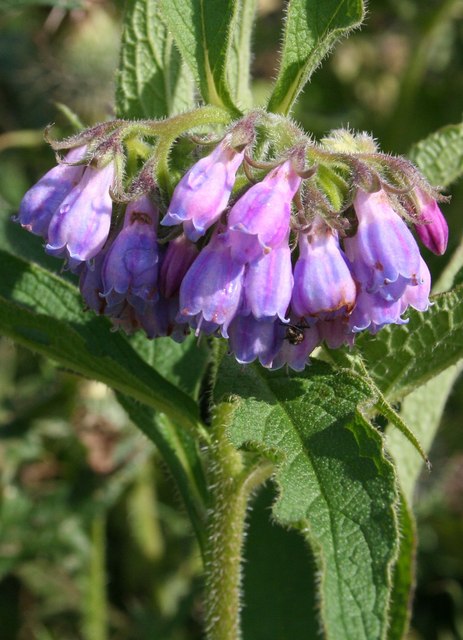
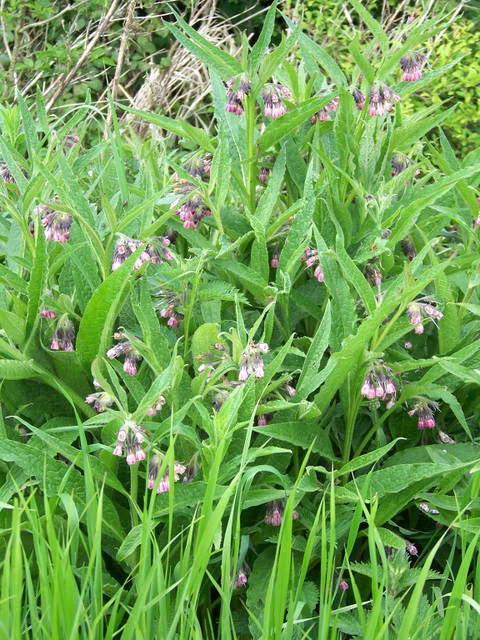
Comfrey (Symphytum officinale) isn’t a native plant in the US, but it has still become an indispensable garden ally for many people. It has a long tap root, so it can reach into deeper layers of the soil to draw nutrients upward. It also has a favorable nitrogen/phosphorus/potassium ratio. acts as an accumulator, drawing and gathering nutrients from the air and soil within its leaves. Gardeners then cut the plant and either scatter the leaves as green mulch, compost them, or allow them to decompose by themselves and use that liquid to irrigate their plants. They’re really cool little plants and considered tremendously helpful.
As it turns out, comfrey’s most remarkable characteristic may be all of the controversy it generates.
Anyhow, as I am planning next year’s garden and contemplating whether I want to try planting a fourth(!) round of comfrey starts, I thought now might be a good time to write a little about the folklore and various uses of comfrey.
Comfrey Magical Uses and Folklore
Comfrey is a borage relative native to Europe and parts of Asia, and it likes to grow in wet areas. It’s also known as boneset, knitbone, knitback, and a host of other names that refer to the plant’s traditional use as a remedy for bone and joint issues. It should not be confused with common boneset (Eupatorium perfoliatum), which is native to North America and part of the aster family. (This is why standardized names are so important!)
The name “comfrey” also refers to the plant’s use to heal bones. It’s derived from the Latin words “con firma,” meaning “to grow together.”
Multiple physicians throughout history have mentioned comfrey’s healing abilities. Dioscorides prescribed it for broken bones, respiratory issues, and wounds. In her book Physia, Hildegard of Bingen made mention of comfrey’s potential for toxicity:
the internal application of comfrey disrupts the entire order of bodily humors. However, when applied to the skin, it heals ulceration of the limbs.
In addition to medicine, comfrey is sometimes used as a culinary vegetable. It should not be eaten raw, however, and the leaves must be picked while young. The time of year also matters, as comfrey has higher concentrations of toxic compounds early in spring.
The Russian varietal of comfrey, S. x uplandicum, is often used in gardens. Since comfrey can become an invasive problem outside of its native range, there are sterile varieties specifically for growing and fertilizing the garden. These can be propagated by division but won’t self-sow.
Magically, comfrey is a plant of many uses. It’s used in protection spells, as well as those for healing, protection, abundance, and fertility. In general, if you want to accumulate good stuff and make sure you get to keep it, comfrey is a helpful herb.
Comfrey is sometimes added to baths for strengthening divination abilities and cleansing. (However, it’s not a good idea to do this too often for safety reasons.)
Comfrey is associated with the planets Saturn and Venus, the elements of Earth and Water, and the deities Hecate and Brigid.
Using Comfrey
Using comfrey in the garden is pretty straightforward. Plant it (be sure to choose a sterile variety), let it grow, cut it back, cram a bunch of it into a five-gallon bucket, and wait for them to break down into comfrey goop. Dilute it in water (about 1 part comfrey to 15 parts water) and use this water to irrigate your plants. If that sounds like too much, you can also just shred the leaves and use them to mulch plants, toss them into compost, or use them to line pots. Are there plants that make better dynamic accumulators? Sure, but you’re not going to hurt anything by making comfrey fertilizer, either. If it seems to work for you, your soil, and your plants, go for it!
Medicinally, comfrey is a bit troublesome. It has a long history of use for aches, pains, and broken bones. It was used both internally and externally, but it’s internal use is no longer recommended. Like a lot of other borage relatives, comfrey contains compounds that can cause liver problems. While some authorities state that the danger of comfrey is overstated, I still recommend using caution with this herb. Don’t take it internally (or use it topically for extended periods of time) unless it is recommended to you by a qualified medical practitioner.
Magically, add dried comfrey to jars, bottles, or sachets for love, fertility, protection, or abundance. It’s also said that wrapping your money in a whole comfrey leaf before spending it (or gambling) will help ensure that it returns to you.
Personally, I like comfrey. It’s a beautiful plant and, with responsible use, a valuable ally in the garden, the home pharmacy, and the magical herb cabinet. While it’s certainly generated more than its share of controversy over the millennia, I find it a very worthwhile herb to get to know.
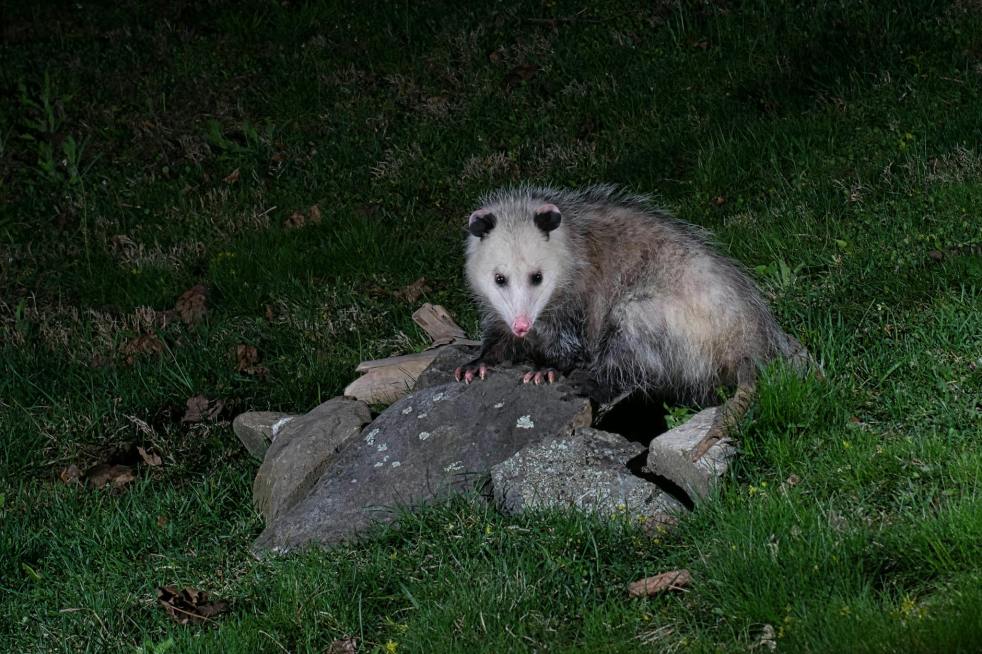
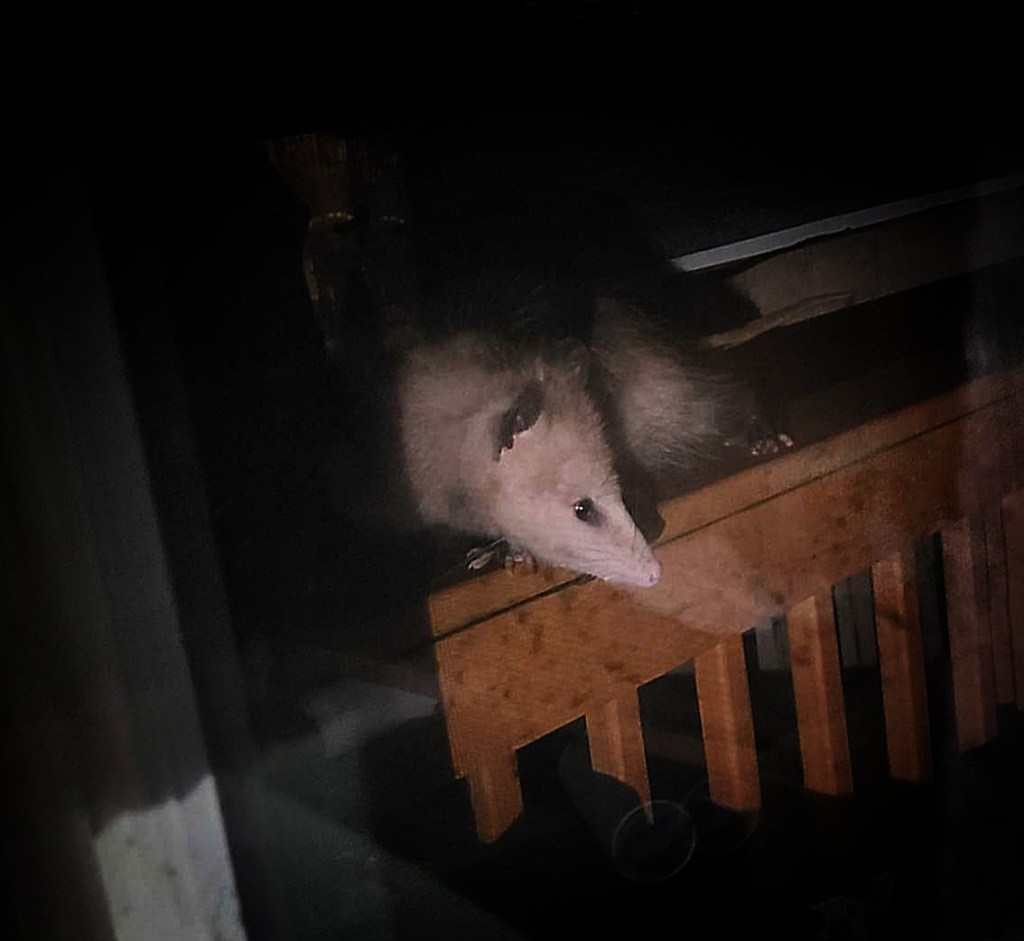
He appeared on the deck railing at 3 AM a few weeks ago, trundling along like one of the ROUS from The Princess Bride. (Which is to say, he moved like a very small man in an opossum suit.) I was so excited I almost shook my Handsome Assistant awake.
When he returned the next day to snuffle around the platform feeders, I actually went outside to offer him a small quantity of the kibble and dried bugs I use to feed the crows. He seemed pretty relaxed about the whole thing — just kind of leaned back and gave me a look that distinctly said, “Are you @#$% serious right now?“
It was when my Handsome Assistant and I were watching Hellier a few days later that I realized that I’d never survive a monster movie. If I lived in Kelly, KY, and encountered the Kentucky Goblins, I would 100% have tried to give them Capri Suns and crackers and ended up 1000% dismembered inside an abandoned coal mine.
But my impending mortality at the hands of something I’m trying to give snackies to is neither here nor there. Since there is an opossum, I thought I would explore the magical meaning of these creatures.
Opossum Folklore
The Virginia opossum is the source of the name “opossum.” It comes from a Powhatan word meaning “white animal,” which derives from a Proto-Algonquian word meaning “white dog.” The Spanish words for opossum, tlacuache and zarigüeya, derive from the Nahuatl tlaquatzin and Guarani sarigweya.
There is a large difference between opossums and possums (and Possum). Opossums live in the Americas, have skinny tails, and are grayish with white faces. Brush-tailed possums are from Australia, have fluffy tails, and are brownish. They are unrelated. The kind we have where I live, the Virginia opossum, is a member of Didelphimorphia (specifically, Didelphis virginiana). Some say that, due to a colossal mix-up, we ended up with Australia’s possum and they ended up with ours. For the purposes of this post, I’m going to focus on the American opossums.
The Virginia opossum. Photo by Skyler Ewing on Pexels.com
It’s often said that opossums “play dead” when confronted with a threat. In reality, they have a few different responses. They’re more likely to attempt to flee, or puff themselves up, hiss, and try to appear more threatening. In some situations, an automatic anxiety response may cause them to feign death, during which their heart rate and breathing slow, they lie motionless, and they emit a foul-smelling fluid from their butts.
It’s also often said that opossums are voracious tick eaters. This is not true. They are opportunistic omnivores, and they do eat a ton of insects, but the study that gave rise to this myth involved opossums in a laboratory setting during which they didn’t have much other choice. (It’d be like covering a human in peanut butter, locking them in a room for several days, and then saying that their diet primarily consists of nut spreads.) When the stomach contents of wild opossums were analyzed, there actually weren’t any ticks in there. Still! Even though they’re not the tick-decimating forces of nature folklore paints them to be, they’re a vital part of the ecosystem that helps control numerous other problem species. They’re basically organic garden pest control that screams at their own butts.
Interestingly, opossums aren’t often found in indigenous American folklore. When they appear in North American lore, they’re usually buffoonish characters. (In fact, their feigning death is often portrayed as stemming from embarrassment!) In South America, however, opossums are clever tricksters. Some groups even regard Opossum as a Prometheus-like figure.
The Symbolism of Opossums
In modern symbolism, opossums are seen to represent cleverness. This may come from the belief that they deliberately choose to “play dead.” (They also have really weirdly dexterous little paws and opposable thumbs on their feet.)
They’re also widely regarded as symbols of patience, perseverance, and survival against the odds. They’re slow-moving and very deliberate animals, and, when in a “feigning death” state, can remain motionless for hours to wait out predators.
Sometimes, opossums are viewed as symbols of rebirth since they seem to come alive after playing dead.
Dreaming of an opossum is believed to represent an illusion. Something may not be what it appears to be. It can be a sign from your subconscious that a situation isn’t right, and you need to look closer to find the truth.
Opossums are commonly associated with the Moon and lunar magic. They’re nocturnal, and their silvery fur and pale faces connect them to these energies.
Personally, I don’t care if Francis (by the way, I named the opossum Francis) never eats a single tick. I’m very happy to share this garden space with him. He is my precious garbage son and I love him very much.






















 Marble Crow