Neodruidry · Plants and Herbs · Witchcraft

Vervain Folklore and Magical Uses

Vervain (Verbena officinalis) is a prominent herb in European folk and ceremonial magic. Its roots also extend to American Hoodoo.

Though most old grimoires mean V. officinalis when they refer to vervain, there are actually about 80 species in the genus Verbena. In my area (and all of the continental US, and fair bit of Canada) we have Verbena hastata, also known as blue vervain. While it’s not the same plant, you’ll often find V. hastata labeled simply as “vervain” in metaphysical contexts.

Lemon verbena, Aloysia citrodora, is also a member of the Verbenaceae family. However, since it’s a somewhat more distant relative, I wanted to limit this post to V. officinalis and V. hastata.

Vervain is sometimes called “the enchanter’s plant,” since it’s one of the most versatile herbs in European magic. Even outside of Europe, it was (and continues to be) considered a plant of considerable medicinal and spiritual significance.

As John Gerard wrote in 1597,

Many odd old wives’ tales are written of Vervain tending to witchcraft and sorcery, which you may read elsewhere, for I am not willing to trouble your ears with supporting such trifles as honest ears abhor to hear.

Magically, it’s used for purification, protection, divination, peace, luck, love, and wealth. It’s a pretty solid all-purpose herb that is often added to formulas to increase their power.

The name vervain comes from the Latin “verbena,” which refers to leaves or twigs of plants used in religious ceremonies. This, in turn, came from the Proto-Indo-European root “werbh,” meaning to turn or bend.
I have also seen the origins of the word vervain given as a Celtic word “ferfaen,” meaning to drive stones away. However, I haven’t found strong evidence for this origin — all attempts to look up “ferfaen” only yield articles claiming it as the word origin of “vervain,” and most of them only give “Celtic” as the language of origin. One source did cite the Cymric words “ferri” and “maen” as a possible origin, with the word “maen” mutating over time into “faen” to eventually yield “ferfaen.” (Upon further searching, I was not able to find the word “ferri,” though I did find “fferi,” meaning “ferry.” This would give the word “ferfaen” a meaning closer to “ferry away stone(s).”)
Nonetheless, the etymological sources I looked at gave “verbena” as the origin of vervain, not “ferfaen.”

A close-up of vervain flowers.
Photo by Tom Fisk on Pexels.com

Pliny the Elder credited vervain with quite a lot of magical properties. According to him, it was used to cleanse and purify homes and altars. He claimed the Gaulish people used it in a form of divination, and that Magi said that people rubbed with vervain would have their wishes granted, fevers cooled, friends won, and diseases cured.
Interestingly, he also pointed out that vervain was considered a bit of a party plant, for when dining-couches were sprinkled with water infused with vervain “the entertainment becomes merrier.”

While vervain is strongly associated with the Druids, they didn’t leave a whole lot of records of their activities behind. What we do know is largely through sources like Pliny, and it’s likely because of writers like him that vervain became strongly connected to the ancient Druids.

For the best potency, vervain should be gathered in a specific fashion. It’s best cut between the hours of sunset and sunrise, during the dark moon. Like many other herbs harvested for their leaves, it’s best to cut the leaves before the flowers open. After cutting, it’s best to offer some fresh milk or honey to the plant.

Vervain is thought to be the origin of the name “Van van oil.” While the van van oil recipes I’ve seen don’t include vervain or vervain oil, it’s possible that the Verbena family loaned its name, nonetheless. (In that case, it was most likely lemon verbena, vervain’s citrus-scented South American cousin.)

Vervain is also one of those contradictory herbs that is simultaneously said to be used by witches, but also effective against witchcraft.

In the very distant past, bards would use brews of vervain to enhance their creativity and draw inspiration.

Medicinally, vervain is an emetic, diuretic, astringent, alterative, diaphoretic, nervine, and antispasmodic. According to Hildegard of Bingen, a poultice of vervain tea was good for drawing out “putridness” from flesh.

Soak some vervain in water, then use the stems to asperge an area, person, or object that you wish to cleanse. It’s also an excellent addition to ritual baths for this purpose.

A cup filled with dried herbs.
Photo by lil artsy on Pexels.com

Sprigs of vervain are also worn as protective amulets, specifically against malevolent magic. Tie a bit with some string, put it in a sachet, and carry it with you. Tuck a sprig of it in the band of a hat. Use a small bud vase necklace and wear a bit of vervain like jewelry.

Planting vervain around your property is said to ward off evil and guard against damage from bad weather. If you choose to do this, please select a variety of vervain native to your area — in most of the US, V. hastata is a safe bet.

V. officinalis is often used medicinally, V. hastata is considered both medicinal and edible, but avoid consuming it if you’re pregnant, trying to become pregnant, or are breastfeeding. Talk to a qualified herbalist if you have any chronic conditions, or routinely take any medications. Avoid consuming a lot of it, since it is an emetic. It’s also important to be sure that the herb you’re working with is really V. hastata or V. officinalis — there are plenty of Verbena species that don’t offer the same benefits.

Vervain is a powerful plant, as long as you know which member of Verbenaceae you’re looking at. If you have the ability to grow a native vervain, by all means do so — these plants are tall, with interesting-looking flower spikes. They’re also easy to dry and store, ensuring that you’ll always have a stockpile of this powerfully magical plant.

Plants and Herbs

Zucchini Folklore and Magical Uses

It’s that time of year!

Have you been visited by a Zucchini Fairy yet? It’s a little early, but I have it on good authority that there have been a few of them about.
Zucchini Fairies are magical creature known to visit neighborhoods where at least one person has planted zucchini. Overnight, a Zucchini Fairy scopes out these gardens and, the next day, all of that person’s neighbors wake up to boxes of unasked-for zucchini on their doorsteps.
They’re very mysterious creatures. In fact, nobody’s ever seen one. All that’s known about them is that they are most definitely not the neighborhood zucchini-grower attempting to get rid of some of the absolutely outrageous number of vegetables that their plants put out.

Ahem.

Three zucchini on a wood table.
Photo by Angele J on Pexels.com

Honestly, zucchini are really great plants for beginning gardeners. They’re both prolific and easy to grow, so it’s not hard to end up with an absolute buttload of fresh zucchini. You can make them into noodles (aptly named “zoodles”), roast them, slice them thin and fry them, or even bake them into desserts. If you’re more magically inclined, you can also tap into their metaphysical properties.

The zucchini we have come to know and love was developed in Italy in the 19th century but did not originate there. It’s one of many plants that came from the Americas and underwent generations of selective breeding to arrive at its current form. Because the modern zucchini is relatively new, there’s not a lot of traditional herb lore around it.

In some areas, locals warn that you should never leave your car windows open during zucchini season. You may return to find your car packed full of it (probably by Zucchini Fairies).

(On a related note, August 8th is official Sneak Zucchini onto Your Neighbor’s Porch Day. I’m not doing zucchini this year, so, if you live near me, yas better strap in for some pumpkins instead.)

While squash is one of the Three Sisters in the traditional foodways of many Indigenous American cultures, that involves other species of squash and not what we picture when we hear the word “zucchini.” Combining corn, beans, and squash creates a food ecosystem in which each plant is fed, supported, and protected. In some Indigenous agricultural practices, each of the three plants is believed to be looked after by one of the Three Sister Spirits. These Spirits are three siblings who were never apart in life — so now, the Three Sister plants much always be planted together, eaten together, and celebrated together as sustainers of life.

If you intend to eat zucchini more or less as-is, seasoned growers suggest picking it when it’s between 6-8″ in length. When it becomes larger, it can get a bit seedy and lose its tenderness. Don’t worry, though — the bigger, tougher zucchini are still delicious when grated and made into breads, cakes, or fritters, so they don’t need to go to waste.

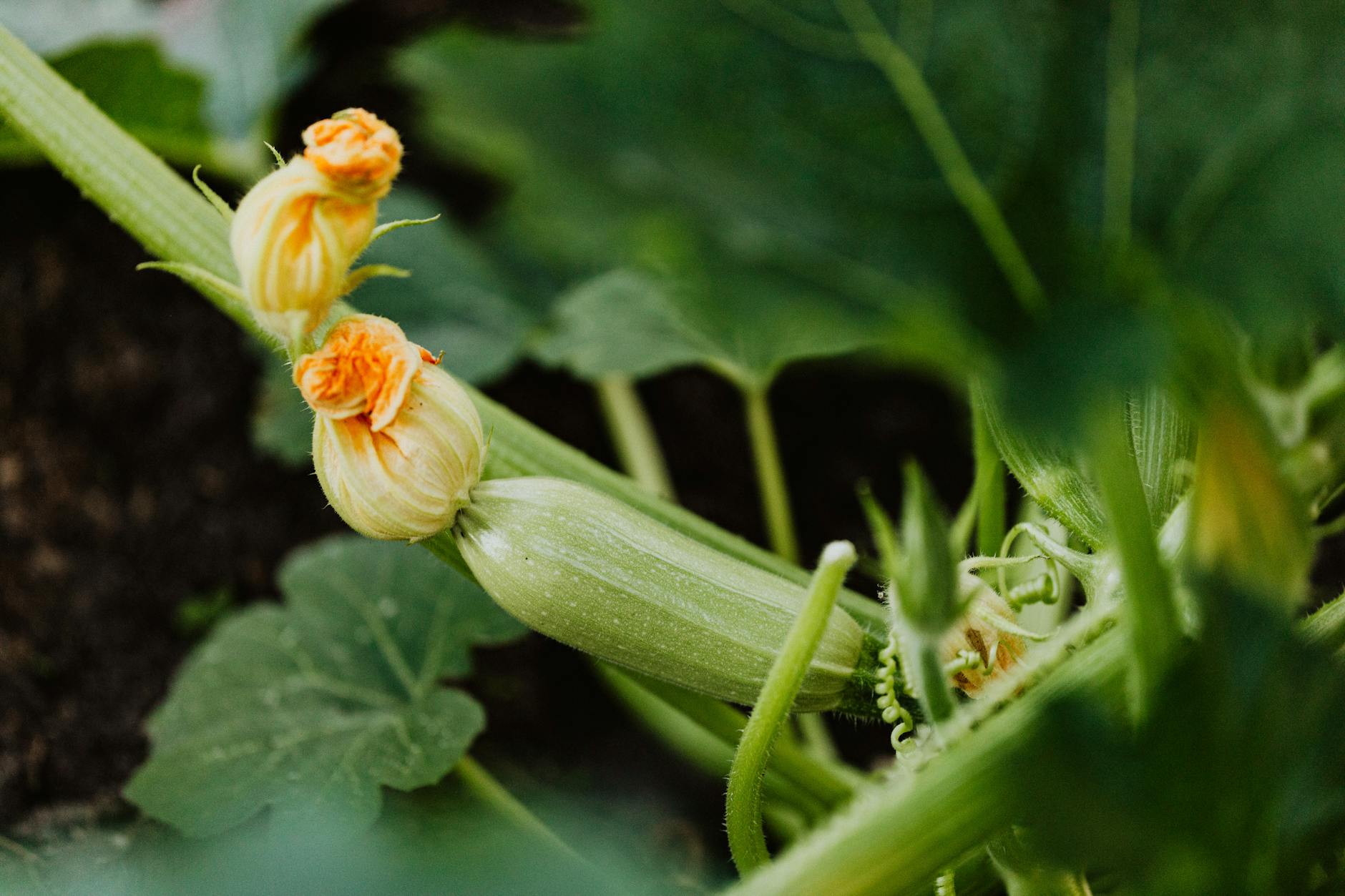
A zucchini ripening on the vine, with the blossom still attached.
Photo by Karolina Grabowska on Pexels.com

Due to its prolific nature, zucchini is commonly used in magic for fertility and abundance.

Zucchini is associated with the element of Earth. Practitioners who use the masculine/feminine energy dichotomy also associate this plant with “feminine” energy.

It’s possible to pick zucchini leaves or flowers to use in things like sachets or jar spells, if you wish. You can also batter and fry the flowers, which are delicious.

Personally, I prefer to leave the leaves and flowers where they are. I find the leaves unpleasant to touch, and the plant needs them more than I do. The flowers also provide food and shelter for pollinators — at night, squash bees like to crawl up inside them just before the flowers close. It gives them a safe, cozy little sleeping bag to curl up in.

As for the vegetables themselves… They’re not exactly the kind of thing you’ll be tucking into your dream pillows or anything (though that mental image is hilarious). So, in lieu of all that, here’s a fantastic recipe for egg-free, dairy-free, nut-free zucchini bread. It also uses cinnamon, which is considered a magical catalyst and love/money herb. Project your intention into the batter as you mix it, and you’ll have a delicious loaf of abundance and prosperity magic when you’re done!

  • 1 cup white einkorn flour (or use regular wheat flour)
  • 1/2 cup whole grain einkorn flour
  • 1/2 teaspoon baking soda
  • 1/2 teaspoon baking powder
  • 1/2 teaspoon salt
  • 1 teaspoon cinnamon
  • 1 tablespoon ground flaxseed
  • A whole bunch of chocolate chips, walnuts, or anything else you’d like to mix in (optional)
  • 1/4 cup avocado oil (or other oil or fat source of your choice)
  • 2/3 cup maple syrup
  • 1 teaspoon vanilla extract
  • 1 C grated zucchini
  1. Preheat your oven to 350 degrees Fahrenheit.
  2. While that happens, whisk or sift together your dry ingredients.
  3. Add your wet ingredients and mix thoroughly. (If you’re using regular wheat flour instead of einkorn, you may wish to add a little extra oil, maple syrup, or a few tablespoons of a milk of your choice — einkorn typically requires less liquid than regular flour.)
  4. Spread the batter in a well-greased loaf pan. Bake for 50-55 minutes, or until a toothpick inserted in the center comes out clean.
  5. Allow to cool, slice, and serve. I like it with a little of the Date Lady’s chocolate spread.

Whether you’re visited by the Zucchini Fairy, are your local Zucchini Fairy, or purchase your zucchini from the grocery store, these versatile vegetables are a great way to inexpensively pad out pretty much any recipe you can think of. Breakfast? Zucchini muffins. Lunch? Zoodles and pesto. Dinner? Roasted zucchini as a side. Dessert? Chocolate chip zucchini bread. Focus on the abundant, fertile, and prolific nature of these amazing plants, and invite their energy into your life.

Plants and Herbs

Hen and Chicks Folklore and Magical Uses

Do you have little to no success with plants?
Do you want to get into gardening, but lack confidence?
Hoo boy, are hen and chicks succulents made for you.

Members of the genus Sempervivum, these succulents are also known as “live forever” or “houseleek.” They have the plump leaves of your average succulent but can thrive in growing zones 9-4. I have one that I stuck in a pot on my deck and did literally nothing for — not even water — and it’s filled the pot, put out tons of little green pups, and is flowering like there’s no tomorrow.

A top-down view of a Sempervivum plant in a pink pot. In the center of the photo, several pink flowers and buds are visible.
A close up of that plant’s first flowers. In the background, you can kind of see other buds emerging on their talk stalks.

Along with their easygoing nature, hen and chicks plants have some interesting folklore and usages in magical disciplines.

Let’s look at their common names first. “Hen and chicks” derives from their most notable method of reproduction — in addition to producing seeds, they send off little offsets in the form of round rosettes which give the impression of a large mother “hen” plant surrounded by baby “chicks.” They’re called “live forever” because they’re evergreen and very difficult to kill. Lastly, the name “houseleek” has no relation to the other plants known as leeks. Instead, the word “leek” comes from the Anglo-Saxon word “leac,” meaning “plant.”

As for why they’re called something that literally translates to “house plant,” there’s an excellent reason for this. Hen and chicks plants were (and are) frequently grown on houses. (When I lived in California, the house I stayed in had some lovely Sempervivum growing on the roof.) This practice originated with the belief that these plants helped to ward off fire and lightning strikes.

These plants are also associated with prosperity, health, and luck. Possibly as an extension of their fire- and lightning-protective connections, some cultures grew Sempervivum on roofs as a way to ensure the health and wealth of a house’s occupants. In Wales, these plants are still sometimes grown on roofs for luck.

(Of course, if you live in the US and have an average modern shingle roof, you may not want to grow plants there. Excess moisture could cause problems, and using your roof as an ersatz garden could void your warranty. Sempervivum are great for green roofs, however.)

As for warding off fire and lightning strikes, there are a few reasons for this. Some species of Sempervivum grow fine, snow-white hairs on them, that look a bit like fine wool or thick cobwebs, and their growth habit can make them resemble a jutting, sculpted beard. This is reflected in the German name “Donnerbart,” or “Thunder beard.” These plants are connected to various thunder deities, like Thor and Zeus.

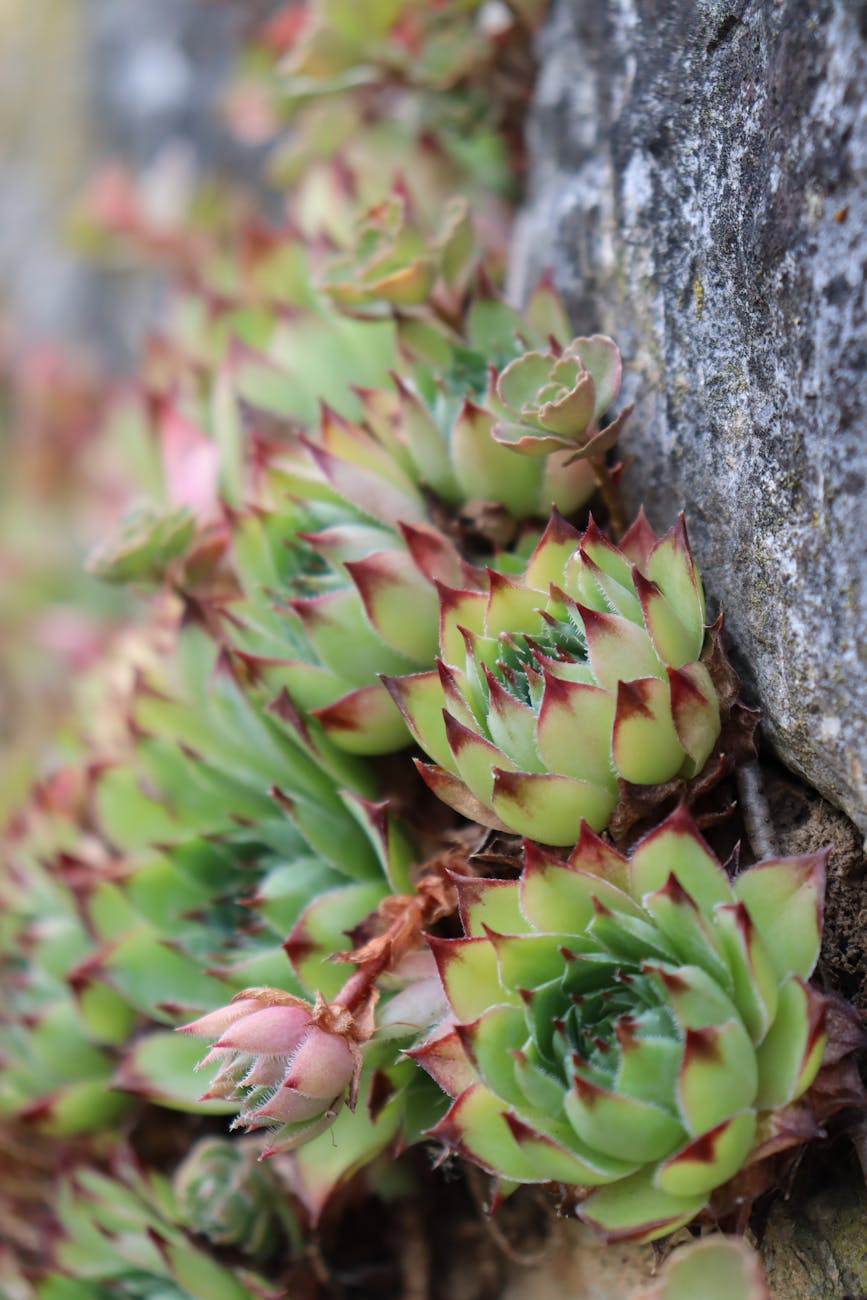
Sempervivums clinging to a rock face.
Photo by Honglei Yue on Pexels.com

The other reason behind it is that Sempervivum can act less as a protector than as an indicator. These plants can thrive in very dry areas, but they still need some moisture to stay plump and green. The presence of healthy hen and chicks plants generally indicates that conditions aren’t conducive to combustion.

Houseleeks are also used to ward off attacks by malevolent magic.

Medicinally, Sempervivum plants are used similarly to Aloe vera. Topically, it is sometimes a treatment for cuts, burns, or warts. This herb was also considered a very useful treatment for diarrhea, while larger doses were a powerful emetic. Traditionally, it’s considered a very cooling herb.

Elementally, Sempervivum is associated with Fire. It is also connected to all thunder deities.

From everything I’ve seen, Sempervivum‘s protective and lucky magical attributes are best employed by simply growing them. Give them a sunny spot and some well-draining soil in the right growing zones, and they’re pretty much good to go. (Of course, if you intend to use your hen and chicks plants in this fashion, it’s good form to ask them for their help.)

While these plants aren’t native to the US, I have noticed that they seem to be a favorite of small native pollinators. So far, I’ve seen three different species of sweat bee. They’re also useful for xeriscaping in especially challenging areas.

As I mentioned previously, you may want to avoid growing them on your roof. Yes, it’s very picturesque and cottagecore, and yes, it’s traditional, but having to pay upwards of five grand to fix or replace a modern shingle roof is none of those things. Plants trap moisture, which roofs need to shed. Their roots can infiltrate minute gaps between shingles, widening them and allowing water in. It may not happen immediately, but growing plants directly on a conventional roof, without any kind of barrier or container between the two, is generally not a good idea.
If you have a flat spot near your roof, like a windowsill, window box, or balcony, stick a couple Sempervivum plants in terracotta pots and put them there instead.

As for using them internally, I don’t recommend it. If you have a minor burn and don’t have a fresh aloe leaf handy, by all means, try applying some Sempervivum goop topically. Using these plants as an anti-diarrheal or purgative has largely dropped off in favor of other remedies, even in alternative medicine.

Hen and chicks plants are adorable, inexpensive, and exceptionally hard to kill. Magically, they’re just cute little protective and luck-drawing charms. If you have the space to devote to one (or a few), they’re well worth their tiny investment of time and money.

Plants and Herbs

St. John’s Wort Folklore and Magical Uses

Ah, St. John’s wort. Taken internally, it’s reportedly a balm for the nerves. Used externally, it’s a balm for cuts and scrapes. Its turpentine-scented leaves and flowers are a source of bright red, medicinal oil, but only when very fresh. The plant itself is the subject of folklore, a medicinal treasure, and a whole lot of magical help.

So, what’s so great about St. John’s wort, and why is it called that, anyway?

Let’s start with the name. Officially, St. John’s wort is known as Hypericum perforatum — “hypericum” from “hyper” and “eikon,” referring to how the flowers were hung above icons, and “perforatum” meaning “perforated,” due to the hole-like appearance of the translucent glands in its leaves.

Hypericum is a large genus, and a lot of its members are referred to as St. John’s wort. There are even some unrelated species that bear the same common name, like the marsh St. John’s worts of the genus Triadenum, or the greater celandine that’s sometimes regionally known as St. John’s wort. For our purposes here, we’re going to stick to Hypericum perforatum.

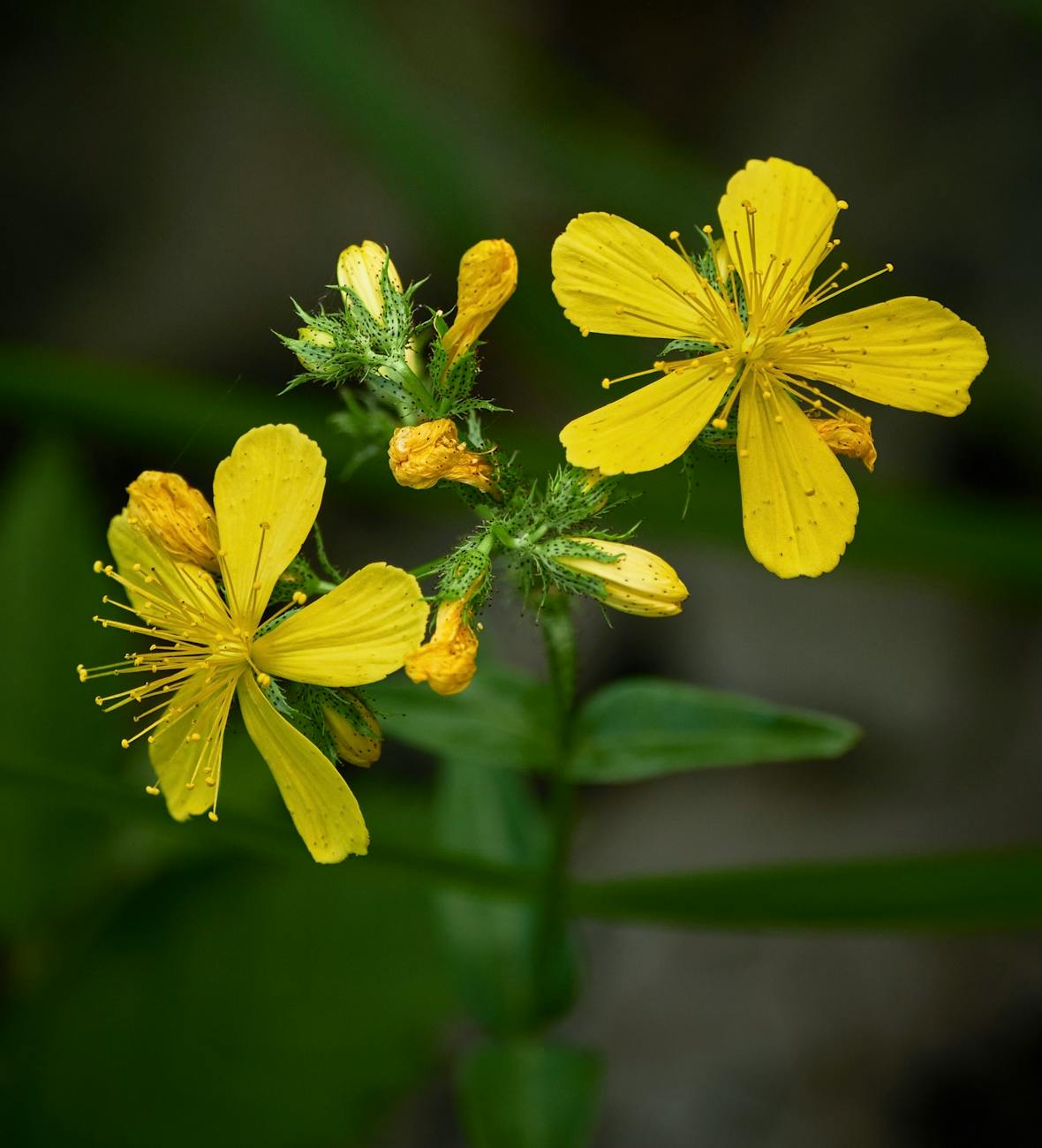
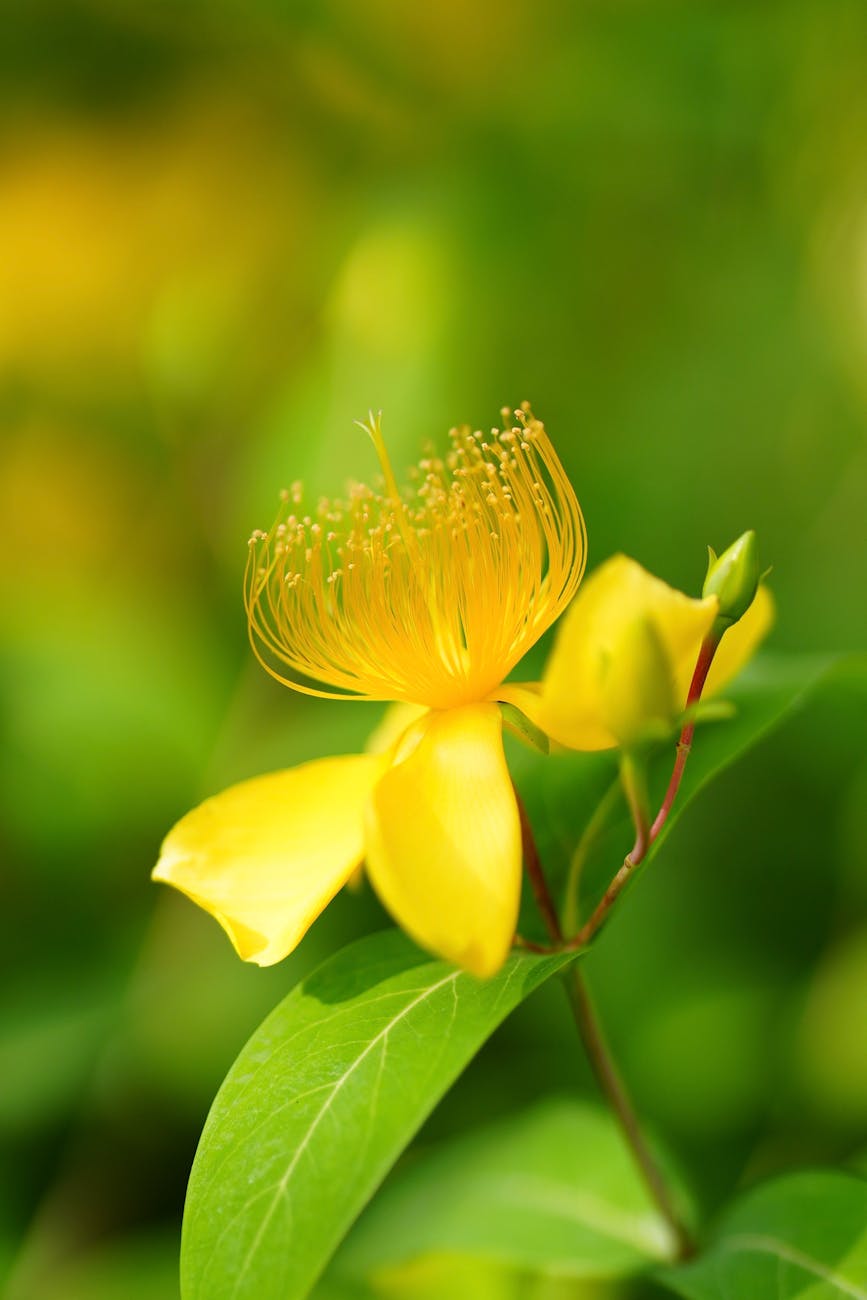
Bright yellow St. John's wort flowers.
Photo by Valter Zhara on Pexels.com

As for how this plant became known as St. John’s wort, it’s a bit of a convoluted story. Its history of use dates back to pre-Christianity, so it wasn’t always known as “St. John’s wort.” (As for the “wort” part, that’s just an old word for “plant,” derived from the Old English “wyrt.”) So, older sources will have their own names for this herb that may not be recognizable to modern readers. St. John’s wort also has a ton of regional names — in the US, it’s sometimes called goatweed, Klamath weed, or Tipton weed. In the UK, it may be called touch-and-heal, rosin rose, penny John, or balm of the warrior’s wound.

The name St. John’s wort came about because it was believed that this herb was at its most potent during Midsummer, and therefore should be harvested on or about June 24th. This was later turned into the Christian feast day of St. John, and so the plant became “St. John’s plant.” It’s also said that the plant’s red, blood-like sap runs in August, on the day that St. John was beheaded.

As evidenced by many of its healing-related common names, this herb is often hyped up in natural medicine circles. Topically, its oil is used to treat and soothe minor wounds in a similar fashion to commercial wound care ointment. Internally, it’s often used to help with symptoms of anxiety or depression. The reason it works is that St. John’s wort has a whole host of active compounds, including sesquiterpine oils, anthraquinone derivatives, and an interesting chemical called hyperforin. Hyperforin is particularly noteworthy, as it may be the source of St. John’s wort’s antidepressant effects, while the anthraquinone derivatives hypericin and pseudohypericin have demonstrated antiviral and/or antibacterial activity.

(As a side note, please avoid taking St. John’s wort internally if you’re on pretty much anything. It can alter how certain medications are metabolized by affecting specific liver enzymes, causing overdoses. It can also inhibit the effects of birth control, antivirals, chemotherapy drugs, certain anticoagulants, and medications for heart disease. Taking it with certain antidepressants also increases the risk of serotonin syndrome, and I don’t wish that on anybody.)

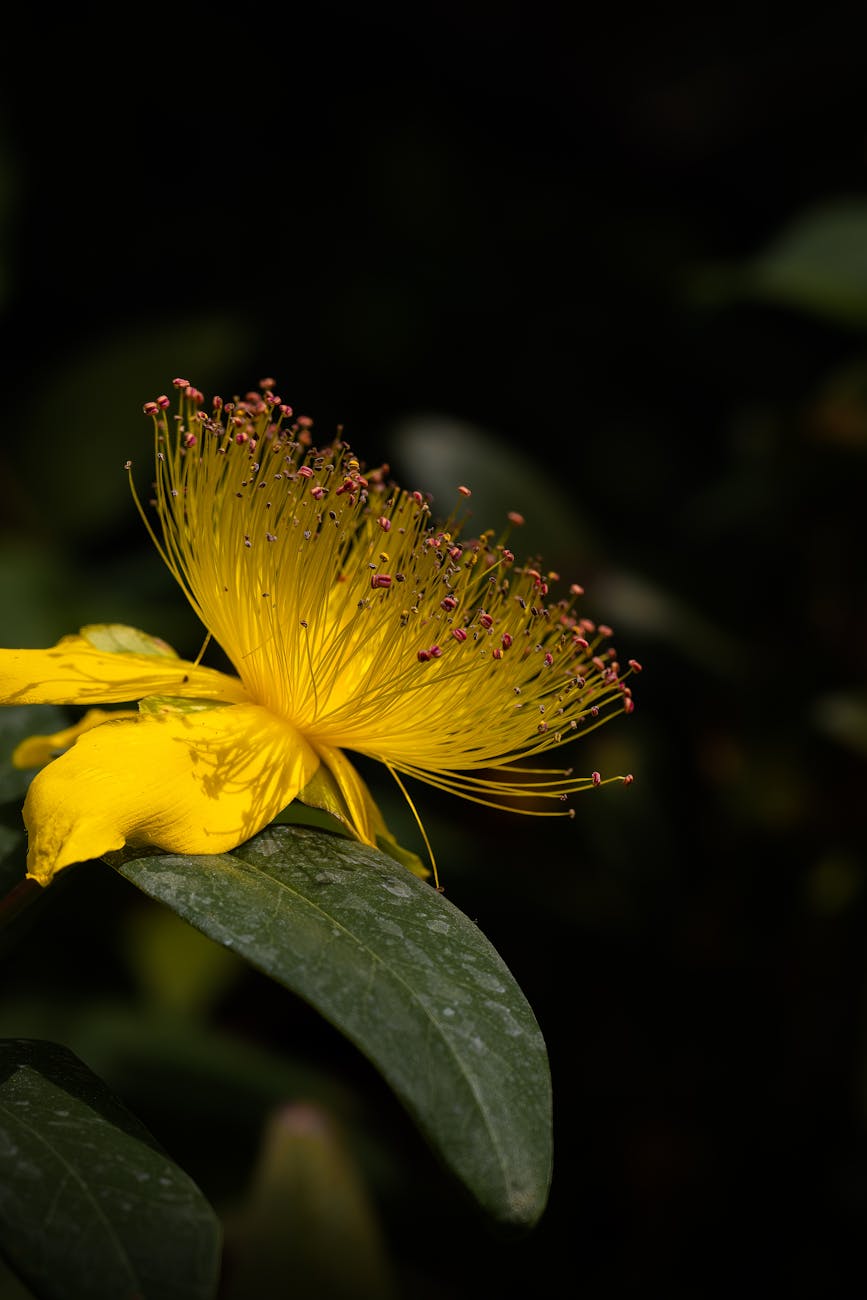
A side view of a creeping St. John's wort, Hypericum calycinum, flower.
Hypericum calycinum, or creeping St. John’s wort, displaying very similar flowers to Hypericum perforatum. Photo by shaosong sun on Pexels.com

Magically, St. John’s wort is often used to repel or banish evil. Another common name, fuga daemonium, literally means “demon flight.” It was often hung in houses, placed above religious icons, or carried as a protective talisman. Flowers, brought into the home on Midsummer’s eve, are considered particularly protective and lucky.

This plant also had some limited divinatory use as a kind of mortality predictor. If you took two sprigs of St. John’s wort and hung it over a marital bed, the sprig that wilted the fastest indicated which member of a couple would die first. Fun!

As a Midsummer plant, St. John’s wort is associated with the Sun and the element of Fire.

It’s probably best to work with this herb in dried or oil form. St. John’s wort is such a potent medicinal plant because the compounds that we use as medicine are actually the plant’s defensive mechanisms — they’re distasteful and poisonous to grazing animals, allowing the plant to grow unchecked. That’s not a super big deal if you’re within St. John’s wort’s native range across parts of Europe and Asia but can become a (rapidly spreading) problem if you’re not. This plant is considered a noxious weed elsewhere, so, unless you’re an herbalist who needs the fresh herb specifically, I’d avoid growing it.

If you have access to a patch of St. John’s wort, however, and you’re outside its native range, harvest all you like. (Not much else will use it, and you’ll be doing the native fauna and flora a favor.)

Use St. John’s wort oil for physical and magical healing. Its resemblance to blood makes it appropriate for workings related to birth, death, or rebirth (though I find a bit of bloodroot or alkanet steeped in red wine or vinegar to be a somewhat better — and easier to obtain — substitute for blood itself).

Use the dried herb for banishment. Burn it in bundles and waft the smoke around any space where you want to clear out malevolent spirits, magic, or the effects of the evil eye.

Place some of the dried herb in a protective sachet and carry it on you. You can also add it to jars, poppets, or other container spells as you deem appropriate.

Plants and Herbs

The Pumpkining. It begins.

I messed up.

I don’t know if you remember, or even read this bit last year, but I had a whole Thing where the front yard started growing some kind of mystery plant out of nowhere, the guy who helps us out with cutting the grass identified it as a kind of squash, and it ended up being a pumpkin vine that produced a large (large) number of beautiful and delicious little sugar pie pumpkins.

I didn’t save the seeds from those pumpkins because the flowers were open-pollinated and I am afraid of toxic squash syndrome. (Long story short, if you grow any cucurbits from seeds that you’ve saved, never eat any that taste weirdly bitter.) I did want to grow more pumpkins since they seemed to do so well, so I bought a little packet of seeds.

I figured I’d plant all of them just kind of wherever. Not all of the seeds would germinate, because nature is unpredictable like that. The ones that did would likely have to fight for survival, because I don’t spray for anything. I don’t even really water stuff. The most I do is wipe down leaves with pest eggs on ’em, and I barely even bother with that unless the eggs are from an invasive species.

So, knowing that these baby pumpkins would have to fight for their tiny lives, I planted all of the seeds.

And they’ve all sprouted.

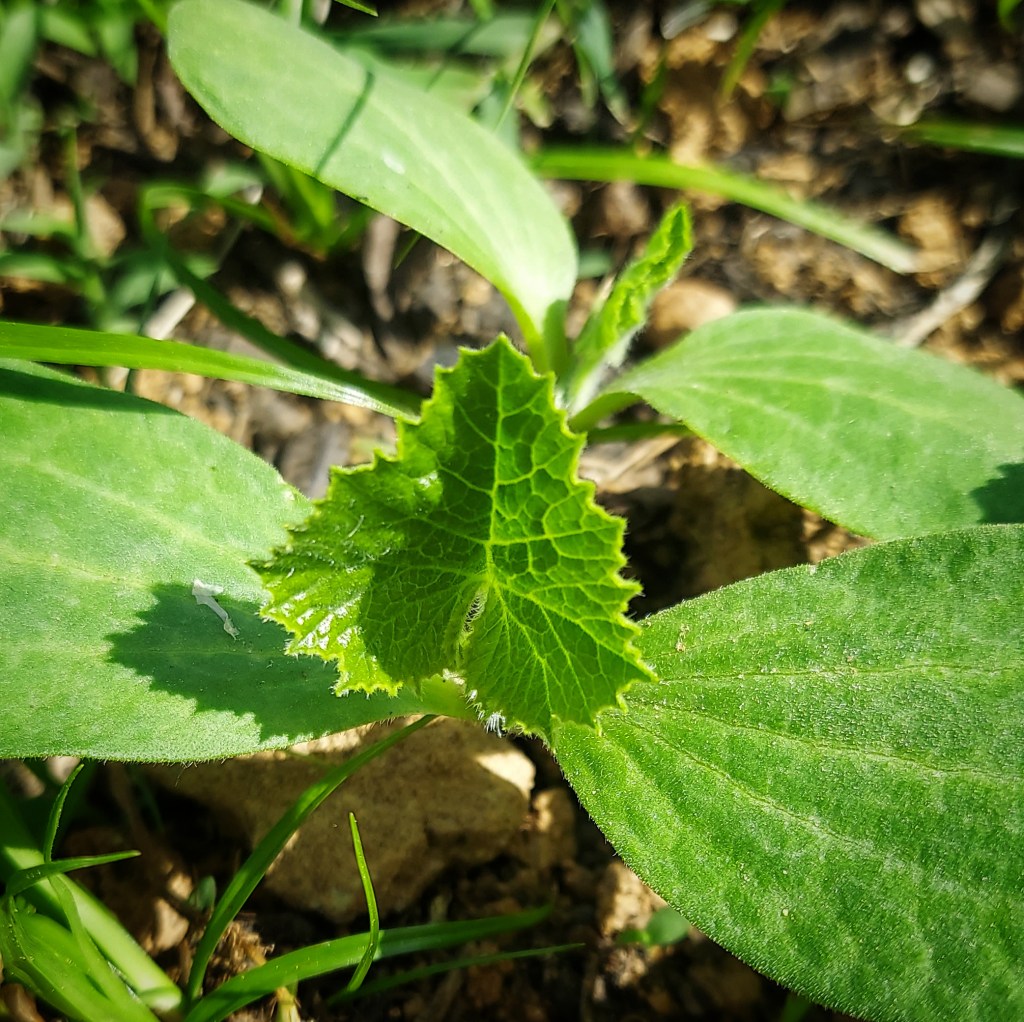
A top-down view of several small pumpkin sprouts.
This was the day before yesterday. Their secondary leaves are now unfurled, ready to go, and looking for trouble.

And they’re gaining strength.

Their stems are plump and sturdy. Their secondary leaves are uncurling. They’ve started to develop the fine, stiff spines that protect their leaves and stems from predators.

A pumpkin sprout, secondary leaf unfurled.
Today.

Where one pumpkin vine gave me more pumpkins than I could handle myself (and pumpkin bread, pumpkin pie, pumpkin bisque, pumpkin sauce), I am now facing about twenty.
That could be hundreds of pumpkins.

I wish I could say that this is the first time that something like this has happened, but it isn’t. I have a track record of vastly underestimating plantlife. Just ask the Passiflora incarnata growing up my porch.

I could pinch off the weakest ones, but none of them actually seem… well, weak. They’re thriving. Living their best little green lives. Just absolutely vibing out here.

I might just have to let them have at it.
Let the yard be a little pumpkin Thunderdome for a bit. May only the strongest survive.

Failing that, I’ll be stealthily abandoning baskets of unwanted sugar pie pumpkins on people’s porches by August.

Plants and Herbs

Lemon Balm Folklore and Magical Uses

Et tu, lemon balm?

I have tried so hard to love it. It’s relaxing. It’s delicious. You can make it into tea or syrup or use it to flavor anything from sugar to fish. If you have anxiety, it’s touted as a virtually ideal way to calm down — the closest thing to an herbal benzo out there.

However, I can also tell you that, from personal experience, that it can also leave you waking up from a nap that leaves you like Robin Williams in Jumanji.

Fortunately, even if you are sensitive lemon balm’s very relaxing properties, there are other things you can use it for. It’s still very tasty in less-than-therapeutic doses and has an abundance of interesting uses in folk magic.

Lemon balm’s official name is Melissa officinalis. “Melissa” is Greek for “honey bee,” since the plant is a favorite of bees and was often planted to help attract them. Beekeepers would also pinch off fresh sprigs of the plant and rub them on the entrances of beehives to entice them to move in and stay.

(“Officinalis” (or “officinale”) just denotes organisms that are useful in medicine or cooking. Kind of like how “sativa,” “sativum,” and “sativus” just mean “cultivated,” and denotes crops grown from seed.
Cannabis sativa and Avena sativa are not closely related, to put it mildly.
Melissa officinalis, the lemon balm, and Sepia officinalis, the cuttlefish, are also not related.)

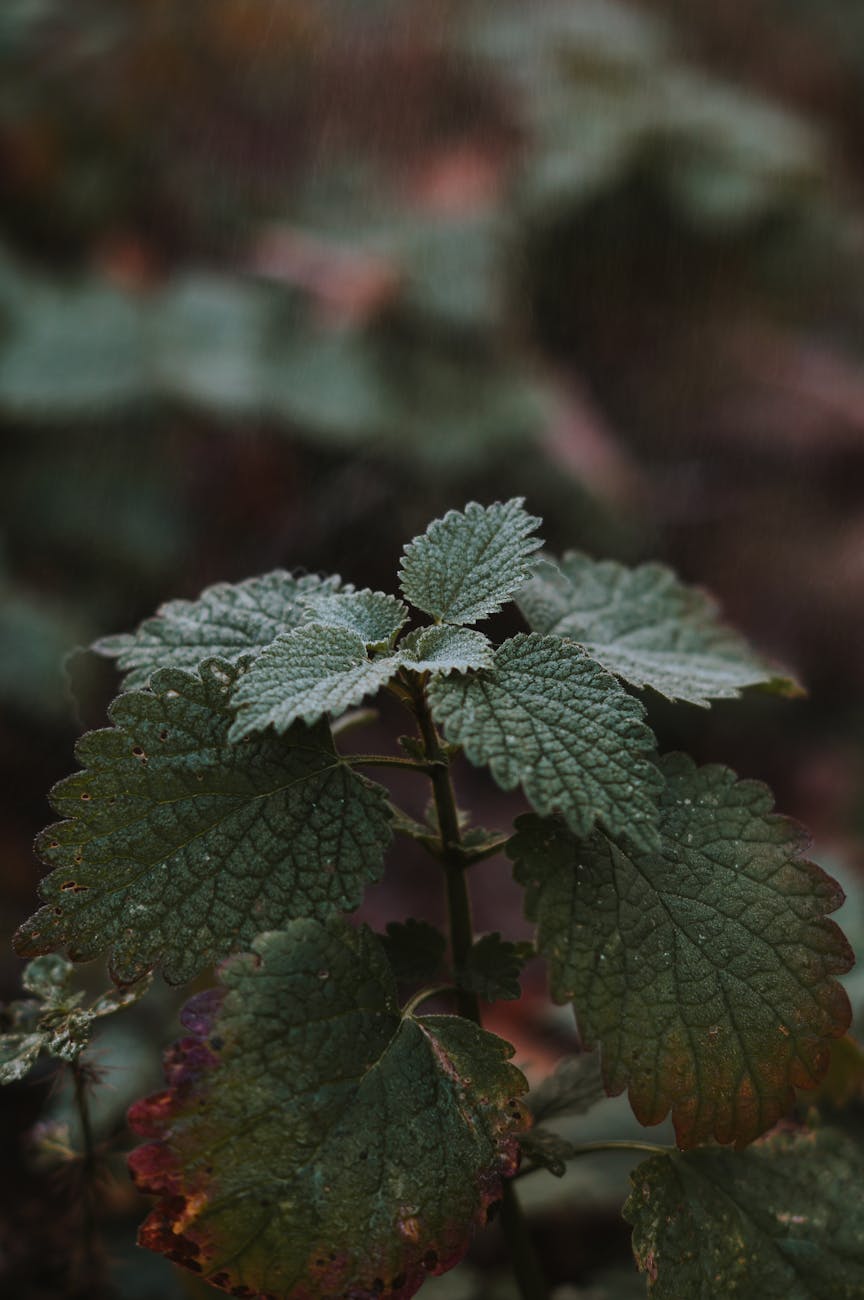
A sprig of lemon balm against a dark background.
Photo by Oksana Abramova on Pexels.com

Lemon balm is good for attracting more than just bees, though. Magically, it’s frequently used as an herb for good luck and general positivity. Tons of recipes feature it for love, fertility, and money.

To a somewhat lesser extent, lemon balm is also used for repelling evil and attracting good spirits. Since it’s so fragrant, it was used to strew the floors of Christian churches. In Abruzzi, Italy, women who happened on wild lemon balm would crush a sprig between their fingers in hopes that the scent would ensure that Jesus Christ would guide them to Heaven.

Lemon balm is considered a sacred herb of Hecate. It’s said that she gave the knowledge of lemon balm and other “witches’ herbs” to her daughters, Medea and Circe.

As well as being a mild sedative, lemon balm is used to soothe digestive issues. However, while it’s a tasty and relaxing herb, it’s best avoided by people with thyroid issues. It can interfere with thyroid hormone replacement therapy.

In the past, lemon balm was also applied to scorpion stings, bites from rabid dogs, and the venom of serpents. Since this herb isn’t an antivenom or protective against rabies transmission, this practice likely met with very limited success.

Nobody seems able to agree on lemon balm’s planetary or astrological associations. Nicholas Culpeper called it an herb of Jupiter and the sign Cancer. Other authorities say it’s an herb of Venus, Neptune, or the Moon. It is considered a generally “Water”-y herb, which makes sense when you consider its ability to relax the mind and soothe the emotions.

I know I usually advocate for growing your own herbs whenever possible, but planting lemon balm is one of those situations where you really want to exercise caution. Lemon balm requires next to no maintenance. Like other members of the mint family, it spreads aggressively outside of its native habitat. Absolutely do not plant it in the ground unless you want the entire area to be lemon balm. Keep it in window boxes, pots, or even containers indoors. If you do grow it in a container outside, avoid placing that container directly on the soil. When I say this stuff spreads, I’m not messing around.

Photo by Alesia Kozik on Pexels.com

In my experience, mints do not smell very good when burned straight. Instead of making lemon balm into incense, consider using it to infuse alcohol for making sprays, or oils for anointing or making balms.

The easiest way to use lemon balm is just to sprinkle some of the dried leaves across your front doorstep. The second easiest is to brew it into a tea and either drink it, use it for washing crystals or other curios, or use it to wash the doors of your home. As you do this, visualize good fortune coming in, and back luck or malevolent spirits turning away.

Lemon balm is one of those herbs that’s readily available fresh, dried, or as an oil. You can try it in a tea, or, depending on how fancy your local shops are, in a gourmet syrup. Its flavor is refreshing, citrusy, and herbal, while also tasting quite unlike anything else. As far as magical ingredients go, it’s also hard to go wrong with lemon balm — it’s a useful herb for attracting good things (also bees) and keeping out the bad. All of that aside, I wouldn’t rely on this as a protective herb on its own, but it’s great for filling up an empty space with useful, positive energy.

Plants and Herbs

Chili Pepper Folklore and Magical Uses

Have you ever gone to the store with an idea of what you need, but no real list? And then you go home and discover that you’ve bought everything but a specific item you actually needed?

Tl;dr, I have a lot of pepper plants now.

See, I was going to the garden store for some tomato starts. (I love tomatoes. When my grandpa kept a garden, he grew big, fat beefsteak tomatoes and there are many, many photos of me and my sibling as tiny children with whole tomatoes in our hands, cheeks smeared with juice and seeds. I do not, however, try to grow tomatoes from seed because it is tedious and saving and fermenting them is Not a Good Time.)

Yellow peppers on a pepper plant.
Photo by Zen Chung on Pexels.com

Somehow, I managed to return with the herbs I wanted for some railing boxes, a bunch of pepper plants I never planned on, and exactly zero tomatoes. None. None tomatoes.

So, I figure now’s as good a time as any for a refresher on the many, many magical uses of the various cultivars of chili pepper.

Chili peppers are members of the Capsicum genus. 90% of the time, Capsicum annuum.
“What about jalapeños?” C. annuum.
“Bell peppers?” C. annuum.
“Serranos?” C. annuum.
“Habaneros?” Okay, those are C. chinense, but mostly due to a series of errors.

It’s been my experience that hot spices, in general, fall into two camps. While the heat of hot spices is great for acting as a kind of magical catalyst to really get things moving, this can be used in one of two ways. The “sweet heat” spices (your cinnamons, ginger, etc.) are commonly used for money, love, and passion. The other hot spices, like chili peppers, are commonly used to banish or protect. In both cases, hot spices are used to get things moving quickly. Whether you want things to move to you or away from you is the deciding factor.

A dried chili pepper, whole star anise, clove buds, and whole nutmegs on a wooden table.
Photo by Pranjall Kumar on Pexels.com

Hot peppers are good at repelling more than just unwanted people, entities, or energies. Capsaicin, the primary compound that gives peppers their heat, is a defensive mechanism to keep peppers from being eaten. Humans, massive weirdoes that we are, decided that capsaicin was delicious, actually, and no plant was gonna tell us what to do.
Birds are unaffected by capsaicin, so they’re a major means of pepper seed dispersal. They eat the brightly colored fruits and scatter the seeds in their droppings.

In Coahuila, Mexico, chili peppers are used to counter malevolent magic. Specifically, they’re a remedy against salting, a practice akin to Hoodoo foot track magic. The practitioner combines salt from the homes of three different widows and graveyard dirt taken from the burial site of someone who died violently, and sprinkles it in front of their intended victim’s front door. To counter this, the victim combines chili peppers, star anise, garlic, rue, rosemary, storax, and myrrh, and uses the mixture to fumigate every corner of their home to drive the evil out.

Chilis are also a remedy for the evil eye.

The Tsáchila people, who live near the foot of the Andes mountains in Ecuador, use chilis to foil a kind of vampiric entity called the red demon. This demon feeds on people’s blood, leaving them pale and lifeless. Burning chilis in a fire while serving chili pepper-laden food drives the creature away, since it can’t tolerate the spicy food or pepper fumes.

The Aymara people of Bolivia, on the other hand, add chilis to a pot of boiling water and other herbs to create a cleansing steam bath. Sitting under a blanket, in the steam, is said to drive out evil energies.

To be honest, anywhere you’ll find hot peppers, it seems you’ll find a ritual that involves burning them to drive out evil. It reminds me of a specific incident from my own life — I was making some spicy sautéed broccoli on the stove top and added the spices a little too early. The capsaicin heated up and became aerosolized, and the fumes drove my then-partner outside. So, burning hot peppers really can drive out malevolent influences!

Hot foot powder is another common use for chilis, specifically within Hoodoo. While specific recipes can vary from culture to culture and practitioner to practitioner, chili is usually the base. This is sprinkled in a target’s footprints, in their shoes, where they will walk (like in front of their door), or in a container with a photo of them, paper with their name written on it, or personal possession of theirs. This isn’t a strictly protective practice, though it is certainly used that way. It’s just meant to drive unwanted people away from the user. Some scholars of folk practices think that hot foot powder may be a variation of walkin foot, which is intended to create confusion in one’s target.

Of course, chilis also have their dark side too. One way to curse someone involves throwing specially prepared chili peppers into their home or workplace. The seeds may also be combined with other baneful ingredients, added to a fabric or paper parcel, and tossed in instead.

Medicinally, capsaicin triggers a cooling response in the body. It helps increase circulation and is often used as a topical “counter irritant” for muscle and joint pain. I personally have a few different muscle rubs and pain-relieving balms, and about half of them are capsaicin based.

Hot peppers are ruled (unsurprisingly) by the planet Mars and the element of Fire.

As mentioned above, chili peppers are excellent at making things go away.
(Well, except birds.)

Red and yellow peppers on a pepper plant.
Photo by Yan Krukau on Pexels.com

Someone bothering you? Find you someone who can make you some hot foot powder. Need protection? Add chili peppers (or the ashes or char from burned chili peppers) to protective salt and sprinkle it in the corners of all of your rooms. Getting badgered by malevolent magic or evil entities? Smoke ’em out by burning some chilis on charcoal. Just be careful with that last one — chili pepper fumes are no joke for babies, children, and people with respiratory disorders. Basically, don’t expose anyone to the smoke that you wouldn’t also want to spray in the face with bear mace.

I also want to reiterate that, while chili peppers are a magical catalyst, I’d avoid them in situations where you aren’t specifically trying to repel something in a hurry. If you’re looking to attract things instead, go for one of the “sweet heat” spices — like nutmeg, cinnamon, or ginger.

I would not advocate using them for malevolent magic. Don’t get me wrong, cursing is absolutely useful and appropriate in some situations, but that’s something you’re better off learning somewhere other than a random website.

Right now, we’re trying not to count our peppers before they hatch. Should we have an abundant harvest, we’ve got a dehydrator, several batches of mango and hot pepper mead, peach and hot pepper water kefir, pepper jelly, spicy dark chocolate, and plenty of other uses in mind. (I love sweet and spicy flavors together, and mango/pepper, peach/pepper, or red berries/pepper/chocolate are my favorites.) Here’s hoping for an abundant harvest!

Plants and Herbs

Plum Folklore and Magical Uses

In autumn of last year, my Handsome Assistant and I planted a plum tree. As we work on getting rid of the lawn in the backyard chunk by chunk, we’re replacing those chunks with tree guilds. We couldn’t decide what kind of fruit tree we wanted for that space — it had to be a dwarf variety, and it needed good disease resistance. If the fruit didn’t need a lot of processing to be edible, so much the better. I was torn between a sand pear and a cherry, but, in the end, we went with a beautiful little Pershore yellow egg plum (Prunus domestica).

Right now, it’s shed its pretty white flowers to leave behind a number of tiny green plums-to-be. While I was looking up ways to protect at least some of the fruit from the other yard denizens, I got caught up reading about some very interesting plum facts and folklore.

Plums have an interesting reputation across multiple cultures. They’re harbingers of spring, protectors against evil, and cultivators of romantic love.

When used as wood for wands, plum is said to be useful for healing. This may tie back to the idea of plums as promoters of vitality (and even immortality — ). Since plum trees also banish evil, plum wood wands are suitable for pretty much all magical workings.

In China, plum (Prunus mume) is one of the Four Gentlemen, along with orchid, bamboo, and chrysanthemum. The plum blossom’s five petals represent the five blessings of good luck, fortune, longevity, and joi, and wealth. Plum blossoms are also symbols of resilience, since they bloom so early — well before the last of the winter snow has melted away.

The plum blossom is one of the national symbols of Taiwan.

In Japan, plum trees are symbol of elegance and purity. They’re also charms against evil and are often planted in the northeastern area of gardens as a protective talisman.

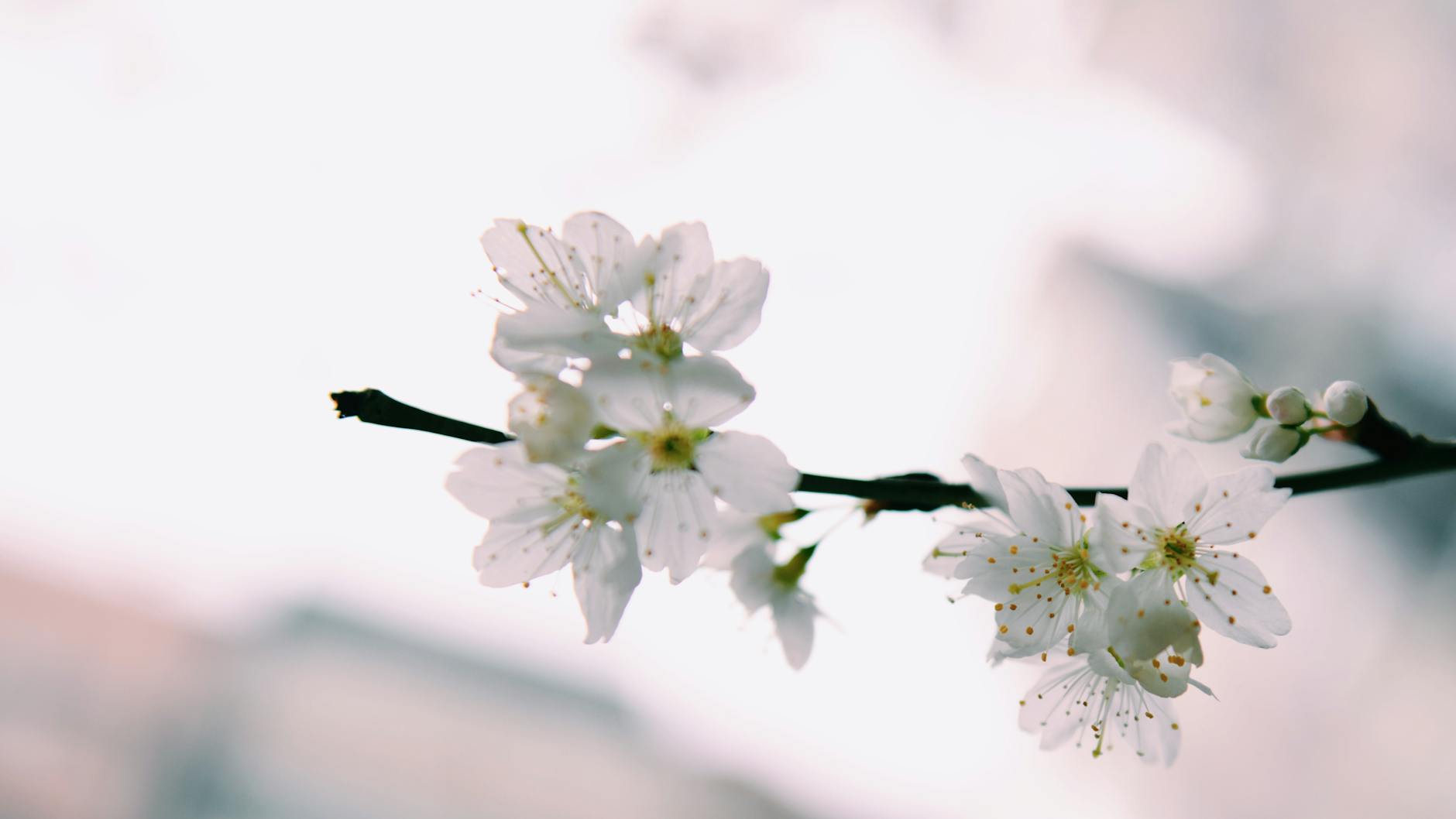
White plum blossoms on a black twig.
Photo by Cats Coming on Pexels.com

Pershore, Worcestershire, has a designated Plum Charmer. This person plays music to the plum trees during the summer in order keep spirits away and ensure a good harvest. (This probably also has the effect of shooing hungry birds and squirrels away, which ensures that fewer plums get nibbled on!)

Unfortunately, good plum harvests are a bit of a double-edged sword. It was also said that plentiful plums mean cholera is sure to follow. (Cholera is caused by the bacterium Vibrio cholerae. Most human cholera cases are caused by consuming food or water contaminated with infected feces, and fruits in general [with the exception of sour fruits] are a potential vector for cholera when they’re prepared by someone affected by V. cholerae.)

I wasn’t able to find much information on plums as a fruit for love, other than the general ideal that any sweet, juicy fruit is suitable for love workings (or as offerings to deities of love and beauty). The blossoms are associated with beauty and marriage, however, and the coverlet on a bridal bed is sometimes referred to as a plum blossom blanket.

Overall, plums are a boundary tree. They’re planted in gardens to be a ward against evil. They bloom on the narrow line between winter and spring. This makes them a useful, surprisingly versatile plant to grow and work with — they seem to function as a way to keep unwanted influences at bay, clearing the way for whatever you want to accomplish.

Plums are associated with the elements of Water and Air, as well as the planet Venus.

Naturally, you could grow a plum tree and request that it guard your space, but that might require quite an investment of time, money, and room. Since plums are associated with keeping evil away, one easy way to make use of them is to hang a windfall plum branch over your front and back doors.

As far as love workings go, the simplest way to use plums there is to share one with a partner (or partner-to-be). For this, I’d probably choose a plum with a deep red flesh and a sort of heart (or, let’s be real, butt) shape. Of course, as with any love working, you’ll only want to do this with a consenting partner. Nobody likes to be sideswiped by a love spell.

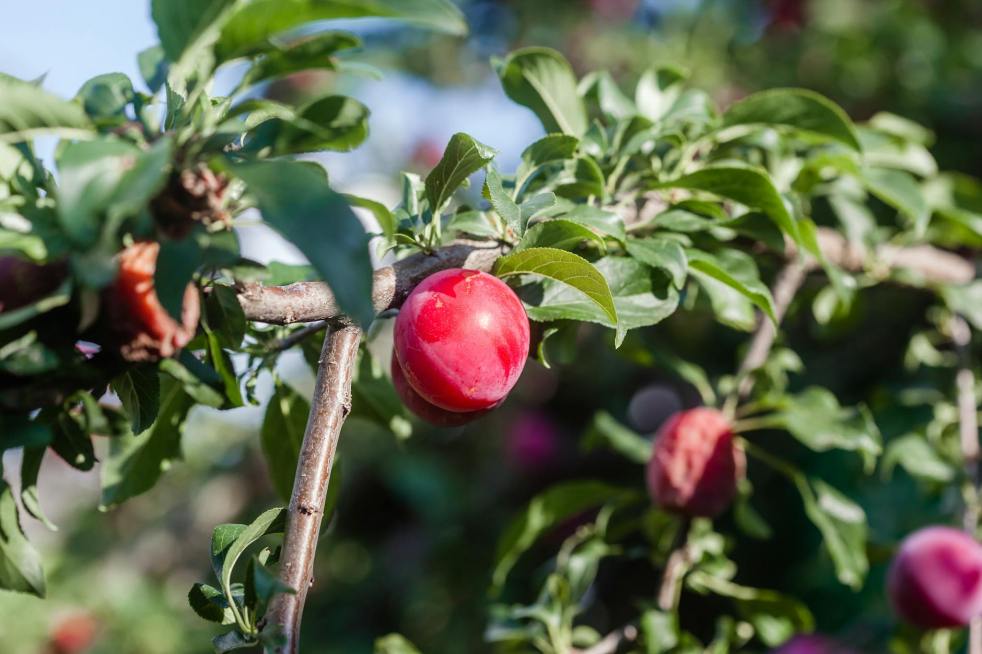
Red plums nestled amid plum leaves.
Like these. Photo by ALINA MATVEYCHEVA on Pexels.com

Plums are stunningly beautiful trees with lovely, delicately scented blossoms. This year, it looks like we’ll be fortunate enough to be graced with plum fruit, too. While I don’t have any windfall branches or evil spirits to keep away, I am looking forward to plenty of preserves this summer.

Plants and Herbs · Witchcraft

Bluebell Folklore and Magical Uses

Hello! How’re you doing?

I sprained my ankle a little bit ago when I made the foolhardy error of trying to get my mail. This has, as you can imagine, somewhat curtailed my adventures. (Well, with the exception of going to see Whose Live Anyway at Warner Theater. Shoutout to the lady who let us go in through the lounge so I wouldn’t have to walk as much! I hope you experience a series of small, comfortable miracles.)

Fortunately, I’ve got plenty to get up to at home. For example, right now, the yard is filled with flowers. Many, I planted — moss phlox, strawberries, blueberries, apple blossoms, pear blossoms — and many I didn’t. I expected to see the same violets, dandelions, and stars of Bethlehem that I saw last year. What I did not expect was all of the bluebells.

We didn’t have bluebells last year.

I didn’t plant bluebells.

Whycome bluebells?

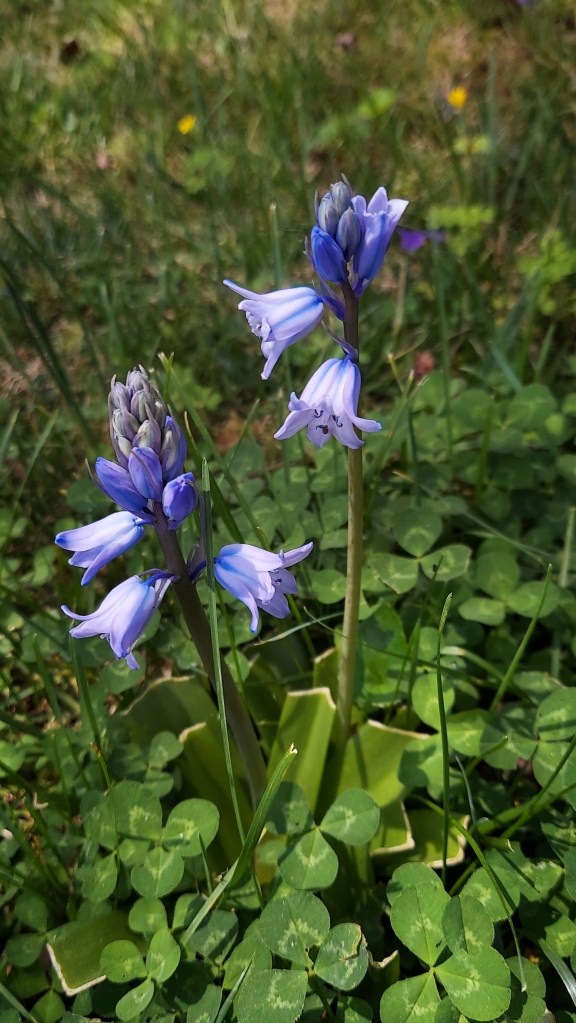
The particular species we have right now seems to be Spanish bluebell (Hyacinthoides hispanica). I know it probably isn’t English bluebell (H. non-scripta) and definitely isn’t native Virginia bluebell (Mertensia virginica). Nonetheless, they’re delightful little flowers and I’m enjoying them. They don’t seem to be stealing space or resources from anything but the grass that I’m systematically attempting to assassinate anyway at the moment, so they can stay for now.

A pair of small Spanish bluebells growing in a patch of clover.

(Spanish bluebells are a bigger issue in the UK, where they’re more likely to be invasive and can hybridize easily with — and eventually displace — native H. non-scripta. The bluebells we have here won’t hybridize, however, as they’re not closely related at all.)

Either way, I’m always in search of new plants to study and write about, so the appearance of these guys is pretty fortunate — I haven’t really looked into bluebells before this, and I like that they’re demanding my attention now.

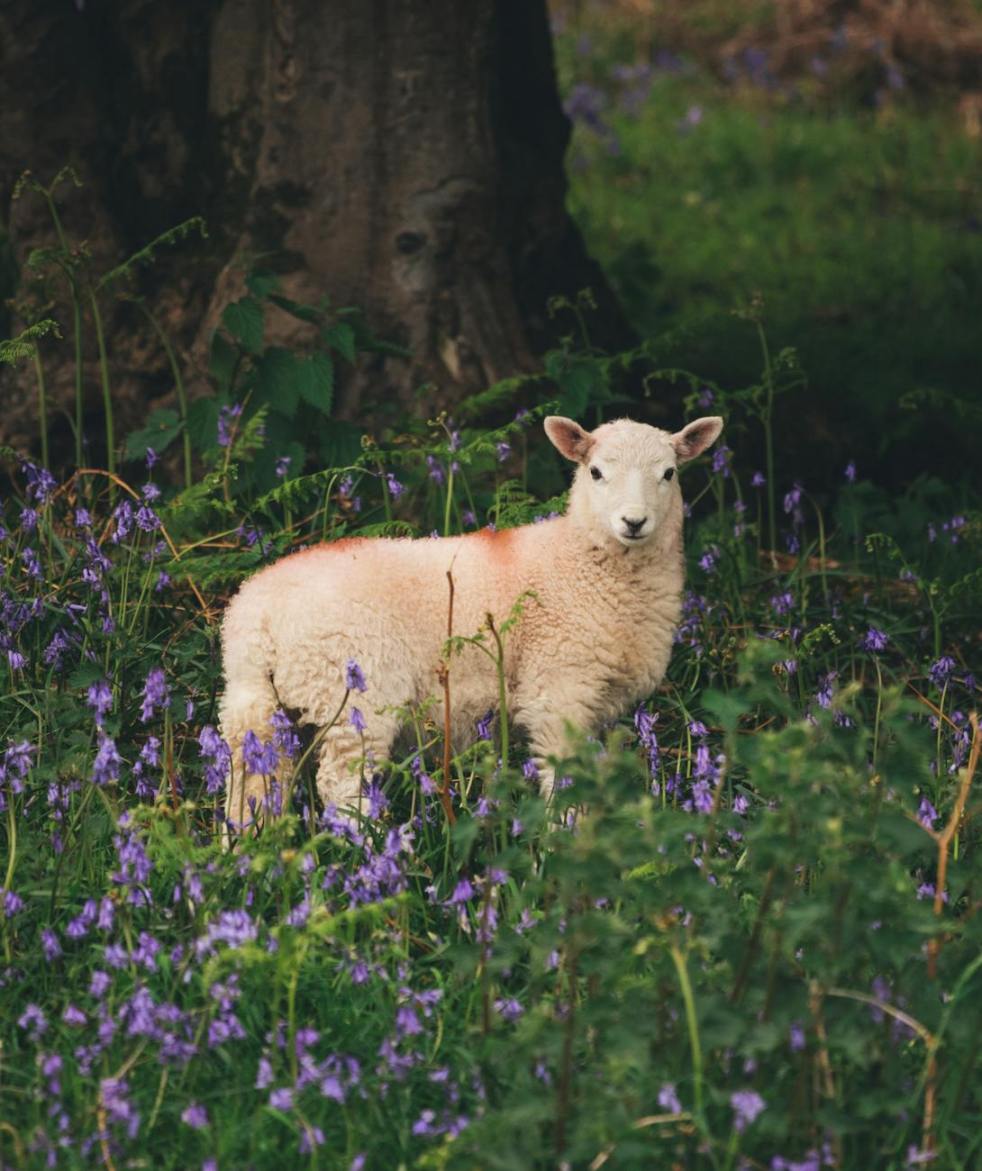
Bluebells are strongly associated with faeries. The fae were believed to ring them, just like you would a metal bell, in order to call other faeries.

However, should you hear the soft tinkling of bells when you’re near bluebells, watch out — anyone who hears the bluebells ring was said to experience the death of a loved one soon after.

This connection to faerie magic is also why it was considered unwise to pick a bluebell. Anyone foolish enough to do so put themselves at risk of being cursed or led astray by the faeries.

A similar, but unrelated, plant is known as the harebell, witch’s bell, or Scottish bluebell (Campanula rotundifolia). These flowers get their name because hares frequent fields of them. It was even said that witches would disguise themselves as hares and conceal themselves amidst the harebells.

It has been a frequent complaint, from old times, as well as in the present, that certain hags in Wales, as well as in Ireland and Scotland, changed themselves into the shape of hares, that sucking teats under this counterfeit form, they might stealthily rob other people’s milk.”

Gerard of Wales, Topographica Hibernica

(It’s weird how much traditional witchcraft reportedly revolved around stealing milk. Case in point, the tilberi.)

These bluebells were also known as “the aul’ man’s bell,” where the “old man” in question is the Christian Devil.

Blue and violet English bluebells.
English bluebells, photo by Suzy Hazelwood on Pexels.com

Bluebells are also connected to love magic. This seems to be largely due to the fact that they’re tenacious, bulb-growing plants. They even send out contractile roots that allow them to sort of “burrow” into the soil where there’s more moisture and protection. As a result, they come back year after year and are considered a symbol of enduring love.

They’re also used for a kind of love magic. Should you be able to brave the faeries’ wrath, pick a single bluebell flower, and turn it inside out without tearing it, you could ensure that your true love returned your affections.

Bluebells are related to hyacinths, and, like hyacinths, they actually can come in a variety of colors — pale to deep blue, violet, and pink. As with other flowers that come in many colors, their colors do, to an extent, dictate their potential magical uses. Pink flowers, as a rule, are useful for love magic. This can be attracting new love, strengthening an existing love, or even just helping with emotional healing and self-love. Purple flowers, crystals, and such are commonly used for more mystical, psychic, or divinatory pursuits, as well as ambition and success. Blue flowers and the like are helpful in rituals for healing, peace, truth, and emotional understanding.

Speaking of which, putting a wreath of bluebells around a person’s neck was said to compel them to speak only the truth.

While bluebells produce a wide range of compounds with potential medical uses, this is one of those situations where there’s a fine line between “medicine” and “poison.” Some of these compounds may be the next line of anticancer drugs, if they’re properly standardized. If you just straight-up eat bluebells, however, you’re setting yourself up for an evening of nausea, pain, and heart rhythm disturbances. Possibly even a long nap on the wrong side of the grass.

Today, bluebells are considered an ancient woodland indicator. This means that they’re commonly found thriving on the floors of old growth forests.

Bluebells and ferns on a forest floor.
Photo by Jocelyn Erskine-Kellie on Pexels.com

In Victorian floriography, the “language of flowers,” bluebells represented kindness.

Bluebells are associated with the planet Saturn and the Moon, as well as the element of Air.

Overall, the message of the bluebells seems to be pretty clear: They’re beautiful, they can represent things like kindness, resilience, and everlasting love… and if you pick them, you’re screwed.

(No, seriously. Depending on where you live, if the faeries don’t get you, the legality of picking wild bluebells might.)

I’ve found several references to drying bluebells and keeping them in the bedroom, but not any definitive reason to do this. Presumably, this may tie into bluebell’s association with peace or love magic. It definitely seems to be either a peaceful dream thing, a romantic love thing, or a “do this to dream of your lover” thing.

Bluebells could theoretically be offered to faeries or other nature spirits. However, since this would involve picking the bluebells first, they might interpret it more like the horse head scene in The Godfather. A much safer bet would be to designate an area of your garden for the faeries and keep an offering of potted bluebells there instead.

If you’re in the United States, you may want to consider planting native bluebells in your garden. Should you choose to work with English or Spanish bluebells, do so conscientiously — avoid planting them directly in the soil, as their sheer resiliency means that they can become invasive under the right circumstances.

All told, I’d recommend enjoying bluebells as they are, as harbingers of faeries, reservoirs of nectar for pollinators, and indicators of ancient forests. These are one plant that is best worked with in situ, rather than picked, dried, and added to a spell.

crystals · Plants and Herbs

The Absolute Worst Crystals for Plants

It’s spring! Kind of!

Yesterday marked the average last frost date for my area (as calculated by the National Arboretum in DC). If you’re like me, you’re probably itching to get your garden started, or at least reclaim some desk space by moving your indoor plants outside for a little bit.

I’ve seen a lot of posts about using crystals and other minerals to help plants. You’ve probably seen the same kind of advice that I have — tuck a quartz point in with your plants to help them grow. Bury four green jades, one at each corner of your garden, to protect your plants and help them flourish.

This got me thinking: What are the absolute worst crystals you could conceivably use for your plants? If some crystals can help, it stands to reason that others can hurt. And hoo boy, can they ever.

While there aren’t many crystals whose metaphysical properties would cause problems in this context, there are definitely plenty that can harm your plants.
Or ruin your life.
Either or.

Halite is salt.
Like, it’s just rock salt.
When people joke about “going to the salt mines,” this is the stuff they’re talking about.

A crystal of halite. It kind of resembles a small pile of snow.

If you’ve ever heard about conquerors razing towns and salting the earth, you probably know that salt and plants don’t mix. (Well, not while they’re growing, anyway. Once harvested, washed, and lightly steamed, it’s a whole other story.)

The reason behind this is that plants’ roots take up water and dissolved nutrients through osmosis. Osmosis works because nature attempts to establish equilibrium. Things move from areas of high concentration to areas of low concentration, until that equilibrium is achieved. It’s much easier for cell membranes to allow water to pass into and out of the cell than to try to move minerals around, and this works out okay because soil almost always has less dissolved solutes in it than the plants’ cells do. The plants’ roothair cells let more water in, osmosis balances the concentration of solutes vs water on either side of the cell membranes, and everything’s good.

Since salt is very soluble, adding salt and water to soil can make it so that there’s more dissolved solutes in the soil than there are in the roothairs. Taking up more water won’t fix things, and so the roots end up losing water to their surroundings.

Some types of soil (specifically heavy clays) can also form compounds that are impermeable to water when they’re exposed to salt. All plants also depend heavily on soilborne bacteria and fungi, which tend to be much less resilient when exposed to sudden changes in their environment. (Like, say, adding a bunch of salt to it.) Kill off these crucial microorganisms, and the plants will soon follow suit.

Selenite, satin spar, and desert roses are all forms of gypsum. Gypsum is a calcium sulfate mineral. It’s also soft and somewhat soluble in water. This means that, when you go to water your plants, you’re likely melting these crystals at the same time. This not only damages the stones, it also deposits all of that calcium sulfate in the soil, altering its pH and potentially negatively impacting plant growth.

Interestingly, gypsum is one of the few materials that exhibits something called “retrograde solubility.” This means that it’s actually more soluble at lower temperatures than it is at higher ones. That’s not great news for anyone who may want to place a selenite specimen in their garden — as soon as a chilly rain hits, they may end up with a disappearing crystal and a whole bunch of dead plants.

Calcite is a calcium carbonate mineral. It’s not really soluble in regular water, but it is in dilute acids. It’s also pretty soft.

A lovely piece of orange calcite.

This means that calcite can easily be scratched by other minerals present in soil. Rainwater also tends to be on the acidic side, so placing it in your garden or watering your plants with saved rainwater can cause it to dissolve over time. This will alter the pH and level of solutes in the soil, which can be detrimental to your plants. While that’s less likely to be catastrophic in a whole garden, it can definitely cause problems for the small volume of soil in the average plant pot.

Hematite is an ore of iron. When it’s found in nature, it often doesn’t look like the smooth, mirrorlike, silvery-black pieces commonly seen in stores. In fact, it usually looks closer to a hunk of vaguely rusty metal. Some massively crystal specimens can exhibit that shiny silver-black appearance, but a lot of inexpensive hematite is rough and rusty and gets polished up before sale.

Hematite is fine to occasionally clean with fresh water, as long as it’s dried soon afterward. It isn’t great to put in with plants or outdoors, though, because this creates the right conditions for it to rust. That’ll damage the stone and leach all kinds of iron oxides into the soil. While natural soil is often pretty high in iron oxides already (like the red clay in my garden), it’s definitely not something you want to introduce if you can avoid it.

While hematite is a form of iron oxide, pyrite is an iron sulfide. The concern here isn’t rust, however. The “sulfide” portion of pyrite’s chemical formula is a bigger problem than the “iron” bit.

A close-up of a chunk of pyrite.

Pyrite is considered insoluble in water, but there’s a lot more than just water going on where plants grow. When pyrite is exposed to both moisture and oxygen, it oxidizes. This produces iron ions (specifically Fe2+) and sulfuric acid. In fact, the oxidation of pyrite and the resulting acid has been responsible for a number of ecological disasters.

This isn’t to say that putting a piece of tumbled pyrite in your yard is instantly going to turn it into a Superfund site, but it’s still best avoided whenever practicable. At best, you’ll end up with damaged pyrite. At worst, a lot of dead plants and possibly a stern letter from the city.

Okay, so. Cinnabar is divisive. On one hand, some mineral enthusiasts act like it might as well be plutonium. On the other, some claim it’s absolutely no big deal.

Here’s the thing: Cinnabar is an ore of mercury, and mercury is toxic. However, mercury is at its least toxic when it’s in its elemental (aka, scoodly silver liquid) form. Metallic mercury isn’t all that well absorbed through your skin during brief, incidental contact — it’s much more dangerous when it’s in its organic form, or as a salt. This is not to say that cinnabar or mercury is safe to handle, I just want to avoid engaging in too much hyperbole.

Mercury vapor, on the other hand, can be readily absorbed by lung tissue. While it takes temperatures of about 674 °F (357 Â°C) to boil mercury, mercury doesn’t need to boil to evaporate and contaminate the air. Even just breaking an old fashioned thermometer can contaminate indoor air for a significant amount of time if it isn’t appropriately cleaned up.

While it’s true that cinnabar is traditionally roasted to liberate liquid mercury, some specimens do exhibit beads of pure mercury on their surfaces.

Anyhow, all of this is to say that the question of “how safe is cinnabar for plants” is too complicated for me to say that it’s safe. Cinnabar was used as a decoration (and even cosmetic) in antiquity, but buildings also weren’t nearly as air-tight as they are now. (Also, a lot of people lost their minds, went into convulsions, and died back then, while doctors blamed things like “eating cherries and milk,” “riding too fast,” and “wearing lace.”)

In the interest of safety, maybe just keep cinnabar away from heat, water, soil, your plants, your lungs, small children, et cetera. It might be safe, but it might not, and you might not find out how unsafe until it’s too late.

“But J,” you might be saying, “Everything says that quartz is perfectly safe in water. It’s not going to dissolve, leach anything weird, kill my plants, or turn my yard into an acidic death pit. What gives?” And you’re absolutely right!

It can, however, burn your house down.

The issue here isn’t so much the quartz itself as it is the refractive quality of crystal spheres. If the sun hits a clear glass or crystal sphere in just the right way, it can produce an effect similar to the sun shining through a magnifying glass. Crystal spheres have the ability to concentrate sunlight into a laser, and this laser can burn stuff.

So, while other crystals are mostly a problem if they get wet, crystal spheres are a problem if they’re sitting in a window. Like, say, where one might place a sun-loving potted plant.

This issue doesn’t just end at your front door, either. While I haven’t read reports of crystal balls starting fires when placed outdoors, the combination of intense sunlight, dry vegetation, and a clear sphere can definitely cause some trouble. If you have vinyl siding, the reflection of the sun just off of a neighbor’s windows can be enough to damage your home’s exterior.

Assuming you’re not in the mood to ruin your horticulture (or your life) with an ill-placed stone, the solution is pretty easy.

You can opt for different crystals instead. Any variety of silica-based mineral will work, as long as it isn’t able to concentrate sunlight. Moss agate, while not a “true” agate, is a lovely green type of cryptocrystalline silica. Jades are silicates, too.

For stones that shouldn’t get wet, like your gypsums and sulfides and such, you can always place them near indoor plants. Just avoid putting them in places where they’ll come in contact with water or the soil.

For quartz spheres, it’s best to keep them covered when they aren’t actively in use. (That’s a big part of where the custom of covering one’s scrying ball comes from.) If you have to put them in with your plants, either bury them entirely in soil or place them in a small, opaque bag first. Just keep them out of the sunlight.

That’s pretty much it. Do your homework on the chemical composition of your crystals, avoid stones that will actively turn into acid or poison when exposed to water, and be careful with the ones that’ll burn your house down.
Happy growing!