life · Neodruidry · Witchcraft

Frederick Pagan Pride 2023

It’s just this past Saturday, and my Handsome Assistant and I pull up to the Unitarian Universalist Church in Frederick, MD. The friendly young people attending the lot tell us there aren’t any parking spaces left. We’ll have to go to the lot a mile down the road, they direct us, and take the shuttle.

Personally, I’m shocked. It’s only a quarter past ten, how could the lot be full already?

A rustic pendant made of copper, quartz crystall, and azurite malachite on a copper chain.

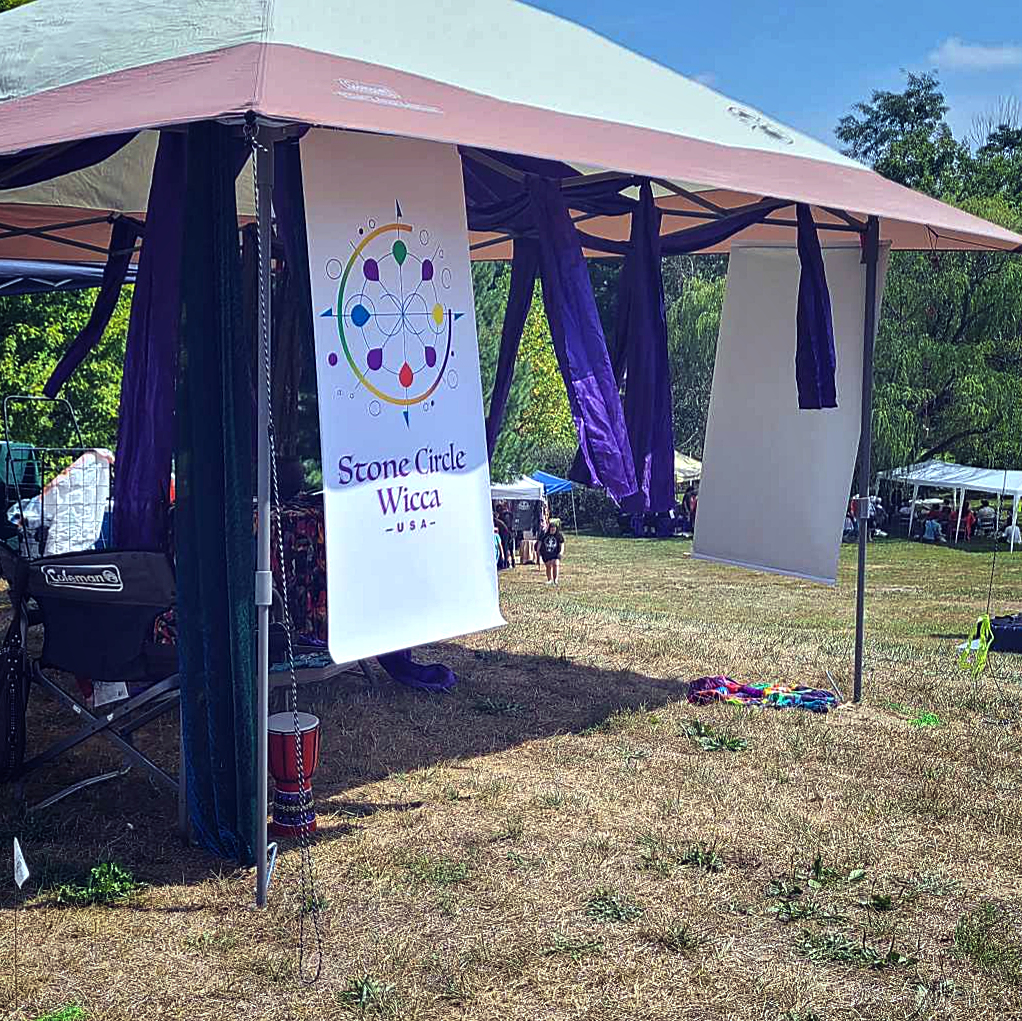
They weren’t kidding, though. Even the other lot was filling up, and the shuttle was almost completely full as we rode back. The grounds themselves were ringed with vendors, information booths, and more — there was Tempered Raven, who hand-forges beautiful blades There were so many booths of jewelry (I bought a beautiful quartz, azurite malachite, and copper necklace from Unclaimed Treasures). There were herbs, incenses, soaps, pottery, handmade brooms and whisks, woodcarvings, altar supplies, and amazing desserts. There was even free coffee, tea, and cold brew from the awesome people at Stone Circle Council (check them out — they do some very cool things).

A handmade ceramic watercolor palette with eight wells.
I also picked up a handmade palette. It’s intended for watercolor, but I’d like to see how it does with casein. Casein paint dries out so fast and softens up with a bit of water, so working with it is a bit more like gouache than acrylic. I’m thinking a glazed surface will be perfect!

There were also loads of workshops and live music. It was busy, it was vibrant, it was great. I always regret not taking more pictures of the event itself, but I always feel a bit odd about snapping pics of people unaware. (Sure, there’s no expectation of privacy in public, but something being legal doesn’t preclude it from being a bit of a dick move, you know?)

The busyness was at once a wonderful sign, and an unfortunate one.

On the one hand, it’s great that events like this are attracting a bigger audience. Aside from vendors of beautiful crafts and delicious food, there are lots of tables for different Pagan, metaphysical, and mystical organizations. If you’re looking for a path to call to you, or people to network with, this is the place to find that thing. In an era where social media has allowed — even encouraged — the proliferation of misinformation that’s unhelpful at best and dangerous at worst (and don’t get me started on AI generated books), it’s really nice that there’s still a wonderful variety of actual organizations dedicated to study and practice.

Last year, I got a little emotional about how events like Pagan Pride make me feel about community, aging, and tradition. It’s a feeling I hope everyone gets to experience at least once.

On the other hand, a big part of the reason for this large audience is that two other Pagan Pride events — the one in DC, and one in Manassas, VA — effectively no longer exist. A friend pointed out that they’d even contacted the coordinators of the DC pride event and hadn’t heard anything back at all. As if the email address was going unchecked. I looked up information on Manassas everywhere I could, but it was pretty scarce. The last event seemed to be in 2019, and the 2022 event was cancelled. According to their Facebook, they weren’t able to hold one in 2023.

A lot of Pagan community organizers seem to be either getting burned out (with everything else going on right now, who can blame them? Add the often-thankless work of organizing to the struggles everyone else is dealing with right now, and it’s completely understandable) or just aging out of their roles. All of the organizations I know, even the ones I’m a part of, operate on budgets that would make a shoestring look luxurious by comparison.

It’s something I’d love to help with, but I’m not really sure where to start. I’ve often said that, if I were handed enough money to live off of for the rest of my life, I’d put it into a small house on a large piece of property. I’d rewild as much as I could and put it under a conservation easement. Some, I’d want to guide into operating as a permaculture food forest (I have tiny fantasies of adopting a rescue donkey or small pony, having them carry a basket, and walking around with them to pick fruits and vegetables). The rest, I’d want to make into an event space for musicians, dancers, and events like Pride. I have no heirs, so, when I died, I’d will it back to whatever Indigenous group formerly held it. In the meantime, I’d want it to be a place for community members to interact — flora, fauna, and human alike.

I mean, I feel like I’m basically describing a two-person commune, but I feel like you get the gist.

I suppose what I’m saying is that it’s a shame that the world has done us up all wretched, and I wish I knew how to take on some of the burden of organizing and setting up events like this with the resources that I already have. (A tiny yard, most of which is steeply uphill, an even tinier bank account, and massive social anxiety).

In the meantime, support your local Pagan organizations and artisans, yeah?
life · Neodruidry

A Fruitful Lughnasadh

Today marks Lughnasadh, the celebration of the first harvest. This usually focuses on summer fruits and grains, so there’s lots of blueberries/bilberries, baked goods, apples, and pears.

In another sense, it’s about coming together to share. Traditionally, it happened during a time of year when the earliest crops were spent, and the next round wasn’t ready for harvest yet. Lugh is also credited with battling the powers of blight, which is connected to the scorching, drying heat of the summer’s hottest days. That meant celebrating with foods that either stored well (like apples and grains) or could be foraged this time of year (like bilberries).

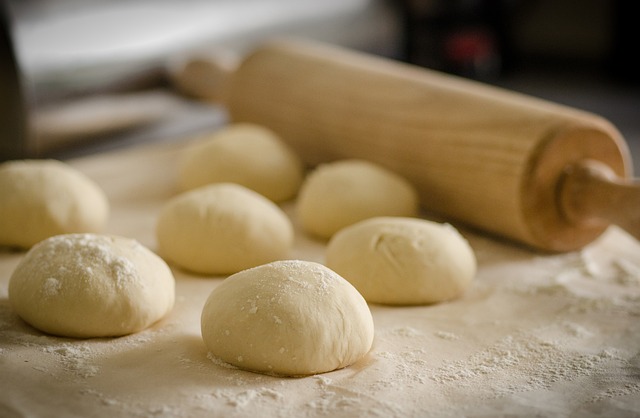
A rolling pin and several balls of biscuit dough on a floured board.

It also started as a funerary feast. While it’s associated with the Celtic deity Lugh, he created this festival in remembrance of Tailtiu, his mother figure. She’d died of exhaustion after clearing the land for growing crops. That makes this festival a poignant combination of anticipation of what’s to come, and gratitude for what has passed. It’s joy and sorrow, thanksgiving and mourning. Tailtiu has passed on, but the land is ready.

This year, we were supposed to join in a camping trip and Lughnasadh celebration. Unfortunately, a combination of high temperatures and severe weather meant that that didn’t pan out the way we’d wanted. Instead, it’s given me more time to think and (as overused as this phrase may be) connect with this High Day.

Really, I’m at a Lughnasadh point in my life. The rise of AI chat bots has coincided with the natural end of several long-term paid writing projects that I’d been working on, so I’m not getting the same volume of work that I once was. At the same time, I’m investing more of my time, money, and energy into other things that haven’t yet paid off. There’s mostly been a lot of planning and reading stuff to help me figure out how to navigate this transition.

Fresh blueberries on a wooden surface.

But I’m not doing that today. Today, I’m extremely thankful for everything that the old cycle has given me. I’ve reaped some very generous harvests from it, and that’s awesome. I’m also excited for my next projects. Having less paid writing means less money, but it also means a lot more time and creative energy to put into things that have deeper meaning for me.

Today, I’m baking bread. I’m making these very strange (but very delicious) cookies full of dried berries and cacao chunks. I’m eating dried blueberries by the handful, and searching my strawberry plants for ripe, red berries.

Have a happy and abundant Lughnasadh, and I hope we all reap a good harvest in the days to come!

life · Neodruidry

A Midsummer Bardic Circle

I love bardic circles. There’s something that’s so much fun about finding a song, poem, or story to share, and listening to the things that others have brought to share with you. Hearing these things can tell you more about a person than hours of conversation can — what they find beautiful or moving. What they want others to hear. What they hold as important.

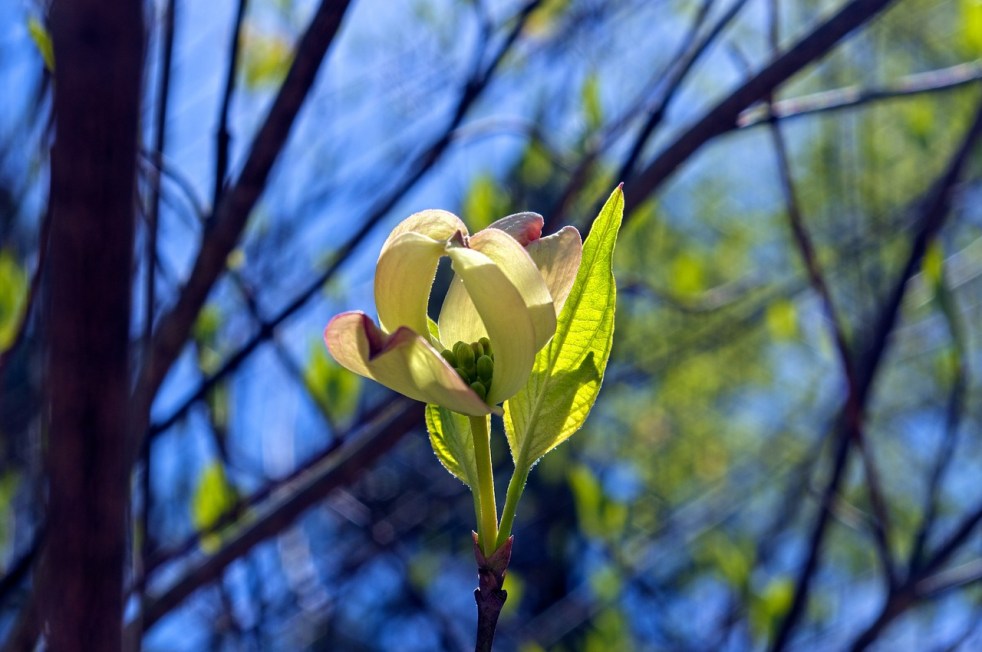
A daisy opens to the sun.

There are few feelings as good as finding your feelings, crystallized and stated by someone more eloquent than you. Bardic circles are a chance to find those things and show them to others.

This year’s was busier than last year’s, which was nice. There were plenty of old and new friends, tons of food, and lots of things for the goods and gear swap.

I shared two poems from Jarod K. Anderson‘s “Love Notes from the Hollow Tree,” ate a ton of black raspberries, watermelon, homemade pickles, and (veggie) hot dogs, and traded books and crystals for more books, homemade incense, peach preserves, pickled watermelon, camping supplies, and a beautiful card of the Druid’s Prayer for Peace done in purple watercolor.

Raspberries ripening on the bush.

We sang together, laughed, and talked about things. The crows in my yard. Gardens. Where the wild berries were ripening, and when to gather to forage for them. Next month’s camping trip. History, legends, and prayers.
Too much to enumerate here, and even trying to do so would just make the words flatten like toothpaste.

As usual, I went home to immediately agonize over everything I said and did (and everything I didn’t), but the social anxiety is worth it. I’m grateful for having a community of such generous, creative, intelligent, and warm people. I’m grateful that we’re welcoming to anyone who wants to come along to learn and share as well.

Deep within the still center of my being, may I find peace.

Silently within the quiet of the grove, may I share peace.

Gently within the greater circle of human kinds, may I radiate peace.”

The Druids Prayer for Peace
life · Neodruidry · Plants and Herbs · Witchcraft

Wood Sorrel Folklore and Magical Properties

Take a look at your lawn. Unless you maintain it to putting-green smoothness, you’re likely to see some yellow flowers.

Not the dandelions — look closer.

You might mistake them for buttercups at first, but they’re really quite different. These little yellow five-petaled flowers are yellow wood sorrel (Oxalis stricta). They’re a native wildflower where I live, and vastly superior to the grass that still attempts to poke its way up through their heart-shaped leaves and small yellow flowers.

A plant with heart shaped leaflets and five-petaled yellow flowers.
A tuft of yellow wood sorrel.

As a native herb here, it doesn’t have a long history of use in old European grimoires. There are, however, many other varieties of wood sorrel — some native, some not, and some of questionable origins.

I’m a big proponent of using native alternatives to exotic herbs whenever possible, so I figured I’d give some background on wood sorrel and a few ways to use its magical (and delicious) American cousins.

Wood Sorrel Folklore

The species name Oxalis comes from the Greek word oxus, meaning “acidic” or “sharp.” The leaves of wood sorrel have a very tart flavor which makes them a tasty addition to salads. When dried, wood sorrel can be used to curdle milk for cheesemaking.

These plants are connected to fairies and woodland spirits. In Wales, wood sorrel is called fairy-bells.

A European wood sorrel plant (Oxalis acetosella), with heart-shaped leaflets and white, bell-shaped flowers.
The white flowers of Oxalis acetosella show why this plant’s sometimes known as “fairy bells.”

In herbal medicine, a decoction of the leaves was used for thirst and fever. Applied externally, the crushed leaves have an astringent effect which helps with abscesses, boils, and wounds.

Dried leaves are said to attract luck and, due to the doctrine of signatures, be healing and protective to the heart.

It’s also said that the dried leaf will allow the user to see fairies.

There’s some debate about shamrocks (an Anglicization of the Gaelic seamróg, meaning “little or young clover”). Shamrocks are associated with Saint Patrick, who used a three-leafed plant to explain the idea of the Christian Holy Trinity. Most depictions of the shamrock show it with three heart-shaped leaves. Since clovers have rounded leaves, this indicates that the shamrock may actually be a species of Oxalis and not a clover at all.

The ancient Druids were said to have regarded the shamrock as a sacred plant with the power to drive off evil spirits.

In the Victorian language of flowers, wood sorrel represented joy and motherly affection.

Wood Sorrel Magical Uses

Magically, wood sorrel is used in spells for luck, healing, protection from evil and misfortune, and love.

These plants can also be useful for working with three-part deities, like the Triple Goddess or Brighid. They make good offerings, or even natural representations of the deities themselves in a pinch.

Using Wood Sorrel

Wood sorrel isn’t a substitute for a visit to a doctor, but it can be a helpful herb for minor problems. Be sure you can reliably identify sorrel before attempting to consume it or use it topically.

If you live where wood sorrel naturally grows, you may want to cultivate a native species in your yard or garden space. This is especially true if you have an altar or dedicated space for nature spirits — wood sorrel is strongly connected to these entities. I’m planning to put an offering bowl and some large bull quartz crystals on the edge of the patch of yellow wood sorrel here, for example.

Using wood sorrel as a protective plant is an interesting idea. This protection may stem from the plant’s three-leaved appearance, which is reminiscent of various triple deities. The number three is also regarded as sacred in itself, since it reflects the past, present, and future; youth, adulthood, and old age; birth, life, and death; and the upper, middle, and lower worlds. Wood sorrel may also be considered protective because it’s very sour. Sour things, like lemons and vinegar, are often used to ward off or cleanse away negative energy.

Yellow wood sorrel leaves. The leaves consist of three heart-shaped leaflets, arranged similarly to clover leaves.
This picture shows the heart-shaped leaves and small yellow buds of yellow wood sorrel.

With all of this in mind, I’d brew a tea of wood sorrel and use it to wash doors, windows, and thresholds. Growing wood sorrel could also have a protective and luck-drawing quality.

The dried leaves and flowers would make a very nice addition to jar spells and sachets for love magic. I’d probably combine the flowers with roses, apple blossoms, and other seasonal blooms associated with love-drawing, then use this mixture in a magical bath.

If you’ve never tasted wood sorrel, I highly recommend it. The tart leaves and flowers are a very interesting addition to salads, soups, and sauces. If you’re into kitchen witchery, these edible wildflowers can be a powerful way to work with your local landscape to bring love, protection, and luck into your life.

life · Neodruidry

“You can go your own way.”

The other day, I got a bunch of emails. Each one regretfully informed me that my email address had been taken off of one of ADF’s mailing lists — artisans, Gael, and a handful of others.

My emotions mixed. First, there was a tinge of embarrassment. I was removed because my email was no longer on their member rolls, which is because I didn’t pay this year’s dues. Next was sadness, then relief.

I wanted to study the Initiate’s Path according to ADF‘s curriculum, but, every time I tried, I always found it difficult to start. It didn’t seem quite as structured as the Dedicant’s Path, and their site migration seemed to cut me off from finding out what I was supposed to be doing.

On the other hand, I got exactly what I needed from ADF. Years ago, I was dealing with a sense of discontentment and a lack of focus. Being an eclectic practitioner resonates with me, and I never really felt quite “at home” in other traditions I had contact with along the way. Still, I felt like I needed something.

That something, as it turns out, was more structure. Following the Dedicant’s Path gave me that: High Days, rigorous study, and the Core Order of Ritual. Once I had that, I didn’t really interact with ADF as much as I would’ve liked. Even the Neodruidry groups I’m in now are primarily made up of members of OBOD and the AODA, so it doesn’t really matter where one studies or what brought them to Druidry.

I chose to take forgetting to renew my membership as a sign. Rather than have my lack of progress on the Initiate’s Path hanging over my head, I’m going to take this time to formulate my own study plan.

I might rejoin ADF in the future, join a different group, or use the foundation provided by ADF to build on myself. I still consider myself an eclectic practitioner and always have, so it could be that I’ve already taken what I needed from this experience.

Either way, I can’t wait to see what the future brings. 💚

life · Neodruidry · Plants and Herbs

Apple Folklore and Magical Properties

So, apples.

They’re versatile, inexpensive, and delicious. You can use them to carve stamps, prepare stuffing, or make a pie. Got an apple core? Feed it to worms or toss it in compost. They’re a delightful package of deliciousness, nutrition, and fiber.

They’re also pretty prominent in the religions of the areas from which they come. Eris tossed a golden apple and started the Trojan war. Iðunn’s golden apples give the gods youth, immortality, and vigor. Manannán mac Lir tempted Cormac mac Airt with a branch covered in nine apples of red gold. Emain, the otherworldly Plain of White Silver, had silver boughs with white apple blossoms.

We don’t have magic apples here, though I feel like Chehalis apples come close. I was drawn to their colors, ranging from emerald green, to golden yellow, to a pale, almost ethereal shade somewhere between the two. (I’ll just be happy if I get to eat one of these apples without the birds and wasps getting to them first!)

An apple ripening on a tree.
One of the little Chehalis apples on the tree in the back yard.

But apples are more than just magical symbols of the Otherworld, anyway. They’re also an indispensable ingredient in kitchen witchery, and even herbal healing.

Apple Folklore

Teasing out the folkloric significance of apples is more challenging than it might seem. Up until the 1800s, the word “apple” was used not just for apples, but also for as a generic term for fruits other than berries. This is why we have “oak apples” (a plant deformity caused by gall wasps), “earth apples” (cucumbers or potatoes, depending on who you ask), “love apples” (tomatoes), or “May apples” (a low-growing relative of barberry).

Ethnobotanists have made some compelling arguments for apples being used as a symbolic substitution for fly agaric mushrooms (Amanita muscaria), an entheogenic fungus. This is an interesting bit of information to keep in mind as you read through the rest of the folkloric and symbolic significance of apples.

The fruit eaten by Adam and Eve in the garden of Eden in Christian mythology is often said to be an apple. This is particularly interesting when you consider the effect of that apple and Terence McKenna’s “Stoned Ape” theory of humanity’s development. This widely-criticized theory holds that entheogens (specifically Psilocybe cubensis) are responsible for much of the progress of humankind. If Adam and Eve’s apple could be viewed as an entheogenic fungi, then the Christian story of the fall of man would be an allegory for entheogens leading to the development of clothing, agriculture, and more.

The larynx, which is usually (though certainly not always) more prominent in male humans, is called an “Adam’s apple” because of a bit of folklore that claimed that the prominence was created by the fruit sticking in Adam’s throat.

In later Christian mythology, Jesus Christ is portrayed as holding an apple. Here, the apple transforms from a sign of the fall of humanity, into a sign of redemption. Considering that this redemption leads to eternal life, this apple is somewhat akin to the apples of Iðunn.

In the Norse Prose Edda, the goddess Iðunn is said to carry an ash wood box in which she keeps golden apples. When the Norse gods begin to grow old, they eat her apples and become young again. The gods, then, depend very heavily on Iðunn’s presence and good will in order to maintain their youth and strength.

Apples weren’t always associated with youth and life, however. In the Heiðarvíga saga, the poet speaks of the “apples of Hel.” These appear to be the antithesis of Iðunn’s apples — the food of the dead.

In Greek mythology, Eris felt insulted when she wasn’t invited to the wedding of Peleus and Thetis like the other gods were. As revenge, she tossed a golden apple inscribed with the words “to the fairest” in between Hera, Athena, and Aphrodite. They immediately began arguing over who deserved it, and asked Paris to mediate. Aphrodite promised him the hand of the most beautiful woman in the world if he chose her, so he did. Unfortunately for everyone, that woman was Helen of Troy, and Paris’ decision kicked off the Trojan War.

The island of Avalon, the mythical, mystical place of Arthurian legend, is the Island of Apples. The name “Avalon” is thought to stem from the Welsh word “afal.”

In Cornwall, Kalan Gwav (Allentide) is a time for giving shiny, bright red apples to friends and family as tokens of luck.

In the Irish Echtra The Voyage of Bran, Bran mac Febail sets out on his adventure when he receives a silver apple bough brought from Emain, the Plain of White Silver.

The Irish sea god Manannán mac Lir’s golden apples emitted a kind of magic lullaby. This could soothe people afflicted with injuries or illnesses to a healing sleep. The name of his paradisical home, Emain Abhlach, comes from the Old Irish “Ablach” (“of the fruits” or “of the apples”).

Apples, fresh flowers, and sheet music on a wooden table. One of the apples has been cut in half to expose the seeds. An ornate knife sits nearby.

In the mythology of the people from the North Caucasus, there is a tree that groows magic apples capable of guaranteeing a child to whoever eats them.

During the Jewish holiday Rosh Hashanah, people dip apples in honey and eat them to bring in a sweet year ahead.

Wiccan lore views apples as a sacred symbol. This is because, when cut in half horizontally, their seeds and core form a pentagram.

An old bit of boat builder’s lore holds that it’s bad luck to make a boat from apple wood, since apple wood was used to make coffins. Doing so was believed to doom the sailors to an early grave.

A common bit of marriage folklore says that, if an unmarried woman peels an apple in one long, continuous piece, then throws it over her shoulder, the peel will fall in the shape of the first letter of her future spouse’s name.

Wassailing is an old English folk practice performed to bless the trees and bring in a big crop in the next harvest season. (I went to a wassail ceremony earlier this year, and it was a ton of fun!)

The Magical Uses of Apples

Apples are a common autumn food and addition to altars for autumn and winter holidays. This is because they’re in season during autumn, and tend to keep very well if they’re stored properly. Apple sauce, apple cider, dried apples, and carefully-stored fresh apples were vital additions to the western European diet during the cold months.

An apple bough with buds, flowers, ripe fruit, and unripe fruit is said to mark a door to the Otherworld.

In general, apples are magically associated with love, fertility, protection, and prosperity. The flowers are excellent additions to charm bags, the fruit is great for kitchen witchery, and the leaves can bring fertility and prosperity to one’s home or garden.

Using Apples in Magic

Apples are possibly one of the easiest and most convenient magical ingredients. Since apples are pretty sturdy and edible when raw, they’re often used as a kind of edible “package” for magical intentions. Hold an apple in your hands, visualize it filling with your intention, whisper your intention to it, and eat.

If you have access to apple leaves (either pruned or fallen — please don’t pick fresh leaves from the tree), bury thirteen of them in your garden. This is said to increase its productivity for the next year. I’d argue that you could also add these leaves to compost, or bury pruned or fallen apple wood in your hügelkultur mounds.

Apple blossoms are great ingredient for love magic. Their action is said to be gently seductive. They are also used for peace, contentment, and success. This suggests that they’d be a useful addition to any spell for attracting happiness into one’s life.

Apples are also said to be protective. Apple cider vinegar can be a useful (and pungent) addition to jars and bottle spells for protection against both one’s enemies and malevolent energy.

Another small Chehalis apple ripening on a tree.
Another little Chehalis apple.

I can’t tell you how excited I am for apples this year. The springtime apple blossoms were incredible, and I check on the ripening fruits with excitement every day. Here’s hoping you can find ways to incorporate these magical fruits into your meals, rituals, and daily practices.

life · Neodruidry · Plants and Herbs

Increasing Landscape Resilience with Native-ish Plants

Hello! It’s April, it’s going to be almost 90° F this weekend, and winter skipped us.

Well, we had like one cold week, but that was it.

Honestly, it’s had me worried. A number of plant species that are native to this area require cold stratification — in other words, they need a period of cold and some pretty big temperature swings in order to trigger them to germinate at the correct time. This includes a tree that’s very important to me, the bald cypress. They’ve evolved to need cold stratification because without it, their seeds could germinate far too early and die off in the middle of winter.

I have packets of seeds that I want to plant, too, that need to be sown within a narrow window of time. I’m talking when temperatures are cool (but not too cool), usually right around the last frost date. The trouble is… like I said, it’s going to be in the high 80s this weekend. Our official last frost date was a few days ago.

Now that I’ve gotten my complaining out of the way, there’s an idea I’ve been exploring.

I first ran into it when I was researching native hydrangeas. I love hydrangeas in general (my grandfather had a big hydrangea next to the house I grew up in, alongside a strangely persistent and hardy opuntia cactus), but they’re not really known for their heat tolerance. They are, by far, not the only plants that are going to suffer as temperatures increase either.

A hand touches a cluster of purple Hydrangea macrophylla flowers.

Smooth hydrangea (Hydrangea arborescens) is native to this area. They also prefer daytime temperatures in the 70s and require supplemental irrigation when it gets too hot and dry.

Oakleaf hydrangeas (Hydrangea quercifolia) are native to the Southeastern United States. In other words, they’re from the US, just a bit lower than where I live. Changes in average temperatures are expanding the range of some southern plants and animals, while driving others further north.

Unfortunately, there’s not much that a single person can do to keep their cool temperature-loving plants from suffering from this effect. It’s also debatable whether we should — landscapes are ever-changing and evolving, and state borders are artificial constructs that plants and animals don’t recognize. It may increase the resilience of the landscape to work with this shift, rather than against it.

For this reason, I’m experimenting with oakleaf and smooth hydrangeas. Experts point out that this area’s climate is slowly aligning with species that used to be relegated to more southern states. Blending some Southern species with Midatlantic species could help create a plant, animal, and fungal community that’s more resilient to climate change, and decrease the need for supplemental irrigation or treatment for diseases related to heat stress.

Saving seeds from the individual native plants that seem to struggle less with the heat can help their species adapt over time, which will feed and protect the native animal species that depend on them. Adding in native-ish species from a bit further south can help the land adapt. It also ensures sources of food and nesting sites for the animals that are also being driven north as temperatures rise.

life · Neodruidry · Plants and Herbs

A Little Late Wassail.

This weekend, my partner and I had the pleasure of wassailing some baby trees.

Traditionally, this was something that was done December-ish, but this particular wassail was for some very young trees that’ll be going in the ground soon. Consider it a kind of baby tree blessing.

Wassailing is a ritual to bless fruit trees, drive away unwelcome spirits, and ensure a bountiful harvest. It involved drinking cider, singing, making noise, and giving offerings of drinks and cider-soaked toast to the trees.

This wassail was hosted by someone in a Druidry group to which I belong. Another member put together songs and blessings, and all of the attendees gave their own blessings to a little sour cherry, a baby fig, and a small (somewhat struggling) dogwood.

A red squirrel in the branches of a fruit-laden cherry tree.

(I wished that the fruit trees would produce lots of flowers and nectar for the insect community, and tons of fruit for the birds, squirrels, and human community. To the dogwood, I just said, “Good luck, buddy.”)

The food was incredible. There was wassail cake flavored with lots of bright orange zest, homemade root beer, chocolate-Guinness cake, meat and vegetarian hand pies, tiny apple hand pies, fresh vegetables, ginger snaps, cheese, fruit, and so much more. We’re still without a decent oven, so we brought some extra sparkling water, graham crackers, fancy chocolate, and vegan marshmallows for fire pit s’mores. In lieu of hanging cider-soaked toast on the trees, there were bits of cider-splashed graham cracker.

The singing was fun, the yelling and cheering was fun, and the blessings were heartwarming. There was an adorable dog who did happy zoomies all around the yard, with deep, happy “doggy laughs.” I can’t tell you the last time I went to any kind of house party, so the feeling of gathering with a bunch of kind, warm, intelligent, funny people was almost indescribable. (It also set off my brain’s own personal social anxiety afterparty, during which I questioned every interaction I had all afternoon for several hours.)

It was also really nice to see someone else working on turning their yard into a source of food for their family and the local fauna. It gave me some inspiration for things that might work well in this yard. The warming weather has me absolutely raring to go out and do more to keep my promise to the spirits of this spot, and now I’ve got images of redbuds and sour cherries dancing in my head.

Be in good health!

Neodruidry · Plants and Herbs · Witchcraft

It’s Imbolc season. Get the bucket.

I think a big part of what kept me from really connecting with a lot of Wiccan-based Paganism when I was younger was that, at the time, the available source material was pretty prescriptive. Sabbats were on specific days, with specific traditions attached, and there was an onus the follower to do things “right.”

Having lived in a pretty big range of climates, I can say that that’s had an impact, too. It’s hard to feel in the harvest or growing seasons when they just don’t line up with the harvest and growing seasons where these traditions were based. If the wheel of the year is supposed to reconnect humanity to nature and its cycles, a strict interpretation is the opposite of helpful. When I lived in California, for example, it felt like observing the traditional sacred days was sometimes counterproductive — spring didn’t look like it did in Europe, or even in the Eastern US. Neither did winter. It made things feel rote, which robbed them of meaning.

That’s why I’m a big proponent of celebrating the High Days when and how it makes sense to do so. If your growing zone means that you’re not going to see the first signs of spring until March, or won’t ever experience cold and snowfall, then so be it.

All of this is to say that the vast majority of my High Day traditions are pragmatic (perhaps to a fault).

Imbolc passed recently, amid surgeries (one for me, one for the Certified Lap Loaf. We’re both doing well!), falling down the stairs (just me. That part of me is not doing well.), and probably other stuff that I’m forgetting because of the first two things. A lot of ADF members celebrate the High Days on the nearest weekend, which is nice. Less pressure that way when your most-of-you isn’t working correctly.

A picture of the face of a small gray tabby cat. She looks very angry, probably about the blue nylon cone surrounding her head like some kind of fucked-up satellite dish.
Don’t let the barely concealed rage fool you. She’s purring here.

To me, Imbolc is refreshment. It’s deep cleaning, washing my front door, doing repairs, and making food. (This year, it’s also starting plans for home improvements that we won’t be able to do until later spring and early summer, like replacing the roof.) It’s also almost never actually on the first of February.

I don’t set up an Imbolc altar. I follow the same basic ritual structure that I do for any other day. For me, the main difference is the feeling of lightness and renewal that I carry through doing things like scrubbing grout, cleaning out garden beds, de-scaling the dishwasher, and chucking Affresh tablets down the garbage disposal.

When you’re re-learning lost, buried, or reinvented cultural traditions, it’s easy to get caught up in the need for accuracy and correctness. It’s also easy to forget why the High Days existed in the first place — to mark significant occasions throughout the year, largely based on what people who grew crops and raised animals considered significant.
When you get too invested in following the letter of a tradition, you can lose the spirit of it.

From my house to yours, here’s a small thing that I like to do each spring. It works equally well whenever you need to feel that sense of newness and freshness that only spring can bring.

Imbolc Home Cleansing

You’ll want to have:

  • A white candle. (The golden beige of natural beeswax is fine, too.)
  • Dried vervain.
  • Water.
  • A bowl.

First, steep the vervain in some hot water, as if you were going to make a tea. (I like to put vervain and water in a clear jar, then stick it in the sun for a while to infuse. If it’s cloudy where you are, a kettle of boiling water is fine.)

Vervain flowers.

Once the infusion cools, strain out the leaves and pour the resulting liquid into the bowl.

Next, light the candle. Declare, either out loud or to yourself, that this flame represents the return of the sun — whether that’s the literal return of longer daylight hours, or a metaphorical return of warmth and light is up to you.

Carry the bowl and candle to each room of your home, moving in a clockwise direction. Set the candle down in a safe spot and use your fingers to flick the vervain infusion around the perimeter of the room (be sure to get the corners). If you have prayers or chants that feel appropriate here, use them. I usually fall into a kind of stream-of-consciousness monologue about the objective of the working. It’s less important that your words sound nice than it is that they mean something to you and help you focus on what you’re doing.

When you’re through cleansing your entire home, offer the rest of the vervain infusion to your yard, garden, or nearest patch of green stuff. If your candle is small, you can let it burn completely and dispose of the remnants. If it’s a big one, snuff it and re-use it for a cleansing or purification ritual another day.

Environment · life · Neodruidry · Plants and Herbs

Persimmon Foraging Quest

Hello! If you’ve been reading here for a while now, you may have come across the Persimmon Quest.

This is an annual quest my partner and I go on every autumn. We call around or visit grocery stores in order to find out who actually has persimmons (preferably the astringent kind, but non-astringent will also do). Then, we purchase and eat massive quantities of persimmons.

The first time I had one was when I still lived in California. It was a Fuyu persimmon (Diospyros kaki), crunchy and sweet, and I was sold. When I had my first perfectly ripe Hachiya, like a water balloon filled with sweet, flavorful jelly, I was smitten. When I realized that one of the trees planted here by one of the former occupants was probably a persimmon, I was ecstatic.

A Druidry group I belong to recently offered a small foraging expedition. One of our members is a biologist, and he’s kind and generous enough with his time to lead seasonal foraging walks. Last spring, we hunted for ramps. Now that it’s persimmon season, we went to track down some trees.

And oh, did we ever.

Three bags of soft, bright orange American persimmons, along with a sprig of coralberry and some dried mountain mint.

Several of them were already bare, picked over by wildlife and wind. Some were still laden with fruit that fell at the slightest touch. We picked only the ripest, squishiest ones, leaving the rest to soften in the sun and feed other things.

My partner and I came away with several pounds, which I cleaned and froze for future use. They’re very different from Japanese persimmons — we snacked on a few as we foraged, and it was striking just how much the flavor seemed to vary from tree to tree. American persimmons (Diospyros virginiana) are most similar to Hachiya-type Japanese persimmons, in that they’re very astringent before they’re ripe. When they look like they’re nearly rotten, they’re at their best.

Most of the ones I tasted were almost floral when compared to a Hachiya. Still very sweet and soft (with a slight astringent bite in a few places), but floral like lavender lemonade is floral. The comparatively large seeds got in the way a bit, but I’ve read some interesting recipes for roasting and grinding them to make a coffee substitute. As someone who doesn’t drink coffee, I’m intrigued! If I can get a foraged equivalent for Dandy Blend that isn’t dandelion root, I’ll be excited.

I haven’t yet decided what to do with the persimmons themselves. I might separate the seeds and pulp, then freeze the pulp again in an ice cube tray. I figure, if I want to add them to smoothies, sauces, or desserts, I can just thaw out some cubes of prepared persimmon mush fairly quickly and easily. I could even pop a cube or two in a jar for making persimmon kefir. (One member of the group was considering doing fruit leather but based on my experiences trying to make strawberry leather in the oven, I don’t think I want to tackle that without a dehydrator.)

There was a lot more to see than just persimmons, too. Dogbane (Apocynum cannabinum) with its stringy bark (good for stripping and braiding into twine). Horsenettle (Solanum carolinense) with its bright yellow, tomato-like, deceptively delicious-looking poisonous fruits. Fragrant tufts of mountain mint (Pycnanthemum muticum), gray and brittle with age. The most striking were the coralberries (Symphoricarpos orbiculatus), their tiny, bright magenta fruits standing in vibrant contrast to their bright green leaves.

I found these berries particularly intriguing. As it turns out, they’re a valuable native food plant for birds, grow in shade, can stabilize banks, don’t have any major pest or disease vulnerabilities, and thrive on neglect. I’m still looking for native/non-invasive plants to help feed the yard’s hard clay soil and reverse some of the damage from supporting a lawn, and coralberry fills a very important niche here. From what I have read, coralberries aren’t of much value as food for humans. That’s okay, though. Not everything in the yard has to — or should — be for me to eat.

Plus they are so pretty.

I’m considering growing some mountain mint, too. Like other mints, they can take over a yard. Since they’re a native plant, I think it’ll be easier to keep them at a reasonable level than, say, the old peppermint that’s slowly eating part of the back yard. Interestingly, it’s closer to bee balm (monarda) than it is to peppermint, and there’s a faint bee balm-ness to its scent that gives that away. Mountain mint also attracts an incredible variety of native pollinators and predatory wasps, and is both edible and medicinal. Medicinally, it’s treated almost as a panacea — it’s considered a digestive, carminative, emmenagogue, expectorant, and more, though I haven’t thoroughly researched the active constituents myself yet. If it can serve as a home-grown, native substitute for peppermint tea, I’ll be all for it. The flavor does lead me to think that it’d be great for seasoning poultry or wild game, and I’m eager to try.

That’s what I love about foraging trips. Not only do I come away with tasty food, but I also get a better idea of ways to try to heal the land I’m now responsible for. Seeing a wide variety of native plants shows me what this patch of grass could be and tells me how I can help it get there. I’m excited!