This past Saturday, my Handsome Assistant, some friends, and I went on a bone walk. This was organized by a friend in the Druidry group of which I’m a part, and it’s pretty much exactly what it sounds like — a walk through an area where it’s common to find bones.
Late winter/early spring is the best time for this, because winter is harsh on wild things and this is when the snow melts and uncovers the earth again. It’s a meditation on mortality and privilege; we are fortunate to have access to the things we need to easily survive winter, but this isn’t universally true. And, regardless of how true it is, none of us will live forever. It’s kind of an antidote to modern western society’s extreme refusal to acknowledge the more visceral aspects of our own mortality.
(I’ll give you an example. When my grandmother passed away, she was sleeping in bed beside my grandfather. Her body was picked up, cleaned, preserved, and covered in makeup and a wig. Her cheeks were stuffed with cotton to hide the way cancer had eaten her away. Her eyelids were pulled over barbed plastic forms to make her look like she was sleeping. We filed in during the wake to see her, and she was carted off to her grave by unseen hands. Only, it wasn’t her grave exactly — she was brought to a kind of staging area, with her coffin set atop a white rectangular platform. There was a eulogy, the press of a button, and a mechanical whirr as the coffin descended into the platform. It was all very neat and methodical, with as little involvement from the bereaved as possible. Just lots of preservatives, makeup, and little tricks to maintain the illusion of life, and a closed casket gently lowering into a sterile, white box.
If this is the closest we come to experiencing mortality before going through our own, no wonder we’re so fucking weird about it.)
The bone walk itself was a lot of fun. We didn’t find many bones, mostly some vacant snail shells. The area we walked was a very diverse meadow, with horse nettle, lobelia (I even snuck some leftover lobelia seeds), native grasses, and more plants than I could possibly identify, so there were signs from an abundance of wild things. Shed feathers. Coyote scat, packed with rodent and rabbit fur until it looked almost like owl pellets. Tufts of winter coat from horses, where they’d rubbed against a fence. The stumps of trees, whittled to a pencil point by beaver teeth. Droppings from rabbits, deer, and horses. It was the traces of a healthy, vibrant population.
We chatted about all kinds of things, mortality-adjacent and non. Books. Music. The population of crows that visits here. The plants we saw. I haven’t been able to see anyone since late autumn, so it was nice to just catch up and spend time together.
We also talked about the idea of a burial forest, where everyone could be buried beneath a tree. One friend said they wanted to be buried beneath an apple tree, which would continue to feed people in a somewhat macabre fashion. I said I wanted to be buried under a bald cypress, so it’d grow cypress knees. Then I could continue to be a pain in the ass in death as I am in life.
(Alternatively, I want to go to a body farm. Then I want my picked-clean skeleton recovered, well-scrubbed, and adorned with thrift store junk jewelry. Then I want to be propped up on a marble throne in a mausoleum to confuse the shit out of anthropologists far into the future.)
Once we’d finished the bone walk, my Handsome Assistant and I had to go. (We had a rather long drive back, and I was in a hurry to get to my favorite stationery store before it closed because it would probably be my only opportunity to pick up Colorverse’s exceeding gorgeous 2025 ink, Blue Green Snake, without having to order it online.)
(I got the one with blue purple shimmer.)
We stopped at a placed called Kelley Farm Kitchen on the way back. We’d never been — didn’t know anything about it, really, but it said it was “100% Vegan.” I had some doubts when I looked at the creamy sauces and cheesy dishes on their menu, but they were not kidding.
My Handsome Assistant got a seitan cheesesteak and a little bit of macaroni and cheese (well, “cheese”), which were both delicious. I was debating getting the same, but I went with the pinto bean and avocado tacos instead, and you guys.
They were amazing. Just a little heat. Flavorful. Satisfying. The tortillas were soft, but with just a bit of crispiness on the outside. The grated carrots were a cool, sweet counterpoint to the salt and heat of the other ingredients. And the sauce!
For serious, I’d gladly make the trip just to get more tacos.
This was a small adventure, but delightful. I’m glad that the thought of mortality doesn’t strike the same fear in me that it did years ago. I’m grateful that I got to see and socialize with my friends. I’m happy to spend time in a beautiful, biodiverse place. I’m glad for delicious food, good conversation, and beautiful ink.
I will never cease to be simultaneously baffled, amused, and horrified by the sheer number of tiny, pointless ways that the human body can go wrong.
I don’t mean cancer or anything that serious. Just tiny things, like hitting your late twenties and discovering that your brain is no longer able to regulate its own cerebrospinal fluid. Or going to sleep and waking up with a ruptured disc in your spine. Or, as I recently discovered, calmly crocheting on your couch and having part of your eyeball fall apart.
It’s fine. (Really.) It sounds much worse than it is. It seemed much worse than it is when it happened — a sudden flashing of light around the edges of my vision, and the appearance of a blobby, dark-bordered circle in the middle. No pain. No blindness. Not even blurriness. Just something quite a bit stranger than the usual slate of pseudotumor-related optical batshittery to which I’ve become accustomed.
It’s a posterior vitreous detachment, and it’s what happens when your ocular jellies kind of pull away from their attendant structures. The flashes of light happen because the retina has no receptors for pain, and the sagging vitreous jelly pulls on stuff it shouldn’t. The little blobby circle is a shadow cast on the retina from the detached bit. It’s gross, it’s weird, and it’s also bizarrely… harmless?
I mean, it isn’t ideal, but it’s also something that just kind of happens to people. I’ve read that it’s more common in older people, but not exactly uncommon in younger people. My history of papilledema may make me more susceptible, since nothing inside my eye it shaped the way it ought to be anymore to begin with. It isn’t even caused by in injury, the way a detached retina can be. It’s just one of many ways your body can decide to be uncooperative.
And, as with so many other small, horrifying annoyances, there’s not really much to be done. It’s just kind of like that now and will remain so for the next few months until a) my brain retrains itself to ignore it, and/or b) the stringier bits settle to the bottom of my eye. There’s a pretty high likelihood that I’ll develop a retina tear or detachment at some point, but, until that happens… eh.
I can’t say I’m happy about it, but it could be a lot worse.
Eyes were a terrible idea. Mortal existence is a scam.
Years ago, people wrote about the “dead internet theory.” It’s the idea that humans on the internet are a bit like habitable exoplanets — tiny islands in a vast ocean of mostly nothing, where that “mostly nothing” is made up of bots. Now, it’s half conspiracy theory and half grim joke on the continued enshittification of content creation. Whether it’s the coordinated effort of state actors or the natural consequence of the drive for automation and engagement, it seems like we’re hurtling toward a dead internet on a rocket cycle.
So, I’m here to tell you that this blog is entirely human-generated. I come up with the ideas myself, I outline them myself, I research them myself, and I write them myself. I either use my own photos or seek out those by human photographers. When I’m researching, I avoid sources that appear to come from generative AI. The only parts of this process that’re automated are basic grammar, spelling, and SEO compliance checks.
Photos like this vignette of a pen and journal with *squints* crystals and a dried orange slice, I guess. Photo by Alina Vilchenko on Pexels.com
I don’t know who to attribute it to, but I read a great comment not long ago: “How could I be bothered to read something that nobody could be bothered to write?” It’s simple, but it stuck with me. If I can’t be bothered to write something, why should I assume that anyone would bother reading it?
There’s also the fact that I genuinely enjoy making stuff. I like writing. I like making art. I like learning new skills and using them to create things. I can’t imagine automating any aspect of this, because I don’t understand what the point would be. I’m also disabled in a way that makes creating things legitimately difficult. If someone can lose the use of their arms and re-learn to paint using only their teeth, I can sort myself out.
In my experience, arguments in favor of content creation using generative AI seem to come largely from a desire to be someone who has created something, not the desire to create something. This isn’t a strange belief, either — not everyone enjoys the messy, ugly phase that every creative project goes through in the beginning, when the words are unedited, the colors are flat, the melody hasn’t come together, and the bread hasn’t proofed yet. I just think the answer lies in finding a different means of self-expression, not in getting an algorithm to do the hard part.
Every weird turn of phrase and wack idea present here is entirely organic. They’re products of my experiences filtered through my sideshow-quality mind.
(This also means I’m sometimes slow to respond to comments, soz.)
Okay, look. I’m not a film buff. I have no desire to turn this blog into a collection of movie reviews. But I saw a movie that I loved and most of the rest of the internet seems to hate, and oh boy do I have some Thoughts.
I like watching horror movies during winter, especially during the Yuletide season. I have a few favorites that I return to, but lately I’ve been into folk horror (like Midsommar, The VVitch, and Sauna). After chewing through a decently long list of scary movies, I was searching for some more in that same vein when I came across The Head Hunter.
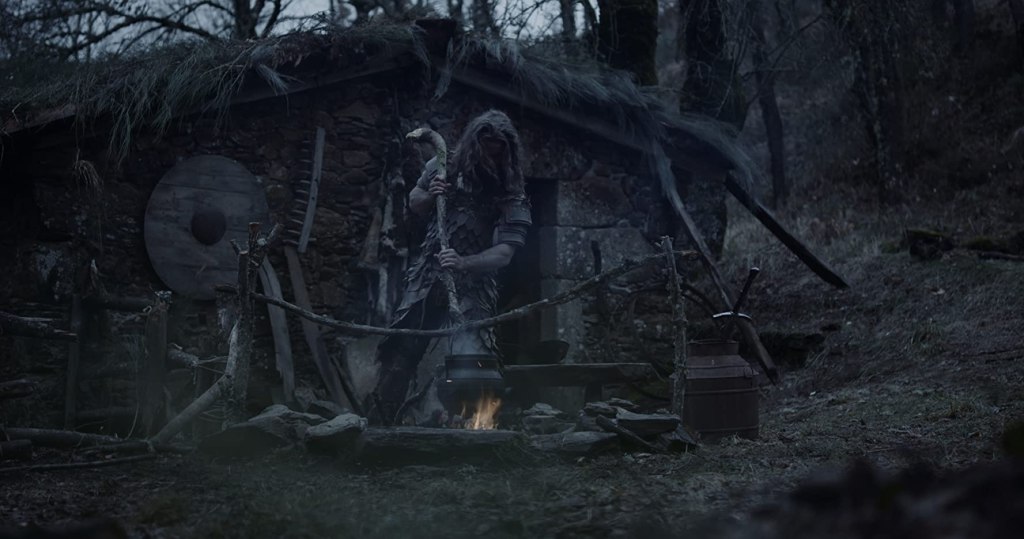
If you’re not familiar with it, The Head Hunter is a dark fantasy/folk horror film directed by Jordan Downey, starring Christopher Rygh, and filmed in Portugal on a ludicrously tiny budget (like, Cube tiny). Fortunately for this film, the miniscule budget seemed to be a help rather than a hindrance — The Head Hunter, like Cube, is a really excellent example of doing a whole lot with a little. Like, one-room-a-forest-and-some-Halloween-decorations-from-Party-City little.
What’s The Head Hunter about?
So, first off, the trailer for this movie is a bit misleading. Based on a number of reviews I’ve read, it seems like a lot of people went into it expecting to get a hack and slash sword-and-sorcery monster movie. Instead, The Head Hunter delivers a portrayal of grief, loss, obsession, and revenge, dressed in minimalist horror and stunningly effective character- and worldbuilding.
It’s also the bleakest movie I’ve ever seen. I love Sauna and Hereditary, so that’s saying a lot.
The story opens with a father and daughter (known only as Father and Daughter). We only get to see the two interact in a brief flashback before we’re brought to the present day — the Daughter is dead, and the Father is a monster hunter.
Every so often, a trumpet blasts. The Father follows the sound to a specific tree, where he finds an arrow, wrapped in a scroll, piercing the bark. On these scrolls are his assignments — basically charcoal and parchment “wanted posters” of whatever monsters are presumably making nuisances of themselves in the local area.
He goes on the hunt. We’re never shown the battles, just the aftermath. The Father returns, bruised, bloodied, and exhausted, with his quarry’s head in a bag. He opens a jar of some kind of substance, rubs it on his wounds, passes out, and awakens healed. Before long, there’s another horn blast, and the process repeats.
That is, until he gets called to hunt the monster that killed his daughter.
Alchemy, Worldbuilding, and the Monster Mash
If the plot sounds a bit thin, that’s because it is. It also doesn’t really need to be more than that. It’s very minimalistic, and it uses this minimalism. This movie is character-driven, not really plot-driven. We follow the Father through his day-to-day, and these mundane, tiny activities do an astonishing amount of heavy lifting when it comes to fleshing out the world that he inhabits.
For one, he keeps the heads as trophies, but that’s not all. The Father is also an alchemist, akin to The Witcher. He has a book filled with the scrolls of each monster he’s killed, but a brief flip through it shows that it also contains information on astrology and herbology. He also has a lot of specialized apparatuses — grinders, a cauldron, jars for macerating, that kind of thing.
We’re shown scenes of him boiling down monster parts into a kind of sludge. He strains things. He dries them. He grinds them down to a powder. He sets the end result up in jars with locking lids, kept behind heavy chains to keep them safe. He doesn’t say a word during this process, and there’s no narration, but there doesn’t need to be. This collection of scenes shows us exactly what we need to know: The Father is a learned man who has either created or been taught the complex alchemical process of turning dead monsters into a healing salve.
There’s no magic here, either. The whole monster mash process is… visceral. Chemical. It’s not showy, bloody, or gory, but the scenes have a smell and a texture.
Some other subtle touches here and there tell us a lot more. For one, the Father gets his assignments by following a horn blast to a tree. He never interacts with another person. At one point, he passes by a castle filled with music and, presumably, other people enjoying themselves. Interestingly, even when his Daughter was still alive, there was a deep sense of isolation about him. Neither he nor the Daughter are shown in a town or even talking to anyone else. Has he isolated himself and his family by choice? Did he do something to drive them to the fringes of society? Is he an outlaw? Where’s the Daughter’s mother? Did something happen to him or his family? How did he become the head hunter?
These questions aren’t answered, and they don’t really need to be. Just like his name, the Father’s backstory isn’t really important. What’s important is his present day: He’s angry. He’s grieving. He’s propelled by vengeance. He’s utterly alone.
And he isn’t a hero.
The Ending
A lot of people didn’t understand the ending or felt that the movie really fell apart because it killed their suspension of disbelief. While I get it, I don’t agree.
(I’m also about to spoil the shit out of this movie, so skip this part if you haven’t seen it yet.)
The Monster Mash (and That @#$%ing Window)
Throughout the movie, we see and hear a window shutter creaking and swinging in the wind. It’s a minor, annoying thing — the kind of small home project that might get put on the back burner for anyone, let alone someone whose days primarily consist of fighting for his life, repairing his armor and weapons, and making monster mash to make sure he doesn’t die. (He also doesn’t seem to be making a ton of money as a monster hunter, so add “getting food, water, and the necessities of life” to that list.)
After the Father gets the call that the monster that killed his Daughter has returned, he goes off to kill it. We don’t see the battle, but he’s successful. He carries the head back in a canvas bag, just like all the others, and tosses it on the floor as he tends to his wounds and otherwise prepares to spear the head on one of his wall stakes. (Say what you will about his interior decorating, the man knows how to commit to a theme.)
Unfortunately, that damned window shutter keeps creaking and banging. Violently enough, in fact, that it knocks a jar of monster mash onto the bag containing the Head. Unbeknownst to the Father, the monster mash is more than just a healing salve — it can even reanimate the dead. The head creeps from the house, painfully propelled by its spinal cord, desperately seeking a body.
When the Father sees the spilled monster mash and now-Head-free space on the floor, he’s shocked. In disbelief, he tests the mash on a dead spider. When it reanimates, he curses, smashes it flat, and goes off to find the Head and finish the job properly.
There’s only one problem: He leaves too quickly. He doesn’t see the smashed spider as it trembles to life second time, with horrifying implications for the effects of the mash. This is what sets up the climax of the movie.
With the Head now on the prowl for a body, it first comes across the corpse of a creature the Father snared in a trap earlier. It attaches itself to it and awkwardly pilots it along, until it gets caught in another trap. The Head then tears itself free again and continues on… until it comes to the Daughter’s grave.
The Father doesn’t just have to kill the Head again, he has to do it while it’s piloting his Daughter’s skeletal body and raspily calling out, “Father.”
The Arrow
At one point earlier in the film, the Father returns to the Daughter’s grave with an iron arrowhead. He briefly explains that people say that firing the arrow can send a soul to the afterlife, but he’s never believed that kind of thing. He tosses the arrowhead onto her grave, almost apologetically.
After the Father defeats the Head a second time, he re-buries his Daughter’s body. The grave is shallow — we can see him scooping loose soil with his hands, seemingly barely able to fully cover her bony limbs in his grief and desperation.
He fires the arrow high into the sky. He wasn’t able to save her life. He wasn’t able to protect her corpse. But maybe, by finally firing the arrow to send her to the afterlife, he can protect her soul.
The Corpse
Firing the arrow is an acknowledgement that the safest place for the Daughter is away from the Father. He kept her with him, presumably after the loss of her mother, and it cost her her life when a monster attacked. He continued to keep her with him, by burying her nearby, visiting her, and giving her occasional gifts, and the Head stole her body and defiled her corpse. Firing the arrow is the final acceptance that he needs to let her go.
Unfortunately, the Father lives a cold and bloody life. We see him bring back the heads of his prey, we see him set traps and make the monster mash, but that’s all. He’s got a lot of heads on his wall. The landscape is still littered with bodies.
The arrow travels high and far, only to thunk into a fly-swarmed corpse on the bank of a stream.
The corpse is an indistinct, furry mass overlaid with the drone of flies. It isn’t the Daughter’s head, because the rest of her is skeletal at this point and this corpse is too recent. It isn’t a rucksack, because we can hear the din of flies feeding on it. It could be the corpse of the wolflike monster from earlier in the film, or the Father’s dead horse, the Head’s original body, or even a random bit of carrion. Like many other things in this movie, its origins aren’t important. It’s a rotting body, presumably just one of many in a hard, violent landscape.
The arrow doesn’t contain the daughter’s soul, or the monster’s soul. It isn’t tainted with monster mash. It’s a superstition the Father doesn’t even believe in, but it’s also all he has right now. It’s the last act of a grieving parent desperate to save his child in some way, after he’s failed too many times already. And it fails, too.
“Body Mine.”
The Father’s mission is accomplished. The Head severed and placed in a bag, he sinks his axe into it to kill it a second time.
In the end, we’re given a scene through the window with the banging shutter. We see the Father walk past, followed by the sound of sawing wood. (Presumably to finally fix the goddamned window.)
Then, there’s a groan. A wet snap and a squelch. And more sawing.
The movie ends with the Head, now attached to the Father’s body, clumsily walking into the house, taking a jar of monster mash, and making one final, triumphant declaration:
“Body mine.“
And a lot of people absolutely hate this ending, because it doesn’t seem to make sense. What’s more, it doesn’t follow what people want from a hero’s story.
I see two problems with that, though:
1) There are little things scattered here and there that make it completely plausible.
As far as the implausibility of the Head winning a fight against the Father goes, there are a lot of theories. One in particular stands out to me.
The Head, on its own, likely couldn’t have overpowered the Father (even without his weapons and armor) even if it had the element of surprise. We are already shown a scene where it comes very close, though. During the fight in the cave, the Head gives just about as good as it gets to a fully-armored Father, head-on, in close quarters.
During that same fight, we’re shown the Father apologizing as he tears the Head from his Daughter’s body. He doesn’t destroy the body, he just pulls the intruder free. Then, he takes her body with him and re-buries her in a shallow grave.
A grave the Head already knows.
It wouldn’t have had to look hard, or even particularly far, for a new body to pilot. If the Head was able to nearly overcome the Father in hand-to-hand combat already, there’s enough evidence that it could’ve done so again.
With the Daughter’s body, stolen from a fresh grave (again), and the Father unarmed, unarmored, and distracted with noisy work, the Head could kill him.
And it did.
2) The Father is not a hero.
The character of the Father is not set up as a hero. He’s our protagonist, but the worldbuilding doesn’t lend itself to heroics. He isn’t on a hero’s journey, and he doesn’t get a hero’s ending.
For example, take the sense of isolation. We’re never told if he’s isolated by choice, by necessity, or by law. Nobody knocks on his door to ask him for help. They pin a message to a tree, blast a horn, and (even when he’s visibly standing in the same field) seem to go out of their way to avoid him. They know he’s there, but there’s something about the Father that’s otherworldly. Outside. Wrong.
Second, the journey of the Head mirrors that of the Father. Both of them are shown using dead bodies as a way to heal themselves and prolong their lives. The Father uses them by breaking them down via alchemy to make his healing, immortalizing monster mash. The Head uses them by attaching itself into one corpse after another. Both of them effectively leapfrog from one body to another, picking up a fresh corpse, using it to repair themselves, then moving on. One just uses more jars than the other one does.
Third, we’re not really shown what the monsters do. There are implications — in one scene, the Father finds a corpse and has a brief, one-sided conversation with it about how it died. It’s implied that it was killed by one monster or another, but we’re never given the kind of swathes of destruction we’d expect from the word “monster.” You could replace them with perfectly ordinary bears, or particularly dedicated pigs, and the effect would be about the same. We kind of have to take the scrolls at face value that these are, in fact, monsters in need of killing.
The Head killed the Daughter, but we aren’t shown that, either. On one hand, the exact circumstances aren’t important. The details don’t matter nearly as much as the fact that this is the incident that sets the Father on his path of vengeance. Still, it made me wonder:
We know the Head is sapient to some degree, because it can speak and understand concepts like “body” and “ownership.” Did the Head also understand familial relationships? Has it lost more than just its body?
The Father and Daughter were outside of society from the beginning, but did the Father become a monster hunter only after the Daughter died? Could the Head have killed her for its own revenge?
If we were watching this from the Head’s perspective… Would anything other than the ending be different?
Ultimately…
The Head Hunter is and isn’t a monster movie. It’s a very effective, minimalist portrayal of how the desire for vengeance leads to obsession, and that obsession can make monsters of us. It’s a depiction of grief and pain that isn’t given a voice, and how that manifests in other ways.
The Father buries his Daughter, but his grief is expressed in rage. He learns (or develops) an entire science in order to hold on just long enough to get his revenge. He’s single-minded, looking solely to the day when the creature who killed his child returns. He has no contact with the town, other than accepting their demands that he kill the things that they’ve deemed monsters. In his obsession, he ignores the banging shutter until it ultimately becomes his undoing. Like Orpheus, he’s unable to keep from looking back. Because of that, there can be no future for him.
I don’t think there is a deeper magical significance to the arrow, or a secret plot twist involving the corpse on the stream, but that doesn’t mean they don’t have meaning. They’re part of the futile action of a parent who desperately wants to save their child and isn’t able to. Like Annie trying the seance in Hereditary, or Katherine lying in Caleb’s grave, the Father fires the arrow because he cannot imagine doing anything less for the child he grieves. It hits a corpse because there is no happy ending here.
Those who live by the sword, die by the sword, and so often condemn their loved ones too.
The Head Hunter is a bleak, bleak movie, but I enjoyed it. With a tiny budget, almost no dialogue, and a few, artfully handled scenes, it manages to build an interesting, complex world and a portrait of a man in torment.
If you go into it anticipating a fantasy monster movie, you’ll likely be disappointed. If you go into it anticipating minimalist horror with some stunning atmosphere and worldbuilding, I think you’ll enjoy it.
Kiko has always been a “daddy’s girl.” The kind of cat who’s content — nay, delighted — to sit on my Handsome Assistant’s lap for hours at a time, gazing up at him with an expression that could only be called “worshipful.”
Don’t get me wrong, she loves taking small naps on me. But if he’s available, it becomes much more, “This is my daddy’s house. That idiot lives here too.”
So on Thursday, when she ignored him to come snooze on my stomach and gently headbutt my face, I was surprised.
“Am I dying?” I joked. “Don’t say that. You know she loves you,” he replied.
Anyhow, 10:00 Friday morning. I woke up with a nagging backache of a kind I have uneasily come to associate with pyelonephritis. Even though I hadn’t had any urinary symptoms beyond the “maybe I should have a glass of cranberry juice about this, just in case,” kind, I was somehow progressing into the worst pain of my life. I tried taking a hot bath, just in case it was a muscle or joint thing. When I was in danger of passing out and drowning, I crawled to my Handsome Assistant’s office door and pounded on it.
“Is everything o-“ “help“
No position was comfortable, or even marginally less agonizing, so I kind of did the worm on the floor for a while as he looked things up, asked me questions, and decided it was time for a ride in the Wee-woo Wagon.
Ten minutes after that, I was loaded in the back of an ambulance and shot full of fentanyl and Zofran.
“Is it helping?” One of the paramedics asked. “It’s… I still feel pain. But in a way that’s hard to care about,” I replied. “Yeah, it does that. I have some other stuff that’s more dissociative.”
I don’t remember what I said after that. I’m pretty sure it was something akin to that everyone in the ambulance was now my friend except for this one light that was kind of strobing in a way that I Did Not Appreciate.
It being early January, every ER was swamped. (Also, contrary to popular belief, arriving in an ambulance does not get you seen faster than if you walk in the door. You get triaged just like everyone else no matter how you get there.) Fortunately, the ambulance guys had started an IV so I was able to get some more medication for nausea and pain while I had to wait. Also, because I compulsively apologize when I’m afraid or in pain, I did that to pretty much everyone I came in contact with. If my mind couldn’t find a reason to apologize, I just said “Thank you” over and over instead.
At one point, my Handsome Assistant inspected the various doors, closets, and cubbies in the room. He found this closet/wardrobe type of arrangement and decided it was a good time to go to Narnia. (Also that black box is an Xbox mounted to the wall, because this room used to be/occasionally still is used for pediatrics. No games or controllers, though. I think you have to ask for those.)
Everyone was very nice and extremely helpful. I briefly talked to a teledoc when they were initially triaging me, so they could order some pain meds and initial testing (a CT scan, some bloodwork, and a urinalysis) while I had to wait for a room. My Handsome Assistant handsomely assisted me by occasionally asking how things were progressing, if I could have some water or ice chips, and so on. One of the nurses noticed he called me “they,” so she asked what my pronouns were just to make sure.
“Honestly, I do prefer ‘them.’ But I’m in the ER, you could call me Donald Duck and I’m really not gonna worry about it,” I explained, around a mouthful of ice chips.
There were ultrasounds. An offer of morphine. Ultimately, it looks like it’s a urinary thing of some kind, and my immediate future looks like a whole lotta antibiotics, phenazopyridine, and heating pad time.
Hat tip to everyone in the ER, though. The doctors were thorough, the nurses were very chill and understanding, and the imaging technicians/various -ologists did a lot to help put me at ease. I feel like I’ve been dragged over several miles of gravel road, but I’m probably going to be fine.
But anyway, the point I’m trying to make is that, should you feel a deep, continuous ache in your lower back, and stretching, massage, etc. don’t seem to help, get thee to a doctor instanter. Don’t wait. Not only can it be very dangerous, but it also hurts super badly the entire time.
My Handsome Assistant and I like to go cabin camping in winter. Rates are usually lower, things are less crowded, he’s got PTO to use up (or else lose), and there isn’t usually much else to do. A change of scenery does us both good, even if it’s only for a couple of days. It’s also nice to experience the time around the solstice like this.
(We half-jokingly say it’s glamping, because there’s a shower, sheets, heating, and a mini-fridge. Either way, it’s nice and I much prefer it to most of the hotels I’ve been to.) (Even the fancy ones.)
However, while we anticipated a possibly-snowy getaway/creative retreat to work on music, fiction writing, and so on, what we got was… 60° F (15.5° C) and a meteor shower.
Did any of yas know there was a meteor shower? I didn’t. The only ones I usually pay attention to are the ones that occur over the summer here, like your Delta Aquarids and Perseids, and I have been Missing. Out.
I only realized when I was sitting in bed one night, drinking tea and looking out at the forest through the window, all cozy and idyllic and junk. An object, about as large and bright as the brightest star in the sky, flared to life, moved across the sky, and disappeared. I was, of course, surprised — a shooting star without a tail? A “drone” with an oddly predictable flight pattern and only one light? A hallucination?
As it turns out, it was most likely part of the Quaternid meteor shower. This one is, apparently, often overlooked. It has a short period of peak activity and happens in late December/early January, so most people miss it. Also, the Quaternid meteors usually don’t have long tails. They do, however, produce some very bright, striking fireballs. So that was neat.
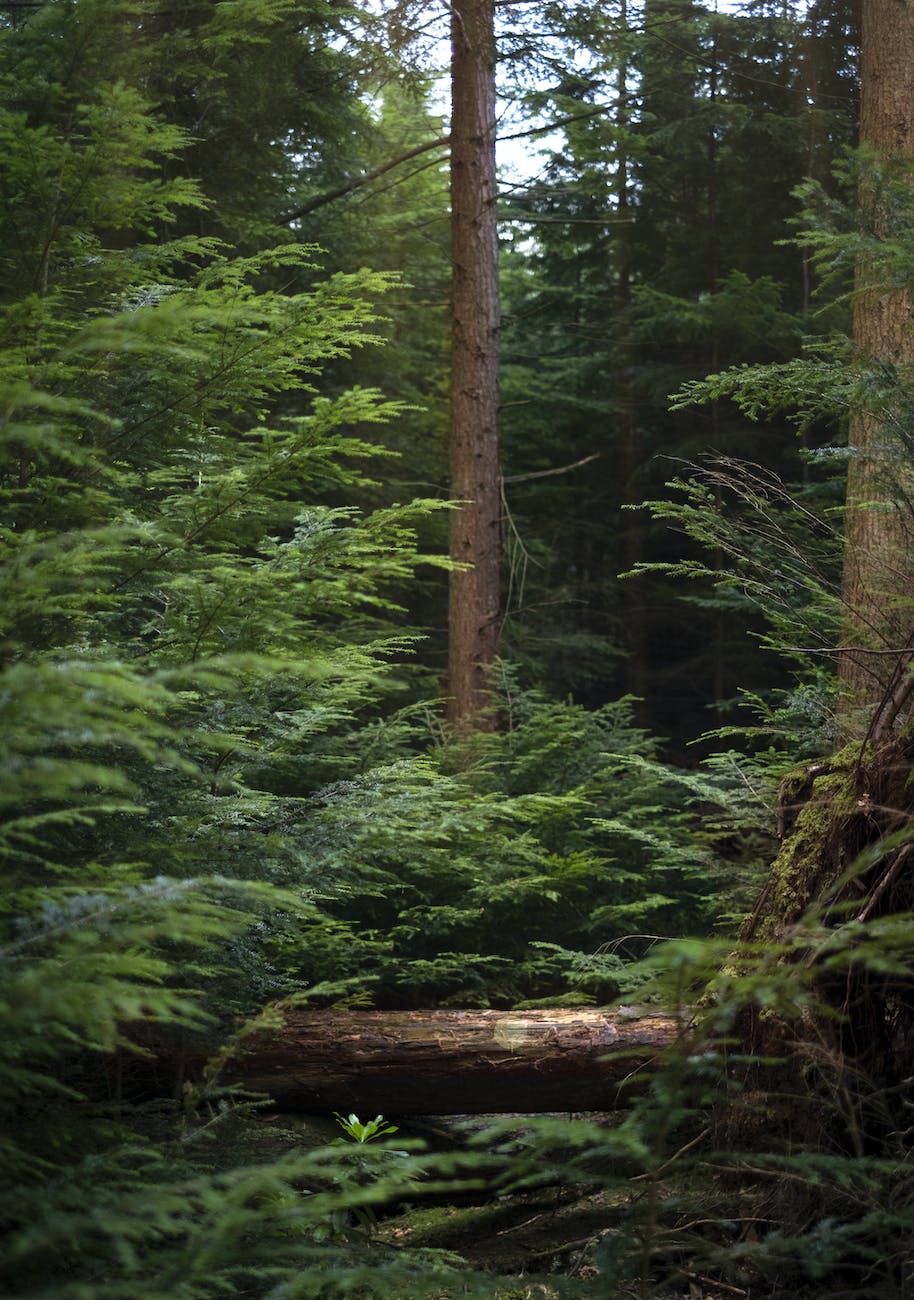
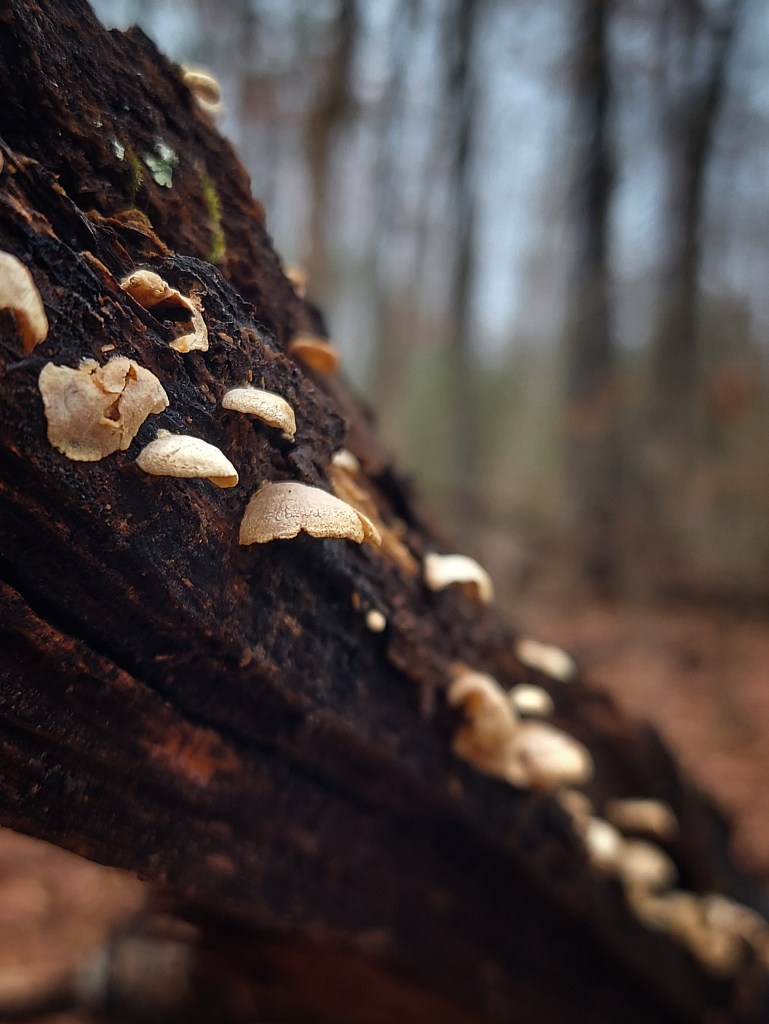
The next day, we spent the late morning going for a walk. With the weather as strangely warm as it was, it turned out to be ideal conditions for finding some very interesting specimens of fungi and beautiful colonies of lichen and moss.
Unfortunately for me, most common culinary species of mushrooms and boletes make me very ill. (Oyster mushrooms, why won’t you let me love you?!) I also have only a passing interest in identifying them, since my interest is primarily visual.
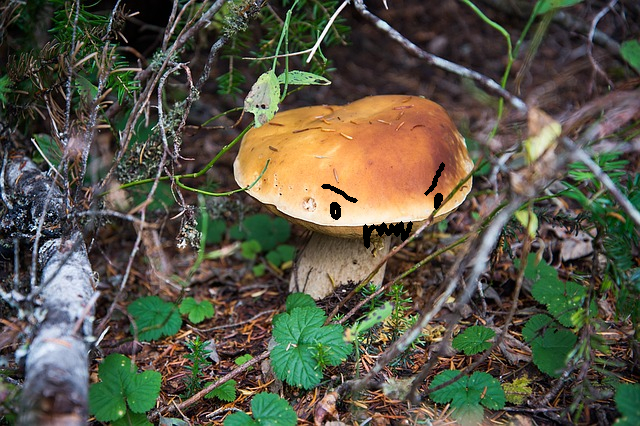
It has been years, but I am still inordinately proud of this very, very silly picture.
I’m what you might call an amateur “catch and release” forager. I love looking at them. I love their folklore. I love finding them. I love taking pictures of them. Sometimes, I’m even able to identify them. I get really stoked when I find ones that a) I recognize, b) are useful, and c) won’t try to make me yakk everything I’ve eaten since fourth grade. But that’s neither here nor there.
Look! We found cool mushrooms and assorted other little forest buddies!
I don’t care how common moss, lichen, and little beige mushrooms are, I will be excited about them absolutely every time. Like a person calling their spouse over every time their cat does something adorable, I will never not be endlessly delighted by them whenever I see them.
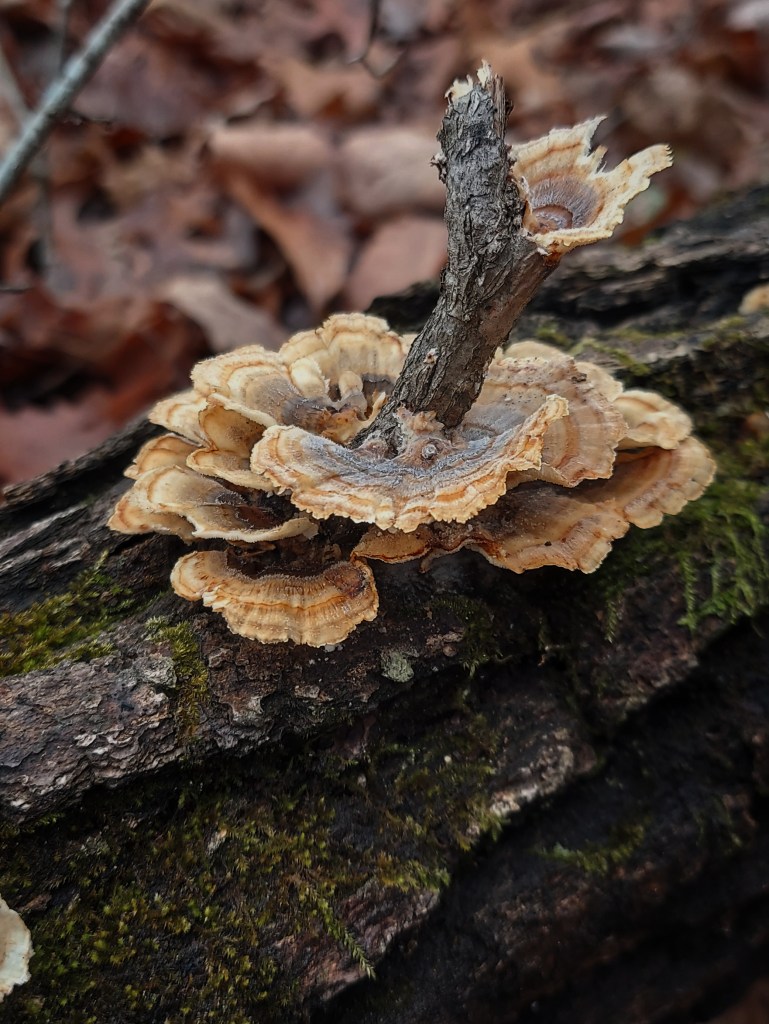
A cluster of what are most likely stump puffballs (Lycoperdon pyriforme).Likely white cheese polypore (Tyromyces chioneus).A cluster of what’s most likely one of the Stereum species.No idea what these are, but I love this photo.
I don’t even need to know what kind they are, I’m just happy to have them around.
Here’s hoping your days are similarly filled with interesting small things.
Hello, I haven’t forgotten about you (collectively) or gotten bored with writing here or anything. Mainly I’ve just been massively preoccupied with carving little guys out of wood to the point that most of my fingers aren’t working as they should and typing has become somewhat of a challenge.
I resonate strongly with this. In fact, I become intractable if I’m made to go too long without creating weird little guys.
The actual day of the solstice passed uneventfully for us, as it often does. It’s the shortest day and darkest night of the year, and, since it isn’t widely observed in the US, my Handsome Assistant (who has been assisting me handsomely by doing things like opening jars and turning doorknobs until my hands work again) didn’t have time off.
We did exchange gifts this holiday season — a kilt, a book he’d wanted, and a small sculpture for him, and a fancy new lyre and a small sculpture for me. We also followed our annual tradition of eating pie and watching horror movies.
Theoretically, Yule should be about anticipation. About hope. The shortest day and coldest night give way to gradually lengthening days as the sun makes its gradual return. It’s been kind of hard to feel hopeful, though, for reasons I probably don’t need to enumerate here. If there is, it’s in the form of a brewing tension before a crisis point.
Shit feels a bit fucked, really. If you haven’t exactly been filled with Yuletide wonder and hope, you aren’t alone. But that’s okay. In the words of a friend of mine, “hope is poison. Spit it out and fight.”
If you don’t have the energy for all the “new year, new me” stuff, you’re not alone either. Save it. There are enough other battles to fight. Sow an edible plant. Reskill. Learn to make one inexpensive, shareable meal really well. I know I kind of harp on it, but these are very small things that contribute to the resilience of you, your family, and your community.
Here’s hoping for a return of strength and light to all of us, as the days grow warmer and brighter. I’ll return with a much more fun post about finding weird little mushrooms tomorrow.
So, I haven’t made any secret about having what many would call “mental health struggles.” I don’t find this something to be ashamed or embarrassed about — if I had diabetes, I wouldn’t be embarrassed by using insulin. If I don’t have enough serotonin or dopamine, I’m not embarrassed by supplementing those, either. Most medicine is pretty much fixing malfunctioning levels of various horrible meat fluids, whether they’re in the blood, pancreas, liver, or brain. The human body is a soggy box of horrors.
(Really, though, I’m not super fond of the euphemism “mental health struggles” either. I came out with funky brain stuff, and I’ll likely die with funky brain stuff regardless of how much therapy, medication, yoga, supplements, special diets, et cetera that I use. Rises and falls in this aren’t because I’m not struggling hard enough, or I’m losing some kind of struggle. Them’s just the breaks, you know?)
Anybutts, I’ve been using a very common SSRI for years to help blunt the worst of it, and it’s helped. The only trouble is, since it’s widely available in a generic form, I’ve been getting those generics. This isn’t a big deal, usually, except for every couple of months when I go to refill my medication.
Playing “cheap generic medication grab-bag” every couple of months is not the kind of game that I’m into. Photo by Alex Green on Pexels.com
Generics are generic because they can be produced by companies other than the brand owner, usually for a fraction of the price. This means that pharmacies can fill their generics from whichever manufacturer is currently cheapest (or at least not straight-up out of stock). As a result, if you use a common generic medication on an ongoing basis, you’re likely to get meds from a number of different manufacturers over time.
“But J., what’s the big deal? It’s all the same, right?” Helas, it is not. Generics have to be bioequivalent to brand-name medications, but that’s it. The inactive ingredients (the stuff that actually dictates how fast the medication breaks down, and how quickly or how well your particular body absorbs it, et cetera) do not. This means there’s also no objective “best” generic, because everyone’s personal biochemistry reacts to these inactive ingredients in different ways. You wouldn’t want to give someone with celiac disease a pill that used wheat starch as a binding agent, for example.
This generally isn’t a big deal for most medical conditions, but it can be a very big deal for drugs to treat or mitigate mental illness. For example, my last bottle of pills came from Camber, whereas the one before was from Aurobindo. I had Lupin before that. Every time I get a refill from a different manufacturer, I have to go through an adjustment period. Sometimes, it’s easy. Sometimes, it’s not. Sometimes, it involves resigning myself to having terrible stomach pains, increased panic, or dangerous ideation for months and hoping I’ll get a different manufacturer on the next go-round. It’s not fun. It’s not helpful. It’s not safe. For some reason, I hit a heavy, long, difficult period of what I call The Ennui shortly after I started taking Camber’s pills. This happens sometimes.
But this is going on seemingly forever. Flatness. Anhedonia. Withdrawing from life. Nothing seems to move the needle even a little bit. It’s not as if the medication isn’t doing anything — if that were the case, I’d be curled up terror-breathing with tetany. But whatever it is doing is Weird and Bad.
“But J., pills are unnatural anyway! Our ancestors didn’t have pharmaceuticals! Just do what they did!” They fucking died, Sharon. That’s what they did.
So, not exactly wishing to go the ancestral approach just yet, I call my doctor. No problem. This happens. It’s a thing. Generics are not all equivalent, and there isn’t really a way to go, “Hey, this manufacturer’s meds suck for me, and I need the ones from this one.” All you can do is get them from the actual brand name, consistently, so you don’t have to readjust every time you refill. Once you know how the brand name medication works for you, you can have some consistency. So, my doctor filled out a new prescription and designated it “brand medically necessary.”
And my health insurance (through United) doesn’t want to cover it.
This isn’t my first brush with this sort of thing. When I was diagnosed with pseudotumor cerebri (intracranial hypertension), I was referred to a neuro-ophthalmology specialist — someone who specializes entirely in the connection between the brain and eyesight, who’d know better than anyone what was going on. And Blue Cross wouldn’t cover it, so I didn’t get to go. Would I have saved more of my vision had I been able to? Would I still have developed Charles Bonnet syndrome? I guess we’ll never know!
At this point, I’m not sure what else to do. A significant part of me is very close to calling United and saying, “Look, I understand. The brand name is way more expensive. However, in light of recent events… you sure, bro?”
If you’re in a similar position, you probably get it. A friend of mine who has experienced in the medical field recommended a service called SingleCare that’s a) highly rated, and b) able to help discount prescriptions and find the pharmacies with the lowest prices. They even help with brand name medication. Even with their help, the specific medication I need is still priced well out of my price range, but they can be a lifesaver for a huge number of other people.
Anyway, rant over. With luck, I’ll be able to get this sorted out. Otherwise, I guess I’m hanging on and desperately hoping that we’re back to Lupin or Aurobindo next time around.
About a week or so ago, I got a lovely message from someone who I wasn’t able to email back. In it, they asked if this site functioned as a kind of grimoire for me, and, if not, if I had any charms for protecting a hard copy grimoire or other magical text.
To the first point, I wouldn’t say that this site is really a grimoire for me personally. Right now, I have a pretty solid background in magical techniques and a running list of go-to ingredients to be able to do what I need to do on the fly. Magic in Druidry also tends to have a different emphasis than witchcraft and folk magic. I mostly keep this site because I have fun writing about folklore and exploring the connections between old beliefs, way-less-old traditions, and modern science.
I do have a small notebook and couple of pages in a notes app that I use for working out recipes. This is for when I’m working on a specific brew, incense, or oil and need to take notes.
As far as protecting things goes, this can be very important. I grew up in an abusive household headed by someone who went from staunch Catholic to American Evangelical, with all of the emphasis on fear, the End Times, and absolutely everything being Satanic. Every few months was another sign of the Apocalypse and a miniature Satanic panic. It was exhausting. The psychological aftermath of it is still exhausting.
Fortunately, there are a lot of ways you can protect yourself and your materials if you’re in a situation where you need to.
1. Protection charms.
I’ll be honest, I’m not super into protection charms for hiding objects. I don’t have a real reason why, other than that I like to rely on more mundane means first. Still, a short, sweet protection charm, when slapped on over several other layers of security, can certainly be a welcome addition.
The easiest protection charm is an old Wiccan bit I picked up ages ago. It’s succinct, it’s simple, and it’s nice as an added layer on top of mundane infosec.
Place the object in front of you.
Hold your dominant hand over it.
Channeling your energy into your hand, send it down into the object.
Trace a pentagram over the object.
Say, “With this pentagram, I lay protection here both night and day. And the one who should not touch, let their fingers burn and twitch. This is my will, so it will be.” (The original contained the line, “I now invoke the Rule of Three. This is my will, so mote it be.” I leave most of that out, as the Rule of Three doesn’t actually have any meaning in my tradition.)
Whatever you do, don’t just look up lists of “protection herbs” and throw a bunch of them together. Lists of magical correspondences are useful for some things, but every herb has a folkloric and often medical or scientific basis for its use. Carraway seed, for example, is usually invoked for protection against theft and loss. Good for keeping chickens and such from wandering off, not so much for keeping someone from reading your diary.
Also, the presence of these herbs may be a tip-off. Most regular notebooks don’t come dusted with a generous helping of bindweed and St. John’s wort.
2. Magical Alphabets.
Magical alphabets are writing systems that are sometimes said to have a unique power of their own but also function as cyphers. Some of them are 1-to-1 swaps for the Latin alphabet. Someone who isn’t well-versed in them would have no idea what they say and, even if they had an inkling, they’d have to find the right alphabet and painstakingly translate letter by letter.
You want to create something that an interloper wouldn’t be able to immediately decipher? A magical alphabet is your friend.
Magical alphabets can also be used to hide things in plain sight. Get a sketchbook, memorize a magical alphabet (or create your own cipher), and draw something. Anything. Write the information you want to record in your cipher or magical alphabet, incorporating it into the drawing or background. At most, it’ll look like asemic writing.
3. Become as the noble squirrel.
If you can’t have a handwritten magical text, the next best bet is to go online and start stashing stuff in weird places.
If you have an email address or app, start writing an email. Don’t send it. Let it stay in your “Drafts” folder. Use it to save whatever information is important for you.
Open up Notepad, Wordpad, or something like it. Write strings of gibberish and symbols. In the middle, write the information that you need to save. If possible, change the font to Wingdings. Save the file as something innocuous, preferably stashed in a program file somewhere on your computer. Few people are going to bother hunting for occult secrets in “Sims 4 > Mods > earringconfig.txt.”
Even better, set it to be “hidden,” stick it in a ZIP file and encrypt it, or password-protect it.
You can also start a free blog on something like tumblr, Blogger, or WordPress. Don’t access it through an app that you need to download, use the site’s interface instead. Don’t use a URL or username that you use anywhere else, especially not your actual name or birthdate. (For best results, use a common word you’d find in the dictionary. It’ll obfuscate your stuff in search engine results.) If you can, password protect it or mark it as private. Use that to organize whatever information you need. Clear your browsing history after each time you update it, and don’t save your login information to your computer or phone.
4. Go traditional. Way traditional.
If you have an altar space or tools that you want to protect, do like the old heads did: Use the most mundane stuff imaginable.
I’m talking a stone to represent the Earth (or the pentacle, if that’s your jam). A mug, cup, or jar for a chalice. Your hand for a wand or athame. A scented candle (even if its unlit) for Fire or the hearth. A bud vase of flowers for the Tree. (Of course, your tradition/path may call for all, none, or more of this, but you get the idea.)
The principle here is to strip everything down to its most basic. A fancy altar with a cloth embroidered with occult symbols, a towering pillar candle, a chalice, a ritual sword, a staff, and a cauldron is going to attract attention. A windowsill with a tea light, a bud vase, and a rock, not so much.
5. Have long hair? Use it!
There’s an old trick that won’t exactly protect a book or small box of objects but can tell you when someone’s been snooping.
If you have long hair, pull out a single strand. Tie it around the book or box. It’s inconspicuous but will easily break when someone tries to go through your stuff. If you go back and your hair is no longer there, you know someone has read your grimoire or gone through your things.
There are some who’ll probably say, “But J., you’ve just told people how to find all of our secrets!” I don’t really think this will be the case, especially if you use several measures at once — save part of what you want to save in an email Draft, another part in an innocuous file, and another in a drawing. Even if one part gets found out, you can still maintain plausible deniability.
Having to protect yourself, your stuff, and your desire to learn is a pain. It’s demoralizing and disheartening. Unfortunately, it’s also sometimes necessary. If you have secrets you need to keep, it’s better to pile on both magical and mundane measures to make sure your stuff stays safe.
Note: This post contains affiliate links. These allow me to earn a small finder’s fee if you make a purchase, at no additional cost to you. Thank you for supporting small businesses and this site!
For many of us, the winter holidays are a time for gift-giving — especially in the US. Even people who aren’t Christian may celebrate Christmas as a secular holiday, focused around getting together with close friends and family, eating delicious food, and exchanging gifts. For some Pagans, Yule is an opportunity to exchange gifts as a small-scale representation of the communal spirit necessary to make it through the dark, cold winter months.
If you’re like me, you’re probably into reskilling. This past year, I’ve taken up small sewing projects, Nuno felting, making herbal tinctures and smoking blends, and growing fruit. My Handsome Assistant makes his own mead and melomel. These things have given us tangible things and skills to share within our community, and they’re fun. For real. There’s an enormous sense of accomplishment that comes with being able to go outside, pick breakfast from vines you’ve grown, then turn the leaves into useful medicine.
This year, Etsy put out their Holiday Hub with a great selection of gifts for everyone, at all price points. I thought I’d make my own list of suggestions focused around cute kits and fun gifts for reskilling.
This year, my Handsome Assistant has gotten into whittling (with a gorgeous handmade knife he purchased during Pagan Pride Day). Right now, he mostly strips the bark from branches so I can use them for making other things. When he wants to move on to making his own projects, I plan on getting him this kit from ButternutSpoonCarver — it comes with everything you need to carve a wooden spoon, which is a great project for beginners.
This knife kit from RazorbackBladeworks contains everything you need to make an 8″ Damascus steel knife, including rosewood scales, brass pins, and a leather sheath. It’s a really nice kit for the person in your life who a) has everything, or b) is very into knives. (It’s me, I’m b.)
This makes a full-tang knife, so it’ll be as durable as it is beautiful and useful.
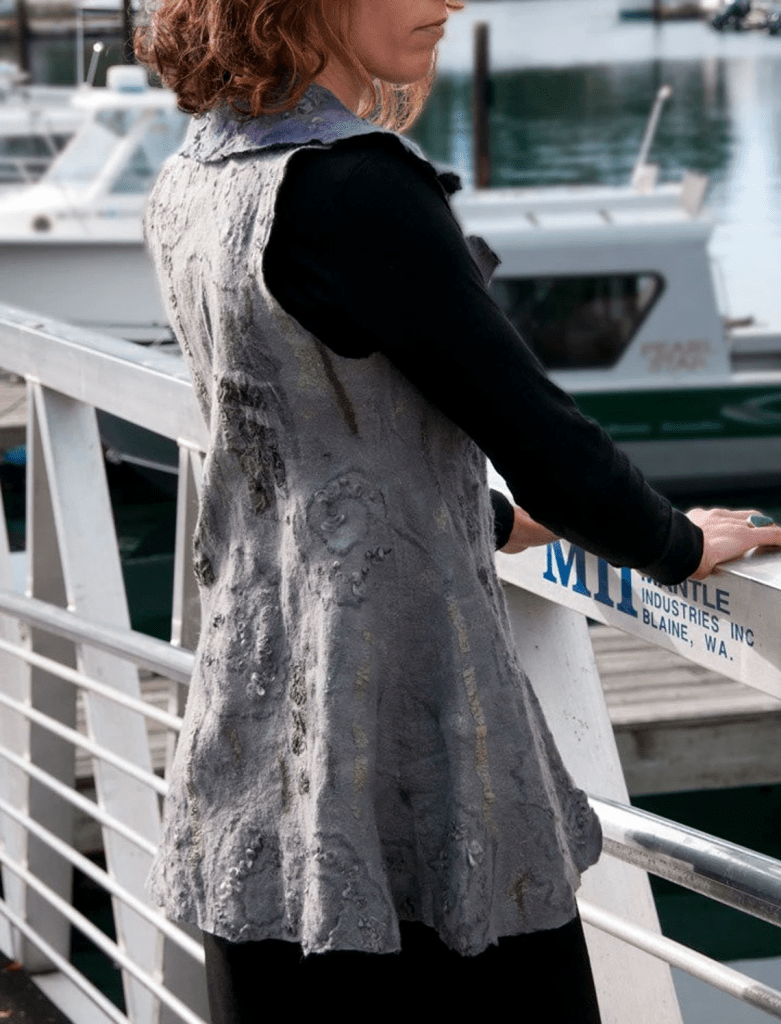
Nuno felting is a ton of fun. Using this kit, I started with a length of silk and some wisps of wool, and, after rolling a soapy pool noodle around my kitchen for a bit, have a gorgeous scarf in my favorite colors. It’s a project I definitely want to tackle again — I’d love to use this technique for arm warmers, vests, shawls, you name it. Next, I’d like to give this Nuno felt vest kit a try.
If you’re not familiar with Nuno felting, it’s a technique that involves felting wool roving onto a fabric backing. It’s easy, beautiful, and very satisfying. If knitting or crocheting aren’t quite your bag, but you’d still like to get into fiber arts, give it a try! These kits from EsthersPlaceonEtsy and SurigirlFibers make it easy.
Solar printing uses light from the sun to trigger a reaction, creating a vivid blue and white silhouette of whatever objects you’d like to use. It’s commonly used for creating interesting botanical art by laying leaves and flowers down on the paper before exposing it to sunlight.
This usually involves working with potentially dangerous chemicals, but this kit by ElementalLeaf makes it easy and less messy. It comes with pre-treated paper that you expose to sunlight and process in plain water, but gives you the same stunning results as traditional cyanotype methods.
Have you seen flower dyeing? This is a process that uses the natural pigments in flowers to create a unique, beautiful, almost tie-dye-like pattern on fabric. The flowers are simply placed on the fabric, then wrapped up and steamed.
While fresh flowers for dyeing are in short supply in temperate areas during winter, this kit comes with everything that you need to create a one-of-a-kind scarf from these completely natural materials. The scarf itself has also been pre-treated with a mordant, so the colors in your finished project will last.
Biophilic design isn’t just a fad. As it turns out, living in spaces with natural materials and live plants is better for our physical and mental health. This kit allows you to bring more nature into your home, without the struggle of keeping live moss.
It comes with a frame and a variety of preserved moss, so your finished project will last and stay looking good. It’s a great project to introduce the concepts behind creating living moss art and terraria, and also allows you to liven up spaces that may not be conducive to keeping living plants. Since this project is pretty simple, it’s also good for teens and supervised children.
Candle making is a pretty classic winter activity. With relatively little labor, you can create your own candles to bring light, warmth, and cheer into your home. It doesn’t take a lot of specialized knowledge or supplies, either, so it’s a great activity to do as a family.
This kit uses non-toxic soy wax and natural fragrances and contains enough for two candles. Everything is pre-measured and ready to go.
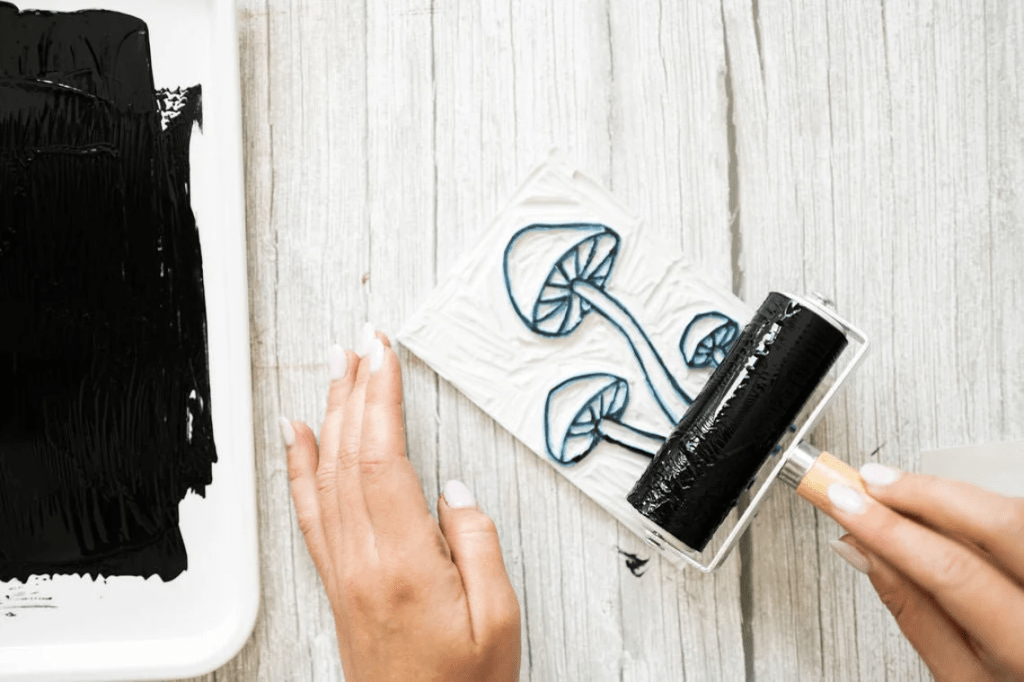
I have really fond memories of making linocut prints in art class as a kid. This kit contains everything you need to do the same — soft linoleum blocks, knives, ink, and even blank greeting cards. Purchase it early, and you can make your own holiday cards!
Once your linocut blocks are made, you can use them over and over again on paper, fabric, you name it. Use a variety of colored inks, or even multiple blocks layered on the same piece to create stunning artwork. This kit is a great introduction to printmaking.
When I was little, my grandma taught me a very basic crochet stitch. I’ve been wanting to pick up more, and this kit is going to be my gateway into actually crocheting things.
It comes with everything you need to make a cute beanie — yarn, a hook, instructions, and even access to a YouTube tutorial. It’s a very easy project, suitable for ages 10 and up, but the results are pretty impressive. Best of all, once you have this simple technique down, you can make all the beanies you want to wear, give away, or even donate.
Watercolor is one of those skills that anyone can pick up but takes some bravery to get into. It doesn’t erase like pencil, so it teaches us to embrace whatever “mistakes” we make and weave them into the final vision. Like Bob Ross said, “we don’t make mistakes, just happy little accidents.”
This kit contains everything needed to make beautiful beetle art. It has sheets of watercolor paints in brilliant colors, a reusable water pen, inspiration images, and pre-printed beetles to paint.
Winter is a great time to hang out and focus on building new skills. If you’re looking for a new hobby to take up or just need a gift for someone who’s difficult to buy for, these DIY kits may be just the answer you need. You or your giftee can learn things, sharpen your skills, and maybe discover a brand-new passion.













 Marble Crow