life · Neodruidry

Could 15th century poetry have an antidote for toxic positivity?

So, toxic positivity. If you haven’t personally encountered it, you might be thinking, “J, you absolute drill bit, how could positivity be toxic?” Just roll with me on this.

What’s toxic positivity?

Eat a healthful diet and exercise regularly, and that’s healthy. Obsessively count calories and jog for hours to burn off every meal, and that’s an eating disorder. Play video games to relax, and that’s good and fun. Play video games for hours on end, to the point where you’re eating at your desk and your room looks like a Superfund site, and that’s unhealthy escapism. Looking on the bright side of things is healthy. Police your thoughts to avoid having an iota of negativity sneak in, and that’s toxic positivity.

Toxic positivity shows up in a wide variety of ways. In this context, I want to talk about the stay-positive-at-all-times-to-attract-a-better-life-for-yourself that still seems to pervade the internet and new age thought in general.

In some sects of fundamentalist Christianity, women are told to “keep sweet.” Despite what they may feel, they must be “joyfully available” to their husbands. No matter what, that positive facade must be upheld.

This happens in new age circles, too. Concepts like the Law of Attraction tell people that negativity begets negativity. That means that you should fill your life and thoughts with positivity, so your life gets better. If things are bad, you’ve clearly brought it on yourself by being negative.

Positivity becomes toxic when it’s rigidly enforced in the face of all sense and reason. When you’re told that your negative thoughts and feelings attract bad things to you, thereby holding you responsible for all of the slings and arrows of outrageous fortune, that’s not healthy. It’s natural to feel bad — and even act on that feeling — when bad things happen. People who are born into poverty, become disabled or very ill, or experience other misfortunes don’t manifest these things for themselves.

Toxic positivity happens in a climate that enforces a status quo. When you’re made to feel responsible for misfortune in your life, and, above all, not to ever let on that you’re unhappy, you’re less likely to agitate for necessary changes in your life and the world around you.

It wasn’t always like this.

It’s also not uncommon to see new age gurus misappropriating very spiritual concepts in order to push this modified version of the prosperity gospel. You can see this in the idea that ever having or expressing a “negative” emotion could block one’s chakras, disrupting one’s internal energy flow (at least, until you pay a guru for a class, video, tool, or treatment to fix it).

The thing is, while this idea isn’t exactly new, it’s relatively recent. It’s also something that crops up as a means of control — tell people that their negative emotions will harm them, and it saves you from the inconvenient work of having to care about other people. Get enough people to believe that their misery is their own fault, and the rich and powerful get to stay rich, powerful, and beyond criticism.

The Three Cauldrons as a Remedy for Toxic Positivity

Amergin was a Druid and bard in the Irish mythological cycle. The idea of the Three Cauldrons is attributed to him, taken from a collection of poetry and prose that dates back to the fifteenth century CE. While these writings come from that period, the ideas within them may hearken back as far as the eighth century.

In these writings, humans are regarded as having three cauldrons within them: Coire Goiriath, the Cauldron of Warmth; Coire Ernmae, the Cauldron of Motion (or Vocation); and Coire Sois, the Cauldron of Wisdom. These should not be conflated with the energy centers found in other spiritual writings and systems — the Three Cauldrons aren’t simply a European equivalent to chakras. The writings don’t actually specify where, exactly, the cauldrons are. Are they in the body, the soul, both, or neither? Despite this, it’s generally accepted that Coire Goiriath resides in the lower belly, Coire Ermae in the chest, and Coire Sois in the head.

With this in mind, people are generally considered to be born with their Cauldron of Warmth upright, filled with vitality and the capacity for physical growth. Their Cauldron of Motion/Vocation is on its side, and turns upright only after growing, learning, and experiencing things. The Cauldron of Wisdom is upside-down. It should be noted that not everyone’s cauldrons are oriented the same way — some people have differing talents, levels of physical vitality, and so forth. There is no ideal way for your cauldrons to be, they simply are. It’s your job to do the work to maximize the potential of what you’ve been given.

My own existence springs forth from the Cauldron of Poesy,
Which was created by the gods from the dúile;
Enlightened is each inspiration
That streams forth in my speech and from my center of being.
I am Amergin White Knee,
Ancient in years and gray of hair.
My inspirations are found within
The many forms of poetry
That are born within my Cauldron of Warming.
The Gods do not orient each person’s Cauldrons equally
Or fill them with the same talents and abilities:
Some are formed upside down, some tilted or upright.
Some are empty, while others are half full,
Some are filled with knowledge like Eber and Donn,
Capable of creating chants of life and death,
Through a skillful combination of words
In the power of three genders: masculine, feminine, and neuter,
And possessing the strength of three measures: double letters,
Long vowels and short vowels.
My Cauldron of Vocation is trained
Through a study of the arts of poetry
And sustains me through proper composition.
I sing also of the Cauldron of Knowledge
That allocates the gifts of wisdom
According to the laws of each art
And the work of each artist in general.

Amergin, The Cauldron of Poesy

The Cauldron of Motion

While people can be born with their cauldrons oriented in different ways, they don’t need to stay like that. For people who wear blinders throughout their lives, their Cauldron of Motion may be upside down. Those who practice the arts may have their cauldron on its side. Those who go through the depths of sorrow and heights of ecstasy may turn their cauldron upright.

I want to highlight that last part: the depths of sorrow and heights of ecstasy. Eighth century poetry acknowledged that, in order to write, sing, and create art, you needed to experience things. Not just one kind of thing. Sorrow is as integral to the process as joy is.

The writings get more specific here, too. Longing, grief, envy, and the search for the divine are all acknowledged forms of sorrow. Good health, marriage, and accomplishment are some of the acknowledged forms of joy. The concept of balance — not just between joy and sorrow — is further emphasized:

The Cauldron of Vocation
Fills and is filled,
Grants gifts and is enriched,
Nourishes and is enlivened,
Sings praises and is praised,
Chants invocations and is enchanted,
Creates harmonies and is harmoniously created,
Defends and is strongly defended,
Orients and is aligned,
Upholds and is upheld.

Good is the wellspring of measured speech.
Good is the home of the well of speech.
Good is the joining of their powers:
Strength is made durable.

It endures longer than any fortress.
It is better than any tradition.
It is our guide to wisdom,
As we free ourselves from ignorance.

Amergin, excerpt from The Cauldron of Vocation

This power comes not from upholding positivity in the hopes of attracting a better life. It comes from the work of experiencing both joy and sorrow, devoting yourself to a greater pursuit, and acting and speaking with honesty and integrity. This is the origin of strength, endurance, and freedom. This is what lets us change things not only for ourselves, but for the world.

life

I will become… Five Punch Man.

Studying Neodruidry has given me a lot of exercise for mental discipline, but didn’t really come with a physical side. Plogging is something that follows that mindset, but is also something I’ve been doing for ages and don’t really consider an additional physical activity. I wanted another way to make myself stronger, enforce physical discipline, and burn off some of the extra ADHD energy.

Even if you aren’t a degenerate weeb (just kidding — ily degenerate weebs) you’ve probably seen/read/heard of One Punch Man. Even if you haven’t done any of that, you’ve probably seen a meme or two based on it.

Anyway, at one point, someone asks Saitama how he became One Punch Man. His answer?

100 Push-ups, 100 sit-ups, 100 squats, and 10km running EVERY SINGLE DAY!!!

It’s not bullshit, either. There are tons of breakdowns of (and testimonials about) the One Punch Man Workout all over the internet at this point.

My only problem is that, while I covet the muscular limbs of a Percheron, my own are noodly and disappointing. Shovelglove has absolutely helped my upper body and my endurance, but I need something for my most-of-me.

So, for now, I’m adding in what I call the Five Punch Man workout. It is basically the same as Saitama’s, just… one fifth of it for now. Twenty push-ups, twenty sit-ups, twenty squats, and about a mile and a half’s worth. I’ll work my way up to a hundred, assuming my knees don’t come apart in the process.

Wish me luck!

art · life

I’m in a show!

I have spent my entire artistic career making things for private collections and not entering shows. Part of this is due to anxiety, but most of it has to do with my very strange relationship with attention.

Anyway, I decided it was time to suck it up and apply to one. I did, I got in, and now you can see some of my work at The Torpedo Factory in Alexandria, VA. This particular show is running until June 5th.

Honestly, I feel good. Validated. Like I accomplished something. It was easier than I expected, too.

Hooray!

life

Good music transcends time and language.

I’ll let one of the The Hu’s frontmen say it.

Music transcends any language. Even when we were growing up and listening to Western rock bands, to this day I still don’t understand some of my favorite songs. But [through] the music, the rhythm and the tune and the way it’s delivered… It’s something special. You’re able to ‘understand’ everything because you feel it. 

Gala (Galbadrakh Tsendbaatar), in an interview with Louder

I don’t remember how I first learned about The Hu. When I write or paint, I often end up putting a song on, then letting whatever algorithm is currently spying on me keep recommending things. I remember being captivated by Wolf Totem, and put their songs on heavy rotation afterward.

This past Monday, my partner and I finally got to see them in concert. It was at Warren Theater, which isn’t quite what you’d picture when you think of a metal show (think lots of seats, chandeliers, ceiling medallions, you get the picture). I thought the seats might get in the way of moving around. I did not allow them to.

The band was fantastic. The energy was contagious. The crowd was enthusiastic and friendly. (The guy sitting behind us photobombed us in a hilarious way, and I almost regret laughing so hard because the shot ended up blurry.) And the music. It’s hard to describe the fusion of traditional Mongolian instruments and throat singing with metal in a way that does it justice. I could write about it for what feels like forever, but, as the old quote goes, “writing about music is like dancing about architecture.”

This is what modern bardic tradition should feel like. It feels like the kind of power old stories talk about when they speak of bards that could strike a person down with a verse.

I barely know a few words in Mongolian. If a song interests me, I need to look up a translation, and a romanization so I can at least try to approximate the pronunciation. It doesn’t matter, I still try. My lack of linguistic skills meant that I couldn’t know any of Jaya’s between-song banter. It didn’t matter, I cheered with my fists in the air anyway.

This was easily one of the most fun shows I’ve been to in ages. If you have the opportunity to see The Hu, take it.

life

Warren and his Harding.

After years of listening and watching live streams, my partner and I finally got the chance to see one of The Dollop‘s live shows. (If you’re not familiar, The Dollop is an American history podcast by Dave Anthony and Gareth Reynolds.) Not only does it go into all of the stuff history class just kind of ignores or glosses over, it’s funny as hell.

“But,” you might be asking, “What does this have to do with witchcraft or Druidry?” Historically, Druids were top-level advisors, doctors, and military strategists to leaders, and most leaders are, as it turns out, so staggeringly, bafflingly weird and incompetent that the fact that they manage to leave the house each day without accidentally choking on their own pants beggars belief. It also helps to see the origins of the absolutely bonkers way that the US deals with minorities, religion, minority religions, human rights, and conservation.

Last Saturday, we got to learn some… things about former President Warren G. Harding.
Especially about his best friend, “Jerry.”

His dick.
Harding named his dick.
He named it Jerry.
I’m not even going to get into who/what “Mrs. Pouterson” was.

Apparently, Wa-wa-warren Harding, Ohio’s Greatest Fuck Machine, wasn’t just a sex addict. He was also addicted to writing letters about sex. Often on official letterheads. Prolifically.
It should be unsurprising how many scandals this nearly led to. Harding ended up having to pay secret child support not only to a woman less than half his age (who he started grooming when she was a teenager), but also hush money to the friend of his wife (and wife of his friend) who threatened to expose all of the James Joyce-level pervert letters Harding had sent her over the years. All 1,000 pages of them.

By the way, Harding was married the whole time. His wife, Florence, suffered greatly from kidney trouble, has historically been described as “severe” and “dour” (read: firm and competent), and was arguably the only influence in Harding’s life that let him be a halfway functioning human being.

She also regularly found out about her husband’s indiscretions. Like when he was getting his bone on in an anteroom/cloakroom of the oval office, and had a member of the secret service stand at one entrance. This was so he could knock if Harding’s wife showed up. Harding could then tuck Jerry away in his pants and dash out of the other door, and pretend he’d actually been Presidenting the whole time. No word on what Harding’s sex partner was supposed to do, other than hide among the coats.

I could go on, but I honestly would like to stop thinking about Warren Harding’s junk and never have to remember it again. You should probably just listen to The Dollop. It’s educational, it’s funny, and it shows that even if history doesn’t always repeat itself, it absolutely rhymes.

Environment · life · Plants and Herbs

Foraging for Flowers and Ramps

The more I think about it, the less sure I am that alien invaders would be able to set up shop here for an appreciable amount of time. They’d probably get eaten. (Even the really weird-looking ones. Especially the weird-looking ones. Maybe in an etouffee, like crawfish.)

A garlic mustard plant.

I like to consider myself an invasivore. If it’s here, causing harm, and tasty, I will find a way to eat it. This is why I was very happy to learn how to identify garlic mustard on a recent foraging walk with some friends. (A lot of invasives are valuable as medicine or food — they wouldn’t’ve been brought here if someone didn’t think they were useful for something.)

Of course, not all tasty things are invasive, which is why it’s important to be conscientious. In general, it’s best to take as little of a plant as you can, and avoid taking the roots unless absolutely necessary. One of the nice things about eating invasive plants is that you don’t need to be particularly careful about damaging their population, but this isn’t true for native species. Like ramps, for example.

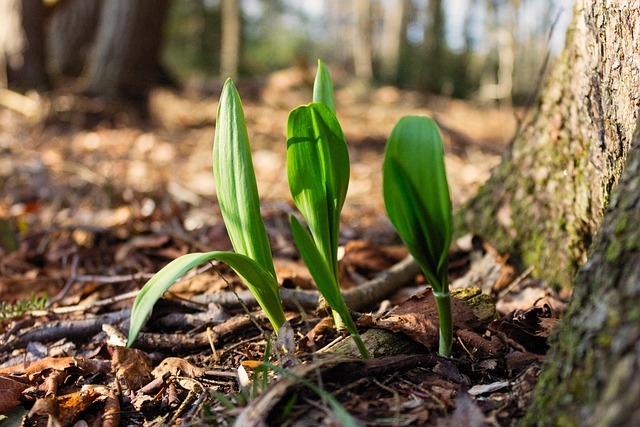
A cluster of wild leeks at the base of a tree.

Ramps are wild leeks, and sadly trendy in the culinary world. In some areas, they’re delicacies that have been harvested to endangerment. They’re a spring vegetable very similar to a leek you’d get from the grocery store, which means they’ve got an onion-like bulb topped by flat leaves. The whole plant is edible, but it’s not uncommon for a nice patch of ramps (which can take years just for the seeds to germinate, then another seven years for the plants to mature) to get harvested to oblivion for the bulbs.

Fortunately, since the leaves are also delicious, this isn’t necessary. You can enjoy ramps and still leave the live plants behind. All it takes is harvesting one leaf and moving on, rather than digging up the entire plant. (I’m planning to chiffonade the leaves for potato soup. I’ve got some new potatoes from the farmers’ market, creamline milk, and a whole bunch of home made vegetable broth!)

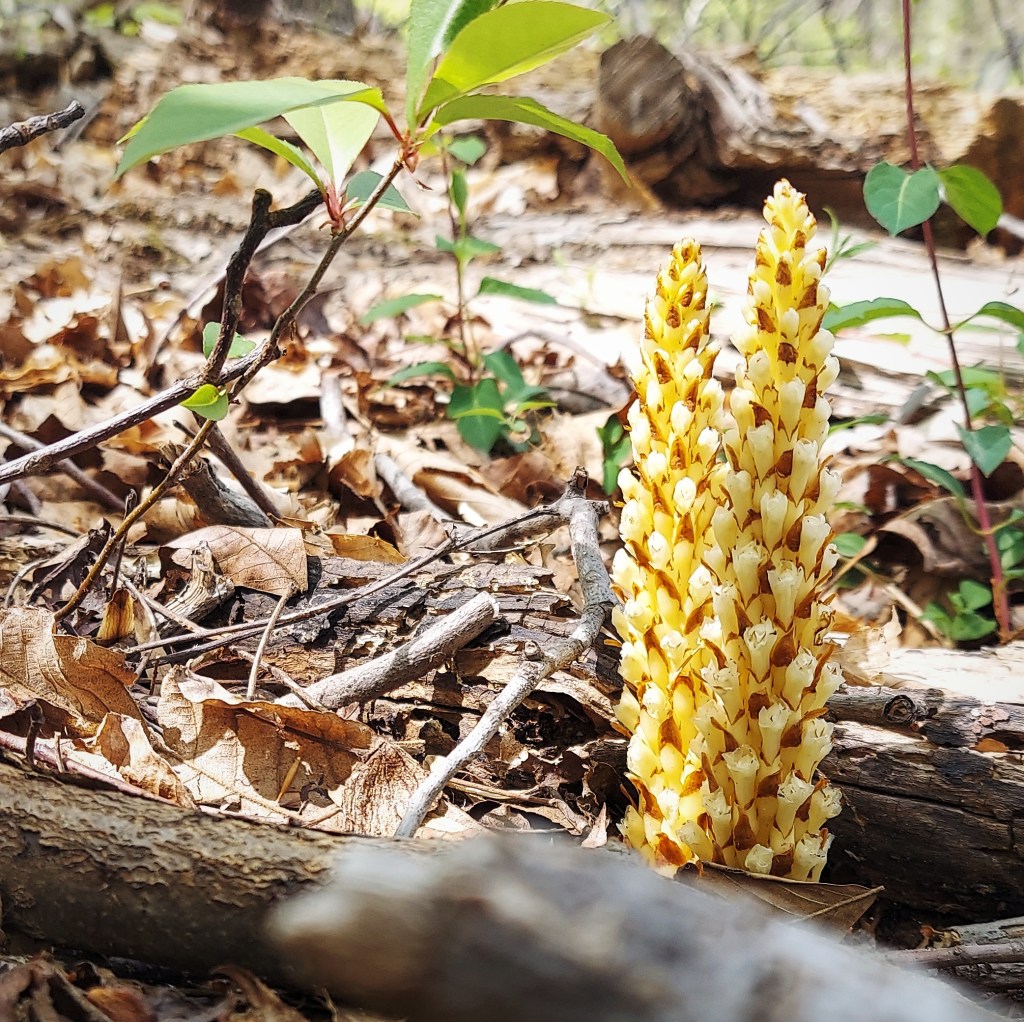
A cone-shaped inflorescence of bear corn.

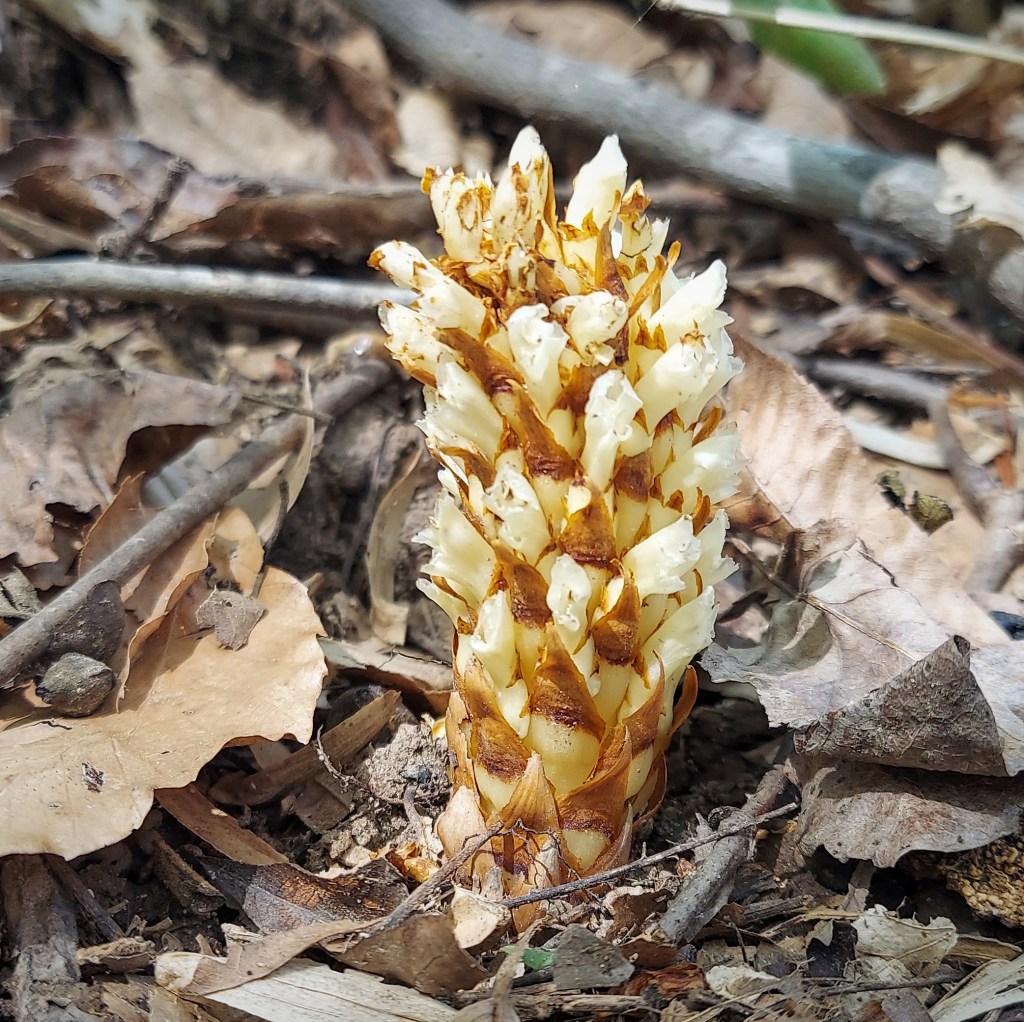
One of the neatest things I saw recently wasn’t something I was looking for — in fact, I’d never encountered it in my life, and had no idea it existed. Conopholis americana, also called cancer root, bear corn, or bumeh, is a profoundly odd-looking parasitic plant that lives near oak and beech trees. At first resembling an upright corn cob or the cap of a fungus, closer inspection revealed cream-colored flowers.

Despite the name cancer root, it doesn’t appear to actually fight cancer. However, it does have some pretty powerful astringents that help with wound clotting. This plant was also used to help induce and progress labor (which gave rise to another, more offensive name that has largely fallen into disuse). It’s also a diuretic and laxative, which is what gave it the name “bear corn.” After months of hibernation, bears need to “unplug,” as it were. They’re attracted to the springtime blooms of bear corn, and eating it seems to help get things moving.
This idea is plausible enough, though I have chosen not to test it myself.

We also spotted a black squirrel, though nearly missed it. He skittered quickly along a fallen tree, and was far out of sight by the time I managed to try to get a picture. Still, even without photo evidence, it was pretty neat to spot two very rare things. (Melanistic squirrels only occur in about 1 out of every 10,000 eastern gray squirrels!)

Here ’til the day breaks and night falls,
J.

Blog · life · Neodruidry · Plants and Herbs · Witchcraft

Back into the woods.

it’s a rly good deal tho, I texted.

My phone buzzed a second later.
I’m literally about to get on a plane right now, he’d sent back.

This back and forth happened a few more times, before he finally agreed that a couple hundred dollars off a four-day vacation was, in fact, a very good deal.

This all started when my partner realized how much vacation time he had left over at the end of last year. It doesn’t roll over and he can’t cash it in, so it was pretty much just kind of wasted. Ever the supportive devil on his shoulder, I urged him to make sure he takes all of the paid time off he could this year, especially if it was just going to evaporate if he didn’t.

“Your job’s able to offer you this because of the value created by your labor. It’s not a free perk or a fun bonus, it’s literally something you’ve earned. If you can’t get the equivalent value in your paycheck, you should take whatever you’re offered. You’re basically giving up part of your salary otherwise.”

(I also have the same attitude toward expensed meals, fitness equipment, and other benefits. Just because it isn’t money doesn’t mean it isn’t compensation, friends!)

And this is how, on a shuttle immediately before boarding a plane, my partner prayed that his phone’s battery and internet would hold out long enough for him to book a four day stay in a Getaway cabin. It was a scramble to schedule everything before the sale ended or his phone gave out, and he succeeded with almost no time to spare.

A sign on a cabin that says "Getaway Shirley."

We’ve stayed in a Getaway tiny cabin before, so I knew this’d be a good deal for us. Last time was during winter, so I was pretty excited to experience the area when it was a bit warmer and greener. That part of Virginia isn’t exactly in full bloom just yet, but was still beautiful — especially if you’re a weirdo like me who experiences aesthetic arrest from the sight of, like, an extremely good mossy log.

Interior of an apothecary shop, with shelves full of incense, candles, herbs, and remedies.
Image from Visit Waynesboro.

When we weren’t walking in the woods, taking pictures, trying to identify plants, or “catch and release” mushroom hunting, we were reading or writing. One day was a bit too chilly and rainy to do much outside, so we went for a drive down Skyline to Waynesboro, VA. There’s a fantastic apothecary there called PYRAMID, with some really wonderful locally made candles, incense, artwork, jewelry, herbs, teas, remedies, and curios.

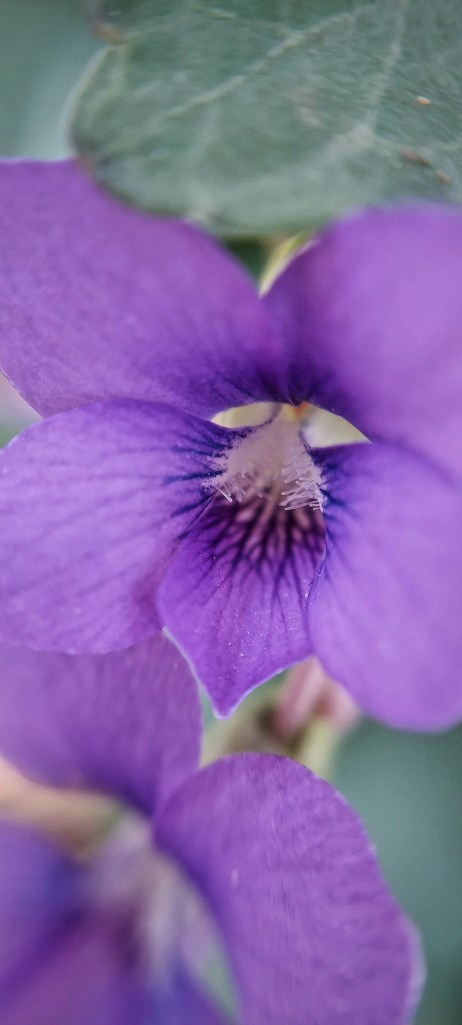
A close-up of violet flowers.

The environment of the cabin was just as relaxing as last time. There was a very beautiful patch of violets right near our fire pit (I picked a few for pressing), and we were tucked far enough away in the trees to have privacy but just close enough to other cabins to not feel completely isolated. Along the stream in the woods, Christmas ferns were sending up tons of spiraling fiddleheads. The moss was verdant and bright green, and the lack of leaves on the trees was more than made up for by the abundance of lichen and mushrooms on the ground. The weather was cool, alternating between sun and a light, silky drizzle that made everything seem fresher and brighter. Though the trail we took was relatively short, it took us a while as we kept stopping to get down, snap pictures, sketch, or identify something.

We packed well this time around, though we brought way too much food for the two of us. Pasta, salmon, shrimp, steak, cinnamon rolls, ingredients for s’mores… He cooked the meat and fish over the fire, and made some of the most amazing, crispy salmon I’d ever had. It was simple — just fish cooked in the cabin-provided olive oil, salt, and pepper — but the texture and subtly smoky flavor were perfect. We had it with lentil pasta all’arrabiata, and I’ve been craving campfire cooked salmon and pasta ever since.

A close-up view of the inside of a violet flower.

(We did run out of salad greens at one point, which got me wondering how I’d scrape together some from the surrounding landscape if I had to — there were violets, dandelion greens, and the pink flowers of redbud trees… Christmas ferns can be eaten the same as ostrich ferns, so fiddleheads too. Fortunately, I did not become responsible for foraging for our vegetables, because I did not want to play “Fuck Around and Find Out: Salad Edition.”)

Coming back took a bit, mostly because we’d scheduled things so we still had a day or so between going home and going back to work. It meant that we were able to visit all of the pottery shops, antique stores, and farm stands that we passed along the way. We ended up coming home with coffee beans, copper sculptures, and a cypress knee(!!!) that we hadn’t originally intended to, so I’d say our sidequesting was a success.

Here ’til the crow flies and the flies crow,

J.

Blog · life · Plants and Herbs

Come. Let us frolic among the violets and- *upset bird noises*

I struggle with setting up and changing routines. I thrive with structure, though it’s very difficult for me to adhere to, and I don’t like having to move things around. This isn’t to say I don’t like spontaneity — but I need to schedule opportunities for spontaneity around the stuff I gotta do. Maybe it’s my Virgoan tendencies, maybe it’s the unmedicated ADHD and the fact that I have the executive function of a brine shrimp. Who knows!

A vase of flowers and jar of chalk next to an open day planner.
You want spontaneity? I can be spontaneous for four hours next Thursday.

Anyhow, all of this is a roundabout way of explaining how my partner and I went to frolic with the polycorns and run amongst the brain trees. See, we try to hit up farmers’ markets whenever feasible. This is partially out of a desire to shop local, our duty to support our community, the need to make sure the market keeps happening in our city, and also because the food is way better (and generally cheaper) than our other options here.

A head of lettuce growing from the ground.
A fresh lettuce with the roots still on absolutely beats the metaphorical balls off of an anemic head of iceberg, and I do not apologize to anyone.

There’s only one problem — the market we usually visit is open on Sunday, and we had a Thing scheduled for that day. So, we roused ourselves on Saturday to go track down another farmers’ market, which meant that the morning I usually spend sleeping in (and being slept on, in turn, by a small orange cat), I instead spent buying produce, cheese, a batch of really kickass empanadas, et al.

This meant that both partner and I were bright eyed and bushy tailed, with a whole afternoon ahead of us and nothing to do with it. I suggested a walk, so we went to find an entrance to this pretty little local trail.

As it turns out? It was a really good idea.

We didn’t walk very far, but there wasn’t a need to. The area we found was carpeted with violets, and a little flowering dogwood had burst into a riot of bright pink blooms. There was even what may have been an apple tree nearby — it’s hard to tell, because a lot of that branch of Rosaceae look similar when they flower — perfuming the air with a bright, sweet scent. Some deer had evidently paused there, leaving tracks in the soft, damp sand.

The trail was full of dogs, too, from an adorable miniature schnauzer, to a huge, sleek, jet-black pit bull. (His ears were cropped, and he crossed the little footbridge before his owners did. When I first saw him, a tiny caveman part of my mind warned that I might somehow be looking at a panther. I’d say this is silly and ridiculous, but this is also a world where the Tiger King exists and zebras just kind of wandered around the DC area for a while.)

My partner and I looked for four-leaf clovers between the sweet purple and white violets, poked around the shore of the nearby creek, and picked up litter along the trail.

A faded, wet, beaten-up sign saying "Love thy neighbor, no exceptions. Black lives matter. God is love. LGBTQ+ people are of sacred worth."
Even the litter here is extremely wholesome.

Then, in the midst of this sweet, flowery idyll, I heard what could only be described as the sound of someone trying to feed an uncooperative bagpipe into a garbage disposal. There was a crashing noise, the crunch and rustle of leaves, and a pair of shapes darting through the trees.

Well, one was darting. One was kind of… scramble-flailing? Whatever it was, it wasn’t flying and it wasn’t falling, but it looked extremely uncomfortable.

A large crow had chased a falcon to the end of his family’s territory, and was in the process of escorting the interloper out (with violence). I’d read about crows doing this, had even seen videos of it, but nothing compared to the sight of that massive, almost eerily silent corvid turning an entire-ass raptor into a crying mess.

Now, I had a front row seat. I was fortunate enough to be standing right where there was a break in the trees, which gave me a really good view of the whole situation. It happened too fast for me to record any of it, though it had the same kind of weird time-dilation you experience watching a car crash. It was an amazing experience, though, and I felt honored to have been privy to it.
It was also the most absolutely metal thing I’ve ever seen in my life.

(The falcon and crow were fine in the end, from what I could see. The falcon beat a very embarrassed retreat, and the crow went back to survey his spot.)

Even in a flowery park, nature is hardcore.

Now I’m gonna go have empanadas. (They are spinach and cheese.)
Have a good day!

A photo of my partner and me, framed by some dogwood flowers.
life · Plants and Herbs

Quantity: 15 (or, I will be eating strawberries until I die. Possibly of strawberries.)

We’re officially past our last expected frost date here, so I’ve been having Notions about making the balcony all fancy.

I started with two railing planters od garden sage, calendula, basil, and dill. While our spot doesn’t exactly get full sun, it gets several hours of direct sunlight in the afternoon, so these seemed like a suitable experiment. After all, I figured, if they don’t thrive out on the balcony, I can move them to my south-facing windows.

I also moved my hanging plant stand out there, and festooned it with mosquito plants, snapdragons, and pansies. We even got a small cherry tomato planter, some lettuce, and a raspberry bush.

Oh. And strawberries.

I had an idea that I thought would be neat — I could use a terracotta strawberry pot, plant it all around with strawberry starts, and put a vining plant at the top. I could train it to grow using the balcony as support, and it’ll look neat. I wasn’t really able to find a suitable plant with a vining habit, so I went with some crookneck squash in the end. I was able to find some strawberry starts, so I picked three different varieties and trucked them home, excited and ready to get my hands in some dirt.

The thing is, there are a couple of different ways that plant starts are sold. When we went to Home Depot, they had tons of individual Burpee starts in little dark green pots. When we went to the independent garden store, they had starts in white square packages. They were about the same circumference as the Burpee pots, so I figured the only difference was branding.
I’m going to pause for a moment to mention that I was also wearing a brand-new pair of glasses, which I feel may not be quite the correct prescription.

Anyhow, this is how I ended up with 47 strawberry plants.
I did not need or want 47 strawberry plants.
I have no idea what I’m going to do with 47 plants’ worth of strawberries.

Once I got the starts home and got a better look at the packaging, my stomach dropped into my knees. I pressed every spare container I could into service — old planter liners, spaghetti sauce jars, cartons, some terracotta pots I’d been planning to use for another project, you name it.

A windowsill filled with terracotta pots of tiny strawberry plants.
This is my bedroom windowsill, and also every other horizontal surface that gets basically any sunlight.

My balcony is covered in strawberries. My windows are covered in strawberries. I have strawberries growing in the fancy-pants greenhouse cabinet in my partner’s office. I wake up to strawberry plants. I trip over strawberry plants. I have yet to find anyone who wants spare strawberry plants.

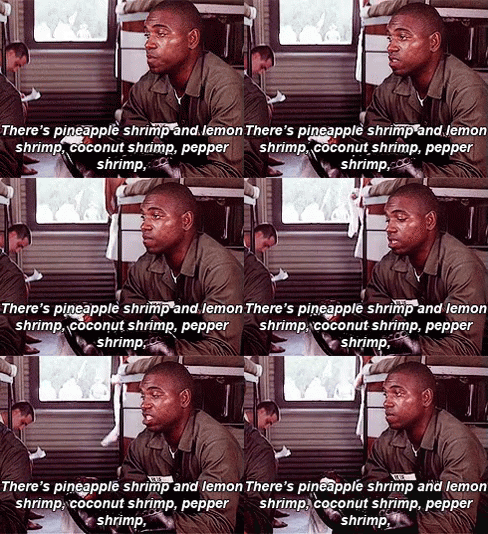
A gif from Forrest Gump. "There's pineapple shrimp and lemon shrimp, coconut shrimp, pepper shrimp..."

They are the first things I see in the morning, and the last I see at night. I’ve been looking up recipes for pies, jams, sauces, salads, and brews. I’ve been hunting for reusable multi-gallon freezer bags. I’ve been researching deities who enjoy strawberries as offerings, in the hopes that I might be able to unload some of them like an overly friendly neighbor with too much zucchini.

It’s been about a week, and they’re flowering and thriving. I don’t know what I’m going to do. I don’t have the heart to just toss them, and, like I said, I don’t know anyone who wants them. I wouldn’t know how to ship them even if I did.

An image entirely filled with strawberries. Nothing else is visible.
An artist’s rendition of my life for the foreseeable future.

I have a sneaking suspicion that I’m going to get very tired of strawberries in the near future.

life · Plants and Herbs

Reskilling: Learning to Brew (and how it almost shot my partner)

Hello!

I haven’t updated in a while — it hasn’t been for lack of material, either. As we move into spring, I’ve been working on planting my balcony, developing new skills, and seeking out more connections. It’s the time of year for planting seeds in the anticipation for growth, and I feel it.

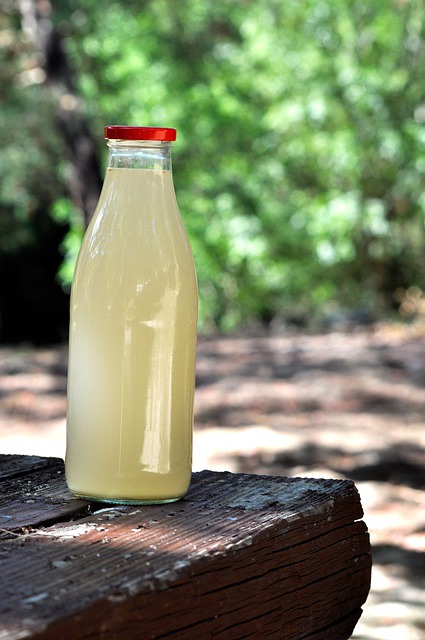
Anyway. You’re probably wondering about the title, so here goes: I’ve been making tibicos, also known as water kefir. This is a kind of probiotic beverage that’s made from granules that naturally develop on Opuntia cacti. These are essentially a SCOBY, kind of like kombucha, in a sort of gummy polysaccharide matrix. The balance of bacteria and yeast is quite a bit different, however, yielding an end product with a very different taste and bouquet of probiotics. Also, unlike kombucha, water kefir grains form little clear to beige squishy lumps instead of a mushroomlike “pancake.”

So, the process of making water kefir goes like this:

  1. Boil some filtered water.
  2. Add sugar. I usually use a half cup or so for a half gallon jar.
  3. Make sure the sugar’s dissolved.
  4. Let it cool.
  5. Add the kefir grains.
  6. Cover the jar with a piece of cloth or loose-fitting lid.
  7. Wait 36-48 hours.
  8. Strain the liquid into a bottle (save the strained-out kefir grains).
  9. Add juice, crushed fruit, spices, or whatever you want the final flavor to be.
  10. Cover the bottle with a cap, or one of those fancy swing-top corky deals.
  11. Let it sit on the counter for another 24 hours. Burp it occasionally.
  12. Put it in the fridge.
  13. Enjoy.

Note the part that says “burp it occasionally” in bold letters. This is extremely important.

I’ve been working with a flavor blend that my partner and I really like. It’s about a half-cup to a cup of tart cherry juice and a cinnamon stick, in a 32-ounce swing-top fermentation bottle. There’s only one problem: It’s been very warm here, and cherry juice has a lot of sugar.

Even if you’re watching your sugar intake, the sugar content of water kefir is kind of the opposite of a problem. The fermentation agents in the grains break almost all of it down and produce CO2, a bit of alcohol, and more of themselves. In the end, you get something that’s fizzy, very slightly alcoholic, and flavorful, without being too sweet. The warmer the environment, the faster the bacteria work.

That is, if you get the ratio of juice to water kefir right for that second fermentation. And if, as I said, you burp the bottles regularly. Otherwise, you’ll get something that’s fizzy, alcoholic enough to peel paint, flavorful, not too sweet, and capable of detonating your entire kitchen and giving anyone in the room with you a traumatic brain injury.

I know this all sounds like hyperbole. I cannot emphasize enough to you how much it is not.

I popped that swing top off, and the force of the gas (from a bottle that I’d already burped a few hours ago) was enough to blow the wired-on top completely off, ricochet it off of the cabinet and into another room, and soak the ceiling in a geyser of cherry and cinnamon water kefir. I stood there in shock, holding the now half-empty bottle, while a sticky red rain fell around me. My partner, who very narrowly avoided having a wire and rubber bottle top embedded in his left temple, was in a similar state. It took a minute for the adrenaline rush to calm down, and I hope the probiotic benefits are enough to make up for the eight years the experience shaved off of our lives.

As it turns out, uncorking things can be way more dangerous than you’d think.

Anyhow, we poured out two glasses of what was left, and it was delicious. I think the fact that it was just this side of moonshine also helped calm us down a bit, which was a plus.

(Fortunately, I’ve gotten my better-ratio-of-juice-and-burping-the-bottles-often together since then, and no longer produce things that could conceivably be used to rob a bank.)

I’ve also made another version, where the water kefir grains feed on brown sugar for their first ferment. I add some lemon juice, ginger, and cinnamon for the second, and the end result is a very tasty ginger ale with just a tiny bit of sweetness. Since I have my process more or less nailed down at this point, I’m also working on adding herbs and fruits for various intentions to make drinkable potions.

Though I’m limited by space, I have a long list of skills I’d like to rediscover and build upon. Hopefully none of the others produce ersatz explosive devices.