There are a lot of small, local waterways in this area. Creeks feed into streams, streams into rivers, rivers into the sea, like a vast circulatory system. All of the trash that ends up in parks and little groves around these creeks doesn’t just stay locally, it eventually moves along, causing more damage as it goes. That’s why it’s so important not to litter in the first place. But, since people are gonna people, it also helps to go actively engage in a park cleanup.
This past Saturday, five of us (from the Neodruidry group I’m part of) went to a park that’s part of the local watershed. Armed with grabbers, bags, and gloves, we started along the trail and kept going for about an hour and a half, filling bags with a speed that was honestly pretty surprising. Old clothes, broken dishes, water bottles (mostly water bottles), liquor bottles, diapers, shopping bags, takeout containers, plastic wrap, aluminum foil… There was a surprising variety of grossness.
At one point, I was just following along from one bit of trash to the next like I was pursuing some kind of very disturbed Hansel and/or Gretel. Next thing I know, I’m on a steep, rocky bank with no easy way to climb up and a bag that’s too heavy to let me even if there was.
Oh well. That’s one fun thing about a park cleanup — you sometimes end up in interesting places you didn’t expect to be.
I continue along the creek, fishing trash out and stuffing it into the bag. I eventually find a spot that looks easier to climb, right beside a bridge. I conk my head in the process, but I do eventually emerge, crashing through the undergrowth like Sasquatch, to run into my Handsome Assistant.
“Oh. There you are! I was looking for you.”
“Ha ha, yep!” I laugh, trying my best not to look like someone who’d just climbed out of a creek with a sack of trash and sticks in their hair, arms studded with fresh scabs and thorns. “Look!” I pull an object out of my pocket. “I found a cool thing!” It is an abandoned wasp nest.
He is very understanding about all of this. We join the others and continue bagging trash.
By the end of the park cleanup, we’ve got nine bags (nine!) of garbage. No scale, but most of them were pretty heavy (I’d say they ranged from 15-35 pounds). Some people thanked us as we worked, which was really nice — I just feel a little bad because I wasn’t expecting it and thought they were talking to someone else at the time, so I didn’t think to acknowledge it.
I’m tired and sore now, but it’s totally worth it. It’s the good kind of tired. The park was beautiful even before cleaning it up, but it’s great to know that none of those metals or plastics will end up in our waterways now.
I don’t know why this surprises me. I knew — or at the very least hoped — that developing a relationship with the birds here would mean lots of baby birds.
I just didn’t really count on their parents dropping them off on my doorstep.
This is not code language. After dealing with deadbeat cabbage butterflies last year, I thought my need to concern myself with the reproduction of the local wildlife had more or less come to an end. However, I was incorrect. Like, really incorrect.
The crows (there are seven or eight of them now) dropped off a fledgling in the back yard. He hops and makes a few bold (if futile) attempts at flying, then ends up hiding behind my shed most of the time. Magni and the others post up on the roof of the shed most of the day, and I’ve seen Magni carrying peanut butter puffs to the baby, so at least the little one’s parents are aware of what their kid is doing.
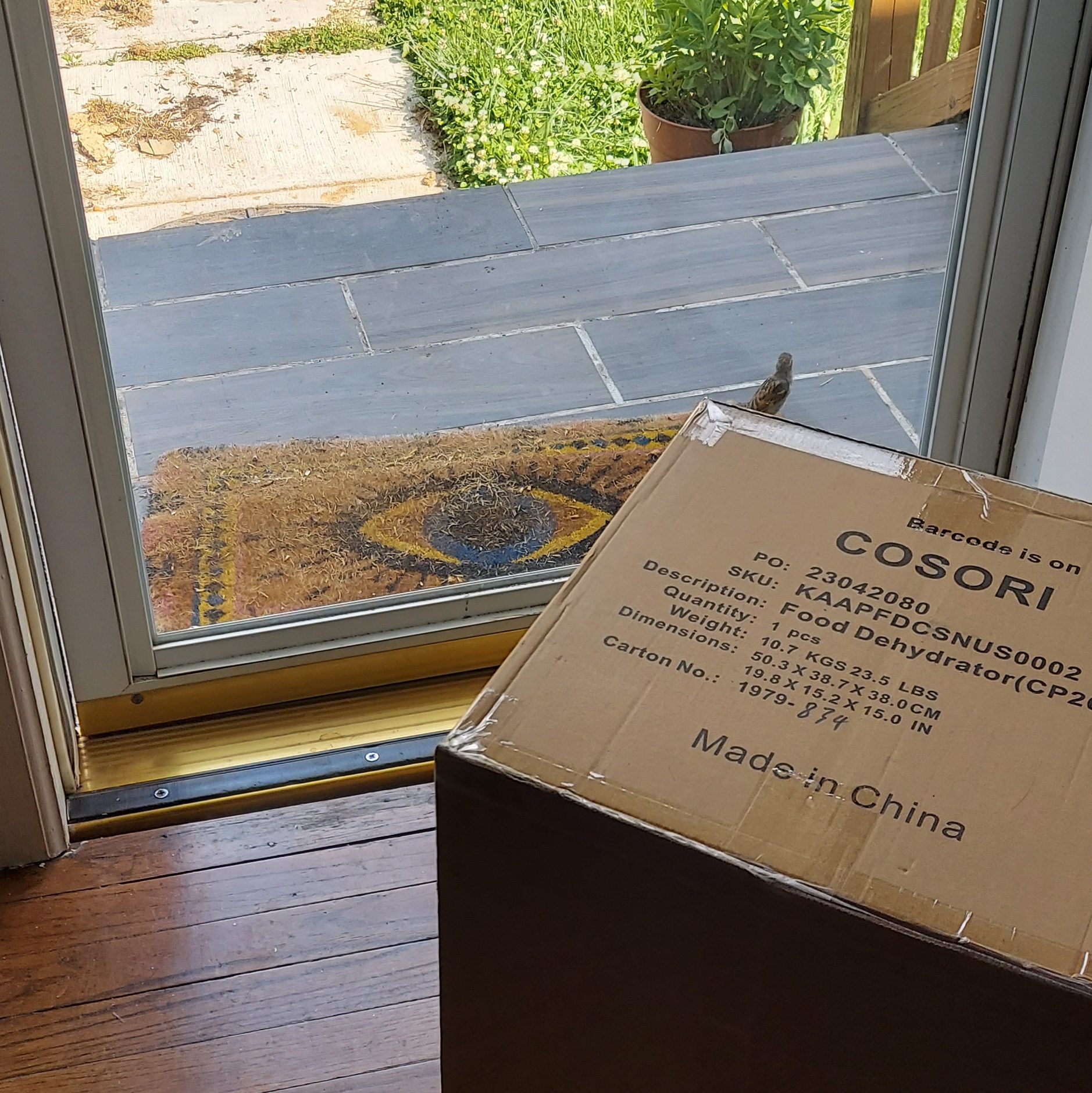
The house sparrows dropped one of their kids off on my porch. It came up and kind of scratched at the door, much to the confusion of myself and the cats.
Kid, where are your parents?!
All of this means that I spend a not-insignificant portion of the day treating the yard like some kind of avian daycare center. I keep the bowls topped up with fresh, cool water, leave fruit and dried bugs where they can forage without going into the road or where neighborhood cats can get them, make sure there aren’t any confrontations, and make sure there are shady spots for them to hide out during the sunniest part of the day. It’s been kind of hot, and the wildfire smoke hasn’t done anyone any favors, so I’ve tried to make things easy on everybody involved. I don’t want the babies to become too used to just scooping up snacks from the bird feeders, though, so I toss them berries and bugs on the grass.
We have a pair of cardinals here, too, but I don’t know what they’re up to just yet. There’s still the side yard and the driveway, so who knows where they’ll unload their brood.
I have to admit, as much as I worry about the babies (are they learning to find food well? Are they staying hydrated? Are they away from cats and snakes?), it’s kind of nice knowing that their parents seem to consider this a safe spot. They’ve even stopped flying far when I go out to refill the feeders and water dishes — the sparrows stay in the apple trees, and the crows hop to the fence and roof until I’m finished. Sometimes, when I sit out there to meditate and get some sunlight, they’ll land on the deck and go about their business anyhow. It’s nice. Being ignored never felt so good.
Pardon the blurriness. I looked up and spied this one watching me and had a fraction of a second to snap a pic before they hopped down to the water dish.
I’ve always had a love-hate relationship with no-poo.
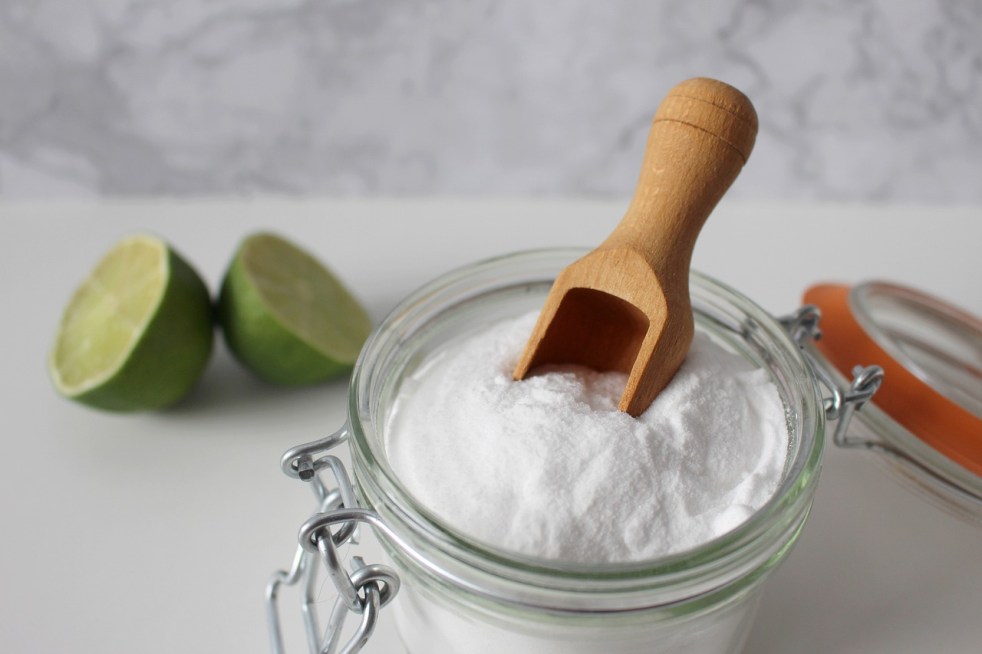
If you’re not familiar, “no-poo” is a hair care method that involves shunning shampoo. This doesn’t mean that you don’t clean your hair, you just do it a little differently. An initial baking soda scrub gets rid of oil, and a vinegar rinse afterward neutralizes it and makes your hair soft and shiny.
Theoretically.
My custodial parent had very different hair from mine, and they weren’t interested in learning the difference or teaching me how to properly care for myself. As someone who was raised to believe that I was just cursed with oily hair and the only cure was copious amounts of shampoo, I’ve always been curious about how people with other hair types take care of theirs. Do they have to shampoo so often, their scalp turns tight and itchy? If not, was it just good luck on their side?
When I still lived in California, I tried no-poo. We had well water, and the water quality was way better than what I’d had before. (This is not a high bar. When I was a kid on Long Island, we had to have our pipes “flushed” yearly or so, and periodically had our water chlorine-shocked. We’d get notices about a week beforehand to warn us that our water was about to get gray, gritty, and nasty for a while. When I lived in Delaware, all the water was just… hard. Really hard.)
The trouble is, no-poo turned my hair into sticky, uncombable clumps glued together with a generous deposit of stearic acid. As it turns out, the water had way more minerals than I anticipated. It took a week for me to get things back to normal again.
I don’t know what made me consider doing no-poo again. Curiosity, perhaps. A sensitivity to a lot of shampoos, maybe. A desire to see if it’d make having trichotillomania easier to deal with.
When I experienced problems before, the prevailing advice was to just use distilled water instead of tap. Since a major part of my initial desire to go no-poo was to avoid plastic, this was counterproductive. Sure, it’s less plastic, but less plastic + a less-than-stellar experience wasn’t really a compelling reason to stick with it.
This time around, I made a solution of baking soda and sea salt for cleaning my hair, then a large jar full of one part vinegar to three parts water to rinse. I’ve also:
Made a rinse potion out of ginger tea and apple cider vinegar. It felt and smelled nice, but I didn’t notice much of a difference between using that versus tap water and vinegar.
Made a rinse potion out of chamomile tea and apple cider vinegar. This was soothing and smelled like apples and bubblegum. Not a huge difference otherwise, though.
Added three drops of cedar oil to the rinse potion. This was overkill and I smelled like hamsters for two days.
Added a drop of frankincense oil to the rinse potion. This was better.
I don’t want to jinx myself, since it’s only been three weeks, but I’m finally enjoying this. My hair is fluffier and softer than it would be with shampoo alone, and much less weighted down than it gets with shampoo and conditioner. Even my partner commented that my hair had a lot more volume than usual.
(I wanted to provide a before-and-after photo here, but all of my “before” photos are of me in various bandanas and other sundry headwear, so they’re of very limited utility. Whoops.)
The most important thing, I think, is that I didn’t wet my hair before applying the baking soda solution. I also didn’t allow the tap water to touch my hair between cleaning and rinsing. That means that the baking soda was neutralized without coming in contact with the high-mineral tap water, so I didn’t turn my hair into sticky clumps of wax. Once everything was neutralized, I had no problem with giving my hair a rinse or two with cool tap water. No distilled water necessary.
My scalp also feels much better. Like, a lot better.
I’m going to stick with it for as long as it continues to work out as well as it has so far. We’ll see how it goes!
If you want to give it a shot, the entire process goes a bit like this. I don’t really measure anything, so all quantities are estimates:
I toss a handful or two (so about two tablespoons) of plain baking soda into a container filled with approximately a cup and a half of warm tap water. Not all of the baking soda will dissolve, and that’s okay.
I pour this over dry hair. Once my hair is saturated, I thoroughly scrub my scalp and work it through the length of my hair.
Now, without allowing any more tap water to touch my hair, I mix roughly a quarter to a third of a cup of vinegar to a cup and a half of warm tap water.
I pour this over my hair to neutralize and rinse out the baking soda.
If I feel like it’s necessary, I can rinse my hair with cool water at this point. I don’t always, since the scent of the vinegar dissipates pretty quickly.
That’s it! The most important part of not getting a head full of sticky residue seems to be carefully avoiding the addition of any more hard water than strictly necessary. This lets the baking soda handle the emulsification and saponification processes (while not as strong a base as lye, baking soda does produce a low enough pH to react with oil) and be neutralized by the vinegar without producing a ton of residue. Mixing the baking soda in tap water appears to be fine, as long as it’s applied to dry hair. Rinsing with vinegar in tap water is also fine, as long as I haven’t wet my hair with plain tap water beforehand.
“Man, that salad outside looks good. I’m almost jealous.”
It’s not really a salad, though. It’s sunflower seeds. Cracked corn. Peanuts. A handful of blueberries and strawberry tops, garnished with an equal handful of cat kibble.
On of the things I love about where I live is that it’s the territory of a family of crows. I don’t know them very well yet, but there are two who stand out: one I call Magni, because he’s the largest, most intimidating, and usually spends his time acting as a sentry for the others. Another, I call Muse. This one’s smaller and doesn’t fly far when I go out to fill the bird feeders — only to the other edge of the deck, where they sit and wait for me to finish. (I call them “Muse” because this behavior means that they’re the easiest member of the family to snap pictures of, so I have tons that I can use for painting references.)
I’ve planted plenty of things that crows like, though that’s mostly just different kinds of berries for now: three elderberries by the big maple tree, dozens of strawberries, four blueberry bushes. The little mock strawberries, embedded in the grass and clover like jewels, I leave alone. They’re not strictly desired, but their bright red berries are still edible and sought after by birds.
As the weather warms up, I see more and more small friends coming to share crow salad. There’re the ubiquitous house sparrows, song sparrows, cardinals, starlings, juncos, and one cocky blue jay. I sit in my kitchen, peering over the edge of the windowsill, to see where they go once they’ve eaten their fill. Kiko and JJ sit on the mat, chattering in their strange little cat language to birds that will never reply.
I’d like to befriend the crows that visit here, but the advice I’ve seen hasn’t been much help. I’ve tried crow calls, but they respond better to my ridiculous sing-song, “Hello, babies!” People say to give them peanuts, but these guys are more excited for cat kibble and odds and ends of fruit. Sometimes, though not often, they’ll sneak an orange tomato from my bush and fly off with it like raven stealing the sun.
This summer, there might be wild pigeon grapes too. Next, there’ll be beautyberry. Hopefully they like those.
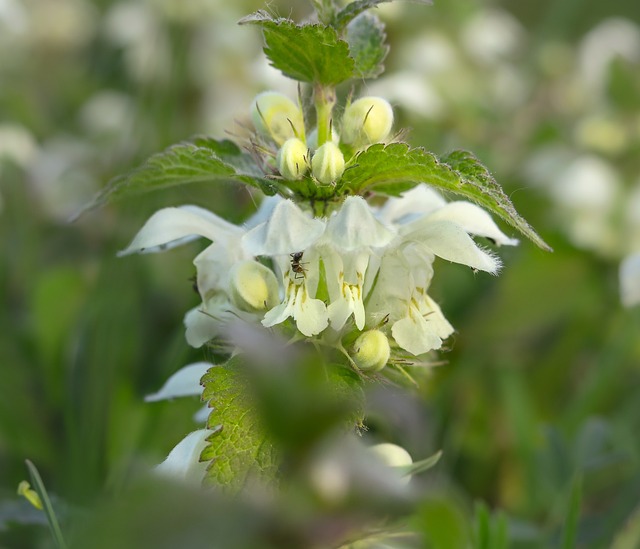
If you have any semi-neglected patches of ground in your life, you may have seen them — short plants with heart-shaped leaves, arranged like low towers accented by tiny flowers. Though they’re not native to this area, they’re pretty abundant. If you’re into controlling invasive plants, you’ll probably be happy to know that they’re also delicious edibles!
Don’t let the name fool you. Dead nettles aren’t poisonous, and they’re not nettles. They’re called “dead nettle” because they look an awful lot like stinging nettle, but their leaves are stingless. In reality, they’re part of the mint family (which probably explains their prolific growth and ability to thrive pretty much anywhere).
One of the best things about these nutritious plants? They’re easy to identify and don’t have any poisonous lookalikes. They’re also useful in all kinds of other ways.
Dead Nettle Folklore
Medically, purple dead nettle is used for allergies. It’s rich in quercetin, and has anti-inflammatory properties that make it useful for people with spring hay fever.
Some areas call it purple archangel, because it appears there around the Feast of the Apparition (May 8th). This was when the archangel Michael was said to have appeared on Mount Gargano, Italy, in the sixth century.
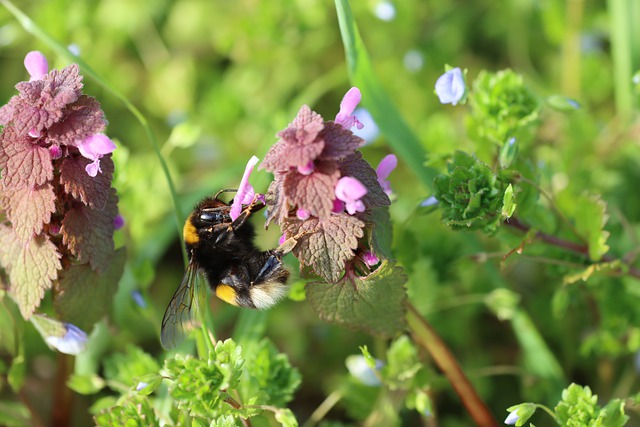
White dead nettle is sometimes called bee nettle. This is because it provides an early source of pollen and nectar, so it’s very popular with bees (and children! Kids sometimes suck the nectar from white dead nettle flowers, kind of like how kids used to suck the honeysuckle flowers that grew on the elementary school’s fence when I was little).
In Lancashire, it was said that white dead nettle flowers always come in twos, because they’re actually pixie shoes that have been left outside. These flowers also have two black spots inside, which are sometimes called “Cinderella’s slippers.”
White, spotted, and purple dead nettles are all used to treat stings from actual nettles. Mash the plant, squeeze out the juice, and apply it to the stung area. You can also chew some of the leaves and apply the resulting paste.
Magical Properties of Dead Nettle
Dead nettle is associated with determination, due to its ability to grow pretty much anywhere. (I’ve been harvesting it from cracks in the concrete, here.) It’s also connected to happiness, optimism, and relief.
Like other members of the mint family, it dries well. Harvest some, hang it upside-down, and put a paper bag around it to keep off dust and catch any dropped leaves or flowers. Once you have some dried dead nettle, you can use it in teas, incense blends, sachets, poppets, jar spells, or pretty much anything else. This small, unassuming herb is fantastic any time you need a hit of joy and motivation.
Dead nettle is also useful in kitchen witchery. Add it to soups, salads, or even pesto to benefit from its magical and anti-inflammatory properties.
This plant also works wonderfully in tinctures, salves, and oils. This is a great way to preserve it well beyond its season.
For now, I’m pulling it out of my raised beds to prepare them for other things. Some will be left for the birds (chickens, especially, seem to love the stuff), and the rest will be brewed into tea, blended into smoothies, eaten fresh, dried, and pureed and frozen in ice cube trays to add to soup or fill out pesto!
Hello! If you’ve been reading here for a while now, you may have come across the Persimmon Quest.
This is an annual quest my partner and I go on every autumn. We call around or visit grocery stores in order to find out who actually has persimmons (preferably the astringent kind, but non-astringent will also do). Then, we purchase and eat massive quantities of persimmons.
The first time I had one was when I still lived in California. It was a Fuyu persimmon (Diospyros kaki), crunchy and sweet, and I was sold. When I had my first perfectly ripe Hachiya, like a water balloon filled with sweet, flavorful jelly, I was smitten. When I realized that one of the trees planted here by one of the former occupants was probably a persimmon, I was ecstatic.
A Druidry group I belong to recently offered a small foraging expedition. One of our members is a biologist, and he’s kind and generous enough with his time to lead seasonal foraging walks. Last spring, we hunted for ramps. Now that it’s persimmon season, we went to track down some trees.
And oh, did we ever.
Several of them were already bare, picked over by wildlife and wind. Some were still laden with fruit that fell at the slightest touch. We picked only the ripest, squishiest ones, leaving the rest to soften in the sun and feed other things.
My partner and I came away with several pounds, which I cleaned and froze for future use. They’re very different from Japanese persimmons — we snacked on a few as we foraged, and it was striking just how much the flavor seemed to vary from tree to tree. American persimmons (Diospyros virginiana) are most similar to Hachiya-type Japanese persimmons, in that they’re very astringent before they’re ripe. When they look like they’re nearly rotten, they’re at their best.
Most of the ones I tasted were almost floral when compared to a Hachiya. Still very sweet and soft (with a slight astringent bite in a few places), but floral like lavender lemonade is floral. The comparatively large seeds got in the way a bit, but I’ve read some interesting recipes for roasting and grinding them to make a coffee substitute. As someone who doesn’t drink coffee, I’m intrigued! If I can get a foraged equivalent for Dandy Blend that isn’t dandelion root, I’ll be excited.
I haven’t yet decided what to do with the persimmons themselves. I might separate the seeds and pulp, then freeze the pulp again in an ice cube tray. I figure, if I want to add them to smoothies, sauces, or desserts, I can just thaw out some cubes of prepared persimmon mush fairly quickly and easily. I could even pop a cube or two in a jar for making persimmon kefir. (One member of the group was considering doing fruit leather but based on my experiences trying to make strawberry leather in the oven, I don’t think I want to tackle that without a dehydrator.)
There was a lot more to see than just persimmons, too. Dogbane (Apocynum cannabinum) with its stringy bark (good for stripping and braiding into twine). Horsenettle (Solanum carolinense) with its bright yellow, tomato-like, deceptively delicious-looking poisonous fruits. Fragrant tufts of mountain mint (Pycnanthemummuticum), gray and brittle with age. The most striking were the coralberries (Symphoricarpos orbiculatus), their tiny, bright magenta fruits standing in vibrant contrast to their bright green leaves.
I found these berries particularly intriguing. As it turns out, they’re a valuable native food plant for birds, grow in shade, can stabilize banks, don’t have any major pest or disease vulnerabilities, and thrive on neglect. I’m still looking for native/non-invasive plants to help feed the yard’s hard clay soil and reverse some of the damage from supporting a lawn, and coralberry fills a very important niche here. From what I have read, coralberries aren’t of much value as food for humans. That’s okay, though. Not everything in the yard has to — or should — be for me to eat.
Plus they are so pretty.
I’m considering growing some mountain mint, too. Like other mints, they can take over a yard. Since they’re a native plant, I think it’ll be easier to keep them at a reasonable level than, say, the old peppermint that’s slowly eating part of the back yard. Interestingly, it’s closer to bee balm (monarda) than it is to peppermint, and there’s a faint bee balm-ness to its scent that gives that away. Mountain mint also attracts an incredible variety of native pollinators and predatory wasps, and is both edible and medicinal. Medicinally, it’s treated almost as a panacea — it’s considered a digestive, carminative, emmenagogue, expectorant, and more, though I haven’t thoroughly researched the active constituents myself yet. If it can serve as a home-grown, native substitute for peppermint tea, I’ll be all for it. The flavor does lead me to think that it’d be great for seasoning poultry or wild game, and I’m eager to try.
That’s what I love about foraging trips. Not only do I come away with tasty food, but I also get a better idea of ways to try to heal the land I’m now responsible for. Seeing a wide variety of native plants shows me what this patch of grass could be and tells me how I can help it get there. I’m excited!
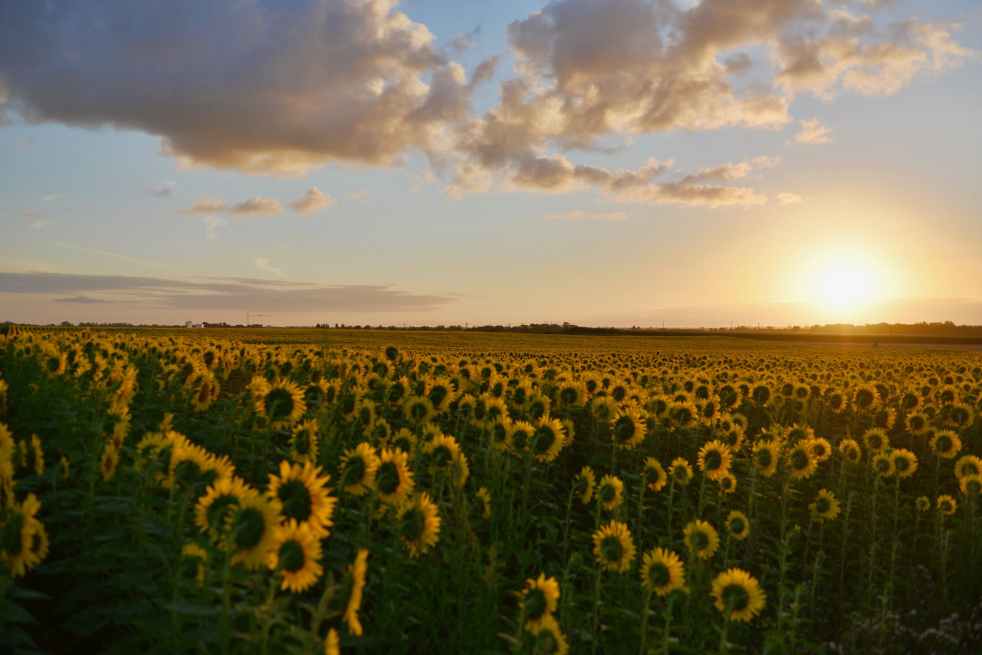
Friday, protesters from Just Stop Oil threw tomato soup over Van Gogh’s Sunflowers fourth version (don’t worry, the painting itself is fine) before gluing themselves to the wall. This was ostensibly a protest against climate change, but it’s left a lot of people with a lot of feelings.
Some are angry at the choice of painting. After all, Van Gogh was poor, mentally ill, a lover of nature, and unappreciated during his lifetime. If there’s an artist likely to align with environmentalism, it’s him.
I’m not here to debate the relative merits of attacking a priceless cultural artifact. The most effective protests are ones that shock and inconvenience us, forcing us to notice things we haven’t considered before. In that respect, this kind of action can be effective. The road to any kind of progress was never paved with politeness and respectability.
The fact is, though, that you have a very limited window of time to convey your message with that kind of action. Once you’ve thrown the soup and whipped out the glue, security is already on their way. You have at best a few minutes to convey why you’re there, what you’re doing, and why people should care. There is no room for confusion. Your window is limited, and your shit needs to be extremely together.
That’s where this ultimately falls apart. At first, I even wondered if it was intentional performance art intended to critique the movement.
It’d be charitable to say that the call to action was a bit muddled. The world should stop allowing new drilling for oil, but also fuel prices should be cheaper so people can heat up soup in the winter. British Petroleum raises fuel prices so they can donate to museums, which leaves people cold and hungry. Since this is theoretically an environmental protest, I’m assuming that the intended message wasn’t supposed to be “BP needs to stop donating to museums and make oil more accessible.” I figure that this wa intended to convey that we need decentralized grids made up of renewables, but there are several layers of abstraction between that message and Van Gogh’s Sunflowers doused in tomato soup.
It also invokes the idea that life is more valuable than art. This is true, but art is also our only record of some extinct species. Life is also a nebulous concept — “life,” in general, will continue. The planet will recover. Human life will not, but that’s always been our fate. The only thing that will outlast us and hold any echo of us, whether our species is taken out by climate change, an asteroid, or simply by evolving into a genetically distinct descendant, is the artifacts we leave behind. Maybe another species will come along to see it, maybe it won’t. In either case, a piece of artwork is a perplexing vehicle ‘for the message the protesters seemed to be trying to convey.
There’s also something very “pink ribbon” about it. I don’t know that there’s anyone in the world who isn’t aware of climate change and the need to switch away from fossil fuels. Hell, even the companies that profit from it know they need to try to cleanse their reputations. That’s one benefit of this protest, though — it did draw attention to the fact that many museums are funded by oil companies (in this case, British Petroleum) in an attempt to make themselves look bett-
Oh.
Still, maybe some oil heirs are sincere in their desire to divest from the industry that gave them their money. Ideally, nobody would accept “blood money” funding from something that’s actively destroying the envi-
Oh.
Ever since “The Merge,” Ethereum touts itself as an environmentally friendly form of cryptocurrency. While this did reduce this specific crypto currency’s energy consumption by 99.9%, it should be noted that its prior consumption was roughly equivalent to the entire country of Chile (which consumes about 73 billion kWh per year). This change is a positive development in the world of crypto, and more currencies should adopt it, but .1% of that is still massive. It’s touted as being good for the environment, but this is a bit misguided — it’s just less of a massive energy sink when compared to its competitors.
This isn’t to suggest that individuals or organizations have to pass some kind of ideological purity test in order to make a statement, but it’s important to remember that they aren’t exempt from scrutiny just because they’re saying something that you agree with. No one is immune to propaganda, and this kind of thing is literally why greenwashing persists. Know who’s cutting the checks.
The whole thing is especially baffling when you consider this that the National Gallery is just a few minutes’ walk away from a British Petroleum office. There’s already a problem with pushing the responsibility for climate change onto individuals rather than the big businesses that contribute the most. Big business, especially oil companies and the fishing industry, love the fact that people focus on making incremental lifestyle changes. While the rest of us squabble about who is and isn’t allowed to use a plastic straw, they get away with (often literal) murder.
It’s no secret that many individuals found the soup-throwing upsetting, but what impact has it had on the key players driving climate change? Why is this action directed at the public? Even if every person at the museum left and wrote angry letters to BP, is boycotting BP’s product something that public infrastructure will actually allow them to do?
There was also concern that one of the protesters flashed what appeared to be a white supremacy hand gesture as she was led away. I haven’t seen the photos or video of this, so I can’t speak to its veracity. It makes me wonder if it was genuinely a white power signal, or if she was trying to make the “OK” hand gesture because a thumb up doesn’t really work in cuffs. (The “OK” hand gesture is now listed as a hate symbol, but this is entirely because a bunch of dipshits on 4chan back in 2017 tried to convince the internet that it was.) Assuming that the accusation of racism is correct, the use of any kind of white supremacist gesture in this context is kind of baffling. Women of color are the group that’s the most negatively impacted by climate change. I guess a white supremacist might want to contribute to the oppression of other people by discrediting the environmental movement? They’re strange concepts to link together in the context of some soup-throwing, I tell you what.
So, here’s an environmental protest, but one that’s funded by oil money and crypto donations. A protest that wants to end the use of oil, but also wants fuel to be cheaper and more accessible. An action that targeted a representational artwork of nature, by an impoverished, mentally ill artist, instead of any of the British Petroleum corporate offices a few minutes’ walk away. One that, like so many actions before it, seems to push the responsibility for climate action on individuals instead of corporate entities.
In the end, I feel bad for these kids. I remember having intense, unfocused passions that I dedicated to causes I strongly believed in (but weren’t always well thought-out). If this was their idea, I hope they can learn and do better in the future. If someone put them up to this, I hope that person is held responsible.
As an artist and environmentalist, it all leaves me with one question: What was the actual end game here?
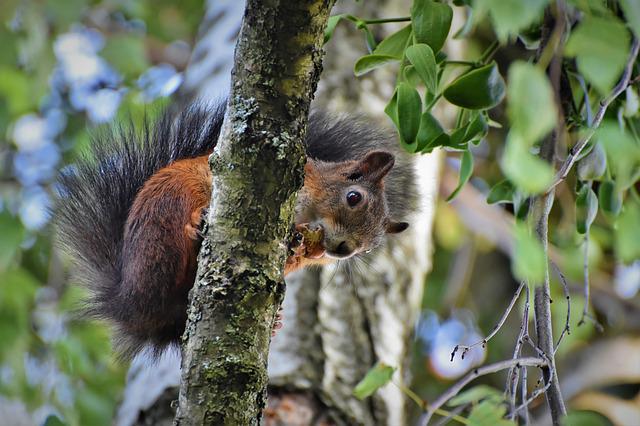
So, remember how I accidentally got a bunch of squirrels hammered a bit ago?
They paid their tab.
Like I mentioned in that previous post, permaculture requires a lot of fallow time, at least initially. There are a few things I could plant, but otherwise it’s mostly observing, identifying what’s already there, and tending to the raised beds in the front yard. In this process, I’ve decided on a few plants that I think will do very well.
So, imagine my surprise when I went out and noticed a bunch of seedlings of these same plants, newly growing adjacent to the squirrel kegger.
Seriously. My delinquents planted tomatoes (so many tomatoes), beans, and a whole host of other plants I’m excited about. It’s late in the season, so I don’t know how well they’re going to do right now, but still. I’m basically feeling like the hillbilly trash Snow White of gardening right now.
It was slightly annoying to have a band of rowdy rodents making and chugging bathtub squirrel gin in my platform feeders, but I’m not even mad. Well done, my dudes.
(I’m still not buying you more cranberries, though.)
I’ve tried to be conscientious in the way I take care of this yard. Permaculture isn’t achieved overnight — it can take up to a year of just observation to understand what should actually go in a space, and what arises naturally. While I’ve been on a crusade to get rid of a lot of the less-useful, non-native plants that were introduced here, I’ve tried to balance this with working slowly, patch-by-patch, and providing more sources of food, water, and habitat to replace what I’ve removed, and then some. (I even found and transported a yellow woolly bear caterpillar from a soon-to-be-doomed spot in the front yard, to a thriving bee balm plant in the back.)
Still, until I’m able to provide more food plants and water sources, I figured I’d put out some simple platform feeders. I’d already noticed bees descending on my yard after I watered the raised bed there — even when nothing had been planted yet, they were attracted to the water. Thirsty little buzzy people bobbed from tiny puddle to tiny puddle, eagerly drinking it up and trying to beat the heat. A platform feeder, I figured, would allow me to provide some water sources and a little bit of food for the larger guys out there.
I started fairly simply. I threw in a handful or so of sunflower seeds and some sulphite-free dried cranberries that I’d had laying around for a while, and put a bit of fresh water in the water dish.
Then I forgot about it. I mean, I had a lot of other things to contend with, like my war against lawns as a concept (and this lawn specifically). It was after a few days of rain and a bit of a hot spell that my partner called me into his office.
“Those feeders are really busy!”
“Yeah?” I asked, leaning in to peer out of the window overlooking the deck.
“Yeah! There’ve been a bunch of squirrels there all day!”
“Huh. Weird, they weren’t paying any attention to it befo-”
I squinted at the squirrels as it all clicked. Fruit. Water. Heat. The feeders didn’t collect rainwater, but it had rained enough to make those dried cranberries plump and juicy. The warmth just helped the sugar, water, and natural yeast along.
“Oh, shit,” I muttered.
Those hairy little delinquents were doing shots of fermented cranberry on my deck.
There was an excellent reason why these fruits, long ignored and forgotten about, were suddenly teeming with squirrels. Glassy-eyed squirrels. Glassy-eyed squirrels with burgeoning alcoholism.
Through my own negligence, I had managed to create some kind of speakeasy for squirrels. And they were having a fantastic time. Fantastic enough that I hesitated to rush out and try to chase them away from their ersatz kegger. (I mean, I don’t know how many drunken squirrels it’d take to kick my ass, but I knew how many they had on their side.)
I haven’t yet found any of them nursing tiny hangovers or passed out in the grass, but I still discarded the old fruit and put out fresh cranberries. If they liked dried fruit, they could have those.
Then I noticed that they were putting them in the water dish next to the feeder, presumably to create some kind of backyard rodent pruno.
I’m a little worried about what’s going to happen when I run out of cranberries, to be honest.
I mean, I can appreciate a carpet of grass from an aesthetic perspective, but only because I find its unnatural smoothness and homogeneity both pleasing and unsettling. If the Uncanny Valley has plants, they are all putting green grass.
When we purchased this place, we also become responsible for several thousand square feet of lawn. I should probably put lawn in scare quotes, because it’s less “lawn” than it is an amalgamation of grasses and weeds that look just enough like grass from a distance. The “Hello, fellow kids” of grass, if you will.
Grass is also a major drain on the local environment here. While its vital to areas like the African savannah, keeping it lawn-perfect requires too much water, fertilizer, pesticide, and either gas or electricity to mow. I say “too much,” because grass gives virtually nothing back when it’s confined to a postage-stamp of lawn. You can’t eat it, it’s too short to weave into anything useful, and mown grass is too tiny and insubstantial to make decent fuel. Lawns aren’t even good at feeding wildlife. If grass were allowed to go to seed, it could feed birds, but maintaining a lawn means cutting it short long it before it gets to that point. All lawns do is take, take, take. In a place where droughts are likely to become both more severe and commonplace, and habitat loss drives away native species, lawns can suck it.
Shown: The only useful purpose for a lawn.
Besides, all grass lawns are are socio-economic symbols. The ability to use a property for aesthetics and leisure alone signifies a certain level of economic security, which, back in History Times, was pretty much a form of rich people gloating. Turning the land around your fancy estate into an immaculate green carpet meant that everyone could see and marvel at your fancy estate. Having a grass lawn around your house, as a concept, is pretty new.
“But j,” you might be saying, “Flowers are grown for aesthetics, too!” This is true, but not entirely. Flowers are pretty, but they also feed pollinators. Grass is wind-pollinated, so it barely even feeds bugs. Flowers are also often the precursor to edible fruit. Even roses fruit, and they’re good for you!
I have a patch of soil at my disposal, so it feels more responsible to use it for the production of either food (if not for humans, than for wildlife) or native habitat. I don’t have a homeowner’s association, so nobody can tell me what to do with the dirt and I am free to create the habitat my wretched little goblin heart desires.
I also have very specific feelings regarding the stewardship of a yard. It’s land that was taken, carved into a suburb, had all of the native flora scrubbed off of it, and made to grow a boring, repetitive lawn. It just feels more respectful to the people, plants, and animals who once called it home to turn it back into something… I don’t know. More nourishing. Less sterile. More diverse. Abundant. Comfier. Sustainable, and sustaining in turn. Even if I live here until I die, this place will outlast me. I gotta do right by it.
I’m fortunate that not everything here is grass, though. On the margins of the property, you can see where the people who lived here before made a mark. There’s a rose bush, rue, a potted sedum, crape myrtle, and azaleas. Tucked away, there are some blueberries, an apple tree, a young persimmon, and a red maple. Like islands in squares of lawn, there are two tiny, tiny Japanese maples.
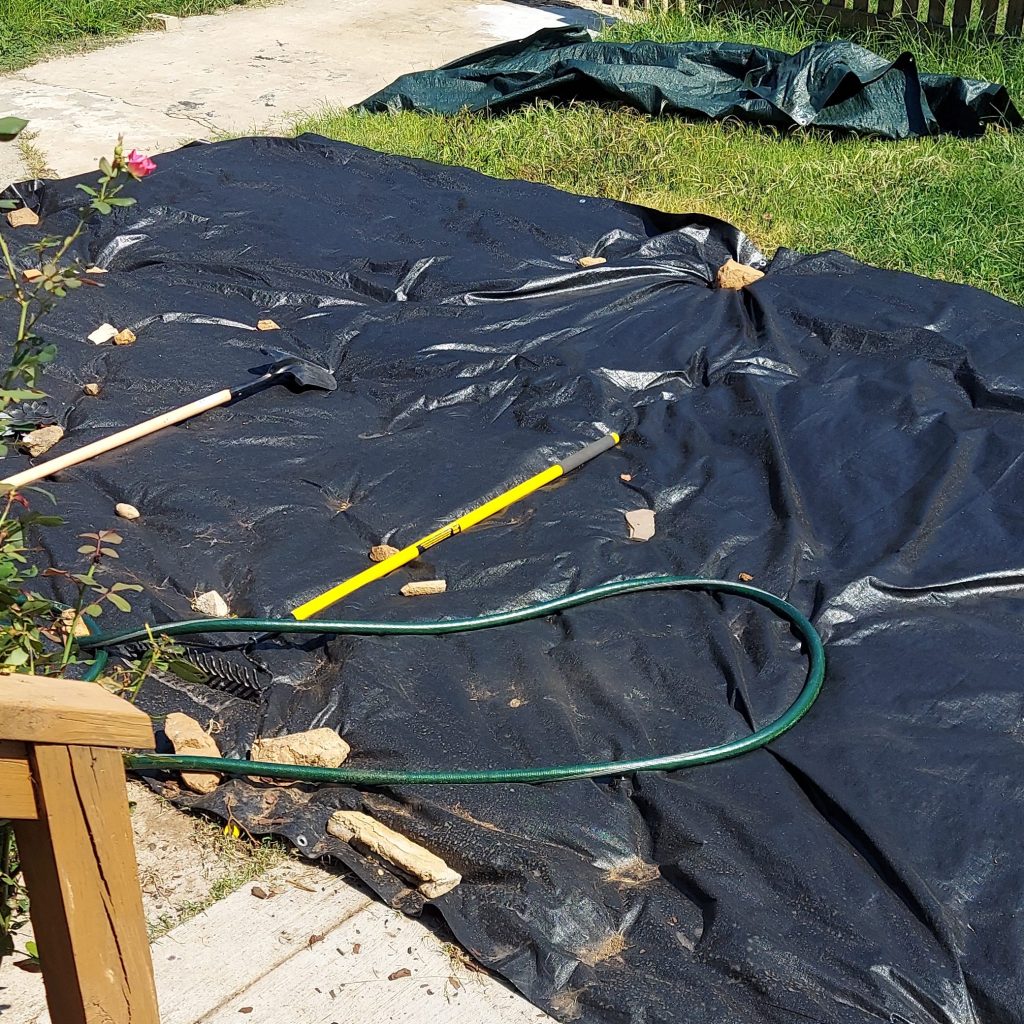
All of this is to explain why most of my front yard is currently a black tarp. Even if we’d needed to have a grass lawn for some reason, the front yard is about 50% actual grass, and 50% other kinds of plants (mostly invasives) that just kind of moved in when the intense light and heat killed off patches of the grass. Doing anything useful with the grassy areas pretty much involves going scorched earth — literally.
This is the gardening equivalent of having a rusted-out truck up on blocks in your driveway.
I spent a lot of time researching different ways to get rid of — and subsequently replace — an entire lawn, and this is the solution that seemed to be the best for our situation. A black tarp, when placed over closely cropped grass, captures a lot of heat. This, coupled with the deprivation of moisture and sunlight, kills the plants under it. They break down over a period of weeks, and you get a nice, nutritious patch of soil for growing better plants on. Right now, the plan is to replace everything with a mixture of sun-loving local groundcovers and plants that can pull double-duty as ornamentals and sources of food — Passiflora incarnata, for example, which produces these amazingly alien-looking blooms followed by tasty fruit. I’d also like to adopt the custom of growing edible plants near front gates and fences for passers-by. Even if people don’t want them, the birds will.
The tarp thing is just one method of grass assassination (or grassassination, if you would). We’re also using the “lasagna method” in other areas, which entails mowing the grass short, covering it in layers of paper and cardboard, and smothering that in compost, mulch, and soil. The grass dies, it and the paper break down, and you’ve got the foundation for a very fancy raised bed. (So far, this method is working very well for some bee balm and elderberry plants I put down in one corner of the yard, but more on that another time.)
So, if you’ve been reading here and wondering why I haven’t been posting, it is not because I’ve been kept busy with paid writing or have abandoned society and gone on a bender in a forest. I have been battling one of my greatest foes: LAWNS.
This is for that summer you made me spend on prednisone, you little green S.O.Bs.













 Marble Crow