Every summer, a Druidry group I am part of gets together to grill, tell stories, sing, and swap goods and gear. Some of these are things we’ve made (like artwork or preserves), some are things we’ve grown (like plant starts and seeds), and some are things we’ve purchased, and want to find a new home for. I’ve taken home books, macrame plant hangers, sculpture, watercolor art, camping gear, oracle cards, some vintage Le Creuset, and one very unique tool.
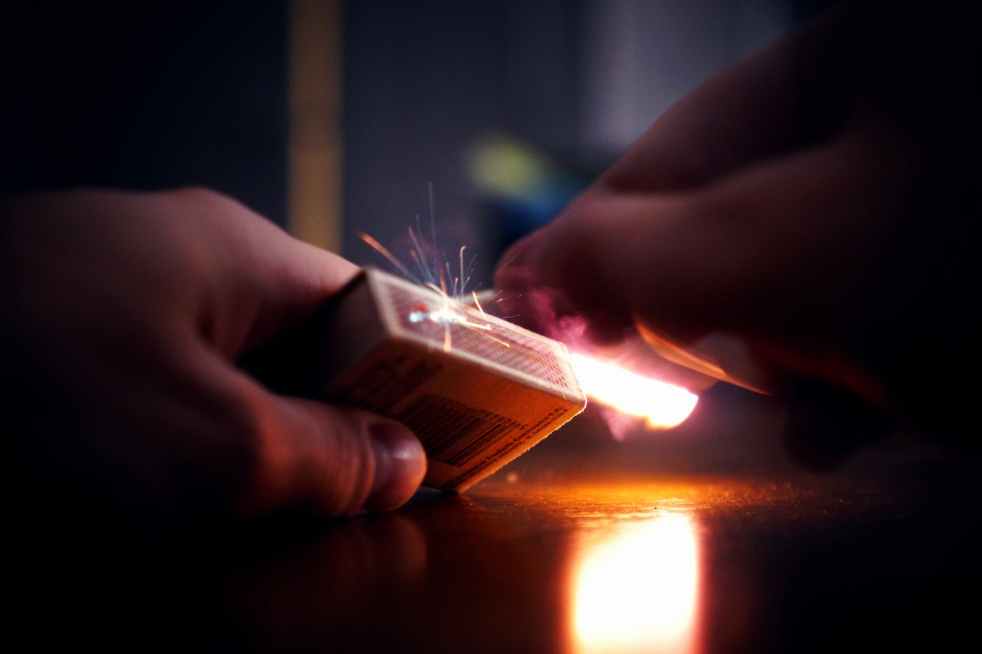
This is the Spark Magic box. It describes itself as a way to “[k]indle that inner spark,” and carries this idea through the prompts themselves. They’re all derived from various creative and spiritual practices, with a bit of self-care mixed in, printed on 50 cards shaped like matches. This makes it easy to shuffle through them just by shaking the box, plus the match design is just a really fun, unique idea.
This isn’t your standard oracle deck or list of journaling prompts, however. There are some writing prompts, of course, but this box also contains ideas for physically and mentally taking care of yourself, beautifying and enhancing the health of your immediate environment, and cultivating a regular practice to help you feel empowered and self-fulfilled.
Personally, I like it a lot. I often experience periods where I feel sort of dull and lifeless (enhanced, no doubt, by cyclothymia). While the prompts in here aren’t a substitute for a therapist, the ideas are usually pretty good at helping me to re-engage with practices that I’ve allowed to fall by the wayside. They help me feel more enthusiastic about doing stuff again. I feel like they’ve been much more helpful in this regard than the usual lists of self-care suggestions and journaling prompts that I see online.
Part of this may be due to the structure of the deck itself. It’s not a pick-and-choose list of things to do — there’s an oracle deck-style element to it. Part of the fun isn’t just drawing a match and seeing what it says, it’s taking some time to think about why I’ve drawn the specific match that I did. This also makes it fun to combine with tarot or oracle readings.
Would I recommend this? Yes, absolutely. If you’re someone who feels like they could use a little boost or some inspiration now and then, Spark Magic may be helpful for you. At $12.95, it’s also pretty inexpensive. If you like cartomancy, try combining Spark Magic with your oracle or tarot readings as a fun, interesting way to gain more insight.
With so much snow on the ground, it’s been even easier to keep track of all of the visitors to the front and back yards. From the efficient single-track prints of stray cats, to snowshoe prints of rabbits, to the rodent tracks ending in the sudden whump of an owl, they all stand out starkly in fresh snow.
For example, these prints by resident Absolute Unit Frederick de Bonesby, the gray squirrel.
The weather is warming up bit by bit (it’s supposed to be in the 60s F this weekend, go figure), so the snow isn’t long for this world. With that in mind, I thought this might be a good time to look at different folk beliefs and folk magic practices involving animal tracks and footprints.
Footprint Magical Uses and Folklore
Unique footprints and strange feet are a defining characteristic of many cryptids and folk monsters:
The Tupi-Guarani people of Brazil have the Curupira (Tupi for “blister-covered”), a kind of demon with fiery red hair and backwards feet.
The Scottish have the glaistig or maighdean uaine (“Green maiden”); a gray skinned, blonde-haired woman with a long green skirt to hide her goat legs.
In Madagascar, there is the Kalanoro. This is a humanoid cryptid described as a small, hairy person with red eyes and backwards-facing legs and feet. While they are said to have once lived in corporeal forms, habitat destruction has left only their spirit forms behind.
In the Himalayas, there are Abarimon (“mountain-dweller”). These are said to be vicious humanoids with backwards feet who lived solely in a single mountain valley. While Abarimon were dangerous, they could only breathe the air of their valley home, and thus were unable to ever leave it.
In Trinidad and Tobago, there is the Douen. This entity is another humanoid with backwards facing feet but has the distinction of also lacking any facial features other than a mouth. If they hear a child’s name, they are said to be able to mimic the parents’ voices, calling to the child to lure them into the forest. Douen may be related to the duende, humanoid spirits from Spain and Latin America.
In Australia, there’s the Yowie. This is a tall creature covered in dark hair, often said to have backwards-pointing feet.
The Dominican Republic has La Ciguapa, a lovely wild woman with long, dark, silken hair, beautiful bronze skin, and backwards feet. While small, she is perfectly proportioned and incredibly agile. She’s said to use her beauty and agility to prey on those who are foolish enough to venture into the woods — her domain — alone.
On the Indian subcontinent, there are ghosts known as bhuta. These can shapeshift into any animal, but often appear as perfectly normal humans — save for their backward-facing feet.
To be honest, you’d probably be hard pressed to find a culture that doesn’t have some version of “cryptid whose main thing is having weird feet.” Many of them serve as cautionary tales against wandering dangerous places alone, especially for children. They’re the personification of situations that seem perfectly safe, or even nice (like meeting a beautiful woman on a walk in the woods), and lure you in before you notice the danger that you’re in (like the fact that she’s a cannibalistic cryptid with weird feet). Across cultures, the message here is also pretty consistent: Stay away from strangers, and out of the wilderness at night.
In northeastern Tanzania, there are a series of incredibly ancient footprints set in stone. These point to two small groups of hominids (likely members of Australopithecus afarensis) traveling in the same direction. The Maasai people associate these footprints with Lakalanga, a hero so big that he was said to leave footprints sunk into the ground wherever he walked. He is said to have helped the Maasai win a battle against a neighboring enemy, long, long ago.
In South Devon, England, a heavy snow fell in the winter of 1855. The next day, and for two days after that, mysterious sets of very hooflike marks appeared. They were in single file, roughly 4 inches long by 3 inches wide, and managed to cover a total area of about 40 to 100 miles. Strangely, these hoofprints didn’t seem to care about obstacles — they traveled straight over fences, hedgerows, walls, and even houses. Called the “Devil’s Footprints,” hypotheses for their appearance range from experimental balloons to kangaroos… But there’s still no accepted explanation.
In some magical traditions, footprints are used for sympathetic magic. Any spell benefits from the addition of something belonging to the target — a nail clipping, a lock of hair, or a scrap from their clothing, perhaps. (I once managed to pull something off by getting a target just to touch a grass poppet that I’d made, but that’s neither here nor there.) In the absence of these, footprints often suffice.
Some magical powders, like the hot foot powder used in Hoodoo, are sprinkled into a person’s footprints to control their actions. This derives from the traditional West African practice of foot track magic, brought to the Americas by the transatlantic slave trade.
Reading animal tracks is also a method of divination. While augury was traditionally divination using the flight paths of birds, you can also gather omens from the number, direction, and maker of tracks you come across.
These belong to a stray cat. Cats conserve effort when walking trough snow by placing their hind feet directly in the prints of their forefeet.
When it comes to divination using a human’s footprints, the practice is called “ichnomancy.” This comes from the Greek “ixnos,” meaning “footstep,” and “manteia,” meaning “method of divination.”
Using Footprints
Divining with footprints can be a little difficult, since you need to be able to read them in a mundane sense first. For example, deep footprints indicate a heavy load. Widely-spaced ones indicate a long stride, perhaps someone running. The different depths of the impression in the heel and ball of the foot areas can also tell you different things.
My first suggestion for working with animal tracks and footprints is to familiarize yourself with what you’re likely to encounter. If a deer walked through your yard, what would it look like? How about a dog, or a bear? What impressions does it leave when a bird of prey scoops up a rat, or a squirrel? Consider your connections and associations to each of these creatures. What would their appearance mean to you?
Next, consider their other qualities. Movement to the left is often considered an ill omen, while the right is considered a positive one. For example, seeing the tracks of a bear or mountain lion moving quickly toward your left could be an omen of danger. Seeing the tracks of an animal you have a positive connection to, moving at a leisurely pace toward your right, could be a very good omen.
Working with footprints in a magical context is a bit different. You can collect the dirt from within a footprint and use it to target a spell toward whoever left the footprint. You can also sprinkle magical powders or crushed herbs in someone’s tracks, or over a place where you expect them to step. (There are far too many magical powders to enumerate all of their uses and qualities here, unfortunately. Since this is a method frequently employed by Hoodoo practitioners, you may wish to consult with one for more information. Many online sellers of Hoodoo supplies offer consultations and can answer your questions on foot track magic.)
As for me, I love seeing fresh tracks in the snow. It’s a reminder that, while the outdoors seems to sleep under its cold, fluffy comforter, there’s still plenty happening. Tracks also give me another way to gauge the way everything’s activity increases as we inch closer to spring. I look forward to seeing tracks in the mud and snow just as much as I look forward to seeing new faces at the feeders and in the fruit trees.
I love divination. Back when I’d just started learning, I knew that divination — more than any other magical skill — was something I wanted to become good at. I have different tarot decks that I use for different purposes, oracle decks, Lenormand cards, a set of ogham staves, a set of runes, a scrying bowl, and multiple stones that I use for crystal scrying. There’s just one problem: What do I use?
I used to get tripped by that a lot. Which method was going to be easier? Which was going to be more explicit? Which would be more accurate?
Why not use them all?
At first, I hesitated. Admittedly, some part of me was afraid that reading multiple divination methods would give me answers that were confusing at best, and contradictory at worst. It seemed like an easy way to end up concluding that divination wasn’t telling me anything useful to begin with.
Nonetheless, I pushed on. It had to be worth a try, right? In retrospect, I’m very glad I did.
When I have a very pressing question, I do a lot. I cast a rune and an ogham stave. I read a tarot spread of my own devising. I draw an oracle card. I scry in a stone or bowl. I go outside and see what the birds’re doing and what the trees have to tell me. I drop into a trance and see what bubbles up to the surface.
And every time, it paints a very clear, coherent picture.
How to Combine Divination Methods
Each method has its own use case and emphasis, so how do you put all of that together?
The trickiest part is viewing each method in their own cultural context. Many guides to runes and ogham, for example, have simplified the meanings to the point where they’re very far removed from their original* interpretation.
(* Or allegedly original. There are large gaps in our historic knowledge of how some divination methods were used, which adds to the confusion. One example of this is the ogham forfeda. Is Mor the beech, Scots pine, or the sea?)
The lack of consensus means that it’s not really doable to just jump into multiple different divination methods and combine them immediately. It’s important to work with each one separately, to learn its limitations and develop a kind of personal interpretation of its meaning. This doesn’t mean that you have to reinvent the wheel by discarding all of their conventional interpretations, but I highly recommend keeping a divination record that allows you to look back and see how each reading turned out. This can show you what cards, runes, symbols, and so forth tend to show up for you, and when.
After that, the only question is what order to put everything in. Personally, I enjoy laying out the tarot spread first, then ogham, then runes, and finally an oracle card. Once I have this story before me, I consult nature and, if need be, scry or enter a trance.
Putting the results together is honestly the easiest part. Here’s how things shake out for me:
Tarot tends to show me the “why” of a situation — what feelings, mindsets, energies, and hidden facors are bringing something about.
If I use Lenormand, it tells me the “what.” While it might seem like that would be extremely useful, I usually skip Lenormand reading. Believe it or not, knowing what happens is usually a lot less important than knowing all of the other stuff. Think of it like being told the future by a genie who’s a bit of a prick — knowing what isn’t as helpful as knowing why, how you’ll feel about it, and what you need to do to.
Runes usually highlight the most important connecting concepts that unify the whole for me.
Ogham usually tells me what to do or focus on.
Oracle cards generally offer reassurance, or a way to look at the bright side and get through a difficult situation.
Nature augury tells me if a situation is generally positive or negative. If something very unusual appears to me, it can give more specific information akin to ogham reading.
If this sounds like a lot of work, it certainly can be! It’s also very rewarding, and even a bit thrilling to see everything come together.
If this interests you, but you don’t want to perform it yourself, that’s totally understandable. This is one of several readings I can do for you, if you like. Just check out my shop!
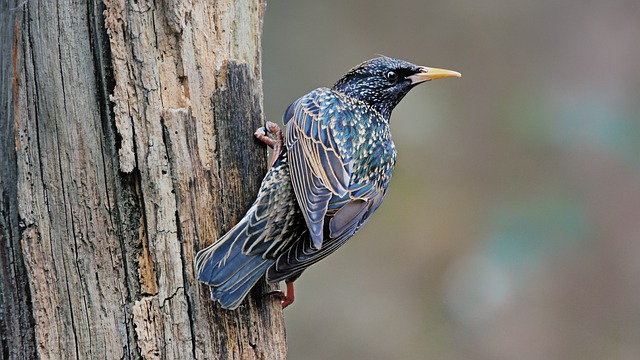
Since there are still small, belligerent starlings all over the yard, I figured I’d make the best of a very noisy situation and write a bit on their magical significance. While I mostly know them as small weirdoes who periodically walk up to me and gape to be fed (which is almost admirable in its temerity, to be honest), they’re powerful, sacred animals in their own right.
Starling Folklore
Despite their ubiquity in my area, starlings aren’t native to the United States. The story is that they were brought here in the late 1800s in what is, perhaps, the silliest fashion imaginable. A German-American Shakespeare enthusiast named Eugene Schieffelin wanted the US to have all of the birds mentioned in Shakespeare’s plays, so he imported and released about sixty to eighty of them. (Invasive species who?) However entertaining this tale might be, it most likely isn’t actually true.
Shakespeare’s mention of starlings refers to their talent at mimicry:
Nay,
I’ll have a starling shall be taught to speak
Nothing but “Mortimer,” and give it him
To keep his anger still in motion.
spoken by Hotspur, in Act 1, Scene 3 of Henry IV
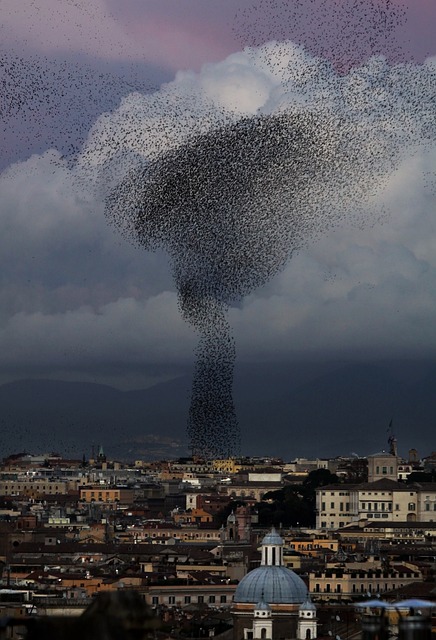
In Rome, however, starlings were more than a curiosity or a passing note in a play. Starlings form very large, elaborate migrating flocks called murmurations. These are exceptionally striking formations of thousands of individual birds who seem to cover the sky in a flowing, undulating mass. Augurs, diviners who read the movement of birds, would watch these murmurations to receive messages from their gods. Some forms and flows were very good omens. Others, not so much.
In the Welsh Mabinogion, Branwen is sent to Ireland to marry King Matholwch . Her marriage is far from happy, however, so she tames a starling and teaches it to speak. She sends the starling back to Wales, where it alerts her brother Bran to come and save her.
Starlings can mimic far more than words. Mozart kept one as a pet, and it learned to repeat portions of his compositions. When it died, he was heartbroken. He performed a funeral that his biographer (and wife’s second husband) described thus:
When a bird died, he arranged a funeral procession, in which everyone who could sing had to join in, heavily veiled – made a sort of requiem, epitaph in verse.
Georg Nikolaus von Nissen
Starlings also seem to imprint readily on people. Personally, I have made every attempt to avoid them, however their babies still don’t seem to have any issue strolling up to me with their mouths open, expectantly. It’s kind of like walking up to a grizzly bear and demanding spaghetti.
In general, the starling’s place in folklore seems to have been secured by their ability to bond with people, and their talent at mimicking speech and other sounds they encounter. Just watch this one, who not only imitates a human, but flawlessly mimics an Alexa unit immediately afterward:
It’s almost eerie!
The Symbolism of Starlings
Starlings are said to represent everything from freedom, to prosperity, to love. Given their folklore, they’re most strongly connected to communication and divination.
To divine using a flock of starlings (or even just one, though they always seem to show up in groups!) involves noting their number and behavior. It can sometimes be hard to count starlings, particularly since they can number in the thousands within a single murmuration.
If you observe them in flight, like the ancient Romans, pay attention to the shapes they form. What do they evoke for you?
Note the direction in which they’re flying. This means both the cardinal direction, and their relative direction. The east represents beginnings, renewal, spring, and the dawn. The south represents a climax, an apex, summer, and high noon. The west represents a decline, a release, autumn, and twilight. The north represents endings, death, winter, and midnight.
In terms of relative directions, birds flying to the right generally indicates a positive or affirmative response. Birds flying to the left generally indicates a negative response.
As with any divination method, keep a journal of what you see and your interpretations. After some time has passed, revisit what you wrote and see how accurate it was. This can help you decode what the flight of birds means specifically to you.
Starlings are polarizing little guys. Some people absolutely love these noisy, funny little birds, while others hate them. I’ve come to be amused by their antics, though I’m also looking forward to when their fledglings are finally grown and it’s time for them to migrate!
Since there are still small, belligerent starlings all over the yard, I figured I’d make the best of a very noisy situation and write a bit on starling symbolism and magical significance. While I mostly know them as small weirdoes who periodically walk up to me and gape to be fed (which is almost admirable in its temerity, to be honest), they’re powerful, sacred animals in their own right.
Starling Folklore
Despite their ubiquity in my area, starlings aren’t native to the United States. The story is that they were brought here in the late 1800s in what is, perhaps, the silliest fashion imaginable. A German-American Shakespeare enthusiast named Eugene Schieffelin wanted the US to have all of the birds mentioned in Shakespeare’s plays, so he imported and released about sixty to eighty of them. (Invasive species who?) However entertaining this tale might be, it most likely isn’t actually true.
Shakespeare’s mention of starlings refers to their talent at mimicry:
Nay,
I’ll have a starling shall be taught to speak
Nothing but “Mortimer,” and give it him
To keep his anger still in motion.
spoken by Hotspur, in Act 1, Scene 3 of Henry IV
In Rome, however, starlings were more than a curiosity or a passing note in a play, and starling symbolism was a important thing. Starlings form very large, elaborate migrating flocks called murmurations. These are exceptionally striking formations of thousands of individual birds who seem to cover the sky in a flowing, undulating mass. Augurs, diviners who read the movement of birds, would watch these murmurations to receive messages from their gods. Some forms and flows were very good omens. Others, not so much.
In the Welsh Mabinogion, Branwen is sent to Ireland to marry King Matholwch . Her marriage is far from happy, however, so she tames a starling and teaches it to speak. She sends the starling back to Wales, where it alerts her brother Bran to come and save her.
Starlings can mimic far more than words. Mozart kept one as a pet, and it learned to repeat portions of his compositions. When it died, he was heartbroken. He performed a funeral that his biographer (and wife’s second husband) described thus:
When a bird died, he arranged a funeral procession, in which everyone who could sing had to join in, heavily veiled – made a sort of requiem, epitaph in verse.
Georg Nikolaus von Nissen
Starlings also seem to imprint readily on people. Personally, I have made every attempt to avoid them, however their babies still don’t seem to have any issue strolling up to me with their mouths open, expectantly. It’s kind of like walking up to a grizzly bear and demanding spaghetti.
In general, the starling’s place in folklore seems to have been secured by their ability to bond with people, and their talent at mimicking speech and other sounds they encounter. Just watch this one, who not only imitates a human, but flawlessly mimics an Alexa unit immediately afterward:
It’s almost eerie!
The Symbolism of Starlings
Starlings are said to represent everything from freedom, to prosperity, to love. Given their folklore, starling symbolism is most strongly connected to communication and divination.
To divine using a flock of starlings (or even just one, though they always seem to show up in groups!) involves noting their number and behavior. It can sometimes be hard to count starlings, particularly since they can number in the thousands within a single murmuration.
If you observe them in flight, like the ancient Romans, pay attention to the shapes they form. What do they evoke for you?
Note the direction in which they’re flying. This means both the cardinal direction, and their relative direction. The east represents beginnings, renewal, spring, and the dawn. The south represents a climax, an apex, summer, and high noon. The west represents a decline, a release, autumn, and twilight. The north represents endings, death, winter, and midnight.
In terms of relative directions, birds flying to the right generally indicates a positive or affirmative response. Birds flying to the left generally indicates a negative response.
As with any divination method, keep a journal of what you see and your interpretations. After some time has passed, revisit what you wrote and see how accurate it was. This can help you decode what the flight of birds means specifically to you.
Starlings are polarizing little guys. Some people absolutely love these noisy, funny little birds, while others hate them. I’ve come to be amused by their antics, though I’m also looking forward to when their fledglings are finally grown and it’s time for them to migrate!
I don’t like Black Friday. Part of it comes from several years of retail work, part of it comes from reading way too many stories of people getting shanked over Elmo dolls and discount TVs. It sucks for workers, it sucks for shoppers, it just sucks all around.
So, when a Meetup group I’m in posted a late afternoon hike this past Friday, I was more than happy to do that. The weather didn’t look promising, but there’s no such thing as bad weather — just the wrong clothes. As long as it kept me from being bombarded with reminders of Black Friday, I would’ve hiked in a storm.
This came right after a Zoom session about the role of walking as a spiritual practice. It was a really enjoyable discussion, and I was intrigued by the number of different roles it seems to occupy for people. I never really gave walking much thought — it’s part of my spiritual practice, but not one I really had to devote brainspace to, if that makes sense. Some talked about entering a kind of flow state, where the walk itself was a way to disconnect from the body. For others, walking was the opposite — a chance to focus on mindful movement, and quiet the mind. It all depends on what you need from it. Will walking be an external practice, or an internal one?
For me, it’s always been a weird form of augury. I don’t want to use the phrase “connect with nature,” because I feel like the wellness movement has worn it pretty thin. Really, it’s a way to make friends, as long as your definition of “friends” is flexible enough to include fungi and holes in the ground. If I meet a lot of new friends, it’s a pleasant walk and a good omen. If I don’t, it isn’t.
It can be a more specific divinatory practice, too. I know it’s not uncommon for people experiencing a lot of synchronicities (angel numbers, and the like) to ask for a sign or some kind of answer. Asking for one, then going out for a walk to see what you get is a useful form of divination. It’s definitely easier than trying to find a haruspex in this day and age.
It’s also a gratitude practice for me. I’m not about to get all gratitude journal on you, but, after spending several years too sick and deconditioned to do much of anything, I feel like the best way to express thanks for still having a mostly-functioning body is to use it for stuff.
We started out by meeting up in a parking area near one of the picnic groves. (There are trails all over this area, so you can pretty much start walking in any direction and end up on one.) It was really good to finally meet some of the people I’d only be able to speak to on Zoom calls, and the hike itself wasn’t too tough — three miles start to finish, through trees that helped cut some of the blustery wind and whose leaves lit up like lanterns once the sun sank below the lead-colored clouds. The air was scented with the vaguely spicy smell of gently decaying leaves, and so cold that I could feel it like a razor every time I reached the top of a hill.
Which is exactly how I ended up having to stop and catch my breath a bunch of times, wrestling with my jacket to pull out the carton of warmish coconut water I’d kept snuggled against my chest like a newborn. Fortunately, I brought a bandana-style mask with me. It helped warm the air before I breathed it in, which made things a bit easier, and also allowed me to pretend to be normal while actually gasping like a malfunctioning Billy Bass.
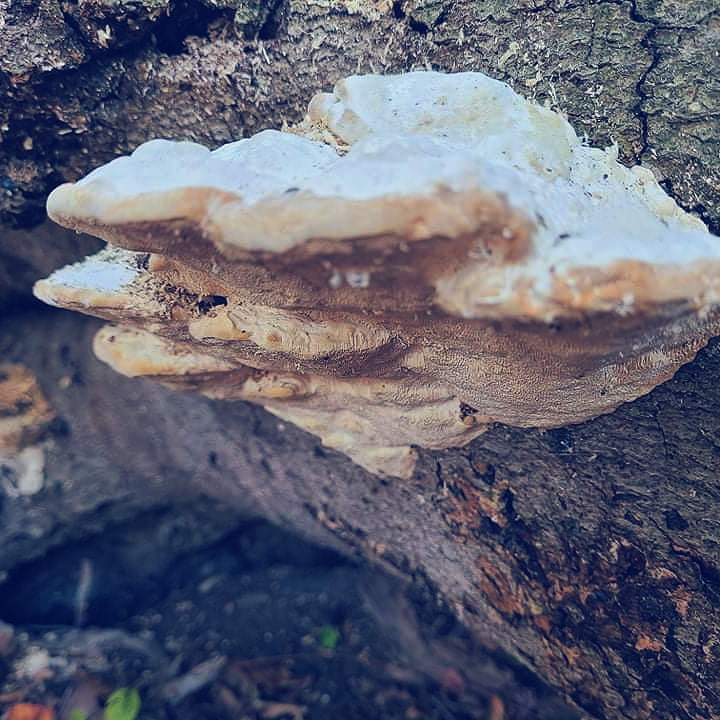
The entire forest is slowed down for the cold seasons, so it wasn’t like hiking earlier in the year. While the moss was still green, it was confined to neat, short little mats without their long, almost eerie-looking spore capsules. There were no eyelash cups or jack-o-lantern mushrooms. I did spot some neat-looking shelf fungi, and scrambled down into a space under a fallen tree for a picture. Another branch held some tiny specimens that were so fine and woody, they almost looked like ruffled feathers.
We all made it to the end, just before sunset. The light had that “golden hour” magic going on, which turned the treetops and patches of sky into a stained-glass canopy and the fallen leaves into a blanket of gold and copper. There was a peaceful moment where we paused before leaving, to make offerings of water and close out the experience. My partner and I picked up tea and dinner, then headed home.
It was the longest uninterrupted hike I’d been able to do in years. It gave me a chance to push my limits a bit more, and feel the edge of where my endurance is now. I get winded and dizzy easier than I did before IH, but I did it, and I’m intensely happy and grateful.
The end of October marks the beginning of a new year for me, and that means taking stock. I like to do this with something I jokingly call “the whole hog,” a single reading that uses tarot, Lenormand cards, Ogham, and oracle cards to give me as complete a picture as possible. It’s fun, interesting, accurate, and, once you’re used to it, surprisingly easy.
There’s really no reason not to combine whatever forms of cartomancy or sortilege you like best. I’m not suggesting you shuffle all of your cards together, of course (I mean, the differences in size and texture would turn that into a nightmare). There’s only one thing you have to keep in mind:
Each type of card is best suited to a certain type of question.
For example, you wouldn’t want to ask a Lenormand deck what energies you need to focus on for the coming year. (Coffin + Birds + Woman + Lilies + Bear will tell you a lot, but not that.) Similarly, you don’t want to ask an oracle deck what will happen if you make a specific decision, because drawing a card that tells you, “Remember, you are enough” isn’t going to be… well, enough. Combining decks is more of a holistic approach to a question or problem, allowing you to explore it across multiple dimensions.
What’s the difference between tarot reading and reading Lenormand cards?
Lenormand is very specific and concrete. A basic reading might entail asking something like, “What will happen if I accept this job offer?” You then shuffle the deck, then fan it out and look for the signifier relating either to yourself, or the question at hand. (Personally, I usually choose a signifier related to my question.) The two cards in front of it, the card itself, and the two cards behind it are the reply. They’re able to give you very detailed information, like, “A woman will deliver you a message related to your career, which will result in a social engagement and creative opportunity.”
Tarot, I’ve found, is better suited for describing the energies around a situation. If you ask your tarot deck the same question, you may draw cards indicating celebration, growth, female energies, and even communication. It won’t necessarily indicate a specific situation that you may anticipate, but it will tell you how you’ll feel about it.
Tarot also has a lot of psychological and spiritual overtones, where Lenormand is all practical. Many tarot readers would bristle at the idea of tarot reading as fortune telling, but that’s pretty much exactly what Lenormand cards purport to be — a tool for telling fortunes.
This is a mixed blessing. Reading Lenormand is simple, though not necessarily easy. There are only a few spreads, and cards are always read the same way: in pairs, with their own set of grammar, the way one might read a sentence. For people used to the fluidity of tarot, where there are millions of different spreads, multiple interpretations of the same card, reversals, and a heavy emphasis on intuition, Lenormand can feel rigid. On the other hand, for people used to reading Lenormand cards, tarot can feel too vague and subjective.
So how do you put them together?
The trick is to choose your subject matter carefully. Remember, Lenormand is best suited for concrete answers to questions. (Think “What-ifs,” and things of that sort.) Tarot is best for exploring the energies, archetypes, and other less concrete aspects of a situation.
Combining the two goes something like this:
Consider the situation you want answers about. What ways are there to approach it? Do you have a certain approach you favor? What specific steps are you planning to take in order to address it? Keep this in mind, or write it down.
Next, consider how this situation extends beyond the physical world. Imagine that you have questions about a romantic relationship. Outside of this relationship’s impact on your daily life, what kind of effect will it have on your highest good and spiritual growth? What’s do you need to know about what’s happening beneath the surface?
Formulate a set of questions based on this information. One should be a straightforward “What-if” based on the approach you plan to take. Another should be related to how this situation will impact you spiritually and mentally.
Choose a signifier in your Lenormand deck. If you identify as a man or woman, this can be the Man or Lady cards. If you don’t identify as either, feel that another card is more appropriate, or are reading for someone else, choose a signifier that relates to the situation. (For example, the Tree card is often used as a signifier in health-related readings.)
Shuffle the deck. Keep your “What-if” question in mind.
Fan the deck out, face up. Look for the signifier you chose.
Read the two cards in front of it, the card itself, and the two cards behind it. This will describe a chain of events. (Remember: No future is set in stone. This tells you the outcome if all of the people, energies, and other factors remain the same as they are right now.)
Write your interpretation down.
Next, shuffle your tarot deck. Keep your second question in mind.
Read your tarot cards using a spread of your choice (or draw the top card, top three cards, and so on).
Write this interpretation down.
You now have answers that cover two different aspects of your question. One tells you what will happen purely in the physical realm, the other tells you the mental, emotional, and spiritual impact it will have. Put together, you can develop a pretty accurate (and very helpful) picture.
This isn’t limited to Lenormand and tarot cards, either. As I mentioned, I’ve done something similar with Ogham staves, oracle cards, and more. The only thing to keep in mind is that each type of divination has its strengths and weaknesses. None are inherently superior or inferior, they’re just different. Think of them like cardiologists and plumbers — both are professionals in their fields, but you don’t necessarily want them to have to do each other’s jobs!
Yesterday, literally the same day that I posted that tarot reading, I got a bit of disappointing news. I don’t want to get into the details, but it turns out that an artistic opportunity that I’d been pretty excited about isn’t going to happen for me. C’est la guerre. Even amid fulfillment and happiness, it’s a bit much to expect everything to be a slice of fried gold.
Still, understanding that fact doesn’t really banish the bad feelings. Here’s what did, though:
I set a timer.
I gave myself ten minutes to be completely self-indulgent in my complaining. After that, the grumpling grace period was over and I had to keep quiet about it. This serves two purposes:
It keeps me from dwelling on whatever’s bothering me.
It keeps me from becoming insufferable to absolutely everyone around me.
Don’t get me wrong, though. I use this time. I flop dramatically on furniture. I go full Howl’s-Moving-Castle-goopy-wizard. I get to feel my feelings, I can be cartoonishly whiny until I laugh at myself, and other people won’t secretly wish they could lock me in a dumpster.
I did some agitation pedaling.
My partner calls it “having the zoomies.” I call it having more energy than I know what to do with. Sometimes it’s from anger or annoyance. Sometimes it’s boredom. Sometimes, it’s because I ate four bowls of cereal for dinner.
All that corn syrup and riboflavin
Either way, ten minutes of furious living room biking usually sorts it out decently well. I work myself up to my top speed, and hold it as long as I can — all while mentally focused on a goal I have. When I get to the point where I can’t sustain it anymore, I release the energy toward that goal.
Sweat is also cleansing. Sweating can be a sacred act. There are reasons why so many cultures have traditions built around inducing a good sweat.
Singing along to Turisas is entirely optional, but it helps.
RA-RA-RASPUTIN, RUSSIA’S GREATEST LOVE MACHINE
I took a bath (with friends).
(No, not human ones. I don’t think any of them would talk to me afterward.)
When it comes to spells to fix a disappointment, I think they should be spontaneous. It’s not really the time to go worrying about moon phases or astrological timing — if you have needs, fulfill them. Emergency magic performed from the heart can be just as effective as a meticulously planned ritual.
Water is the element of emotions. It’s cleansing. It’s healing. It’s a great way to kill some time doing something that’s objectively good for you. It was late at night, so I didn’t have the energy to make myself a full-on brew, but I do pretty much own my weight in various teas. I boiled some water, added two bags of peppermint and one of chamomile, and asked for their help.
“Peppermint,” I said, said I, “I feel like complete ass and would like that to not be a thing anymore. Peppermint, clear my energy from all that’s dragging me down, and, with chamomile, fill that space with luck and prosperity.”
If you’re putting it in a bath, the garnish is probably kind of excessive
I held my projective (dominant) hand over the vessel, and did the energy thing. When I felt that it was good enough, I asked the brew if it was ready.
“If this be done, and done well, push my hand away from the vessel.”
(Fortunately, I felt the familiar little energetic “push” against my palm. I don’t think I had it in me to sit on my bathroom floor and troubleshoot this spell.)
I poured the brew in a bath full of warm, fresh water, dumped in an unmeasured buttload of Trader Joe’s $1.99 sea salt, stirred it with my projective hand, and called it good. As soon as I stepped in, feeling the silkiness of the water, smelling the fragrant peppermint-and-chamomile steam curling up from the surface of the water, I began to feel better.
I also had a bright, unmistakable vision of a wolf’s face when I closed my eyes, but that’s probably going to take some further research.
I followed the advice I’d been given in the first place.
There’s a lot to be said for the idea of conceptualizing things as happening “for” you instead of “to” you, though that can be tough to remember in the moment. Personally, every setback I’ve ever experienced — every call I never received after a job interview, every breakup — has always led to something better within the space of a few weeks, like clockwork. I don’t force positivity on myself, and you shouldn’t either if you’re really not feeling it, but I try to keep this track record in mind.
Anyway, all of this is to say that, when the sun is shining and everything’s going great, sometimes a minor bump in the road can seem bigger than it is. Tarot readings function as more than a prediction and an energetic snapshot of your life. They’re also advice. Yesterday’s advice was to celebrate, spread joy, and not let my emotions overrule my discernment. I have a lot to celebrate (I sold a painting recently! I can hike longer trails! I did a bunch of paid writing!), I’m hoping this post might be helpful to someone else who’s feeling the slings and arrows of outrageous fortune, and, logically, I know this disappointment will pass and be forgotten before long.
I turned it around.
Creativity is deeply personal. When you put yourself into what you make, it’s hard not to take rejection pretty hard. Most of the time, though, that rejection has nothing to do with you — because creativity is so personal, there’s no accounting for what people want. What I consider my best work is almost never as popular as the things I’m not nearly as attached to.
Similarly, this situation in no way impugns me as a person or a creative force. So, worn out from pedaling, freshly minty, and completely called out by my own tarot deck, I went to varnish some paintings.
I don’t want to suggest that vigorous cycling and a bath are the way to deal with, say, a house fire, the loss of a loved one, someone stealing your car, or a loved one burning down your house and stealing your car, but these techniques can help shift the energy around the things that occasionally show up to heck your day apart.
Okay, so “fruit” is a bit of a misnomer. I felt like using the gorgeous Tarot de Maria-Celia deck this week, and it’s not so much about the fruit imagery. Still!
I gave myself a little three-card spread. I’ve been working on fine-tuning a spread of my own devising, but I didn’t feel like I needed quite that level of detail for a simple weekly reading, you know? For getting a general feel of things, three cards is usually plenty for me.
I drew Le Soleil, Neuf de Deniers, and Roy d’Epée. For the most part, these have the same meanings that they do in RWS-style decks. For the most part.
Le Soleil, believe it or not, has some surprising parallels with Le Diable. It, too, has two minions — both with red sashes like shackles around their necks. While the Devil is deception, manipulation, and control, the Sun is its opposite — the light banishes shadows, and brings everything into clarity. The Devil is entrapment, the Sun is freedom. The Devil is the addiction that saps your energy and your money, the Sun is vitality, growth, and prosperity.
It’s a great sign for new beginnings. Like the return of the sun heralds the new growth of spring, It’s regeneration.
The Neuf de Deniers follows this. Unlike other decks, Marseilles-style decks don’t really have a lot of imagery for the pips cards — just a graphic representation of their suit and numeric value. Deniers (Coins or Pentacles) is the suit of material wealth. Nine is the last number before ten, the ultimate culmination of the suit’s cycle.
It’s a sign of achievement. Material comfort and freedom are at hand, hard work is rewarded. It’s a sign to celebrate!
More than that, though, it points to a time of balance. You’ve achieved this success through hard work and staying in harmony with your surroundings. Prosperity doesn’t always come in the form of a paycheck — sometimes it’s the abundance of the land.
Lastly, there’s the Roy (Roi) d’Epée. He can be a significant person, or merely the qualities of the ruler of the suit of Swords. His power is of the intellect, he is logical and incisive. He can also be a bit of a prick — he’s cunning, but also scheming. He’s intelligent, but may be cold. He is an authority, but may be too detached. As advice, he says to turn away from the emotions for now, and trust in logic and reason.
Taken together, this is a good sign! Le Soleil indicates success, growth, vitality, and fulfillment. Le Neuf de Deniers indicates comfort, abundance, and autonomy. Le Roy d’Epée says that obtaining, enjoying, and maintaining this requires intelligence and discernment. As advice, they say to spread joy and celebrate, but keep a cool head and let intellect lead the way.
Personally, I’m excited. Even as the days become shorter and the nights lengthen, I can feel that solar energy. I feel relaxed, happy, and fruitful. I’m hydrated, moisturized, and well-rested. My vibes are high, my mind is clear, and I can’t wait to see what’s next.
I hope your omens are just as positive. We could all use a little good news.
P.S.: If you’d like a tarot reading, all of the readings in my shop are still 30% off! Place an order, and you’ll have your reading, my interpretation, and a pic of the cards I pulled for you within 48 hours.
I feel like I draw the Page of Wands more than any other card. Honestly.
I’m not surprised that he’s appeared again, though. He’s all creativity, adventure, and youthful enthusiasm. He’s good news and fast messages. In career readings, he might mean a work trip. In love readings, he’s playfulness and vacations.
So, considering this past weekend’s adventures, I kind of figured he’d turn up soon.
My partner and I want to go kayaking one of these days, by which I mean “he wants to go kayaking, and I am figuring out ways to cover every tragedy that can possibly happen while kayaking.” I don’t do super well with the sun beating down on me, so summer isn’t my ideal time for outdoor sports. The couple of weeks between the beginning of September and the end of October are perfect for me. There’s only one problem: htf do you kayak?
I mean, I get it. Sit in the boaty part, do the paddles, motion happens. I have had to row things before. Still, there’s something about the thought of taking a kayak out on a river that makes my throat tense up. (That thing is anxiety disorder. Even with medication and a great therapist, some of it sticks around.)
I feel like kayaking would be fun, on a conceptual level. Neither of us have ever done it before, so I have automatically adopted the position of Learning Everything That Can Go Wrong and Preemptively Thwarting It.
(Incidentally, while this is doubtless one of my more annoying traits, it also makes me fantastic on road trips. Need Benadryl? A tampon? A snake venom extraction kit? A small fire extinguisher? Emergency backup water? A convenient source of potassium? I’ve got you. I prepare for everything like it’s the first ten minutes of an action movie where we end up on an island infested with crocodiles.)
My partner says, “Let’s go price kayaks this w-,” and before he can even say “-eekend,” my brain’s off to the races. We’ll need life vests, for one. That’s obvious. Swimsuits — no, wetsuits, since the water won’t be as warm as it would be in July. Water shoes. A waterproof bag to hold stuff. Lessons. What if I lose my ID? I’ll write my identifying information on myself in case I drown. What if we accidentally go over a dam and one of us breaks something? I’ll have to bring a bandana I can use to make a sling. Do I remember how to give first aid for a spine or neck injury? What if I fall in the water and the cold knocks the wind out of me? It happened at summer camp once, and I wasn’t allowed to swim after that. (Fortunately, what I lacked in ability-to-breathe-in-cold-water, I made up for in ability-to-spot-and-subsequently-escape-from-bears-that-got-to-the-blueberry-patch-before-I-did.)
When I was five, my grandparents took me to the beach. I splashed and played happily, but, when my grandma noticed that I’d gone a little too far out and called me back, I couldn’t return. Caught in the undertow, I floundered and sputtered until someone had to come drag me out and do whatever they do to kids they’re afraid will dry drown. As clearly as I remember the helpless feeling of being caught in the current, everything after that is like someone smeared my memories with Vaseline.
Years later, my grandpa was careful to keep me out of the waves. He always fished a lot, and I used to love sitting by the buckets of fish he brought home, seeing what kind of hitchhikers had snuck into the water. Sometimes I’d find a tiny crab, or a snail, or even a sea urchin.
Finally, one day, he decided he’d teach my siblings and me to fish and set crab traps. The other kids were too young to sit and wait for a bite, so they mostly spent the day running around and dropping bait down each other’s shirts. While they did that, I felt a bite on one of the bamboo poles. My tiny heart pounding with excitement, I reeled in my catch. Was it a flounder? A salmon? A tuna? Maybe it was a shark.
It was not a shark.
To this day, I’m not sure. Nobody was able to definitively identify what I pulled up from the depths.
I’m reminded of Eddie Izzard’s bit about the Biblical flood. If it was supposed to cleanse the Earth of evil, there must have been a lot of evil fish and ducks left over.
This fish was silvery. It had spiny fins that flared out like claws, and a long, undershot jaw full of pointed, mean-looking teeth. It thrashed with the strength of something several times its size and, when we put it in the bucket with the rest of our catch, the results were… bad. It didn’t seem like it had much meat on it, either — whatever biological real estate it possessed seemed to be taken up entirely by teeth, spines, and hate.
While it churned the water in the bucket and snapped at the air in fury, Grandpa suggested throwing it back. My tiny child eyes immediately welled up with tears.
“But… I caught it. It’s my fishy.”
I was formulating plans for filling my kiddie pool with table salt and hose water so I could keep it, maybe befriend it through some kind of piscine Stockholm Syndrome. Unfortunately, it died on the way home (as fish in plastic Home Depot buckets are wont to do). I kept it in the freezer for several months afterward, like some kind of incredibly creepy trophy. Sometimes, I’d chase my brother around the house with it. Every so often, I’d take it out to look at it and feel a tiny, bone-deep, neanderthal thrill of survival, as if this dead fish was an assurance that I’d be able to live on a deserted island for a really long time if I needed to.
I have not been fishing again.
It would probably surprise you to find out that I’m a devotee of Manannán mac Lir. It surprised the shit out of me when I finally came to that realization, I’ll tell you that much.
The Page of Wands means news and adventures. And now we’re going kayaking. Hopefully the devotee thing counts for something, because, after surviving almost drowning and whatever the hell I put in that fish bucket, I would not want to explain to my seafaring ancestors that I died in three feet of water because I kayaked wrong.












 Marble Crow