(If you’re arachnophobic, you probably want to skip the whole “symbolism of spiders” post. Don’t worry — I’ll be back next week with some more non-spider related lore.)
This is Matilda. I was out checking for more ground candy (aka, the delicious maypops that fall off my porch’s vines when they’re ripe), when I happened to look up and realize that I was face-to-face with a massive orbweaver (Neoscona species).
Later that afternoon, once she’d had a chance to build a sizeable web right across the upper part of my window, I very carefully opened the window to snap multiple pics of her from a variety of angles. It was then that I realized that there was a fire truck and an ambulance in front of one of my neighbor’s houses.
(Note to neighbors: THERE WAS A COOL SPIDER.I PROMISE THAT I’M NOT A MANIAC.)
(Also the emergency vehicles left pretty uneventfully, so hopefully everyone is okay.)
*Ahem*
Anyhow, this is the time of year when sightings of these guys peak around here. So, in honor of Matilda, I figured now would be a good time to write a bit about the magical meaning and symbolism of spiders.
Spider Folklore
In Greek mythology, the first spider was a woman named Arachne. She was a marvelously talented weaver — allegedly better than Athena herself. She challenged her to a weaving contest, and Arachne’s weaving was, indeed, very beautiful. However, while her weaving was flawless, Arachne had chosen to create a tapestry mocking the gods. (In some tellings, Athena is simply enraged by Arache’s pride.) Angered, Athena transformed her into a spider.
In Catholic Christian mythology, the symbolism of spiders relates to faith. Saint Conrad of Constance, a German bishop, is said to have seen a spider fall into his cup during Easter Mass. While it was widely believed that all spiders were venomous (or, in this case, poisonous) Conrad drank the wine and trusted in his faith to preserve him.
Probably the best-known spider in mythology is Anansi, from the Ashanti people. He’s viewed as a cunning trickster figure. He’s so prominent, that he gave rise to the term “spider tales,” which encompasses several kinds of story within the Ashanti oral tradition.
In North America, spiders were viewed as either trickster figures, or ingenious creators. The Hopi and Diné people have Spider Grandmother, who plays a key role in the creation of the world.
In Peru, spiders frequently appear in ancient artworks (including the famous Nazca lines). While the specific significance of these depictions is often uncertain, it is known that the Cupisnique people had a spider deity associated with weaving, nets, war, and power.
In Australia, spiders sometimes appear in art and as clan totems.
The people of Kiribati Island and the Republic of Nauru, of Micronesia, both have spider figures that play a central role in their creation mythology.
In Japan, there are spider-like yokai called ogumo, yatsukahagi, or tsuchigumo. Tsuchigumo translates as “earth spider,” but likely didn’t originate as a spider at all. Historian Yoshiyuki Takioto put forth the idea that tsuchigumo were local chieftains (described as short people with long limbs, who lived in caves, eschewed civilization, and disregarded the imperial court), These chieftains were most likely shamans. The yokai tsuchigumo first turns up in medieval literature, as a spider-like figure 60 meters long. When killed, the heads of almost 2000 people fell from its belly.
In Scotland, spiders were an inspirational figure during the First War for Scottish Independence. After a series of defeats, Robert the Bruce hid in a cave. While there, he watched a spider struggle to climb a strand of silk. Despite failing over and over, the spider eventually succeeded. This gave him the encouragement he needed to go back into battle and eventually win Scotland’s independence.
It’s often said to be bad luck to kill a spider that you find in your home. This has a (perhaps unsurprising) grain of truth to it — killing spiders in your house means that you’re opening yourself up to all of the much less desirable things that spiders eat. If an infestation of flies or ants looks like bad luck to you, then you might want to heed this bit of folklore!
The symbolism of spiders in dreams includes:
Feeling like an outsider — like a spider in a web in the corner of a room.
Wanting to be an outsider.
A protective force.
A strong or overbearing feminine figure.
Rewards for one’s hard work.
Unpleasant relationships. Relationships one can’t escape, a (usually feminine) person who is draining one’s energy, a conflict with an overbearing person.
However, dreaming specifically of a rainbow colored spider is said to point to a situation that you probably want to avoid.
The Symbolism of Spiders
Spiders have far-reaching symbolism. Across cultures, they’ve been everything from tricksters to cosmic creators, to the unfortunate fate of the proud.
In general, these animals are associated with industry and creativity. Spider webs come in an astonishing variety of shapes and sizes — from small, silk-lined burrows to impressive constructs that are as delicate as they are massive.
They’re also associated with snares, webs, and trickery. Spiders who use webs to catch their food place them in places where they’ll be both efficient and unobtrusive — virtually invisible, until an unwitting insect (or unlucky hiker) bumps into them. Spiders who don’t use webs generally either rely on natural camouflage to hide them as they run down their prey, or conceal themselves and wait for the opportunity for ambush. In all cases, they are patient, diligent, and cunning. This can be good for you, if you’re seeking to emulate the spider a la Robert the Bruce. It can also be very bad, if you’re heading into a situation that may prove to be a trap. As with all things, context is important when it comes to interpreting omens.
Jumping spiders are ambush predators. Photo by Skyler Ewing on Pexels.com
Spiders are also connected to resiliency. No matter how many times their webs are destroyed, they rebuild them. They get knocked down, and they climb right back up again.
To an extent, spiders are also symbols of healing and rebirth. A spider can lose a leg or two and (if they survive the injury without losing too much hemolymph) will regrow them with subsequent molts.
Not a lot of people like spiders. Personally, I was never a fan of them — they terrified me as a kid. Eventually, I forced myself to take an interest in them, their body language, and their habits. I’m glad I did, because they’re really beautiful, fascinating, helpful creatures when you get right down to it.
This past Saturday was Pagan Pride at the Unitarian Universalist Congregation of Frederick. If you’ve never been, I highly recommend it — there’s live music, workshops on a variety of subjects, food, and tons of vendors of all kinds of cool stuff!
(I, personally, came away with a mug, some artwork, a mushroom-shaped incense holder, a pin, a set of earrings, dried organic lavender, magnesium butter, a really cool jar shaped like a skull, a hand-dyed and block printed bandana, and a display of a mossy log set with three corked test tubes. The stump in the front yard has been putting out a ton of interesting mushrooms lately, and I’ve been dehydrating what I can identify. I’m looking forward to displaying them once they’re done!)
This year, I decided to skip the workshops in favor of hanging out with friends (actually, many of the friends that I just saw at the Mabon celebration), listening to music, and eating delicious sorbet. The Street Cow‘s Cowabunga sorbet pop is non-dairy, real fruit puree, and awesome.
Also, I met some very handsome lads.
This is Spectre.
Spectre is fine, it was just toasty out and he is a young boy who is very excited to see new things.
He was part of Avian Encounters, a group of falconers who provide people with the chance to learn about and see raptors close up. These are all trained birds, kept by licensed professionals who know how to properly feed, care for, and mentally engage them. Getting to see birds like this up close is a rare and fascinating experience.
They also had a little screech owl, an American kestrel…
And (oh, be still my heart) a gorgeous African pied crow.
“May I take a picture of him?” I asked, barely able to contain my excitement.
“Sure! If you make a donation, you can also hold him and take a picture.”
!!!!
Needless to say, I did. He sat still for a short video (the picture to the right is a still), before hopping back to his handler. The whole time, I gushed to him (like a starstruck dork) about how pretty he is.
Human celebrities are all well and good (I saw one of my favorite musicians not long ago and managed to be surprisingly normal about it). A really cool bird or bug, though? I will absolutely lose my mind.
Pagan Pride is delightful every year, but this year was particularly special. I really hope Avian Encounters is there next year, too — the birds are all beautiful, alert, and well cared-for, and it’s a great opportunity to learn more about them and get some close-up reference photos for paintings.
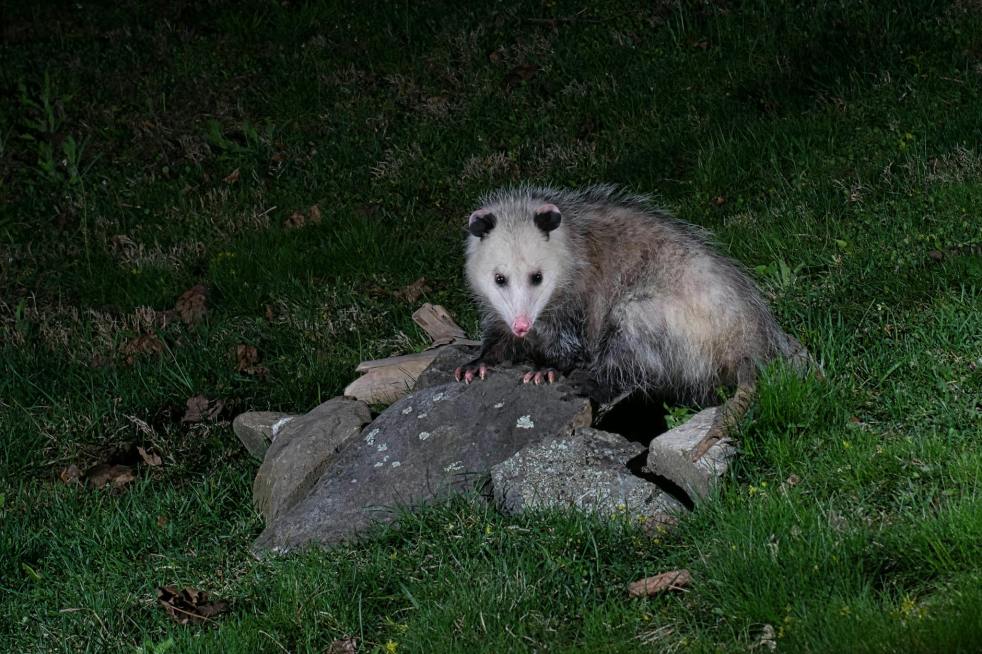
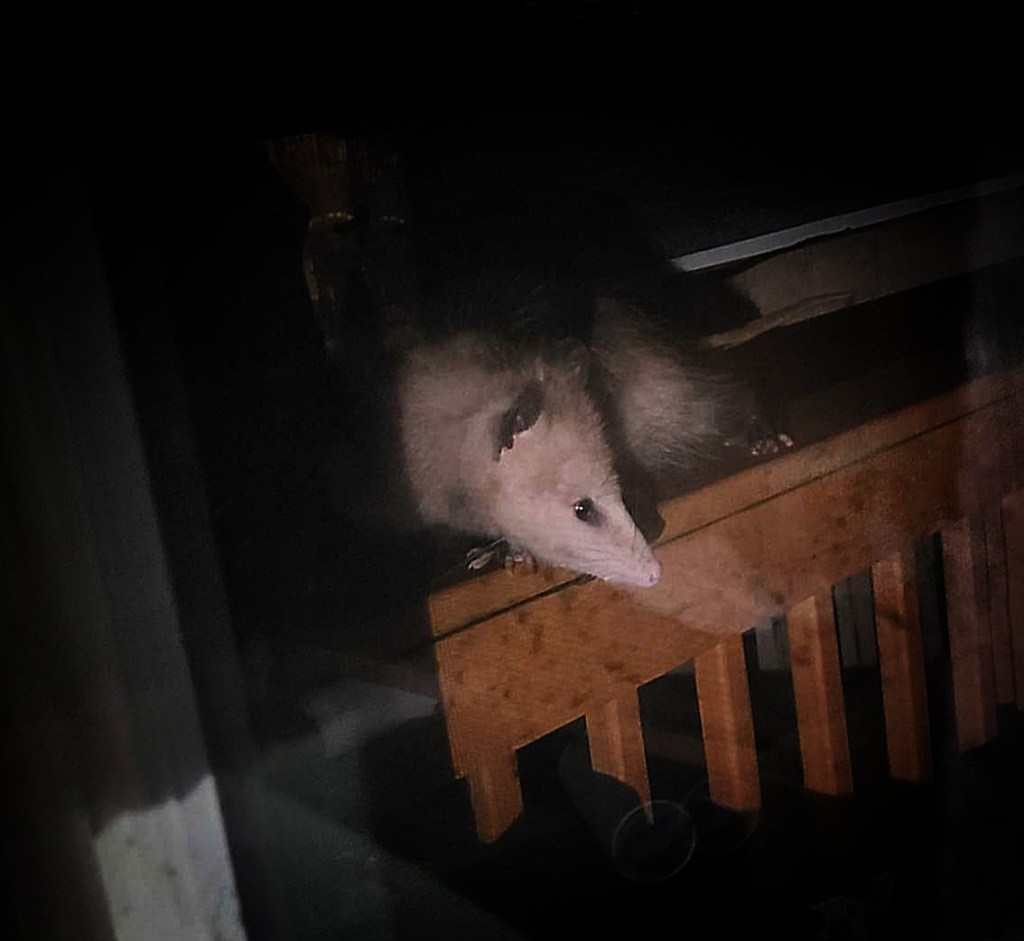
He appeared on the deck railing at 3 AM a few weeks ago, trundling along like one of the ROUS from The Princess Bride. (Which is to say, he moved like a very small man in an opossum suit.) I was so excited I almost shook my Handsome Assistant awake.
When he returned the next day to snuffle around the platform feeders, I actually went outside to offer him a small quantity of the kibble and dried bugs I use to feed the crows. He seemed pretty relaxed about the whole thing — just kind of leaned back and gave me a look that distinctly said, “Are you @#$% serious right now?“
It was when my Handsome Assistant and I were watching Hellier a few days later that I realized that I’d never survive a monster movie. If I lived in Kelly, KY, and encountered the Kentucky Goblins, I would 100% have tried to give them Capri Suns and crackers and ended up 1000% dismembered inside an abandoned coal mine.
But my impending mortality at the hands of something I’m trying to give snackies to is neither here nor there. Since there is an opossum, I thought I would explore the magical meaning of these creatures.
Opossum Folklore
The Virginia opossum is the source of the name “opossum.” It comes from a Powhatan word meaning “white animal,” which derives from a Proto-Algonquian word meaning “white dog.” The Spanish words for opossum, tlacuache and zarigüeya, derive from the Nahuatl tlaquatzin and Guarani sarigweya.
There is a large difference between opossums and possums (and Possum). Opossums live in the Americas, have skinny tails, and are grayish with white faces. Brush-tailed possums are from Australia, have fluffy tails, and are brownish. They are unrelated. The kind we have where I live, the Virginia opossum, is a member of Didelphimorphia (specifically, Didelphis virginiana). Some say that, due to a colossal mix-up, we ended up with Australia’s possum and they ended up with ours. For the purposes of this post, I’m going to focus on the American opossums.
The Virginia opossum. Photo by Skyler Ewing on Pexels.com
It’s often said that opossums “play dead” when confronted with a threat. In reality, they have a few different responses. They’re more likely to attempt to flee, or puff themselves up, hiss, and try to appear more threatening. In some situations, an automatic anxiety response may cause them to feign death, during which their heart rate and breathing slow, they lie motionless, and they emit a foul-smelling fluid from their butts.
It’s also often said that opossums are voracious tick eaters. This is not true. They are opportunistic omnivores, and they do eat a ton of insects, but the study that gave rise to this myth involved opossums in a laboratory setting during which they didn’t have much other choice. (It’d be like covering a human in peanut butter, locking them in a room for several days, and then saying that their diet primarily consists of nut spreads.) When the stomach contents of wild opossums were analyzed, there actually weren’t any ticks in there. Still! Even though they’re not the tick-decimating forces of nature folklore paints them to be, they’re a vital part of the ecosystem that helps control numerous other problem species. They’re basically organic garden pest control that screams at their own butts.
Interestingly, opossums aren’t often found in indigenous American folklore. When they appear in North American lore, they’re usually buffoonish characters. (In fact, their feigning death is often portrayed as stemming from embarrassment!) In South America, however, opossums are clever tricksters. Some groups even regard Opossum as a Prometheus-like figure.
The Symbolism of Opossums
In modern symbolism, opossums are seen to represent cleverness. This may come from the belief that they deliberately choose to “play dead.” (They also have really weirdly dexterous little paws and opposable thumbs on their feet.)
They’re also widely regarded as symbols of patience, perseverance, and survival against the odds. They’re slow-moving and very deliberate animals, and, when in a “feigning death” state, can remain motionless for hours to wait out predators.
Sometimes, opossums are viewed as symbols of rebirth since they seem to come alive after playing dead.
Dreaming of an opossum is believed to represent an illusion. Something may not be what it appears to be. It can be a sign from your subconscious that a situation isn’t right, and you need to look closer to find the truth.
Opossums are commonly associated with the Moon and lunar magic. They’re nocturnal, and their silvery fur and pale faces connect them to these energies.
Personally, I don’t care if Francis (by the way, I named the opossum Francis) never eats a single tick. I’m very happy to share this garden space with him. He is my precious garbage son and I love him very much.
Right about now, several species of birds have turned the area around my house into a kind of avian daycare. Again.
There are birds of every distinction turning up, kids in tow. Most of these kids look almost exactly like the adults — the starlings, for example, are fully the size of their parents and the only difference is that some still have their brown feathers. The baby crows look just like their parents, save for being a little smaller and still having pink corners on their beaks.
Since these babies are rapidly transitioning from their juvenile plumage to their full adult feathers, that means that they’re molting. You can find feathers everywhere — mostly fluffy white down, but the occasional primary feather, too. That’s why I thought that it might be a good idea to write a bit about the magical meaning of feathers.
Before I do, though, there’s one important caveat: All parts of native birds, including shed feathers, are protected by the Migratory Bird Treaty Act of 1918. This is to protect them from poaching by ensuring that there isn’t a legal market for their feathers, bones, etc. If you see a shed feather outside and you aren’t sure if it’s from a native species, invasive species, or domesticated species, leave it right where it is.
Feather Folklore
Feather pillows can also be a source of ominous omens. In Appalachia, death crowns or angel crowns are complex, crownlike whorls of feathers found in the pillows of the deceased. Usually, they’re only found after the person has died — it’s unlikely that anyone would go probing their pillow for death crowns otherwise. However, it is said that, if you find and break up a death crown in someone’s pillow, you can prevent their death.
In Celtic legend, feathers are commonly associated with the Otherworld. Some fairies are said to wear cloaks trimmed with red feathers, and The Morrigan wears a cloak of black ones.
The Morrigan isn’t the only goddess to have a feather cloak. Freyja, the Norse Goddess of love, war, sex, and magic, is said to have a cloak of gray falcon feathers (fjaðrhamr). This cloak grants her the ability to shape-shift into a falcon at will.
In Egyptian legend, Ma’at is associated with the Feather of Truth. She is the personification of truth, justice, and balance, and this feather is a representation of her. When a person dies, their heart is placed on a scale and weighed against this feather. The hearts of virtuous people are lighter than this feather, and they are allowed to pass on to Aaru, the Field of Reeds. The hearts of the wicked are heavy, and they are devoured by the goddess Ammit.
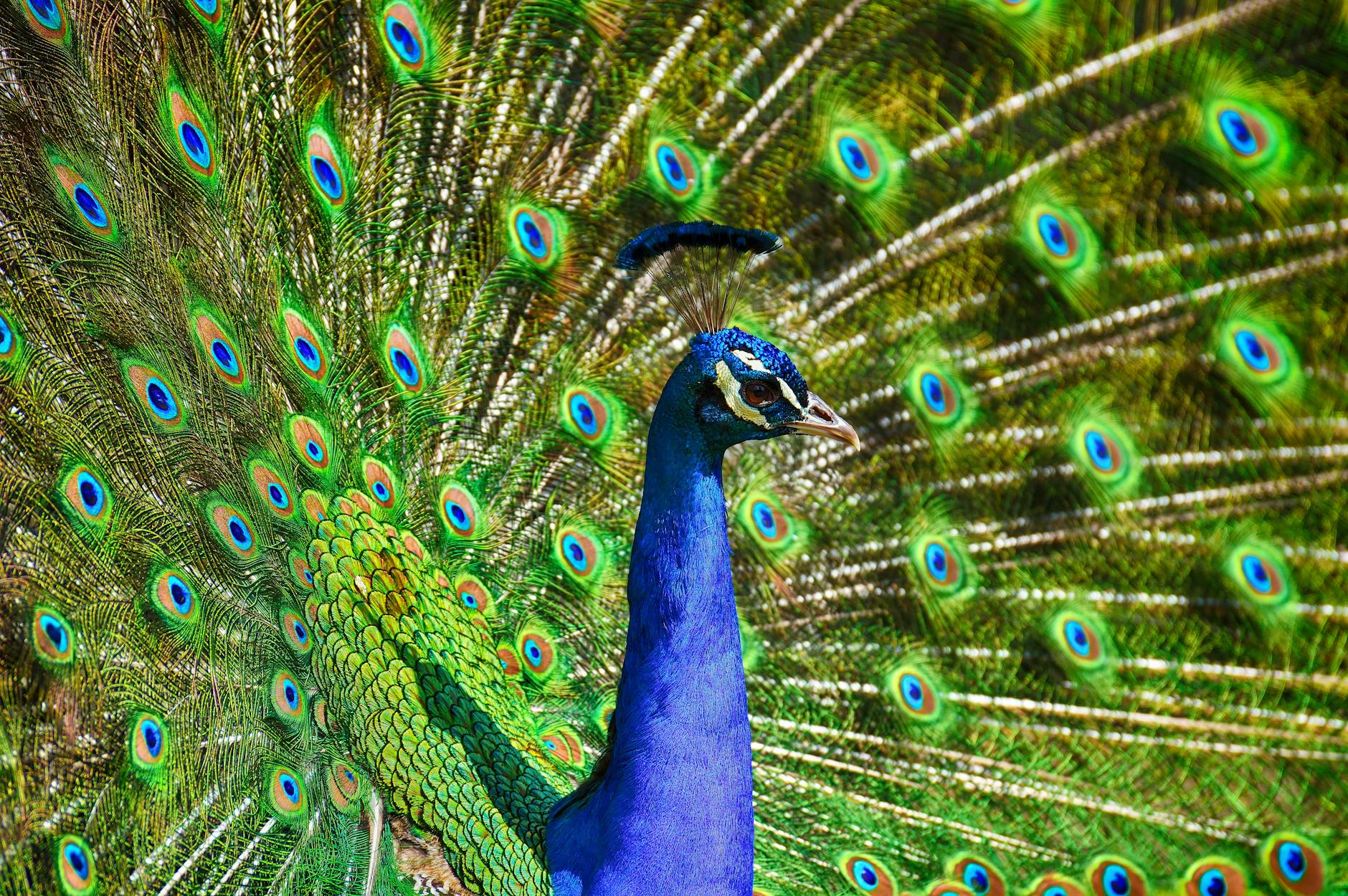
In Greek legend, Hera, the Goddess of marriage, family, and women, took the peacock as her sacred animal. She’s also the one responsible for the male peafowl’s beautiful, unusual plumage. When Zeus seduced Io, he knew his wife would be jealous. He either turned Io into a white cow (another one of Hera’s sacred animals) to protect her from his wife, or Hera transformed her herself. Either way, Hera set the many-eyed giant, Argus Panoptes, to watch over her new prized cow. Having many eyes, he only needed to close a few at a time in order to sleep. This made him the perfect watchman… until Hermes came along. Zeus asked Hermes to free Io. Hermes, in turn, disguised himself as a shepherd and used charms to put all of Argus’ many eyes to sleep at once, then killed him. Having lost her watchman, Hera immortalized him by placing his many eyes on the tailfeathers of the peacock.
In North America, Indigenous people have also attached significance to feathers for ages. Eagle feathers, in particular. (I remember being at a Powwow where another dancer I knew had dropped an eagle feather. It was retrieved from the ground with ceremony, treated as a fallen warrior. It was a very emotional experience, especially for her.) Indigenous textile artists have also woven feathers into warm blankets and beautiful garments (sometimes called match-coats).
In modern witchcraft, feathers are commonly used as representations of the East or element of Air.
The Symbolism of Feathers
In addition to representing the East, Air, multiple deities, and various concepts of the Otherworld, feathers are also considered an “angel sign.” These “angel signs” are a collection of circumstances that are said to indicate that one’s guardian angels, spirit guides, or ancestor spirits are nearby. They include finding white feathers or shiny coins, hearing mysterious music, or smelling sweet, unexplainable smells. It’s important to be careful with angel signs, however, since so many of them have mundane explanations. It’s very easy to get caught up in looking for signs, start interpreting everything as some kind of “angel sign,” and end up in spiritual psychosis, where the desire for significance blurs the line between reality and delusion. Sometimes, an angel number is an angel number. Sometimes, it means you spend too much time looking at the clock. Similarly, sometimes, finding a feather is an “angel sign.” Sometimes, it means your neighborhood has stray cats.
Feathers are also subject to color symbolism. Finding a feather of a specific color is said to have a specific meaning. For example:
White feathers are positive omens, or indicate the presence of benevolent beings.
Black feathers symbolize protection.
Red feathers can represent protection, passion, or good fortune.
Blue feathers represent peace.
Green feathers symbolize abundance or fertility.
Yellow feathers represent joy.
Orange feathers symbolize creativity.
Ground feathers are omens of stability and groundedness.
Gray feathers, like blue ones, represent peace.
Of course, all of this is highly contextual. If you’re at a duck pond, the presence of white or gray feathers is unremarkable and not likely to represent anything but the presence of ducks. On the other hand, finding a bright green feather in your yard, when you don’t have an abundance of green birds in your area, may be a bit more significant.
Feathers represent all kinds of things, but their primary association is with the fine line between this world and the others. They are tools of shapeshifters and symbols of creatures capable of traveling between worlds. If you find a feather outside, appreciate it for its beauty, see if you can identify what species it came from, and leave it be to return to the soil. If you work with feathers in your practice, source them from pets or well-treated backyard fowl.
He’s back. At least, I’m pretty certain sure it’s him, though he appears able to fly now. This crow has a distinctive appearance and a set of behaviors I had previously only observed in Boink, so I am somewhat confident in my assertion that The Shed-Dwelling Scrunglemuppet Has Returned.
Last year, he spent evenings roosting in the big apple tree, and mornings and afternoons sitting on top of the shed. When I went outside, he’d run to the far side to “hide.” If he heard the back door close, his little head would pop up over the shed’s roofline to see if I was still there. If not, he’d hop his way over to the feeders to grab some food before the other crows came.
Now, he appears with the rest of the family. He still appears to be pushed away from the food and scolded, and he still does the same goofy little run, but he’s at least better able to get away from predators. I don’t think there are many animals who would go out of their way to eat a Boink, but there are certainly creatures who would take the opportunity to hunt a land-locked crow.
Boink still has to be a bit opportunistic when he eats. He’s still scrungy. His tail is still kind of karked up, and I don’t think he’s capable of not looking bedraggled, but his flight feathers are back and that’s what’s important.
The first time I saw a grackle, I mistook it for a crow for a split second. It was only when I noticed its long tail and absolutely furious facial expression that I was like, “Oh.”
While grackles are typically pretty gregarious birds, we have a single male boat-tailed grackle (Quiscalus major) that visits the back yard here. He’s very pretty — black at first blush, but iridescent shades of peacock blue, bronze, and violet when the sun hits just right. Unlike crows, he also has light eyes. (Which, I think, lends to the whole expression thing.)
A male grackle. Photo by Gabriel Espinoza on Pexels.com
He’s usually very difficult to get a picture of, since he’s nothing if not wary and easy to startle. Lately, he’s been coming closer to the kitchen window and displaying more curiosity. I thought it might be a good time to write a post dedicated to these beautiful, interesting birds.
Grackle Folklore
Most grackles move in large groups, called “plagues” or “annoyances.” This might seem unfair — worse than a murder of crows, even, or an unkindness of ravens — but it likely comes from their ability to decimate corn harvests. They’ll show up to follow behind plows in order to grab the turned-up worms, insects, and mice that wind up in the furrows (which isn’t really a bad thing, if you’re a farmer) but they’ll also descend on ripe corn to feast on the grain.
Grackles can be a bit of a problem for bird feeders, too. Smaller than crows, they’re quite happy to avoid the work of digging up worms and bugs and instead go for the nice, nutritious seed in a feeder. Where a crow or other, larger bird will ignore things like thistle and millet, grackles will dive right in. This can end up leaving nothing for seed-eating songbirds, so many people aren’t too stoked about seeing a crowd of grackles turn up in their yards.
Nonetheless, these birds have an important role. Unlike many small songbirds, which primarily feed on seeds and don’t dig up burrowing insects, grackles help control pests like invasive grubs and worms. During the time of year when seeds are the most abundant and make up a larger portion of their diet, they also help propagate them in their feces.
Not everyone finds these birds to be nuisances, either. In the late 1400s to early 1500s, the Aztec Emperor Ahuitztol purposefully introduced great-tailed grackles (Quiscalus mexicanus) into the capital Tenochtitlan and the Valley of Mexico. These birds were taken from the Aztec provinces of Totonacapan and Cuextlan in the Totonac and Huastec regions of Mexico, and received plenty of human intervention to help them establish themselves and grow their numbers in their new home. They were well protected and well fed, which allowed their population to take root. These birds were named teotzanatl, which roughly translates to “divine” or “marvelous grackle.” Certainly a far cry from calling them a plague or annoyance!
(This is far from the only case of something like this happening. Aztec emperors kind of had a thing for bringing in exotic plant and bird species, and even importing special gardening staff to help their new acquisitions thrive.)
Interestingly, these grackles were protected — not only by guards, but also by public shaming. It’s uncertain why this was so necessary, unless attempts to hunt the birds were legitimately an issue. This could have been because they’d become pests, or because their feathers were considered very valuable. Probably both.
Grackles are also the subject of an ancient legend. In it, Zapate the great-tailed grackle was unable to sing. Being a very clever, tricky bird, he stole songs from the sea turtle. This left the turtle without a voice, and the grackle filled with… well, all kinds of noises.
While they aren’t members of the corvid family, they share crow, raven, and magpie’s intelligence. They’re able to solve puzzles, catch fish, and will even clean the grills of cars in order to get at the tasty, tasty smushed bugs.
Grackles also seem to be uniquely equipped to detect the Earth’s magnetic field due to natural deposits of magnetite in their little heads. This may be helpful for navigation and migration.
The Symbolism of Grackles
In general, these birds are said to represent caution, resourcefulness, and community support. Be cautious, however — the appearance of a grackle is also considered a symbol of misfortune.
As with a lot of birds, you often have to pay attention to what they’re doing when you see them since their behavior can color their meaning.
For example, a bunch of grackles can represent friendship, community, and support. A single grackle, not so much.
A grackle foraging or stealing food can be a sign that you need to be resourceful. You may be entering a time when you’ll have to survive by your wits.
These birds also engage in a behavior called “anting.” There, they crouch and spread their wings over anthills. As the tiny insects scurry over them, they pick off mites and release formic acid, which helps repel pests. These birds will also fumigate themselves with everything from stolen moth balls to discarded cigarette butts — whatever keeps the feather mites away. If you see a grackle anting or fumigating themselves, it may be a sign that it’s time for some reflection, spiritual cleansing, or actual decluttering. You might need to schedule some time to take inventory, clear some of the chaos from yourself or your environment, and make a fresh start.
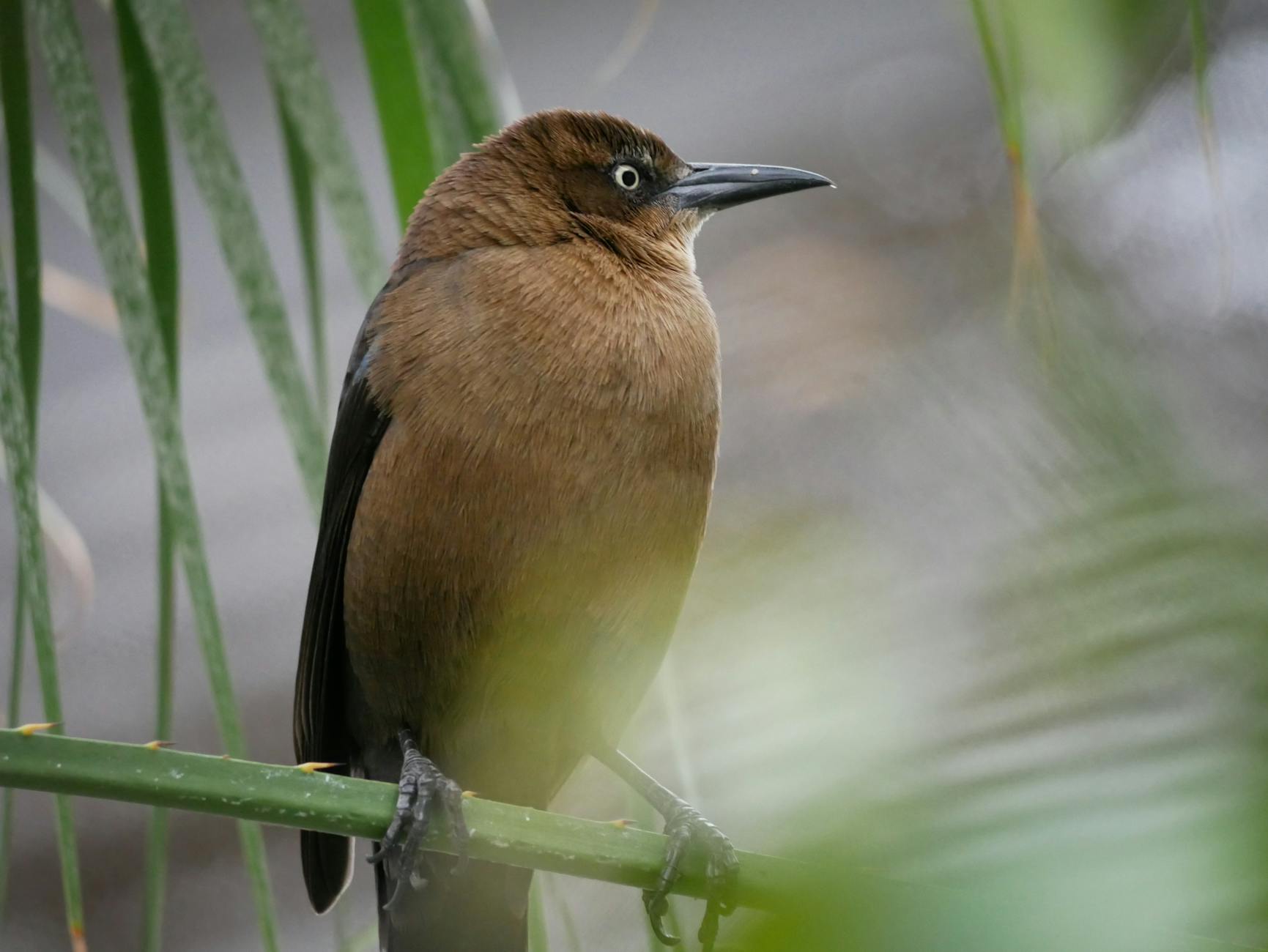
A female grackle. They lack the dark, iridescent feathers of the males, instead displaying beautiful shades of a rich brown. Photo by Connor kane on Pexels.com
No matter whether grackles are a welcome sight to you or not, these are brilliant, beautiful birds with a fascinating history. From dumpster scavengers to the protected birds of an imperial house, they have lived closely with humans and fulfilled many roles for ages.
Crows (and corvids in general) can be pretty divisive. I don’t think I’ve met someone who can just take or leave them — it’s always either a fervent love, or a deep dislike.
And I get it, honestly. They’re noisy. They’ve been known to eat nestlings, eggs, and small mammals. To many, they’re a nuisance and they don’t understand why anyone would go out of their way to make their yard more attractive to these birds.
Ever since we moved here, I’ve been feeding a small family of crows whom I’ve come to love dearly. I’ve hesitated to feed other species, because I don’t want to encourage them to congregate (and potentially spread avian flu) when that isn’t their normal feeding pattern. While the debate about feeding birds and crow/raven behavior will likely never come to an end, here are a couple of things I’ve personally observed when making an effort to coexist with crows:
They’re very smart. (Like, really smart.)
With most members of corvidae, you’re dealing with a very intelligent animal. With crows specifically, something on the level of a toddler or a very bright dog.
I wanted to mention this right off the bat because it heavily impacts a lot of my other points.
They’re also opportunistic.
In general, crows aren’t really hunter hunters. They do eat meat, and they will eat young, weak, or sick animals, but they’re opportunistic feeders. If the opportunity isn’t there, or there’s an easier source of high-value food somewhere else, they’ll go elsewhere.
Crows are also a prey species for larger carnivores. When they’re eating, they’re vulnerable because their attention is directed toward that and not toward looking for threats. This is why groups typically have a sentry or two, to keep an eye on things while the others feed.
A blue jay, one of the more colorful members of the corvid family. Photo by Pixabay on Pexels.com
They’re also still wild animals, no matter how closely they may coexist with humans. Wild animals will go for easier-to-get food sources whenever possible, because more challenging ones a) aren’t guaranteed, and b) require more effort (read: calories) and attention to access. The exception to this seems to be when there’s a particularly appealing, usually calorie-dense food item available that’ll make up for the potential danger and extra effort expended to get it.
You can direct their behavior.
With the above things in mind, you can direct their behavior to a degree.
I’ll give you an example. When I worked in pet retail, I had customers that’d come in and complain that squirrels and large birds that kept getting into their bird feeders. We had tons of anti-squirrel technology available — baffles, special lubricants for poles, specially shaped feeders, and even battery powered ones that vibrated, spun, or did all kinds of other gymnastics. I’d gently try to guide these customers to dedicated platform feeders and bags of corn, but they always turned it down. No matter what they bought, they’d be back in a few weeks for something else. A greased pole was no longer enough, because the squirrel learned how to jump from a tree at just the right angle to defeat it. A specially shaped feeder wasn’t enough, because the crows would team up to work around it. The cycle would inevitably repeat, until they finally just gave up and bought the platform feeder and the bag of corn. After that, the squirrels and large birds would eat the easy to access food, and the smaller birds had their own.
Since this crow population was already established here (and has since grown due to habitat destruction caused by some recent construction), giving them high-value, easy to access food has ensured that I get to keep more of the fruit and vegetables from my garden. This isn’t just because the crows don’t take as much, either — they’ve also done quite a bit to keep various garden pests away.
I don’t leave their food unattended — I usually feed them items I know they like, then sit out there just a few feet away with my own lunch. I have never once been harassed for my food. I’m pretty sure it’s because, like other intelligent animals, they’re able to distinguish between what food is given to them and what food is mine. Why bother me to eat off of my plate, when their plates are right over there? Why run the risk of a potential conflict with a human when they have accessible, desirable food already?
They might not impact songbird populations in the way most people think.
This study covers the relationship between various predator and prey species. One of its findings is that, as prey species numbers increase, so do predator species numbers, and there isn’t strong evidence that native (non-invasive) predators alone drive species decline.
A single predator, or small group of predators, can impact local numbers of prey animals, but don’t appear to correlate with a decline in overall numbers. The thing here is that crows are, like I said, opportunistic. They take prey from nests, where other predators are more likely to be less discriminating and take reproductively mature animals (since those are the ones they’re most likely to encounter out and about). Many corvids are also very territorial — an established family of crows will actively drive off other, larger, less opportunistic predators. They appear to exert both a predatory and protective influence on local prey species.
While I offer food for the local birds and squirrels, I’m careful not to do it every day. (Water, on the other hand, is always available.) Nobody goes hungry, and there seems to be less impetus for them to eat what I’m growing or trying to protect, but they still need to engage in natural foraging behavior.
This works in my case because this crow family had already established this area as their territory. If you listen to their calls, you can hear them relaying from one tree to the next. While they’ll cover a lot of ground in order to find food and water, a sentry alerts the others when there are snacks available. They can go about their business and stop by when there’s food.
(One funny thing I’ve noticed is that their vocalizations change when I’m on the deck, whether I’m putting food out or not, like they’re telling everyone that it’s almost time to eat. Once, I was only watering a few plants and went right back inside, and I got to hear a very excited crow call trail off into something that sounded unmistakably like disappointment.)
They’re not just garbage birds.
Crows (and many other members of corvidae) will get into dumpsters if there’s an opportunity, somewhat rightly earning them the nickname of “garbage chickens.” Stories abound of people feeding them fries, chips, and other very palatable, salty, oily, and largely carbohydrate-based foods. These really aren’t optimal dietary contributions for them, though, and having a positive relationship with your local corvids should mean taking their actual nutritional needs into account.
I explored the foraging habits of crows, plus the diets fed to pet pied crows in captivity as well as crows and ravens at rehabilitation centers. In the end, I came up with a mixture of cat or puppy kibble, cracked corn, raisins, and a low sodium, unfortified cereal as a base. To that, I add hardboiled eggs (cut into quarters, shell attached), dried mealworms or black soldier fly larvae, peanuts (in the shell), and fruit, depending on what I have on hand. Sometimes, if I have the leftover tail end of a loaf of homemade bread, I’ll cut that into cubes and toss it in too. This all seems to work out pretty well — they appear to enjoy it, and they’ve got some of the darkest, shiniest feathers I’ve ever seen on an urban crow.
They may not really react to humans like you might expect.
One thing people bring up often is that crows will get used to humans, which will cause problems.
There are definitely cases of birds, including corvids, losing their fear in areas with frequent, close contact with a variety of people. Anyone who’s ever tried to eat French fries on a boardwalk can probably give you several examples. (I was almost eaten by a pelican when I was little. It was a defining experience.)
I can’t speak to this in general, but I can point out my own observations as someone dealing with an urban crow population that already has a lot of incidental contact with humans. Like I mentioned above, I also stay out there by the feeders after I fill them. While the family of crows has certainly grown bolder with time, this change in behavior seems to be limited to me. If I’m out there and my Handsome Assistant joins me, their behavior switches gears immediately. They keep their distance, and even make some unique vocalizations. If I’m there with a stranger, the difference is even more stark. As intelligent animals with the capacity to recognize individuals, they seem to have drawn some very firm lines between “human what puts the food,” “other human,” and “some guy, idk.”
One interesting experiment with ravens kind of highlights this. A researcher was teaching a raven to trade, by offering the bird a small piece of cheese (a high-value food item) in exchange for a piece of bread (a lower-value one). At one point, the researcher accepted the raven’s bread, then had the audacity to eat the cheese right in front of them. The raven, understandably pissed, refused to engage in any more trading exercises… but only with that particular researcher.
Sometimes, they just leave (and that can be a good thing).
Animals have their own agenda, though it’s often tempting to see them through a humanized lens. I’ve seen a lot of posts from people asking why their local population of crows just left — do the birds not like them anymore? Did they offend them somehow???
The truth is, wild animals have their own schedule. They likely won’t, don’t need to, and shouldn’t come hang out every day. During summer, when a lot of fruits ripen and grains are harvested, crows are likely to go off to agricultural areas to eat the dropped grain. They also have babies, so they’ll be off doing parent activities. In winter, they may need to go to a more desirable climate or more abundant food and water source. If the larger murder of crows is going off to do something, a given crow family will go with them.
If they stop showing up for a while, it can honestly be a good sign because it means they’re still being wild birds. It might suck if larger carnivores move in and start causing trouble in their absence, but that’s nature for you.
A magpie. Photo by Manuel Torres Garcia on Pexels.com
On top of all of this stuff, I’ve also noticed some interesting impacts on my hyper-local environment since I began putting food out for these birds:
There actually seems to be more biodiversity now.
In the beginning, I was lucky to get some house sparrows, starlings, and the occasional mourning dove. As time goes on, I’ve begun to see more species. Like, a lot more. Blue jays, cardinals, finches, dark-eyed juncos, woodpeckers, and grackles, to name a few. (Even a mockingbird that has absolutely given the crows a run for their money when it comes to territoriality.)
Part of this may be because there’s more food available, but most of the food I put out consists of things that would appeal to crows and jays, not necessarily other species. I have, however, noticed that the local crows do a lot to keep the smaller birds safe, because…
They will not tolerate nonsense.
I’ve written before about how this family of crows have effectively become my unpaid, unasked-for yard bouncers. In addition to dispatching particularly chaotic squirrels, I’ve seen them bounce bigger predators, too. They’ll get together and mob a hawk (which is honestly fascinating to watch). They’ll chase away stray and feral animals. They’ll even warn me if there’s a particularly suspicious snake in the vicinity. They’ve kept rats, mice, and grubs away, too. They have very definite ideas about Who Belongs and Who Does Not.
These crows seem like a protection racket. Like a dragon that demands an occasional sacrifice from a local village, or a rat snake that keeps mice and rats out of a chicken coop in exchange for the occasional egg. It’s weird, but I’ve seen them on my deck, coexisting perfectly fine with the smaller birds and other squirrels… So, I guess it’s all chill?
I’ve actually gotten a ton of free food out of the deal.
Granted, a lot of this is because I’m not particularly fussy about garden borders. If something neat springs up, isn’t a noxious weed, and won’t run the risk of poisoning me, I’m inclined to let it be and see what happens.
As it turns out, “what happens” is a ton of volunteer tomatoes, corn, grapes, and berries. (The smaller birds even planted a bunch of millet and broccoli.)
They’ve also brought me occasional small gifts, but I can’t eat those.
When it comes to coexisting with these incredible animals, the important thing to remember is that a) they’re very smart, b) they have the capacity to remember and distinguish between individuals, and c) they’re wild. While it might seem flattering to feel needed and loved like you would with, say, a dog, that’s counterproductive to a wild animal’s survival both physically and mentally. It is possible to interact positively with them without harming their ability to live without you, and this should be the goal of anyone who really loves these birds.
The other day, I was on the deck having breakfast with my local crowbros. (It’s funny — as soon as I go outside, I hear their calls pick up speed and intensity. Then they start to swoop around and gather in the big maple tree. Once some of the braver members of the family are present, they’ll start making forays to the feeders. Gradually, once they’ve proven its safe, the timid members follow suit.) This day was different, though.
This day had squirrels. Not just the usual suspects (Freddy de Bonesby and the pruno-making delinquents), either. Today, there was a black squirrel.
Black squirrels are a naturally occurring melanistic variation of grey or fox squirrels. They’re fairly rare under normal circumstances, appearing at a rate of about one for every 10,000. This is overall, however — black squirrels do occur more commonly in specific areas. They’re generally seen more often in urban places (theoretically because they blend in better there than they do elsewhere) and at the northernmost portions of their ranges (theoretically because they absorb sunlight more efficiently, keeping them warm and extending their active, foraging times during the cooler months).
Melanism in squirrels doesn’t occur with the same beautiful variety as human skin colors, and isn’t even the same as melanism in other animals. In most other animals, melanism is a recessive gene and an individual must inherit it from both parents. In humans, coloration is controlled by multiple genes that come in a variety of alleles that show incomplete dominance, resulting in an incredible variety of hair, eye, and skin colors. In squirrels, melanism is associated with the is associated with the MC1R-Δ24 E B allele EB and is incompletely dominant with the “wild” coloration allele E+. So, a squirrel that inherits two wild coloration alleles will be the color of the average gray squirrel (E+ + E+). A squirrel that inherits one copy of the melanistic allele will exhibit a dark brownish, nearly black coloration (EB + E+). A squirrel that inherits two copies will be a deep, shiny, inky black (EB + EB).
Even rarer than melanistic squirrels are leucistic squirrels — white squirrels with black eyes. These are not the same as albino squirrels, which typically have pink and blue eyes. Albino squirrels typically have poor eyesight. Leucistic squirrels have normal eyesight. Both stick out like sore thumbs to predators and generally don’t survive long in the wild.
Where I live, melanistic squirrels more common because it’s a) by a major city, where b) a bunch of them escaped from a zoo this one time.
I had seen a few here and there in the past, but I’d never seen one in the yard before. Out of curiosity, I decided to look up the magical and folkloric significance of these adorable weirdos.
Black Squirrel Folklore
Remember that bit about escaped zoo squirrels? Well, the tale goes like this: As far back as 1900, Frank Baker (superintendent of the National Zoo) repeatedly requested rare, beautiful black squirrels from several locations in Ontario, Canada. Two years later, Thomas W. Gibson (Ontario’s former commissioner of Crown lands) sent the National Zoo eight black squirrels. Canada is in the northernmost portion of the eastern gray squirrel’s (Sciurus carolinensis) range, so melanistic individuals are far more common there. In 1906, eighteen of the black squirrels were released onto the zoo’s grounds. For some reason, people okayed this decision because they literally didn’t think they’d get out. However, being squirrels, that’s exactly what they did. As a result, DC has an exceptionally high population of melanistic squirrels.
Remember when I wrote about solar eclipses a bit ago? I briefly mentioned the Choctaw legend about greedy squirrels coming to eat the Sun. These weren’t just any squirrels, though — they were particularly hungry and mischievous black squirrels.
In Ireland and the UK, black squirrels were viewed similarly to black cats: as signs of good luck or prosperity. Rare as they are, they were also thought to have connections to the fae realm. While they don’t appear to have the “messenger” connotations of animals like crows, they are no less connected to occult knowledge.
Given squirrels’ propensity for burying things, black squirrels were associated with finding hidden treasure.
Of course, as has often happened throughout history, the spread of various forms of Christianity during the medieval period turned what were once good luck symbols into something sinister. Black animals, like cats, crows, ravens, and even squirrels, were then associated with misfortune and evil. They were often accused of being witches’ familiars.
The Symbolism of Black Squirrels
In general, black squirrels are associated with good luck. English coal miners would keep them around for luck, and it was considered very unlucky to ever harm one.
Even in cultures where melanistic squirrels are viewed as troublesome, they were typically seen more as eccentric trickster figures than something expressly evil.
Today, places that are fortunate enough to be blessed with lots of black squirrels often take pride in it. Some of them are jokingly called “squirrel towns,” and feature black squirrels on their signs, as the subject of annual festivals, and represented on souvenirs in gift shops.
In a divinatory sense, the appearance of a black squirrel heralds a positive change of some sort.
While they may not be super rare here, black squirrels are still delightful to see. From what I’ve noticed, they seem jumpier and more skittish than other eastern gray squirrels, so being able to get a photo of one (or even a clear look at one) is a treat.
Hello! If you’re in the US, hopefully you enjoyed the eclipse on Monday. I spent most of it enjoying the lovely weather, painting my porch, and experiencing the very surreal feeling of an eclipse-dimmed sun.
The family of crows who hangs out here all came to rest in the maple tree in the backyard. (I read that zoos had noted that the eclipse affected animal behavior, and some birds seemed to be agitated by this bit of celestial disruption. I’m guessing these guys figured it wouldn’t be a terrible idea to spend the eclipse in a place they knew came with food, water, and safety.) So, once the porch was finished, I spent the rest of the time relaxing, reflecting, and feeding them hardboiled eggs.
This, and the recent Spring Equinox, got me thinking about the folklore and magical properties of eggs. I don’t eat them, myself, but they’re rich with symbolism and certainly deserve a look.
Egg Magical Properties and Folklore
In ancient Greek Orphism, there was the Orphic Egg. This was an egg, usually depicted with a serpent coiled around it, from which hatched the primordial deity Phanes.
Ancient Egypt had their own concept of a cosmic egg not unlike the Orphic Egg. There was a cosmic goose called the Great Honker (Gengen-Wer) who laid a world egg, from which the Sun and Earth hatched.
In Hinduism, there are multiple mentions of eggs. The Hiranyagarbha is similar in concept the world/cosmic egg. In one tradition, the creator deity Brahma emerged from the egg and created the world. The Shatapatha Brahmana mentions another creation story, in which the Prajapati reproduces himself, releases the waters of the world, transforms into an egg to enter the waters, then emerges from the egg to make the Earth, sky, and middle regions. In Garuda Purana, Vishnu was born from a golden egg.
Eggs are a strong recurring theme and metaphor for creation across cultures, and they’re also associated with the Sun. In Egypt, the Sun was sometimes conceptualized as an egg. In Australia, some Indigenous Australian peoples held that the Sun was produced during a fight between birds. Brolga the dancing crane and Dinewan the emu quarreled, and Brolga grabbed one of Dinewan’s eggs and tossed it from its nest. The egg struck a piece of wood, freeing the yolk from the shell and catching it aflame. This flaming yolk stayed in the heavens as the Sun.
In Europe, eggs were also a symbol of creation, birth, and fertility. French brides would break eggs to ensure a swift pregnancy. German farmers would rub egg yolks on their ploughs to transfer the egg’s fertility to their fields.
As in Australia and Egypt, eggs were also associated with the Sun in much of Europe. This, however, seems largely to do with the fact that both return at the same time. Most of Australia and Egypt have milder winters, but winters in much of Europe can be pretty harsh. The Spring Equinox marks the beginning of spring and longer, warmer days, which is also when birds start laying again. Even modern chickens, who’ve been selectively bred to produce far more eggs far more often, will take a break in winter if they aren’t “tricked” with supplemental lighting. Chickens literally need the Sun or eggs don’t happen!
Slavic egg decorating further connects eggs with the Sun, and is the source of modern Easter egg traditions. Slavic Paganism has a Sun deity named Dabog (or Dazibogu, Dazhbog, Dazhboh, Daždźboh…). Birds were his chosen creatures, for only they could get close to him. Eggs, therefore, are intimately connected to both the Sun deity, and the return of warmer weather and the fertility of animals and the land in spring. Decorating eggs was a way to honor this. The simplest form of decorated eggs, a single solid color, are to be blessed and eaten, conferring the blessing to the consumer. More elaborate designs are for ritual or amuletic purposes.
Eggs are frequently used for cleansing. In Brujeria, they’re a key component of huevo limpia — egg cleansing. Egg cleanses are also a part of Hoodoo. Sometimes, these eggs have certain restrictions imposed on them by the practitioner. For example, the egg may need to come from a specific color of hen, and be laid before noon.
Using Eggs
Using eggs can be as simple as boiling, blessing, and eating them. They’re a traditional food for spring festivals. Though I don’t eat them myself, when I end up with some, I offer them to the birds during their breeding season. The extra protein and calcium seem to be very much appreciated.
Eggs can also be a vehicle for container magic, albeit a delicate one. To do this, make a small hole at both ends of the eggshell without shattering it. Blow through the hole to push the yolk and albumen into a separate container. Use the now-hollow egg to hold dried herbs, petition papers, or other spell materials. Hang the egg from a tree branch with a bit of twine or ribbon. When the egg eventually breaks, the spell will be released.
As with Slavic decorated eggs, you can also decorate egg shells for ritual or amuletic purposes. (For this, you may actually want to use a ceramic or wooden egg instead of a real one — whole eggs will rot, and hollowed-out eggs are very fragile.) Decorate it with wax and dye, decoupage, beadwork, painting, or, if you use wood eggs, pyrography. Choose symbols that relate to the egg’s significance to your practice — creation, fertility, birth, abundance, and so forth. Carry one with you as an amulet, or use them as altar decorations or ritual power objects.
You don’t need to buy or eat eggs to be able to work with their powerful symbolism. Purchase ones made of ceramic or wood, or you can make your own using air-dry clay or papier-mâché. They represent the earliest, oldest magic — the creation of the world, the cosmos, and everything that is. Eggs are the infinite seed of creation, and a very worthy addition to any spiritual path.
As the weather warms up, the crows come back in force. They distribute themselves around the perimeter of their territory, sending a single “caw” in a kind of relay. As far as I can tell, it seems to mean, “Hi, I’m a bird! Status update: Still a bird!”
This single “caw” is passed from sentry to sentry until something happens to disrupt it. That could be a cat, an owl, a snake, or the sudden appearance of a quantity of snacks.
One of these sentries is positioned in the big maple tree in the back yard. As far as I can tell, he has exactly one mission: Keep tabs on my comings and goings.
I know this because I hear his single cries throughout the day, echoed by the equally single cries of his family group. As soon as I show up on the back deck, that single “caw” turns into a rapid series of calls. If I start putting out the crow salad, the shouts get even faster and more high-pitched. By the time I turn around to go back inside, the apple trees and the roof are full of black shapes.
Pardon the raindrops on the window pane.
Sometimes, they don’t even wait for me to go all the way inside before they swoop in and start eating. If they’re particularly feisty, they’ll barely hop away when I go out to refill. This seems to be out of a sense of avian practicality, rather than fear — it really seems like they fly up to the roofs to wait in order to be out of the way, not because they’re genuinely wary of me anymore.
I’ve found a mix of food that doesn’t seem to appeal much to other bird species, so this family can feed safely without concerns about being hassled or coming into contact with pathogens from unrelated birds that might otherwise swarm the feeder.
I can’t be positive, but I’m also reasonably certain that this sentry is the same li’l nerd who came and stared in my bathroom window after my Handsome Assistant and I returned from being out of town for a few days.
I can’t overstate how helpful they’ve been to have around — they deal with nuisance animals, and I’ve gotten a ton of free garden plants from them (and one small bouncy ball). I love this band of weirdos so much. It always makes me so happy to see them.















 Marble Crow