Plants and Herbs · Witchcraft

Pea Folklore and Magical Uses

As I mentioned in my tiny plant haul, I recently picked up some packets of snap peas. I was never really a fan of peas growing up — mostly because the ones I was exposed to were the mushy, grayish kind from a can. Few things can beat a fresh, sweet peapod off of the vine, though, and they’re legitimately fun to grow!

Three pea pods, split to reveal the peas inside.
Photo by R Khalil on Pexels.com

Soon, it’ll be time to start peas from seed in my growing zone. Since I’m kind of champing at the bit to get them started, I figured this would be a good time to look into all of their folklore, symbolism, and magical correspondences.

Sweet peas and rosary peas aren’t that closely related to garden peas, or even sugar snap peas. Sweet peas (Lathyrus odoratus) are grown for their flowers and have toxic seeds. Rosary peas (Abrus precatorius), as their name implies, are grown for beads and are fatal if ingested — if it’s thoroughly chewed, a single rosary pea is enough to kill an adult human. Garden, snow, and sugar snap peas are different cultivars of Pisum sativum, and are grown for their edible shoots, pods, and seeds. L. odoratus, A. precatorius, and P. sativum are members of the family Fabaceae, but so are plants like lupine, Scotch broom, and logwood trees. For this reason, it’s important to draw a distinction between folklore and magical uses of edible peas, versus sweet pea or rosary pea.

A pair of pink sweet pea flowers.
Sweet peas in bloom. These are grown for their beauty and fragrance, and are definitely not edible. Photo by Magda Ehlers on Pexels.com

Peas are an incredibly old food source grown around the world. While garden peas (Pisum sativum) are thought to have originated around Pisa, in Italy, they’ve also been found in Egyptian tombs, and the earliest evidence of them dates back to the Neolithic era, in what is now Greece, Jordan, Turkey, and Syria. They are considered to be one of the first food crops domesticated by humans.

According to British lore, pods containing nine peas are considered lucky.

Peas were used to cure warts through sympathetic magic. This is a very common old wart-removal method — you touch or rub the wart with an object, then burn, throw away, or bury said object. As it decays, the wart shrinks. In this case, the afflicted person would touch a wart with a pea, wrap the pea in a bit of paper, then bury it in the ground. When the pea broke down, so too would the wart.

Peas are a cool-weather crop, and don’t do very well in heat. One old rhyme about the planting of peas and beans says, “Be it weal or be it woe, Beans should blow before May go.”

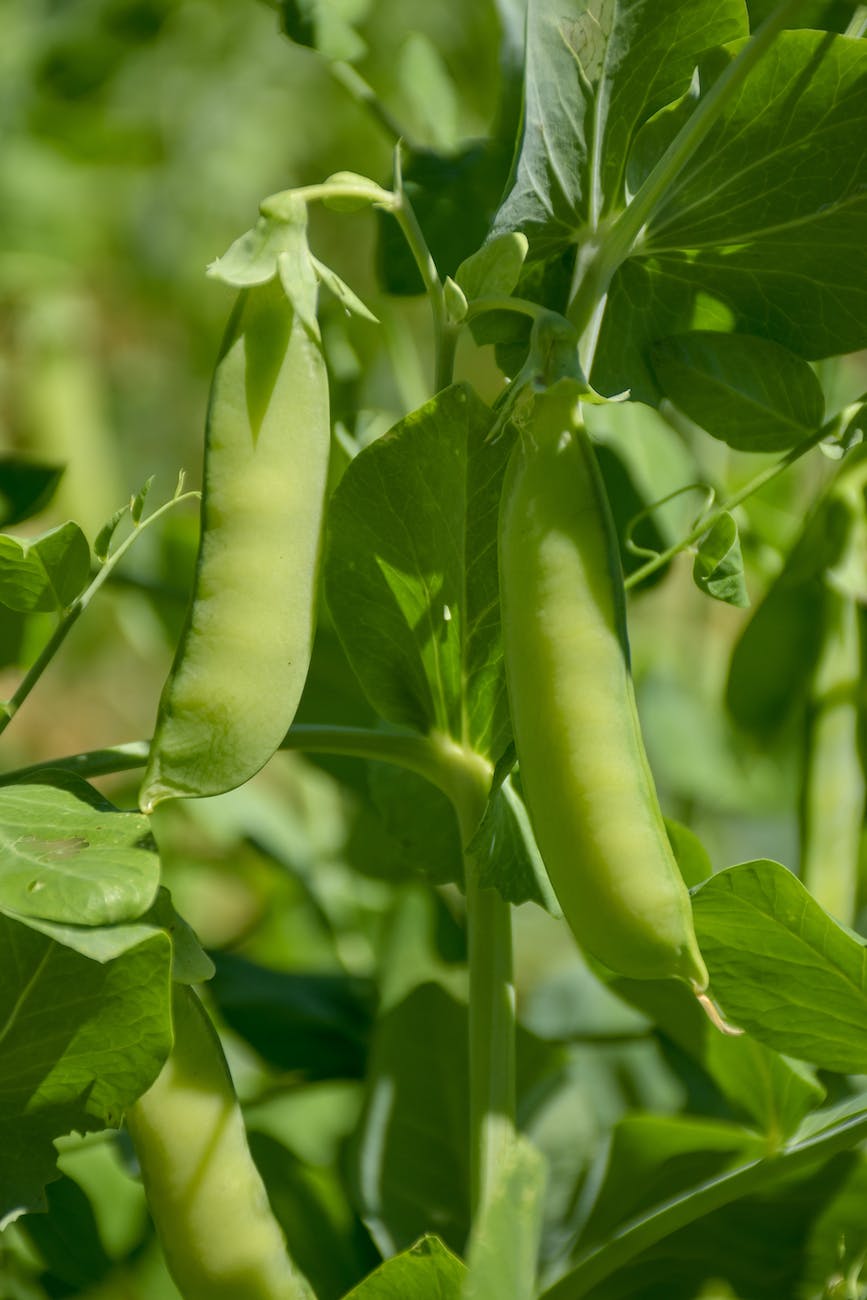
Pea pods growing on the vine.
Photo by Gilmer Diaz Estela on Pexels.com

Green peas are used in formulas for health or money. Yellow peas, on the other hand, are best for luck. In some cultures, carrying a dried pea in your purse or pocket is said to attract good luck.

Dried peas are also used for divination. They’re shaken up and cast, similarly to the way you might cast bones or runes. You then read the patterns that they form.

As a common food crop, using peas is pretty easy — especially if you like kitchen witchery. Cook and eat peas to bring in more wealth, health, and luck.

Dried peas can be added to sachets or bowls to attract money. Combine them with dried herbs like chamomile, basil, cinnamon, patchouli, and cinquefoil. Add this to a bowl containing a few pieces of citrine and/or pyrite, and some coins. Keep the bowl clean and free of dust, and periodically refresh it with new herbs and more coins. Never remove the coins from the bowl.

If you have a difficult decision to make, take one seed pea for each of your options. Plant them, carefully marking which pea corresponds to each option. Keep an eye on them as they sprout — their growth and vigor can provide guidance on what to do.

Peas are a useful magical ingredient that’s easy to grow yourself, even if all you have is a tiny space and a pot. They’ve got fiber and protein, are associated with luck, money, and healing, and keep well once dried. All told, no matter whether you’re into kitchen witchery or not, these little guys are a very useful addition to your store of magical ingredients.

Books

Let’s Read: Folklore and Symbolism of Flowers, Plants and Trees

I admit, when I first got my copy of Ernst and Johanna Lehner’s Folklore and Symbolism of Flowers, Plants and Trees, I was slightly disappointed at the size. I’d been hoping for a longer volume, while this one comes in at just 128 pages. However, despite my initial misgivings, I did enjoy this book.

For starters, it’s well organized. The first chapter covers sacred plants from Middle Eastern, Chinese, Norse, and other cultures/religions around the world. The next is a neatly alphabetized collection of folklore about flowers. From there, it goes on to cover strange and wondrous plants, and plant calendars from various cultures. The last section is a list of the floriographic meanings of each plant.

That said, this is a somewhat old book, and the majority of its sources have a Euro- or Christocentric lens. Some spellings that appear as typographical errors (Batatosk for Ratatoskr, for example) seem to be artifacts of old printing methods. Some of the wording is also outdated, like the usage of Mohammedan (an archaic term for Muslim or Islamic that’s now regarded as a misnomer at best, or offensive at worst). Some of the common names they chose to use also may be a bit strange to an English reader, like Bo Tree for Bodhi Tree. You get the idea.

While it isn’t long, the pages are large enough to hold beautiful antique illustrations and a lot of information. The entries also include the scientific name of each species (where known), which is very helpful. Relying on common names can be misleading — feverwort, also known as common centaury (Centaurium erythraea) is not the same as feverfew (Tanacetum parthenium). There are also a bunch of plants in the Gyrandra, Schenkia, and Zeltnera genera also referred to as centaury.

All told, this isn’t necessarily a book for deep dives or long reads. However, it’s a very useful quick reference for floriography, and a decent jumping off point for research into mythology and folklore. Would I say it’s indispensable? Not necessarily, but it’s been very useful to me and is really nice to have on hand. It’s best, I think, when paired with a book detailing each plant’s magical or medicinal uses. It’s a nice jumping off point for further research into folklore and mythology, but it shouldn’t be treated as the final authority.

If you’re looking for a quick mythological or floriographic reference for a wide variety of trees, herbs, and flowers, Folklore and Symbolism of Flowers, Plants and Trees is a good book to have. If you’re looking for more comprehensive information, magical uses, folk medicine, or a deeper analysis, you’ll probably want to look elsewhere.

Plants and Herbs

A tiny plant haul — nerve plant, ZZ, and more!

Since we’re swapping rooms around, my Handsome Assistant and I felt like it’d be a good idea to scope out some more little green guys to add to our family. (I also have a disco ball in my shower that I’ve been dying to put a plant in.)

So, armed with time to kill, we stopped by a local florist/nursery. We have a bit of a reputation there — in summer, especially right after we moved and were murdering our lawn, we were there nearly every week.

I usually have a pretty good idea of what I’m looking for when I go, but my Handsome Assistant is a bit more impulsive. There have been many occasions where I’ve had to disappoint him by pointing out that a cool looking plant is extremely poisonous, or else has space/light/care needs way beyond our means. He has an eye for really awesome plants, and I always feel bad doing it.

A collection of houseplants in a flat cardboard box.

This time, we came away with a nerve plant (Fittonia), what I think is a raven ZZ plant (Zamioculcas zamiifolia), a pretty pothos (Epipremnum aureum), and a Chinese evergreen (Aglaonema).

Some of these are listed as toxic in various resources because they contain calcium oxalate crystals. These crystals are a natural defense against herbivores, as the crystals are sharp and cause irritation to the mouth, throat, and stomach. This is rarely severe, and is a purely mechanical injury. It isn’t toxic the way that, say, the phytotoxins in lilies or the cardiac glycosides in foxglove are toxic. It’s more “toxic” in the way that trying to eat a handful of broken glass would be “toxic.” Damaging, rather than poisonous.

(There is a way that calcium oxalate can potentially raise the risk of kidney stones, but, since calcium oxalate isn’t very soluble, it’s a whole Thing that depends on fat absorption, the presence or absence of certain electrolytes, and so on. In the end, the main problem most people and animals have with calcium oxalate-containing plants is that their crystals can cause irritation, pain, and/or inflammation on contact.)

Nerve plants are known for being big, fussy babies. If they want water, they will wilt until they look dead. Give them a drink, and they perk right up. Some growers have success with treating them like ferns — keep them humid, keep them evenly moist, and don’t give them too much sunlight.

A nerve plant with dark green foliage and striking bright pink veins.

ZZ plants, on the other hand, are known for their hardiness. They like indirect sunlight and can deal with neglect. They’re very hardy and drought-tolerant — some sources even say that they can go for months without water and will grow in pretty much any lighting condition that isn’t a windowless closet. Needless to say, they thrive when their needs are adequately met, but they can definitely survive if you make a few mistakes here and there.

The funny thing about this plant is that I think it’s a variety known as a raven ZZ plant. This variety is known for its nearly black foliage. They’re also usually more expensive than regular ZZs. This specimen was labeled and priced as a regular ZZ plant despite its deep purple-black leaves, which I think might be due to a slightly damaged stem on one side (having worked in retail, sometimes things like that make life easier). Either way, it’s a beautiful little plant and I’m not complaining!

A closeup of the ZZ plant's foliage. The leaves are thick, waxy, shiny, and of a dark purple color.

Pothos are one of my favorite indoor plants. They grow easily, bounce back from wilting, and propagate like nobody’s business. I’ve even used them to propagate other plants — I stick a plant I want to root in a cup of water along with a pothos cutting. It seems like enough of the pothos’ natural rooting hormone ends up in the water to help the other plant along, thought this is by no means proven. All I know is things root faster, and everyone’s happy.

I’ve also developed a real soft spot for Aglaonema, or Chinese evergreen. These plants also thrive with neglect and can grow in a variety of conditions. I have one near my front door that doesn’t get much light and I routinely forget to water. It is the lushest, leafiest plant in the house, and recently put out some flowers. They’re a really lovely houseplant (honestly, think of the word “houseplant,” and the first mental image you get will probably be an Aglaonema) that’s good for difficult areas.

Next, we picked up a Sansevieria. These are also called snake plants, adder’s tongue, devil’s tongue, or mother-in-law’s tongue (but my mother-in-law is cool, so I don’t use that one). These plants are toxic due to the presence of saponins, but they’re also not trailing plants and pretty easy to put out of reach. Like the ZZ plant and Chinese evergreen, these plants deal with neglect very well. Give it bright, indirect light and a little water now and then, and it’ll be pretty happy.

Lastly, we got some peas.

I had pretty good luck with growing sugar snap peas last year, even though I planted them several months too late for my growing zone and the heat stunted them a bit. Determined to do better this time around, I picked up two packets of peas — one Sugar Daddy, a sweet, stringless bush vine pea; and one Sugar Magnolia, a vining pea with purple flowers and pods.

I’ve been wanting to try to expand the fruit tree guilds we started. Right now, we’ve got the apple tree that was here when we purchased the house, a smaller Chehalis apple, and a yellow egg plum tree. We’ve planted bulbs around the bases, as well as some blueberries, strawberries, garden sage, and yarrow, but I really want to maximize the space by using the fruit tree trunks as supports for vines. Some guides recommend Muscadine grapes, which would be amazing, but I think they’d overwhelm these baby trees at the moment. So, peas it is!
life · Neodruidry

Happy Imbolc 2024!

Yes, it technically started at sundown yesterday, but it still applies.

According to traditional weather divination, we could be looking at a long, cold winter yet. Today’s a bit rainy, but yesterday was sunny and mild. A mild Imbolc means the Cailleach has made the weather pleasant so she can go out and collect enough firewood to last for the rest of the season. If winter were going to end early, she wouldn’t bother, and it’d be miserable outside.

A stack of firewood.
Mild, sunny Imbolc? The Cailleach’s out gathering firewood for a long, cold winter. Photo by Lum3n on Pexels.com

There are a lot of ways to celebrate Imbolc, but I’ve gotten into a nice groove of making it my spring cleaning day. It’s a time that makes me excited for the season ahead — I want a fresh house, a filled fridge and pantry, and some promising divination, you know?

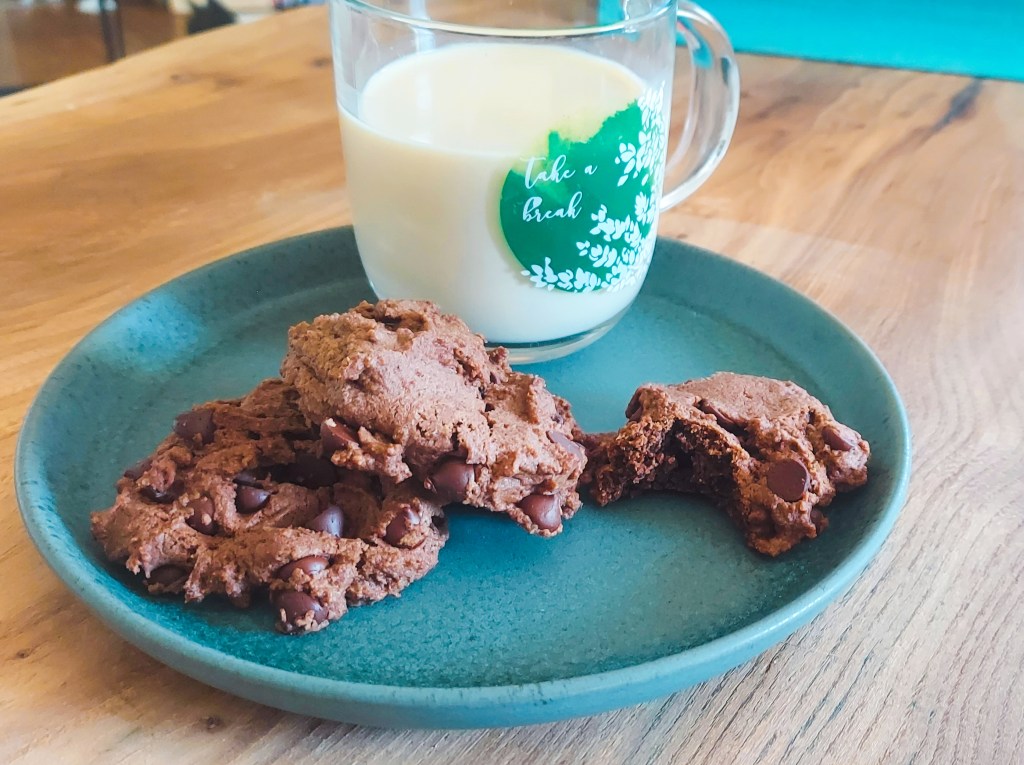
I have a large Brigid candle that I lit last night, snuffed before bed, and lit again this morning. We’re cleaning and decluttering. There’s a loaf of fresh baked einkorn bread, a pot of soup, a pie, and a batch of cookies.

Most importantly, I’ve decided to rearrange my entire house so it stops making sense.

I was raised (well… “raised” seems a bit generous, but follow me here) to accept convention. When something seemed questionable or, frankly, stupid, I was told that that’s how it was done.
“That’s the style.”
“The other way would be wrong.”
“That’s silly.”
I feel that this has been instrumental in making me the spiteful pain in the ass that I am today.

My house is, like many other homes from the 1940s in this area, built in a Cape Cod style. It’s meant to be very efficient when it comes to keeping the hot sun out during summer and cold drafts away during winter, so it doesn’t have large windows. Fortunately, it faces the southeast, so we do still get plenty of light. The living room, where we spend most of our time, has a little eastward facing window. In other words, we end up missing out on the best light most of the day.

My studio, on the other hand, is a bit bigger than I need it to be. It also has a lovely west-facing window that lets in the most gorgeous sunlight in the late afternoon. The late afternoon that I usually spend in the living room.

“Self,” I says to myself, “Does it make more sense to keep my living room where it is just because that’s where living rooms usually go, or to move things around according to how we actually use these rooms?”

And this is why my living room is going into the bedroom-turned-studio, my studio is going into what used to be the living room, and we’re dedicating half of the living room-turned-studio-space to be a quasi-dining room. Yes, it’s confusing. It’s also a lot of work. I think it’s going to be very worth it, though.

As the land gets brighter and warmer, I want to (quite literally) bring more light into my life. Imbolc, for me, has always been about clearing, renewal, and preparation. I can think of no better thing than making room for more light and brightness here.

Brigid, Goddess of inspiration, fire, and healing, may you bring your brightness, warmth, and clarity to the rest of this year.

Neodruidry · Plants and Herbs · Witchcraft

Chickweed Folklore and Magical Uses

Recently, we had a tiny burst of warm weather (by which I mean an extremely unseasonable 76° F/24° C). It was nice! Also very concerning, but nice!

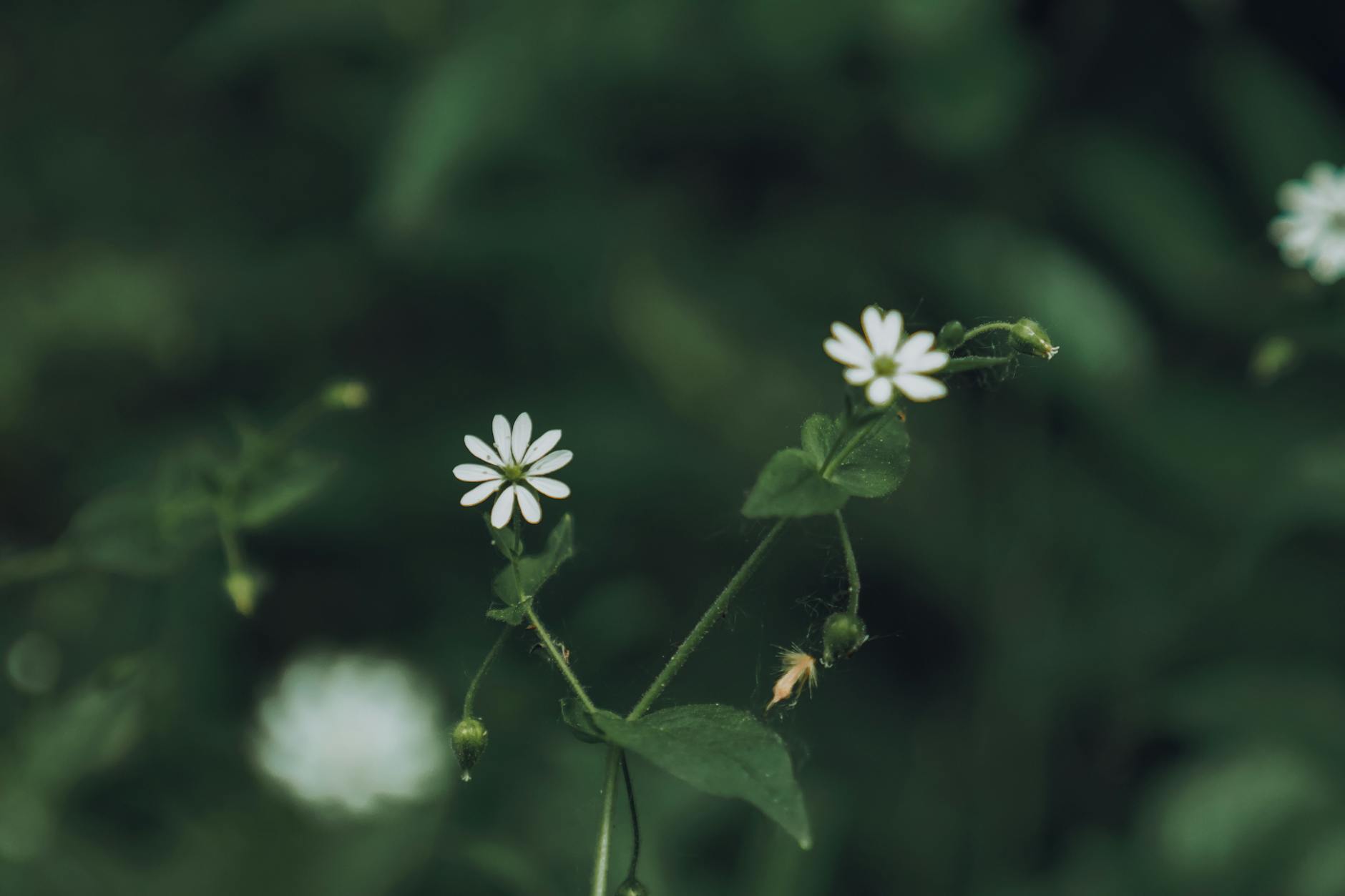
This little bit of heat seems to have kicked the yard into overdrive — while the bigger plants haven’t started leafing out yet, we’ve had a lot of spring ephemerals suddenly make an appearance. Following the grassassination, most of our ground covers are various types of chickweed and violet while the moss phlox and other guys establish themselves. Right now, we’ve got lesser chickweed (Stellaria apetala) and regular chickweed (Stellaria media).

Some plucked sprigs of Stellaria media.
Photo of Stellaria media by kokokara on Pexels.com. If you look closely, you can see the row of tiny white hairs.

While neither of these species are native (lesser chickweed is European, while regular chickweed hails from Eurasia), they’re still a valuable herb in early spring. They’re full of minerals and vitamin C, and one of the first edible springtime greens to appear. It isn’t a good idea to eat a ton of them — not raw, anyway — but they provide nutrients that are often in short supply for winter foragers.

So, with that in mind, I figured I’d take a look at the various folklore and magical uses for these humble little groundcover plants.

Chickweed has a few poisonous lookalikes, but is also pretty easy to identify. Two of its unique characteristics are the presents of a row of white hairs (like a cock’s comb) and a firm, green stem-inside-a-stem. Pull a chickweed’s stem apart, and you’ll uncover a green “chicken bone!”

When I say that chickweed is high in vitamin C, I really mean it — sailors used chickweed steeped in vinegar to prevent scurvy during times when citrus fruits weren’t available.

Chickweed is associated with love and fidelity. This idea may stem (no pun intended) from its growth habit. Chickweed grows in groups, with spreading tendrils reaching out from the center. It’s a powerful visual metaphor for the importance of community, as each chickweed stem grows out from this connected center in order to reach its full potential.

This plant is also very tenacious. It’s hard to get rid of, and often springs right back up after being cut or pulled out. While chickweed favors moist soil with a good pH and abundant nutrients, you can also find it growing in cracks in sidewalks. This makes it useful for situations that you want to exhibit this same resilience — for example, a long-term relationship.

Some green magic practitioners also associate this plant with abundance. It produces a lot of very long-lived seeds, which connect it to fertility and prosperity.

Tiny white chickweed flowers.
Photo by Imad Clicks on Pexels.com

The name “chickweed” comes from chicken and weed. Since these plants are pretty nutrient-dense and come up in early spring, they’re eagerly fed on by poultry and are particularly good for growing chicks.

Chickweed is very easy to find. Look for moist (but not soggy) soil, in early spring, just about anywhere and you can probably pick some. It’s stubborn, it’s prolific, and it’s not super fussy. Use a good plant identification app and research chickweed’s poisonous lookalikes, or, even better, go with a seasoned forager who can show you what to look for.

Once you have your chickweed, you can use it fresh or dried. Dried, it mixes well with jasmine, rose petals, lavender, and other love-drawing ingredients. Blend these dried herbs together with equal parts Epsom and sea salts, add a few drops of patchouli and rose oil, and use the resulting mixture for a love-drawing bath.

To attract a partner, wear a sprig of chickweed. These unassuming greens can be easily tucked into a boutonniere, vase necklace, flower crown, hairclip, or fascinator without too much trouble. As with the bath salt recipe above, combine them with other love-drawing plants for best effect.

To ensure the fidelity of a partner, it’s said that you should feed them chickweed. (If you do this, you should probably ensure that you have their consent, and that you’ve properly identified your chickweed or purchased it from a reputable source. Otherwise, you’re going to end up with an angry and/or poisoned partner.) Caraway seeds are used in a similar fashion.

If you have access to a yard, or even just an open field, you most likely have access to chickweed. This plant is subtle, but powerful. Whether you choose to use it as food, medicine, or a magical ingredient, this tenacious little herb can be a great friend to make.

divination · Neodruidry · Witchcraft

Footprint Folklore & Magical Properties

With so much snow on the ground, it’s been even easier to keep track of all of the visitors to the front and back yards. From the efficient single-track prints of stray cats, to snowshoe prints of rabbits, to the rodent tracks ending in the sudden whump of an owl, they all stand out starkly in fresh snow.

A set of squirrel tracks in snow.
For example, these prints by resident Absolute Unit Frederick de Bonesby, the gray squirrel.

The weather is warming up bit by bit (it’s supposed to be in the 60s F this weekend, go figure), so the snow isn’t long for this world. With that in mind, I thought this might be a good time to look at different folk beliefs and folk magic practices involving animal tracks and footprints.

Unique footprints and strange feet are a defining characteristic of many cryptids and folk monsters:

  • The Tupi-Guarani people of Brazil have the Curupira (Tupi for “blister-covered”), a kind of demon with fiery red hair and backwards feet.
  • The Scottish have the glaistig or maighdean uaine (“Green maiden”); a gray skinned, blonde-haired woman with a long green skirt to hide her goat legs.
  • In Madagascar, there is the Kalanoro. This is a humanoid cryptid described as a small, hairy person with red eyes and backwards-facing legs and feet. While they are said to have once lived in corporeal forms, habitat destruction has left only their spirit forms behind.
  • In the Himalayas, there are Abarimon (“mountain-dweller”). These are said to be vicious humanoids with backwards feet who lived solely in a single mountain valley. While Abarimon were dangerous, they could only breathe the air of their valley home, and thus were unable to ever leave it.
  • In Trinidad and Tobago, there is the Douen. This entity is another humanoid with backwards facing feet but has the distinction of also lacking any facial features other than a mouth. If they hear a child’s name, they are said to be able to mimic the parents’ voices, calling to the child to lure them into the forest. Douen may be related to the duende, humanoid spirits from Spain and Latin America.
  • In Australia, there’s the Yowie. This is a tall creature covered in dark hair, often said to have backwards-pointing feet.
  • The Dominican Republic has La Ciguapa, a lovely wild woman with long, dark, silken hair, beautiful bronze skin, and backwards feet. While small, she is perfectly proportioned and incredibly agile. She’s said to use her beauty and agility to prey on those who are foolish enough to venture into the woods — her domain — alone.
  • On the Indian subcontinent, there are ghosts known as bhuta. These can shapeshift into any animal, but often appear as perfectly normal humans — save for their backward-facing feet.

To be honest, you’d probably be hard pressed to find a culture that doesn’t have some version of “cryptid whose main thing is having weird feet.” Many of them serve as cautionary tales against wandering dangerous places alone, especially for children. They’re the personification of situations that seem perfectly safe, or even nice (like meeting a beautiful woman on a walk in the woods), and lure you in before you notice the danger that you’re in (like the fact that she’s a cannibalistic cryptid with weird feet). Across cultures, the message here is also pretty consistent: Stay away from strangers, and out of the wilderness at night.

In northeastern Tanzania, there are a series of incredibly ancient footprints set in stone. These point to two small groups of hominids (likely members of Australopithecus afarensis) traveling in the same direction. The Maasai people associate these footprints with Lakalanga, a hero so big that he was said to leave footprints sunk into the ground wherever he walked. He is said to have helped the Maasai win a battle against a neighboring enemy, long, long ago.

In South Devon, England, a heavy snow fell in the winter of 1855. The next day, and for two days after that, mysterious sets of very hooflike marks appeared. They were in single file, roughly 4 inches long by 3 inches wide, and managed to cover a total area of about 40 to 100 miles. Strangely, these hoofprints didn’t seem to care about obstacles — they traveled straight over fences, hedgerows, walls, and even houses. Called the “Devil’s Footprints,” hypotheses for their appearance range from experimental balloons to kangaroos… But there’s still no accepted explanation.

In some magical traditions, footprints are used for sympathetic magic. Any spell benefits from the addition of something belonging to the target — a nail clipping, a lock of hair, or a scrap from their clothing, perhaps. (I once managed to pull something off by getting a target just to touch a grass poppet that I’d made, but that’s neither here nor there.) In the absence of these, footprints often suffice.

Some magical powders, like the hot foot powder used in Hoodoo, are sprinkled into a person’s footprints to control their actions. This derives from the traditional West African practice of foot track magic, brought to the Americas by the transatlantic slave trade.

Reading animal tracks is also a method of divination. While augury was traditionally divination using the flight paths of birds, you can also gather omens from the number, direction, and maker of tracks you come across.

A set of cat tracks through snow.
These belong to a stray cat. Cats conserve effort when walking trough snow by placing their hind feet directly in the prints of their forefeet.

When it comes to divination using a human’s footprints, the practice is called “ichnomancy.” This comes from the Greek “ixnos,” meaning “footstep,” and “manteia,” meaning “method of divination.”

Divining with footprints can be a little difficult, since you need to be able to read them in a mundane sense first. For example, deep footprints indicate a heavy load. Widely-spaced ones indicate a long stride, perhaps someone running. The different depths of the impression in the heel and ball of the foot areas can also tell you different things.

My first suggestion for working with animal tracks and footprints is to familiarize yourself with what you’re likely to encounter. If a deer walked through your yard, what would it look like? How about a dog, or a bear? What impressions does it leave when a bird of prey scoops up a rat, or a squirrel? Consider your connections and associations to each of these creatures. What would their appearance mean to you?

Next, consider their other qualities. Movement to the left is often considered an ill omen, while the right is considered a positive one. For example, seeing the tracks of a bear or mountain lion moving quickly toward your left could be an omen of danger. Seeing the tracks of an animal you have a positive connection to, moving at a leisurely pace toward your right, could be a very good omen.

Working with footprints in a magical context is a bit different. You can collect the dirt from within a footprint and use it to target a spell toward whoever left the footprint. You can also sprinkle magical powders or crushed herbs in someone’s tracks, or over a place where you expect them to step. (There are far too many magical powders to enumerate all of their uses and qualities here, unfortunately. Since this is a method frequently employed by Hoodoo practitioners, you may wish to consult with one for more information. Many online sellers of Hoodoo supplies offer consultations and can answer your questions on foot track magic.)

As for me, I love seeing fresh tracks in the snow. It’s a reminder that, while the outdoors seems to sleep under its cold, fluffy comforter, there’s still plenty happening. Tracks also give me another way to gauge the way everything’s activity increases as we inch closer to spring. I look forward to seeing tracks in the mud and snow just as much as I look forward to seeing new faces at the feeders and in the fruit trees.

art · life

So, we went to the show!

Last time, I mentioned struggling with imposter syndrome. Yesterday, my Handsome Assistant and I braved the cold (it is bonkers freezing right now, especially considering that it’s going to be like 60° F next weekend) and went to the opening of the art show.

The venue itself was beautiful (it’s history, not so much) and its tall ceilings, many windows, and twists and turns were very conducive to hosting a large art show without everything feeling too cluttered or busy. Sadly, I didn’t really get any pictures of the interior or the show itself (it would’ve been difficult to do without getting some of the possibly-unconsenting public in the shots) but you can see all of the entries here. Interestingly, the majority of them were portraits of people — there were fewer animals than I expected, though I did find one other lovely painting of a corvid.

The volunteers and other artists were all very nice, too. Everyone I spoke to was kind and helpful. We even ran into one of my Handsome Assistant’s friends, whose child had won an award for their work in the juried student exhibit.

While it was a nice outing overall (the artwork was beautiful and moving, the venue was gorgeous, and the rolling hills of the grounds were streaked with kids on brightly colored sleds), it was also pretty mentally exhausting. There’s a COVID surge, so being indoors in a group was a bit tense. I also felt a very acute sense of imposter syndrome. An inner critic kept telling me that I didn’t really belong there, that my work was only chosen to humor me, so I wouldn’t get discouraged and withdraw my membership. Anxiety turned what should have been a relaxing, inspiring day into a bit of an internal mess.

But still, we did the thing! As cold as it was, and as much as my various social anxieties kept urging me to pull out, we went and did it. All that remains now is to figure out how to make it easier on myself in the future and be more confident in my art. It’s something that’s much easier said than done.

art · life

I am not an imposter — I am an unstoppable trickster.

As I write this, JJ is playing with the snow I tracked in on my boots, while I am listening to pan flutes and drinking a smoothie to try to combat a killer bout of agita.

One of my paintings was accepted for a juried show starting later this month (it is this guy). This morning, my Handsome Assistant gave me a ride to drop it off at the gallery… By which I mean he drove me there and he went in to drop it off, while I sat in the car and tried not to throw up.

I’ve been through this before. I’ve entered shows, had my work accepted, and gone through the whole process, but, somehow, it still never seems to fail to launch me into a tiny existential crisis. I end up expending a ton of mental and physical energy to compare myself to other people, compare my work to other artists’, and make a carefully curated mental list of all of the reasons I don’t deserve to be there.

I know a lot of people have imposter syndrome and are probably doing the same thing. However, I am sure that they pale in comparison to my level of utter charlatanry.

But even that is a kind of talent, I guess. Maybe I don’t deserve to be where I am. Unfortunately, there are no shows for chicanery. There are no legitimate places where a skilled imposter can showcase their ability to fake a level of competence. Until there’s a place for the most impostery of imposters, maybe this is where I belong after all.

Neodruidry · Witchcraft

Snow Folklore & Magical Properties

As I write this, it’s snowing. It’s a good snow, too — big, dry, puffy flakes. Kids have a snow day, and the hill in the back yard is covered in a good six inches of fluffy powder.

JJ has never seen snow before, so we tried bringing her outside to explore. She was curious, but also did not seem to enjoy the feeling of cold, wet paws. So, I brought her her own plate of snow, because we’ve got a washable rug and I’m full of bad ideas.

A small, adorable gray tabby cat paws at a pile of snow on a plate.

All of the plants are covered, branches bent under the weight of snow. Even the evergreens and the bright magenta beautyberries are hidden from view. So, I thought today might be a good time to talk about the tales, legends, myths, and magical properties of snow!

While not strictly related to snow, one of my favorite weather omens deals with cold winters: “Onion skin very thin, mild winter coming in. Onion skin thick and tough, coming winter long and rough.” The same is said of apple peels. Of course, this works best with local onions and apples — an onion grown in another country probably can’t tell you much about the weather in yours!

No onions? No problem. You can also foretell a cold winter by looking at walnuts and acorns. A heavy crop means a harsh winter. Similarly, thick shells on walnuts also warn of a cold winter.

A pair of acorns.
Photo by Ylanite Koppens on Pexels.com

The seeds of American persimmons are also used to predict winter weather. If they’re shaped like spoons, you’ll have lots of snow to shovel!

Leaves that fall early predict a mild winter. Leaves that fall late (or worse — wither on the branch and don’t fall at all) predict a cold one.

Animals can also warn you about a cold, snowy winter. If their fur is thicker than usual, winter is likely to be a doozy. If squirrels stash their nuts up high, then you’re likely to see a lot of snow. If you live in an area with a wild turkey population, watch where they decide to rest. If they perch in trees and won’t come down, snow is coming.

If you see a woolly bear caterpillar, take note of the width of its bands. Caterpillars with especially wide middle bands predict a mild winter.

Mushrooms are yet another way to predict snowfall. If you see abundant mushrooms in autumn, then you’re likely to get a lot of snow. If mushrooms are scarce, your winter will probably be dry. This makes a lot of sense — mushrooms need humidity. If you have a lot of humidity in the cold months, you’re likely to get a lot of precipitation, too.

Supposedly, the date of the first snowfall can help you predict more. Whatever date the first snowfall falls on will tell you how many more snowfalls you’ll get that winter. (For example, following this logic, we’d be looking at fifteen more snows!)
Another variation calculates the number of snowfalls a slightly different way: However many days past Christmas the first snow falls, that’s how many you’ll have that winter. (Using this method, we’d be looking at twenty one.)
Yet another variation calculates the number of snowfalls using the date of the new moon. The date of the first snowfall, plus the number of days since the new moon, will tell you how many snowfalls to expect. (According to this, we’d be looking at twenty.)

In Japanese folklore, there’s a snow spirit known as yuki-onna, or some variant thereof. This translates to “snow woman,” but she may also call herself “snow daughter,” “snow granny,” “snow hag, “snow girl,” or even “icicle woman,” depending on the region. There are many stories about the origins of these spirits, ranging from otherworldly princesses trapped on Earth, women born from snow drifts, or the vengeful spirits of murdered women. Yuki-onna is also associated with children, as multiple tales describe one holding a child, accompanied by a child, or stealing children.

Frau Holle, or Old Mother Frost, is a figure from German folktales. She is related to the Germanic goddess Perchta, and it was said that the souls of those who died in infancy went to her. She also causes snowfalls when she shakes out her bedspread and beats her pillows.

A frozen lake, with snow-covered mountains in the distance.
Photo by Riccardo on Pexels.com

Cultures all around the world have personified winter and snow. These include figures like the Cailleach in Ireland, Beira in Scotland, Despoina and Khione in Greece, Itztlacoliuhqui in Mesoamerica, Skadi in Norway, and Tengliu in China.

When it comes to the magical properties of snow, the most important thing to remember is that it’s water. It shares the same magical uses, it’s just in a more convenient, semi-solid format. You can draw runes or sigils. Snow is useful for beauty, purification, and healing, particularly emotional healing. Because of its ephemeral nature, snow is also helpful for banishing.

You can use snow in the same ways that you’d use water. If you like cleaning crystals or ritual objects in rain, collect some snow and use that instead. It works every bit as well!

Snow is also a great vehicle for sympathetic magic. If you’d like to banish something (or someone) from your life, collect some snow in a bowl or on a plate. Draw a representation of this thing (or, if it’s a person, write their name) in the snow. Put it in the sun, let it melt, and pour the water out far from your home.

Snow-covered mountains under a starry sky.
Photo by eberhard grossgasteiger on Pexels.com

If someone you know is creating problems for you, you can also use snow to get them to knock it off. (Assuming, of course, that pelting them with snowballs and shouting at them isn’t an option.) Write the person’s name on a slip of paper and place it in a jar or other lidded container. Pack the jar with snow, while you demand that this person piss off and stop troubling you. Put the jar in your freezer and leave it there until they go away. If you like, you can also ask the frost giants, spirits of frost, or your tradition’s frost deities to sit on them.

With the (sometimes radical) shifts in this region’s weather, my local area has experienced droughts. This makes an inconvenient amount of snow a very welcome sight, since that’s what’s going to replenish everything and help nurture new life come spring. Here’s hoping for a fruitful, abundant spring and summer this year!

life

And some free Takis.

After the car saga from the other day, the car was found. It was even mostly intact!

From the looks of things, the thief had brought a bat (probably to break a window, if need be). They ended up not using it, opting instead to rip the handle off the door and toss the bat onto the floor. From there, they tore off the ignition cover and used a USB cable to steal the car. It pretty much follows the exploits pointed out on TikTok beat for beat.

The good news is, the car wasn’t severely damaged. Believe it or not, it’s still drivable — as long as you don’t mind having to open the door without a handle and start it up with a USB cable. The bad news is that this kind of theft is so common that it can take a long time to get replacement parts, so the car’s going to be out of commission for a while.

My Handsome Assistant had just gotten the car detailed literally days before this happened, so it was really disheartening to see how grungy it is. There was half a bag of Cheerios on the floor. Empty soda cans. A dirty hoodie. Also, an unopened bag of Takis.

For now, we’ve got a rental via the insurance company. As frustrating and upsetting as this experience has been, in retrospect it’s also really funny. They tried on the sunglasses, and still never found the tracking tile in the case, for crap’s sake. They took the car for a joy ride, smoked a bunch of weed, and apparently ate half a bag of dry Cheerios! There is a comically tiny Little League bat! I can’t not find this hilarious!

A screencap of a messenger app. There's a series of photographs of a dirty car interior, including trash, a jacket, a baseball bat, a pair of sunglasses, and a bag of Takis.
Below the photos, there's a brief conversation:
"So they didn't break a window to get in."
"Yep. And busted into the steering column."
"Free Takis, though."

He left everything at the tow lot.

The Takis went uneaten. They weren’t opened or suspicious or anything, but it was the principle of the thing.