Books · divination

The Illustrated Herbiary

Note: This post contains affiliate links. These allow me to earn a small finder’s fee when they are used to make a purchase, at no additional cost to you. Thank you for helping to support creators and this site!

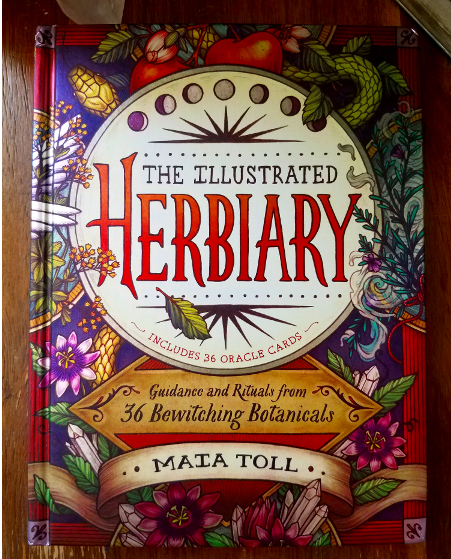
I promised myself I wouldn’t get any more books, but that was before I saw The Illustrated Herbiary, by Maia Toll.

herbiaryInitially, I purchased it because it looked like a beautifully illustrated collection of green magic based spells, without a lot of extraneous information. At this point, I have pretty much all of the “beginning witch” guides I could possibly use, and it’s not always easy to find a book of spells that doesn’t use up a lot of space on the basics of spellcasting. Upon further inspection, I was pleasantly surprised to find out that it wasn’t actually just a collection of spells and meditations — the back cover contains a pocket with a set of really lovely oracle cards.

My favorite aspect of The Illustrated Herbiary is its simplicity. The book isn’t quite what I originally thought; I figured I was getting a book of spells, each written to focus around a single herb. In reality, this book is much closer to a divination aid… At least, that’s how it’s functioned for me so far. Each of the oracle cards corresponds to a section of the book. After drawing a card or doing a spread, you can turn to the book for more information about the meaning ascribed to the card, a focus for meditating on the card, and a spell for working with the herb’s energy. I don’t necessarily agree with all of the information presented (some of the section on white sage, for example), but it’s easy to use, it’s fun, and the illustrations are really, really cool.

That said, I would have liked this book to have more information. It’s certainly stylish and fun to look at, but it would’ve been nice if it contained more spells, herb lore, or even instructions for creating herbal charms or other crafts. My only real complaint is that, once you’ve assembled the deck of oracle cards, there’s no good way to put them back in the envelope and still close the book properly. (I used it as an excuse to get a new bag from Talitha’s Altar. They make beautiful, well-constructed tarot bags.)

deckbag
Seriously, I love them.

If you’re brand new to spellwork, this book won’t really cover the basics for you. If you don’t need the basics reiterated, it’s a very fun, original divination tool and source of inspiration. I’ve really been enjoying this deck thus far, and have even experimented by combining it with the Crow Tarot and Wild Unknown Animal Spirit decks.

divination · life

Man, the Ten of Swords does not screw around.

Betrayal, sure.

I had a feeling my body was going to be what betrayed me, because that’s generally how it goes. The only thing I enjoyed less than being correct about this was waking up so dizzy I couldn’t see, and spending several hours hunched over a trash can feeling simultaneously certain I was going to die and terrified I was not. Idiopathic intracranial hypertension carries a risk of stroke, which freaked me out for a bit, but most of my face was working okay so I figured that wasn’t it. Why’d this happen? No idea — I just woke up like that.

It was frustrating. It was disheartening. It was pretty much exactly what I’d been warned about.

(Enough about that, though, because it’s gross and I want to stop thinking about it.)

I did get a lot of reassurance afterward, though. I drew cards related to healing, cleansing, and optimism. I even saw a tiny hummingbird pause and hover right outside my window, which I thought was pretty impressive considering I live in a walk-up with no outdoor space to speak of. As long as I’ve lived in this area, I’ve never seen a hummingbird here before — if I hadn’t looked at the right moment, I would’ve missed him entirely!

Anyway, this week’s one-card reading felt a little more familiar. I admit, it was supremely weird to pull the Ten of Swords last week. I usually get such good news relating to what I’m up to or things I’m working on, to have my primary deck suddenly go all “DANGER, WILL ROBINSON” at me was extra unsettling. I get a lot of cups and wands. When I do draw something from the suit of swords, it’s usually a court card.

All of this is to say that I drew the Knight of Wands and I’m feeling a lot better.

Wands12
Knight of Wands from the Rider-Waite-Smith tarot deck, artwork by Pamela Coleman Smith.

The Knight of Wands is a person (or, in this case, bird) of action, like all of the Knights. This card represents the pursuit of an idea, and the drive and energy needed to bring a vision to fruition. By that same token, it also represents looking before you leap. Unlike the Knight of Pentacles, the Knight of Wands is not patient and definitely not into conservative courses of action.

This card comes at a pretty good time — my S.O. and I finished a book not too long ago, and are now working on what needs to be done to turn it into something other people can (and might actually want to) read. It’s taken a lot of planning and strategizing already, so I definitely don’t feel like we’re acting on impulse here. Rather, the Knight of Wands seems to represent the desire and ability to actually act on the plans we’ve been sitting on for so long!

… I’m not gonna lie, though, I’m just happy it wasn’t the Ten of Swords again.


divination · life · Witchcraft

Of Brown Moths and Synchronicities

Literally minutes after I finished writing the previous, I hit “Schedule” and got up to do my usual nighttime ablutions. I’m standing there, trying to rinse the soap out of my eyes because I am a fool who couldn’t properly use a facial brush if my life depended on it, when something suddenly flies into my field of vision.

“Holy crap,” I responded, followed by a, “WHO told you?!”
(NB: “Who told you” is how I react to pretty much anything that surprises or displeases me, and also many things that don’t. They are good words for when you don’t have any better ones, like when a moth pings off of the side of your face, lands on your mirror, and acts all huffy about it.) 

It was a little brown moth. Not the sort of pantry moth I might’ve expected, though it was equally small and nondescript. If I had to guess, I would peg it as a Macaria aemulataria, though I didn’t really stick around to check its license or anything. I said goodnight, and got into bed.

That’s when I noticed that I had a new email alert on my phone. The Bloggess put up a new post: The silver moth. Her post is beautiful — full of love, kindness to a wayward moth that found its way into a pool, and memories of her grandfather. She talks about moths as representations of faith, and sphinx moths, specifically, as omens of death. It made me curious about my little brown moth. It wasn’t a sphinx, but it might be a good idea to find out if Common Angle Moths are omens of anything unpleasant. The timing struck me, and life doesn’t have many coincidences.

In dreams, brown moths are said to represent love and attraction. Moths, in general, are symbols of faith, transformation, psychic awareness, vulnerability, and adaptation, among other things. To some, they are omens of good luck. To others, bad luck. Coming on the heels of the cards I drew, I was at least happy to see that small brown moths seem to be a sign of more good things than bad… The kind of things I need to hear right now.

I’m grateful to the little brown moth that wandered its way into my bathroom. I’m grateful that The Bloggess rescued that silver moth, and I wish peace and good things for her and her family. I’m happy that I have another little message of hope, even if it did startle the everloving crap out of me and then sit on my mirror and look at me like it was my fault.

divination · life

When the News is (Mostly) Bad

So, I did my usual one-card draw, like I do pretty much every week.

My health hasn’t been great lately, which probably isn’t much surprise — stress tends to complicate things, and we have a lot going on. None of it is necessarily bad, to be honest. It’s just A Lot.

So, with that in mind, I inquired about my health. I’ve been trying some new things, hoping for a little relief. What could I look forward to this week?

I drew the Ten of Swords.

Swords10
Image from the Rider-Waite-Smith deck, artwork by Pamela Coleman Smith.

The Ten of Swords is generally regarded as crappy. How could it not be? In more or less every deck I’ve used, it features a depiction of a figure lying face down, back pierced with ten blades. It speaks of betrayal, which I can certainly identify with — not all betrayals come at the hands of other people. For example, I spend a lot of time feeling betrayed by my own organs, pollen, barometric pressure, gravity, temperatures, and bread.

In short, it’s…
I mean, it’s not a great omen.  

No card is universally bad, however, and the Ten of Swords is no exception. Does it kind of suck? Of course it does. It’s also a Ten, though, which marks the culmination of the progression depicted by the pip cards — whatever betrayal and suffering it describes is coming to an end. Are things going to get worse before they get better? Probably. But at least the sucky bit’s going to be over soon.

Not exactly reassured by this, I wanted to know how I could avoid the worst of it. I already feel poorly, how can I keep things from getting worse before they get better? I’m hoping to keep things on an upward trajectory, so a setback would be really discouraging. (Mostly because setbacks generally involve getting needles in my spine.)

I drew The Star.

The Star is particularly interesting here. It speaks of hope and optimism, which I can understand… Dwelling on how crappy I feel right now is only going to add to the stress that’s making things more difficult in the first place. That makes plenty of sense. The really intriguing thing about The Star is its position in the major arcana: it follows The Tower.

The Tower is the card of destruction and turmoil. It’s the utter demolition of old things that makes room for the new. It’s a period of tremendous upheaval, and The Star is the renewed hope, stability, and understanding that follows it. In short, things could be a lot worse. I’m nearing the end of a difficult energy cycle, and working to maintain my sense of hope is what’s going to carry me through it. Things could definitely be better, but this gives me some encouragement that there’s still something I can do. (And something I should be doing anyway, let’s be real.)

So, with these things in mind, I wanted to know when. When could I actually expect to begin to see improvement in my situation?

I drew the Knight of Cups. While court cards often indicate a blockage, or something that needs addressing before you can see improvement, Knight cards generally indicate some kind of forward motion. Great! Progress! I didn’t get a definite time this time, but still!

… I still wanted to know when though. At times like this, phrasing can be important. “When?” is generic — it can be any point in time. It could be after you recognize something the card is trying to tell you, you meet the person the card describes, or you learn a lesson the card is trying to give. Asking when, and nothing more, will not always yield an exact date. I should’ve known better… So, I asked how long from now I could expect to feel some improvement.

I drew the King of Wands. Have you ever experienced the decided feeling that your cards are great at telling you things you already know, but don’t really want to acknowledge that you already know?
I get that a lot.
In this case, the King of Wands in my deck is a confirmation that success will come with focused effort. I can’t look at my healing as a passive thing that’s going to happen to me, or something that will come with metaphysical work alone. It’s difficult to do the things I know I need to do in order to feel even marginally better, but there is no alternative. Even if I’m not experiencing any great benefits from a new treatment, gratitude journaling leaves me frustrated, rigidly scheduled polyphasic sleep is inconvenient, and I leave meditation just as frustrated as I was when I began, I have to stick with them and maintain a sense of optimism. In terms of timing, Wands indicate weeks or summer (though some consider them days or spring — experimenting with your deck can help you narrow down which is more accurate for you).

So, I have a lot of work to do. I’ve re-worked the strict schedule I adhere to, in a way that works better with the treatments I’m undergoing now. (I think most people might find that stifling, but I find it helps a lot with self-care and alleviates my anxiety.) If I can keep doing the work, even through the upheaval I’m experiencing, improvement will come.

life · Witchcraft

Let’s manifest the #$@% out of a place!

I love my apartment. I really do. It’s cozy, it’s quiet (well… when one of the neighbors doesn’t trip their smoke alarm, at least), it’s got hardwood floors, and the bathroom has its own window. Despite some of the tragedy this neighborhood has seen, this complex has been home to me and many other people.

Between me, my S.O., and our cats, we’ve really outgrown our space. It’s a studio, and not only is it packed, it is decidedly not a large enough play gym for our very active kitty boy. I have a whole set of shelves just for herbs, oils, and art supplies, countless plants, and my easel takes up an entire corner to itself — when you’ve only got four corners to start with, this is not optimal. Studios are also subjected to the same disadvantages as a lot of tiny homes. When you have limited space, you have limited things you can put in it. When you have limited things, the things you do have undergo a lot more wear and tear. This is especially true of furniture and, unless you’re lucky enough to score some rugged, solid wood thrift store finds, it becomes noticeable pretty quickly. Having your bed in your kitchen/living room/work space also makes for some awkward entertaining.

We knew we wanted to move months ago, but the timing wasn’t right. It would’ve been tough to afford, and, after some complicated car trouble, we knew that moving to a less expensive spot just outside the city would make things harder on us in a lot of ways. Originally, we planned to wait a little bit. Since my S.O. got his bike, though, our options have opened up tremendously!

Which means I gotta find an apartment.

(Let me also add that I’ve begun to develop a hate-on for the word “manifest.” I think the internet has ruined it for me. It’s also the most accurate word to use here, so I’m just going to deal.)
(And complain a little.)

I’ve posted in the past about the ways specificity can make or break a spell. Fortunately, I’ve got a list of things I really want in a domicile, and not too many deal breakers. I’m not exactly looking for a penthouse suite, and my S.O. would be happy with anything that’s larger than what we have and has a separate bedroom.

What can I say? We’re adaptable.

New Home Manifestation Spell

A Cancer moon is good for work involving finding or buying a home. If you can’t perform it when the moon is in Cancer, try to do it on a Thursday.

For this spell, I used:

  • A citrine stone. Since I am trying to transform my list of wants into reality, I was careful to choose a natural citrine over a heat-treated stone. Here’s why.
  • Paper.
  • A pen and non-toxic ink.
  • A yellow chime candle or tea light. (I like using untreated yellow beeswax.)
  • Bay leaves.
  • A fireproof bowl.
  • Success or Luck oil. Use your favorite recipe or, if you don’t have one, dilute a few drops of frankincense in sweet almond, jojoba, or another carrier oil.

You can do this after casting a circle, opening the gateway, or any other spellcasting preparation you usually do, or simply after grounding and centering yourself.

  1. Begin by taking a few minutes to meditate on what you want in a house — how big should it be? What kind of neighborhood or community do you want to live in? Is there anything you need to live near? Do you want carpet, or hard flooring? Only you know what’s important to you in a home, so take the time to picture the perfect spot for you!
  2. When you have an idea of what you need, begin writing it down on the paper. Make a list of all of the details that are important to you, and be sure to read over it afterwards before considering it finished. There might be deal breakers (like mold or cockroaches) that you neglected to mention.
  3. After the list is complete, anoint the yellow candle and all four corners of the paper with the oil. Fold it neatly, and place it under the candle and citrine crystal.
  4. Light the candle.
  5. Now, on the bay leaf, write your desire: “I manifest the home I desire.”
  6. Light the bay leaf with the candle flame, and place it in the fireproof bowl. As it burns, say:

    “I wish to find a place for me,
    the perfect home where I feel free.
    Warm and cozy, where I can be,
    safe and comfortable, so mote it be.”

  7. Allow the candle to burn until it snuffs itself out.
  8. Leave the crystal in place, until you are ready to tour a new home or speak to a rental agency. On those days, dress it with a drop of the oil and carry it in your pocket. When you return, repeat steps 5 and 6 and place the stone back on top of the paper until it is needed again.

Happy house hunting!


life

The time I was a monkey hostage.

I grew up in an area that, by the standards of my home state, wasn’t exactly affluent. Nonetheless, we had the good fortune to be located near a main road that ran from a major city, through my town, out to several areas that were considerably richer than my neighborhood. This street had some really neat shops — excellent restaurants, fantastic consignment and thrift stores, and even a store dedicated entirely to dollhouse miniatures. (I used to go there to get things to outfit the stable my grandpa made for me for my model horses. The man is a wizard with a saw.)

One of my favorite shops was a pet store. It had a room full of friendly, inquisitive parrots of every description, another full of exotic fish and anemones, and plenty of other cages full of exotic animals — hedgehogs, a toucan, I even remember a kinkajou. The shop was run by a very nice family, and, as far as I know, staffed entirely by the owners’ children. All of the animals seemed to be healthy, well cared for, with the kind of outgoingness that comes from regular handling.

My family wasn’t very well off, so going to this pet store was an outing just as much as going to the zoo might be. We rarely bought anything more than a bag of cat or dog food, but it was fun just to walk through and look.

I remember going one year when I was around four or five, maybe six. It was winter, and cold enough that I had on a lavender knit cap, a matching puffy coat, and a set of mittens on a string. I was walking past a row of cages, peeking in to see what my wide tiny child eyes could see.

Capuchin monkeys!

The cage was large, especially to me, and I don’t know how many it housed. They clambered over the branches suspended between the bars, spun rainbow-colored blocks strung on a jute rope, and sat watching the passing customers with their shiny, shoebutton eyes and fistfuls of half-chewed monkey biscuits in their paws.

Don't be fooled. These are the soulless eyes of a kidnapper.
Don’t be fooled. These are the soulless eyes of a kidnapper.

I don’t remember how it happened — I wasn’t actually that close to the cage. All I remember is turning away to look at a group of guinea pigs, and seeing a long, slim, black-haired arm snake into my view. A split second later, pairs of tiny hands pulled my hat down over my eyes and yanked me back against the bars. In the tiny sliver of light at the bottom edge of my hat, I could see more pairs of hands, arms, and even a few tails holding my coat.

“Um.” My mouth immediately went dry. I had the sneaking suspicion this would somehow be my fault, and I was almost as afraid of yelling and startling the monkeys into starting up a cacophony as I was of my mom spotting me and starting one at home. “H-help?”

I couldn’t see much, and my arms were stuck out like the kid in A Christmas Story. I was starting to panic, but also worried about struggling and accidentally hurting a monkey. Their little arms looked so spindly and fragile — deceptively so for something capable of restraining an entire kindergartner. I would’ve felt guilty for the rest of my life if I accidentally hurt one. I had also seen enough “U BREAK IT, U BUY IT” signs in other stores to foresee this ending badly. I didn’t know how much a monkey cost, but I knew we couldn’t afford one.

Help.”

I could feel the panic rising. What if I didn’t manage to get free? What if they stole my hat and I got in trouble for losing it? What if the monkeys tried to eat me? I turned my head frantically, hoping I could clear my vision enough to spot another customer, one of the employees, anyone whose attention I could try to get to help me out of my incredibly dumbass predicament.

Was this a hostage situation? Would they let me go for a banana? I didn’t even know monkey ransom was a thing, let alone had the foresight to bring anything I could use to barter for my freedom. I didn’t think my mom did, either, unless the monkeys were willing to negotiate for some Trident wrappers and half a pack of Marlboro Lights.

HELP.”

It took awhile for my mom to find me. Baffled, she started trying to pull me free before giving up and going to get one of the owners. It took both of them and the work of several patient minutes of prying away tiny fingers to free me, while monkey bedding and the remains of chewed-up biscuits rained down on us. The capuchins seemed to think this was hilarious.

In the end, I did (perhaps unsurprisingly) manage to get free. No monkeys were harmed, and my hat was only slightly unraveled. We still went to that pet store for years afterward, but I did stop wearing hats there.

divination · life

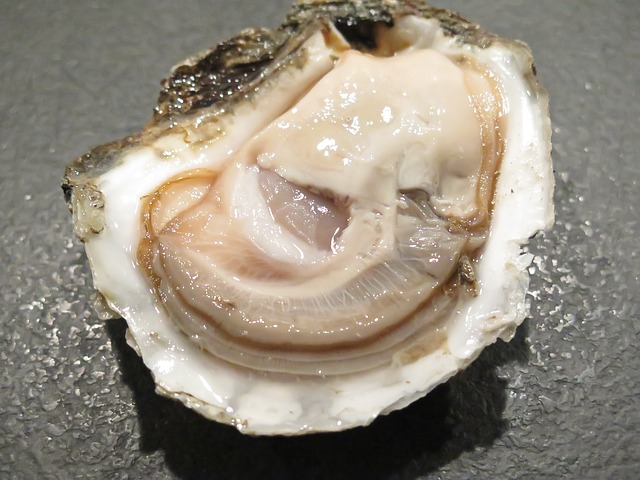
The Wild Unknown called me an oyster and I don’t know how to feel about that.

Part of being Pagan, for me, is seeing the sacred in everything. I’ve seen some people arrive there because they were raised that way. Others arrive there after a crisis. From the unsprouted embryonic leaves in a seed (tiny, but strong enough to split a rock), to the chaotic force of a tornado, there is a majesty and a power in everything.

I am reminding myself of this because I do not want to be an oyster.

Don’t get me wrong — there’s nothing wrong with oysters. Farmed oysters are the most sustainable, least ethically objectionable source of animal protein. They turn bits of sand into pearls. Their shells are neat. They’re not exactly great judges of character, but they could be worse. They are basically questionably sentient water nuts filled with goo. It’s fine.

Still, as I was shuffling my new copy of The Wild Unknown oracle deck the other day, I had my hopes up. What energy would it help me connect with? A wolf? Lion? Maybe a snake?

An oyster.
“Surprise, nerd.”

Nah.

(I’ll level with you, this feels like a bit of hypocrisy considering my inward criticism of certain sectors of new age spirituality — like that nobody ever seems to have a dung beetle or a pantry moth as an animal guide.)

I don’t necessarily not want to be an oyster because I think they’re gross or boring, mind. They remind me of a sinus infection and aren’t exactly the kind of thing I’d want to hear Sir David Attenborough discuss at length, but still.

The Wild Unknown describes oysters as patient and persistent, but likely to hide things. They can be shy and withdrawn, and suffer from self-doubt. “When the oyster card appears, it’s important to reveal your inner treasures.” When in balance, oysters are generous and masterful. When they’re not, they are reluctant and silence themselves. To bring things back into balance, making yourself share something helps.

So, tomorrow, I’m gonna share you a thing.


divination · life

The Ten of Cups

Hello! It’s been a month(ish) since I last posted. I’m sorry about that.

I do have a pretty good reason for dropping off of the face of the earth, though — sort of a combination of managing my health and that thing where you’re not supposed to tell people you’re doing a thing, because you’ll get the same emotional high from talking about it as you would from actually doing it and then end up never actually finishing it.

Anyway, in my time away I finished two paintings and one book, written collaboratively with my awesome and creative S.O. So that’s neat.

He and I have no idea how and if it will ever be published, but, thus far, beta readers have received it well. After getting the first round of feedback, we’ll have to seek out an editor, and then decide how we want to progress.

(It is a very long, drawn out, complicated process, and I am glad he has elected to handle most of it. I got to compile everything, make the initial edits, and format it all into a readable manuscript.)

Even if no publisher wants it and nothing comes of it, it’s certainly a good feeling to look at your writing and be able to say you’ve finished a full-length novel.

So, I wasn’t that surprised when I pulled the Ten of Cups this week.

Cups10
Ten of Cups from the Rider-Waite tarot, artwork by Pamela Coleman Smith.

The suit of Cups speaks of emotional fulfillment, and Tens are the completion of a cycle. They’re the ultimate culmination, So, it’s probably unsurprising that the Ten of Cups, then, speaks of joy, peace, and happiness. It’s contentment, emotional security, and an abundance of love. Though the artwork varies from deck to deck, it usually depicts a couple joyfully surveying a landscape replete with signs of luck and happiness — a rainbow, flowers, sunshine, rolling hills, a neat little house, you name it. It’s one of the most positive cards in the deck.

Working with my S.O. on what has ultimately been a labor of love for the both of us has been a trip. We started writing collaboratively as a way to roleplay — acting out little scenes between the two of us when distance, money, time, or health didn’t let us go on many adventures. This practice evolved into a setting with deep lore, eons of history, its own cosmology, and a tremendously varied cast of characters. To be honest, last we counted, we’d written enough for several novels and two or three anthologies of short stories, but this is the first we’ve felt confident enough to put through the process of turning it into something actual.

I feel like it’s a bit like having a baby, only nobody had to throw up for months, we still get to sleep afterward, and everyone’s perinea stayed intact. So probably not actually much like having a baby.

Hopefully, when all the hurly-burly’s done, I’ll be able to share it with you, too.

life

Getting Real Sick of “Wellness.”

A big part of witchcraft is learning to see through illusions, and let go of that which is no longer useful. So how much longer are we going to keep putting up with wellness?

Sorry, I should probably specify — “wellness.”

I’m not sure when it began, though I imagine it’s an insidious trend that you could probably follow all the way back, beyond the days of irradiated water jugs and Eben Byers’ jaw. There’s money to be made in solving problems, but there’s a fine line — make sure people know they’re unwell, but not too sick in any verifiable way, just unwell enough to require an easily-marketable brand of help. Blame stress, and you can turn attention away from the socioeconomic factors that are actually making us ill in the first place. We’re stressed, and that’s a problem that needs solving! Maca lattes! Yoni eggs! Self-care!

I could go into the ways that self-care has gradually morphed into self-indulgence, or the various racialized and gendered aspects of the wellness industry, but these are things for another day. Instead, I’d like to point out the ways that self-care has adopted a more sinister role: Not only are we supposed to spend money and energy to properly perform “self-care,” we’re supposed to do this in order to prolong our own exploitation. Take enough eleuthero so you don’t feel worn out at your second or third job. Stay hydrated so your eyes don’t get puffy and tired-looking after you’ve been up until five AM with a sick child, or you’ll hear about it from your boss. Your company won’t give you benefits, but there are beanbag chairs in the break room. You have to put in mandatory unpaid overtime, but they’ll let you nap in your office. Forget about adequate sick leave, vacation time, therapy, or health care, you need ping pong tables and this herb-, vitamin-, and crystal-infused water!

The thing is, I’m not stressed by electromagnetic frequencies, or because I don’t know how to sleep properly. People around me aren’t stressed because they don’t have a relaxation app or aren’t drinking the right tea. They’re stressed because economic insecurity requires both parents to work in the majority of families (61.1% in 2016, up from 31% in 1970) while affordable child care options remain sparse and birth control, abortion access, and adequate maternity/paternity leave is considered an entitlement. (Don’t even start me on our maternal death rate.) They’re stressed because they have to hope they can crowdfund insulin this month, or figure out how to make their child’s medical equipment out of scraps from Home Depot. Oils won’t fix that, Brenda. 

(Cue someone inevitably supplying an ironically smug, “Well, don’t have kids if you can’t afford them,” even though they’re eventually going to need the generation being born now to empty their bedpans, administer their medication, and keep them from wandering into traffic. Save your energy, my dudes. I see you.)

In an article by Jessica Knoll in the New York Times, Smash the Wellness Industry, she mentions that many aspects of it rely on the trope that women, especially, are silly bubbleheads that can’t care for themselves:

[W]ellness also contributes to the insulting cultural subtext that women cannot be trusted to make decisions when it comes to our own bodies, even when it comes to nourishing them. We must adhere to some sort of “program” or we will go off the rails.

The wellness industry exists as a sort of modern day panem et circenses that places the blame for our exhaustion and dissatisfaction squarely on ourselves, while absolving the structures that create these feelings with the vague, yet seemingly immutable, idea that “life is just stressful.” If we’re tired, it’s not because of the number of us required to work multiple jobs to make ends meet, it’s because we’re not sleeping right or drinking enough green juice. If we feel stressed, it’s not because the gig economy is quietly undermining worker’s rights and protections, it’s because we don’t take the right supplements. If we have brain fog, it’s not because of the anxiety and depression we can’t afford to treat, it’s because we sleep in the same room as our cellphones. Modern life, man. Whaddyagonnado?

It doesn’t help that wellness has effectively become a luxury, either. In I Helped Turn Wellness Into a Luxury Good. Now It’s Out of Control, Rachelle Robinett discusses just that:

I see healing sessions staged for the photo-op. I listen to supplement retailers position their wares with promises instead of information (“Calm”, “Youth Water”, “Meditation Tonic”). And, at the boardroom tables of so many companies, I hear how they want their products to represent “a movement,” be “a lifestyle,” and “empower” people. But I believe there’s nothing empowering about selling detox waters, vitamins we can’t absorb, or overpriced herbs without giving people the tools they need to create real, lasting change.

We’re worn down, and the solution we’re offered is something that costs time and money that more and more of us don’t have. The most overworked, underslept, undercompensated, stressed demographics — theoretically the most in need of the wellness industry — are also those least likely to be able to afford help. And, as Robinett points out, even those who can afford it are more likely to get placebos and platitudes rather than assistance achieving actual mental, physical, and spiritual health.

I am not against some of the things co-opted by the wellness industry, myself. Some of it helps. Gods know I use crystals, herbs, and oils. I meditate every day, keep a gratitude journal, and listen to binaural beats-enhanced music, because they work for my situation. I’m not against using them, I’m against pushing them as vague remedies for the symptoms of a much deeper problem. Unfortunately, the commercialization of wellness has turned many of these things into a performance, items to add and check off of a list in the pursuit of a nebulous vision of health and happiness. When we are told what we need to have and do to be well, rather than given the opportunity to get in touch with what we actually need, that’s a problem. When taking care of ourselves becomes a shopping list rather than a mindful practice that we are afforded the time and energy to do, that’s a problem. When we are given things to buy rather than ways to effect lasting societal change at the core of what makes us unwell, that’s a fucking problem.


Plants and Herbs

Hand-Feeding a Pitcher Plant

Rule number one of keeping a Nepenthes is that you keep the fertilizer far, far away. Some horticulturists have had success with foliar feeding, but I don’t yet trust myself not to hurt mine — they’re more delicate than they seem, sometimes.

Carnivorous plants are carnivorous because their roots are not well adapted to extracting nutrients from their substrates. That’s why they eat bugs. Digestive enzymes are nature’s way of making sure they get fed, roots or no. Well… Unless they’re one of the types that evolved to digest fallen leaves or be a sleeping bag for bats, but I digress.

My N. ventrata’s pitchers are still fairly tiny (there are a bunch of them now, though), and my apartment is mercifully bug-free aside from the occasional spider or stray stinkbug, so there isn’t much hope when it comes to leaving my plant to its own devices. If it’s  hoping to catch a meal here, it’s going to be very disappointed for a very long time.

That’s okay, though. I’ve got this covered.

Pitcher plants are easier to hand feed compared to Venus fly traps. For fly traps, you have to rehydrate dried insects into a kind of bug-burger, then wiggle it around until the trap activates. Too much water, and the liquid might cause the plant to rot. Not enough, and the plant’s digestive enzymes might not be able to break it down adequately.

Pitcher plants, though? They’re a breeze:

worms
Delish!

Nepenthes pitches contain so much liquid, rehydration isn’t really an issue. They also lure insects rather than trap them, so I don’t have to put on a dead bug puppet show to get them to latch on. Take a pair of tweezers, pick up a pinch of dried bloodworms, and drop them in. You can even crush the worms to powder for particularly small pitchers. It doesn’t take many, so one container will last for ages.

Larger pitchers benefit from dried crickets or mealworms instead, but my guys are much too little for that. Pinhead crickets are often available as a special order from some pet stores, but they usually only come in large increments. I also don’t want to have to fight with fitting live crickets into those tiny pitcher mouths!

Feeding is kind of a misnomer, though — nepenthes are still photosynthetic, and depend on carbohydrates for energy. Bugs are more akin to fertilizer than actual food. As with other types of fertilizer, it’s better to err on the side of not feeding enough versus feeding too much. I don’t feed my pitchers often — once a month, if that. Regardless of what you feed them or how often, it’s important to make sure that the insects are completely submerged in the digestive fluid. If they aren’t, they’ll just end up growing mold instead of breaking down and feeding the plant.

Hopefully, I’ll have some pitchers large enough for crickets soon. Until then, I’ve got loads of bloodworms!