
Witchcraft

Is energy manipulation necessary for magic?

Funnily enough, I got the idea for this post a long time ago — when I was reading up on reasons why cognitive behavioral therapy might fail. That, coupled with a lot of books and papers on traditional and folk magic, raised an interesting question in my mind:

Is energy manipulation requisite for magic?

I’ve seen some experienced witches who poke fun at the spells created and posted by younger ones. I’ve even written about raising and directing power myself. Here’s the thing though — none of that shows up in the really old stuff.

Seriously. I can point you to a hundred different old bits of magical folklore and formulae, and not a one will mention anything about raising, directing, or releasing power. Nonetheless, these spells were important enough for the practitioners to pass them down.

If you look at modern spells and rituals, though, some manner of energy manipulation is considered absolutely requisite. If you skip it, or somehow do it wrong, you won’t achieve your goal. You could argue that the old wise women and cunning men raised and directed power without doing so in so many words, or even worked old magic without realizing that that’s what they were doing. If that’s the case, then who’s to say that this power-raising has to be done on a conscious level?

I have a theory that I find pretty interesting. It’s similar to one posed by Phil Hine in Condensed Chaos, when he talks about Spirit, versus Energy, versus Cybernetic models.
I don’t think magic changed. I think we did.

The Guardian posted an article a couple of years ago on the apparent decline in effectiveness of CBT. Oddly enough, this decline might be due to nothing more than CBT’s reputation. When it was first developed, it was lauded as a marvel of modern psychology. This perception may have influenced how effective it was for people who tried it — believing they were learning a miracle cure for their problems, they experienced one. As more and more people went through CBT with less than stellar results, this perception shifted. It’s declining in effectiveness because it no longer benefits from a reputation as a miracle.

This isn’t to say that all magic is a product of the placebo effect (though there are certainly branches of mental magic that rely on it to a degree). I’ve had experiences I definitely can’t attribute solely to that. But, as the article above mentions, a 1958 book by psychoanalyst Allen Wheelis stated that Freudian psychology no longer worked because people had changed. Modern humans were better at self-understanding. They now needed different tools.

The old techniques weren’t completely wrong; they’d just outlived their usefulness.

Oliver Burkeman

Modern humans are better at understanding the physical underpinnings of the world (arguably at the expense of our metaphysical understanding and psychic sensitivity). We have knowledge that would’ve been unthinkable to our ancestors. Learning changes us. We interact with energy — and therefore magic — differently. One of my ex-partners’ grandmothers cured people of worms by snapping a handful of straw over their stomachs. My ancestors did things that, if I posted them to an online grimoire, would have experienced witches laughing and poking fun at them for being ineffective “baby witch” spells.

The act of observing changes the observer as well as the observed, and we’ve done a lot of observing.

Does this mean that one way is better, more legitimate, more powerful? I really don’t think so. As Burkeman says, old tools outlive their usefulness. We’ve changed. Ten thousand years ago, nobody could digest milk in adulthood. (And don’t even get me started on what we’ve done to our jaws.) We occupy and interact with our environment differently — including the unseen world. It’s entirely possible we need to consciously manipulate energy because that’s what we’ve adapted to.

I’m curious to see what shape the future takes.

life

A man, a plan, a sledgehammer.

I’m firmly of the opinion that most people would benefit greatly from cultivating four disciplines: something physical, something linguistic, something creative, and something that pays the bills. It doesn’t really matter what those things are, as long as you’re able to keep at them. Some people can luck out and become multilingual professional musical theater actors and knock out all four at once. The rest of us, not so much. Still, even if you never become fluent in another language, even if your creative endeavors never turn into a profitable side-hustle, it’s okay! The real goal is to improve your physical health, release endorphins, and maintain your neuroplasticity.

Admittedly, I had a hard time finding a physical activity I enjoyed. My body’s been through a lot, between chronic CSF headaches, joint pain, deconditoning, this one weird, twisty rib that pops in and out ever since I got run over, etc. Activities that weren’t boring usually put too much stress on my body. Activities that were gentle enough didn’t keep me mentally stimulated. Then a friend introduced me to shovelglove. (Note: The original page contains some ableist and fat-shaming language.)

The teal deer is this: You get a sledgehammer. You wrap the end in a sweater so it doesn’t heck your floors. For fourteen minutes a day, every day except weekends and holidays, you pick it up and you move it. It isn’t important how you do this — pick motions that feel good and get your muscles working. It doesn’t matter, as long as you’re consistent. If it starts to feel too easy, buy a heavier sledgehammer.

As a concept, it appealed to me for several reasons:

  1. It only requires fourteen minutes a day, and nothing at all on weekends or holidays. That’s barely a blip in my schedule.
  2. It’s really freeform, so it’s hard to get bored. Turn it into an imagination game. Crank up Finntroll or Turisas, pretend you’re building a forest stronghold and fighting off bandits, and the fourteen minutes’ll be up before you know it.
  3. The movements feel useful. I never really enjoyed regular weight training because, while it’s certainly effective, the motions feel repetitive and arbitrary. This feels natural and functional, like my body is learning to do things (row a boat, chop wood, battle alien invaders) that I might actually have to do someday.
  4. You only need two pieces of equipment: a sweater, and a sledgehammer. One, I had in my dresser. The other, I got from a hardware store for like $10.
  5. It can be as intense or as gentle as you want.
  6. It makes me feel like a sexy barbarian.

I also enjoy it because I feel like it’s a good idea to have some familiarity with some kind of melee weapon, even if you’re not actually practicing a martial art with it. My partner has some pretty serious training in a variety of martial arts. I can at least brain a dude with a maul if I need to.

The only piece of advice I’d give is this: Engage your core. If you’re not familiar with the movements you choose, and aren’t careful to protect your back, it’s very easy to wrench something.

Other than that, it’s a fun, effective way to exercise, and one I actually look forward to. I’ve been able to achieve visible results — while before I had the noodly appendages of a heavy reader, my biceps and triceps are larger, more defined, and just generally better at doing stuff.

Plus spending fourteen minutes a day feeling like a Klingon is pretty rad, in itself.

life

Safe(ish.)

Man, where do I even start?

By now, you probably know that a bunch of insurrectionists stormed the Capitol Building, where they were more or less welcomed with open arms by the people tasked with preventing that kind of thing. At least, until some rioters apparently tried to make their way to Pence’s office, resulting in one tragic death. Excruciatingly stupid, but tragic.

We were put under a 6 PM curfew. There’s a state of emergency until the inauguration. People are already talking about disciplining the police, who seemed complicit at worst and mind-bogglingly ineffective at best, and having the national guard walk around the city with guns. The Department of Defense is blaming the police, the police are blaming the DoD, and I’m pretty sure the mayor has some solid ground to blame both. House Majority Whip James Clyburn thinks the whole thing may have been an inside job, as insurrectionists were able to target his unmarked office while ignoring his marked one.

Without doxing myself, I live near where all of this went down. Like, really near. To say this has been a nerve-wracking shitshow would be an understatement. I’m not even going to get into the difference in police response to the insurrectionists vs. BLM, because more eloquent people have already done that many times over, and, to be perfectly honest, I generally don’t express myself well when I’m on the brink of a rage aneurysm. I will say that it has definitely served to underline the idea that police apparently can interact with protesters in a nonviolent fashion, and choose not to.

There were pipe bombs. There was a hastily-constructed gallows.

About half of the population of various pro-Trump venues blamed antifa for staging the insurrection to make them look bad, the other half posted selfies from inside the Capitol Building. Others posted their relatives’ pictures with pride. It doesn’t really matter, because the insurrectionists learned absolutely nothing from other protests and refused to wear masks, so identifying them hasn’t exactly been difficult.

One of my S.O.’s co-workers had rioters on their porch, and had to chase them away with a bat. The rioters said he “better have a gun next time.”

We’re safe here for now. Word is there will be more riots. Even if there isn’t, it means there will be more curfews and guards. Even if the insurrectionists are punished for their actions, it’s the people who actually live here who’ll have to deal with the consequences. (Probably in perpetuity, too, considering the fact that people in airports still have to take their shoes off before they’re allowed on a plane.)

I just… I’m so tired.

life

Isolation Vacation

As it turns out, there’s a buttload more to working from home than setting up a desk.

I think neither my partner nor I would’ve been able to predict the effects it had: worse sleep hygiene, confused cats, a general air of unease, a much harder time separating work and life, working an extra three hours or so a day. The trouble is, if you have to work from home, you don’t get much choice in the matter — you either have a separate space for an office and the kind of mental walls that help you keep your work life and home life separate, or you’re kind of boned.

So we engineered a way to take a vacation in the most low-risk, isolated way possible.

Getaway offers tiny cabins a little less than two hours outside of D.C. It worked out perfect for us — we booked and paid for the cabin online a few months in advance (they fill up quick), picked up some extra provisions during our last grocery trip, filled up on gas when we normally would anyhow, and made the trip without having to stop. Checking in was completely contactless, too. We received a text with the lock code, keyed it in to the number pad on the door, and stepped into a very comfy, charming one-room cabin.

It was pretty much perfect. There was a spacious bathroom at one end, with a large shower and accessibility bars. At the other, there was a big, marshmallowy queen sized bed under an enormous window that looked out onto the woods. The cabin also had a pretty well-equipped kitchen, with a two burner stove, sink, pots, pans, silverware, and dishes. (There was even a bowl for traveling dogs.)
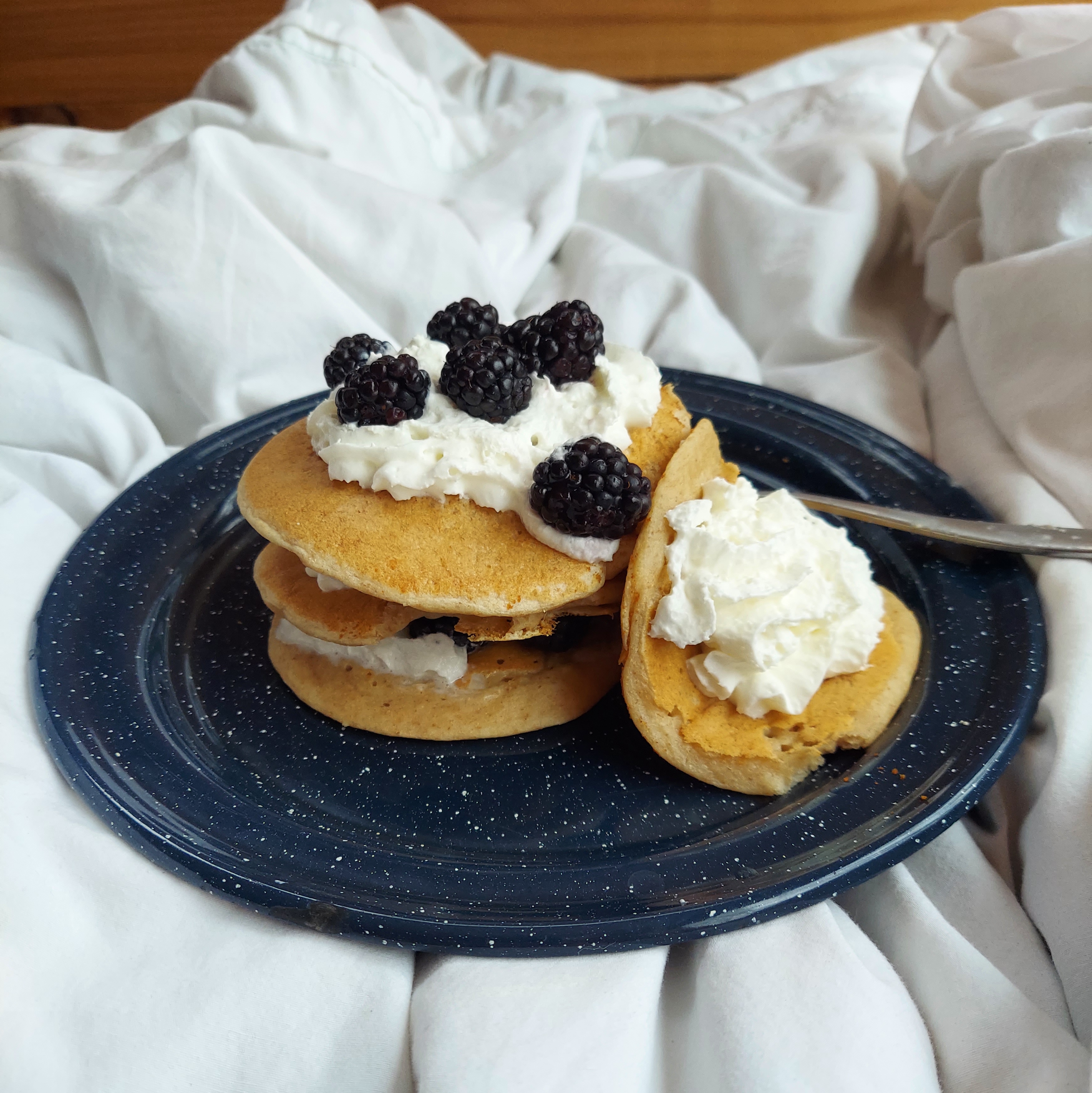
It snowed pretty heavily, which kept us from really taking advantage of the trails or the fire pit. Even so, it was really wonderful being able to snuggle up in bed with a cup of tea and some pancakes, under that huge window, and watch the snow through the trees. The night sky was gorgeous, too — I stayed up late both nights to stargaze.

It was just cozy, you know? Peaceful. Idyllic. No work emails, no calls, no wifi to answer them even if we wanted to. Just the creaking of the trees in the wind, snow, and the stars at night.

It turned out to be a great atmosphere for brainstorming, too. My S.O. and I did some storyboarding, and he wrote a really awesome short story (that will hopefully go up somewhere in the future). I had about a thousand ideas, but didn’t really get into writing or making art while I was there — I took a few notes and made some sketches, but I didn’t want to lose too much time trancing out in a creativity fugue like usual.

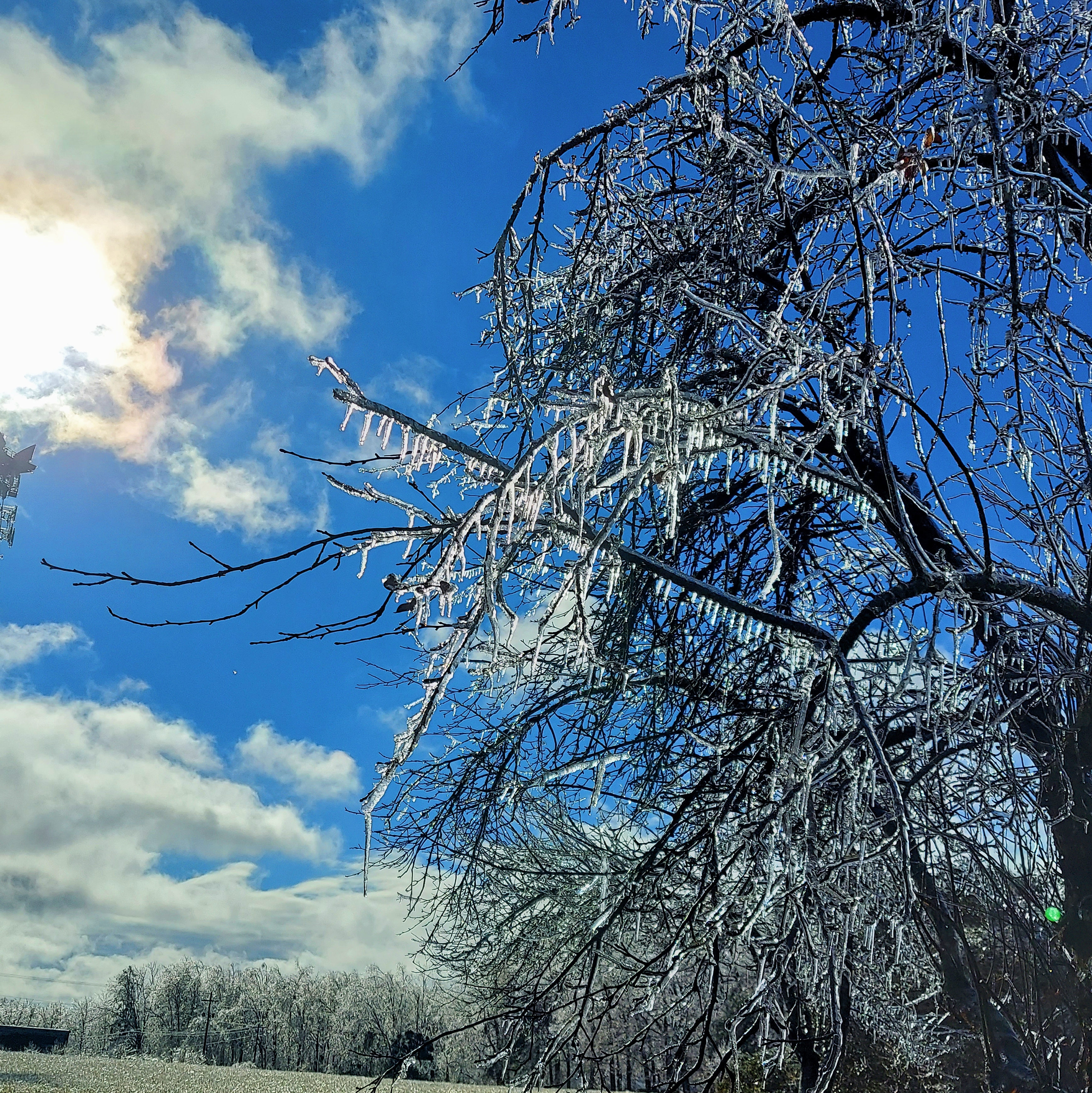
Even the way home was pretty. It rained after it snowed, and the nighttime temperature drop made the water freeze around all of the bare trees until it looked like they were covered in diamonds. The sky was blue, and the sun glittered through the trees’ ice-covered claws until even an ordinary road next to a set of power lines looked like something out of Narnia.

Everything was so bright and pretty, in fact, and we felt so refreshed, that we didn’t really want to go home right away. Stopping somewhere populated wasn’t really an option, but that’s okay.

There’re always roadside attractions.

We’re both kind of suckers for them (by which I mean that, if there’s a World’s Largest Something between here and California, we’ve probably stopped by). The biggest windchime? Been there, rang it, had a slice of pie. My S.O. had barely opened his mouth to say he wished there was something cool on the way home before I had a list of things that were a) large, b) unpopulated, and c) at least slightly ridiculous.

And that’s how we found a giant nutcracker. (Well, mostly the head.)

He used to be a paving company’s tar silo. When a paint company bought the property, they painted it and converted it to this fellow. Honestly, the setting had a pretty unique sense of melancholy — there he was, with the approaching clouds just beginning to gray the sky, strewn with unlit Christmas lights, staring unblinkingly out at a McDonald’s across the street.
It felt very Lynchian, though I’ll be damned if I can explain how.

Our appetites whetted by the urge to see more huge things, we next drove back to D.C. to find an actual giant.

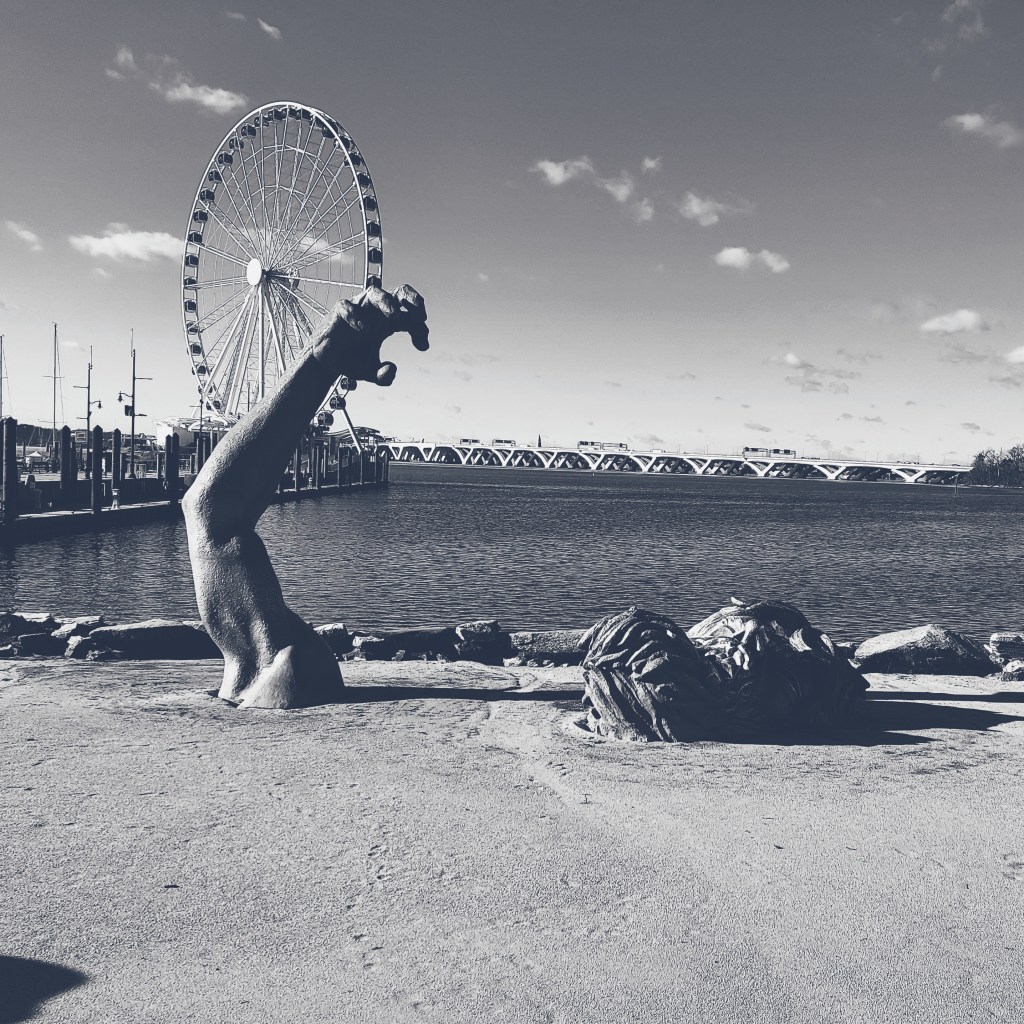
Fortunately, it being the middle of the week, during a pandemic, and also December, the place was pretty much deserted. Several areas were closed off, so I wasn’t able to get closer to the sculptures themselves, but the image was still very striking. There he was, this metal titan struggling up from the beach sand, face twisted in anguished effort.
Then, in the background, a lazily turning Ferris wheel.

I don’t know if any of you have played Kenshi, but there’s one particular area that gives me a similar feeling. There’s just something about massive metal hands clawing vainly at the sky that’s so damn eerie. When it’s juxtaposed against a beach and a carnival ride, it’s surreal as hell. I love it.

Now we’re home, snuggled up with two cats who had Many Things to Say about our absence. If you’re reading this the day it was posted, it’s the winter solstice. Keep your eyes peeled tonight for the conjunction of Jupiter and Saturn, and have a happy Yule.

Blog · life · Plants and Herbs

In the conifers.

As much as I love cypress trees literally any time of year, November to early December is my favorite time for them.

Why?

Because they make everything smell fantastic.

Bald cypress trees turn orange and shed their needles in autumn to early winter — as I write this, most of the ones here are, indeed, impressively bald. The result is a carpet of needles mingled with sticky, resinous cones.

The cones are particularly interesting to me. They start out as small, hard green buds. Sometimes you can find them on the ground as early as October, but they don’t really ripen for another month after that. Then, they expand and become almost crumbly, their scaly surfaces separating and falling apart to reveal the fragrant seeds inside. That’s when it’s really nice to find a stand of them and pick up a few from the ground. I live for the smell of the rich, autumn soil, the earthy-spicy-sweet smell of decaying leaves, and the fresh, piney, almost citrusy scent of cypress resin. If I can meet some mushrooms or a neat patch of lichen on the same trip, I’m ecstatic.

(I’m a pretty easy organism to please, all told. I’m pretty much a beetle with different ideas.)

We went and gathered a few cones not long ago. I keep a small jar of them on my altar, right next to a bald cypress knee. The seeds, I sneak into various concoctions — nothing ingestible, though. While cypress trees are generally not considered poisonous, they’re not edible, either. It’s a bit of a bummer, if you ask me. I’d love to be able to have it as a twist on pine tip tea.

After that, we took a trip to the arboretum. Naturally, there’s not much to see this time of year — the flowering dogwoods are not, the lilac is long since asleep, and the oaks and maples are skeletal — but there’s a kind of architectural beauty to a lot of the bare trees. Now is when they get to show off colors and patterns in their bark, the strange, Escher-like twists of their branches, and all of the other things leaves hide in spring and summer.

Most of the conifers, of course, are still going strong. I met a Norway spruce that I found especially pretty — I hadn’t realized that their immature buds look like flowers before, their papery brown petals unfolding like tiny roses.

It wasn’t late when we arrived, but this time of year, the early sunset and angle of the planet slants the sunlight in a way that makes everything look almost surreal. It’s a cold beauty, but I love it.

crystals · Witchcraft

What is Devic Temple Quartz?

Lemurian. Elestial. Devic. Lightbrary.

Buying quartz can be complicated.

Sigil. Starbrary. Garden.

The truth is, most of these terms are just names for physical features of the crystal itself. Some claim that these physical traits line up with the stones abilities or affinities, but this isn’t always the case. One of these terms is “Devic Temple Quartz.”

So, what’s a Devic Temple quartz?

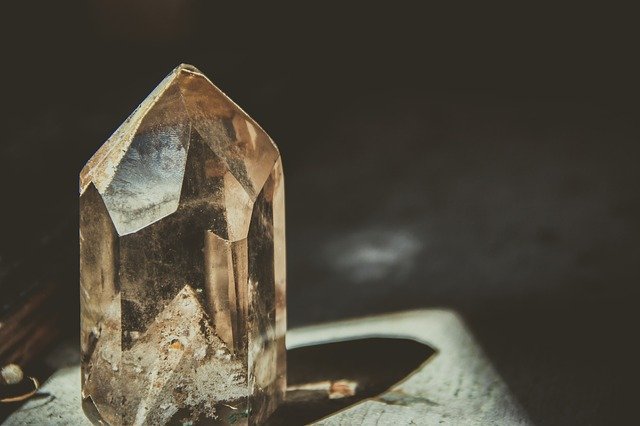
In simple terms, a Devic Temple quartz is a quartz crystal that has internal fractures that resemble seats or shelves. These usually also have some visible foggy wisps produced by trapped gasses or water, often called “fairy frost.”

If the water inclusions are large enough, it might also be called “enhydro.” If it appears to have the outline of another crystal inside, it might be called “phantom.” If it contains inclusions of hematite, chlorite, or other minerals, it might be called “lodolite.” As a word of caution, while lodolite is a common term among gem enthusiasts, it’s not actually a real name. It pretty much just means “stone that has some mud inside.” You might also see these called garden or shaman quartz.

Like I said, there are a lot of words involved. Try not to sweat it too much.

What can it do?

Devic Temple quartz is purported to house light beings, nature spirits, or other allies. Sometimes, if you look at the internal fractures, rainbows, fairy frost, and other features, you can see what appear to be faces, dancing bodies, or humanoid/animal shapes.

Since these crystals are said to act as “houses” for spiritual entities, they’re considered a way to communicate with them in meditation, healing, and so forth. Having one of these guys is pretty much like a direct line to the spirit in the crystal. Some also consider them a way to communicate with faeries and/or angels.

Here’s where my opinion differs…

Honestly, from my experience, all crystals have their own presence. Sometimes, you can perceive it as a kind of electric feeling in your fingers — like the feeling you’d get if you were holding a bird, a firefly, or some other tiny life, afraid of squeezing too hard. This isn’t to say that a crystal is alive the way we typically conceptualize life, but it’s in there. In this respect, Devic Temple crystals aren’t unique.

That said, they can make it easier to access that presence. It’s kind of like the difference between trying to find a hermit in the woods, and walking up to a numbered address with a brightly-painted front door and a sign that says “Free pies, inquire within.”

Sometimes, you can see the physical appearance of a crystal’s presence in the fairy frost, even if it isn’t a Devic Temple crystal. One of my favorite meditative activities is to sit with a a crystal, a macro lens, and a good light source, and look for tiny buddies.

If you look on the left, you might see a faint image that looks like a side-on view of a human skull. What else do you see?

Do you need a Devic Temple quartz? I wouldn’t say that they’re essential — but I wouldn’t say that about any crystal. Ultimately, if a stone resonates with you and is responsibly sourced, pick it up. Don’t buy it because of the names attached to it. Choose what you’re drawn to and discover its unique features afterward, when you have a chance to sit with it.

life

I’ve been translating my cat.

I mean, that’s not what’s kept me busy for the past twenty or so days, but it’s a small project I’ve embarked on.

(What did keep me away was an absolute ton of paid writing. It’s hard to write all day and then still feel like I want anything to do with words by the time I’m done. This is especially true when that writing involves hours of researching things like metallurgy and UV-C lighting. By the end of it, my brain is tired and feels like the tail end of a discarded boba tea.)

About a week ago, my S.O. and I found the app Meow Talk. It claimed to be able to record cat noises and translate them into something understandable to humans. I consider myself pretty perceptive when it comes to figuring out what these nerds are trying to say to me, but, admittedly, I was curious. How accurate could a cat recording app really be?

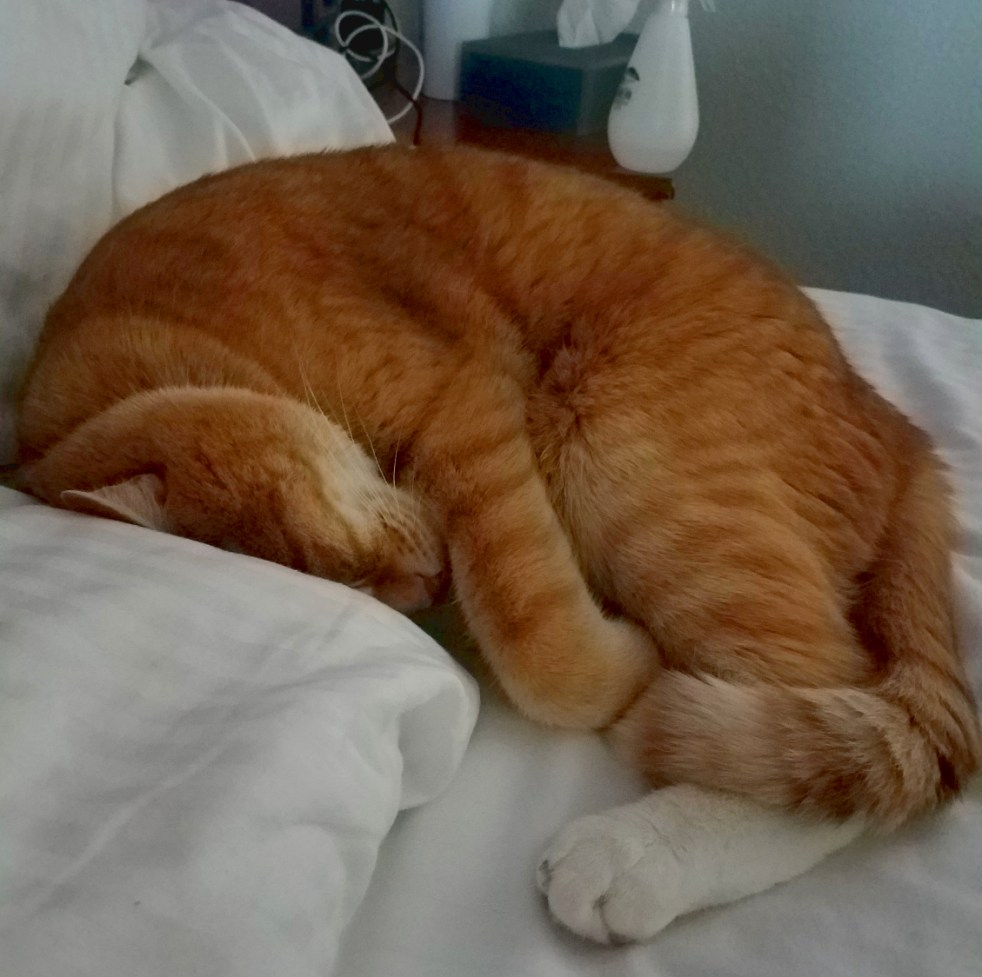
A fangy-toothed cat sleeping upside down.

As it turns out, eerily so. It correctly interpreted all his weird little greeting chirps as “Hello.” He also tells the fridge “I love you,” and responds to my attempts to smooch him with “I AM IN PAIN.” Like I said, accurate. Meow Talk isn’t even paying me for this endorsement. I’m just genuinely surprised and tickled that someone was able to interpret my cats weird little trills and yowls. I haven’t yet managed to capture one of his weird 3 AM TED Talks to no one, or the paid mourner-style wailing he does every time we move a piece of furniture, but I’m working on it.

It doesn’t really work on Kiko, but she primarily communicates through touch. If someone makes an app that can turn little paw-taps into human speech, I’d be all over it. So far, I’ve managed to figure out her “please sit by my bowl and watch me eat,” “smooch my head,” and “roll over, I need to nap on your stomach. It’s an emergency” bops, but she’s developed a very robust punching-based language that defies interpretation a majority of the time.

If you have a cat, especially a vocal one, I recommend messing around with the Meow Talk app. It’s fun, if nothing else, and could be informative. Especially if your cat has a weird attachment to appliances.

life · Neodruidry · Witchcraft

A Soggy Samhain

It was cold and rainy here over the weekend, though that was fine by me — we weren’t exactly spoiled for choice when it came to bonfires and dumb suppers this year. Besides, though rainy weather does my brainmeat up all wretched, it does make me want to clean and air everything out.

So cleaning, cleansing, and refreshing all of my wards is exactly what I did. I would have refreshed my altar too, but I did that on the last new moon — dusting it, wiping it down with a special blend of oils, herbs, and flower water, burning more herbs in my hearth-cauldron, lighting candles, the whole bit.

I often like to take all of the herbs that are getting to be past their peak, ones that I’ve had lingering in my herb jars, drawers, and cabinets for a bit too long, and burn them on Samhain. It just feels right to burn the old herbs, thank them for their usefulness, and either save the ashes (depending on the herbs) for black salt or return them to the soil. I didn’t get to do that this year, but that’s okay — I don’t really have a big stash of old herbs anyhow.

I also filtered the oil I’d started on October’s first full moon, which gave me an inexplicable craving for pizza (courtesy of all of the dittany of Crete. That stuff smells delicious). Now I’ve got a neat little bottle of fresh raven oil chilling in my secret stash, which makes me pretty happy. I’d love to be able to work this combination of herbs into another form — incense, maybe — but many of them are the type that just tends to be throat-pluggingly smoky and bitter when they’re burned. They might work alright if they’re in small amounts and sufficiently worked into a sweeter-smelling base, but that’ll take a little experimentation.

This month came with its usual compliment of especially vivid dreams and messages, but I won’t bore you with those details. I hope the feeling lasts, though. I’m always at least a little sad to see them go once the veil’s no longer as thin.

So how was everyone else’s holiday?

life

Dirt, Moss, and Cypress Knees

One of the really hecking sweet parts of having more physical endurance now is that places I already loved to go have opened up a lot more to me. Take Kenilworth Aquatic Gardens, for one.

It’s a very quietly beautiful place most of the year, other than summer when the lotuses bloom in a sea of brilliant pink. It’s never very crowded, there are always plenty of places to sit, and you rarely hear people over the orchestra of insect calls and birdsong. Even the city traffic dulls to a low, forgettable roar in the background.

Even though the gardens are arguably at their best in summer, I like them the most in autumn. My favorite part of them isn’t the lotuses, really (though I have a certain appreciation for their alien-looking pods), it’s the bald cypress trees.

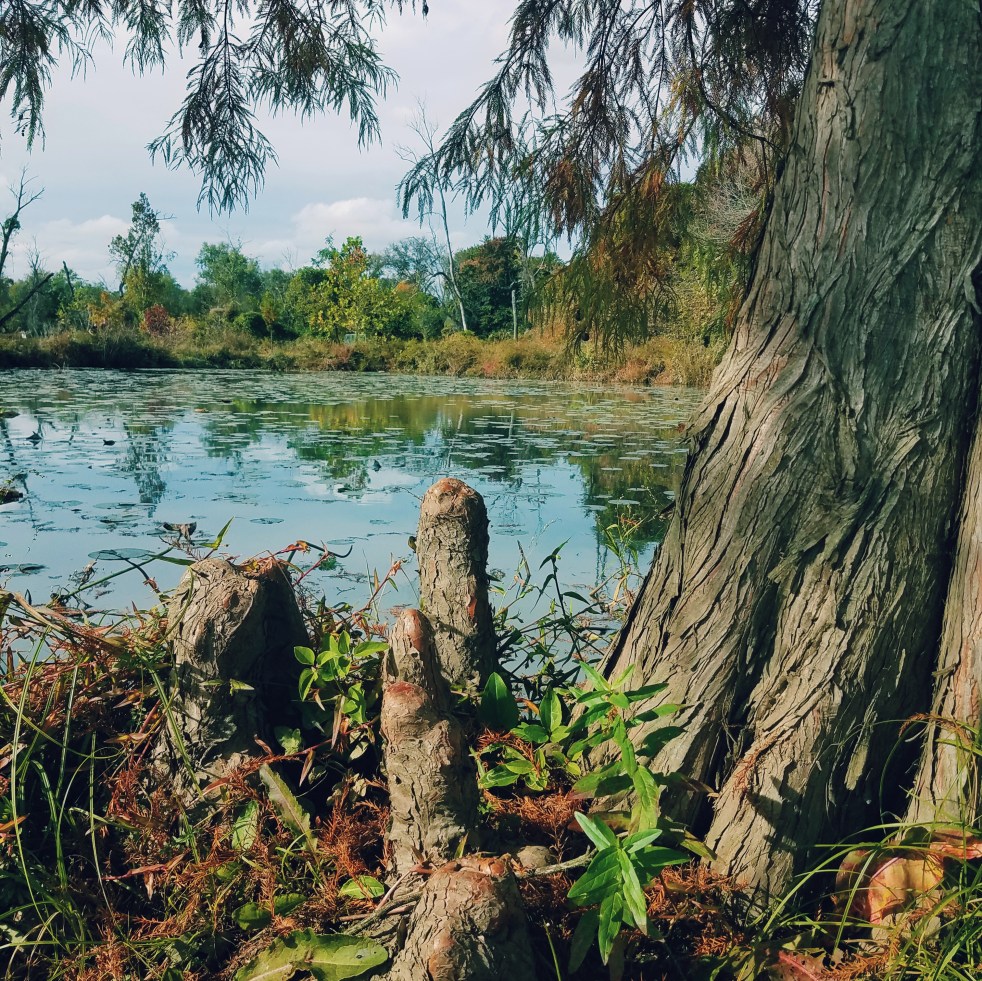
I love bald cypress trees. They’re my favorite tree. I love their scent (I once knelt down to take a picture of one, and ended up ruining a good pair of jeans by permanently staining the knees green. I felt embarrassed afterward, like a child ruining a set of school clothes on the playground, but sweet, fresh smell of crushed cypress needles was almost worth it). I love the way their needles turn brilliant orange in autumn. I love that they’re one of the few weirdo conifers that actually loses their needles in winter. I love the way they grow, in the liminal space between land and water. I love their alien-looking knees — mistaken for people, animals, and even monsters once they get large enough.

A bald cypress tree with a set of knee-like protuberances on its roots.
Knees!

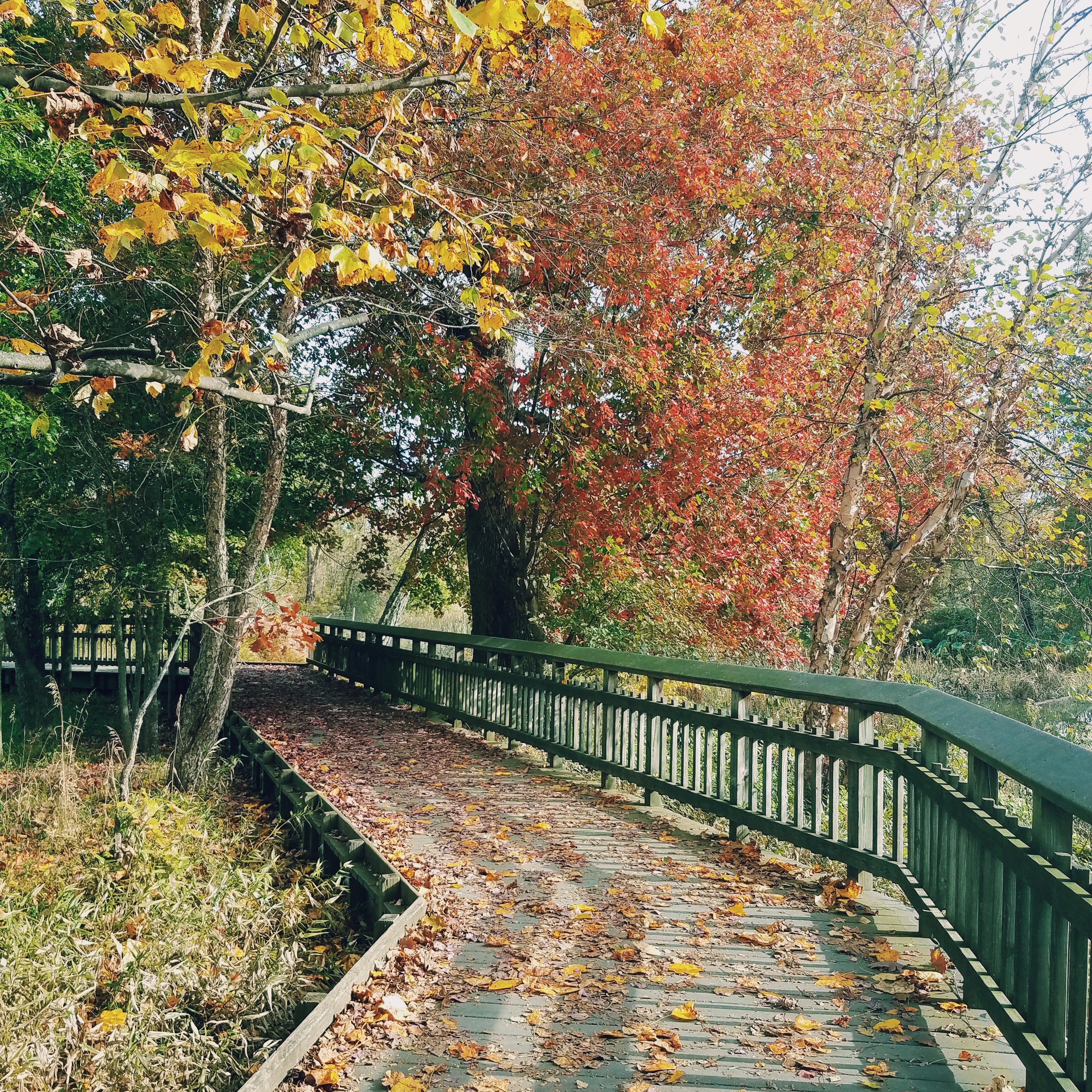
Anyway, before I launch into another paean to bald cypress trees, all of this is to say that we took a long walk in the park and it was pretty nice. The boardwalk is especially pretty this time of year, with the leaves falling on it like confetti in shades of burgundy, vermillion, violet, and saffron.

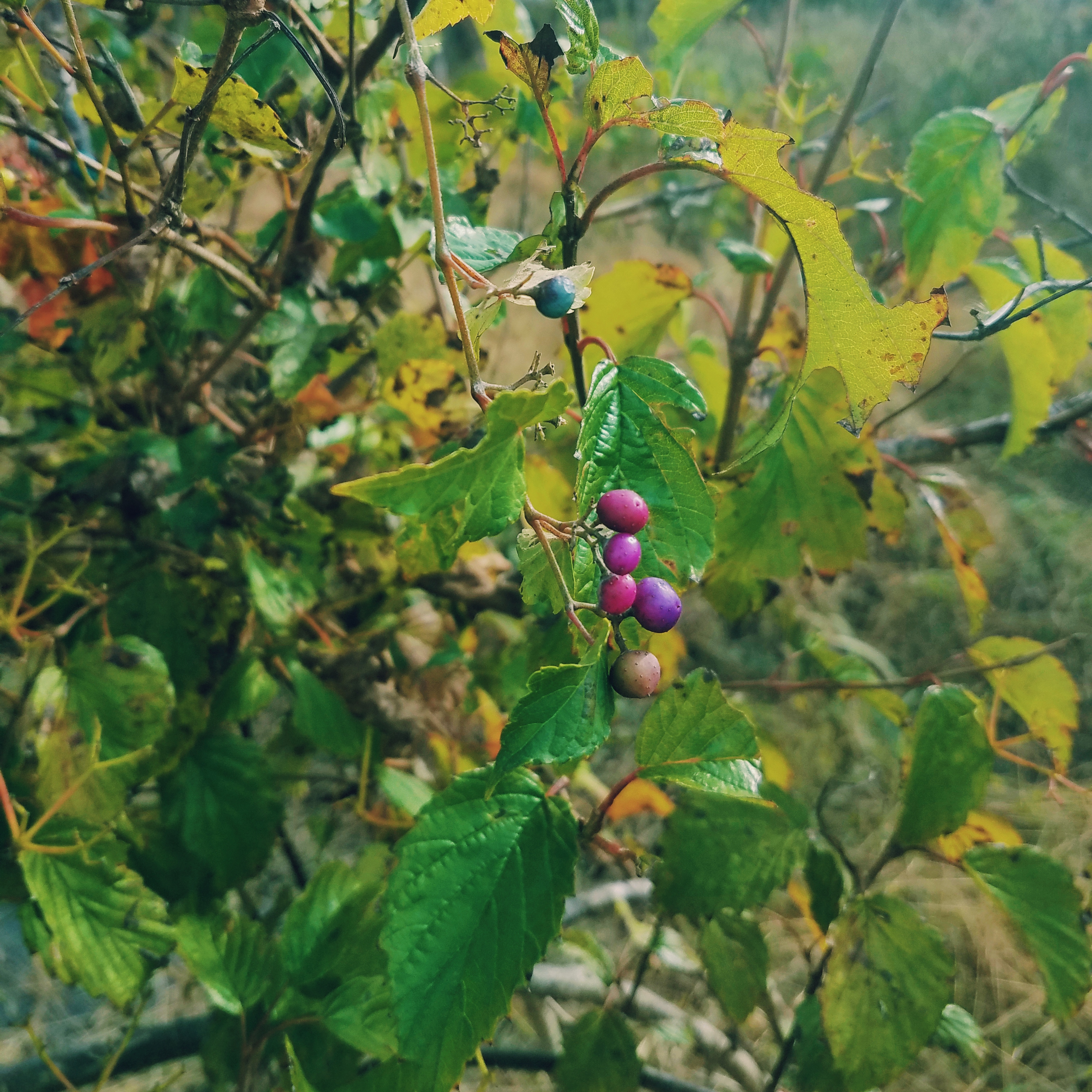
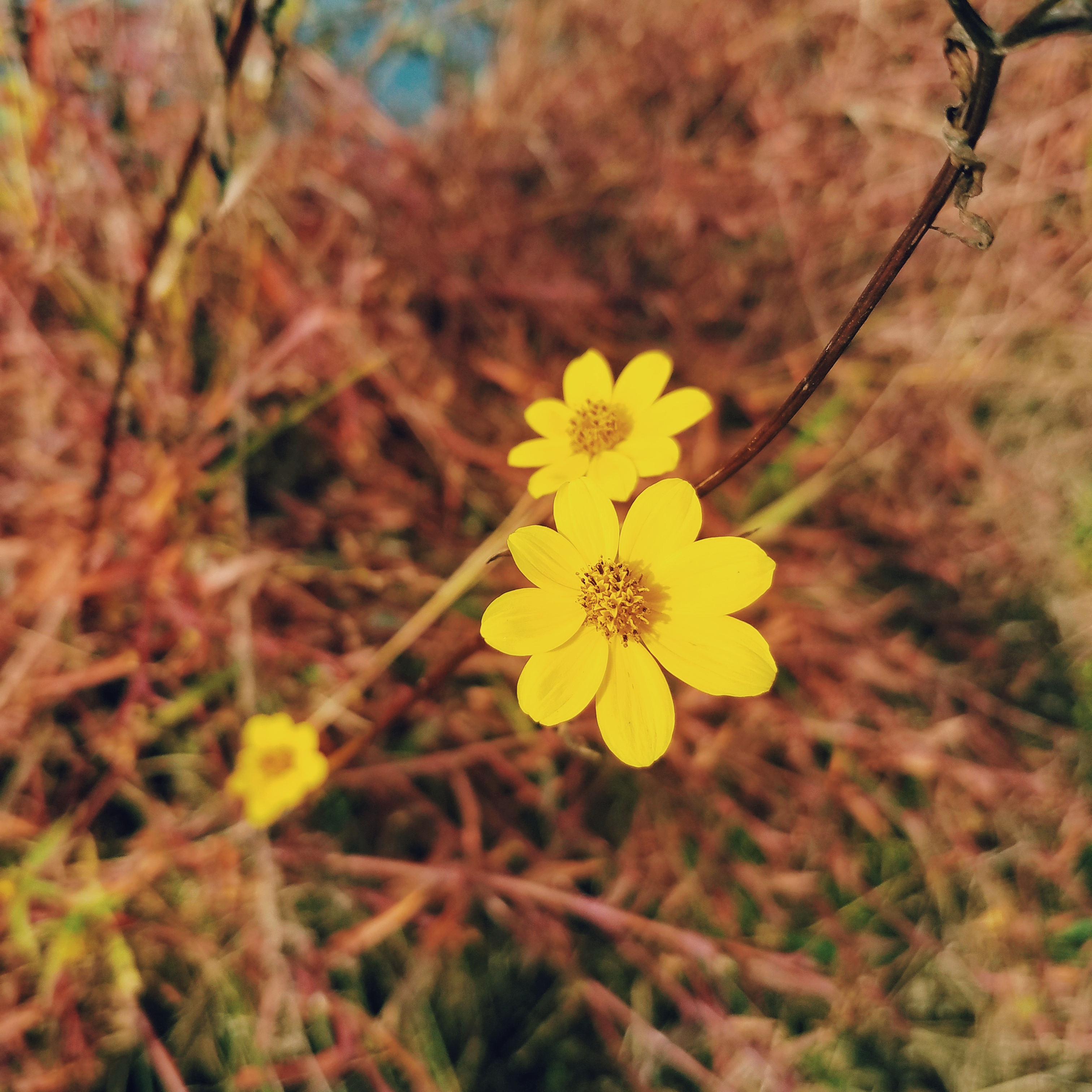
There weren’t as many flowers, of course. I found some kind of yellow asteraceae, and these very pretty silver cock’s combs, but that was about it. I did also spot some aggressively purple berries on (what I think is) a viburnum, though. Judging by the number of bare twigs, the birds have been hitting them up for snacks pretty hardcore. I know cardinals will happily eat them — I used to have a bright red buddy who hung out outside of the window of my old apartment.

My partner and I sat on a bench for a bit, enjoying the sound of the insects chirping, birds warbling, and wind soughing through the trees.

“What… What are you doing?” He asked.

“Taking off my shoes,” I replied.

“Why?”

I shrugged. “Something about ions. Mostly because it feels good. Dirt. Moss. You know.”

“Fair enough.”

(He eventually followed suit and realized I was right — the cool ground felt wonderful, and the moss was very soft.)

As I write this, it’s Saturday night, I’m snuggled up and waiting to watch a livestream by Gareth Reynolds. I’ve got my partner, my cats, and a fantastic slice of pie. All told, not a bad end to the day!

crystals · Neodruidry · Plants and Herbs · Witchcraft

7 Ways to Set Up a Pet-Proof Altar

Let me preface this by saying that I love my cats. I do. But one of them has an odd obsession with getting into any plant that’s within reach (and several that aren’t), and the other will hurl things and scream if one of us fails to sit on the kitchen floor with him in the morning. I don’t know why this is, but it’s the reality of the situation.

Anyway, as you can probably tell, this makes setting up and maintaining a home altar somewhat… challenging, shall we say. Not only do I not want my altar disturbed, I also don’t want to have to worry about someone eating something they shouldn’t. So, here’s how I keep everyone (and everything) safe:

Train Your Cats to- hahahahahaha

Sorry, couldn’t resist. Couldn’t finish that thought with a straight face, either.

She might be your familiar, but that doesn’t mean she cares about your stuff.

Choose Portable Altar Decor (But a Permanent Space)

In my opinion, part of an altar’s power is in its presence even when it isn’t being used. Some of that is lost when you have to set up and take down your altar every time you need it, but that doesn’t make a portable altar any less beautiful or meaningful.

If you do have to go the portable route, however, I’d recommend keeping a dedicated altar space. Even if you can’t have food offerings out without your dog getting into them, or your cat tries to knock over all of your statuary, you can still have a specific space that’s only used for your temporary altar. Get a nice accent table and cover it with a cloth. Set it with a good-sized crystal or a vase of flowers (if your animal companions will allow for it). Save the other altar tools and decorations for when you’re actually performing a working, but keep that space as a designated altar even when it isn’t in use.

Use a Drawer

One of the best ways I’ve found to avoid my felines’ penchant for destruction is to choose a table with a nice, deep drawer, and set up an altar in that. You can still have a permanent space, and all you have to do is pull the drawer open to get to work.

Remember to close it gently, though — you’ll keep your altar tools and decorations from rattling and knocking around that way.

Use the Floor

If having things knocked over is your primary concern, why not just put them on the floor to begin with? The fact is, having chairs and tables so far from the floor isn’t a universal thing — plenty of cultures around the world use low tables, floor cushions, or nothing at all.

Designate a space for a floor altar. Set it with a small accent rug and your altar supplies. Place a comfy floor pillow in front of it, and you’re golden.

Use the Outdoors

If your interior space is too thoroughly dominated by your four-legged roommates, consider working outside. It’s a bit less convenient if the weather’s bad, but outdoor altars are beautiful, functional, and, if you work closely with your local nature spirits, immensely powerful.

The only tip I’d offer here is to choose altar decorations that are resistant to walking away. Expensive statues might disappear on you, and shiny crystals may prove irresistible to the local bird population. Materials that aren’t durable enough might end up a bit worse for wear after a few rainstorms and a couple of rounds of sun bleaching, too. Largish stones, garden statuary, candles, and — of course — plants are inconspicuous, not likely to disappear, and can handle being outside.

Watch the Center of Gravity

Few things are as nerve-wracking as a tall, lit candle. This is especially true when that candle is in the same room as a cat. If candles are part of your practice, make sure to invest in some good, heavy candle holders. If you can make sure your candles are sufficiently bottom-heavy, they’ll be less likely to tip over easily. For this reason, I also recommend tealights and jar candles over, say, long, fancy tapers.

The same is true of any statuary or other decorations. Avoid choosing items that have a high center of gravity, because they’re much more likely to tip over if, for example, a very zealous boxer puppy wags his tail too close to your altar.

Invest in Some Museum Wax

Museum wax is what helps keep museum displays in place. It comes in several types, from an opaque, gummy material to one more like clear dental wax, and can help things stay stationary if they get bumped. The only caveat here is that it doesn’t work on an altar cloth — museum wax provides a tacky surface between two smooth finishes, so it won’t really help to keep your statues in place on top of fabric.

Know Your Poisons (They May Not Be What You Think)

So, we probably all know not to let our pets get into toxic herbs or houseplants. The ASPCA has a good list of plants that can trigger adverse reactions.

I remember watching a video by a crystal worker a few years ago. In it, they mentioned being guided by their intuition to charge a piece of cinnabar(!) using fire(!!). The reason I mention this is that, sometimes, the list of things we know we should keep away from our pets isn’t as long as it ought to be.

For example, cinnabar is an ore of mercury. Some specimens even have droplets of mercury on or in them. Metallic mercury is, itself, not that toxic — organic mercury compounds are far more dangerous — but inhaling heated mercury vapor is a super bad idea. Honestly, you shouldn’t even really handle cinnabar or wear it next to your skin. If you want to work with it, use gloves, keep it in a glass container, and definitely don’t let your pets touch, lick, or play with it. Definitely definitely don’t heat it up.

Some other gemstones contain toxic materials, like lead, arsenic, or antimony.

Plants and mineral specimens aren’t the only sources of a potential poisoning, either. Some pottery — particularly very old or inexpensive stuff — may not be food safe. This means that its paint or glaze can contain toxic minerals that might leach out if you use it to cook with or eat from. While this isn’t usually a super serious concern for altar tools, it can be if you have a pet who tries to sneak a drink out of your altar’s water vessel or steal your food offerings!

The bottom line is, it’s important to know what goes on your altar. If you have pets, it’s equally important to assume that everything is going to end up on the floor or in someone’s mouth eventually.