Music transcends any language. Even when we were growing up and listening to Western rock bands, to this day I still don’t understand some of my favorite songs. But [through] the music, the rhythm and the tune and the way it’s delivered… It’s something special. You’re able to ‘understand’ everything because you feel it.
Gala (Galbadrakh Tsendbaatar), in an interview with Louder
I don’t remember how I first learned about The Hu. When I write or paint, I often end up putting a song on, then letting whatever algorithm is currently spying on me keep recommending things. I remember being captivated by Wolf Totem, and put their songs on heavy rotation afterward.
This past Monday, my partner and I finally got to see them in concert. It was at Warren Theater, which isn’t quite what you’d picture when you think of a metal show (think lots of seats, chandeliers, ceiling medallions, you get the picture). I thought the seats might get in the way of moving around. I did not allow them to.
The band was fantastic. The energy was contagious. The crowd was enthusiastic and friendly. (The guy sitting behind us photobombed us in a hilarious way, and I almost regret laughing so hard because the shot ended up blurry.) And the music. It’s hard to describe the fusion of traditional Mongolian instruments and throat singing with metal in a way that does it justice. I could write about it for what feels like forever, but, as the old quote goes, “writing about music is like dancing about architecture.”
This is what modern bardic tradition should feel like. It feels like the kind of power old stories talk about when they speak of bards that could strike a person down with a verse.
I barely know a few words in Mongolian. If a song interests me, I need to look up a translation, and a romanization so I can at least try to approximate the pronunciation. It doesn’t matter, I still try. My lack of linguistic skills meant that I couldn’t know any of Jaya’s between-song banter. It didn’t matter, I cheered with my fists in the air anyway.
This was easily one of the most fun shows I’ve been to in ages. If you have the opportunity to see The Hu, take it.
After years of listening and watching live streams, my partner and I finally got the chance to see one of The Dollop‘s live shows. (If you’re not familiar, The Dollop is an American history podcast by Dave Anthony and Gareth Reynolds.) Not only does it go into all of the stuff history class just kind of ignores or glosses over, it’s funny as hell.
“But,” you might be asking, “What does this have to do with witchcraft or Druidry?” Historically, Druids were top-level advisors, doctors, and military strategists to leaders, and most leaders are, as it turns out, so staggeringly, bafflingly weird and incompetent that the fact that they manage to leave the house each day without accidentally choking on their own pants beggars belief. It also helps to see the origins of the absolutely bonkers way that the US deals with minorities, religion, minority religions, human rights, and conservation.
Last Saturday, we got to learn some… things about former President Warren G. Harding. Especially about his best friend, “Jerry.”
His dick. Harding named his dick. He named it Jerry. I’m not even going to get into who/what “Mrs. Pouterson” was.
Apparently, Wa-wa-warren Harding, Ohio’s Greatest Fuck Machine, wasn’t just a sex addict. He was also addicted to writing letters about sex. Often on official letterheads. Prolifically. It should be unsurprising how many scandals this nearly led to. Harding ended up having to pay secret child support not only to a woman less than half his age (who he started grooming when she was a teenager), but also hush money to the friend of his wife (and wife of his friend) who threatened to expose all of the James Joyce-level pervert letters Harding had sent her over the years. All 1,000 pages of them.
By the way, Harding was married the whole time. His wife, Florence, suffered greatly from kidney trouble, has historically been described as “severe” and “dour” (read: firm and competent), and was arguably the only influence in Harding’s life that let him be a halfway functioning human being.
She also regularly found out about her husband’s indiscretions. Like when he was getting his bone on in an anteroom/cloakroom of the oval office, and had a member of the secret service stand at one entrance. This was so he could knock if Harding’s wife showed up. Harding could then tuck Jerry away in his pants and dash out of the other door, and pretend he’d actually been Presidenting the whole time. No word on what Harding’s sex partner was supposed to do, other than hide among the coats.
I could go on, but I honestly would like to stop thinking about Warren Harding’s junk and never have to remember it again. You should probably just listen to The Dollop. It’s educational, it’s funny, and it shows that even if history doesn’t always repeat itself, it absolutely rhymes.
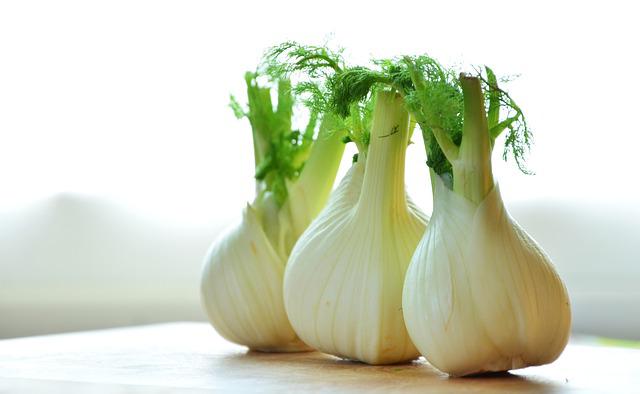
Fennel (Foeniculum vulgare) is a Mediterranean herb related to carrots. The type you see in supermarkets is bred for its large bulb, which is eaten as a vegetable. You can also find the dried leaves in teas and herb blends. It has a flavor very reminiscent of anise or licorice that becomes mild and sweet during cooking. It’s also related to silphium, a plant that was both considered a delicacy and included in formulas to cause miscarriage.
One of the most interesting things about fennel is its action on the endocrine and reproductive systems. While it isn’t true that the ancient Romans harvested a relative of fennel to extinction for to use for herbal abortions, alcohol extracts of a relative of giant fennel (the source of the spice asafoetida) have been found to prevent egg fertilization and induce miscarriages in rats.
Fennel Magical Uses and Folklore
While fennel isn’t exactly the same plant as asafoetida, fennel seeds do act as a uterine stimulant. Part of this is due to an estrogenic effect, possibly courtesy of the compounds anethole, dianethole and photoanethole. Fennel also contains an enzyme that effects the body’s ability to process certain drugs. In the 3rd century, a doctor named Metrodora included a species of fennel in a compound of herbs to cause miscarriage.
Fennel is one of the plants in the Anglo-Saxon Nine Herbs Charm. To wit:
[C]hervil and fennel
very mighty these two plants created the wise leader holy in heaven
when he hung set and sent into the 7 worlds
for wretched and rich all to remedy
stands she against pain
stands she against poison.
Who is mighty against 3 and against 30
against fiends hand
against spells
against enchantment by wicked wights.
An excerpt from the Nine Herbs Charm, from the Lacnunga
Interestingly, Pliny the Elder claimed that silphium (the much-desired fennel of ancient Greece and Rome) had a powerful purgative effect when initially consumed. It was said that the plant purged the body of undesirable “humors,” effectively causing a kind of physical purification. However, Pliny also thought that snakes ate fennel to improve their eyesight, so maybe don’t take everything he says at face value.
When planted around the home, fennel acts as a magical ward. This may be based in part on its use as an insect repellant — the idea being that it repels evil just as well as it does bugs. As an extension of this idea, medieval households would hang fennel above the door and fill their locks with fennel seeds to keep wandering, unsettled ghosts away.
Fennel seeds are burned to purify spaces. You can also dress a candle with fennel seeds to break streaks of bad luck and crossed conditions in your life.
Fennel’s estrogenic effects were sometimes relied on to improve libido. By extension, the flowers and seeds are often used in sachets and charms to enhance one’s love life.
Planting fennel and dill together can result in hybrid plants that look like a cross between the two and taste like neither.
Followers of Dionysus carried wands made of fennel stalks.
Fennel is used for courage. Chew the seeds or drink fennel tea before you have to do something scary or difficult.
Using Fennel
Consume the seeds or drink the tea to help trigger a late menstrual period. The maximum dosage of fennel seeds for an adult human is about 6 grams. More than that may cause unwanted effects.
You can use pretty much any part of the fennel plant — chew the seeds, put them in tea, eat the bulb and stalk as a vegetable, you name it. This means that you’re pretty much free to choose whichever part of the plant resonates best with you, and use it however it suits your purposes. If you plan to consume it, be sure to do your research to make sure it won’t interact with any other herbs or medications you’re currently using. It’s generally safe in food amounts, but the risk of adverse side effects increases with the dose.
Fennel seeds are great additions to sachets, powders, and potions.
Growing fennel is fairly easy. It can grow in zones 5-10, and is a perennial in zones 6 and up. Nonetheless, it’s usually treated as an annual — it self-sows prolifically, and you’re likely to harvest and use the whole plant once its mature anyhow.
Sow fennel in early spring, about 16-18″ apart in an area that receives full sun and has enough headroom for the plant to reach its full 5′ adult height. (It’s best to direct sow, because fennel isn’t very receptive to transplanting.) Avoid planting it near other plants, since it secretes a compound that prevents competition. Coupled with its sun-blocking height, and you may find that its neighbors really struggle. Fennel also hybridizes readily with some other plants, so you may find that the seeds you get from it aren’t true to the parent plant at all.
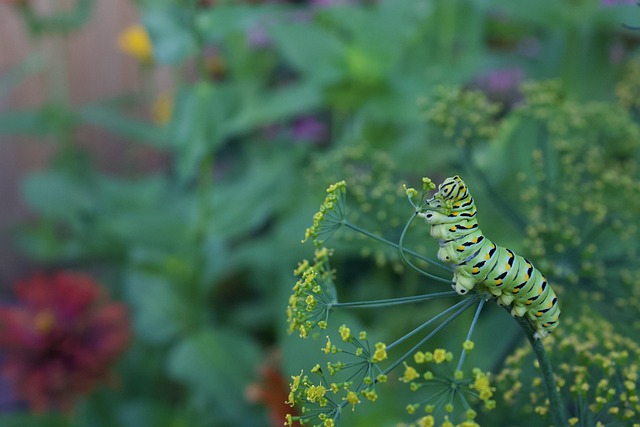
Water fennel regularly until its well established. The plant generally doesn’t experience many problems, though you might find swallowtail butterfly caterpillars chewing on the leaves!
Harvest fennel after about two months, once its mature. Cut off the flowers as they appear, unless you want to gather the seeds (or would like the plant to self-sow).
Burn the seeds or stalks for purification or protection. Blend with rose petals, cinnamon, and other love and lust herbs for use in aphrodisiac formulas.
Ever since my strawberry buying and planting misadventure, I figured it’d be worthwhile to write a bit about the historical and potential magical uses for them. (Especially since, having done the math, I may need to find uses for up to 140 pounds of ’em.)
Strawberries come from various species of the genus Fragaria. Like so many other popular fruiting plants, they’re actually related to roses. The typical strawberries that you grow in the garden or buy in the store are varieties of a hybrid cultivar called Fragaria × ananassa, but there are over 20 species that appear all over the world. Another popular species is Fragaria vesca, the Alpine strawberry. These plants produce small fruits with a flavor reminiscent of pineapple.
I remember playing in a patch of wild strawberries when I was very small. We had a ton of volunteer Fragaria virginiana in our back yard, which returned every year with pretty much no effort on anyone’s part. The birds usually got to the fruits long before we could, so finding the tiny, jewel-like berries hidden under the leaves was like finding treasure.
Strawberry Magical Uses and Folklore
The term “strawberry” comes from the Old English streawberige. This may refer to the tiny seeds on the outside of strawberries (the actual fruits — what we generally think of as the “berry” part, isn’t!) which resemble wheat chaff. A cognate name was eorðberge, for “earth-berry.” This can still be seen in the modern German word for the fruit, Erdbeere.
The deep red color and heart shape of strawberries makes them sacred to Venus and Aphrodite. One may extend this to other goddesses of love and beauty, as well.
This connection to love goddesses may be the source of one legend about the berries. It’s said that double strawberries are potent love charms. If you find one, break it in half and give one half to your intended partner. If you both eat the halves of the double strawberry, you’ll fall in love with each other.
In some parts of Bavaria, strawberries are used to ensure healthy cattle and abundant milk. Farmers hang small baskets of wild strawberries on the horns of their cows, as an offering to local faeries. These faeries are said to love strawberries, and will protect the cattle in return.
Strawberry plants are potent emblems of fertility. They reproduce via seed, largely by attracting birds to their bright red fruit. The birds eat the flesh, and the seeds (actually achenes, or ovaries containing a single seed) pass through their digestive systems. Strawberry seeds only require light and moisture to germinate, so they grow easily pretty much wherever they’re dropped. The plants also reproduce via runners, or specialized shoots that grow out from the mother plant and produce full plants of their own. In other words, it’s almost harder not to grow strawberries!
Using Strawberries
I mean… You can just eat them. Strawberries are kind of neat that way. Convenient. This advice is probably not what you’re here for, however.
It should be noted that, while it’s highly likely you have wild strawberries in your area, you may also stumble across the mock strawberry. This is Potentilla indica, and not a variety of true strawberries (though, like true strawberries, they’re also a member of the Rosaceae family). They very closely resemble wild strawberries, but have yellow flowers and less flavor. Fortunately, they aren’t toxic.
Medicinally, the leaves and roots can be brewed into a tea. This tea is believed to help get rid of “toxins,” which means that it acts as a diuretic. That helps flush compounds like uric acid, so strawberry may be prescribed as a treatment for gout. The astringent properties of this tea is also said to help with gastritis, intestinal bleeding, heartburn, and other digestive complaints.
When used topically, an infusion of the leaves and roots may help clear up acne by acting as an astringent. The fruits, too, are also rumored to be beneficial here — eat a strawberry, then rub the leftover bit of flesh at the top on your face. The natural acids present in the fruit can help with cell turnover and unclog pores.
Magically, you can offer strawberry fruit and flowers to deities of love and beauty. You may also want to use the fruit in kitchen witchery for beauty or attraction spells. If love spells are your bag, you may even wish to include these fruits in brews or desserts to share with your desired partner.
Strawberries are a beautiful part of the transition into spring. Their medicinal properties are helpful for shaking off the effects of winter, and their vibrant taste and color are a treat after months of gray weather.
The more I think about it, the less sure I am that alien invaders would be able to set up shop here for an appreciable amount of time. They’d probably get eaten. (Even the really weird-looking ones. Especially the weird-looking ones. Maybe in an etouffee, like crawfish.)
I like to consider myself an invasivore. If it’s here, causing harm, and tasty, I will find a way to eat it. This is why I was very happy to learn how to identify garlic mustard on a recent foraging walk with some friends. (A lot of invasives are valuable as medicine or food — they wouldn’t’ve been brought here if someone didn’t think they were useful for something.)
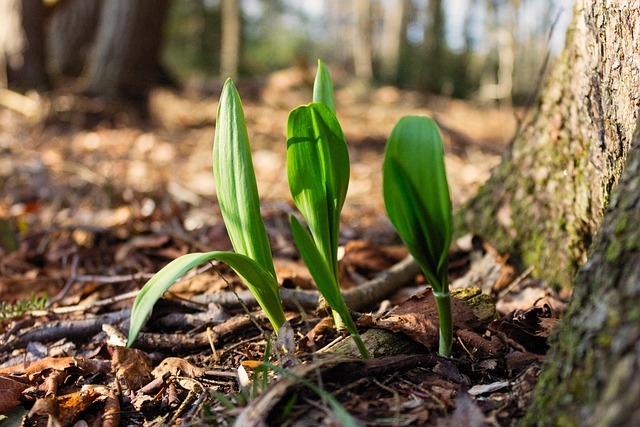
Of course, not all tasty things are invasive, which is why it’s important to be conscientious. In general, it’s best to take as little of a plant as you can, and avoid taking the roots unless absolutely necessary. One of the nice things about eating invasive plants is that you don’t need to be particularly careful about damaging their population, but this isn’t true for native species. Like ramps, for example.
Ramps are wild leeks, and sadly trendy in the culinary world. In some areas, they’re delicacies that have been harvested to endangerment. They’re a spring vegetable very similar to a leek you’d get from the grocery store, which means they’ve got an onion-like bulb topped by flat leaves. The whole plant is edible, but it’s not uncommon for a nice patch of ramps (which can take years just for the seeds to germinate, then another seven years for the plants to mature) to get harvested to oblivion for the bulbs.
Fortunately, since the leaves are also delicious, this isn’t necessary. You can enjoy ramps and still leave the live plants behind. All it takes is harvesting one leaf and moving on, rather than digging up the entire plant. (I’m planning to chiffonade the leaves for potato soup. I’ve got some new potatoes from the farmers’ market, creamline milk, and a whole bunch of home made vegetable broth!)
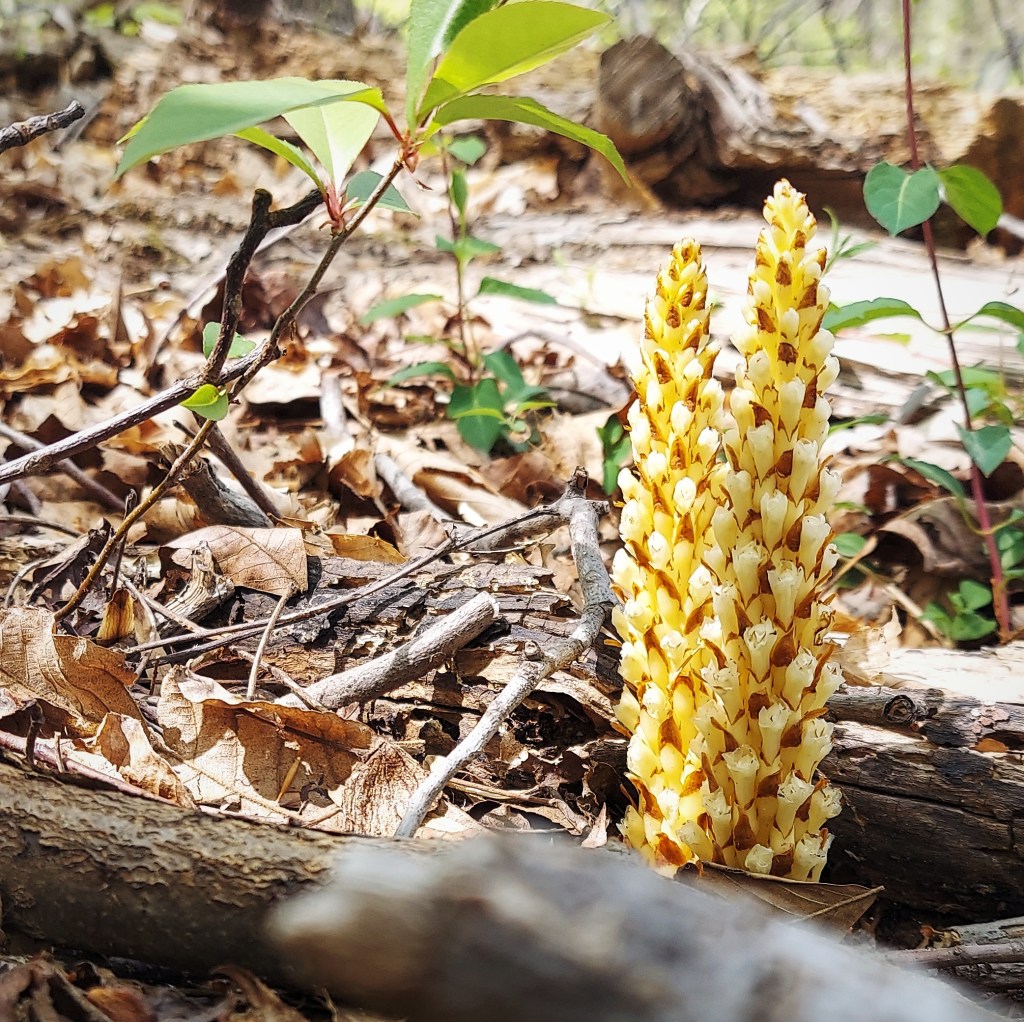
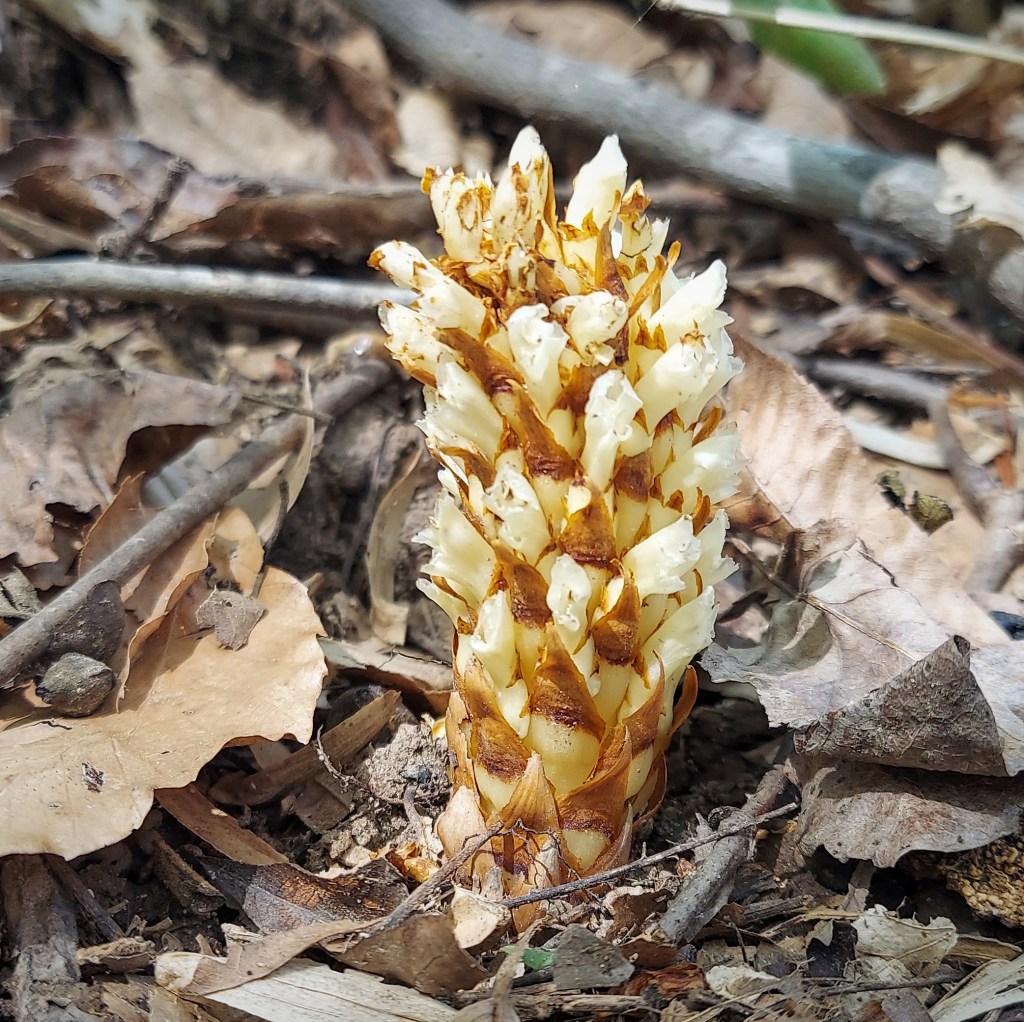
One of the neatest things I saw recently wasn’t something I was looking for — in fact, I’d never encountered it in my life, and had no idea it existed. Conopholis americana, also called cancer root, bear corn, or bumeh, is a profoundly odd-looking parasitic plant that lives near oak and beech trees. At first resembling an upright corn cob or the cap of a fungus, closer inspection revealed cream-colored flowers.
Despite the name cancer root, it doesn’t appear to actually fight cancer. However, it does have some pretty powerful astringents that help with wound clotting. This plant was also used to help induce and progress labor (which gave rise to another, more offensive name that has largely fallen into disuse). It’s also a diuretic and laxative, which is what gave it the name “bear corn.” After months of hibernation, bears need to “unplug,” as it were. They’re attracted to the springtime blooms of bear corn, and eating it seems to help get things moving. This idea is plausible enough, though I have chosen not to test it myself.
We also spotted a black squirrel, though nearly missed it. He skittered quickly along a fallen tree, and was far out of sight by the time I managed to try to get a picture. Still, even without photo evidence, it was pretty neat to spot two very rare things. (Melanistic squirrels only occur in about 1 out of every 10,000 eastern gray squirrels!)
My phone buzzed a second later. I’m literally about to get on a plane right now, he’d sent back.
This back and forth happened a few more times, before he finally agreed that a couple hundred dollars off a four-day vacation was, in fact, a very good deal.
This all started when my partner realized how much vacation time he had left over at the end of last year. It doesn’t roll over and he can’t cash it in, so it was pretty much just kind of wasted. Ever the supportive devil on his shoulder, I urged him to make sure he takes all of the paid time off he could this year, especially if it was just going to evaporate if he didn’t.
“Your job’s able to offer you this because of the value created by your labor. It’s not a free perk or a fun bonus, it’s literally something you’ve earned. If you can’t get the equivalent value in your paycheck, you should take whatever you’re offered. You’re basically giving up part of your salary otherwise.”
(I also have the same attitude toward expensed meals, fitness equipment, and other benefits. Just because it isn’t money doesn’t mean it isn’t compensation, friends!)
And this is how, on a shuttle immediately before boarding a plane, my partner prayed that his phone’s battery and internet would hold out long enough for him to book a four day stay in a Getaway cabin. It was a scramble to schedule everything before the sale ended or his phone gave out, and he succeeded with almost no time to spare.
We’ve stayed in a Getaway tiny cabin before, so I knew this’d be a good deal for us. Last time was during winter, so I was pretty excited to experience the area when it was a bit warmer and greener. That part of Virginia isn’t exactly in full bloom just yet, but was still beautiful — especially if you’re a weirdo like me who experiences aesthetic arrest from the sight of, like, an extremely good mossy log.
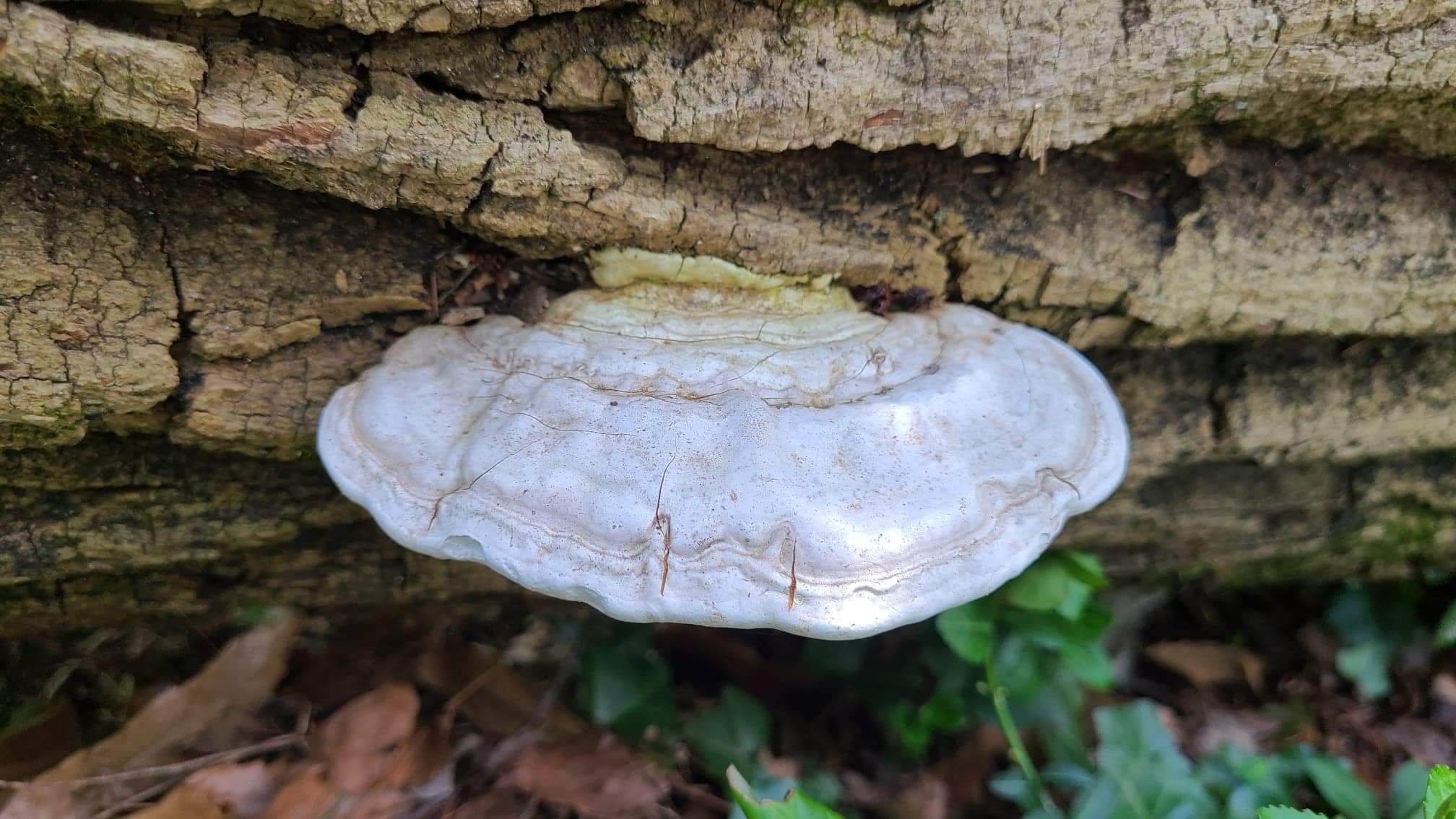
When we weren’t walking in the woods, taking pictures, trying to identify plants, or “catch and release” mushroom hunting, we were reading or writing. One day was a bit too chilly and rainy to do much outside, so we went for a drive down Skyline to Waynesboro, VA. There’s a fantastic apothecary there called PYRAMID, with some really wonderful locally made candles, incense, artwork, jewelry, herbs, teas, remedies, and curios.
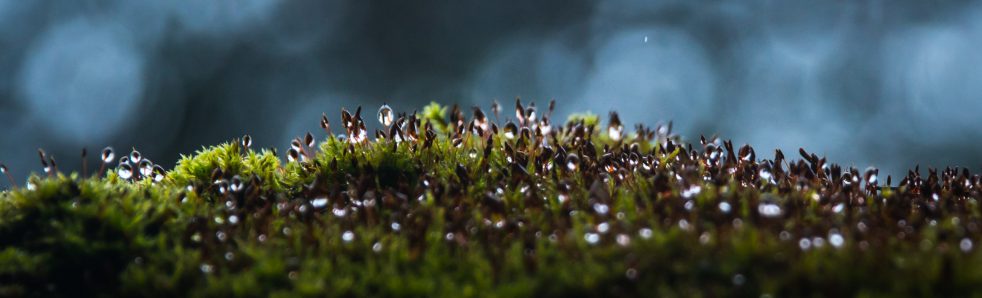
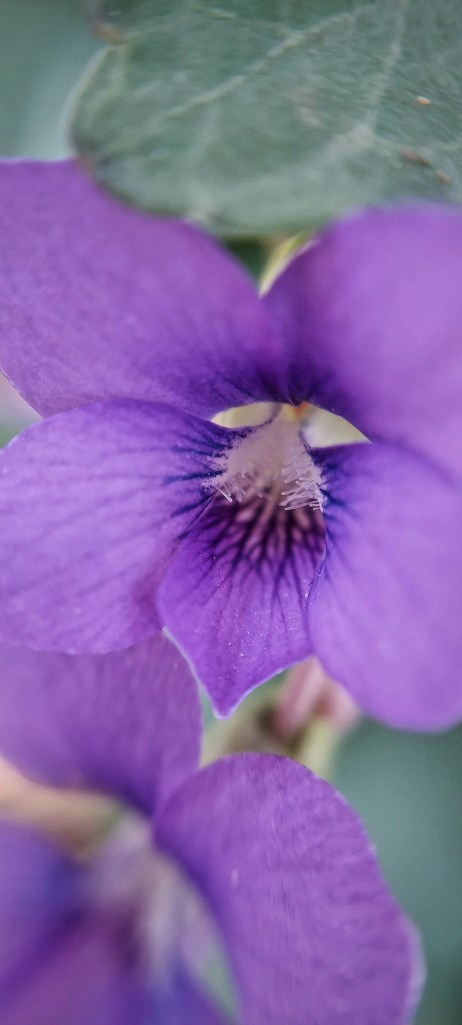
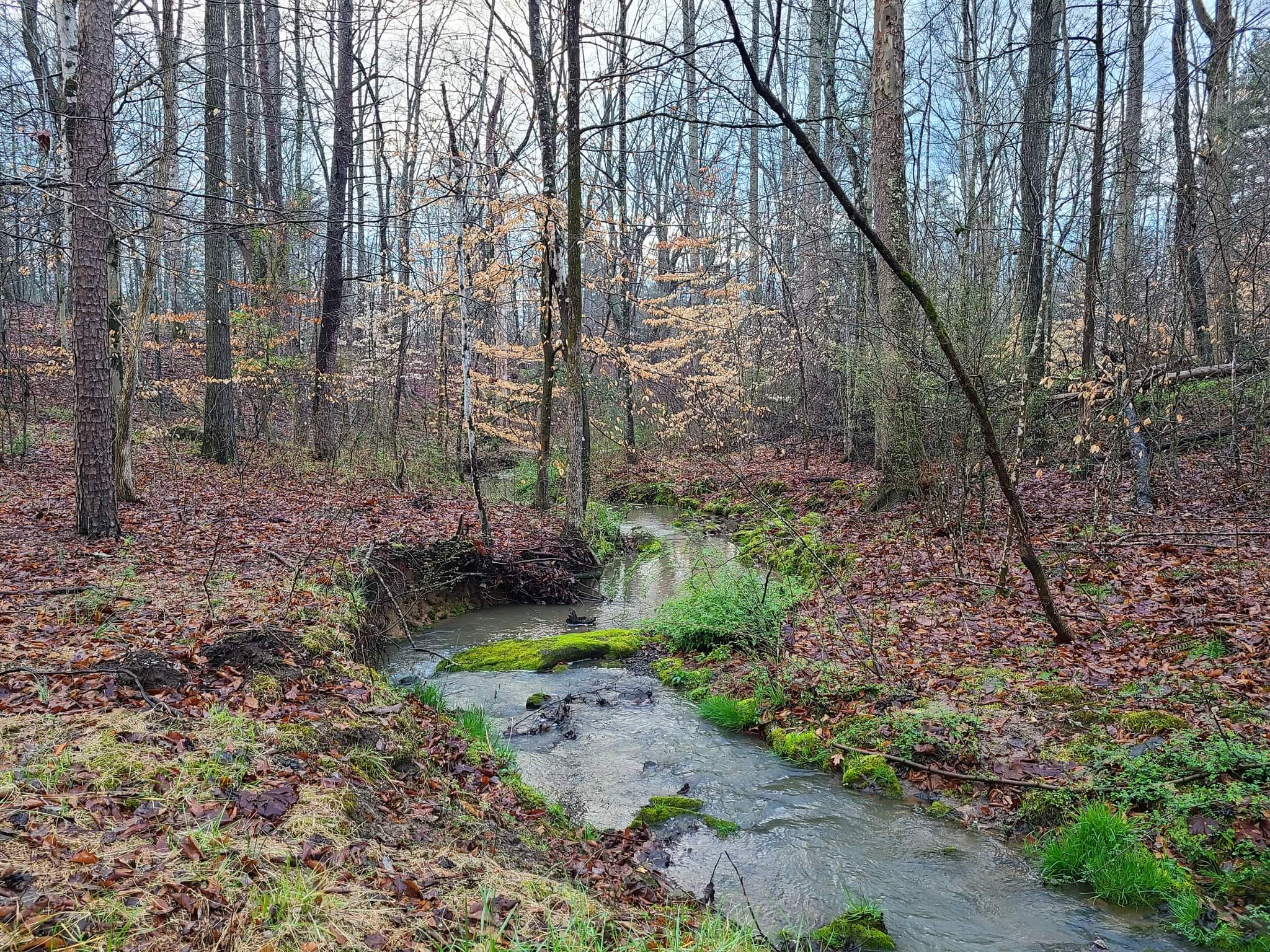
The environment of the cabin was just as relaxing as last time. There was a very beautiful patch of violets right near our fire pit (I picked a few for pressing), and we were tucked far enough away in the trees to have privacy but just close enough to other cabins to not feel completely isolated. Along the stream in the woods, Christmas ferns were sending up tons of spiraling fiddleheads. The moss was verdant and bright green, and the lack of leaves on the trees was more than made up for by the abundance of lichen and mushrooms on the ground. The weather was cool, alternating between sun and a light, silky drizzle that made everything seem fresher and brighter. Though the trail we took was relatively short, it took us a while as we kept stopping to get down, snap pictures, sketch, or identify something.
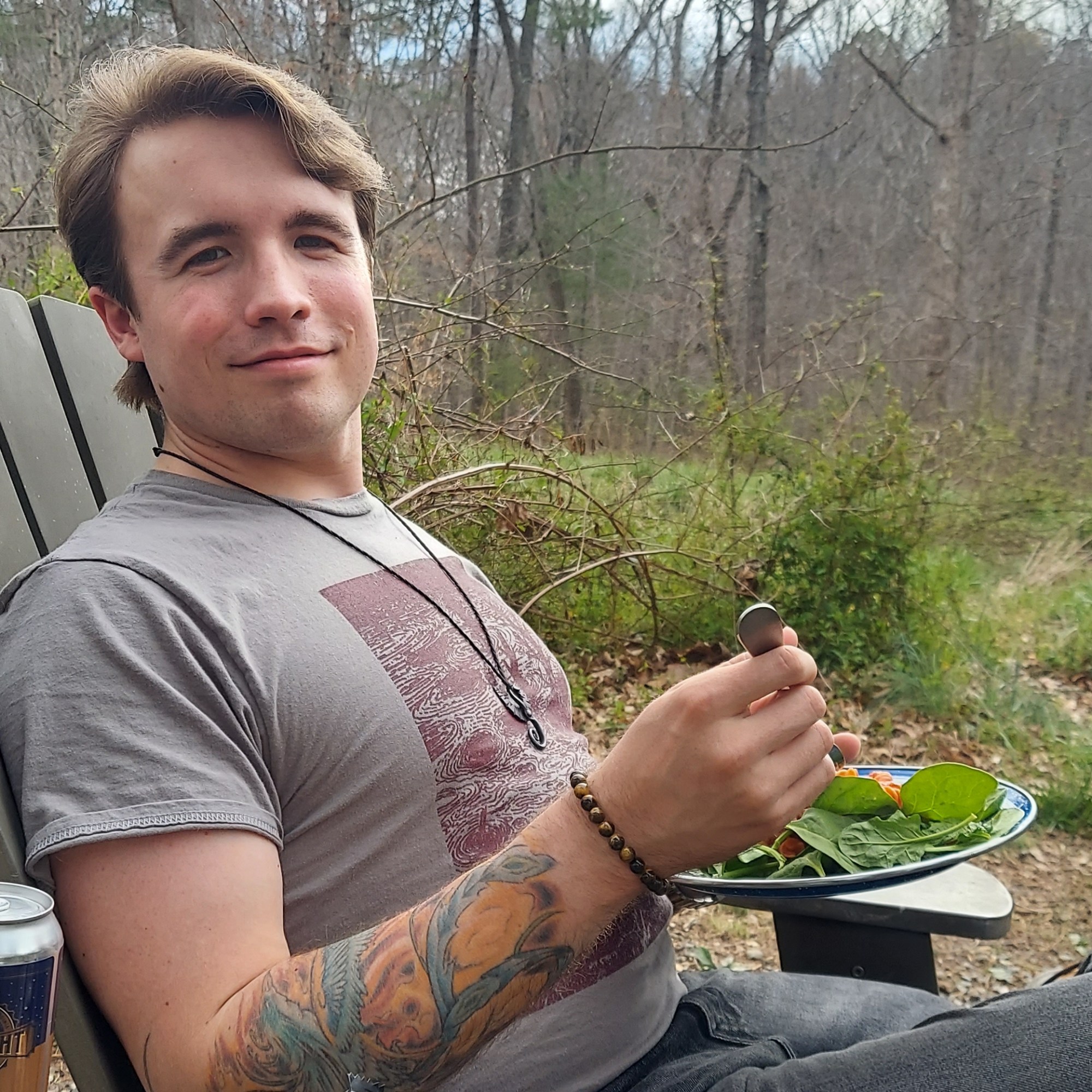
We packed well this time around, though we brought way too much food for the two of us. Pasta, salmon, shrimp, steak, cinnamon rolls, ingredients for s’mores… He cooked the meat and fish over the fire, and made some of the most amazing, crispy salmon I’d ever had. It was simple — just fish cooked in the cabin-provided olive oil, salt, and pepper — but the texture and subtly smoky flavor were perfect. We had it with lentil pasta all’arrabiata, and I’ve been craving campfire cooked salmon and pasta ever since.
(We did run out of salad greens at one point, which got me wondering how I’d scrape together some from the surrounding landscape if I had to — there were violets, dandelion greens, and the pink flowers of redbud trees… Christmas ferns can be eaten the same as ostrich ferns, so fiddleheads too. Fortunately, I did not become responsible for foraging for our vegetables, because I did not want to play “Fuck Around and Find Out: Salad Edition.”)
Coming back took a bit, mostly because we’d scheduled things so we still had a day or so between going home and going back to work. It meant that we were able to visit all of the pottery shops, antique stores, and farm stands that we passed along the way. We ended up coming home with coffee beans, copper sculptures, and a cypress knee(!!!) that we hadn’t originally intended to, so I’d say our sidequesting was a success.
I struggle with setting up and changing routines. I thrive with structure, though it’s very difficult for me to adhere to, and I don’t like having to move things around. This isn’t to say I don’t like spontaneity — but I need to schedule opportunities for spontaneity around the stuff I gotta do. Maybe it’s my Virgoan tendencies, maybe it’s the unmedicated ADHD and the fact that I have the executive function of a brine shrimp. Who knows!
You want spontaneity? I can be spontaneous for four hours next Thursday.
Anyhow, all of this is a roundabout way of explaining how my partner and I went to frolic with the polycorns and run amongst the brain trees. See, we try to hit up farmers’ markets whenever feasible. This is partially out of a desire to shop local, our duty to support our community, the need to make sure the market keeps happening in our city, and also because the food is way better (and generally cheaper) than our other options here.
A fresh lettuce with the roots still on absolutely beats the metaphorical balls off of an anemic head of iceberg, and I do not apologize to anyone.
There’s only one problem — the market we usually visit is open on Sunday, and we had a Thing scheduled for that day. So, we roused ourselves on Saturday to go track down another farmers’ market, which meant that the morning I usually spend sleeping in (and being slept on, in turn, by a small orange cat), I instead spent buying produce, cheese, a batch of really kickass empanadas, et al.
This meant that both partner and I were bright eyed and bushy tailed, with a whole afternoon ahead of us and nothing to do with it. I suggested a walk, so we went to find an entrance to this pretty little local trail.
As it turns out? It was a really good idea.
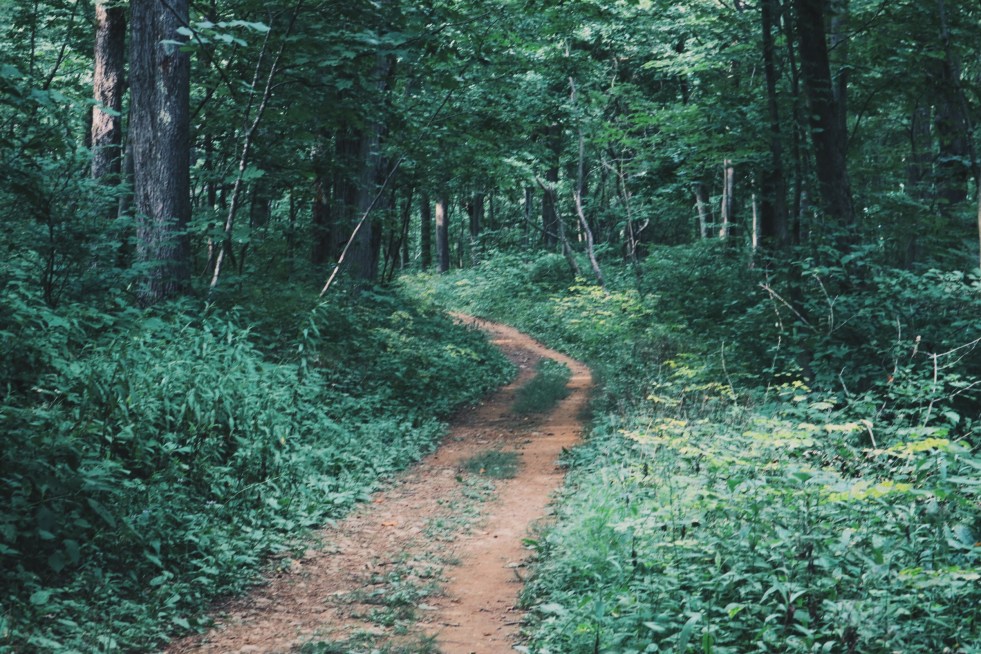
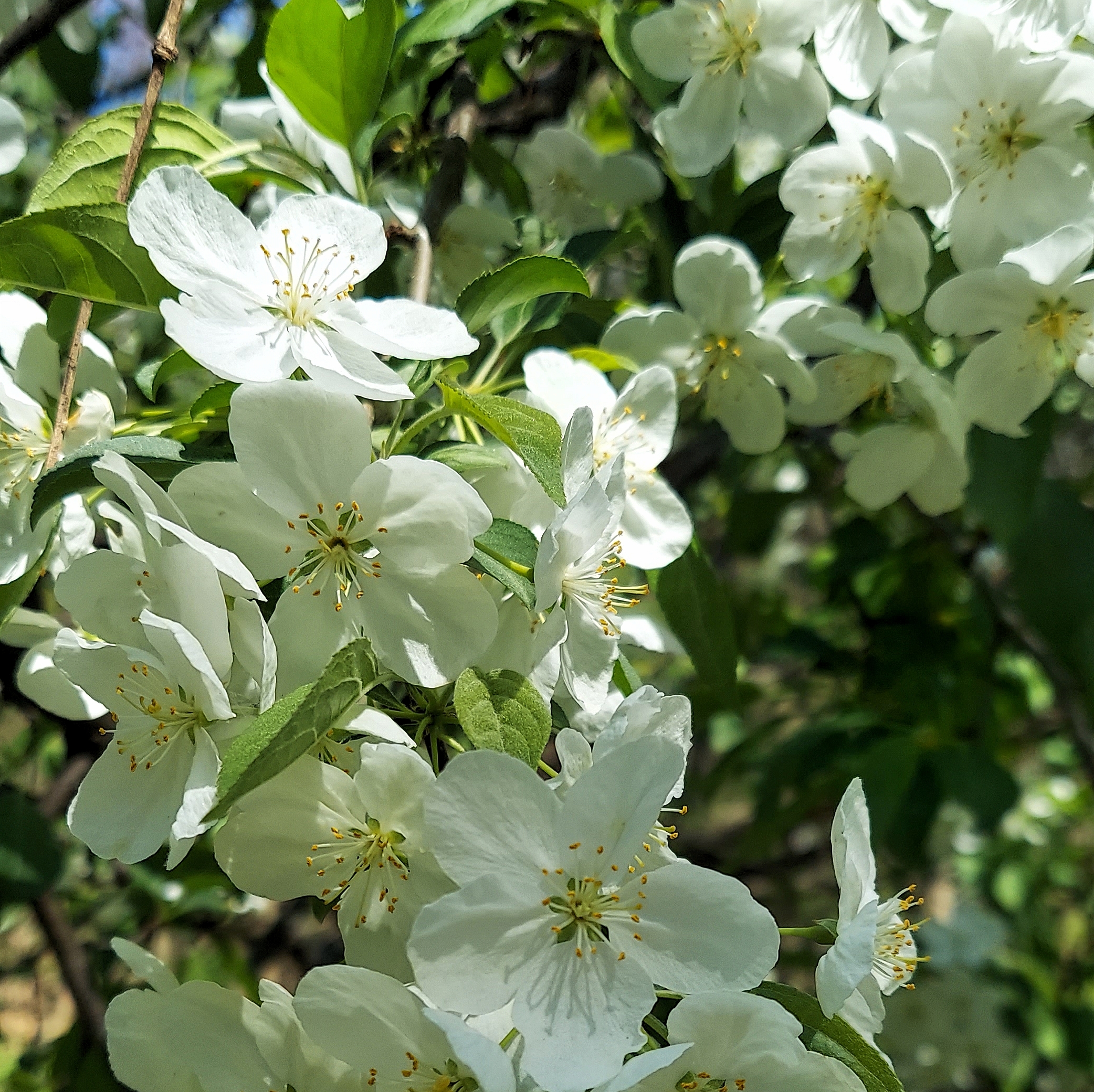
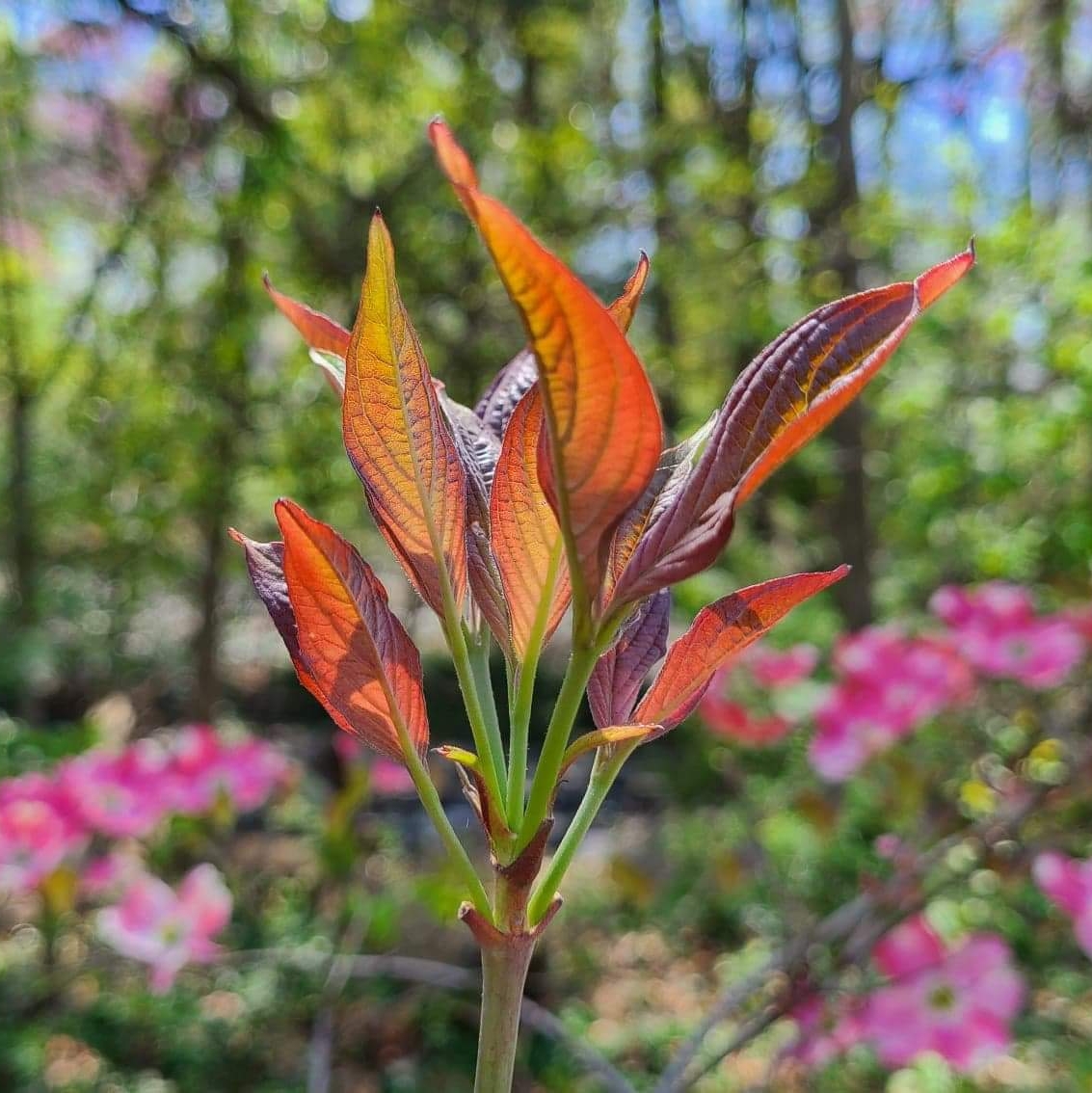
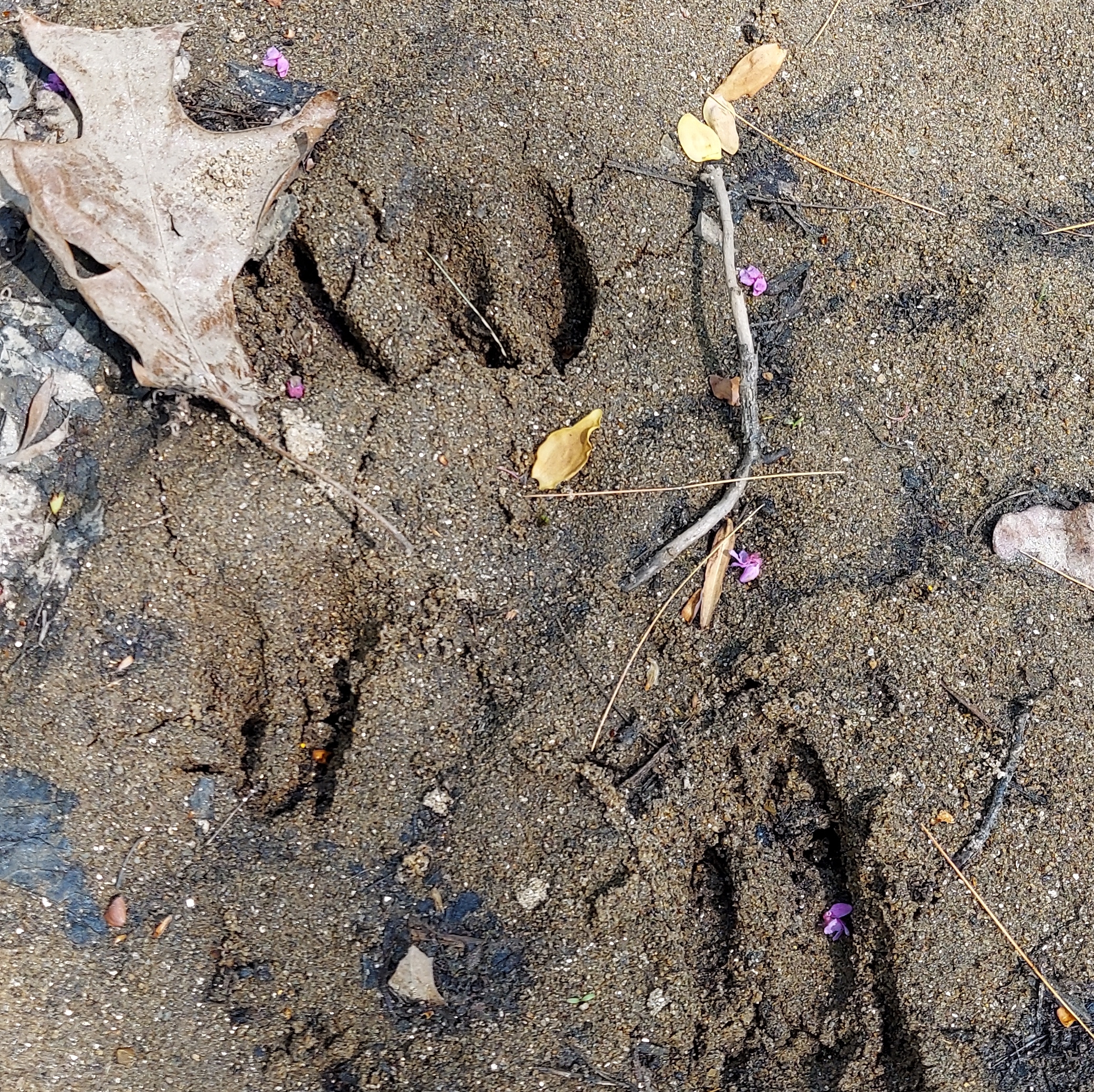
We didn’t walk very far, but there wasn’t a need to. The area we found was carpeted with violets, and a little flowering dogwood had burst into a riot of bright pink blooms. There was even what may have been an apple tree nearby — it’s hard to tell, because a lot of that branch of Rosaceae look similar when they flower — perfuming the air with a bright, sweet scent. Some deer had evidently paused there, leaving tracks in the soft, damp sand.
The trail was full of dogs, too, from an adorable miniature schnauzer, to a huge, sleek, jet-black pit bull. (His ears were cropped, and he crossed the little footbridge before his owners did. When I first saw him, a tiny caveman part of my mind warned that I might somehow be looking at a panther. I’d say this is silly and ridiculous, but this is also a world where the Tiger King exists and zebras just kind of wandered around the DC area for a while.)
My partner and I looked for four-leaf clovers between the sweet purple and white violets, poked around the shore of the nearby creek, and picked up litter along the trail.
Even the litter here is extremely wholesome.
Then, in the midst of this sweet, flowery idyll, I heard what could only be described as the sound of someone trying to feed an uncooperative bagpipe into a garbage disposal. There was a crashing noise, the crunch and rustle of leaves, and a pair of shapes darting through the trees.
Well, one was darting. One was kind of… scramble-flailing? Whatever it was, it wasn’t flying and it wasn’t falling, but it looked extremely uncomfortable.
A large crow had chased a falcon to the end of his family’s territory, and was in the process of escorting the interloper out (with violence). I’d read about crows doing this, had even seen videos of it, but nothing compared to the sight of that massive, almost eerily silent corvid turning an entire-ass raptor into a crying mess.
Now, I had a front row seat. I was fortunate enough to be standing right where there was a break in the trees, which gave me a really good view of the whole situation. It happened too fast for me to record any of it, though it had the same kind of weird time-dilation you experience watching a car crash. It was an amazing experience, though, and I felt honored to have been privy to it. It was also the most absolutely metal thing I’ve ever seen in my life.
(The falcon and crow were fine in the end, from what I could see. The falcon beat a very embarrassed retreat, and the crow went back to survey his spot.)
Even in a flowery park, nature is hardcore.
Now I’m gonna go have empanadas. (They are spinach and cheese.) Have a good day!
The seventh or so time I checked the alcohol content of my water kefir, I was shocked.
“Six percent? How is it still six percent?!”
I’d been working on getting the right ratio of juice to water kefir so I wouldn’t cause any accidental brewing-related injuries. Despite my best efforts, my second ferment still yielded something stronger than the average American beer. (That’s not saying much, but follow me here.) My partner didn’t complain. On the contrary — he thought that having a virtually endless supply of mild booze was a neat concept.
And you know what? I’m coming around to agreeing.
Ray Smuckles knows what’s up.
I make two batches, one for me and one for him. His gets the high-sugar juices added for the second ferment, like cherry, apple, and pineapple, so the kefir microorganisms can turn that sugar into more CO2 and ethanol. I don’t add extra sources of sugar to mine, but pile on spices like ginger and cinnamon. We’ve got a ton of extremely good brews that are both probiotic, and also a) safish for me to drink despite my medication, yet b) able to cause a nice buzz if you have way too much. The strongest and sweetest don’t taste like alcohol, but are still a hair more intoxicating than a regular beer. Plus they make your intestines and immune system do all good, or so I have read.
It’s a lot of work to have to strain the kefir, bottle it, mix up more sugar water, and set up new cultures every 36-48 hours, but so far? Worth it.
We’re officially past our last expected frost date here, so I’ve been having Notions about making the balcony all fancy.
I started with two railing planters od garden sage, calendula, basil, and dill. While our spot doesn’t exactly get full sun, it gets several hours of direct sunlight in the afternoon, so these seemed like a suitable experiment. After all, I figured, if they don’t thrive out on the balcony, I can move them to my south-facing windows.
I also moved my hanging plant stand out there, and festooned it with mosquito plants, snapdragons, and pansies. We even got a small cherry tomato planter, some lettuce, and a raspberry bush.
Oh. And strawberries.
I had an idea that I thought would be neat — I could use a terracotta strawberry pot, plant it all around with strawberry starts, and put a vining plant at the top. I could train it to grow using the balcony as support, and it’ll look neat. I wasn’t really able to find a suitable plant with a vining habit, so I went with some crookneck squash in the end. I was able to find some strawberry starts, so I picked three different varieties and trucked them home, excited and ready to get my hands in some dirt.
The thing is, there are a couple of different ways that plant starts are sold. When we went to Home Depot, they had tons of individual Burpee starts in little dark green pots. When we went to the independent garden store, they had starts in white square packages. They were about the same circumference as the Burpee pots, so I figured the only difference was branding.
I’m going to pause for a moment to mention that I was also wearing a brand-new pair of glasses, which I feel may not be quite the correct prescription.
Anyhow, this is how I ended up with 47 strawberry plants. I did not need or want 47 strawberry plants. I have no idea what I’m going to do with 47 plants’ worth of strawberries.
Once I got the starts home and got a better look at the packaging, my stomach dropped into my knees. I pressed every spare container I could into service — old planter liners, spaghetti sauce jars, cartons, some terracotta pots I’d been planning to use for another project, you name it.
This is my bedroom windowsill, and also every other horizontal surface that gets basically any sunlight.
My balcony is covered in strawberries. My windows are covered in strawberries. I have strawberries growing in the fancy-pants greenhouse cabinet in my partner’s office. I wake up to strawberry plants. I trip over strawberry plants. I have yet to find anyone who wants spare strawberry plants.
They are the first things I see in the morning, and the last I see at night. I’ve been looking up recipes for pies, jams, sauces, salads, and brews. I’ve been hunting for reusable multi-gallon freezer bags. I’ve been researching deities who enjoy strawberries as offerings, in the hopes that I might be able to unload some of them like an overly friendly neighbor with too much zucchini.
It’s been about a week, and they’re flowering and thriving. I don’t know what I’m going to do. I don’t have the heart to just toss them, and, like I said, I don’t know anyone who wants them. I wouldn’t know how to ship them even if I did.
An artist’s rendition of my life for the foreseeable future.
I have a sneaking suspicion that I’m going to get very tired of strawberries in the near future.
I haven’t updated in a while — it hasn’t been for lack of material, either. As we move into spring, I’ve been working on planting my balcony, developing new skills, and seeking out more connections. It’s the time of year for planting seeds in the anticipation for growth, and I feel it.
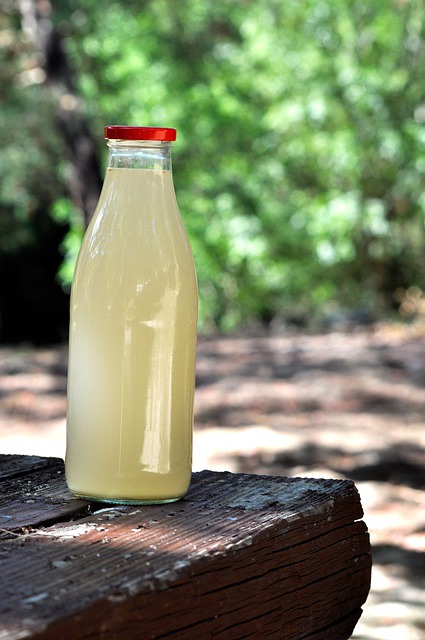
Anyway. You’re probably wondering about the title, so here goes: I’ve been making tibicos, also known as water kefir. This is a kind of probiotic beverage that’s made from granules that naturally develop on Opuntia cacti. These are essentially a SCOBY, kind of like kombucha, in a sort of gummy polysaccharide matrix. The balance of bacteria and yeast is quite a bit different, however, yielding an end product with a very different taste and bouquet of probiotics. Also, unlike kombucha, water kefir grains form little clear to beige squishy lumps instead of a mushroomlike “pancake.”
So, the process of making water kefir goes like this:
Boil some filtered water.
Add sugar. I usually use a half cup or so for a half gallon jar.
Make sure the sugar’s dissolved.
Let it cool.
Add the kefir grains.
Cover the jar with a piece of cloth or loose-fitting lid.
Wait 36-48 hours.
Strain the liquid into a bottle (save the strained-out kefir grains).
Add juice, crushed fruit, spices, or whatever you want the final flavor to be.
Cover the bottle with a cap, or one of those fancy swing-top corky deals.
Let it sit on the counter for another 24 hours. Burp it occasionally.
Put it in the fridge.
Enjoy.
Note the part that says “burp it occasionally” in bold letters. This is extremely important.
I’ve been working with a flavor blend that my partner and I really like. It’s about a half-cup to a cup of tart cherry juice and a cinnamon stick, in a 32-ounce swing-top fermentation bottle. There’s only one problem: It’s been very warm here, and cherry juice has a lot of sugar.
Even if you’re watching your sugar intake, the sugar content of water kefir is kind of the opposite of a problem. The fermentation agents in the grains break almost all of it down and produce CO2, a bit of alcohol, and more of themselves. In the end, you get something that’s fizzy, very slightly alcoholic, and flavorful, without being too sweet. The warmer the environment, the faster the bacteria work.
That is, if you get the ratio of juice to water kefir right for that second fermentation. And if, as I said, you burp the bottles regularly. Otherwise, you’ll get something that’s fizzy, alcoholic enough to peel paint, flavorful, not too sweet, and capable of detonating your entire kitchen and giving anyone in the room with you a traumatic brain injury.
I know this all sounds like hyperbole. I cannot emphasize enough to you how much it is not.
I popped that swing top off, and the force of the gas (from a bottle that I’d already burped a few hours ago) was enough to blow the wired-on top completely off, ricochet it off of the cabinet and into another room, and soak the ceiling in a geyser of cherry and cinnamon water kefir. I stood there in shock, holding the now half-empty bottle, while a sticky red rain fell around me. My partner, who very narrowly avoided having a wire and rubber bottle top embedded in his left temple, was in a similar state. It took a minute for the adrenaline rush to calm down, and I hope the probiotic benefits are enough to make up for the eight years the experience shaved off of our lives.
Anyhow, we poured out two glasses of what was left, and it was delicious. I think the fact that it was just this side of moonshine also helped calm us down a bit, which was a plus.
(Fortunately, I’ve gotten my better-ratio-of-juice-and-burping-the-bottles-often together since then, and no longer produce things that could conceivably be used to rob a bank.)
I’ve also made another version, where the water kefir grains feed on brown sugar for their first ferment. I add some lemon juice, ginger, and cinnamon for the second, and the end result is a very tasty ginger ale with just a tiny bit of sweetness. Since I have my process more or less nailed down at this point, I’m also working on adding herbs and fruits for various intentions to make drinkable potions.
Though I’m limited by space, I have a long list of skills I’d like to rediscover and build upon. Hopefully none of the others produce ersatz explosive devices.


























 Marble Crow