Birds like fruit. Some fruits, like prickly pears, actually evolved to benefit from the acidic environment of an animal’s digestive tract. The exposure to acid helps make it easier for the seeds to germinate. The fruits are delicious to incentivize animals to eat them and scatter the seeds around. Neat, huh?
This means that, if you are both planning to grow fruits for your own consumption and also exist in a place with birds, you need a plan. A big part of my plan involved just planting an absolute buttload of strawberry plants. Some will be eaten, sure, but that’s a sacrifice that I’m happy to make.
The other part of my plan involved special rocks.
The idea is that, if you’re concerned about birds getting into your fruit, you place inedible, non-toxic decoys around. Decorate the areas immediately around your strawberry plants with mediumish-sized rocks painted to look like strawberries, for example, and birds will leave your actual strawberries alone.
You have to do this before the plants actually set fruit, though. This is so birds have a chance to peck at the fake ones, be disappointed, and complain about your crappy, hard, imposter strawberries to all of the other birds before the real strawberries show up.
So far, it seems to be working! My strawberries haven’t produced a whole lot yet (mostly because the majority of them were just twiggy little starts a few weeks ago), but the few I’ve gotten have been untouched.
The crows, however, appear to be fascinated by my various gardening objects.
The younger ones like to play with the small black plant pots from the nursery. If a new thing shows up, they bop around to thoroughly investigate its amusement potential.
My strawberry rocks appear to be a huge hit. The crows are even trying to buy them off of me.
For serious. The strawberry decoy rock in my terracotta pot vanished, and, in its place, I received one (1) thoroughly pecked blue foam ball. It’s a very pretty shade of blue, and I appreciate it, but I’m also extremely curious about the corvid thought process that goes, “Yes. One red rock = one blue ball. Pleasure to do a business, okay.”
The thing is, I put all kinds of tasty stuff in their platform feeder as it is. Grapes. Blueberries. Bits of strawberries. And, like I said, the whole, growing strawberries have gone untouched by beak or claw. They seriously only wanted that one, particular decoy strawberry, and apparently valued it highly enough to barter for it.
I’m honestly kind of tempted to go rockhounding and see if I can pick up some nice, sparkly rocks to put by the platform feeders. We have a ton of mica around here, so I’m pretty confident that I could find something suitably eye-catching for them.
I mean, I know they’re no strawberry rocks, but maybe the crows’ll like them anyway.
I can’t say I’ve ever lived in a very close-knit community. My custodial parent was tired and angry all of the time, so we didn’t really do community activities, either. Now that I’m adult enough to do that kind of thing on my own, I love it. I can’t say that I really have any super close friends in my neighborhood, but I still love things like street fairs, farmers’ markets, and that gem and mineral show we went to not that long ago.
That’s why I approached the sudden appearance of a “For Sale” sign in my neighbor’s front yard with equal excitement and trepidation.
The house belongs to an older couple who have an adult daughter and young grandchild. It’s just like the others on my street — a post-war Cape Cod in a decent-sized yard, but theirs has an addition to give it some more space.
I never really saw the owners much, so I’ve never had the chance to really get to know them. I’m pretty much a golden retriever in a human suit, and my baffling levels of friendliness and desire for connections to other organisms yearn for expression, so this is a regret on my part. Honestly, the people who own the place could’ve moved weeks ago.
But this now raises a question: Who’s gonna buy it and move in? We’re in a walkable location that’s not far from DC, so I could see it going to someone who wants to Airbnb it (which is kind of a huge problem in this area in general). I hope not, though.
Honestly, I just hope whoever chooses to move in doesn’t suck.
Then I figured — if you can use magic to draw love, luck, and friendship into your life, why not cool neighbors?
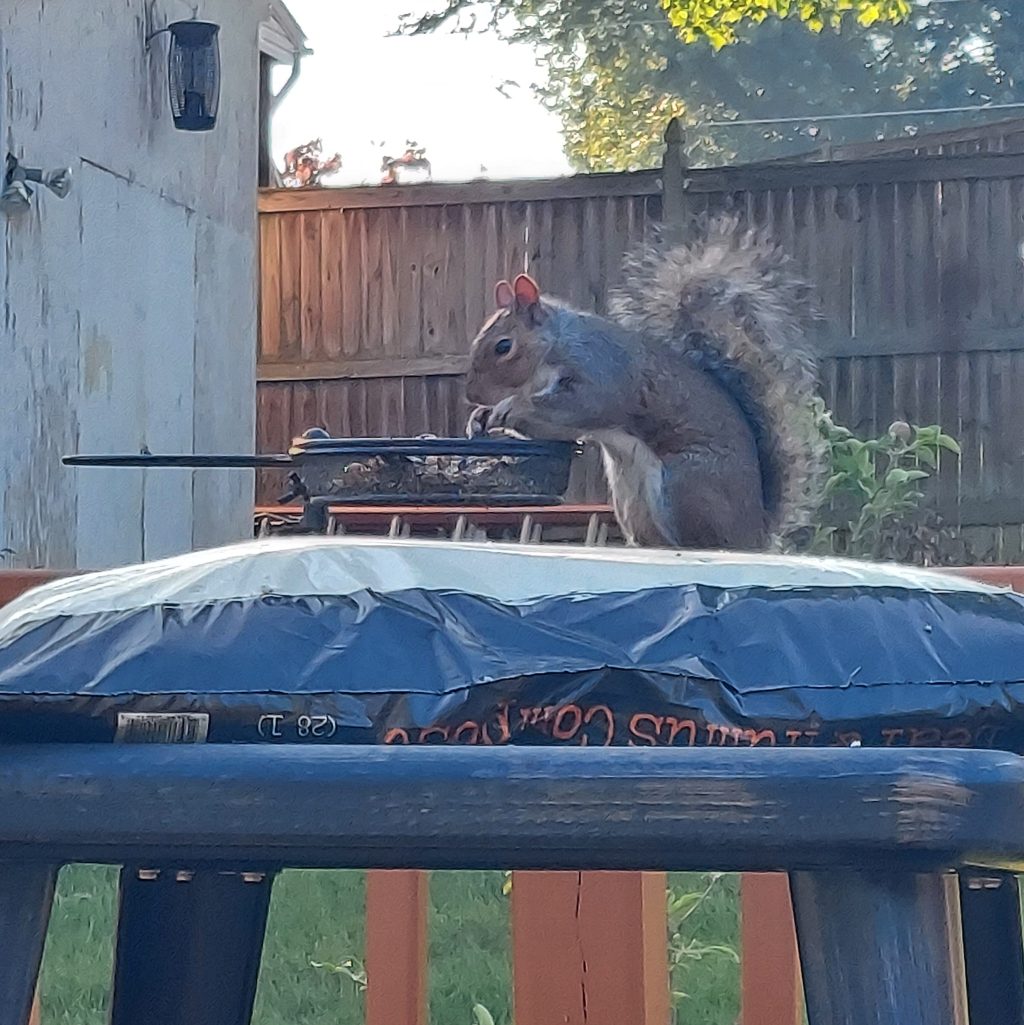
This train of thought it what has found me sitting on my deck, fuming a set of candles (pink for platonic good feelings, yellow for friendship) and a bit of rose quartz in cedar incense, all while arguing with Frederick de Bonesby that it is actually very rude to let his gigantic ass take up the entire platform feeder, and there is a line of sparrows squabbling behind him while they wait their turn.
(Frederick de Bonesby does not care. His primary concern is maintaining his skin and his flesh and his fats, even though he is a tubby squirrel and not a powerful 92-year-old lich. He does this chiefly through consuming copious amounts of peanuts and dried corn.)
But I digress.
Really, I’ve been using yard work as a kind of stealth mission. See, there’s a porcelain berry vine (pretty, but invasive) near the driveway that needs to be torn out. It’s right next to the fence dividing the properties, and also right by our gate. According to my calculations, this makes it an excellent spot to conceal a sweetening jar, which I can do by digging up the porcelain berry vine and stealthily burying the jar in its place.
I could fill it with sugar syrup and honey. Cinnamon and petals from the big Virginia rose bush in the front yard. Clover blossoms snuck from the edge where our yards meet.
I could also modify a love spell to attract a good neighbor. There are a bunch of them that involve listing the ideal qualities of a potential lover. But instead of “physically attractive” and “financially independent,” I could put things like, I don’t know, “fond of crows,” and “has strong feelings against lawns,” and “doesn’t think the entire LGBT community is a cadre of secret predators.” Really, the principle is the same.
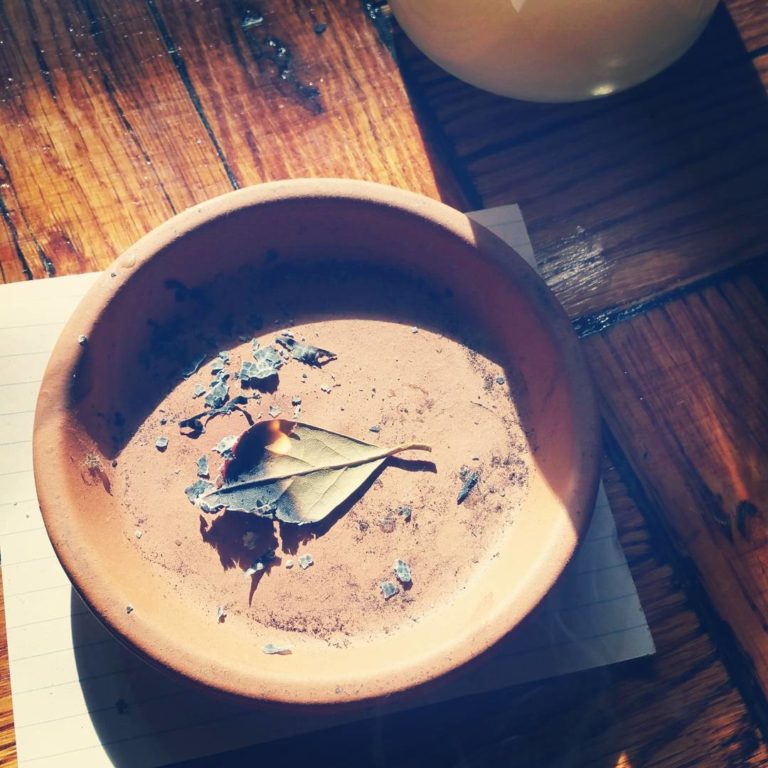
I could fold up the list and put it in a sachet with a magnet and the right herbs and stones. I could take the items on the list, write them on bay leaves, and sit on my deck while I burn them and blow the smoke to the four winds.
I could whisper my wishes to a handful of birdseed, throw it on the ground, and let the birds carry them where they need to go.
I’m also considering modifying another love spell that involves using human image candles. It’s a kind of sympathetic magic where you take an image candle of the appropriate gender for each person, then move them incrementally closer together over a period of seven days, burning the candles a little bit each night. Once they reach each other, you burn them together and either bury the remains near your front door, or melt the wax together, pour it into a mold with bits of herbs, and make a pretty charm of it.
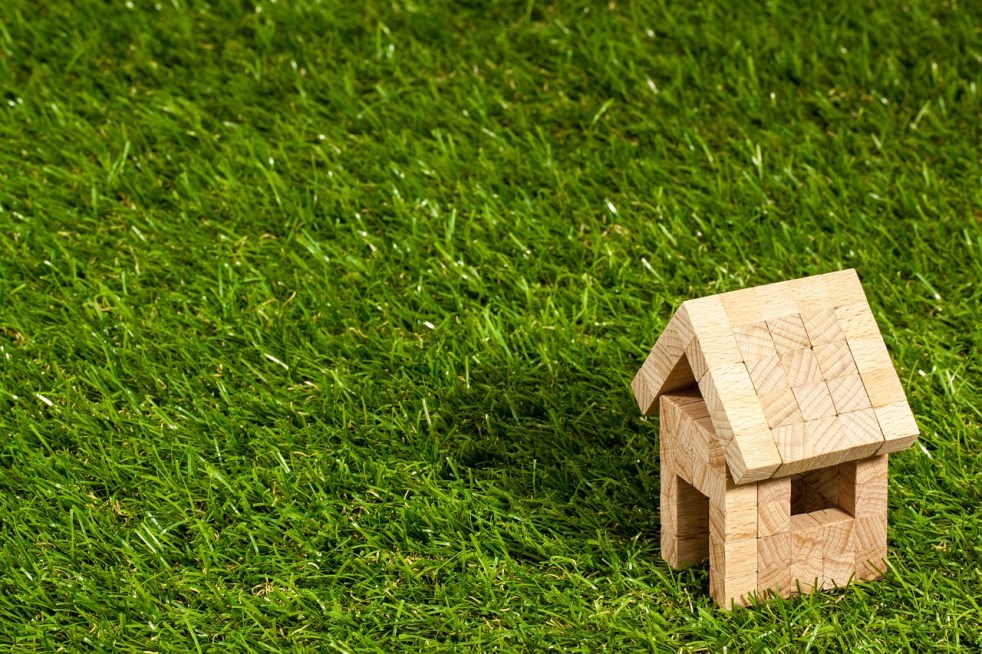
I could find a candle shaped like a house instead, then mark it with the address. Then I’d just need a general human-shaped image candle (or even a plain white one, in a pinch). The moving and lighting part would be the same. Once all I’ve got is stubs and wicks, I could hide the candles under the sweetening jar where the porcelain berry will… have… used to have been. (I don’t know how tenses work for situations like this. I feel like I need Douglas Adam’s help.)
Honestly, I just want neighbors like the two ladies whose tend was next to mine during a celebration I attended years ago. One was a Unitarian Minister, one was an experienced mushroom forager, and they were very kind, generous, and friendly (and fabulous cooks). One of the first things they said to us was, “Nice to meet you! Breakfast is at seven.”
A lot of people consider such spells questionably ethical, even if you perform them without the intent to manipulate a specific person’s behavior. If you really think about it, in a way, I’m kind of just helping my neighbors to sell their house. I’m also attracting people who don’t want to exploit the area for its Airbnb potential and prefer native ecological diversity to monoculture lawns.
So really, I’m also kind of in in the right.
I just hope none of my other neighbors see me burying a bunch of jars and candle stubs in the front yard, or it could get awkward.
Take a look at your lawn. Unless you maintain it to putting-green smoothness, you’re likely to see some yellow flowers.
Not the dandelions — look closer.
You might mistake them for buttercups at first, but they’re really quite different. These little yellow five-petaled flowers are yellow wood sorrel (Oxalis stricta). They’re a native wildflower where I live, and vastly superior to the grass that still attempts to poke its way up through their heart-shaped leaves and small yellow flowers.
A tuft of yellow wood sorrel.
As a native herb here, it doesn’t have a long history of use in old European grimoires. There are, however, many other varieties of wood sorrel — some native, some not, and some of questionable origins.
I’m a big proponent of using native alternatives to exotic herbs whenever possible, so I figured I’d give some background on wood sorrel and a few ways to use its magical (and delicious) American cousins.
Wood Sorrel Folklore
The species name Oxalis comes from the Greek word oxus, meaning “acidic” or “sharp.” The leaves of wood sorrel have a very tart flavor which makes them a tasty addition to salads. When dried, wood sorrel can be used to curdle milk for cheesemaking.
These plants are connected to fairies and woodland spirits. In Wales, wood sorrel is called fairy-bells.
The white flowers of Oxalis acetosella show why this plant’s sometimes known as “fairy bells.”
In herbal medicine, a decoction of the leaves was used for thirst and fever. Applied externally, the crushed leaves have an astringent effect which helps with abscesses, boils, and wounds.
Dried leaves are said to attract luck and, due to the doctrine of signatures, be healing and protective to the heart.
It’s also said that the dried leaf will allow the user to see fairies.
There’s some debate about shamrocks (an Anglicization of the Gaelic seamróg, meaning “little or young clover”). Shamrocks are associated with Saint Patrick, who used a three-leafed plant to explain the idea of the Christian Holy Trinity. Most depictions of the shamrock show it with three heart-shaped leaves. Since clovers have rounded leaves, this indicates that the shamrock may actually be a species of Oxalis and not a clover at all.
The ancient Druids were said to have regarded the shamrock as a sacred plant with the power to drive off evil spirits.
In the Victorian language of flowers, wood sorrel represented joy and motherly affection.
Wood Sorrel Magical Uses
Magically, wood sorrel is used in spells for luck, healing, protection from evil and misfortune, and love.
These plants can also be useful for working with three-part deities, like the Triple Goddess or Brighid. They make good offerings, or even natural representations of the deities themselves in a pinch.
Using Wood Sorrel
Wood sorrel isn’t a substitute for a visit to a doctor, but it can be a helpful herb for minor problems. Be sure you can reliably identify sorrel before attempting to consume it or use it topically.
If you live where wood sorrel naturally grows, you may want to cultivate a native species in your yard or garden space. This is especially true if you have an altar or dedicated space for nature spirits — wood sorrel is strongly connected to these entities. I’m planning to put an offering bowl and some large bull quartz crystals on the edge of the patch of yellow wood sorrel here, for example.
Using wood sorrel as a protective plant is an interesting idea. This protection may stem from the plant’s three-leaved appearance, which is reminiscent of various triple deities. The number three is also regarded as sacred in itself, since it reflects the past, present, and future; youth, adulthood, and old age; birth, life, and death; and the upper, middle, and lower worlds. Wood sorrel may also be considered protective because it’s very sour. Sour things, like lemons and vinegar, are often used to ward off or cleanse away negative energy.
This picture shows the heart-shaped leaves and small yellow buds of yellow wood sorrel.
With all of this in mind, I’d brew a tea of wood sorrel and use it to wash doors, windows, and thresholds. Growing wood sorrel could also have a protective and luck-drawing quality.
The dried leaves and flowers would make a very nice addition to jar spells and sachets for love magic. I’d probably combine the flowers with roses, apple blossoms, and other seasonal blooms associated with love-drawing, then use this mixture in a magical bath.
If you’ve never tasted wood sorrel, I highly recommend it. The tart leaves and flowers are a very interesting addition to salads, soups, and sauces. If you’re into kitchen witchery, these edible wildflowers can be a powerful way to work with your local landscape to bring love, protection, and luck into your life.
At which point I began to doubt that this was necessarily the wisest way for my spouse and I to learn kayaking.
It’s something we’ve always wanted to do but hadn’t really found a way. We checked out kayaking classes and ran up against some teachers who felt that learning to kayak was a major lifestyle decision — nay, a calling — and we would need to approach it with the same solemnity and devotion one might expect from novice monks. So, we kind of shelved that idea for a while.
Then we had the chance to go on a kayaking dealy with our Druidry group. Score! All we’d have to do is rent a kayak and some life jackets, and we could figure it out, right?
Since we were both going, we could just get a tandem kayak. My spouse has more upper body endurance than I do right now, so he could do the majority of the paddling with me as backup. It’d be easier and safer than taking individual kayaks, where something could happen that’d conceivably result in one of us needing a tow anyway. Easy peasy!
Tandem kayaks are known as “divorce boats” because, as it turns out, paddling a kayak with two people is only slightly more difficult than herding cats or folding origami dragons using nothing but your forehead. If your paddling isn’t in unison, then things get weird. You might hit each other’s paddles, or spin in a circle, or distribute your weight wrong and flip over.
(Speaking of which, did you know that kayaks can be carried on your head?
It’s true! A kayak might seem way too big at first glance, but, once you flip it over and put it on your head, it’s capsized! ᕕ(ᐛ)ᕗ )
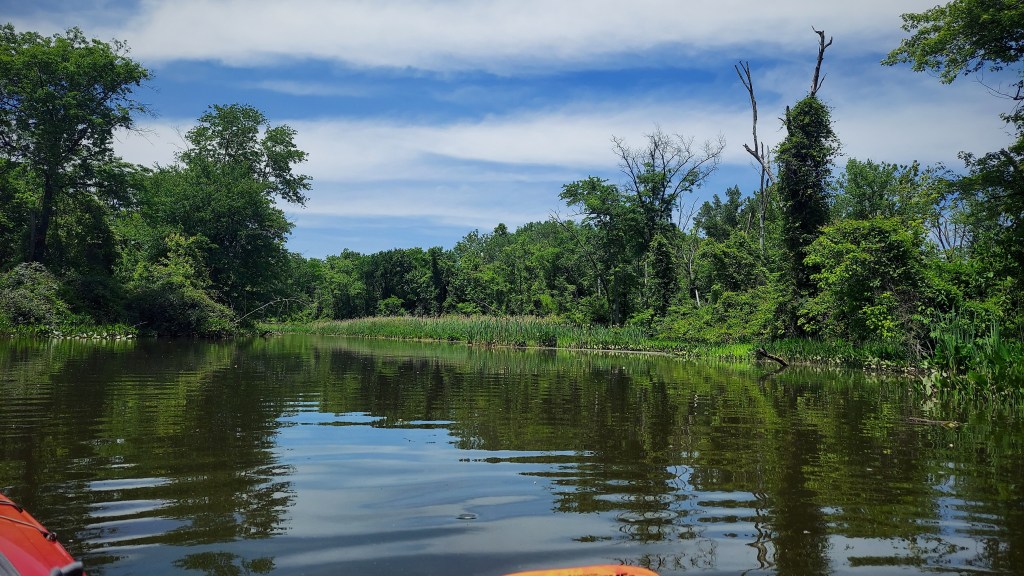
Fortunately, our partnership survived the Ordeal of the Tandem Kayak, and nobody even almost drowned. He sat in front, so I just kind of let him set the rhythm, helped with turns, and took over when he needed to rest for a bit. It was way easier and less nerve-wracking than I expected it to be, and we were both honestly impressed that we not only didn’t get dumped in the water, but actually managed to paddle for several miles along the Anacostia River.
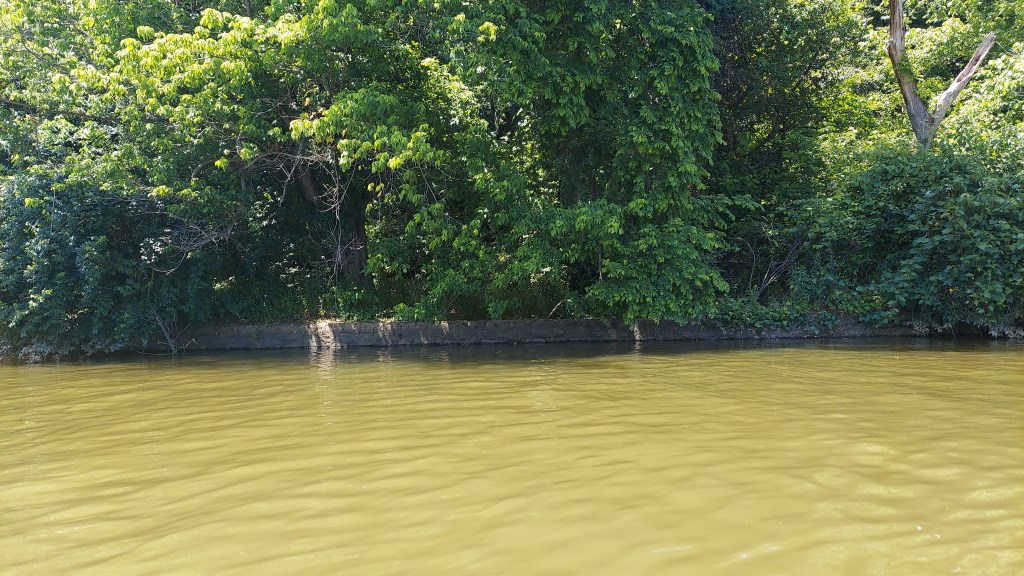
The Anacostia has a bad rap. In the past, this wasn’t entirely undeserved. For a long time, it was used as pretty much DC’s trash dump — to the point where parts of it are still lined with the remnants of “malaria walls.” These were retaining walls designed to help cut down on some of the garbage and assorted filth that ended up in the river, which created stagnant areas that turned into malarial mosquito breeding grounds. While this was once (sadly) helpful, it’s even more helpful to not dump things in the water in the first place. The river itself is much better than it used to be, and there are ongoing efforts to protect and improve it.
For our part, we all had grabby tools for picking up any bits of floating trash that we passed by, and mesh laundry bags for holding on to it until we could reach a trash can. (As it turns out, they’re pretty much perfect for towing along behind a boat when you don’t want to have to keep muddy water bottles and waterlogged grocery bags in your lap.) Since neither of us was solely responsible for paddling, it made it easier to grab the occasional piece of litter. It’s like the watery equivalent of plogging.
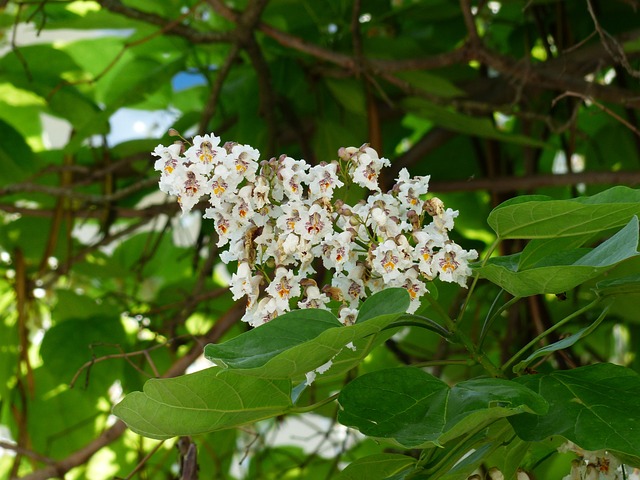
We paused for a bit near clusters upon clusters of lotuses. They aren’t in bloom right now, but the lush greenery, blue sky, songs of the red winged blackbirds, deep twang of frog calls, and the scent of catalpa flowers were still beautiful. We said a short prayer in reverence and gratitude, pausing to take it all in as we bobbed gently on the slow, easy current.
If I had to give one piece of advice here, it’d be to not just put sunscreen on your face, arms, and shins, decide that’s good enough, and let your upper thighs get burned to the color and consistency of glazed ham. I don’t even burn easily, but the sun, lack of shade, and light reflected off of the water was way more brutal than I’d anticipated. Sun hats and cool, long clothing is a must. I went with a broad-brimmed hat, a bright, long-sleeved two-piece bathing suit, a pair of jorts, and some hiking sandals. With the exception of the jorts, this worked out pretty well.
Seriously. It’s only on my upper thighs. I have Neapolitan legs. It’s ridiculous, and now every time I wear pants it feels like I’m rolling in ground glass. The aloe plants in my kitchen aren’t super happy about the situation, either.
All in all, the experience was 10/10. (I won’t even deduct a point for sunburn, because that was my own dumbass fault.) The only near accident came when I noticed a small stowaway on my hat, and we tried to navigate near an overhanging branch to let them go safely. A boat passed by, and the wake made things get weird for a moment.
(This stowaway was a spider. If you have arachnophobia, you should maybe stop scrolling now.)
(It’s kind of a small spider, though. The picture makes it look a lot bigger than it really was.)
(Also this is not a back widow or brown recluse, so it probably isn’t bitey. Even if it is, it is probably super not a big deal.)
I’m excited to go again. I had a ton of fun, and I know how to do even better next time. Our group also had long stretches of the river pretty much to ourselves, too, so it was honestly a pretty beautiful and profound experience.
The other day, I got a bunch of emails. Each one regretfully informed me that my email address had been taken off of one of ADF’s mailing lists — artisans, Gael, and a handful of others.
My emotions mixed. First, there was a tinge of embarrassment. I was removed because my email was no longer on their member rolls, which is because I didn’t pay this year’s dues. Next was sadness, then relief.
I wanted to study the Initiate’s Path according to ADF‘s curriculum, but, every time I tried, I always found it difficult to start. It didn’t seem quite as structured as the Dedicant’s Path, and their site migration seemed to cut me off from finding out what I was supposed to be doing.
On the other hand, I got exactly what I needed from ADF. Years ago, I was dealing with a sense of discontentment and a lack of focus. Being an eclectic practitioner resonates with me, and I never really felt quite “at home” in other traditions I had contact with along the way. Still, I felt like I needed something.
That something, as it turns out, was more structure. Following the Dedicant’s Path gave me that: High Days, rigorous study, and the Core Order of Ritual. Once I had that, I didn’t really interact with ADF as much as I would’ve liked. Even the Neodruidry groups I’m in now are primarily made up of members of OBOD and the AODA, so it doesn’t really matter where one studies or what brought them to Druidry.
I chose to take forgetting to renew my membership as a sign. Rather than have my lack of progress on the Initiate’s Path hanging over my head, I’m going to take this time to formulate my own study plan.
I might rejoin ADF in the future, join a different group, or use the foundation provided by ADF to build on myself. I still consider myself an eclectic practitioner and always have, so it could be that I’ve already taken what I needed from this experience.
Either way, I can’t wait to see what the future brings. 💚
They’re versatile, inexpensive, and delicious. You can use them to carve stamps, prepare stuffing, or make a pie. Got an apple core? Feed it to worms or toss it in compost. They’re a delightful package of deliciousness, nutrition, and fiber.
They’re also pretty prominent in the religions of the areas from which they come. Eris tossed a golden apple and started the Trojan war. Iðunn’s golden apples give the gods youth, immortality, and vigor. Manannán mac Lir tempted Cormac mac Airt with a branch covered in nine apples of red gold. Emain, the otherworldly Plain of White Silver, had silver boughs with white apple blossoms.
We don’t have magic apples here, though I feel like Chehalis apples come close. I was drawn to their colors, ranging from emerald green, to golden yellow, to a pale, almost ethereal shade somewhere between the two. (I’ll just be happy if I get to eat one of these apples without the birds and wasps getting to them first!)
One of the little Chehalis apples on the tree in the back yard.
But apples are more than just magical symbols of the Otherworld, anyway. They’re also an indispensable ingredient in kitchen witchery, and even herbal healing.
Apple Folklore
Teasing out the folkloric significance of apples is more challenging than it might seem. Up until the 1800s, the word “apple” was used not just for apples, but also for as a generic term for fruits other than berries. This is why we have “oak apples” (a plant deformity caused by gall wasps), “earth apples” (cucumbers or potatoes, depending on who you ask), “love apples” (tomatoes), or “May apples” (a low-growing relative of barberry).
Ethnobotanists have made some compelling arguments for apples being used as a symbolic substitution for fly agaric mushrooms (Amanita muscaria), an entheogenic fungus. This is an interesting bit of information to keep in mind as you read through the rest of the folkloric and symbolic significance of apples.
The fruit eaten by Adam and Eve in the garden of Eden in Christian mythology is often said to be an apple. This is particularly interesting when you consider the effect of that apple and Terence McKenna’s “Stoned Ape” theory of humanity’s development. This widely-criticized theory holds that entheogens (specifically Psilocybe cubensis) are responsible for much of the progress of humankind. If Adam and Eve’s apple could be viewed as an entheogenic fungi, then the Christian story of the fall of man would be an allegory for entheogens leading to the development of clothing, agriculture, and more.
The larynx, which is usually (though certainly not always) more prominent in male humans, is called an “Adam’s apple” because of a bit of folklore that claimed that the prominence was created by the fruit sticking in Adam’s throat.
In later Christian mythology, Jesus Christ is portrayed as holding an apple. Here, the apple transforms from a sign of the fall of humanity, into a sign of redemption. Considering that this redemption leads to eternal life, this apple is somewhat akin to the apples of Iðunn.
In the Norse Prose Edda, the goddess Iðunn is said to carry an ash wood box in which she keeps golden apples. When the Norse gods begin to grow old, they eat her apples and become young again. The gods, then, depend very heavily on Iðunn’s presence and good will in order to maintain their youth and strength.
Apples weren’t always associated with youth and life, however. In the Heiðarvíga saga, the poet speaks of the “apples of Hel.” These appear to be the antithesis of Iðunn’s apples — the food of the dead.
In Greek mythology, Eris felt insulted when she wasn’t invited to the wedding of Peleus and Thetis like the other gods were. As revenge, she tossed a golden apple inscribed with the words “to the fairest” in between Hera, Athena, and Aphrodite. They immediately began arguing over who deserved it, and asked Paris to mediate. Aphrodite promised him the hand of the most beautiful woman in the world if he chose her, so he did. Unfortunately for everyone, that woman was Helen of Troy, and Paris’ decision kicked off the Trojan War.
The island of Avalon, the mythical, mystical place of Arthurian legend, is the Island of Apples. The name “Avalon” is thought to stem from the Welsh word “afal.”
In Cornwall, Kalan Gwav (Allentide) is a time for giving shiny, bright red apples to friends and family as tokens of luck.
In the Irish EchtraThe Voyage of Bran, Bran mac Febail sets out on his adventure when he receives a silver apple bough brought from Emain, the Plain of White Silver.
The Irish sea god Manannán mac Lir’s golden apples emitted a kind of magic lullaby. This could soothe people afflicted with injuries or illnesses to a healing sleep. The name of his paradisical home, Emain Abhlach, comes from the Old Irish “Ablach” (“of the fruits” or “of the apples”).
In the mythology of the people from the North Caucasus, there is a tree that groows magic apples capable of guaranteeing a child to whoever eats them.
During the Jewish holiday Rosh Hashanah, people dip apples in honey and eat them to bring in a sweet year ahead.
Wiccan lore views apples as a sacred symbol. This is because, when cut in half horizontally, their seeds and core form a pentagram.
An old bit of boat builder’s lore holds that it’s bad luck to make a boat from apple wood, since apple wood was used to make coffins. Doing so was believed to doom the sailors to an early grave.
A common bit of marriage folklore says that, if an unmarried woman peels an apple in one long, continuous piece, then throws it over her shoulder, the peel will fall in the shape of the first letter of her future spouse’s name.
Wassailing is an old English folk practice performed to bless the trees and bring in a big crop in the next harvest season. (I went to a wassail ceremony earlier this year, and it was a ton of fun!)
The Magical Uses of Apples
Apples are a common autumn food and addition to altars for autumn and winter holidays. This is because they’re in season during autumn, and tend to keep very well if they’re stored properly. Apple sauce, apple cider, dried apples, and carefully-stored fresh apples were vital additions to the western European diet during the cold months.
An apple bough with buds, flowers, ripe fruit, and unripe fruit is said to mark a door to the Otherworld.
In general, apples are magically associated with love, fertility, protection, and prosperity. The flowers are excellent additions to charm bags, the fruit is great for kitchen witchery, and the leaves can bring fertility and prosperity to one’s home or garden.
Using Apples in Magic
Apples are possibly one of the easiest and most convenient magical ingredients. Since apples are pretty sturdy and edible when raw, they’re often used as a kind of edible “package” for magical intentions. Hold an apple in your hands, visualize it filling with your intention, whisper your intention to it, and eat.
If you have access to apple leaves (either pruned or fallen — please don’t pick fresh leaves from the tree), bury thirteen of them in your garden. This is said to increase its productivity for the next year. I’d argue that you could also add these leaves to compost, or bury pruned or fallen apple wood in your hügelkultur mounds.
Apple blossoms are great ingredient for love magic. Their action is said to be gently seductive. They are also used for peace, contentment, and success. This suggests that they’d be a useful addition to any spell for attracting happiness into one’s life.
Apples are also said to be protective. Apple cider vinegar can be a useful (and pungent) addition to jars and bottle spells for protection against both one’s enemies and malevolent energy.
Another little Chehalis apple.
I can’t tell you how excited I am for apples this year. The springtime apple blossoms were incredible, and I check on the ripening fruits with excitement every day. Here’s hoping you can find ways to incorporate these magical fruits into your meals, rituals, and daily practices.
“Man, that salad outside looks good. I’m almost jealous.”
It’s not really a salad, though. It’s sunflower seeds. Cracked corn. Peanuts. A handful of blueberries and strawberry tops, garnished with an equal handful of cat kibble.
On of the things I love about where I live is that it’s the territory of a family of crows. I don’t know them very well yet, but there are two who stand out: one I call Magni, because he’s the largest, most intimidating, and usually spends his time acting as a sentry for the others. Another, I call Muse. This one’s smaller and doesn’t fly far when I go out to fill the bird feeders — only to the other edge of the deck, where they sit and wait for me to finish. (I call them “Muse” because this behavior means that they’re the easiest member of the family to snap pictures of, so I have tons that I can use for painting references.)
I’ve planted plenty of things that crows like, though that’s mostly just different kinds of berries for now: three elderberries by the big maple tree, dozens of strawberries, four blueberry bushes. The little mock strawberries, embedded in the grass and clover like jewels, I leave alone. They’re not strictly desired, but their bright red berries are still edible and sought after by birds.
As the weather warms up, I see more and more small friends coming to share crow salad. There’re the ubiquitous house sparrows, song sparrows, cardinals, starlings, juncos, and one cocky blue jay. I sit in my kitchen, peering over the edge of the windowsill, to see where they go once they’ve eaten their fill. Kiko and JJ sit on the mat, chattering in their strange little cat language to birds that will never reply.
I’d like to befriend the crows that visit here, but the advice I’ve seen hasn’t been much help. I’ve tried crow calls, but they respond better to my ridiculous sing-song, “Hello, babies!” People say to give them peanuts, but these guys are more excited for cat kibble and odds and ends of fruit. Sometimes, though not often, they’ll sneak an orange tomato from my bush and fly off with it like raven stealing the sun.
This summer, there might be wild pigeon grapes too. Next, there’ll be beautyberry. Hopefully they like those.
It’s been a bit since I’ve sat down to read an entire book from start to finish. To be honest, I just haven’t had the time or attention to spare. I do want to get back into providing reviews and recommendations for books, since I see so many posts on social media asking for resources.
This week, I’ll be looking at Gemma Gary’s The Black Toad. At only 133 pages (not counting the bibliography and index), it’s a slim volume. Though diminutive, it’s definitely not hurting for content!
I’ll be honest, a lot of modern books and websites about witchcraft kind of make my eyes glaze over. Now, in a time where everything just gets boiled down to vibrations, intention, and personal gnosis, all of the advice and explanations sound very samey after a while. (They’re also not terribly helpful, and then people wonder why their craft doesn’t work!)
I really enjoy books on witchcraft that have a more historic bent. When I write about herbs or minerals, I end up looking into folklore, not modern lists of associations or uses. It gets closer to the heart of the matter and keeps me from having to reinvent the wheel through personal gnosis, as it were.
All of this is to say that I really, really like The Black Toad. It covers protection, luck, plant charms, weather witchery, and cursing, broken up into the domains of Old Mother Red-Cap, Green-Cap, and Black-Cap. All of this is presented without apology — for the one with the power to heal and protect must necessarily also have the power to destroy.
The spells and charms aren’t written like lists of instructions. Instead, they’re detailed descriptions of historical ways that witches and wise people had for protecting themselves and their animals, improving their luck, healing, and handling their enemies. It’s more than possible to use it as a spell book, but it’s primary value, to me, is as a depiction and explanation of traditional practices.
The only downside is that scientific names aren’t (or possibly can’t be) provided for some of the plants mentioned. Take sage, for example. The mention of sage states that it was drunk for health and longevity. However, there’s a sage native to the area that isn’t a sage at all — wood sage (Teucrium scorodonia). The actual sages, the Salvia species, are native to the Mediterranean. So is this sage an imported garden sage, or native woodland germander? Unfortunately, historic resources often don’t leave us much to go on.
Some other reviewers pointed to the use of Biblical passages in some of the formulas as a problem. However, this is ahistoric and there are plenty of traditional resources that use passages from the Bible. There’s no reason to believe that witches and wise people, historically, would have reason to look down on doing so. The attitudes of modern people toward organized religion have no bearing on what people were likely to use in the past.
I’d recommend The Black Toad to anyone with an interest in traditional western European witchcraft. It gives a useful picture of the role and domain of wise people, as well as several spells that are still useful today.
Hello! It’s April, it’s going to be almost 90° F this weekend, and winter skipped us.
Well, we had like one cold week, but that was it.
Honestly, it’s had me worried. A number of plant species that are native to this area require cold stratification — in other words, they need a period of cold and some pretty big temperature swings in order to trigger them to germinate at the correct time. This includes a tree that’s very important to me, the bald cypress. They’ve evolved to need cold stratification because without it, their seeds could germinate far too early and die off in the middle of winter.
I have packets of seeds that I want to plant, too, that need to be sown within a narrow window of time. I’m talking when temperatures are cool (but not too cool), usually right around the last frost date. The trouble is… like I said, it’s going to be in the high 80s this weekend. Our official last frost date was a few days ago.
Now that I’ve gotten my complaining out of the way, there’s an idea I’ve been exploring.
I first ran into it when I was researching native hydrangeas. I love hydrangeas in general (my grandfather had a big hydrangea next to the house I grew up in, alongside a strangely persistent and hardy opuntia cactus), but they’re not really known for their heat tolerance. They are, by far, not the only plants that are going to suffer as temperatures increase either.
Smooth hydrangea (Hydrangea arborescens) is native to this area. They also prefer daytime temperatures in the 70s and require supplemental irrigation when it gets too hot and dry.
Oakleaf hydrangeas (Hydrangea quercifolia) are native to the Southeastern United States. In other words, they’re from the US, just a bit lower than where I live. Changes in average temperatures are expanding the range of some southern plants and animals, while driving others further north.
Unfortunately, there’s not much that a single person can do to keep their cool temperature-loving plants from suffering from this effect. It’s also debatable whether we should — landscapes are ever-changing and evolving, and state borders are artificial constructs that plants and animals don’t recognize. It may increase the resilience of the landscape to work with this shift, rather than against it.
For this reason, I’m experimenting with oakleaf and smooth hydrangeas. Experts point out that this area’s climate is slowly aligning with species that used to be relegated to more southern states. Blending some Southern species with Midatlantic species could help create a plant, animal, and fungal community that’s more resilient to climate change, and decrease the need for supplemental irrigation or treatment for diseases related to heat stress.
Saving seeds from the individual native plants that seem to struggle less with the heat can help their species adapt over time, which will feed and protect the native animal species that depend on them. Adding in native-ish species from a bit further south can help the land adapt. It also ensures sources of food and nesting sites for the animals that are also being driven north as temperatures rise.
There are a number of stones in the gemstone trade that are referred to as crystals, when they really aren’t. Some, like art glass, don’t have a crystalline structure. Others might be mineraloids, which also lack a crystalline structure. All of this is to say that a fair amount of “crystals” aren’t really crystals at all.
With that out of the way, let’s look at Andara crystals. These are often brightly colored, very fancy-looking clear stones that are purported to have a ton of healing and metaphysical properties (and fetch correspondingly high prices). But what are they, and why are they controversial?
What are Andara crystals?
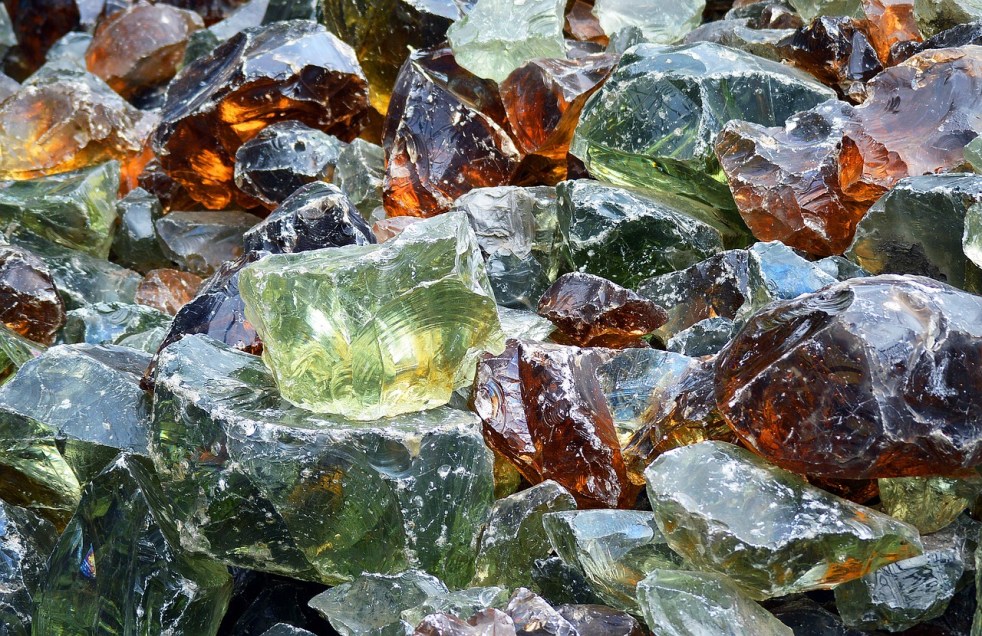
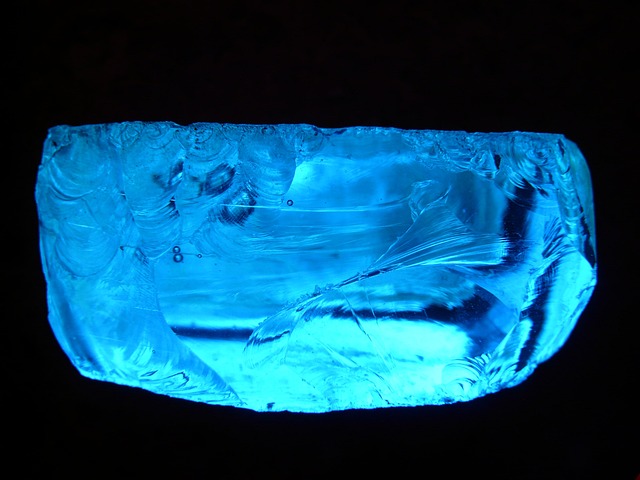
Andara crystals are said to be natural glass which comes from a handful of specific sites in northern California and Nevada, which are the foci of particularly high-energy vortices. These crystals come in every shade of the rainbow, and fans say that they can heal, balance the chakras, raise vibrations, and more. Some even claim that they’re the philosopher’s stone of legend, or an ancient healing tool used in Atlantis.
These stones are said to contain etherium, which is a blend of 70 different minerals. Some are listed as monatomic, which refers to substances made up of elements that naturally exist as a single atom.
Okay, so why are they controversial?
Andara crystals are controversial for a few reasons. For one, they’re not crystals. They’re a type of glass.
For two, they’re not natural (as in, formed by nature). Andara crystal deposits correspond to land dumps of slag glass from manufacturing. They look like slag, and their chemical composition correlates to soda lime glass, of the type used to make bottles. It doesn’t resemble other forms of natural glass, like obsidian or moldavite. The chart in this post gives a pretty thorough breakdown.
The funny thing is that some sellers extol the virtues of Andara crystal and claim that part of its specialness lies in its dissimilarity to other natural glasses. Yes, of course it’s not similar to them — because it’s soda lime glass.
Selling Andara crystals as a natural product is a bit like selling beach glass and claiming it was formed by nature. It may have been shaped and influenced by it, but it’s a man-made material at its heart.
The controversy doesn’t like in Andara crystal’s man-made origins, however — it’s because it’s literally a manufacturing byproduct. Chunks of slag glass get dug up, cleaned off, labeled with a lot of healing and metaphysical properties, then sold for sometimes hundreds to thousands of dollars.
This has caused trouble with not only buyers, but also dealers. When you’re selling something indistinguishable from a chunk of broken bottle, it becomes a race against “counterfeiters.” (I use “counterfeiters” here because the counterfeits are, again, indistinguishable from the alleged genuine articles.) This has led to dealers claiming that their glass is the only true Andara crystal, and dealers selling specimens back and forth to each other — accompanied by certificates of authenticity.
The Emperor’s New Crystal
Is it bad to use a man-made material for metaphysical, spiritual, or even energetic healing purposes? Not necessarily. I honestly love the idea of using slag glass this way, because it removes manufacturing waste from the environment and gives it a second life.
(A crystal — any crystal — isn’t going to take the place of the services of a competent medical professional. If you need insulin or to have a tumor removed, there is no stone that will make that not be the case anymore. I’ve used crystals to get relief alongside conventional treatment and complementary therapies, but I’m not out here trying to cure pseudotumor cerebri by rubbing rocks on my head.)
But here’s where we get into what I think of as the Barmicide Feast of crystals — or, if you prefer, the Emperor’s New Crystal.
It’s true that developing your own personal associations is important for any magical or spiritual tool. I have stones I work with that I love, but other people don’t get anything from. Other people have crystals or herbs that they love, but I get nothing from. These relationships shift and evolve over time, and that’s good and fine.
Unfortunately, some proponents of Andara crystal have used this as a selling point in a way that’s, frankly, kind of gross. They attach long lists of metaphysical attributes to this glass, then claim that only the special and spiritually evolved can feel or access them. If you see the slag for what it is — slag — then you need to get on their level. See? Nasty.
The biggest problem here is that they’re exploiting a grain of truth to build up the cachet of a manufacturing byproduct in order to charge exorbitant amounts of money for it. They’re not wrong when they say that not everyone can experience the energy of a stone — even glass. The shitty part comes from using this exclusionary tactic to get money from people who want to be part of the in-group. Vulnerable people who want to feel that special energy, to feel elevated and included, and are willing to pay for it.
The underlying message is that when you compliment the Emperor’s gorgeous robes and rave about Barmicide’s pistachio-fed lamb cutlets, you, too, can be spiritually evolved.
Again, the shady part isn’t using (or even selling) soda lime glass as a magical or spiritual tool. The shady part is overcharging for a common, inexpensive material.
If you have and use Andara glass, that’s wonderful. My only advice here is, if you feel drawn to it, use this as a starting point to unpack your relationship with crystals. What’s different about that soda glass versus other materials that are around you? If it’s its place of origin, consider visiting this energy vortex and experiencing it for yourself — you might find a piece of regular quartz or some other mineral that gives you just as much, but you won’t have to overpay for it. If it’s the metaphysical claims and the experience of buying the stone from a dealer, then that may be something worth exploring further.










 Marble Crow