Uncategorized

The Bully Birds

My crows have, for the moment, disappeared.

Well, okay. Not disappeared, they’re just sort of close by instead of hanging out on my various sheds and/or porch.
Personally, I blame the starlings.

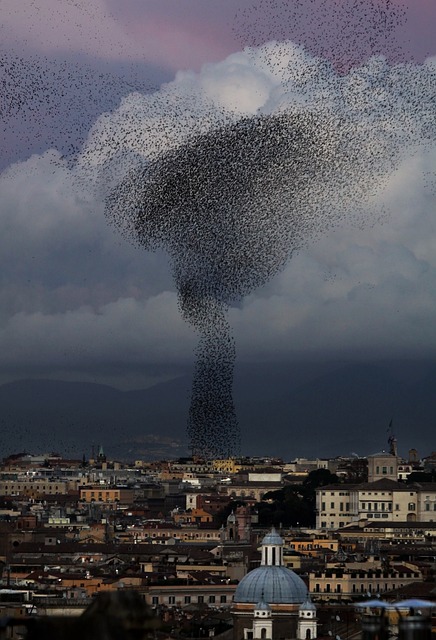
Starlings have a bit of a reputation. They’re invasive, noisy, arrive in hordes, and get into tiny brawls everywhere. They fight in the birdbath and knock it over, upsetting the mourning doves. They fight in the seeds and kick them everywhere. They kick each other off of the deck railing like this is a tiny Sparta, and every one of them is a miniature Leonidas.

A group of starlings doing what they do best: screaming and kicking the crap out of each other in a pile of food.
It’s just this, constantly, all day, every day.

They’re also bullies. Since they travel in groups, often with masses of babies in tow, they have no problem starting fights with birds much larger than them. Starlings are tiny compared to crows, but they do outnumber them greatly. Crows will kill and eat baby birds, so the starling families seem to go on the offensive as a matter of course.

It’s not like they have to fight a whole bunch, either. Crows have good memories, and starlings are loud. It probably only takes one fight for a crow to hear a flock of starlings and not exactly feel up to facing down an army of shrieking lilliputian kickboxers.

A group of starlings pecking in the grass. In their midst, there's an oblivious gull.
A gull, probably about to get his face rearranged.

Starlings also have basically no sense of self-preservation. In the past day, I’ve seen a baby starling walk up and gape its mouth at a reflection, a sparrow, and a squirrel. This afternoon, one of them flew to my kitchen window, stood on the outside sill, and gaped at me through the glass.
I wished I’d gotten a picture of this, but I did not as I was too busy staring in shock at this stunning display of hubris.

Sorry, kid. I keep the feeders filled, but I’m not about to go outside to spit bugs into your tiny face.
Also, where are your parents?

Fortunately, starlings are migratory. They’ll hang around during the summer, like a swarm of drunk college kids in Punta Cana, then pack up and leave. I know the crows are still here because I hear and see them around. They just tend to go to the feeders very early and very late, when they’re less likely to be harassed.

Honestly, I know how the crows feel.

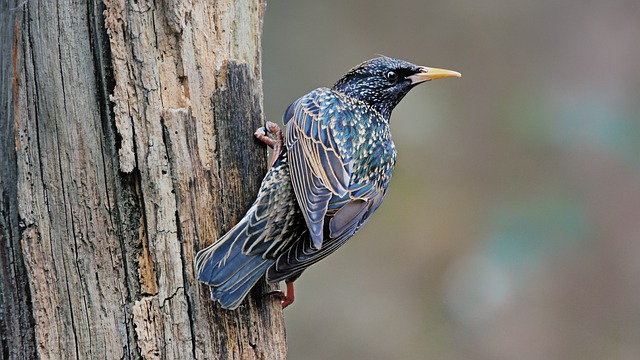
A male starling in a field of dry grass. His feathers are deep black flecked with cream, with a rainbow sheen.
He’s probably looking for someone to fight.
Plants and Herbs

Passionflower Folklore and Magical Properties

As we kill off our grass, we’re working hard to replace it with plants that serve multiple purposes. Ideally, they should be native (or at least semi-local), attract pollinators, provide food for both humans and animals, and either return or self-seed. One of the plants that passed muster is this area’s native species of passionflower, Passiflora incarnata.

Also known as maypop, true passionflower, purple passionflower, and wild apricot, P. incarnata is a really pretty, fast-growing vine that provides both wild-looking purplish blue flowers and edible fruits. The flowers don’t last long, but they’re very striking!

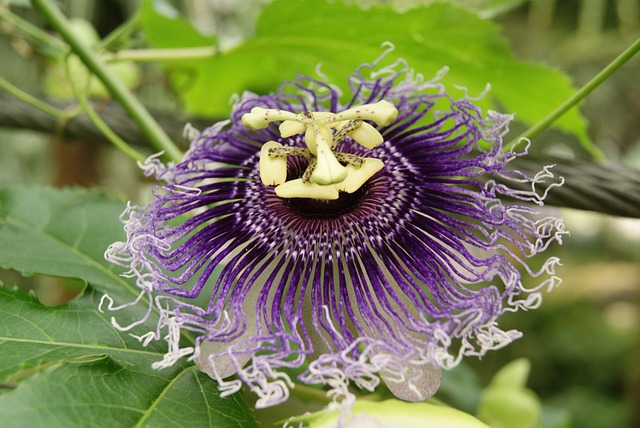
A fringy, bright purple Passiflora incarnata flower.
A flower of P. incarnata.

Unfortunately for me, I didn’t heed the old adage, “the first year they sleep, the second year they creep, the third year they leap.” As a result, I planted way too many passion vines. They’re going to eat my porch.
Help.

Anyway, as I watch my yard speedily being consumed by passion and pumpkin vines, I figured I’d write a bit on the magical uses and folklore of the passionflower.

Passionflower Folklore and Magical Uses

Despite the name, I’ve mostly seen passionflower used as an herb to dampen passions, not stoke them. They’re said to be useful for calming libido, cooling relationships, and cultivating platonic or romantic rather than erotic love.

This could be because the word “passion” has a number of very different and contradictory meanings. As Mark Z. Danielewski wrote in House of Leaves, “Like patience, passion comes from the same Latin root: pati. It does not mean to flow with exuberance. It means to suffer.”

As a new world herb, passionflower was a novel plant to the Spanish missionaries who arrived in Peru in the 1500s. Giacomo Bosio, a monk and historian, referred to passionflower as “La Flor de las cinco Llagas” (“the flower with the five wounds”). This refers to the five wounds the Christian figure Jesus Christ is said to have endured at his crucifixion. The Biblical usage of passion equates to suffering, so, to missionaries, the passionflower represented divine suffering.

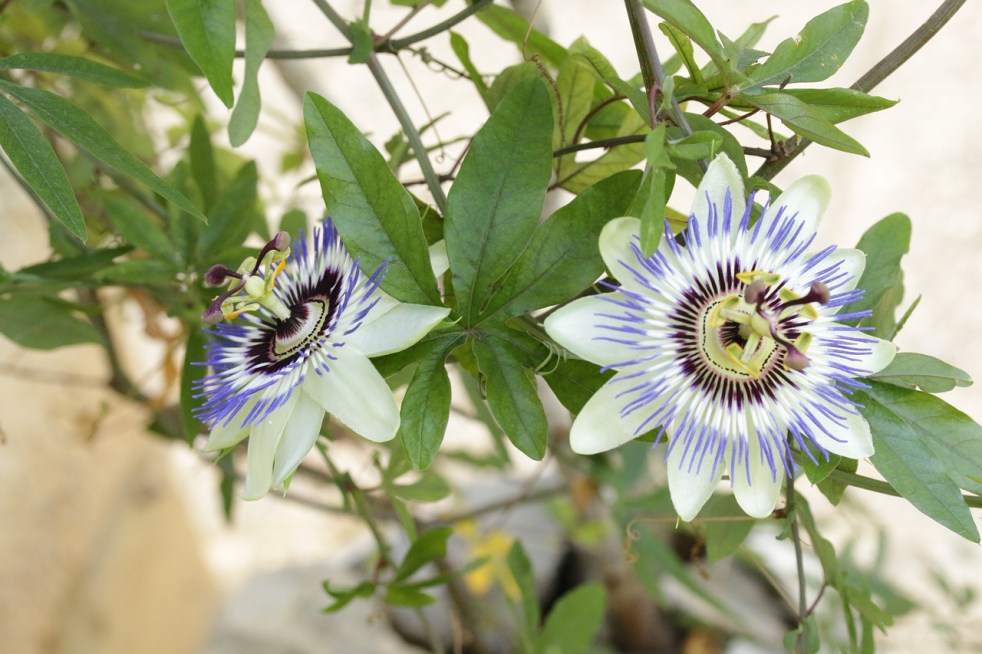
A blue and white flower of P. caerulea.
P. caerulea, a passionflower native to South America.

One tale from Brazil says that the passionflower grew from the tears of a woman who was separated from her lover.

Medicinally, passionflower is used as a calming herb. Evidence suggests that it’s safe to use internally, but there’s been some controversy as supplement manufacturers didn’t meet FDA requirements for safety data. It may interact with sedatives, monoamine oxidase inhibitors (MAOIs), and drugs to prevent blood clots, and is contraindicated in pregnancy.

In traditional indigenous herbal medicine, passionflower is used as a poultice to reduce inflammation and soothe pain.

In the garden, passionflower is irresistibly delicious to Japanese beetles. They’ll eat the leaves and flowers like there’s no tomorrow, which is bad news if you actually want to harvest any fruit!

Taken together, this paints the picture of passionflower as an herb to ease suffering. Since it was said to represent the five wounds endured by Jesus Christ, you could look at it as a “wounded healer.” This isn’t a plant that flows with exuberance, it’s one that knows suffering and eases it in others.

In Victorian flower language, passionflower was said to represent religious fervor or superstition.

Passionflower corresponds with the element of Water and the planet Venus.

Using Passionflower

If passionflower both represents and alleviates suffering, how do you use it? Since it’s native to North and South America, there isn’t really any information about it in ancient magical texts. Nonetheless, there are many ways to work with this unique plant.

As a vine, passionflower grows and clings (hence the whole porch thing.) This makes it useful in workings to bind something to yourself. Since it’s also a plant for relieving suffering, I’d use it specifically in situations where you’d like to bind a solution to a problem — for example, using passionflower to tie yourself to a stable, fulfilling job or enjoyable living situation.

Passionflower is also sometimes used in pillows or sachets for restful sleep and dream magic. Be careful with this, however, as placing passionflower under one’s pillow is also said to be a remedy to dampen libido.

This herb is also used in love magic. Bathing in an infusion is said to attract a potential partner to you, and it’s an often-seen ingredient in sachets, jars, and other charms for love. It works well for this purpose, as long as you know what kind of love you’re looking for. (If you’re after a passionate fling, skip it and go for cinnamon or ginger instead.)

Infuse the flowers in a carrier oil and use this to help ease worries and sooth the heart and mind. Anoint the temples and heart area whenever relief is needed.

All told, passionflower is a delightful herb. It’s beautiful, feeds bees and hummingbirds, and provides valuable medicine. As long as you don’t let its name fool you, it can help you with an array of spells and charms.

life

The Imposter and the Trickster God

I want to be involved in all of the things.

I try to give back as much as I can to every community I’m involved with — my community, Meetup groups, even (well, especially) the band of lovable weirdos who inhabit the yard.

One way to do that is sharing skills, but… that’s not always easy.

Right now, I’m struggling with a quandary. I have some skills I could share with one of my Druidry groups, but I’m also dealing with a massive case of imposter syndrome. It’s hard to share your knowledge with anyone when you feel like your skills aren’t worth offering.

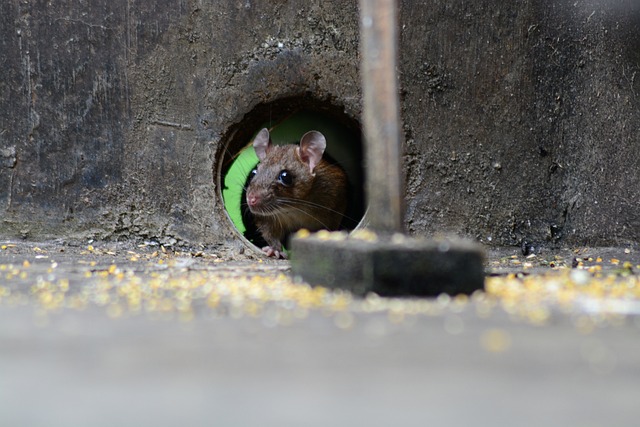
A mouse sneaks through a pipe placed in a concrete wall. His expression is alert and cautious.

The thing is, I obviously wouldn’t be where I am without knowing how to do stuff. Even bullshitting is a skill. I mean, it’s a skill I wholeheartedly admire in other things. My favorite stories have always been about tricksters. Trickster deities, tiny heroes, and animals who compensated for their lack of size, sharp teeth, or fearsome claws by using their cleverness. Even the deity with whom I have the closest relationship is often regarded as a trickster figure, who uses his wisdom, magic, knowledge of the Otherworlds, and trickery in equal measure.

Why’s it so hard to see any of that in myself? Why can’t I manage to share something that I’ve been doing since I was a child?

Plants and Herbs

Hyssop Folklore and Magical Properties

The anise hyssop in my little pollinator garden is putting of spikes of beautiful purple flowers, so I thought I’d write a bit about the magical uses and folklore of hyssop.

A fun fact first, though — anise hyssop (Agastache foeniculum) is not that closely related to actual hyssop (Hyssopus officinalis). Both of them are members of the mint family, Lamiaceae, but so are teak, rosemary, and chia. Anise hyssop is native to Central and North America, while hyssop is from the Mediterranean eastward to Asia.

Anise hyssop is definitely a useful plant, but I figured I’d cover hyssop-hyssop first. If you practice one of the many branches of European-based witchcraft or folk magic, you’re more likely to encounter Hyssopus in old texts.

Hyssop Folklore and Magical Uses

A lot of the modern lore about hyssop comes from its mention in the Bible. It’s indicated numerous times as a cleansing and protective herb. For example:

Cleanse me with hyssop, and I will be clean; wash me, and I will be whiter than snow.

Psalm 51:7

Take a bunch of hyssop, dip it into the blood in the basin and put some of the blood on the top and on both sides of the doorframe. None of you shall go out of the door of your house until morning.

Exodus 12:22

To purify the house he is to take two birds and some cedar wood, scarlet yarn and hyssop.

Leviticus 14:49

When Moses had proclaimed every command of the law to all the people, he took the blood of calves, together with water, scarlet wool and branches of hyssop, and sprinkled the scroll and all the people.

Hebrews 9:19

There’s more, but you probably get the idea. However, this runs into the same problem as anise hyssop versus hyssop. The hyssop mentioned in the Bible is not H. officinalis. (Biblical hyssop is more likely to be Capporis spinosa or Origanum syriacum.) Nonetheless, I figured the Biblical references to hyssop were worth including because they inform quite a bit of the body of lore about H. officinalis.

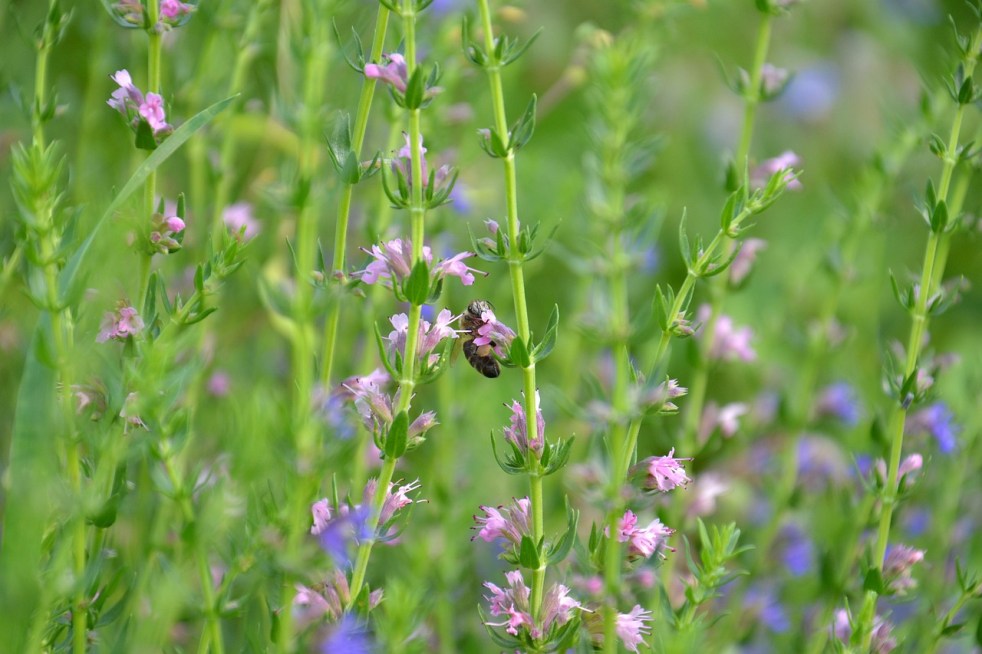
A spike of bright violet-blue hyssop flowers.

The name “hyssop” derives from the Greek word hyssopos, which derives in turn from ezov or azob, the sacred hyssop mentioned in the Bible.

In Egypt, Priests used hyssop as an additive to purify food. This was necessary to make certain foods acceptable for their restricted diet.

Magically, hyssop corresponds to the element of Fire and the planet Jupiter. Following the uses of Biblical hyssop, it’s most commonly employed as a purification and protection herb.

Medicinally, a decoction of hyssop was used topically for treating head lice. It was also used a topical remedy for minor wounds.

In Europe, hyssop was used as a strewing herb. It’s fragrant and seems to have had some action against pests (like head lice, as mentioned above). This may have made it an effective way to keep fleas and other unwanted guests away!

This last bit is particularly interesting to me. In my herb lore reading, I’ve found that the Venn diagram between “herbs used magically for protection” and “herbs that keep bugs out” is almost, but not quite, a circle. Since the Biblical hyssop probably wasn’t hyssop at all, it’s interesting to me that the purposes of Biblical hyssop and European hyssop are so close. It raises a kind of chicken-and-egg scenario — was H. officinalis named for the Biblical hyssop because its pest repellent action “purified” spaces?

Using Hyssop

Sprigs of hyssop make lovely aspergilla. Dip them in water, and use them to asperge sacred spaces, rooms, people, or objects.

Brew hyssop as a tea, strain out the spent leaves, and add the water to ritual baths for purification, cleansing, and hex-breaking. Prepare hyssop the same way, then add to a bucket of fresh water and use it for washing floors, windows, and doors for the same purpose.

A fritillary butterfly on a spike of hyssop flowers.

Add dried hyssop to charm bags for protection, particularly against the evil eye.

Hyssop is sometimes used to season food, and that’s fine. It’s even sometimes used internally in a medical context, and that’s okay too (as long as it’s under the supervision of a qualified herbalist). Otherwise, avoid eating or drinking hyssop. Large doses can cause seizures and cause miscarriages. It’s not known how much of hyssop’s active constituents may pass through breastmilk, and the threshold for hyssop toxicity is much lower for children, so it’s best avoided while breastfeeding.

life

I did it!

A bit ago, I posted about having bloodwork done and discovering that my blood lipids and vitamin D levels were off. I then talked about some of the changes I was making in order to correct these things.

It is with immense relief that I can say: It worked!

Well, it’s still working.

My total cholesterol is now normal, as are my vitamin D levels. The only area of some concern is my LDL (low-density lipoprotein, or “bad cholesterol”) is very slightly higher than it should be. It has decreased, however, so I should be able to normalize it with time and a few more adjustments.

As I figured, the culprit was probably eating takeout. Even “healthy” options are often less than ideal — they’re really just healthier than, say, a burger and fries. If you’re traveling, without a kitchen, or otherwise unable to store and prepare your own meals, “healthy takeout options” are definitely better than the alternative. But, at the end of the day, all restaurant food is made with taste as its primary consideration. I knew this on a logical level. It’s just easy to let yourself ignore it when all you’re ordering is a salad or sandwich, you know?

Anyhow, I don’t have many other lifestyle changes I can make at this point. I can take a fiber supplement. I can explore some herbal remedies said to help maintain healthy blood lipids (ginger seems promising, for example). Other than that, we’re gonna have to get deeper into the weeds a little bit.

I don’t know how much I’ll speak on that, though, chiefly because I know attitudes toward medical care in the US are… complicated, at best. If I do expound on the alternative/complementary remedies I use, I don’t want someone to take that as evidence that these things will fix their own health issues. For one, their body is not my body, and thus their blood is not my blood. For two, it seems irresponsible. I feel like it might encourage someone to place outsized importance on my anecdotal evidence, and I don’t want anyone to get hurt because they refused effective conventional treatment because some outside-the-box shit I did might have helped fix what is really a very minor problem.

So yes. That’s where I am right now — happy, relieved, and figuring out my next steps. Wish me luck!

life

“hey. hey. hey where’d you go”

So, my spouse and I went to an out-of-town family shindig the weekend before July 4th. It was a lot of fun — there was a ton of food, live music, and a huge crowd of interesting people to talk to (many of whom are also Garden People like me).

When I came back, the yard was silent. My heart dropped into my stomach.

Was it because I wasn’t there to keep the food and water replenished? Was it the fireworks? Had someone gotten injured or killed, scaring the whole murder away?
Did something happen to Boink?

I put fresh water and the usual mix of food (peanut butter cereal, cat kibble, dried bugs, and berries) out, but all I got was a clamorous mob of starlings.

(Apparently a group of starlings can be called an “affliction,” which sounds about right. I love all of the birds that come to my home, but most of these are, to put it bluntly, invasive shrieking dickheads who throw things.)

A day went by, then another. I lost sleep and felt my urge to write or paint completely sapped. So much of my art is inspired by these magnificent little weirdos, I hated the idea of working on a painted bird when the real ones had disappeared.

Then this happened.

A crow, head cocked, peers through a bathroom window.
“hey, you there? you guys back n- oh, you poopin?”

The crows returned by having this guy rock up to the bathroom window (please ignore the spots on the glass — the rain and pollen have fingerpainted everything) and stare inside. They twisted their head from one side to the other, very deliberately peering in. If they had hands, they probably would’ve cupped them around their eyes to see better.

It was funny, but, in retrospect, also somewhat concerning. Did they watch us leave? Did they send someone to stare into our house every day to see if we were back yet? There are so many windows, you guys, why did they pick the bathroom?!

Anyhow, the big maple tree is once again filled with raucous caws and shiny black birds. I’ve seen Magni and Muse, and even Boink has once again taken up his position on top of the shed. (I have no idea where — or how, for that matter — he went for several days at a time. I’m just glad he’s back.)

It does my heart good to see them. I just kind of wish they’d maybe peeked in the kitchen instead.

life · Plants and Herbs

This is either going to be awesome, or the sequel to The Color Out of Space.

One of the benefits of encouraging wildlife to hang out is that, if things go right, it’ll basically do your gardening for you. I’ve had so many volunteer plants courtesy of the birds and squirrels, it’s bonkers. Since I’m still working on re-wilding things, I’m grateful for whatever additions the local creatures want to make — I get to see what grows well and what doesn’t, and it’s all for free.

Like that time that all those delinquent squirrels paid their bar tab with a ton of tomato plants.

This is all just preamble to explain that I’ve been watching the progress of some kind of plant in the front plot. The front yard is divided into two squarish plots by a walkway. In one, we’ve finally managed to kill off the grass and replace it with a redbud tree, oakleaf hydrangea, coreopsis, strawberries, moss phlox, and echinacea. Then this thing happened.

A small plant, some member of Cucurbitaceae, just beginning to vine.

Cute, right? It seemed to appear overnight, springing up out of the ground without warning. No sprout, nothing. Just bam! This.

Out of curiosity, I left it. It was in a bare spot, and I was honestly pretty excited to see what it’d turn out to be. I tried identifying it to make sure it wasn’t something invasive or poisonous, but plant apps were stumped. It was almost definitely a member of Cucurbitaceae, but what? Pumpkin? Melon? Squash? Cucumber? Even Reddit’s gardening subs were mostly baffled. Some posters who recognized it even admitted that it looked like “some kind of weird hybrid.”

Anyhow, I figured it’d probably end up being some kind of vegetable, so I left well enough alone. I didn’t even bother watering it. I figured that it was a volunteer, it was doing fine without my interference, so it was just sink or swim from h-

The same plant as above, but now disturbingly massive.

Like something out of a weird fairytale (or Annihilation, or The Color Out of Space), it… expanded. It didn’t get any taller, but it sent out yards of thick, powerful vines across the ground. By the time you read this, it’ll probably have doubled in size.

It also started putting out flowers. Big, bright yellow ones. Each one had a firm, round base. Before long, we had a ton of these.

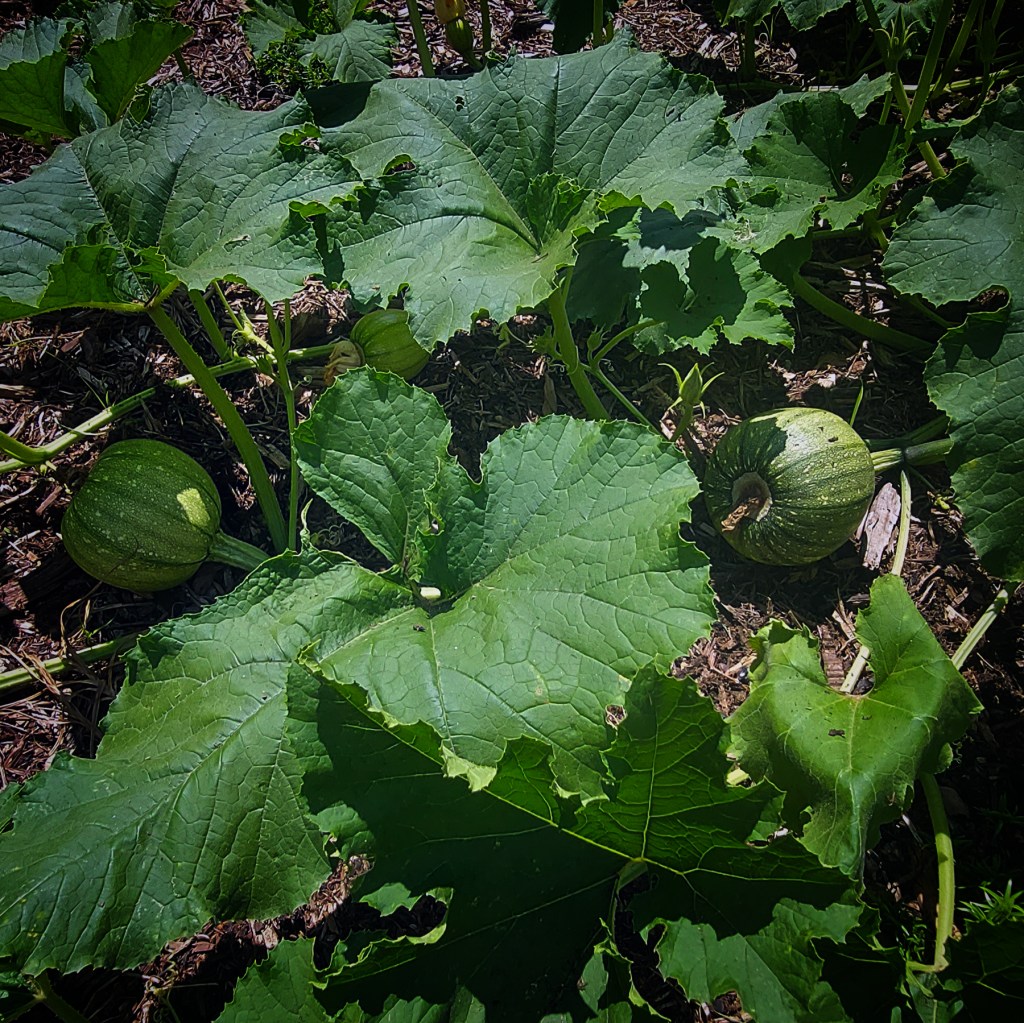
The same plant, now with round, speckled, green, pumpkin-like fruits.

So, not cucumbers. Not melons. Some kind of pumpkin? A squash?

This guy who sometimes cuts the (remaining) grass for us said he recognized it as an ayote. He said it’s tasty when cut up and stewed with beef ribs and vegetables. I don’t do beef ribs, but I have some lovely brisket-style tempeh that could maybe work.

The trouble with volunteer Cucurbits is that there’s a risk of poisoning. If you find a wild squash in your yard, or grow one from seeds that you’ve saved yourself, taste a little bit of the raw fruit before you cook it or serve it to anyone else. Some wild Cucurbits have a lot of a toxic compound called cucurbitacin. It tastes very, very bitter, and enough of it can absolutely kill you. Tl;dr: Do not eat bitter squash, or any other members of Cucurbitaceae that taste weirdly bad.

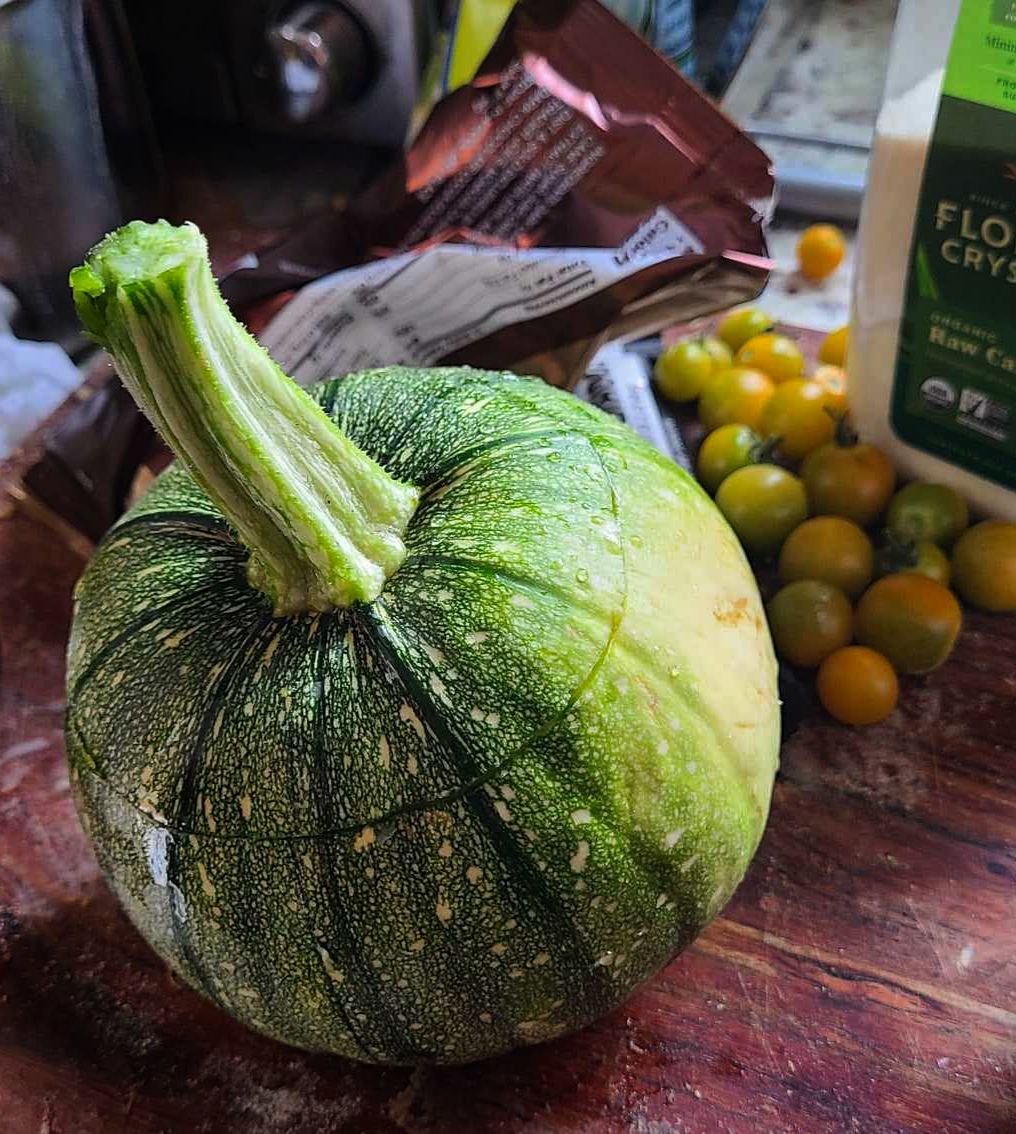
They’re nowhere near ripe yet, but I noticed that the stem of one had broken. I brough it inside for Experiments.

It looked inoffensive enough.
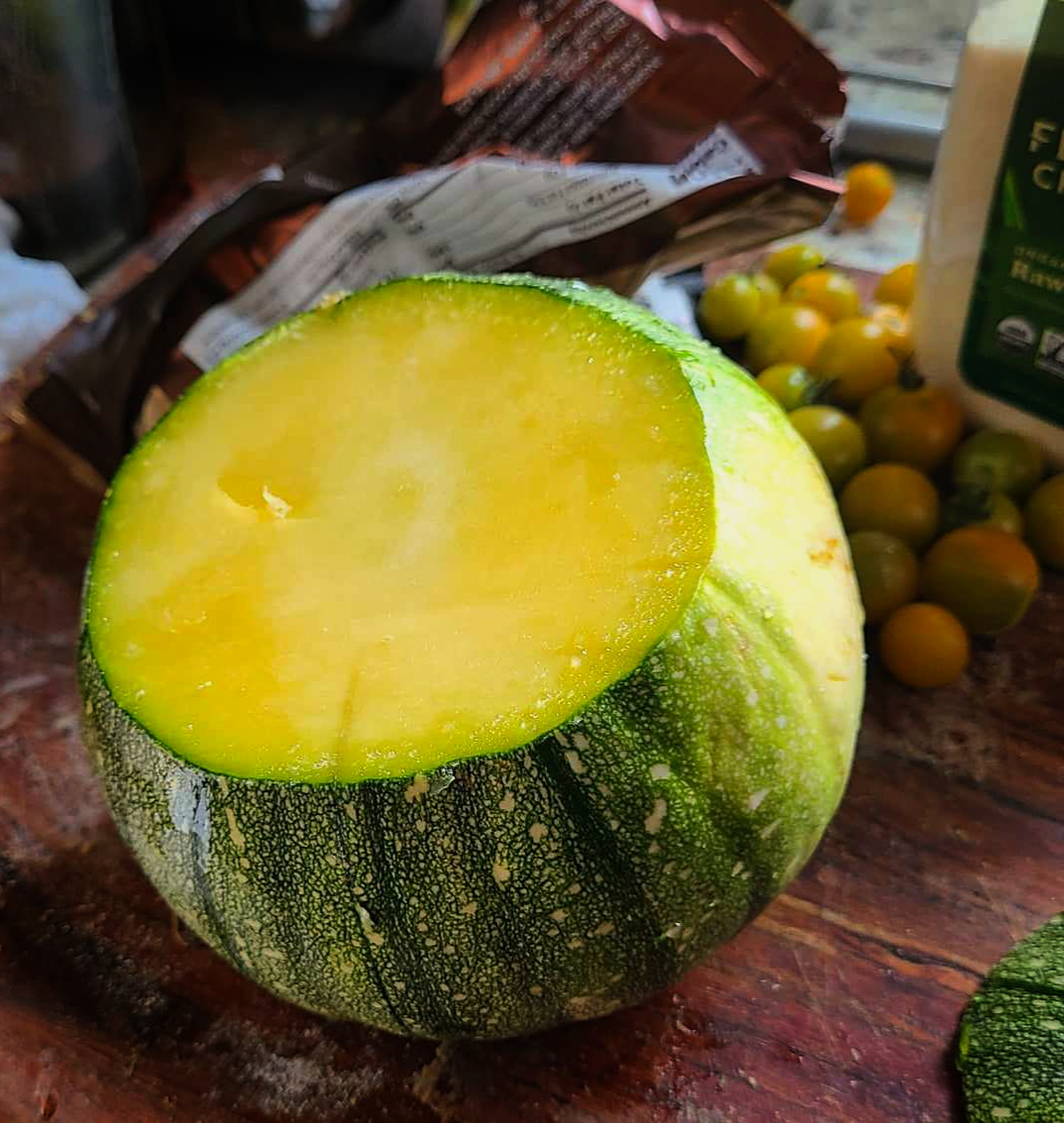
I took a little taste.

Surprisingly, it was pretty good! There was no trace of bitterness, just a mild, sweetish flavor. It’s not as strongly flavored as it’ll probably be once it’s completely mature, but definitely not bad.

I haven’t decided what to do with this specific one just yet. Ayote en miel? Squash soup? Roasted squash?

Whatever I decide to make from this squash, I hope I like it. I’ll definitely have plenty.

Thanks, local animals!

life

This is Boink.

Crows are sleek, beautiful, intelligent creatures.

And then there’s Boink.

Boink looks like he was made by Jim Henson with spare parts and a strict time limit. He looks like what birds would look like in the Fraggle universe.

Boink is not injured, but has somehow managed to damage all of the flight feathers on one wing and half of his tail. He can fly, but it’s the flight a bird whose wings have been clipped — just enough to keep from falling, until his flight feathers grow back in. His main means of locomotion is to hop and scramble in a way that even the best foley artist would have difficult putting a sound to.

A small, scruffy crow gazes pensively through slats in a deck railing.
Boink having a small philosophical moment.

He spends most of the day hanging out on the railing by my back door. When I open it, he jumps up and… well, boinks his way across the deck to the shed. He hops on the roof, bops his way to the other side, and ducks down with his little head sticking up like a periscope.

If I look at him, he ducks.

If I pretend to close the door, he pokes his head up again.

If I go back inside, he moves back to the railing to sit.

Boink is the scruffiest wild animal that I’ve ever seen. He is the prime specimen of scrunginess. An absolute scrunglemuppet. He is Mother Nature’s silliest fool and I love him very much.

He doesn’t seem to have trouble avoiding predators, somehow — when he needs to hide, he hides behind the other shed, or climbs up the big apple tree. It makes me grateful that I didn’t prune it as much as I should have, because the lowermost branches give Boink something to hop onto and make his way up.

(I don’t even really know if he’s a he. In my defense, I don’t think Boink does either.)

I think that Boink may have a criminal record. He doesn’t seem to have a mate to help take care of him, and the other crows push him away from the feeders. I sneak extra portions of food into places I know he can reach easily and put extra fruit and dried bugs to make up for the things he may not be able to forage for himself.

A small, scruffy crow sitting on a deck railing in the rain.
“Hoh. Kibble for Boink? No! Cereals for Boink? No! Every time, they bully Boink.”

The other crows also don’t seem to have a problem with leaving Boink behind, too. Is he Outlaw Boink? Has he been ostracized for crimes, or do they just leave him because they know he’s safe, with his water dish and his food stashes and his shed roof?

I don’t know what Boink did, or what happened to him. He sits on my deck like a tiny, questionably useful gargoyle. He is my very special boy and his presence is delightful.

life

I can only assume that they’re developing agriculture.

Not long ago, I mentioned that the crows in the yard bartered me for a small rock painted to look like a strawberry. Now, the whole reason I had a rock painted to look like a strawberry was to keep birds from eating my actual strawberries. The idea behind it is that you put out strawberry decoys before the plants set fruit, and the birds will investigate them, decide they’re inedible, and assume that the rest of your strawberries are similar levels of bullshit. Seems legit, right?

A strawberry plant with a few ripening strawberries.

These rocks aren’t the only things the crows have been interested in. When my spouse’s mom came for a visit, she remarked that she’d seen the crows playing with some of those little black plastic pots you get from plant nurseries. (I have a few on a shelf on my deck. They’re useful for starting plants, and I’d rather re-use them as much as possible and keep them out of the landfill.) I thought this was funny, but didn’t really put much more thought into it. I had a thing, the crows thought this thing was amusing and interesting, and that was that.

Then I noticed that I had lost all of the strawberry rocks in the back yard and one of the raised beds in the front. Just up and vanished.

Then my spouse mentioned seeing a crow flying away with an empty plant pot in its beak. He’d tried to snap a picture, but only managed to get a blur of tail feathers as the thief absconded.

Putting two and two together, I can only assume one thing: They’re developing agriculture.

Maybe it isn’t aliens or artificial intelligence that we need to worry about. Maybe humanity’ll be overthrown by a race of swiftly advancing, hyperintelligent birds. People remark on the intelligence of corvids, and they’re correct. Crows, ravens, and their kin are very smart. They’re also coming for your horticultural supplies.

If you’re reading this at some point in the future, when the human race is relegated to the annals of bird history as some kind of combination of amusing pets and manual labor force, and our bird overlords have ushered in a new era of art nouveau solarpunk luxury forest communism, I apologize for not being at all sorry because that actually sounds awesome.

Uncategorized

Wild Bergamot/Bee Balm Folklore and Magical Properties

Monarda species, also known as bee balm, Oswego tea, and wild bergamot, is one of my favorite native flowers. The blooms themselves are striking, the leaves are fragrant, they spread very easily, and they thrive where other plants falter. They’re fantastic additions to permaculture guilds, since they’re good at attracting oft-neglected native US pollinators like the raspberry pyrausta moth. It’s also tolerant of juglone, a natural herbicide produced by black walnut trees.

Bright pink Monarda flowers, growing in a bed of maroon Coreopsis.
Some bright pink Monarda didyma flowers in my garden, planted along with some deep maroon-pink lance leaf Coreopsis.

The name “wild bergamot” is a bit misleading — these plants aren’t related to bergamot at all. Monarda is part of the mint family, while actual bergamot is a citrus fruit. I haven’t been able to find an explanation for why this group of plants is called wild bergamot, so I can only venture that it’s because of the fragrance of the leaves. They’ve a sort of minty-citrusy-herbal scent, very reminiscent of Earl Grey tea.

Wild Bergamot Magical Properties and Folklore

Monarda plants are native to the US and have a very important place in the medicinal lore of indigenous American people. The leaves soothe stomach aches when used internally, treat wounds externally, and ease headaches when used as a poultice. The name “bee balm” comes from the plants ability to calm bee stings.

After the Townshend Revenue Act of 1767, colonist American people began boycotting imported British tea. Instead, Monarda leaves provided a suitable substitute.

Bright pink Monarda flowers, of a cultivar called "Marshall's Delight."

Since Monarda is native to the US, you won’t find it in ancient herb lore or medieval European grimoires. It still has a pretty long history of use as a magical ingredient, however, as people have adapted to using what’s around them over the centuries.

Some magical resources claim that lemon balm and bee balm are synonymous. Though they’re both members of Lamiaceae, the mint family, they aren’t the same plants. Lemon balm is Melissa officinalis, native to Europe, and pretty sedating when drunk as a tea. Bee balms are Monarda species, native to the US, and gently stimulating.

Due to its associations with medicine, it’s considered a healing herb.

Monarda can also be used as a purifying and cleansing herb.

It is generally considered to be ruled by Mercury and the element of Air. Due to these planetary associations, it’s sometimes used in spells for money or success in business/academic endeavors.

Using Wild Bergamot

You’ll be pleased to know that, unlike a lot of the magical herbs I talk about, wild bergamot is edible. The whole thing. Stems, flowers, and leaves. The flowers can be used to add color and interest to salads, and the leaves make a wonderful tea. You can also use the leaves to flavor pork or poultry dishes. If you do want to eat your Monarda leaves, treat them like most other herbs: Harvest the leaves before the plant flowers, when they’re sweeter and more tender. They tend to get a bit tough and bitter after the plant matures and flowers appear.

Personally, I find wild bergamot leaves and flowers to be a very nice addition to drinkable/edible brews. Use it in place of Camellia sinensis leaves as a base for magical teas. Historically, it has been drunk to ease flatulence and as a gentle, general stimulant.

One thing I enjoy doing is making simple sugar cookies and decorating the tops with magical sigils. Candied flowers, chosen for their properties, can both decorate and empower these edible spells.

For purifying, pack some fresh leaves into a large muslin tea bag and place it under your bath faucet. You can also brew Monarda leaves into a tea, strain out the plant matter, add the liquid to a bath, and fully submerge yourself.

To purify spaces or groups of people, bundle fresh Monarda stems together, dip them in salt water, and use them to asperge.

Monarda is known to attract bees, as well as ease their stings. Since it’s connected to Mercury and Air, it’s also used as a success herb. Brew a strong tea from the leaves and use it to wash your front door and steps to attract success to your door like bees to a flower. You can also add this tea to floor washes, if you wish.

A prickly-looking Monarda seed head. Its rounded, comprising many small tubes formed by the base of the flowers.
A Monarda seed head. Each of those little “tubes” houses a single loose seed, which will be picked up by birds or scattered by the wind.

In general, Monarda is a very nice herb that plays well with others. In my experience, it acts as a general attractant — magically drawing in your desires the same way that the flowers call to hummingbirds, moths, and bees. Its flavor and scent are delicious and intriguing without being overpowering, so it’s an excellent addition to brews, kitchen witchery, and spell jars. (Most members of the mint family smell pretty acrid when burned, however, so I’d avoid putting it in incense.)

If you’re in the US, Monarda is a delightful addition to the garden. It’s easy to grow, thrives on neglect, and produces an abundance of seeds and rhizomes. You’ll have plenty to harvest and share, but, unlike non-native mints, it’s not considered invasive.