Every time I read the word “lobelia,” I always hear it in the voices of those girls from Lobelia Girls’ Academy from Ouran High School Host Club.
It’s a very specific kind of brain rot. Anyway.
The other day, during the bone walk, we came across some Indian tobacco (Lobelia inflata) in a meadow. It was a striking looking plant, with tall flower spikes covered in things that looked almost like the tiny, dried flower “skulls” of the snapdragon plant. So, I thought now might be a good time to go into the various folklore, (very limited) medicinal, and magical uses of this very intriguing plant.
Lobelia Magical Uses, Folklore, and Medicinal History

The genus Lobelia is made up of a lot of plants with some very disparate characteristics. It’s not considered a very useful designation in a taxonomic sense. It’s very paraphyletic, meaning that it consists of lobelia’s most recent common ancestor and some (but not all) of its descendants. Lobelia species are also highly variable. There’s the giant lobelia of Tanzania, Lobelia deckenii, which is eaten by hyraxes and pollinated by birds. Then there’s Lobelia inflata, Indian tobacco, which is pollinated by bees and doesn’t appear to be eaten by much of anything. For the purposes of this post, I’d like to focus on the American lobelias.
In European-based folk magic, lobelia is often treated as a baneful herb — according to the (lovely, but now-defunct) Pooka Pages, it’s an herb that expresses hatred, where other baneful herbs might express dislike or anger. Its action is efficient, effective, and nasty, but seldom predictable.
Lobelia inflata, also known as Indian tobacco or puke weed, is native to eastern North America. Traditionally, it was an entheogen and, as the name “puke weed” suggests, an emetic. It was also used for skin and respiratory disorders. Consuming lobelia can lead to a lot of adverse effects, however, up to and including death. Its therapeutic index is narrow, and the medicinally helpful dose is very close to the potentially deadly one. As a result, it shouldn’t be used outside of the guidance and close supervision of a trained herbal medicine practitioner or an expert in its ceremonial use.
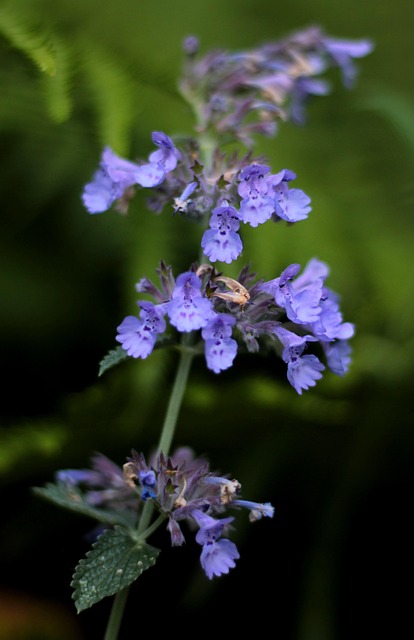
Lobelia siphilitica, or great lobelia, has an absolutely fascinating mechanism for pollination. (Seriously, it’s so cool.) It has three petals that are fused into a kind of landing pad for bees. When a bee lands that is just heavy enough, these petals bend downward as it wiggles its way toward the nectar. This triggers the plant’s stigma to also move downward, wiping along the bee’s back and picking up pollen granules.
Some lobelia species contain a compound called lobeline. This is a nicotine receptor agonist, meaning that it triggers nicotine receptors in the body. For this reason, some species have been used as a way to quit tobacco use. Refined lobeline has even been sold as a commercial anti-smoking aid and has been researched as a potential treatment for other addictions.
Since lobelia has been used as an entheogen, it’s sometimes used (preferably not internally) as an aid to visions and prophetic dreaming. In these cases, the dried leaves are typically added to sachets or dream pillows, or otherwise placed near the user’s bedside.
Using Lobelia
If you live in lobelia’s native range, it’s a great plant for native bees. Look for a species that’s endemic to where you live, and you won’t have to do much to care for it. Your local ecosystem will thank you.
Since lobelia can be rather dangerous when used improperly, I don’t recommend taking it internally despite its history of use as a medicinal herb. As I mentioned previously, the line between “helpful” and “possibly deadly” is very thin, and something that should only be navigated by someone who has been highly trained in its use.
That aside, there’s no reason not to include lobelia in formulas to repel or curse. Add the dried flowers to powders to drive someone away, for example, or include a dish of the dried leaves or flowers in spells that target an enemy. (Not necessarily a rival — as I also mentioned above, this is an herb for hatred. Not one you’d reach for just to outshine someone, express dislike, or exercise your anger.)
You can also include lobelia in jars or pouches for visionary work. While it’s also sometimes suggested to place the dried leaves under your pillow or beside your bed, it’s important to exercise caution here — you really don’t want to place it anywhere where a curious pet or child might ingest it. For that reason, I recommend using lobelia in container spells where the risk of ingestion is minimal.
Lobelia is an interesting, powerful herb that demands respect. On one hand, it’s an herb used for hatred and hexing. On the other, it’s an ally for those seeking prophetic dreams or visions. If you treat it well, and keep its unpredictable nature in mind, it can be a very helpful, fascinating friend.

 Marble Crow
One thought on “Lobelia Folklore and Magical Properties”