
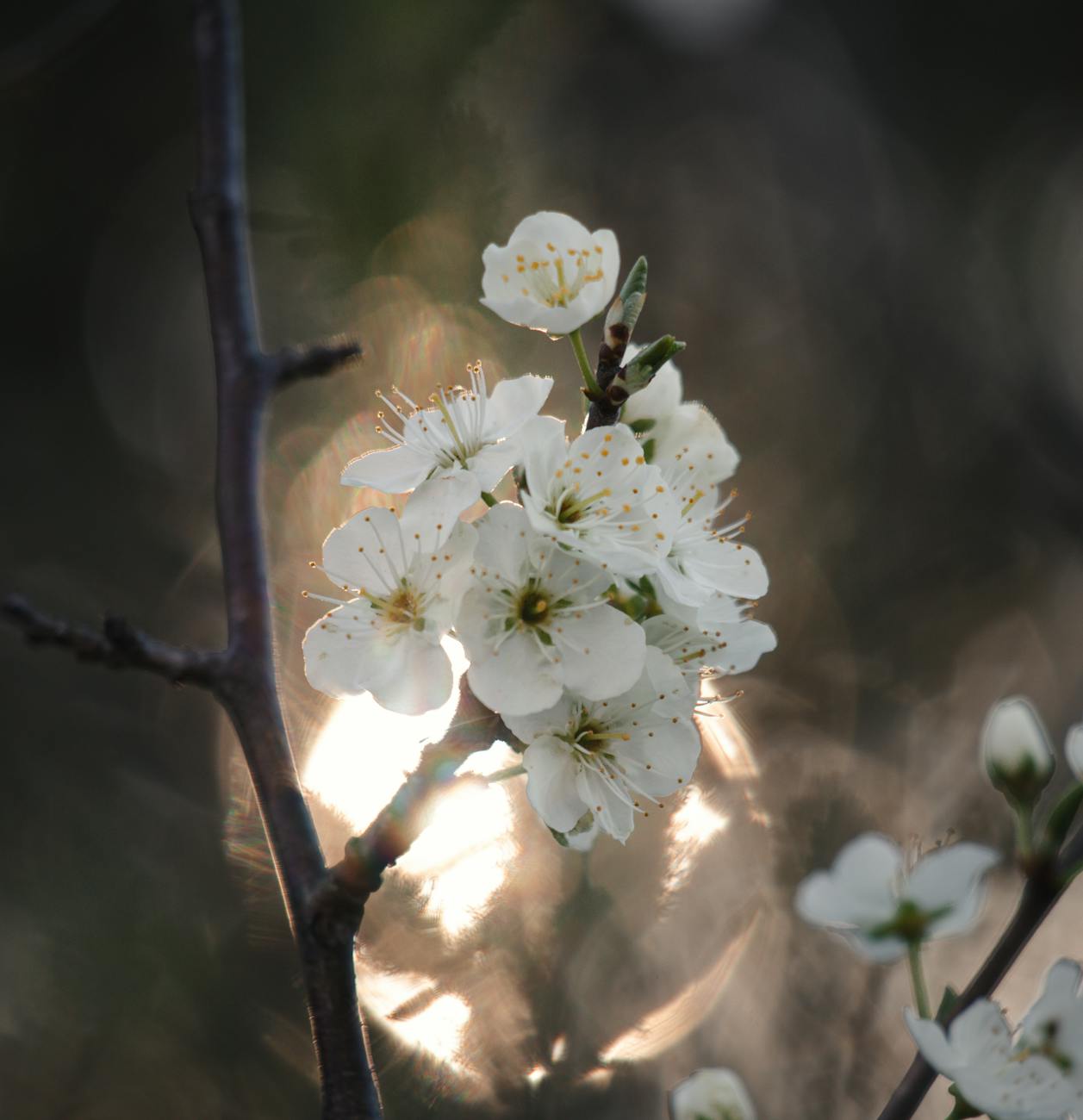
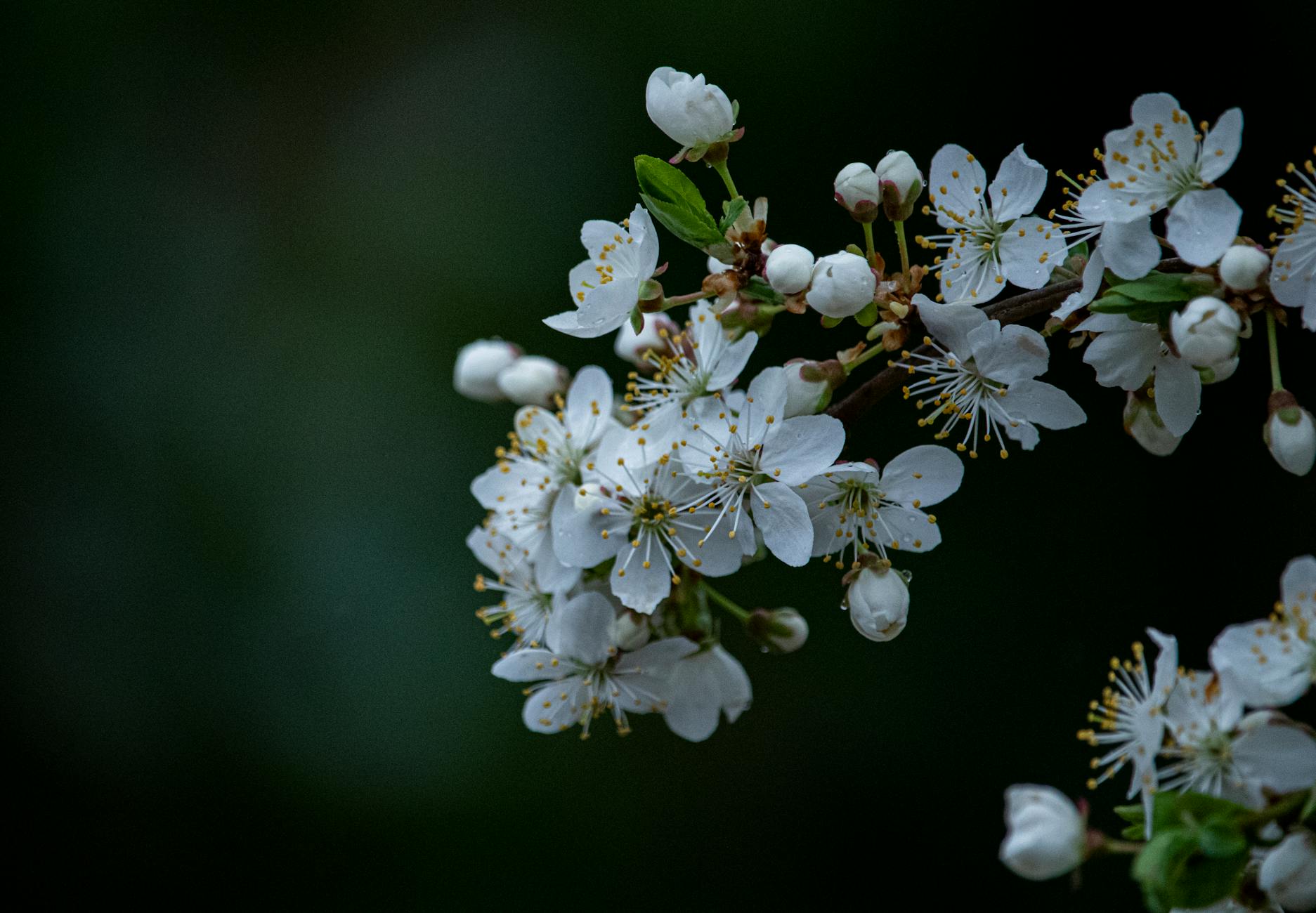
Few trees are as divisive as the blackthorn (Prunus spinosa). When you look at it from a distance, this may be hard to believe — these trees, with their dark bark and frothy white flowers, are honestly very pretty. They also produce sloes, which are excellent in preserves and a crucial ingredient in sloe gin.

So we’ve got a lovely tree with pretty white flowers and useful, equally attractive dark blue-purple fruits. How could a plant like that be divisive?
The answer lies deep in its fascinating folklore.
Blackthorn Magical Uses and Folklore
The blackthorn tree appears in the Irish ogham, an ancient writing system often erroneously called a “tree alphabet.” (In reality, it encompasses a variety of concepts and objects that were only connected to trees much later on.)
This ogham few, straif (ᚎ), is frequently associated with misfortune, struggle, and ill omens. It’s regarded as a few of great power, but also the negative or malicious side of magic and the capricious nature of the fae. Blackthorn trees were said to be guarded by the Leanan Sidhe, and it was terribly bad luck to cut one down.
Interestingly, straif’s original meaning likely did not have any connection to the blackthorn at all and may have been a reference to sulfur. The Bríatharogam are, unfortunately, not much help here. We get “strongest reddening” (tressam rúamnai), “increase of secrets” (mórad rún), and “seeking of clouds” (saigid nél).

Blackthorn trees are so named for their sharp thorns. There are a variety of ways one may use these thorns in magic, but blackthorn’s thorns seem to have gotten a bad rap. They tend to be associated chiefly with negative or malevolent workings, and old witch-lore claims both that the Devil used one of these thorns to prick a would-be witch’s finger before they signed his infernal contract, and that witches would jab blackthorn thorns into poppets to harm people.
In Christian mythology, the blackthorn is also one of the trees said to have “betrayed Jesus” at the Crucifixion.
Since blackthorn isn’t a very big tree — in fact, it’s more often seen as a big bush — it’s very useful as a hedge plant. The thorns mean that it isn’t heavily browsed or easily damaged by cattle and deer, and it grows densely.
This use may be part of its connection to the fae, since blackthorn is quite literally a plant that marks a boundary from one place to the next. It’s a plant that protects itself, as well as whatever may lay beyond it.
In fact, blackthorn occasionally crops up in old hero stories and fairy tales. The hero, pursued by a giant, throws a blackthorn sprig behind him. The sprig immediately roots and grows into an impenetrable hedge, holding back the giant and allowing the hero to escape.
This protection extends beyond hedges, too. Blackthorn wood is hard and dense, and the traditional material for a bata or shillelagh. They’re part club, part walking stick, and similar in shape to the rungu used in some parts of East Africa or the iwisa, induku, or molamu of South Africa (though usually a bit longer). Shillelaghs were used in structured duels, as other cultures might use rapiers, and there’s a martial art that focuses on shillelagh training to this day.
Shillelaghs were traditionally made using the roots of the blackthorn, where they kind of naturally form a knobby end. This made them less prone to cracking, but some people would still hollow out the knob of their shillelaghs and fill them with lead — a bit like Bugs Bunny dumping horseshoes into a boxing glove.
The process of making a shillelagh took time, but not many resources. If you had access to a blackthorn bush, as well as a chimney or a dung heap, you could make a perfectly serviceable weapon. The blackthorn tree was a social equalizer that allowed even the poorest people a useful tool and a means to defend themselves.
Using Blackthorn
Blackthorns aren’t easy to come by in the Americas. They aren’t native here, though they have been naturalized in parts of the Eastern US. So, if you want to work with any blackthorn-derived ingredients, you may have to get creative.
Kitchen witches or potion crafters may have an easier time. They can incorporate some sloe preserves, sloe chutney, dried sloes, sloe gin, or any of the very excellent sloe or blackthorn shoot-based liqueurs into their work.
Other than that, it is sometimes possible to find small numbers of blackthorn thorns available for sale online. When I can get them, I love using them for defensive workings. Write a name on a slip of paper or parchment, skewer it with a blackthorn thorn, and toss it into a jar or box of suitable ingredients. It’s easy, it’s poignant, and it’s perfect.
Failing all of that, you may have to see what blackthorn characteristics you want to tap into and find a good workaround. For thorns, look for stickers from other thorny plants. (Berry canes are often a great source of these.) For working with the fae, you may have an easier time finding a rowan or hawthorn tree. For protection, you’re pretty much spoiled for choice — there are tons of other herbs used for all forms of protection, from securing your home and keeping malevolent entities away to driving out unwanted housemates.
Seriously. There are so many, this post would be a novella were I try to list them all.
Sadly, many of us outside of Europe won’t have the opportunity to work with this beautiful, useful, folklorically-rich tree firsthand, but that’s okay. The blackthorn is a plant with history and power that’s worth understanding, even if we may never have the privilege to meet one.

 Marble Crow