
I wanted to love comfrey. I really did.
Unfortunately, the local herbivores had other things in mind.
(Mostly eating it immediately after planting.)
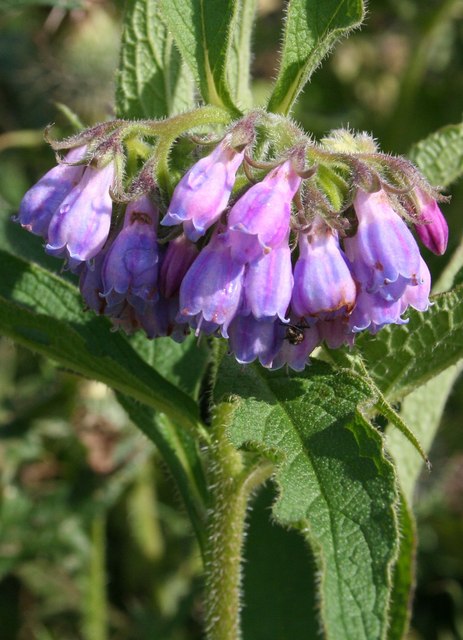
Comfrey (Symphytum officinale) isn’t a native plant in the US, but it has still become an indispensable garden ally for many people. It has a long tap root, so it can reach into deeper layers of the soil to draw nutrients upward. It also has a favorable nitrogen/phosphorus/potassium ratio. acts as an accumulator, drawing and gathering nutrients from the air and soil within its leaves. Gardeners then cut the plant and either scatter the leaves as green mulch, compost them, or allow them to decompose by themselves and use that liquid to irrigate their plants. They’re really cool little plants and considered tremendously helpful.
But that’s okay! Even if they might not be great dynamic accumulators, they’re wonderful medicinal pl-
Oh.
As it turns out, comfrey’s most remarkable characteristic may be all of the controversy it generates.
Anyhow, as I am planning next year’s garden and contemplating whether I want to try planting a fourth(!) round of comfrey starts, I thought now might be a good time to write a little about the folklore and various uses of comfrey.
Comfrey Magical Uses and Folklore
Comfrey is a borage relative native to Europe and parts of Asia, and it likes to grow in wet areas. It’s also known as boneset, knitbone, knitback, and a host of other names that refer to the plant’s traditional use as a remedy for bone and joint issues.
It should not be confused with common boneset (Eupatorium perfoliatum), which is native to North America and part of the aster family.
(This is why standardized names are so important!)
The name “comfrey” also refers to the plant’s use to heal bones. It’s derived from the Latin words “con firma,” meaning “to grow together.”
Multiple physicians throughout history have mentioned comfrey’s healing abilities. Dioscorides prescribed it for broken bones, respiratory issues, and wounds. In her book Physia, Hildegard of Bingen made mention of comfrey’s potential for toxicity:
the internal application of comfrey disrupts the entire order of bodily humors. However, when applied to the skin, it heals ulceration of the limbs.
Hildegard of Bingen, Physia
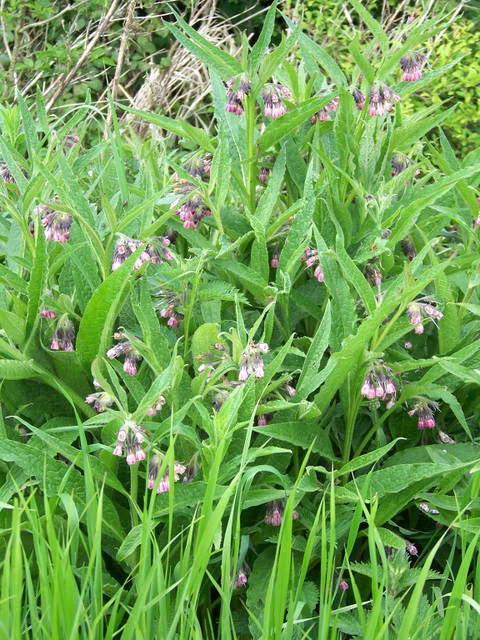
In addition to medicine, comfrey is sometimes used as a culinary vegetable. It should not be eaten raw, however, and the leaves must be picked while young. The time of year also matters, as comfrey has higher concentrations of toxic compounds early in spring.
The Russian varietal of comfrey, S. x uplandicum, is often used in gardens. Since comfrey can become an invasive problem outside of its native range, there are sterile varieties specifically for growing and fertilizing the garden. These can be propagated by division but won’t self-sow.
Magically, comfrey is a plant of many uses. It’s used in protection spells, as well as those for healing, protection, abundance, and fertility. In general, if you want to accumulate good stuff and make sure you get to keep it, comfrey is a helpful herb.
I’ve personally used it to make charms to protect vehicles.
Comfrey is sometimes added to baths for strengthening divination abilities and cleansing. (However, it’s not a good idea to do this too often for safety reasons.)
Comfrey is associated with the planets Saturn and Venus, the elements of Earth and Water, and the deities Hecate and Brigid.
Using Comfrey
Using comfrey in the garden is pretty straightforward. Plant it (be sure to choose a sterile variety), let it grow, cut it back, cram a bunch of it into a five-gallon bucket, and wait for them to break down into comfrey goop. Dilute it in water (about 1 part comfrey to 15 parts water) and use this water to irrigate your plants. If that sounds like too much, you can also just shred the leaves and use them to mulch plants, toss them into compost, or use them to line pots.
Are there plants that make better dynamic accumulators? Sure, but you’re not going to hurt anything by making comfrey fertilizer, either. If it seems to work for you, your soil, and your plants, go for it!
Medicinally, comfrey is a bit troublesome. It has a long history of use for aches, pains, and broken bones. It was used both internally and externally, but it’s internal use is no longer recommended. Like a lot of other borage relatives, comfrey contains compounds that can cause liver problems. While some authorities state that the danger of comfrey is overstated, I still recommend using caution with this herb. Don’t take it internally (or use it topically for extended periods of time) unless it is recommended to you by a qualified medical practitioner.

Magically, add dried comfrey to jars, bottles, or sachets for love, fertility, protection, or abundance. It’s also said that wrapping your money in a whole comfrey leaf before spending it (or gambling) will help ensure that it returns to you.
Personally, I like comfrey. It’s a beautiful plant and, with responsible use, a valuable ally in the garden, the home pharmacy, and the magical herb cabinet. While it’s certainly generated more than its share of controversy over the millennia, I find it a very worthwhile herb to get to know.

 Marble Crow