
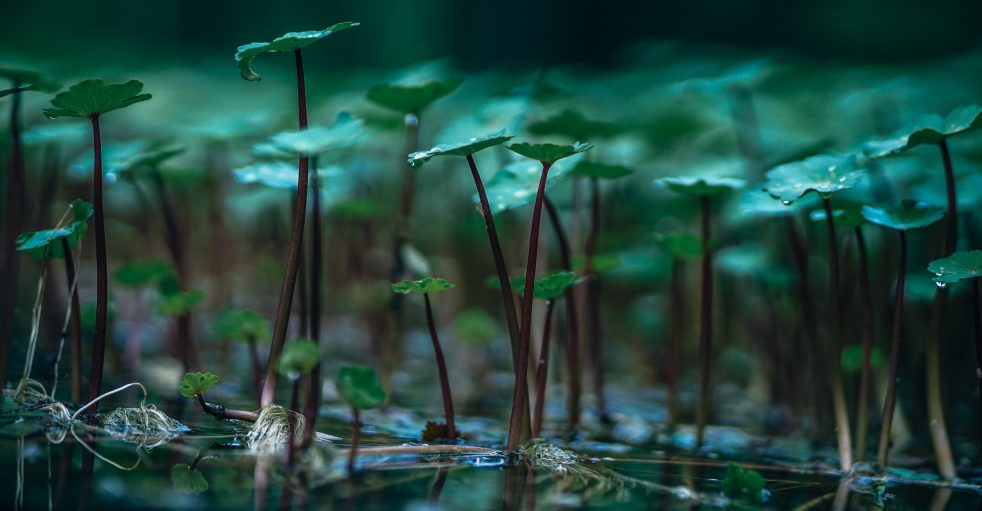
Ah, ivy.
In the US, few outdoor plants are as divisive. There’s the very romantic ideal of an old, ivy-covered brick building in the Northeastern US, but also English ivy is invasive here. It’s a low-maintenance ground cover, but will also crowd out just about everything.
I wrote about vines in general a little bit ago. As I write this, I’ve just come back indoors from taking a walk around the yard and checking on how my plants’re doing. I was scoping out the raspberry canes when what to my wondering eyes should appear by a sneaky tendril of English ivy, creeping its way under the deck. With those two things in mind, I figured now might be a good time to do a deeper dive into one very specific vine: Ivy.
Ivy Magical Uses and Folklore
The ivies make up the genus Hedera. There are 12-15 distinct species within this genus, all native to Europe, eastward to Asia, and southward to northern Africa. The one that most English-speaking people think of when they hear the word “ivy” is common or English ivy, Hedera helix. (Pothos, Epipremnum aureum, is sometimes called “devil’s ivy” but is not related to Hedera. Neither is poison ivy, genus Toxicodendron.)

In the Ogham alphabet, the few ᚌ (gort) is said to represent ivy. The Bríatharogaim for gort is “sweetest grass,” “suitable place for cows,” and “sating of multitudes.” The word “gort” also stems from a Proto-Indo-European root meaning “enclosure.” Some Ogham readers interpret gort as “field,” rather than “ivy,” which seems to be closer to its traditional sense. When the Ogham is conceptualized as a purely tree alphabet, gort becomes ivy. This few is associated with growth, prosperity, and the winding path toward enlightenment. On the flip side, it’s also connected to the word “gorta,” meaning “hunger” or “famine.”
In Irish folk stories, ivy is often described as surrounding the entrances of caves or secret doorways. Interestingly, in this context ivy is concealing these entrances from the outside world — either as a narrative flourish to give the text some more flavor, or as a deliberate guardian and barrier between the Otherworld and this one. In some tales, ivy is a protective plant against the fae.
In ancient Greece, ivy was connected to the God of wine, frenzy, and agriculture, Dionysus. He’s often pictured with a crown of ivy as a representation of his exalted and immortal status. In one tale, it’s said that he wore an ivy wreath to curb the effects of drinking wine — while grapes are a summer vine, ivy is a cooling, wintery evergreen. Thalia, the muse of comedy, was also depicted as wearing an ivy crown.
In Egypt, ivy was a sacred plant to Osiris. Similarly to Dionysus, ivy was connected to the concepts of immortality and rebirth.
The idea of buildings covered in ivy comes from the belief that this plant could protect one’s home and family from evil, as well as bring in good luck. This belief is also where ivy door wreaths come from.
While people often overstate the effectiveness of using indoor plants to remove pollutants from the air, research has shown that ivy may help reduce numbers of airborne mold spores. More study is needed to determine how effective this would be in the average home, as well as how many plants it’d take to cause an appreciable drop in mold spores.
English ivy is considered toxic, and consumption can cause gastric upset, pain, and vomiting. Some people are allergic to ivy, and may experience severe reactions. That said, this plant has historically been used medicinally to treat respiratory issues and extracts can still be found in some modern cold and cough remedies.
As an evergreen, ivy is often used for decoration during the winter holidays. It has a perpetual connection to the sun and springtime since it never loses its color, even during the depths of winter.
Magically, this plant is associated with fertility, abundance, protection, and good fortune. Some also use it to enhance divination or improve psychic abilities.
Using Ivy
If you’re in the US, do not grow English ivy outdoors. If you’re going to grow it, pot it and keep it inside. While English ivy can be controlled with careful pruning, it can easily get out of hand and grow prolifically enough to starve and weaken trees by weighing down their limbs and blocking sunlight from reaching their leaves. It also has a habit of escaping and ending up where there isn’t anyone around to keep it pruned, damaging native forests. IWithin its native range, ivy provides food, shelter, and an increase in the biodiversity of forests. Outside of that range, it is mainly a way to slowly kill trees and turn every available surface into more ivy.

If you really, really want to grow ivy in your garden, look for varieties that are considered non-invasive where you live.
Historically, the easiest ways to use ivy have been to have it near or on your front door, or even just to wear or carry a sprig. You could do this by tucking a fresh sprig in a pocket, a buttonhole, or even a hair clip whenever you go to do something that requires some extra luck and protection.
Traditionally, ivy was used to protect against supernatural entities and malevolent witchcraft. This makes it a good candidate for including in any spells, jars, or sachets intended to break or protect against hexes, jinxes, or curses.
If you do decide to keep English ivy in your home, whether live and potted or fashioned into a wreath or garland, keep it away from pets. While it does have medicinal properties, this is only when properly prepared by a skilled herbal practitioner. Otherwise, it’s considered toxic to dogs, cats, and humans.
Ivy is a beautiful little plant with a long history of symbolism behind it. As with many plants of considerable power, it needs to be treated responsibly — stay mindful of ivy’s place in (or outside of) your local environment and build a relationship with it accordingly. Whether you’re able to safely grow ivy outside, or must keep it confined to a pot indoors, this plant is a very handy and capable magical ally.

 Marble Crow
One thought on “Ivy Folklore and Magical Properties”