
Right about now, several species of birds have turned the area around my house into a kind of avian daycare. Again.
There are birds of every distinction turning up, kids in tow. Most of these kids look almost exactly like the adults — the starlings, for example, are fully the size of their parents and the only difference is that some still have their brown feathers. The baby crows look just like their parents, save for being a little smaller and still having pink corners on their beaks.
Since these babies are rapidly transitioning from their juvenile plumage to their full adult feathers, that means that they’re molting. You can find feathers everywhere — mostly fluffy white down, but the occasional primary feather, too. That’s why I thought that it might be a good idea to write a bit about the magical meaning of feathers.

Before I do, though, there’s one important caveat: All parts of native birds, including shed feathers, are protected by the Migratory Bird Treaty Act of 1918. This is to protect them from poaching by ensuring that there isn’t a legal market for their feathers, bones, etc. If you see a shed feather outside and you aren’t sure if it’s from a native species, invasive species, or domesticated species, leave it right where it is.
Feather Folklore
Feather pillows can also be a source of ominous omens. In Appalachia, death crowns or angel crowns are complex, crownlike whorls of feathers found in the pillows of the deceased. Usually, they’re only found after the person has died — it’s unlikely that anyone would go probing their pillow for death crowns otherwise. However, it is said that, if you find and break up a death crown in someone’s pillow, you can prevent their death.
In Celtic legend, feathers are commonly associated with the Otherworld. Some fairies are said to wear cloaks trimmed with red feathers, and The Morrigan wears a cloak of black ones.
The Morrigan isn’t the only goddess to have a feather cloak. Freyja, the Norse Goddess of love, war, sex, and magic, is said to have a cloak of gray falcon feathers (fjaðrhamr). This cloak grants her the ability to shape-shift into a falcon at will.
In Egyptian legend, Ma’at is associated with the Feather of Truth. She is the personification of truth, justice, and balance, and this feather is a representation of her. When a person dies, their heart is placed on a scale and weighed against this feather. The hearts of virtuous people are lighter than this feather, and they are allowed to pass on to Aaru, the Field of Reeds. The hearts of the wicked are heavy, and they are devoured by the goddess Ammit.
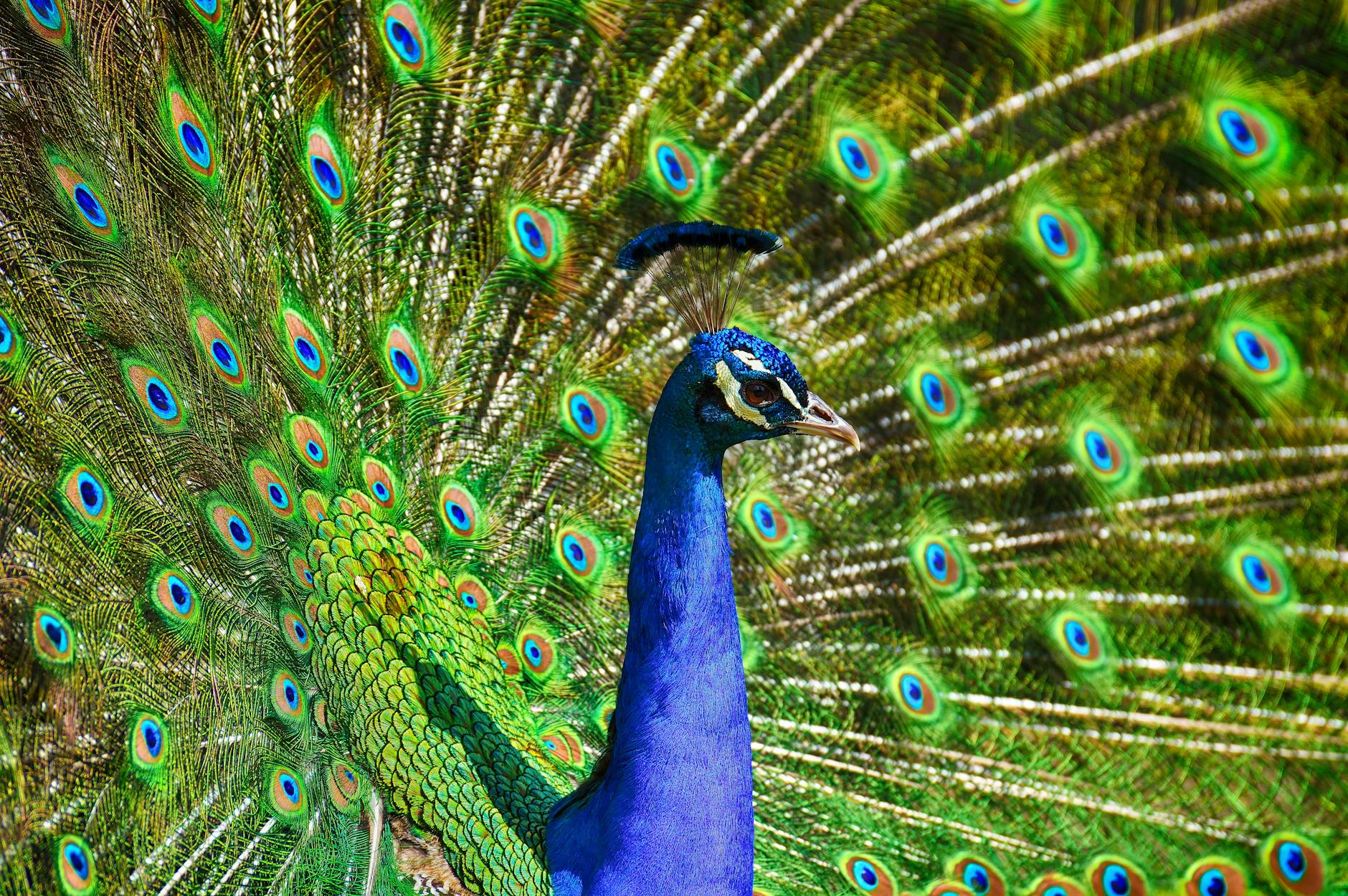
In Greek legend, Hera, the Goddess of marriage, family, and women, took the peacock as her sacred animal. She’s also the one responsible for the male peafowl’s beautiful, unusual plumage.
When Zeus seduced Io, he knew his wife would be jealous. He either turned Io into a white cow (another one of Hera’s sacred animals) to protect her from his wife, or Hera transformed her herself. Either way, Hera set the many-eyed giant, Argus Panoptes, to watch over her new prized cow. Having many eyes, he only needed to close a few at a time in order to sleep. This made him the perfect watchman… until Hermes came along.
Zeus asked Hermes to free Io. Hermes, in turn, disguised himself as a shepherd and used charms to put all of Argus’ many eyes to sleep at once, then killed him. Having lost her watchman, Hera immortalized him by placing his many eyes on the tailfeathers of the peacock.
In North America, Indigenous people have also attached significance to feathers for ages. Eagle feathers, in particular. (I remember being at a Powwow where another dancer I knew had dropped an eagle feather. It was retrieved from the ground with ceremony, treated as a fallen warrior. It was a very emotional experience, especially for her.)
Indigenous textile artists have also woven feathers into warm blankets and beautiful garments (sometimes called match-coats).
In modern witchcraft, feathers are commonly used as representations of the East or element of Air.
The Symbolism of Feathers
In addition to representing the East, Air, multiple deities, and various concepts of the Otherworld, feathers are also considered an “angel sign.” These “angel signs” are a collection of circumstances that are said to indicate that one’s guardian angels, spirit guides, or ancestor spirits are nearby. They include finding white feathers or shiny coins, hearing mysterious music, or smelling sweet, unexplainable smells.
It’s important to be careful with angel signs, however, since so many of them have mundane explanations. It’s very easy to get caught up in looking for signs, start interpreting everything as some kind of “angel sign,” and end up in spiritual psychosis, where the desire for significance blurs the line between reality and delusion.
Sometimes, an angel number is an angel number. Sometimes, it means you spend too much time looking at the clock. Similarly, sometimes, finding a feather is an “angel sign.” Sometimes, it means your neighborhood has stray cats.
Feathers are also subject to color symbolism. Finding a feather of a specific color is said to have a specific meaning. For example:
- White feathers are positive omens, or indicate the presence of benevolent beings.
- Black feathers symbolize protection.
- Red feathers can represent protection, passion, or good fortune.
- Blue feathers represent peace.
- Green feathers symbolize abundance or fertility.
- Yellow feathers represent joy.
- Orange feathers symbolize creativity.
- Ground feathers are omens of stability and groundedness.
- Gray feathers, like blue ones, represent peace.
Of course, all of this is highly contextual. If you’re at a duck pond, the presence of white or gray feathers is unremarkable and not likely to represent anything but the presence of ducks.
On the other hand, finding a bright green feather in your yard, when you don’t have an abundance of green birds in your area, may be a bit more significant.
Feathers represent all kinds of things, but their primary association is with the fine line between this world and the others. They are tools of shapeshifters and symbols of creatures capable of traveling between worlds. If you find a feather outside, appreciate it for its beauty, see if you can identify what species it came from, and leave it be to return to the soil. If you work with feathers in your practice, source them from pets or well-treated backyard fowl.

 Marble Crow