

Recently, my Handsome Assistant experienced a minor vehicular mishap. He was on a motorcycle, so things could’ve been a lot worse, but his injuries weren’t too serious and he’s recovering well.
When he first got his bike, I made him a safe travel charm that he’s kept with him everywhere he rides. He’s dodged the “serious motorcycle accident” bullet, and it could use a refresh. This got me thinking about protective charms in general, which, naturally, led me to what’s probably one of the strongest of them all: angelica root.
Seriously. It’s probably a little too good at what it does, but more on that below.
Angelica Magical Properties and Folklore
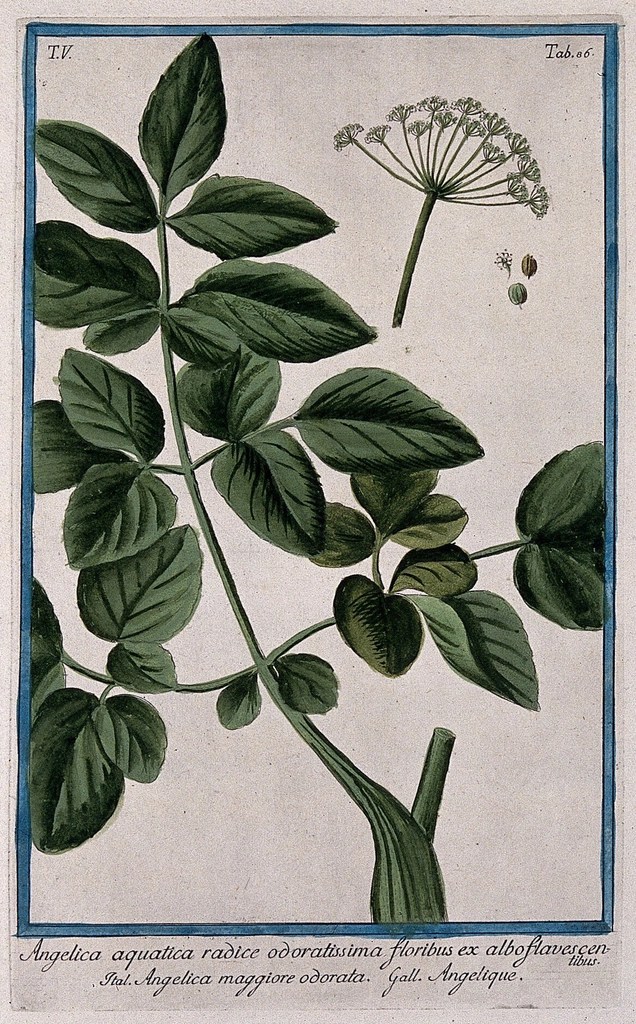
Also known as wild celery, masterwort, and archangel, angelica (Angelica archangelica) and celery are related as members of the family Apiaceae. Angelica archangelica is native to far northern Europe and Russia. Another species known as angelica, masterwort, or purple-stemmed angelica (Angelica atropurpurea) is native to wet areas in the eastern US.
The name angelica derives from the plant’s blooming period. Its flowers typically appear around Michaelmas, the feast of the Christian Archangel Michael.
In both Western European folklore and the Hoodoo tradition, angelica is associated with protection, particularly from evil spirits. It’s also occasionally used to break hexes, jinxes, or curses, depending on their nature.
Purple-stemmed angelica (A. atropurpurea) has a long history of use as both a sacred and medicinal plant by Indigenous people of the southeastern US. It could calm anxiety, ease back pains, soothe stomach trouble, and treat parasites in children. It’s also used in healing ceremonies and as a purification herb. This puts purple-stemmed angelica in the same group as many other purification herbs the world over — namely, herbs that both drive off evil or unwanted energy, and get rid of physical parasites or pests.
Angelica is also sometimes associated with luck, love, and psychic abilities. This may be because it’s so good at keeping unwanted interference at bay — combined with other herbs more directly suited to these purposes, it can keep one’s magical path clear.
On the other hand, angelica also has a reputation for being a bit too good at what it does. According to the (no longer extant) Pooka Pages’ “Concerning the Magical Properties of Herbs & Oils,” angelica may also keep away some things that you do want. If you’re attempting to use it to help you attract something into your life, it’s a good idea to keep this in mind — sometimes, those things aren’t without risk, so angelica may not be the best choice.
An angelica relative, A. sinensis, is also known as lady ginseng or dong quai. It grows in cool, mountainous areas of east Asia, and has a long history of use in Chinese medicine.
Using Angelica
Honestly, there are few protective charms more convenient than a whole angelica root. They’re sort of lumpy and oblong, but firm, compact, and easy to stash in a pocket, bag, sachet, or any other container. I’ve never had one that was crumbly or messy, either.
Hold it in your dominant hand, tell it what you’d like it to do, project this thought, request, or energy into the root, thank it for its help, and you’re good to go. You can also anoint it with an oil, if you’d like.
You can hang a whole angelica root over your front and back doors to keep unwanted forces out or bury a root at each corner of your property.
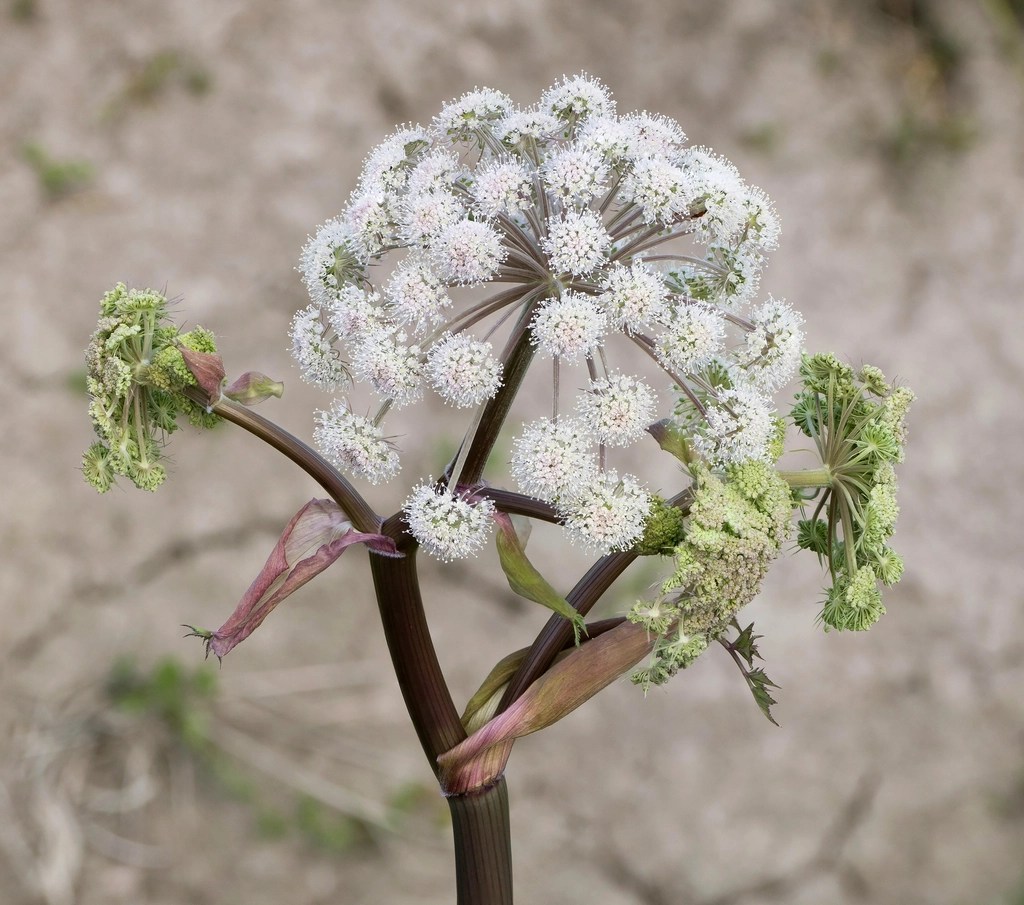
Soak an angelica root in water, then add the water to a floor or door wash, sprinkle it in corners of a room, or pour it along the borders of your property to ward off evil and strengthen magical boundaries.
Angelica roots also make lovely additions to protective oils themselves. Put it in a neutral carrier oil and let it infuse in a cool, dark, dry area, shaking it regularly. If you want a stronger fragrance, add essential oils just before you bottle the finished product. For this, you might want angelica root pieces rather than the whole root — it’ll have an easier time transferring its fragrance to the oil if it has more surface area.
Since the roots are fragrant themselves, and hold other fragrances well, they’re great additions to potpourri or other scented herb mixtures.
You can also eat A. archangelica stems and roots. However, you may not be able to find them in your local grocery store, and they can be challenging to identify in the wild. They have several poisonous lookalikes, so you should never consume anything that you’ve only tentatively identified as angelica. Unless you’re an expert forager yourself, get an expert forager’s opinion first. As the saying goes, you should be as confident identifying a wild edible as you would be identifying it in a grocery store. Otherwise, don’t eat it.
Angelica may not be the most versatile magical plant, but it’s one worth knowing. It’s one of the best at what it does, sometimes to the point of being too effective. It’s one of those herbs that I find it’s better to have on hand and not need, than to need and not have on hand. Whole roots aren’t too expensive, and you can use them to steep in water for magical baths, washes, or asperging, infuse them in oil, or use them whole as protective talismans.

 Marble Crow