
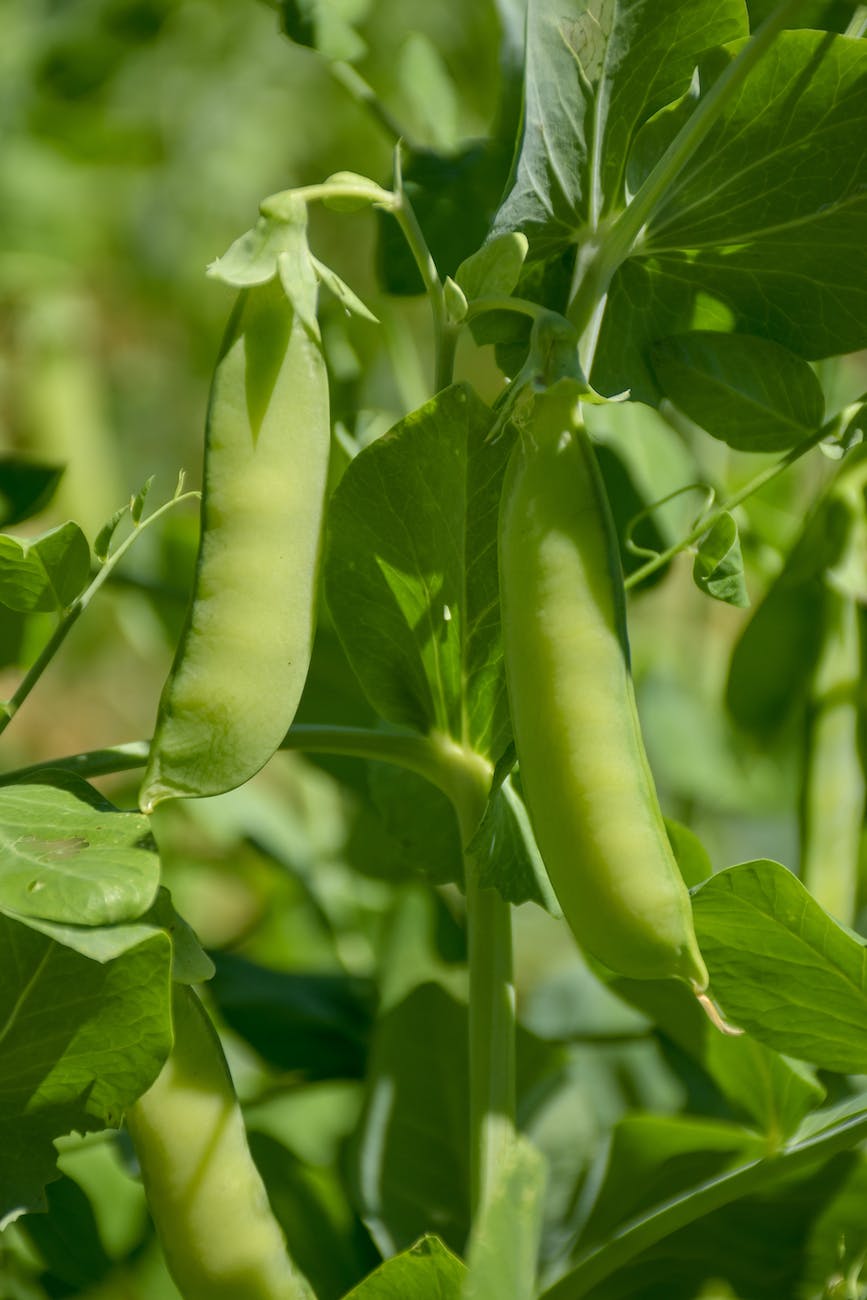
As I mentioned in my tiny plant haul, I recently picked up some packets of snap peas. I was never really a fan of peas growing up — mostly because the ones I was exposed to were the mushy, grayish kind from a can. Few things can beat a fresh, sweet peapod off of the vine, though, and they’re legitimately fun to grow!

Soon, it’ll be time to start peas from seed in my growing zone. Since I’m kind of champing at the bit to get them started, I figured this would be a good time to look into all of their folklore, symbolism, and magical correspondences.
Pea Magical Properties and Folklore
Sweet peas and rosary peas aren’t that closely related to garden peas, or even sugar snap peas. Sweet peas (Lathyrus odoratus) are grown for their flowers and have toxic seeds. Rosary peas (Abrus precatorius), as their name implies, are grown for beads and are fatal if ingested — if it’s thoroughly chewed, a single rosary pea is enough to kill an adult human. Garden, snow, and sugar snap peas are different cultivars of Pisum sativum, and are grown for their edible shoots, pods, and seeds. L. odoratus, A. precatorius, and P. sativum are members of the family Fabaceae, but so are plants like lupine, Scotch broom, and logwood trees. For this reason, it’s important to draw a distinction between folklore and magical uses of edible peas, versus sweet pea or rosary pea.

Peas are an incredibly old food source grown around the world. While garden peas (Pisum sativum) are thought to have originated around Pisa, in Italy, they’ve also been found in Egyptian tombs, and the earliest evidence of them dates back to the Neolithic era, in what is now Greece, Jordan, Turkey, and Syria. They are considered to be one of the first food crops domesticated by humans.
According to British lore, pods containing nine peas are considered lucky.
Peas were used to cure warts through sympathetic magic. This is a very common old wart-removal method — you touch or rub the wart with an object, then burn, throw away, or bury said object. As it decays, the wart shrinks. In this case, the afflicted person would touch a wart with a pea, wrap the pea in a bit of paper, then bury it in the ground. When the pea broke down, so too would the wart.
Peas are a cool-weather crop, and don’t do very well in heat. One old rhyme about the planting of peas and beans says, “Be it weal or be it woe, Beans should blow before May go.”
Green peas are used in formulas for health or money. Yellow peas, on the other hand, are best for luck. In some cultures, carrying a dried pea in your purse or pocket is said to attract good luck.
Dried peas are also used for divination. They’re shaken up and cast, similarly to the way you might cast bones or runes. You then read the patterns that they form.
Using Peas
As a common food crop, using peas is pretty easy — especially if you like kitchen witchery. Cook and eat peas to bring in more wealth, health, and luck.
Dried peas can be added to sachets or bowls to attract money. Combine them with dried herbs like chamomile, basil, cinnamon, patchouli, and cinquefoil. Add this to a bowl containing a few pieces of citrine and/or pyrite, and some coins. Keep the bowl clean and free of dust, and periodically refresh it with new herbs and more coins. Never remove the coins from the bowl.
If you have a difficult decision to make, take one seed pea for each of your options. Plant them, carefully marking which pea corresponds to each option. Keep an eye on them as they sprout — their growth and vigor can provide guidance on what to do.
Peas are a useful magical ingredient that’s easy to grow yourself, even if all you have is a tiny space and a pot. They’ve got fiber and protein, are associated with luck, money, and healing, and keep well once dried. All told, no matter whether you’re into kitchen witchery or not, these little guys are a very useful addition to your store of magical ingredients.

 Marble Crow