
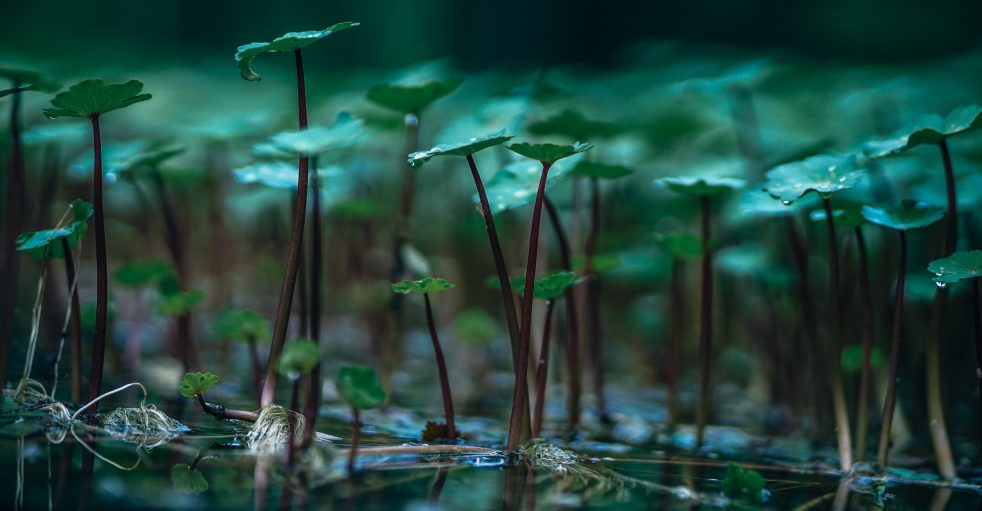
One of the benefits of encouraging wildlife to hang out is that, if things go right, it’ll basically do your gardening for you. I’ve had so many volunteer plants courtesy of the birds and squirrels, it’s bonkers. Since I’m still working on re-wilding things, I’m grateful for whatever additions the local creatures want to make — I get to see what grows well and what doesn’t, and it’s all for free.
Like that time that all those delinquent squirrels paid their bar tab with a ton of tomato plants.
This is all just preamble to explain that I’ve been watching the progress of some kind of plant in the front plot. The front yard is divided into two squarish plots by a walkway. In one, we’ve finally managed to kill off the grass and replace it with a redbud tree, oakleaf hydrangea, coreopsis, strawberries, moss phlox, and echinacea. Then this thing happened.

Cute, right? It seemed to appear overnight, springing up out of the ground without warning. No sprout, nothing. Just bam! This.
Out of curiosity, I left it. It was in a bare spot, and I was honestly pretty excited to see what it’d turn out to be. I tried identifying it to make sure it wasn’t something invasive or poisonous, but plant apps were stumped. It was almost definitely a member of Cucurbitaceae, but what? Pumpkin? Melon? Squash? Cucumber? Even Reddit’s gardening subs were mostly baffled. Some posters who recognized it even admitted that it looked like “some kind of weird hybrid.”
Anyhow, I figured it’d probably end up being some kind of vegetable, so I left well enough alone. I didn’t even bother watering it. I figured that it was a volunteer, it was doing fine without my interference, so it was just sink or swim from h-

Like something out of a weird fairytale (or Annihilation, or The Color Out of Space), it… expanded. It didn’t get any taller, but it sent out yards of thick, powerful vines across the ground. By the time you read this, it’ll probably have doubled in size.
It also started putting out flowers. Big, bright yellow ones. Each one had a firm, round base. Before long, we had a ton of these.
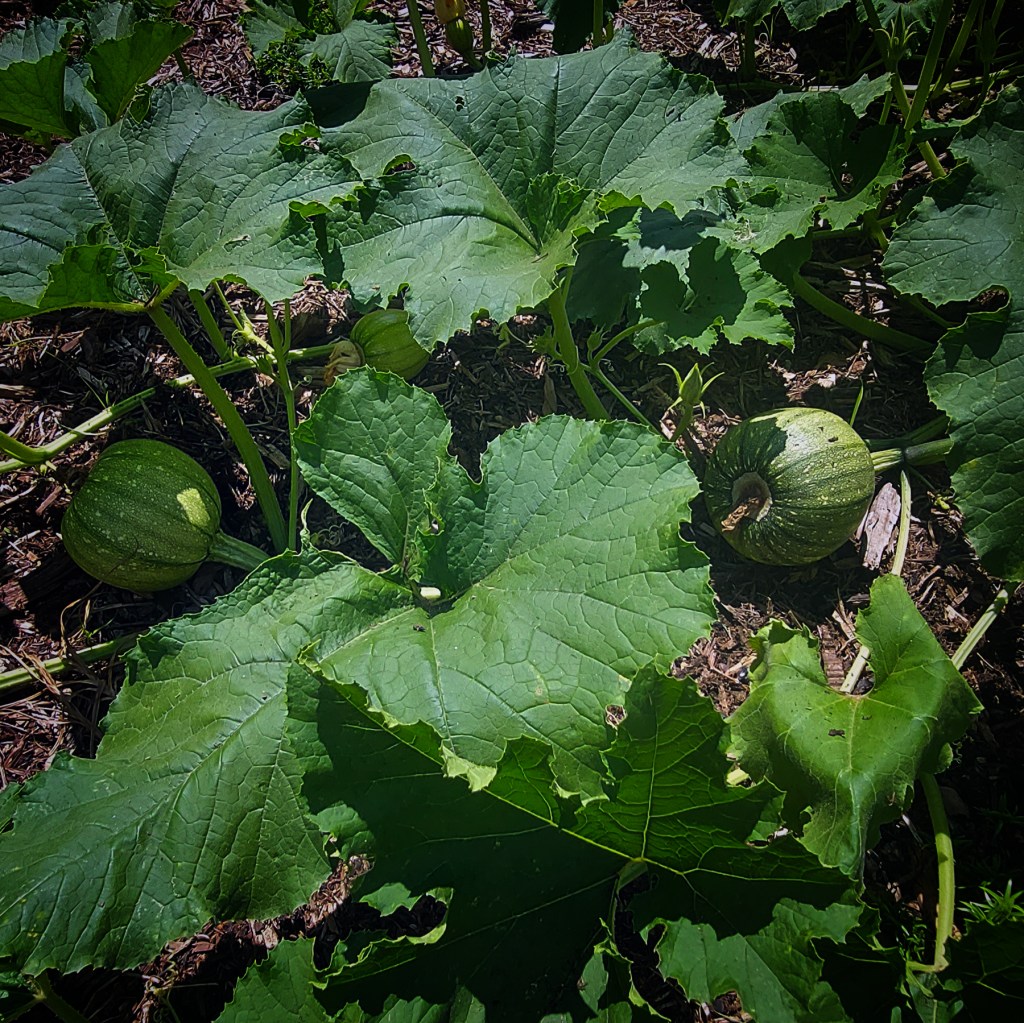
So, not cucumbers. Not melons. Some kind of pumpkin? A squash?
This guy who sometimes cuts the (remaining) grass for us said he recognized it as an ayote. He said it’s tasty when cut up and stewed with beef ribs and vegetables. I don’t do beef ribs, but I have some lovely brisket-style tempeh that could maybe work.
The trouble with volunteer Cucurbits is that there’s a risk of poisoning. If you find a wild squash in your yard, or grow one from seeds that you’ve saved yourself, taste a little bit of the raw fruit before you cook it or serve it to anyone else. Some wild Cucurbits have a lot of a toxic compound called cucurbitacin. It tastes very, very bitter, and enough of it can absolutely kill you. Tl;dr: Do not eat bitter squash, or any other members of Cucurbitaceae that taste weirdly bad.
They’re nowhere near ripe yet, but I noticed that the stem of one had broken. I brough it inside for Experiments.
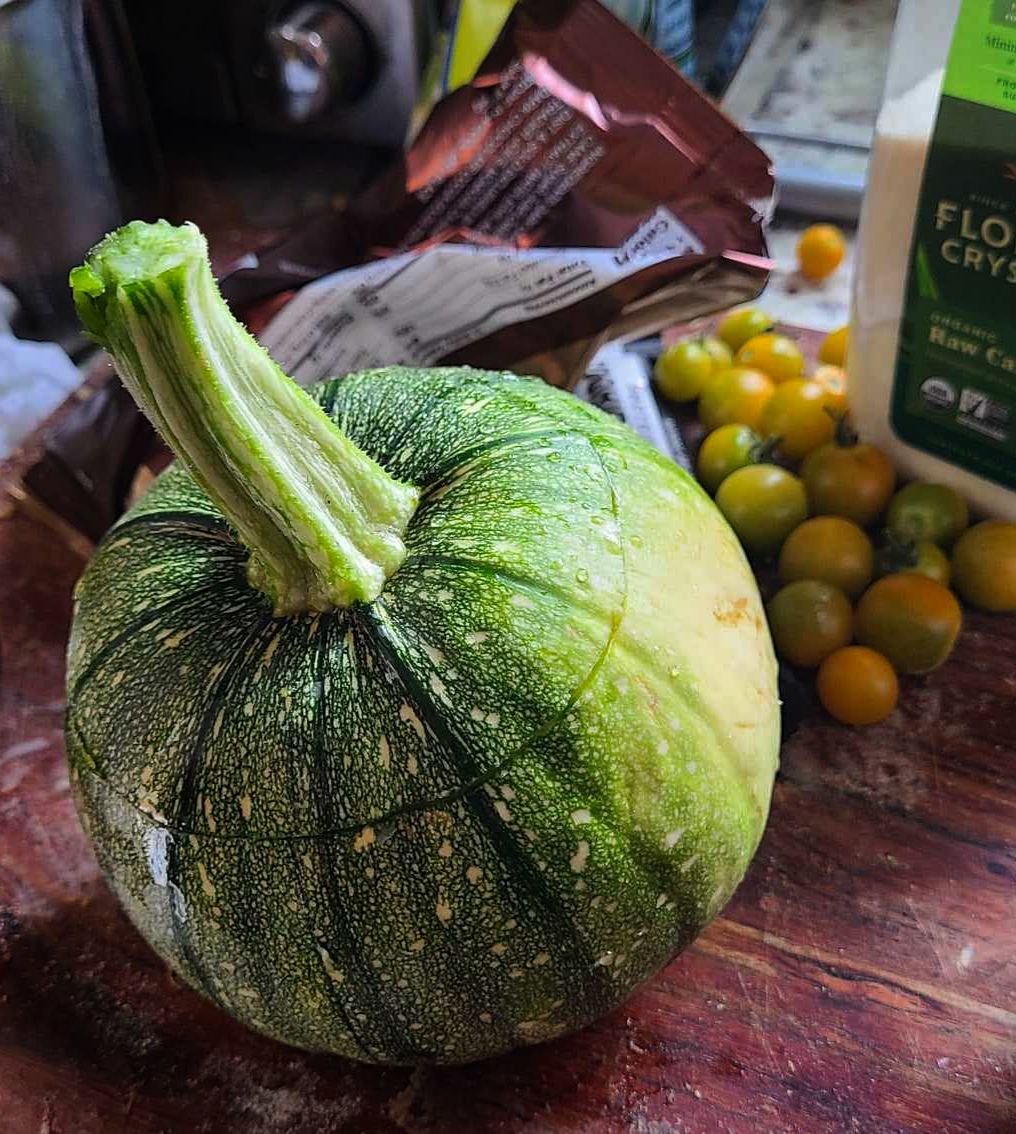
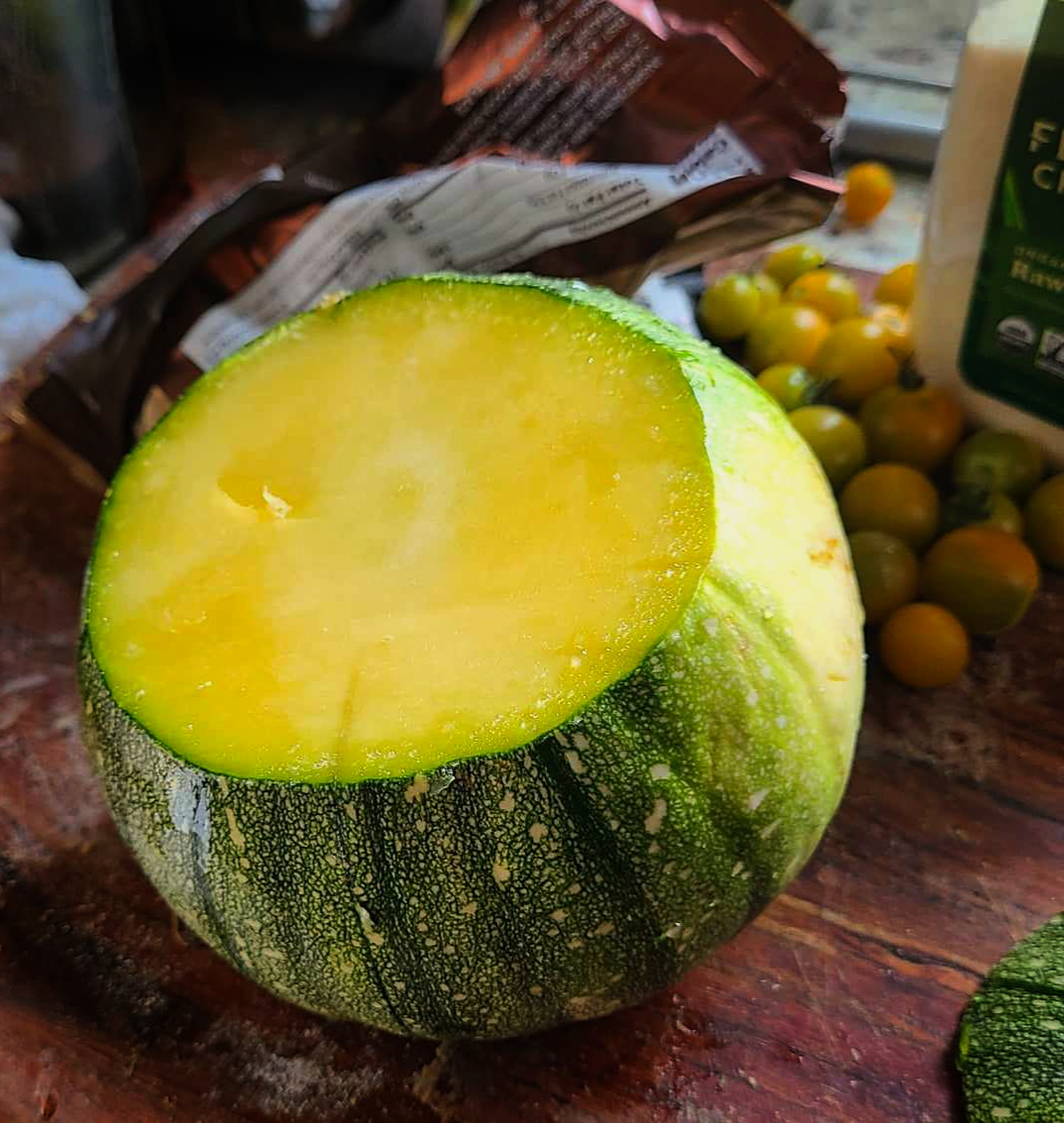
It looked inoffensive enough.
I took a little taste.
Surprisingly, it was pretty good! There was no trace of bitterness, just a mild, sweetish flavor. It’s not as strongly flavored as it’ll probably be once it’s completely mature, but definitely not bad.
I haven’t decided what to do with this specific one just yet. Ayote en miel? Squash soup? Roasted squash?
Whatever I decide to make from this squash, I hope I like it. I’ll definitely have plenty.
Thanks, local animals!

 Marble Crow
I love your blog-glad I found you! I’m converting specific areas in my yard to native and I appreciate your reminders of the magical side of plant life. We also have many volunteer plants compliments of all the creatures who visit us ( for the corn, seeds, watermelon etc we provide😊) and it’s interesting trying to identify them via the PlantNet app. Good luck with your ‘squash’!
LikeLike
Thank you so much! I found (what I think is) a mulberry where the birds hang out the other day, which is pretty exciting. Also, I’m now *almost positive* that the squash is a pumpkin. 😀
LikeLike